PROS:
- Exceptionally balanced chassis favors control over spectacle
- Clark Plaid seating blends comfort, grip, and heritage
- Torque rich powerband rewards real world driving
- Daily usability achieved without sacrificing design intent
- Restraint driven design feels complete and confident
CONS:
- Touch sensitive controls reduce tactile certainty
- Front wheel drive limits ultimate track theatrics
EDITOR'S QUOTE:
The GTI wins not by doing more, but by knowing when to stop.

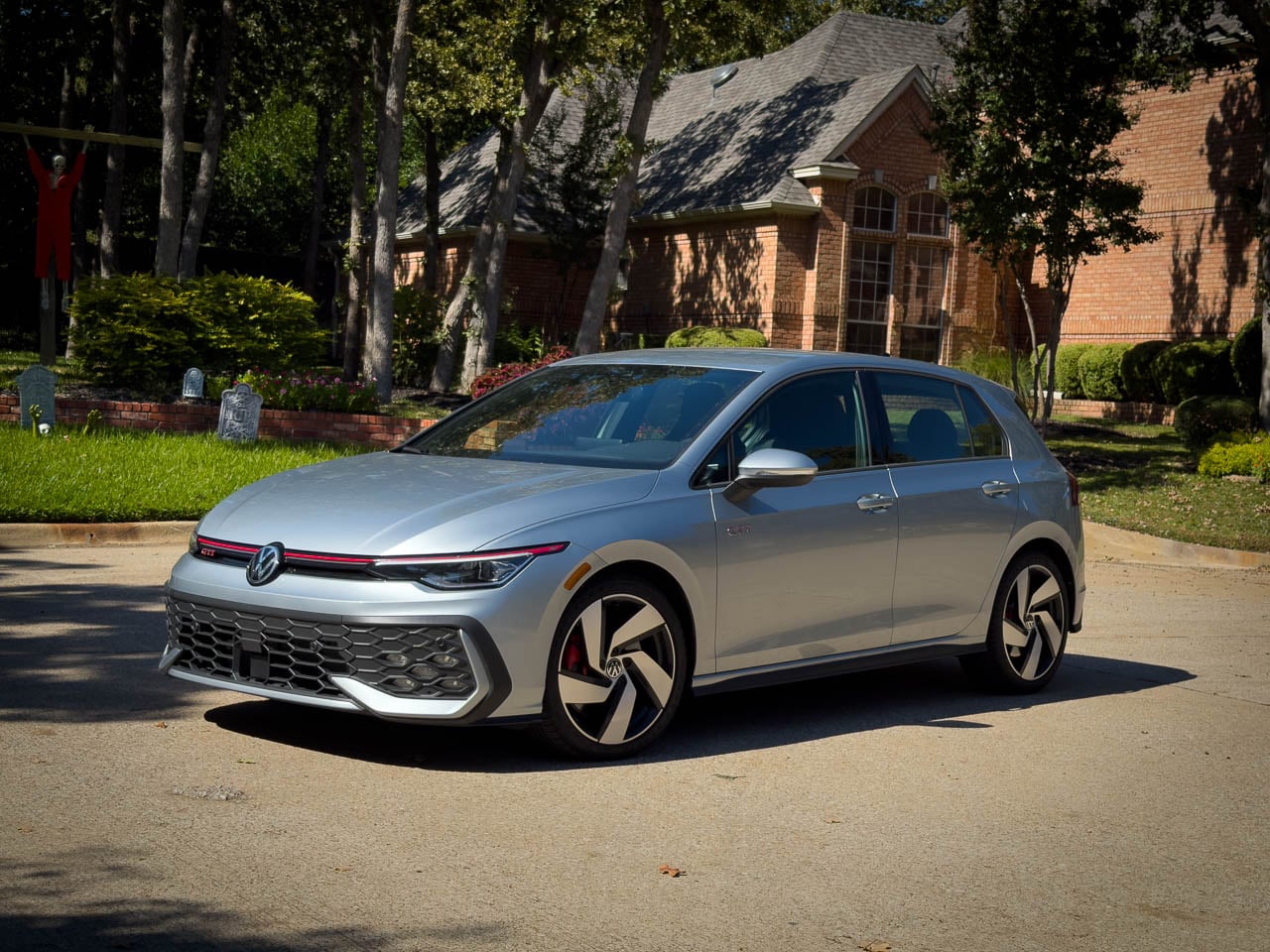
Forty years into its production run, the Volkswagen Golf GTI faces a question most performance cars never survive long enough to answer: what happens when the formula is complete? The 2025 model responds not with reinvention but with refinement so deliberate it borders on philosophical. Look at the grille: a single red line, unbroken, tracing the car’s width before disappearing into the headlight housings. No additional accent. No secondary flourish. That line is the thesis statement. Where competitors chase headline numbers and aggressive styling cues, the GTI presents something rarer in automotive design: the confidence to stop adding.
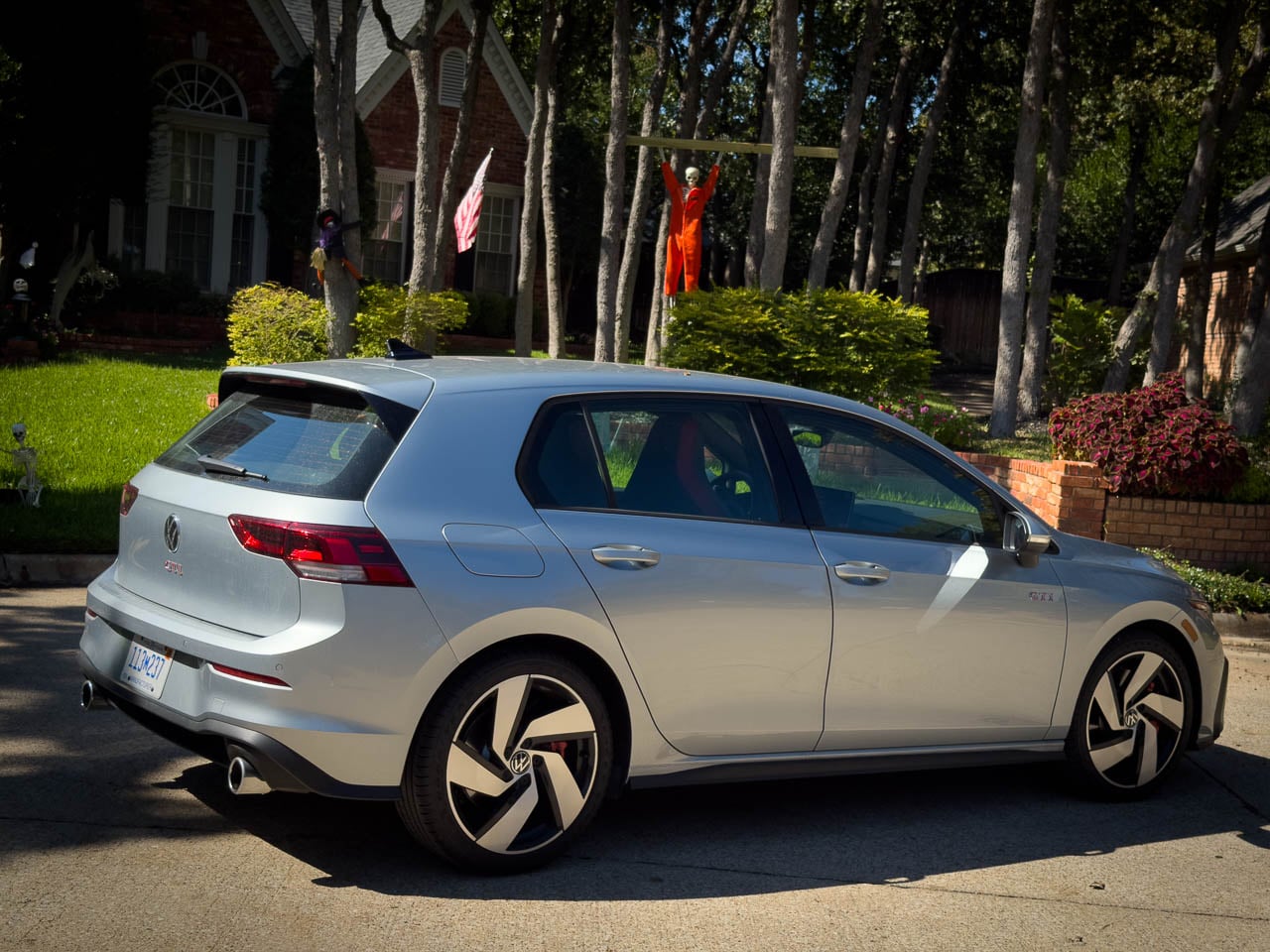
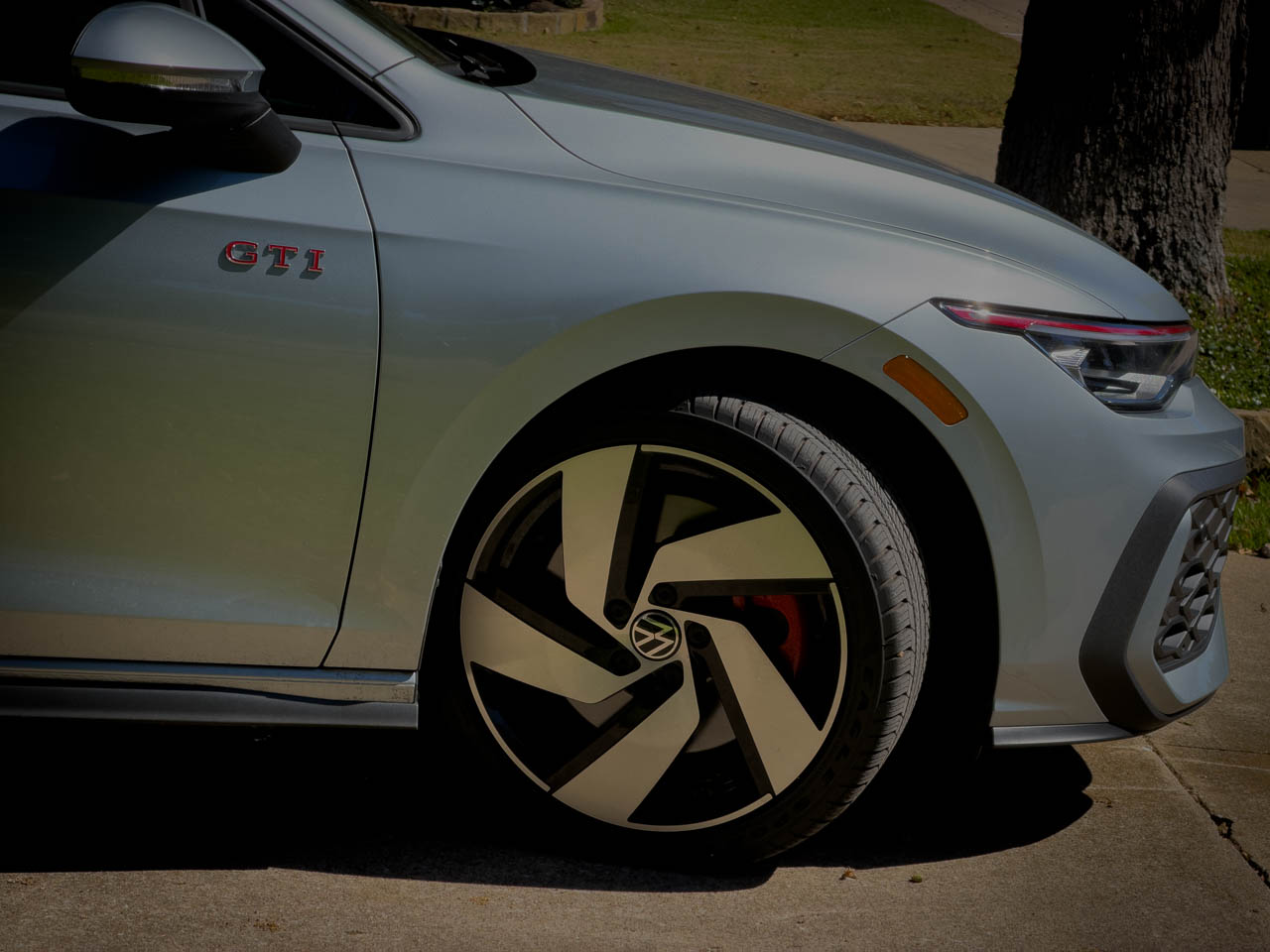
The exterior reads as studied understatement. Body lines remain clean, uninterrupted by vents or scoops that would suggest performance requiring constant explanation. The silhouette sits low without crouching, planted without posturing. In Alpine Silver Metallic, our test vehicle demonstrated how surface finish interacts with the car’s subtle curves, catching light across hood creases that reveal themselves gradually rather than announcing their presence.
Material Language
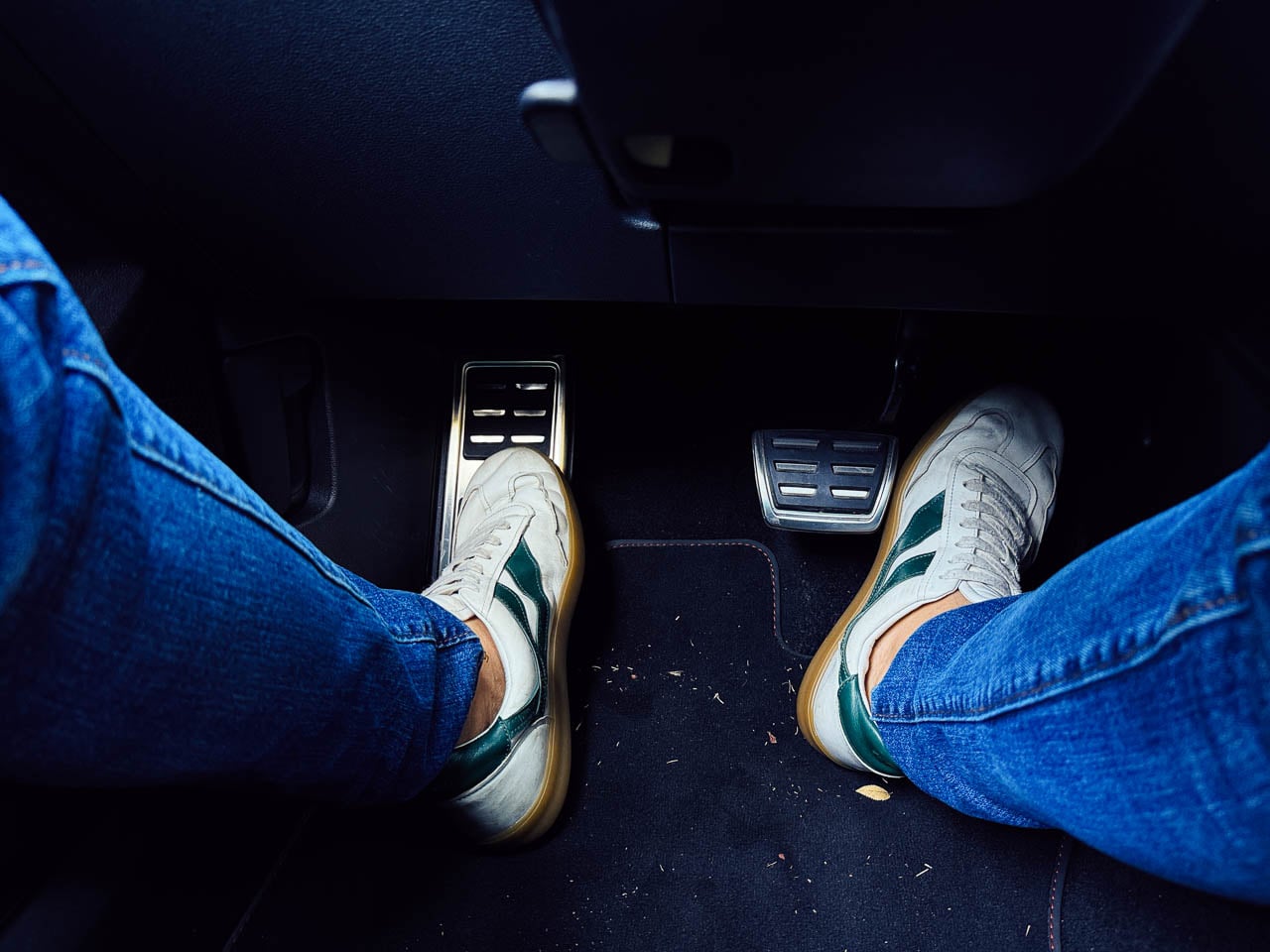
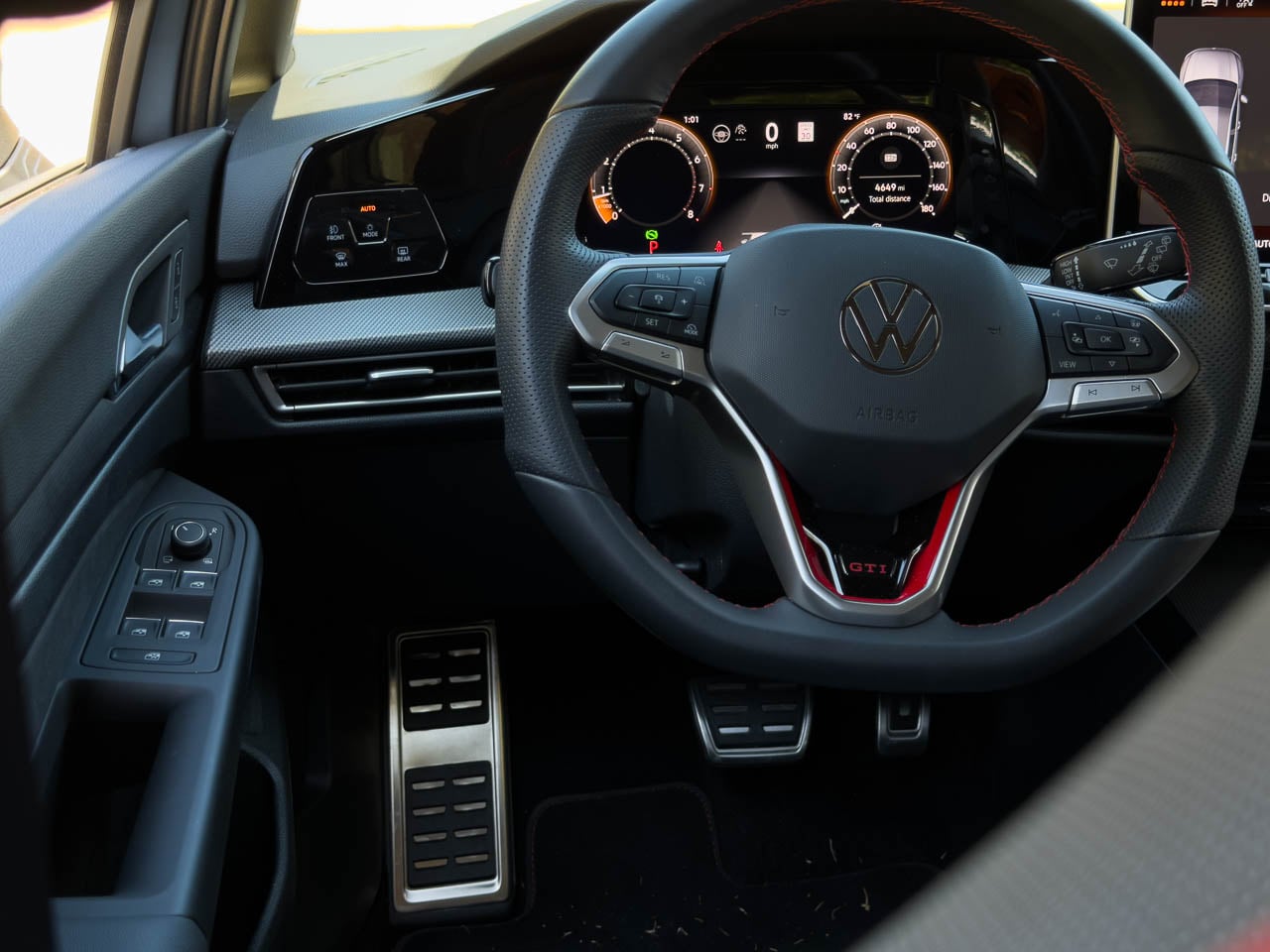
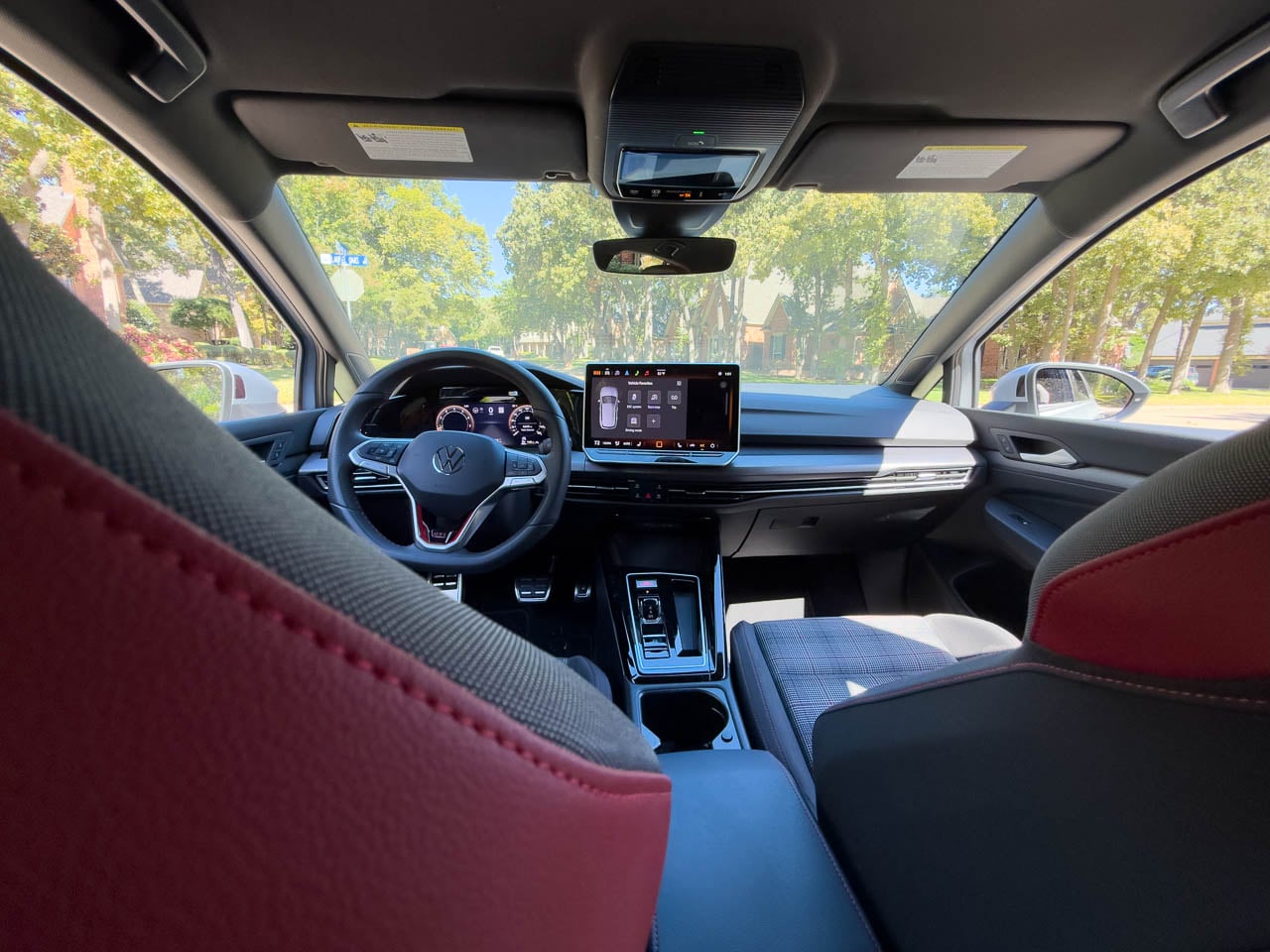
Inside, the cabin architecture prioritizes tactile hierarchy over visual spectacle. The flat-bottom steering wheel occupies the central position in this material conversation, wrapped in leather that wears smooth at the nine-and-three positions within the first few hundred miles of use. Stainless steel pedals catch light from the footwell, their brushed finish contrasting with the matte black plastic surrounds. Red ambient lighting threads through the dashboard at night, the only concession to interior theater.
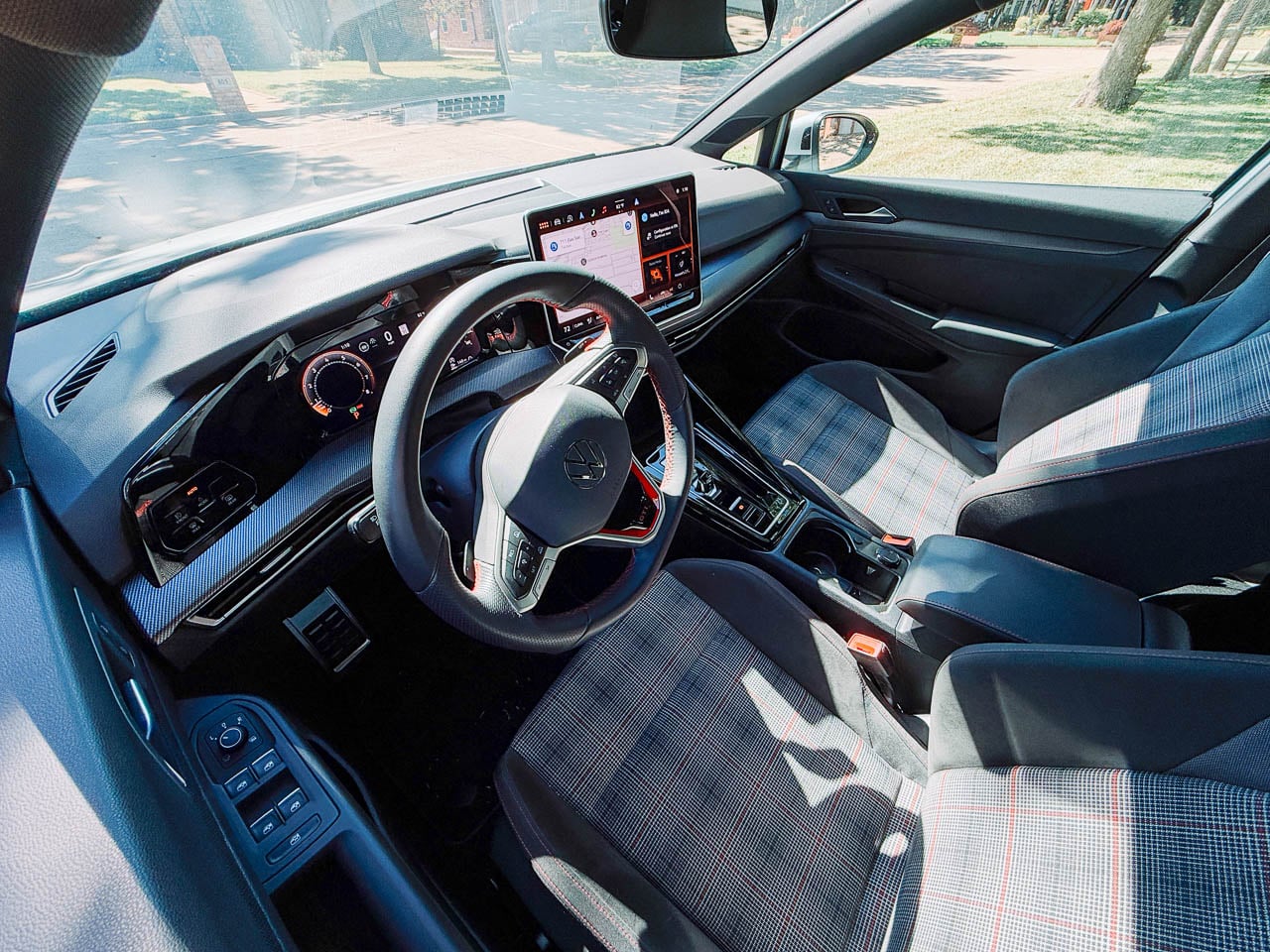
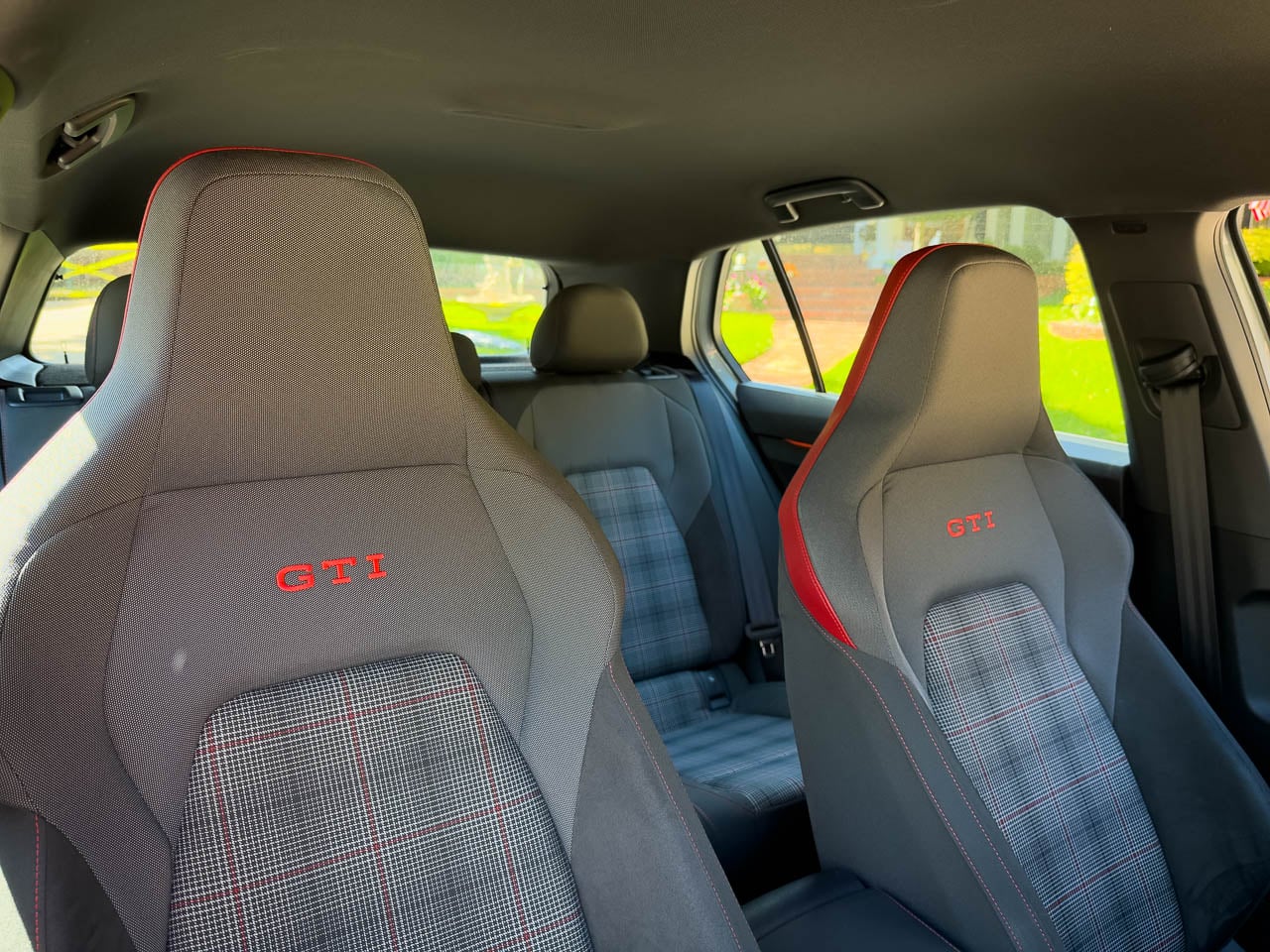
The Clark Plaid seats deserve separate consideration. This textile pattern has appeared in every GTI generation since 1976, and its persistence represents something beyond brand consistency. The weave itself tells a story about Volkswagen’s understanding of what performance seating actually requires: grip during lateral loading, breathability across temperature changes, durability that improves rather than degrades with use. Bolster foam density sits firmer than typical sport cloth, shaped to contain rather than squeeze the occupant. The fabric’s black and gray threads intersect at angles that catch cabin light differently depending on sun position, creating visual movement even when the car sits still. After a four-hour highway stint from Dallas to Austin, the seats demonstrated no pressure point fatigue, a claim many leather-wrapped alternatives cannot make. This is functional heritage, not nostalgia. The plaid works because the problem it solves has not changed.
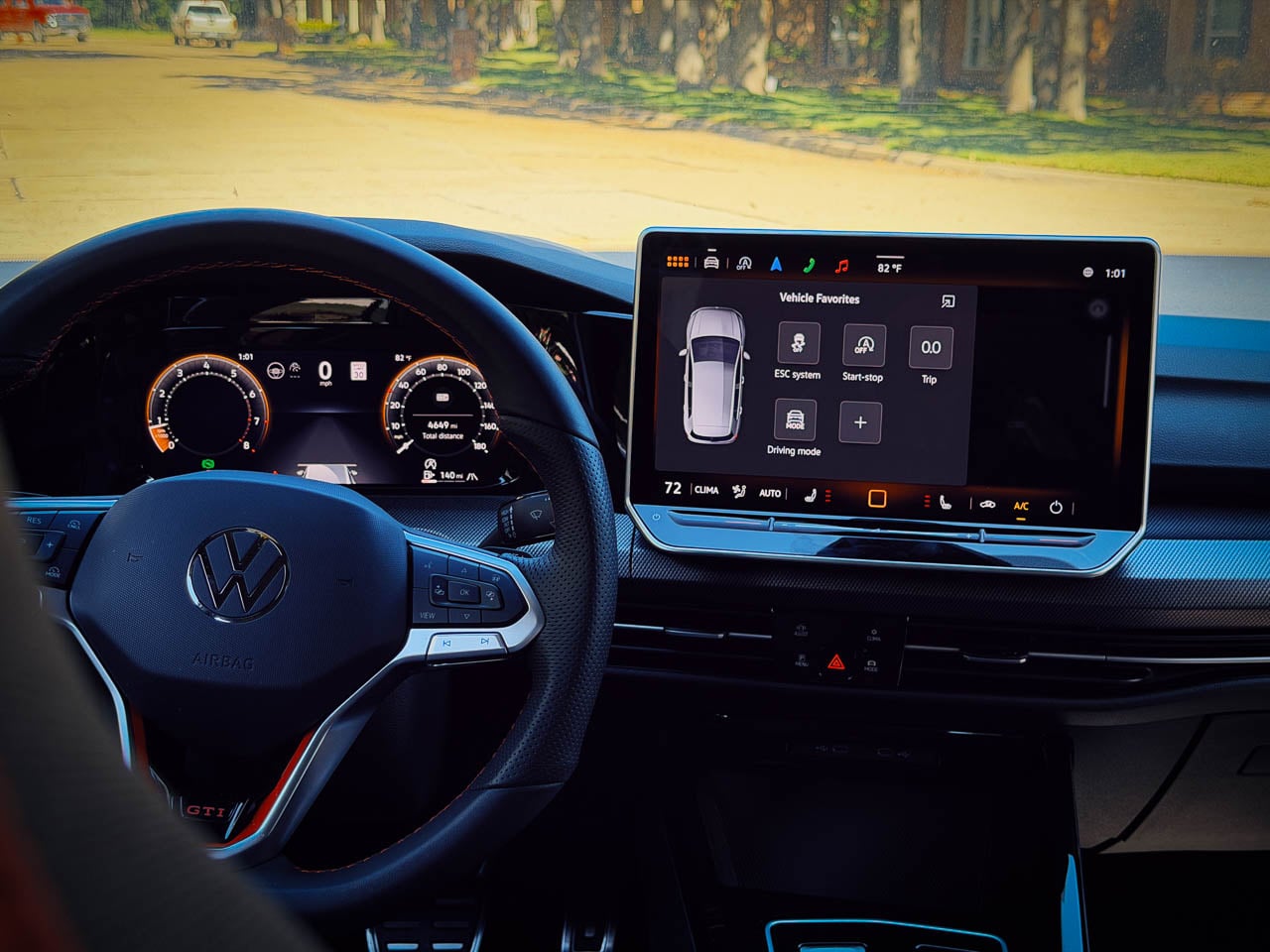
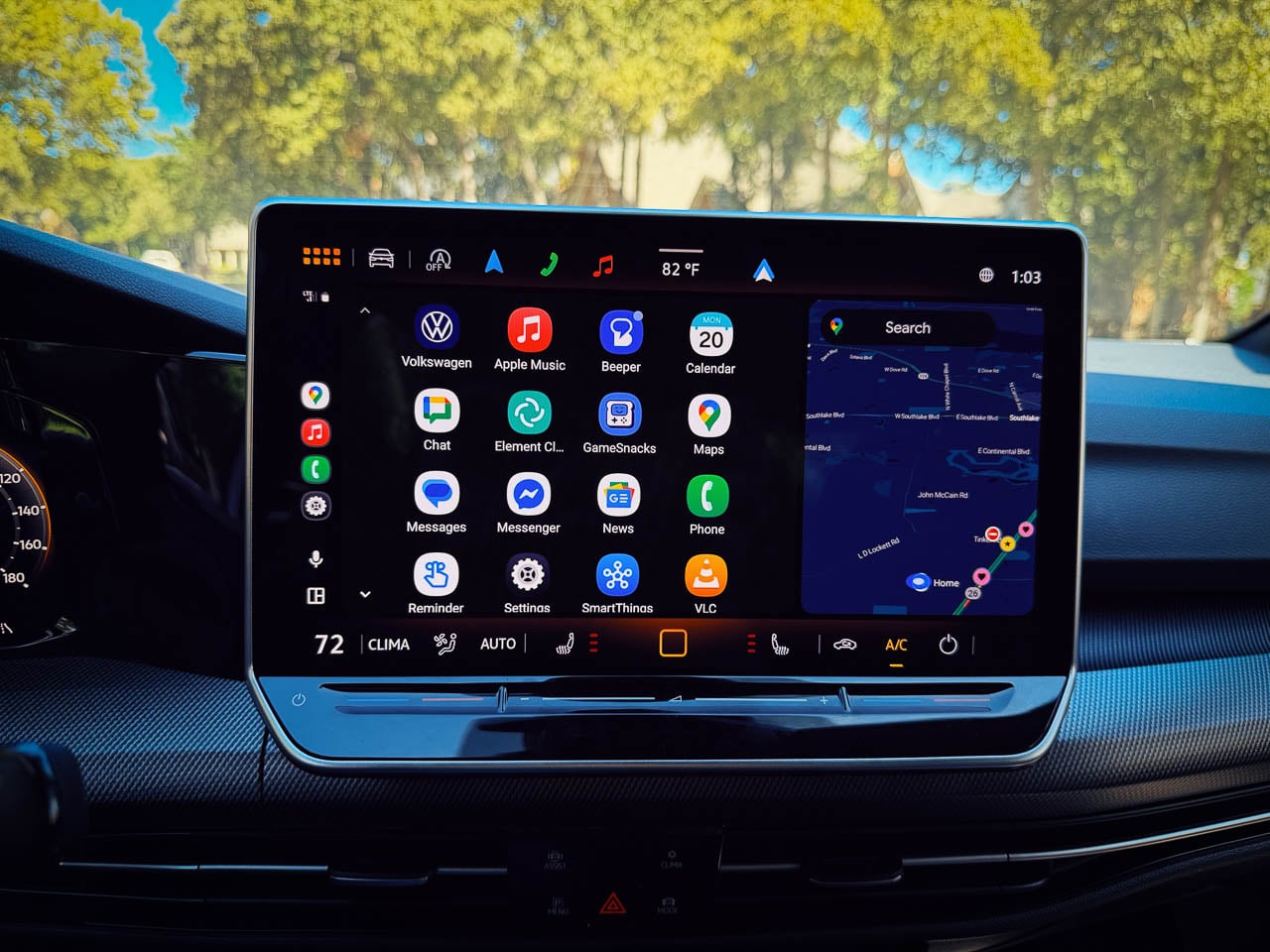
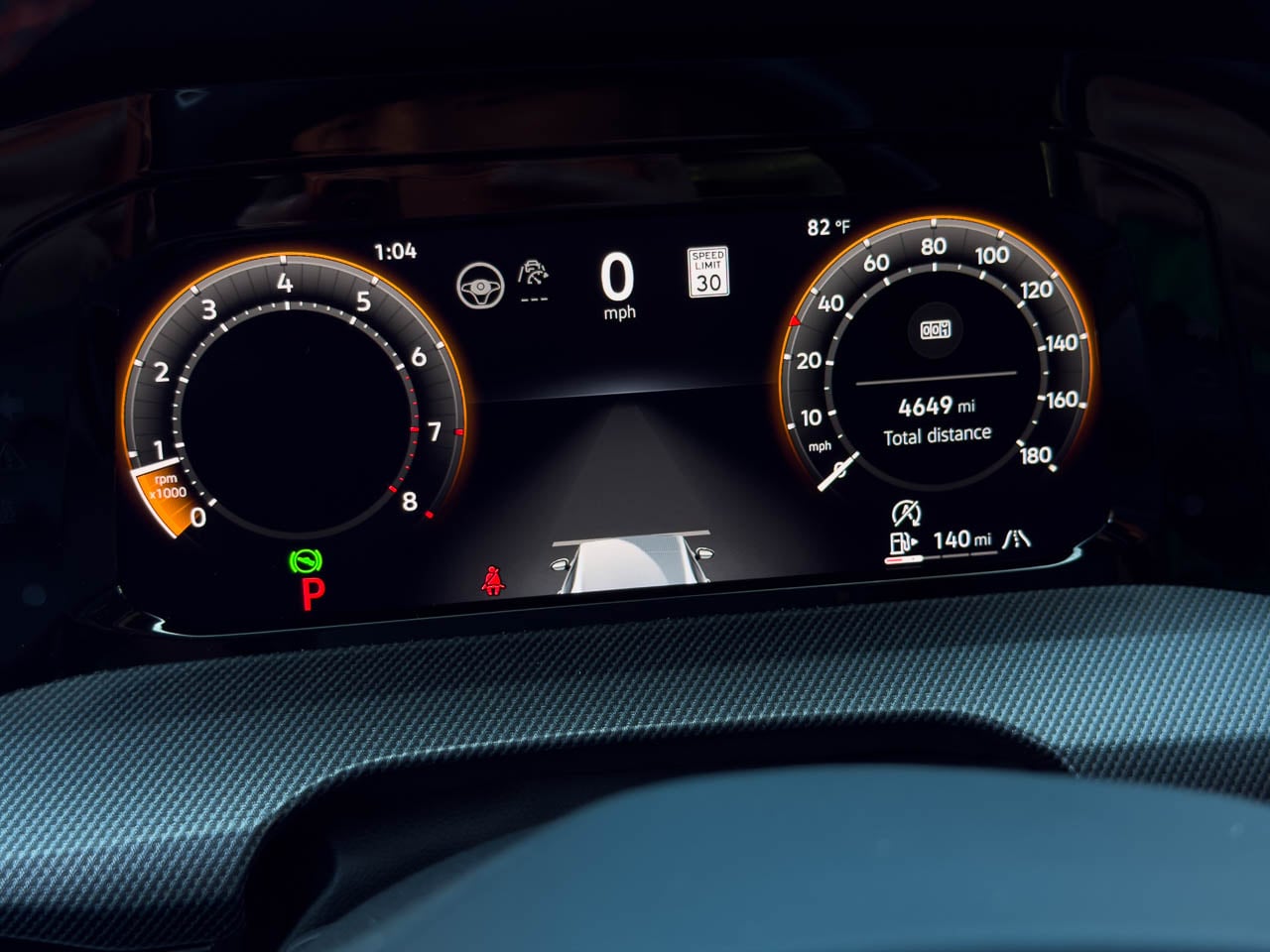
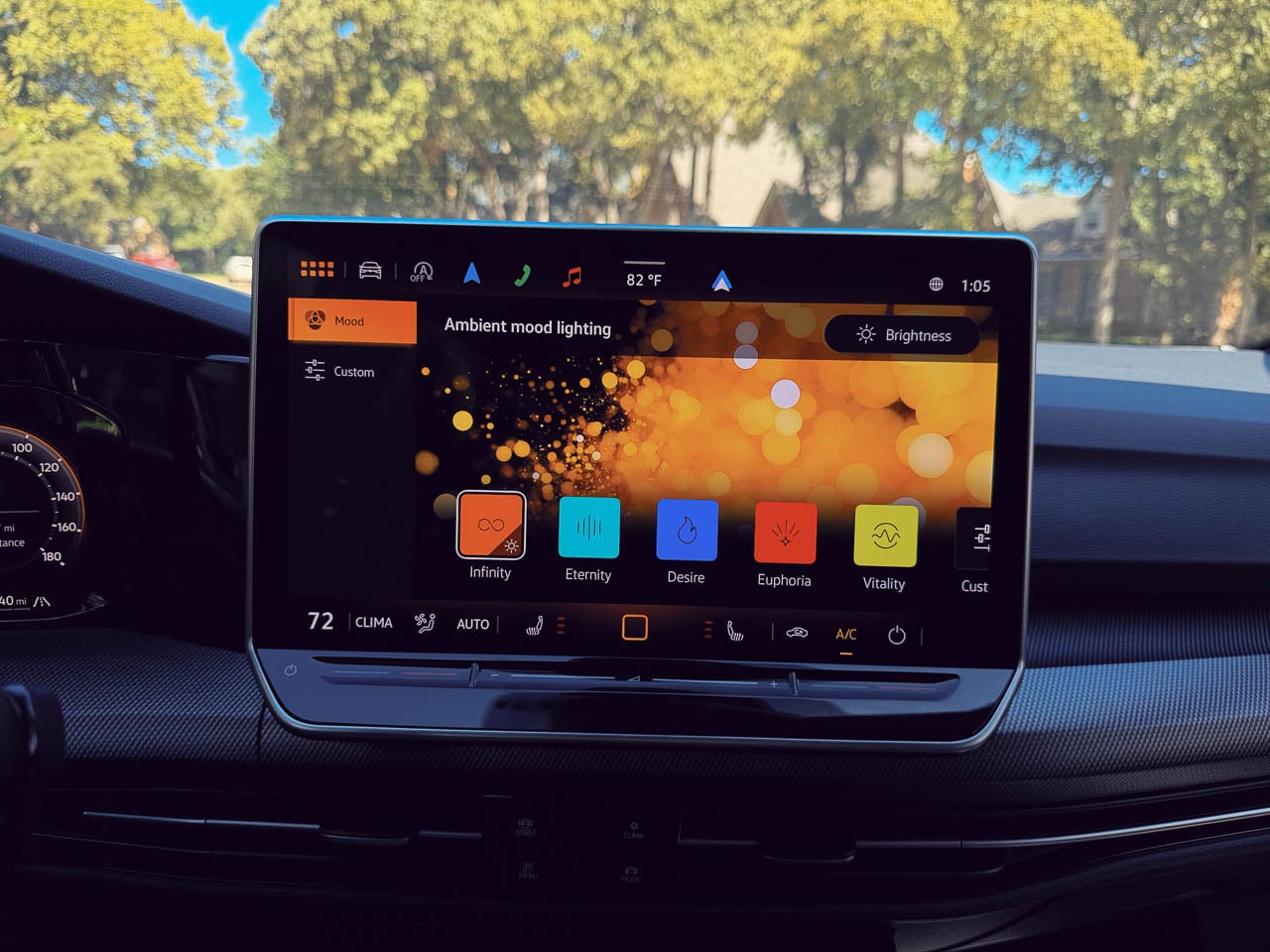
Dual 10.25-inch displays span the dashboard width, their bezels thin enough to suggest a single continuous surface interrupted only by the steering column. Touch-sensitive sliders for climate and volume occupy positions along the center console where physical controls once lived. This represents the GTI’s single visible concession to interface trends over tactile tradition, a trade that prioritizes visual continuity at a modest ergonomic cost. The adjustment period is real but brief.
Chassis Philosophy
The mechanical architecture beneath reveals Volkswagen’s approach to performance engineering. The 2.0-liter EA888 engine produces 241 horsepower and 273 pound-feet of torque, figures that appear conservative against current competition. These numbers obscure the delivery character. Torque arrives at 1,600 rpm and sustains through 4,300 rpm, creating a powerband that rewards partial throttle exploration rather than demanding full commitment.
Our test vehicle carried the seven-speed DSG dual-clutch transmission, a choice that alters the car’s personality without diminishing it. Upshifts compress into moments brief enough to feel like hesitations rather than events. Downshifts arrive with rev-matching that sounds intentional, the exhaust note rising through an acoustic signature tuned to communicate engagement without theater.

The VAQ electronic limited-slip differential manages front-wheel traction with intervention subtle enough to require attention to notice. Corner exit acceleration produces no wheel scrabble, no steering correction, no sense of mechanical systems working to contain mechanical excess. The differential’s operation suggests integration rather than intervention, a chassis behaving as a single coordinated system rather than independent components managed by software.
Dynamic Chassis Control adaptive dampers present a genuine choice rather than a marketing checkbox. Comfort mode absorbs expansion joints and surface imperfections with compliance that transforms the GTI into a credible highway cruiser. Sport mode firms the response enough to communicate surface texture through the steering rim and seat cushion. Steering weight builds progressively from center, carrying none of the artificial resistance that plagues many electronically assisted systems. Brake pedal travel follows the same logic: firm initial resistance, progressive bite, linear relationship between input and outcome. The spread between these settings covers sufficient range that drivers will likely settle into a preference rather than toggle constantly. These are not remarkable specifications. They are evidence of calibration discipline.
The Architecture of Usefulness
The hatchback form factor delivers practicality the GTI’s sedan competitors cannot match. Rear cargo volume expands from 22.8 cubic feet with seats upright to 52.7 cubic feet with the rear bench folded, the rear seatbacks folding via a single pull lever that releases with satisfying mechanical precision. The load floor sits level with the rear bumper height, its carpeted surface firm enough to slide boxes across without catching. This utility exists without visual compromise, the roofline maintaining its sporting rake while enclosing genuinely useful interior volume.
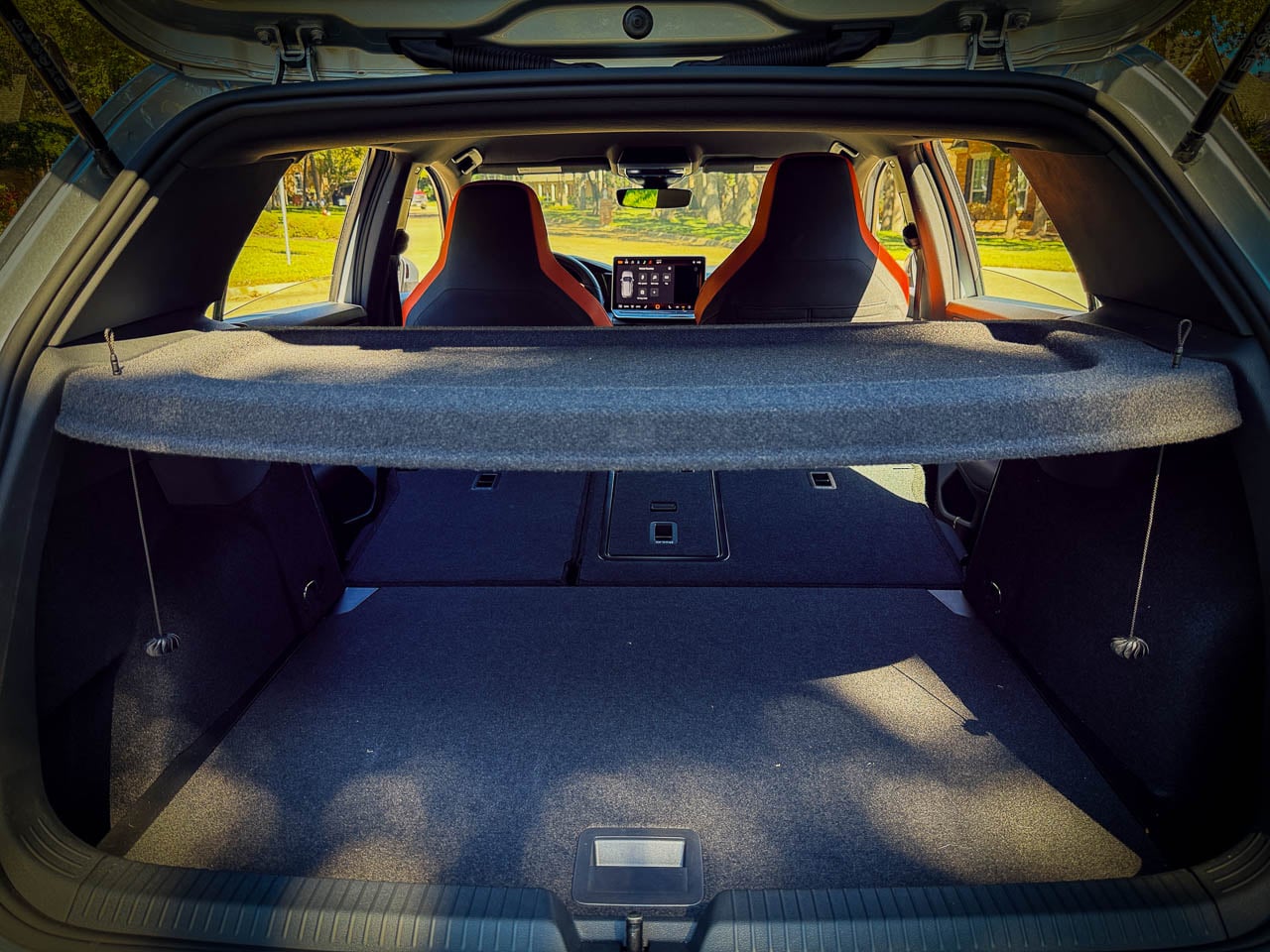
Rear passenger space accommodates adults across moderate distances. Legroom measures adequate for passengers under six feet, though knee contact with front seatbacks remains possible depending on front occupant positioning. Headroom proves more generous than the roofline suggests, the seating position dropping occupants low enough to clear the tapering roof glass.
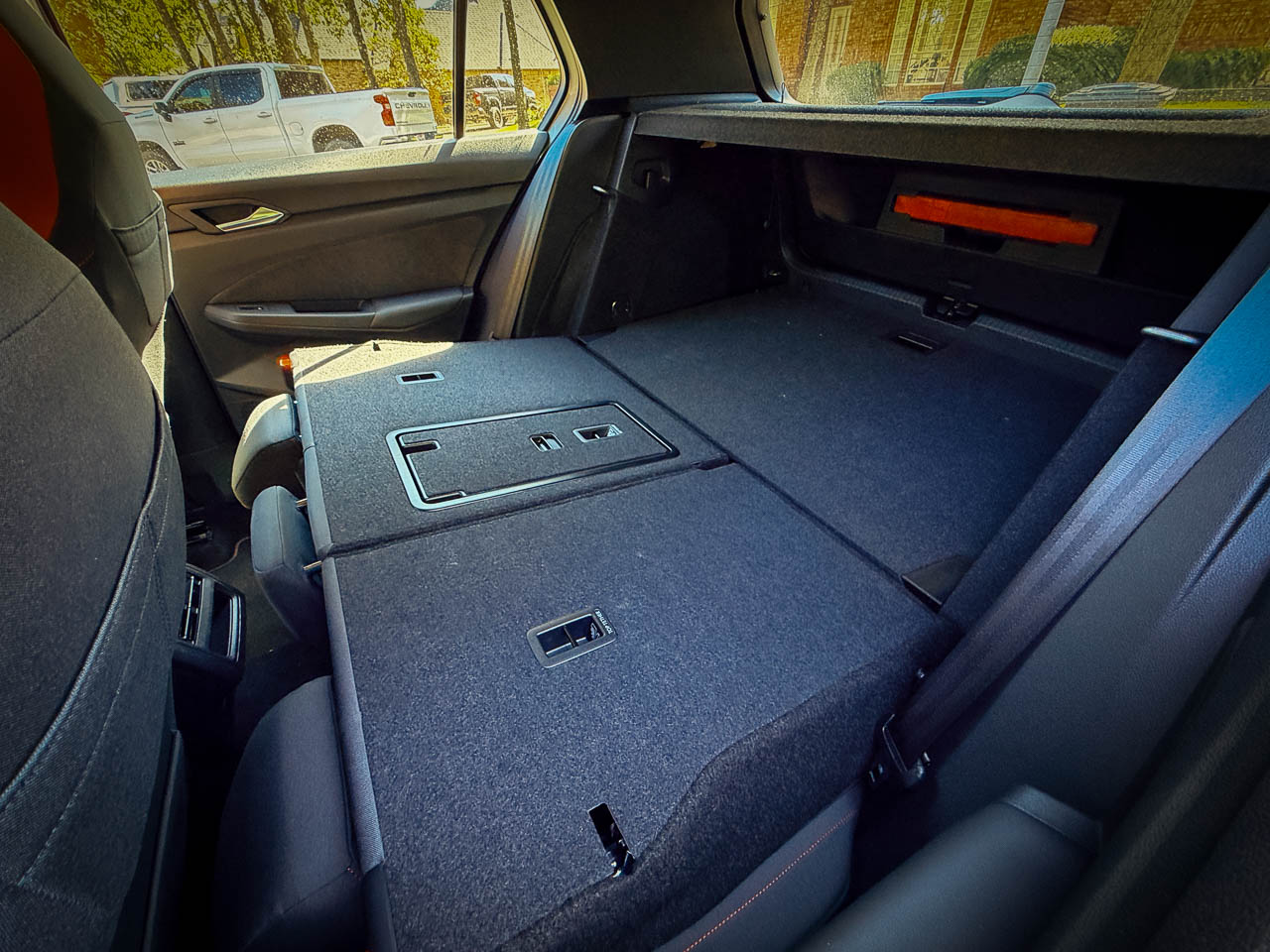
The rear door apertures open wide enough for easy entry, their weatherstripping creating a soft thud on close that communicates build quality without conscious attention. Small storage solutions appear throughout: door pockets sized for water bottles, a center console bin deep enough for phones and wallets, map pockets behind the front seats. For a vehicle this compact, the packaging efficiency represents thoughtful spatial engineering.
The Value Proposition
At $33,860 as tested, the GTI positions itself not against the Civic Type R or GR Corolla but adjacent to them. This is strategic design territory. Volkswagen occupies the space where daily usability and driving engagement overlap, ceding the performance margins to competitors who build cars requiring accommodation. The Type R demands you rise to its level. The GR Corolla rewards commitment with drama. The GTI meets you where you already are.
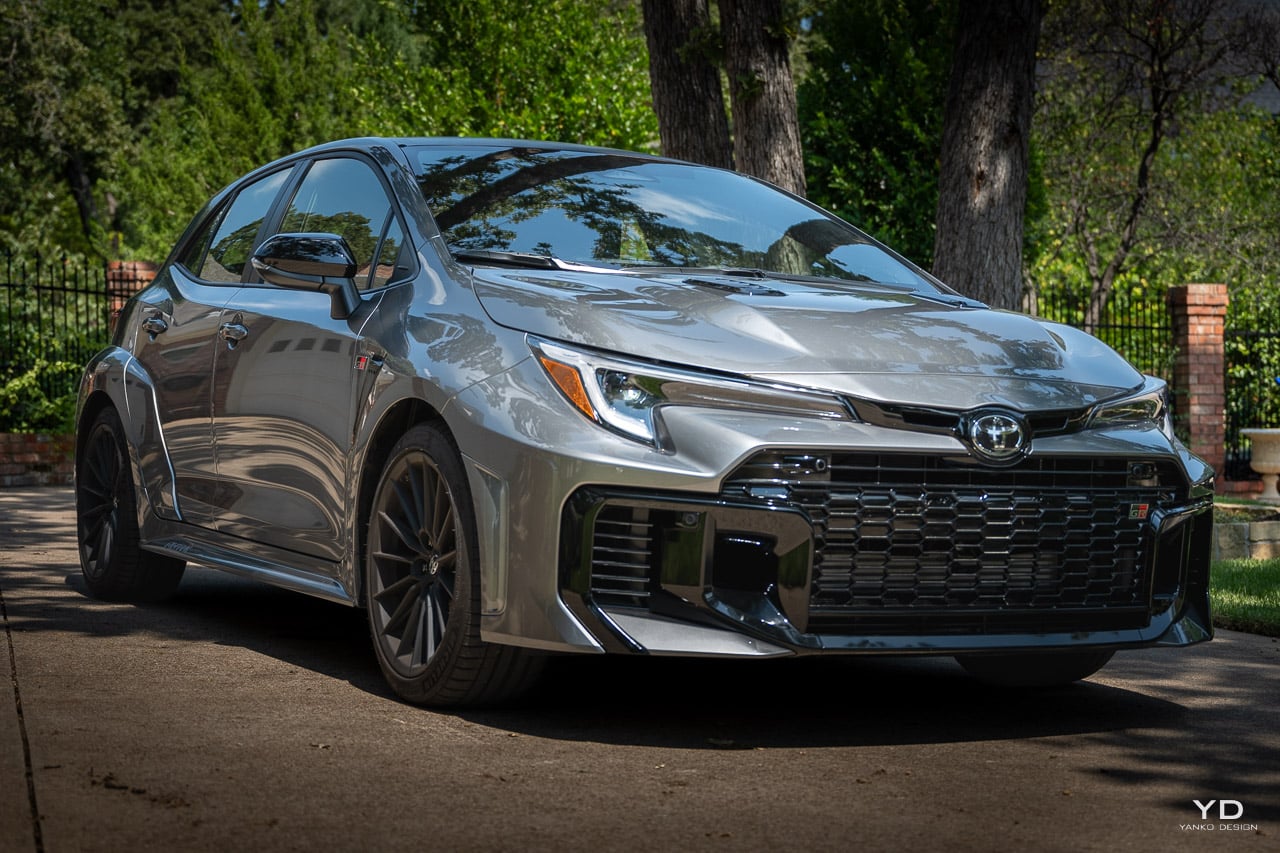
2025 Toyota GR Corolla Premium Manual Review
The four-year bumper-to-bumper warranty and two years of included maintenance read as confidence in the object’s longevity, not as purchase incentives. This is the rarest positioning in contemporary automotive design: a performance car priced for accessibility that does not apologize for what it excludes. The GTI excludes excess. That exclusion is the product.
Resolution: Why This Is Our Car of the Year
The 2025 Golf GTI represents something increasingly rare in automotive design: a product that knows what it is and refuses to pretend otherwise. The chassis does not apologize for being front-wheel drive. The power figures do not strain toward competition with larger engines. The interior does not disguise its price point behind aggressive styling that overpromises.
What remains is a vehicle that executes its intended purpose with precision that approaches elegance. The hot hatch formula, refined across four decades, arrives here in what may be its final evolved form before electrification rewrites the category’s rules entirely. For drivers seeking performance that integrates into daily life rather than demanding accommodation from it, the GTI presents an argument for restraint that carries more conviction than any competitor’s argument for excess.
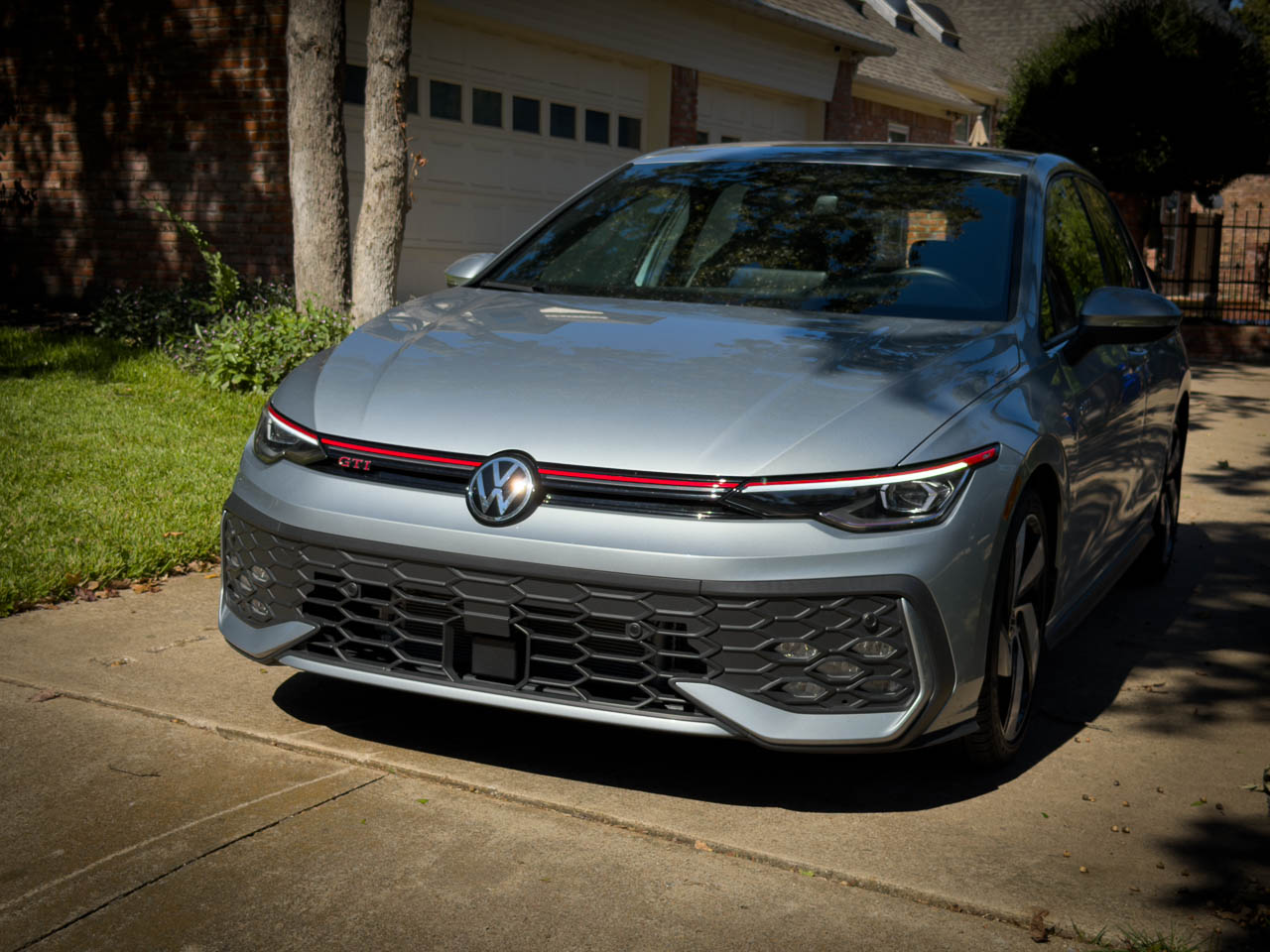
The 2025 Volkswagen Golf GTI is Yanko Design’s 2025 Car of the Year and earns our Editor’s Choice Award because it answers the question that matters: can a performance car be finished?
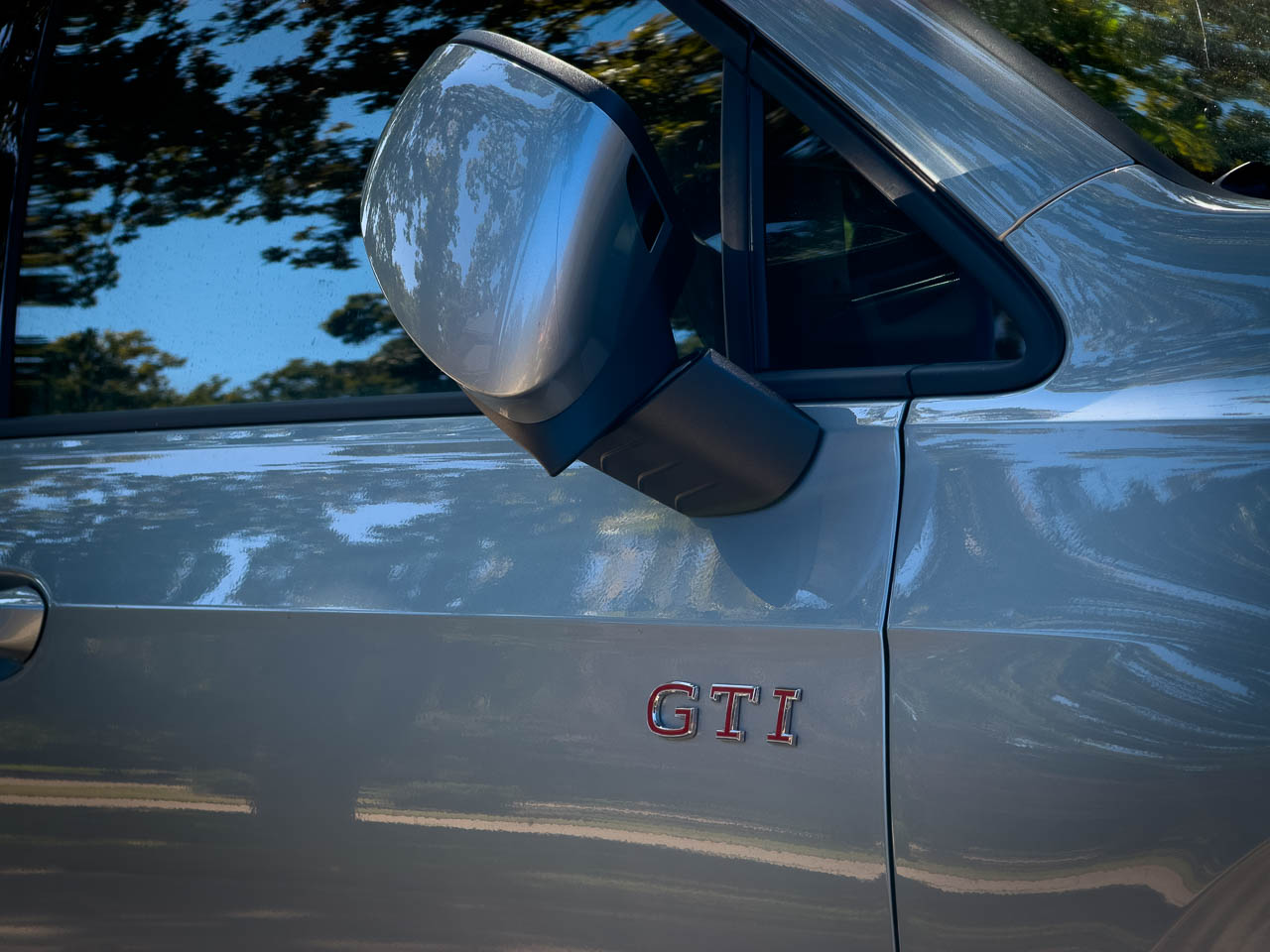
Yes. This is what finished looks like. Not the absence of ambition, but the presence of conviction. Volkswagen built the GTI they intended to build: complete, coherent, and resolved. In the final years before electrification rewrites every assumption about what a driver’s car can be, this is the closing argument for internal combustion restraint.
The award goes to the car that knew when to stop.
SHARE