You know that feeling when you see a design concept that makes you go “wait, is this for real?” That’s exactly what happened when I came across Novasis, a floating platform project by designer Mohsen Laei that just won the Grand Prix Architecture and Innovation Award for the Sea 2025. And honestly? It’s not just another futuristic pipe dream. This thing might actually change how we think about living with our oceans.
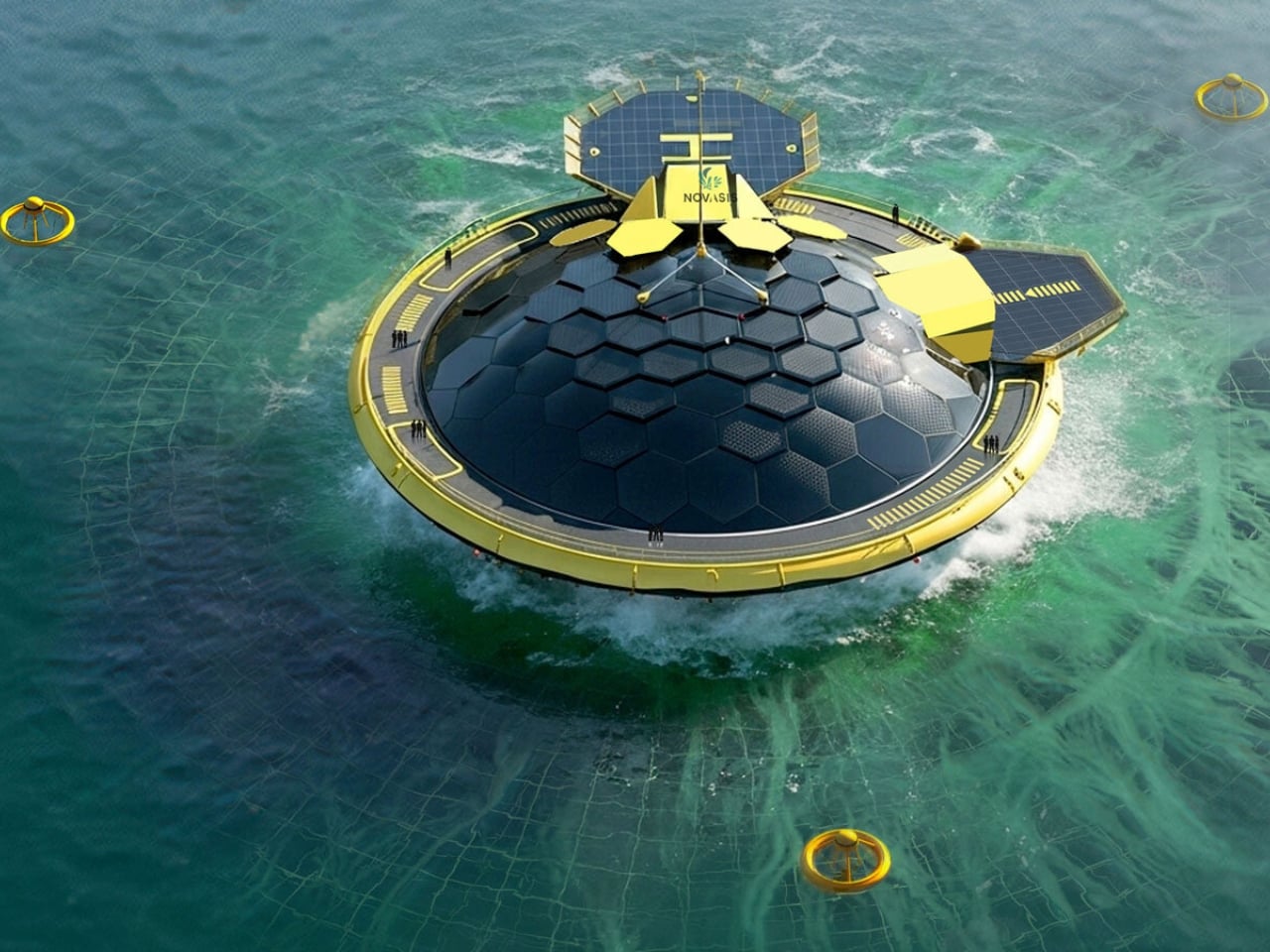
Here’s what makes Novasis so compelling. It’s a scalable floating structure that tackles three massive problems at once: climate change, resource scarcity, and marine ecosystem collapse. Unlike those dystopian visions of humans abandoning land because we’ve wrecked it, this platform is designed for genuine coexistence with the ocean. It cultivates algae on a massive scale, produces renewable energy, creates freshwater, and helps restore marine life, all while being modular, recyclable, and energy independent.
Designer: Mohsen Laei
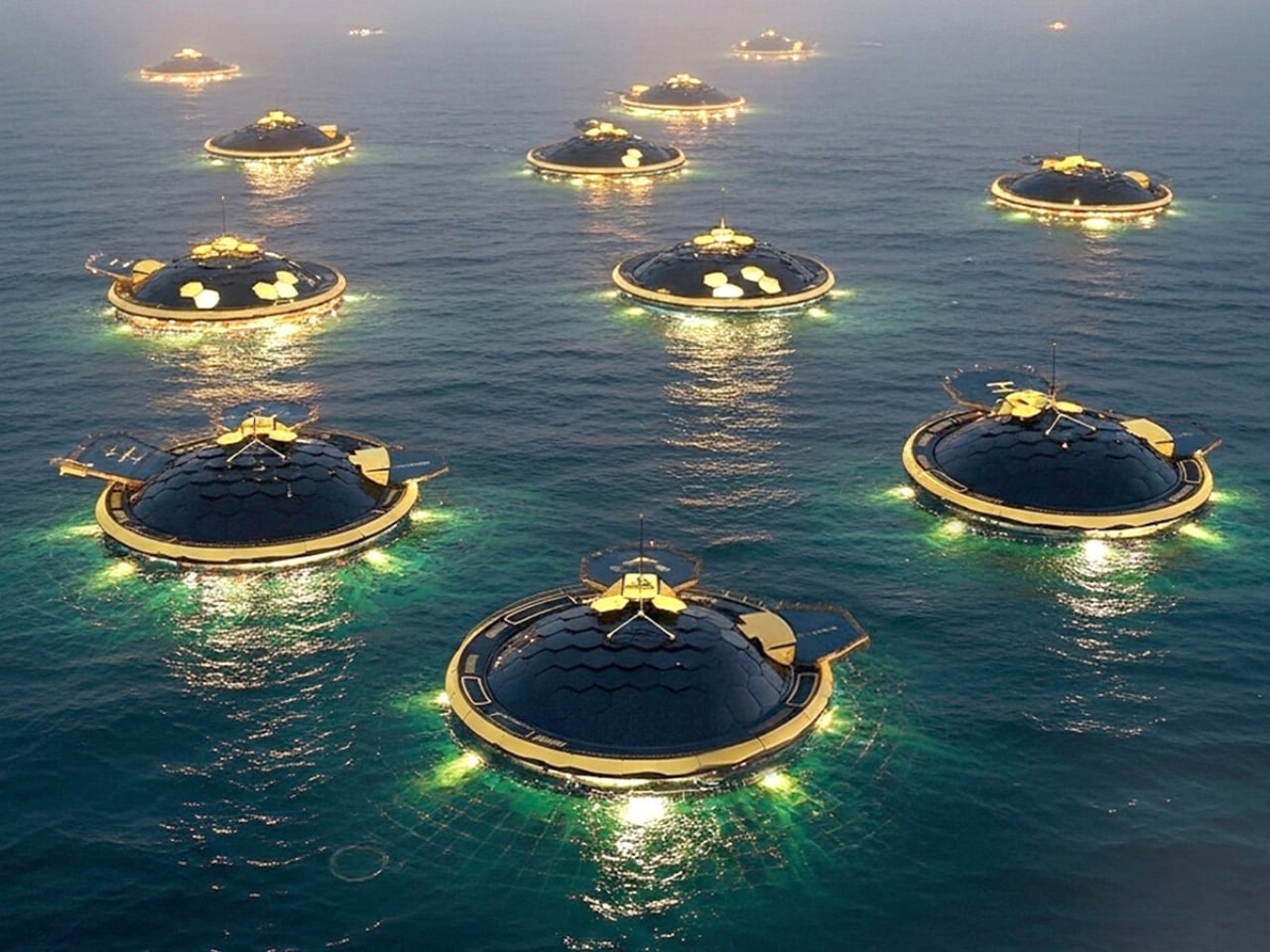
Let’s talk about the algae part, because it’s actually the star of the show. The platform uses floating and submerged nets made from recycled PET to grow both macro and microalgae. Why does this matter? Algae is ridiculously versatile. It can be turned into biofuel, food supplements, pharmaceuticals, and even carbon-neutral materials. Plus, algae cultivation naturally absorbs carbon dioxide from the atmosphere, making this a genuinely climate-positive system. We’re talking about a design that doesn’t just minimize harm but actually reverses it.
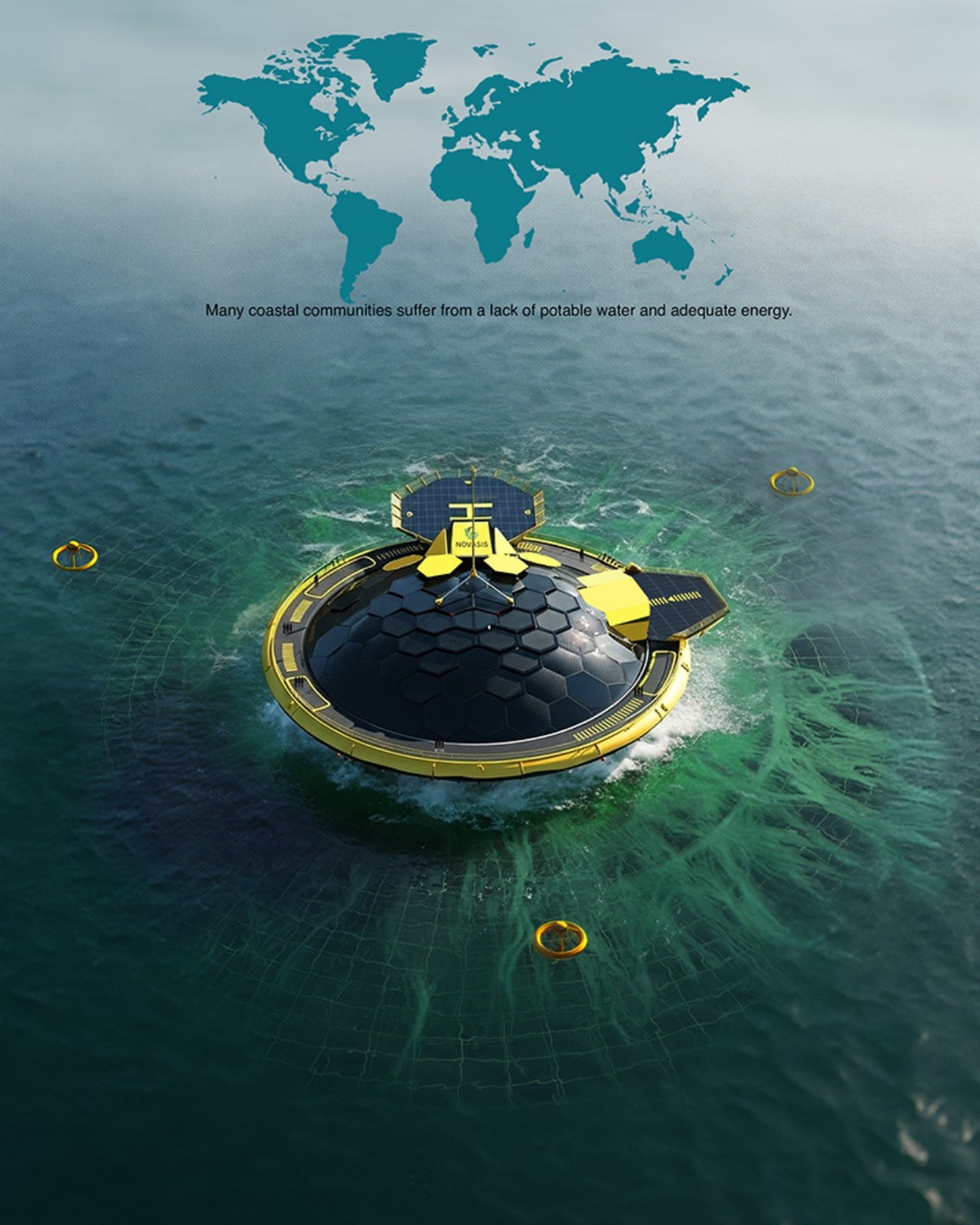
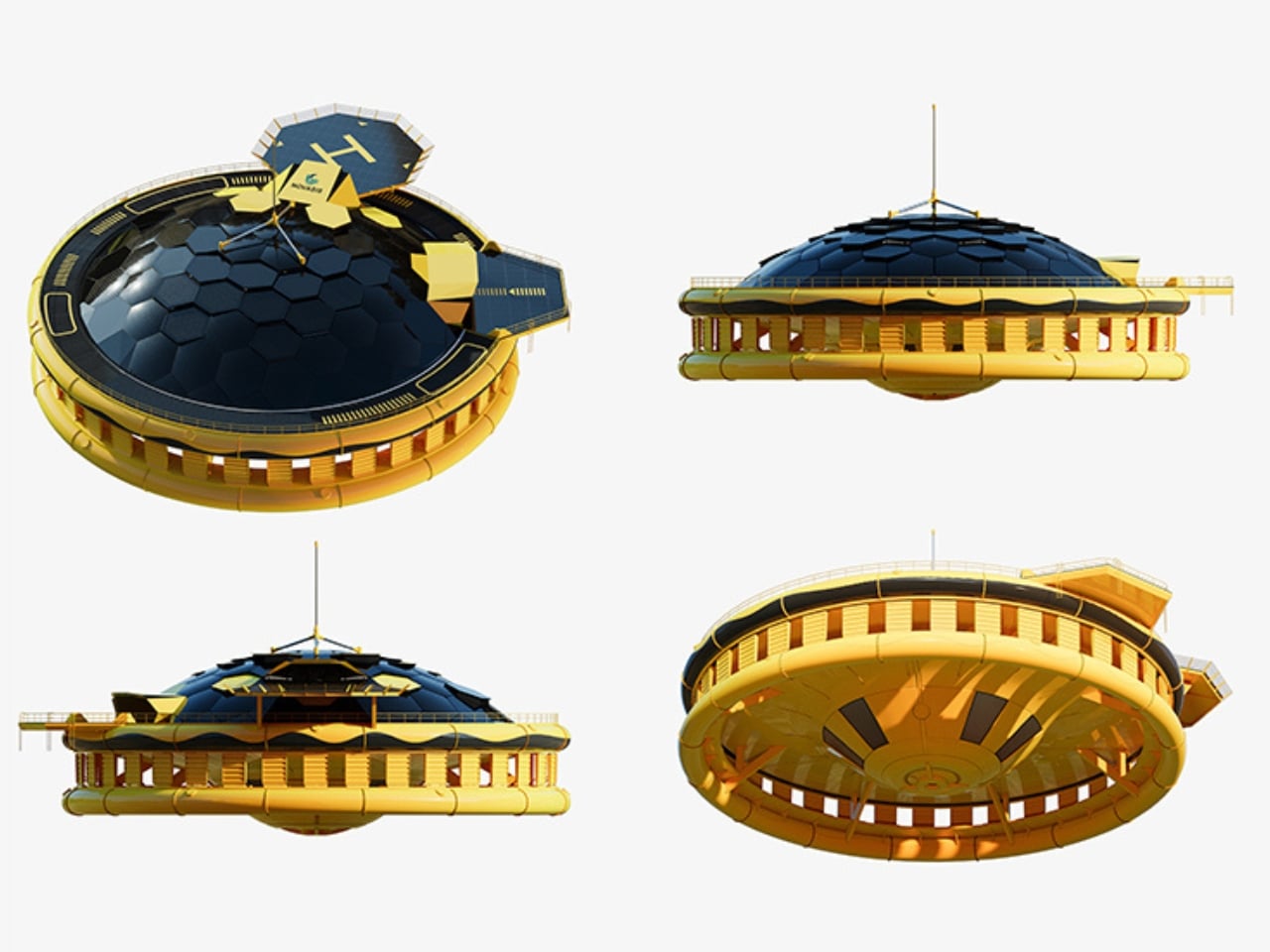
The structure itself is stunning in a practical way. Picture a circular floating platform with a central dome and perimeter walkway that organizes movement across the space. It’s designed to support research facilities, recreational areas, and even habitation. Freshwater gets produced through rainwater harvesting combined with solar and wave-powered desalination, meaning the whole thing functions as a self-sufficient ecosystem. No need to pipe in resources from mainland infrastructure.
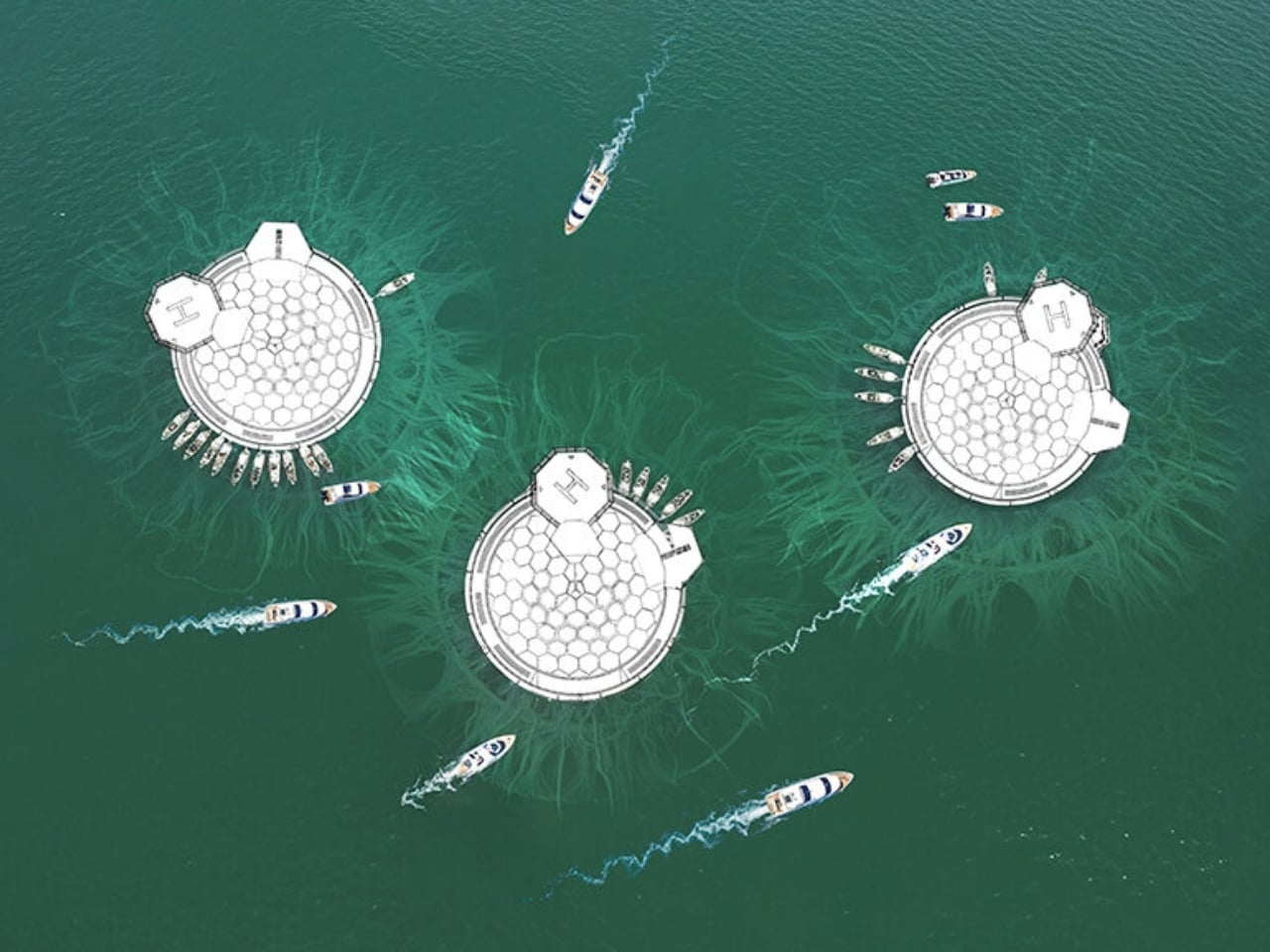
What I find most exciting about Novasis is how it reimagines what “development” can look like in coastal and open-ocean contexts. Traditional marine construction tends to be either extractive (oil rigs, commercial fishing) or leisure-focused (luxury resorts, cruise ships). This platform flips that script entirely. It’s designed to be revenue-generating through biomass production and renewable energy, making it economically viable without requiring grants or subsidies.
Laei isn’t new to ambitious ocean-based concepts either. Back in 2021, he proposed Wind Island, another floating structure that combined wind, water, and solar power with residential and research spaces. That project used flag-like blades around a central tower to capture wind energy while creating shade and cooling for the platform below. You can see the evolution of his thinking from that earlier concept to Novasis, where the focus has sharpened on ecosystem restoration and practical resource production.
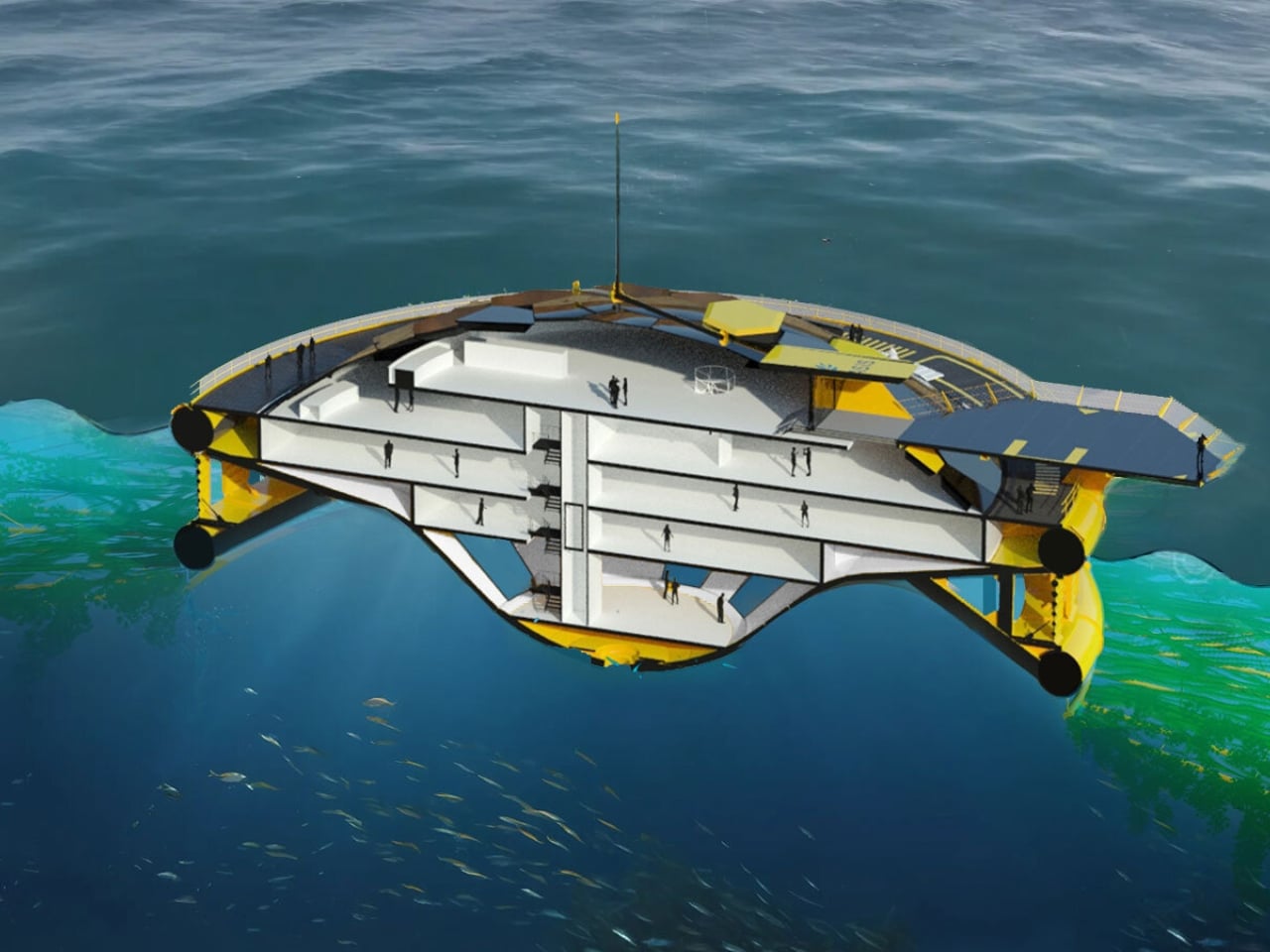
The timing couldn’t be more relevant. Floating solar farms have been gaining traction as a renewable energy solution, particularly because they preserve land for other uses and can actually help clean nutrient-polluted water. But most floating renewable projects focus on just one function. Novasis integrates multiple systems into one cohesive platform, which makes it far more resilient and useful.
Critics might call this concept too ambitious or unrealistic, but I’d argue we’re past the point where playing it safe makes sense. Our oceans are warming, acidifying, and losing biodiversity at terrifying rates. Coastal cities face rising seas and freshwater shortages. We need solutions that are as complex and interconnected as the problems we’ve created. Novasis offers exactly that: a model for how humans might actually contribute to ocean health rather than just taking from it.
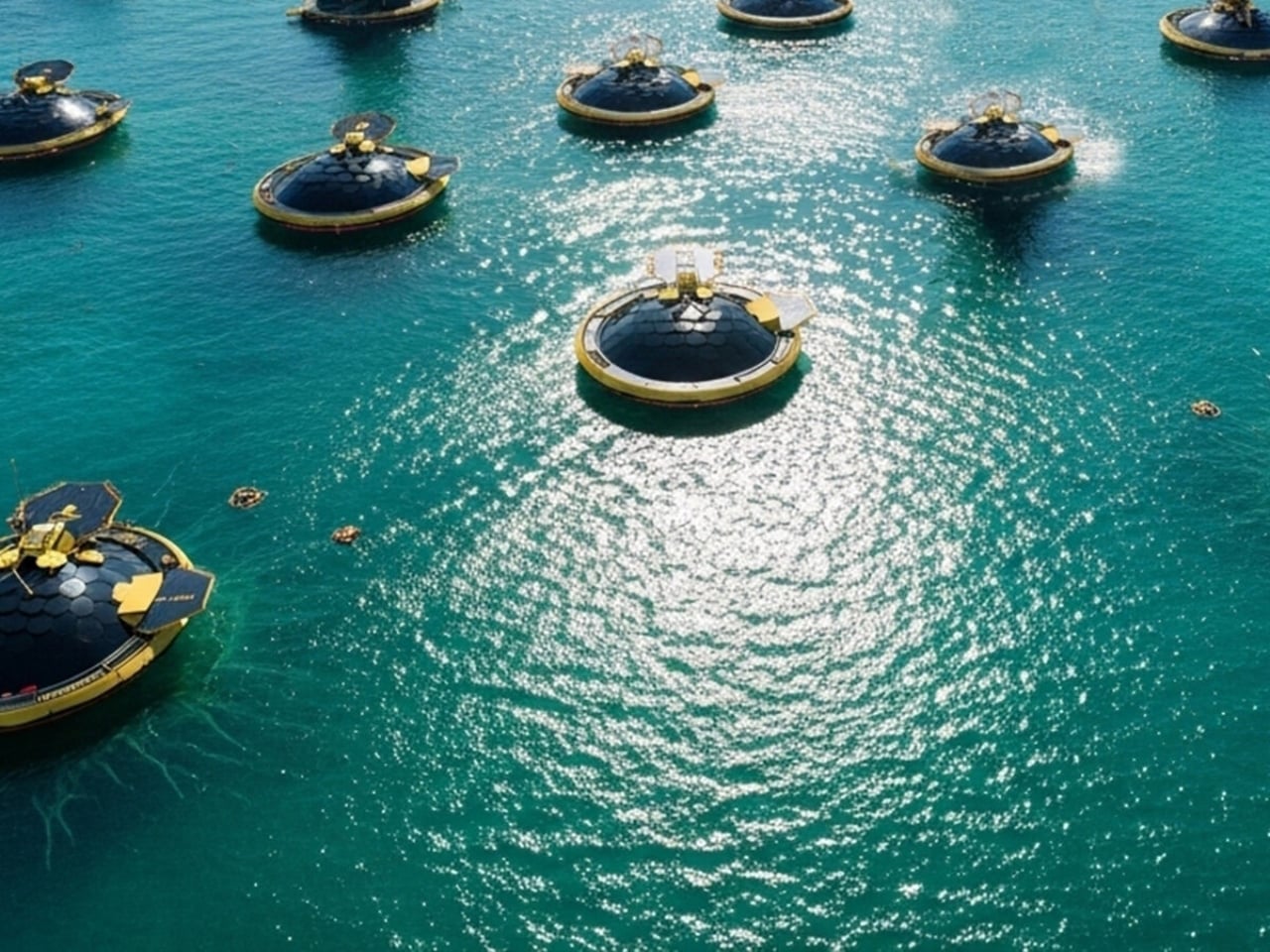
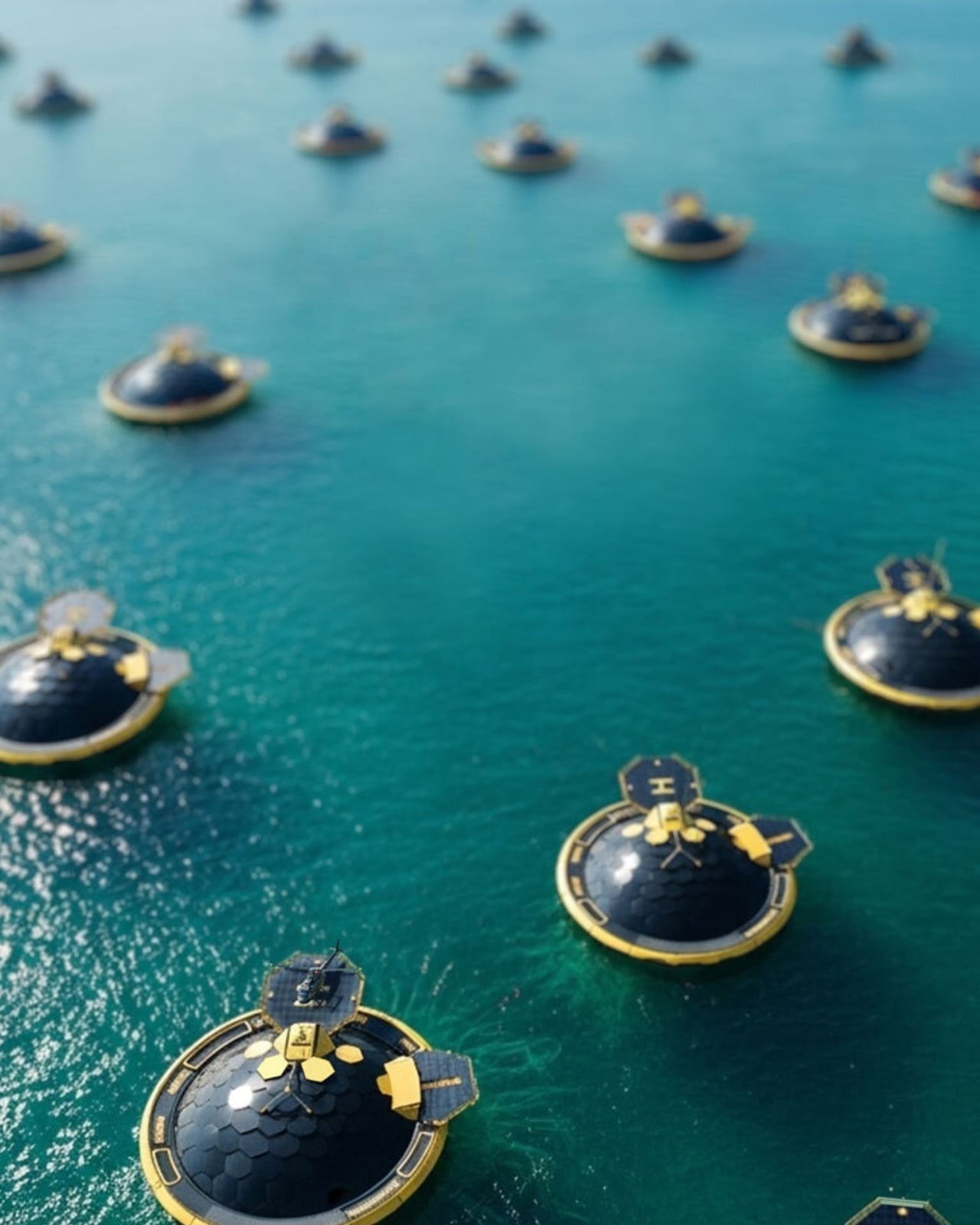
The best part? Because the system is modular, it can scale up or down depending on location and need. Small coastal communities could deploy a single unit. Larger installations could connect multiple platforms into floating networks. The design adapts rather than demanding a one-size-fits-all approach.
I’m genuinely curious to see where this goes. Will we see a working prototype in the next few years? Will governments and private investors recognize the potential here? For now, Novasis stands as proof that design can be both beautiful and functionally revolutionary, that we can build infrastructure that heals rather than harms. And in a world that desperately needs both hope and practical solutions, that feels like something worth getting excited about.
SHARE