Shoehorns have been around for centuries, and their design has barely moved. Most are anonymous strips of plastic or metal that live behind closet doors and rarely see daylight unless someone’s wrestling with a stiff new pair of shoes. They do one job, they do it acceptably, and then they disappear. It’s a category where function was solved long ago, and form has been cheerfully overlooked ever since.
That neglect is the starting point for DROP, a concept prototype that treats the shoehorn as both a sculptural object and an emotional one. The goal isn’t to make it work better but to make it something you’d actually want to live with. That’s a harder problem, and it leads somewhere more interesting than a redesigned grip or a slightly longer handle.
Designer: Alexander Matyuk
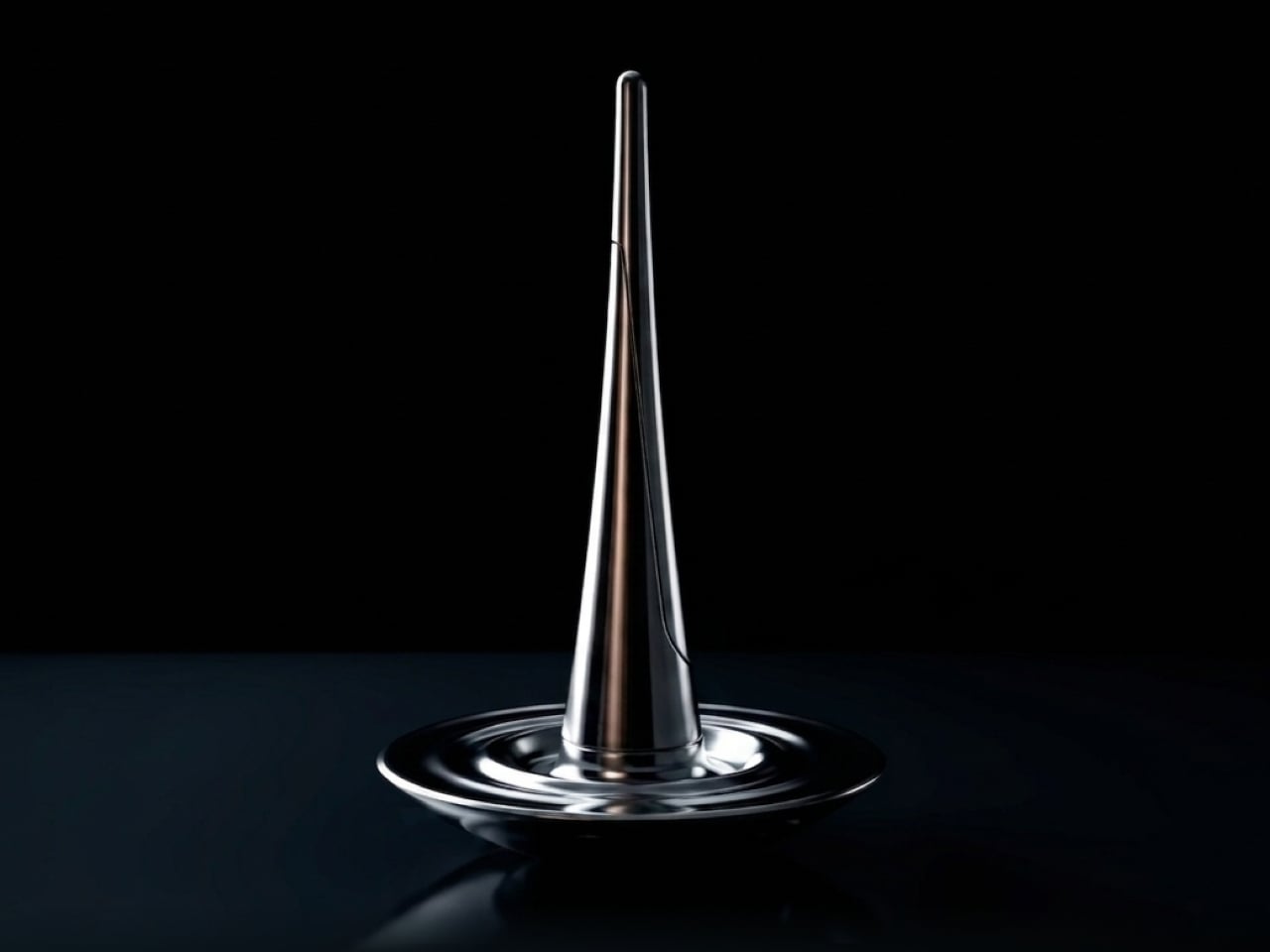

The concept draws from a very specific moment in nature: the instant a water droplet meets a surface. That brief, almost elusive state between motion and stillness became a static form. The tall conical body represents the droplet at the moment of impact, and the shallow curved base beneath traces the ripples spreading outward. It’s a frozen movement given a permanent material shape.
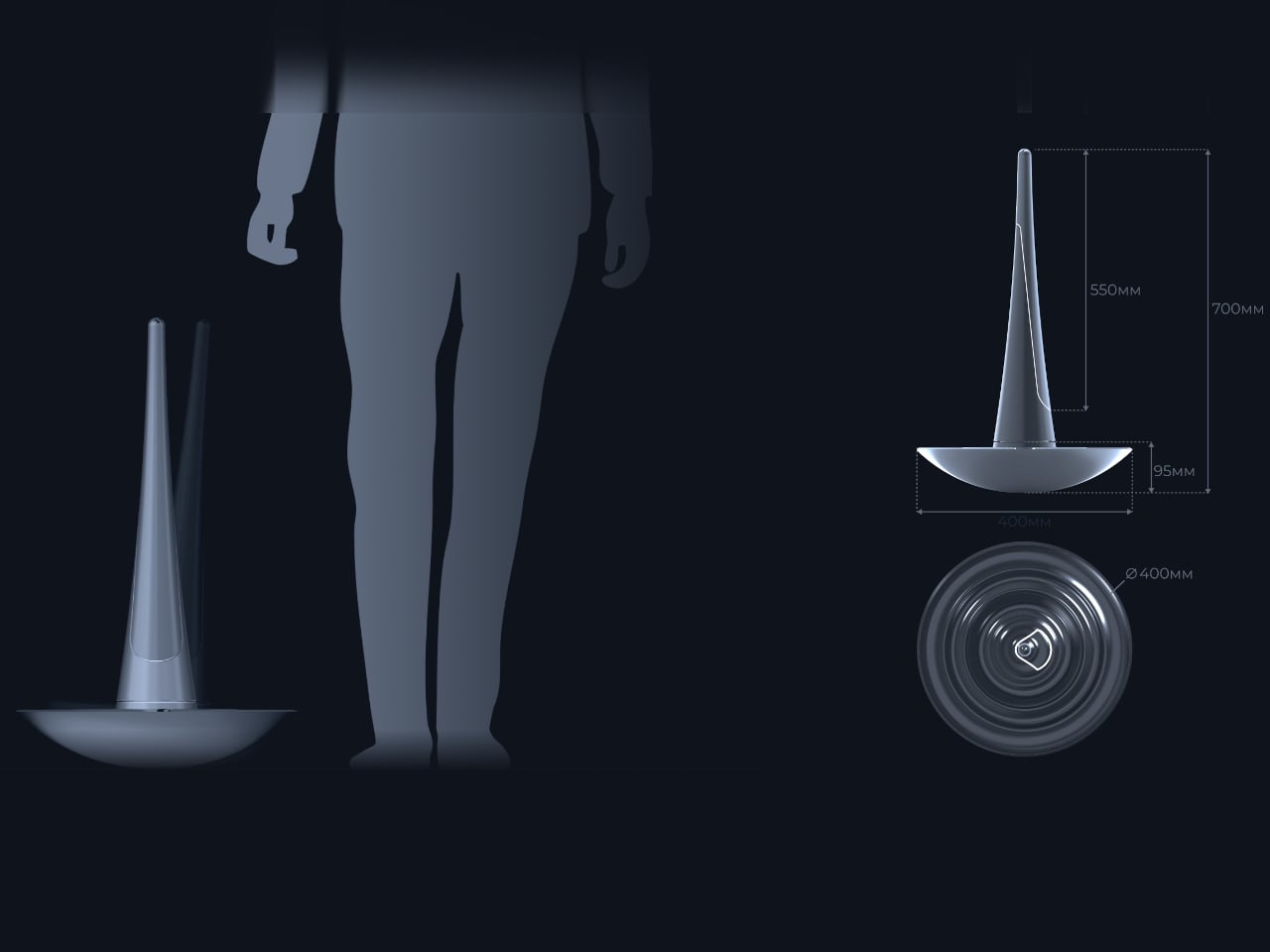
The lead-weighted internal base concentrates mass low enough that DROP behaves like a roly-poly toy: tilt it, push it, set it at an angle, and it returns upright on its own. That self-righting character turns each use into a quiet interaction. The shoehorn responds to each nudge, rocks gently, then steadies itself. For something usually treated as a passive object, that responsiveness is unexpectedly engaging.
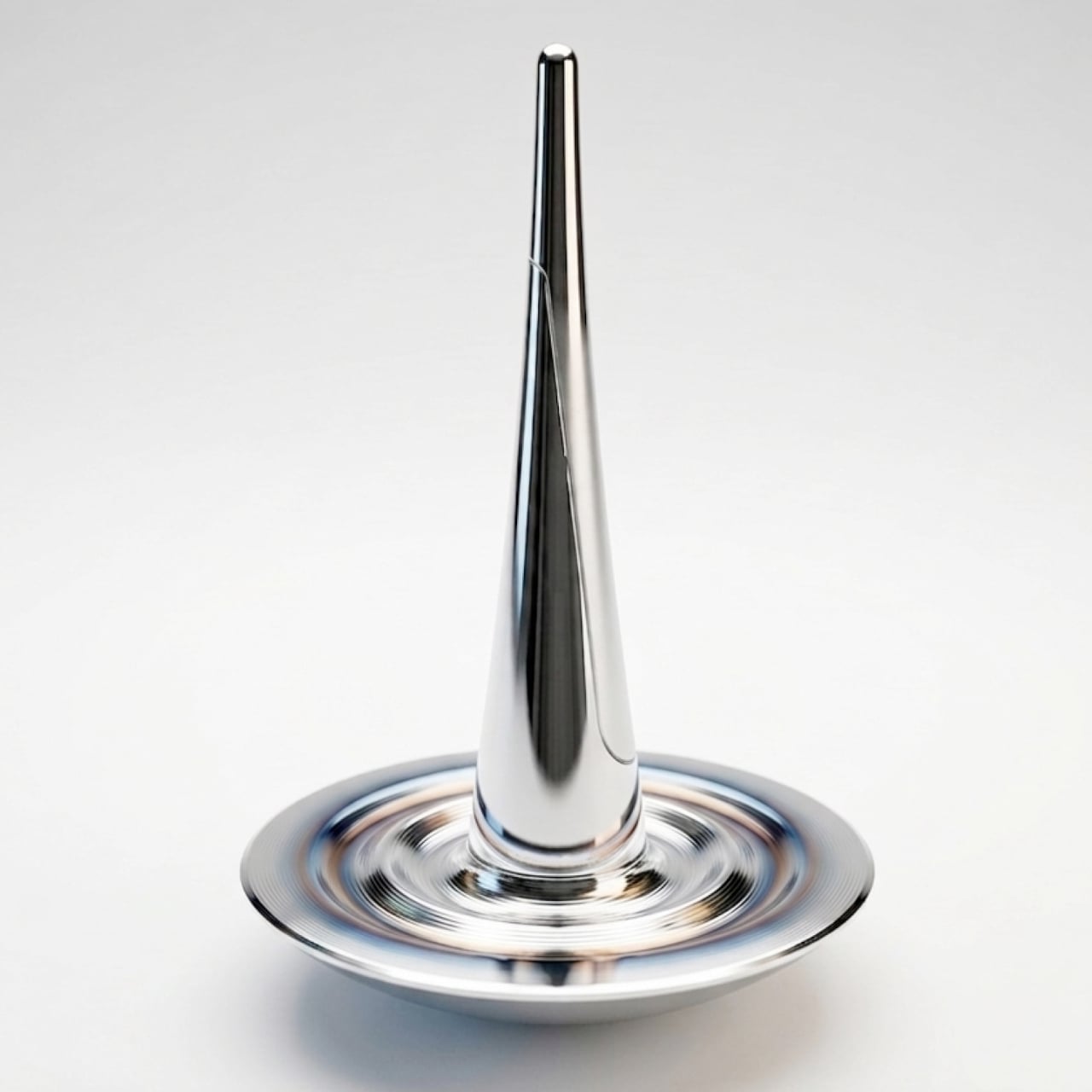
The curved shoehorn blade extends from the conical body, ready when needed. The design stands between 550mm and 700mm tall, firmly in long-handled territory. That height means you can ease your heel into a shoe without bending, which matters in a narrow entryway, for older users, or for anyone whose back has had enough by the time they’re heading out.
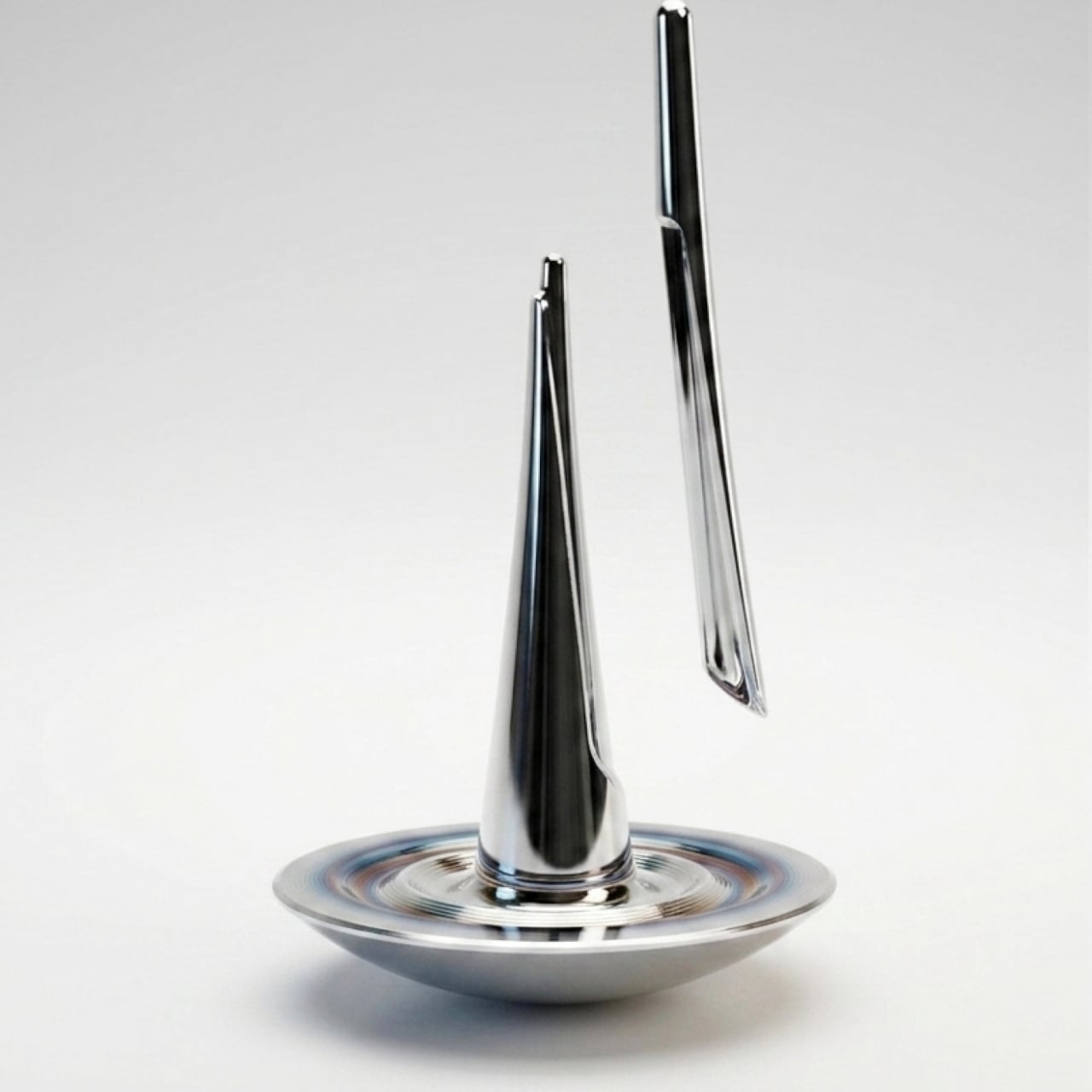
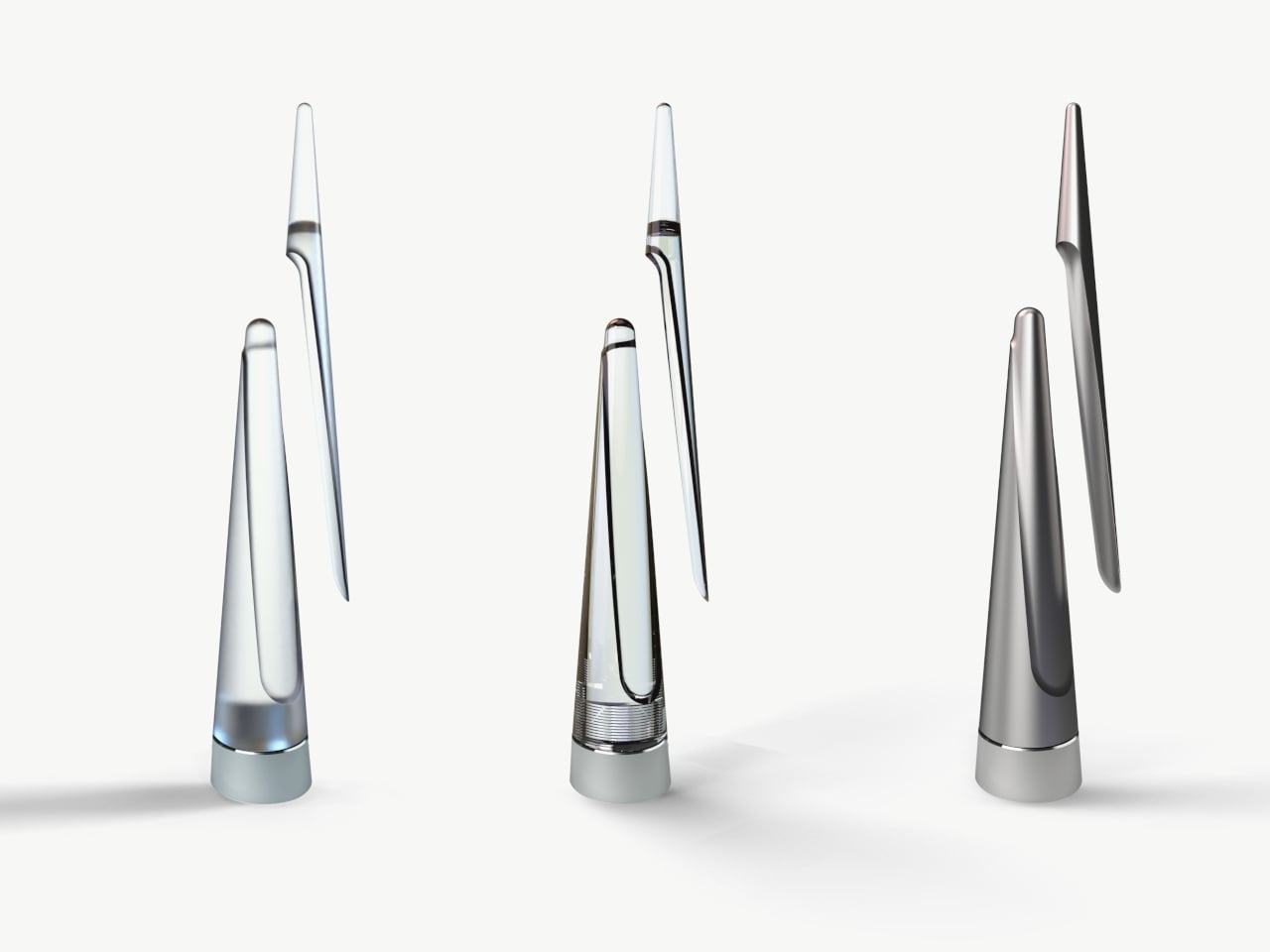
The designer envisions two production tiers. The premium version uses an aluminum alloy body with a lead-weighted internal base, produced through casting or milling. A mass-market version uses composites or polymers to bring the form to a lower price point. Three finish options appear in the concept: a clear glass-like version, a dark smoked variation, and a matte brushed metal option.
A shoehorn that stands on its own without a hook or bracket is already more practical than most. DROP’s broad curved base and low center of gravity mean it doesn’t need to be stored. It can stay out near the door, part of the entry space, rather than an object to stash and inevitably forget about. The ripple-shaped base takes care of that stability by itself.
DROP treats a forgotten tool as a worthy subject for genuine craft and material thinking. Most entryways could use an object that earns its spot on the floor rather than hiding behind a door. The roly-poly mechanism, the water-inspired form, and the weighted base all quietly serve that same goal.