Every sawmill in the world produces it. Every furniture factory, every timber yard, every construction site that cuts wood leaves behind a pile of the stuff, and globally that adds up to hundreds of millions of tonnes of sawdust every year. Most of it gets burned for energy, which is a reasonable enough fate except that burning it releases back into the atmosphere all the carbon the tree spent decades pulling out of the air. It is a material that manages to be simultaneously everywhere and underused, treated as a combustion problem when it is, by the structural logic of its wood fibers, one of the more cooperative raw materials on earth. Firestarter cubes are made from it. Pykrete, the wood pulp and ice composite once proposed as an aircraft carrier hull material, relied on it.
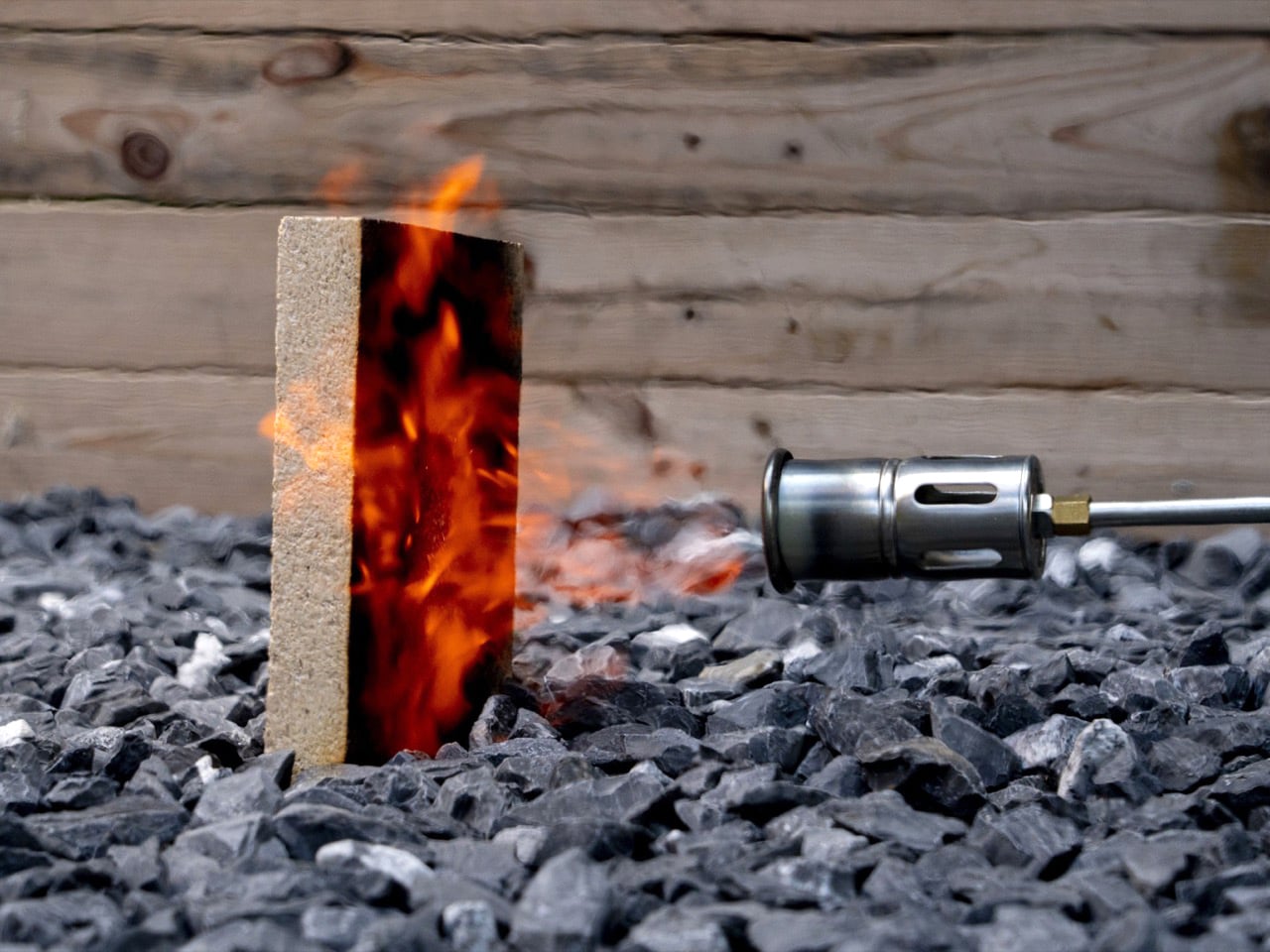
Researchers at ETH Zurich and Empa have now given sawdust another role entirely. Doctoral researcher Ronny Kürsteiner spent his thesis developing a process to bind sawdust particles with struvite, a colorless crystalline mineral composed of ammonium magnesium phosphate, using an enzyme derived from watermelon seeds to control how the crystals grow into the sawdust matrix. What comes out of the mold, after two days of cold-pressing and room-temperature drying, is a composite panel stronger in compression than spruce timber, capable of resisting a direct flame for more than three times as long as untreated wood, and fully recyclable at the end of its service life.
Designer: ETH Zurich
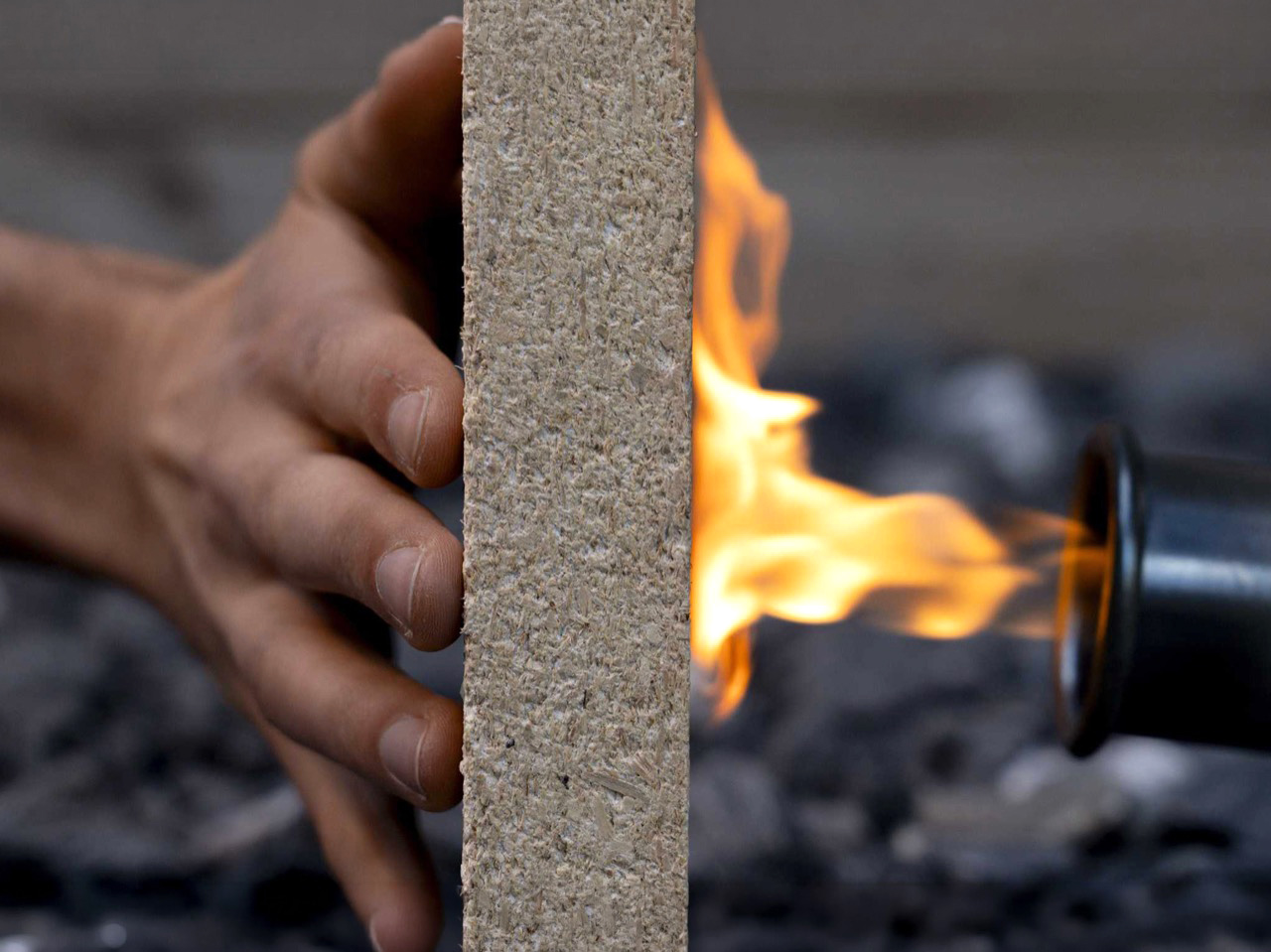
Struvite’s fire-retardant properties have been known for a while; the problem was always crystallization behavior. Conventional precipitation methods produce small, disorganized crystallites that can’t grip wood particles, which is why earlier attempts at this kind of composite fell apart mechanically. The watermelon seed enzyme controls nucleation, producing large interlocking crystals that physically fill the voids between sawdust particles. The binder content sits at 40% by weight. Panels are cold-pressed for two days and dried at room temperature, with no elevated curing conditions required.
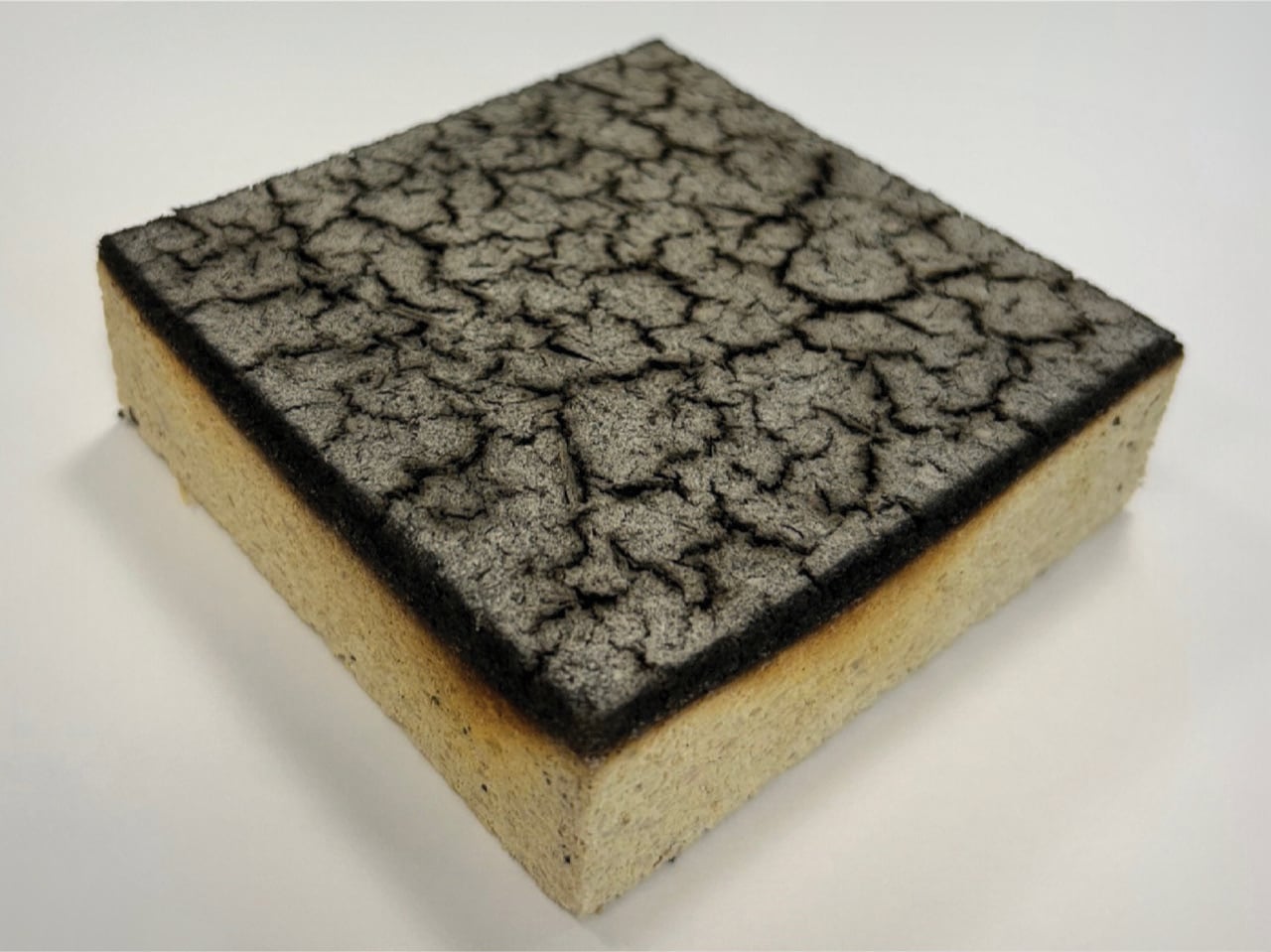
When heat reaches struvite, it decomposes and releases water vapor and ammonia, drawing energy from the surrounding environment. The non-combustible gases displace oxygen, starving the fire and accelerating surface charring; that char layer slows access to unburnt material underneath. Cone calorimeter tests clocked untreated spruce igniting at 15 seconds; the struvite composite takes 45 to 51 seconds. Initial projections put it in the same fire protection class as cement-bonded particleboard, the current default for interior partition applications, though full-scale tests are still pending. Grind the panels at end of life, heat them just above 100 degrees Celsius to release ammonia, and the components separate cleanly for reuse or redirect as phosphorus fertilizer.
SHARE