Most running shoes are Frankenstein jobs. Twenty, thirty pieces of fabric cut, stitched, layered, and glued together by human hands on a factory line. It’s been done that way for decades, and for the most part, nobody questioned it. On just did.
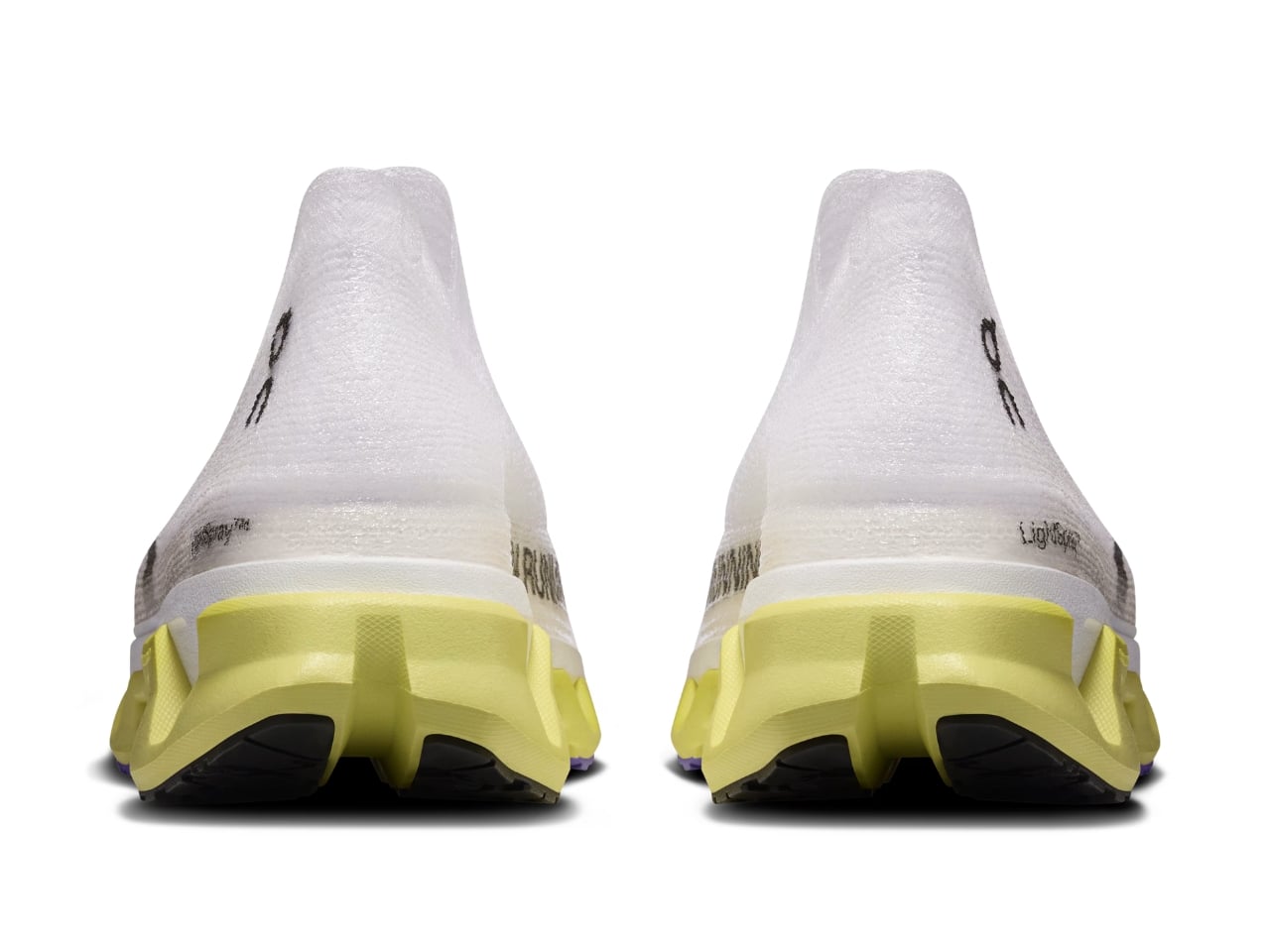
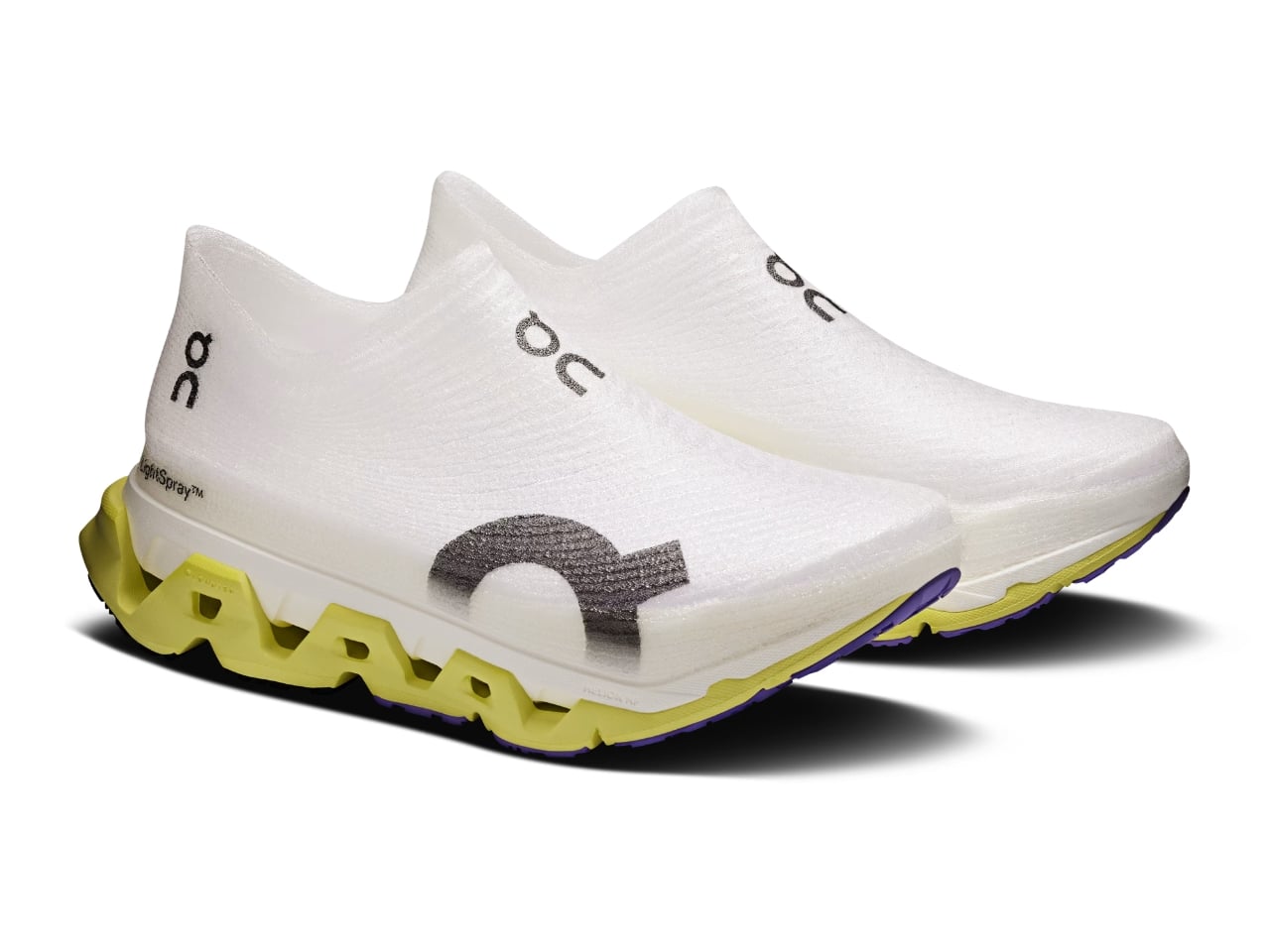
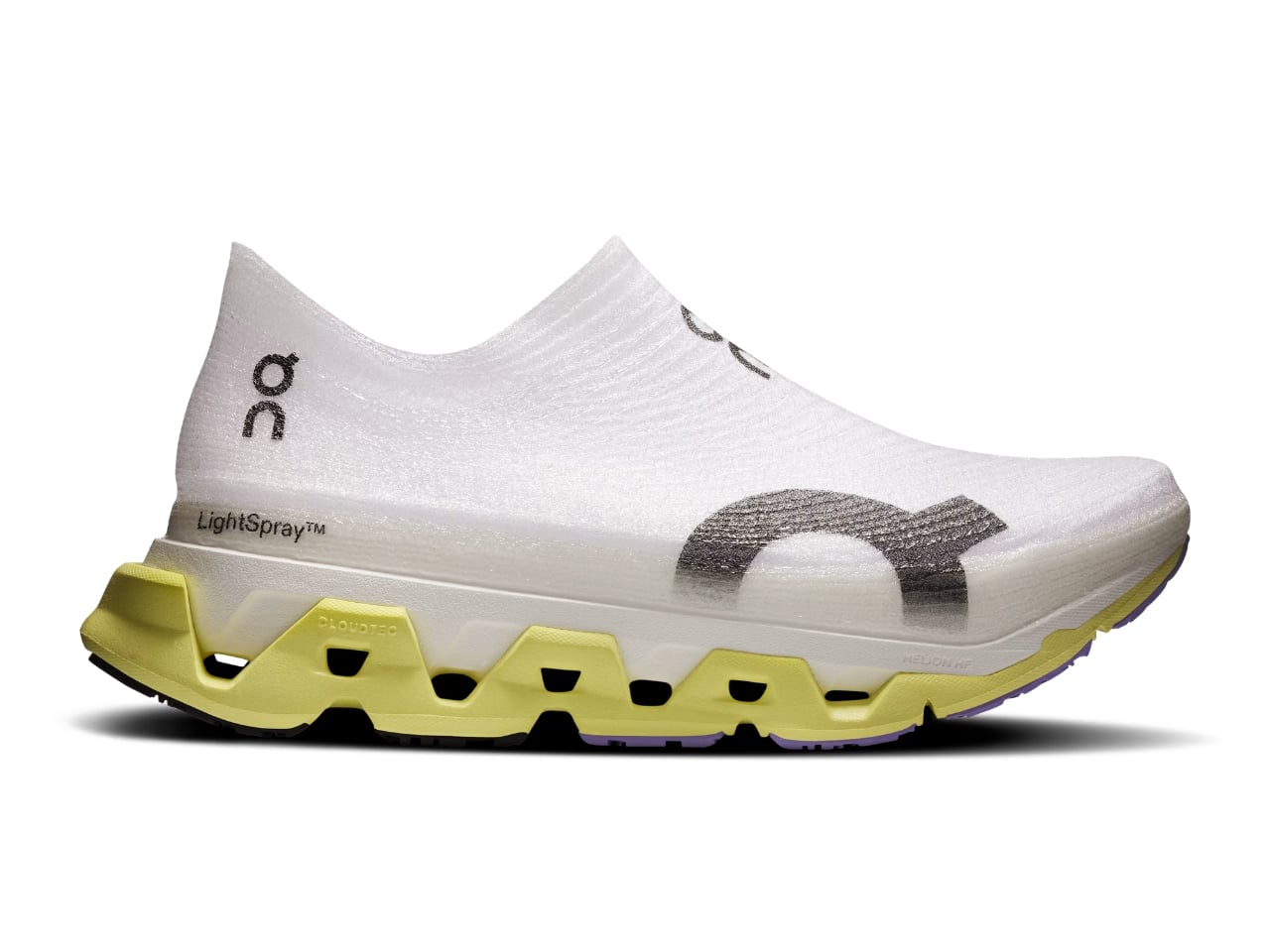
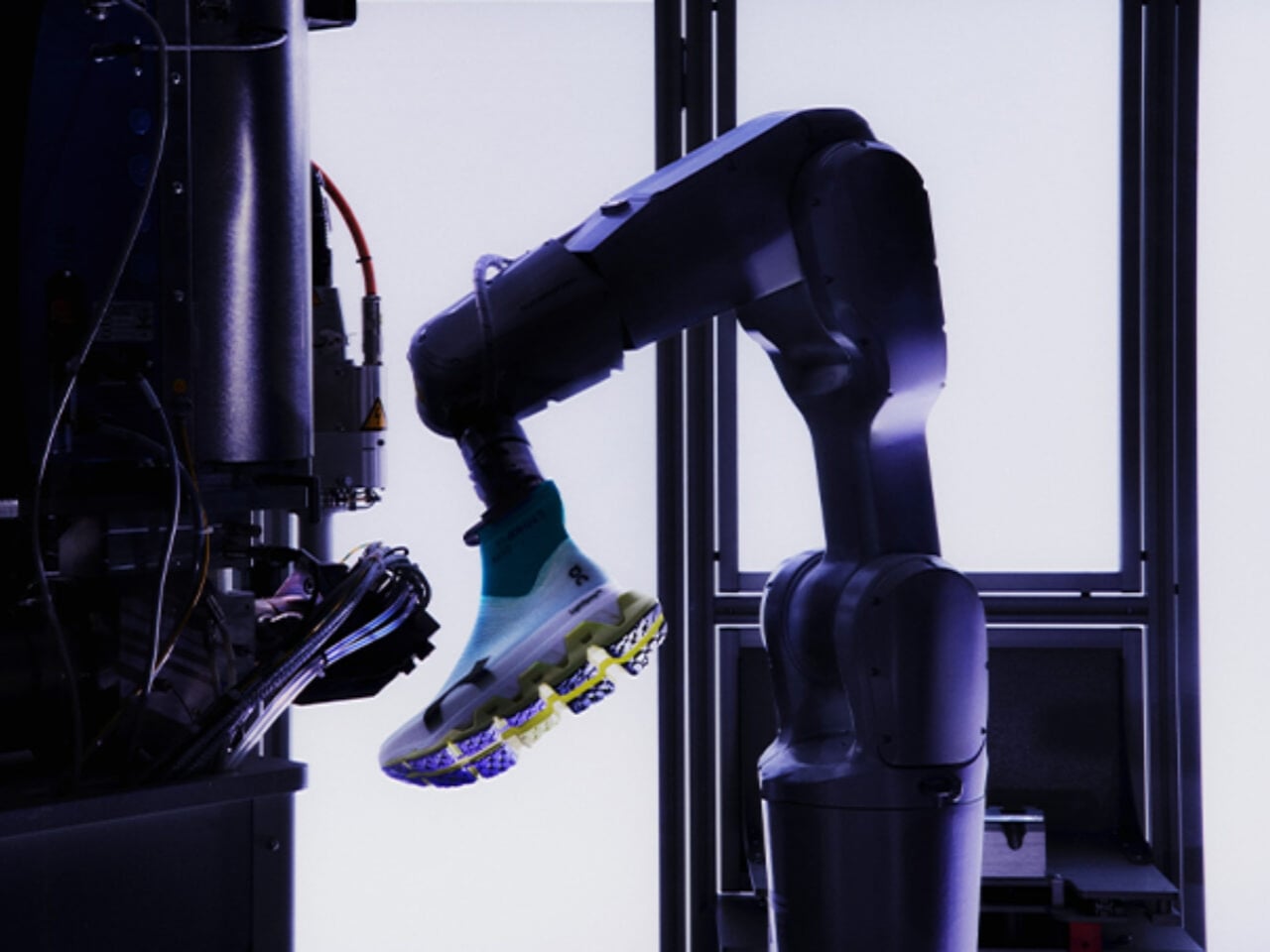
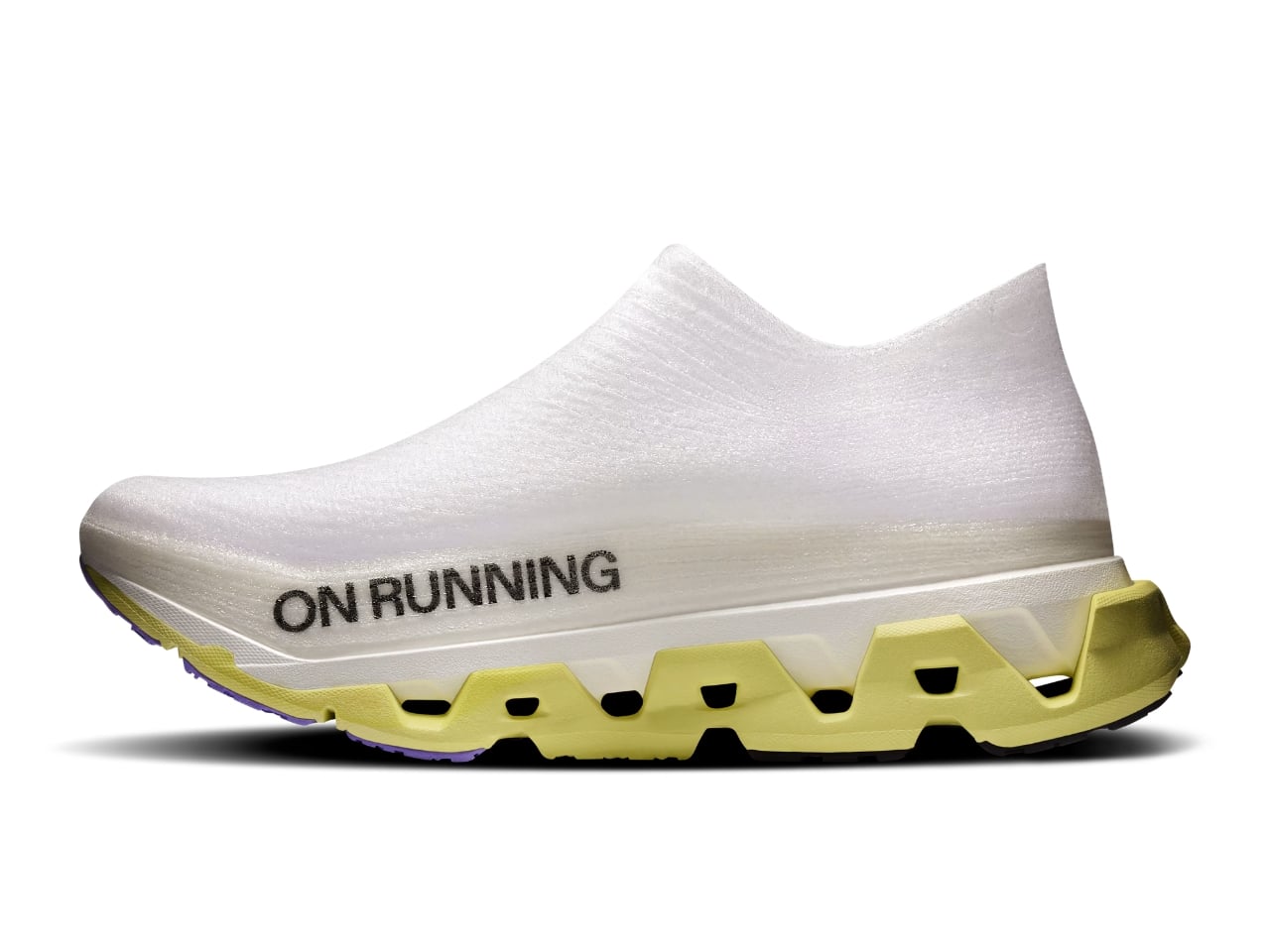
The Swiss brand’s new LightSpray Cloudmonster 3 Hyper doesn’t have a traditional upper. Instead, a robotic arm sprays a single continuous filament onto a foot-shaped mold, and in about three minutes, the entire upper is formed. No seams. No laces. No glue. The result bonds directly to the midsole through thermal fusing, and the whole shoe is made from just eight components. For context, a typical performance runner uses somewhere between 30 and 50. That’s not an incremental improvement. That’s a fundamentally different way to build a shoe.
Designer: On
On first debuted LightSpray in 2024, when marathon runner Hellen Obiri wore a prototype to win the Boston Marathon. Back then it was a single robotic unit in Zurich, a proof of concept more than a production method. Now the brand has opened a second factory near Busan, South Korea, housing 32 robots and boosting production capacity 30 times over. The technology has gone from lab curiosity to something you can actually buy, and that shift matters more than the shoe itself.
What makes the Cloudmonster 3 Hyper interesting as a design object is the tension between its upper and its sole. On top, you get this gossamer, almost skeletal spray-on structure that looks like it was grown rather than assembled. Below, there’s a massive stack of Helion HF hyper foam sitting on CloudTec cushioning geometry. Minimal above, maximal below. It’s a deliberate contrast, and it works visually in a way that most performance shoes don’t even attempt.
On co-founder Caspar Coppetti has said it’s what a shoe from Apple would look like, and while that comparison gets thrown around too loosely in consumer products, here it actually tracks. The Limelight/Bloom colorway, with its white upper, black branding, and yellow tooling, has that same kind of restrained confidence.
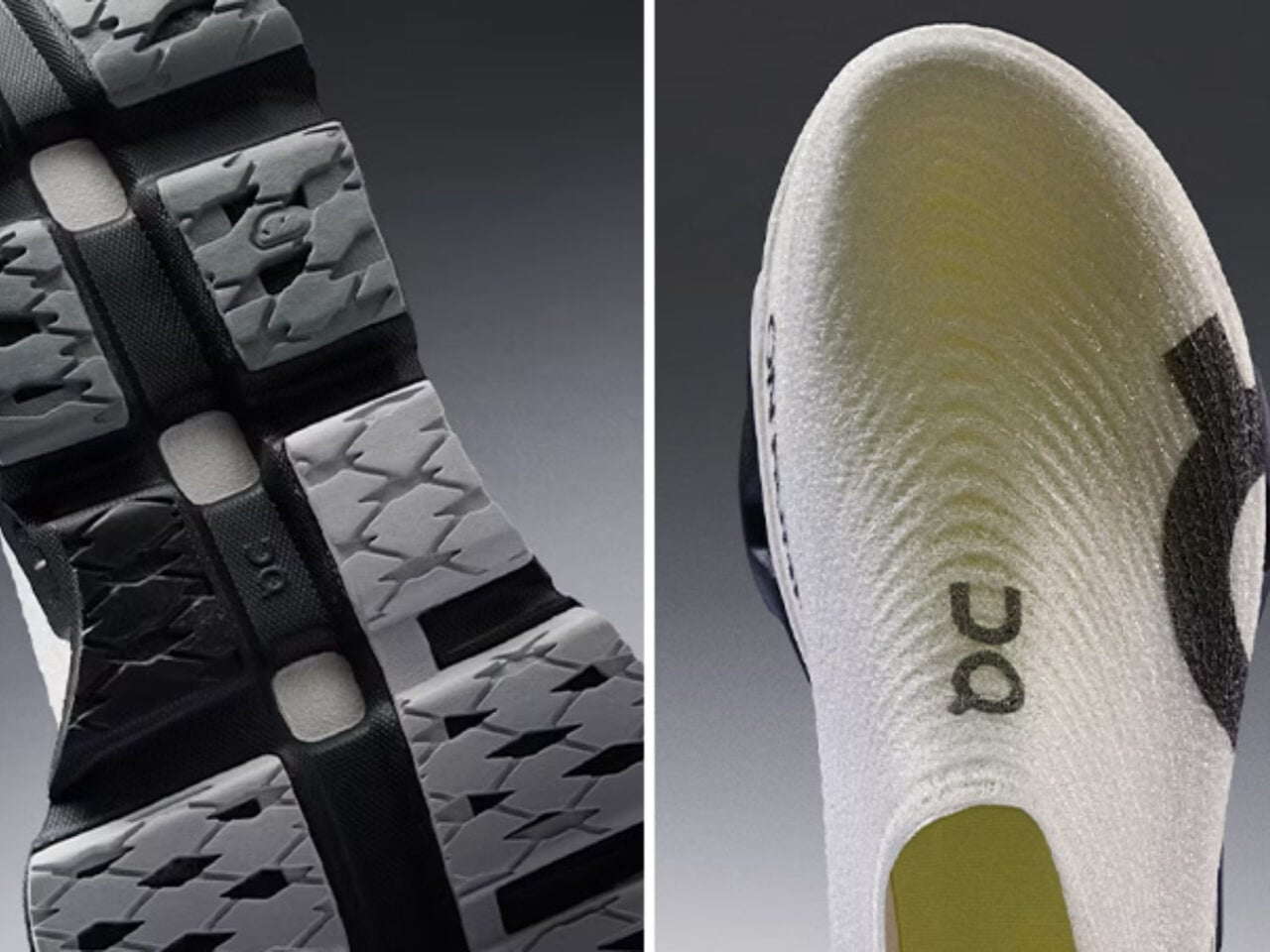
There are real performance implications, too. At 205 grams for a men’s US 8.5, it’s roughly 90 grams lighter than the standard Cloudmonster 3. That’s a significant gap for a max-cushion trainer. On deliberately skipped a carbon plate in the midsole, which is a choice that goes against the current arms race in performance footwear. The reasoning is sound: plates are great for race-day propulsion, but for training shoes built around long runs and high mileage, they can actually fatigue legs faster. The plateless design, combined with enhanced rocker geometry, is meant to keep your legs fresher over sustained efforts. It’s a shoe that asks you to trust the foam instead of the hardware.
The sustainability angle is worth noting without overstating. Eight components instead of dozens means less material waste and a simpler path to recyclability. On claims up to 75% lower CO₂ emissions for the upper compared to its other racing shoes. No running shoe is carbon-neutral, but the LightSpray approach at least moves in the right direction by simplifying what needs to be disassembled and reclaimed at end of life.
I do think there are legitimate questions about the laceless design. A form-fitting sprayed upper is a beautiful engineering solution, but it puts enormous pressure on the sock system and the structure itself to keep the foot locked down during dynamic movement. On includes an Elite Run Sock High Hyper with each pair, which is a smart acknowledgment that the shoe and sock need to function as a system. But runners with wider feet or higher arches should probably try these on before committing $280.
That price point is notable. It’s $90 more than the standard Cloudmonster 3 and $60 above the Cloudmonster 3 Hyper. You’re paying a premium for the LightSpray construction, and whether that premium is justified depends on how much you value the weight savings and the novelty of the technology. For some runners, that will be an easy yes. For others, the standard Hyper at $220 might be the smarter buy.
What excites me about this release isn’t really the shoe, though. It’s what it represents. The footwear industry has spent years competing on foam compounds and plate configurations, essentially tweaking the same fundamental construction methods. On is asking a different question entirely: what if the way we build the shoe is the innovation? A robot, a mold, three minutes, eight pieces. That’s a compelling answer, and I suspect the rest of the industry is paying very close attention.
The LightSpray Cloudmonster 3 Hyper drops March 5 in North America through On’s website and retail stores, with a global release following on April 16. It’s priced at $280.