Most home nebulizers are loud, beige boxes that look like they escaped from a hospital supply closet. Kids with asthma sit next to them for breathing treatments, staring at dials and vents while a motor wheezes. These devices are designed around clinical priorities rather than home life, so they end up bulky, noisy, and visually jarring on bedside tables, which does nothing to help a child already anxious about another round of therapy.
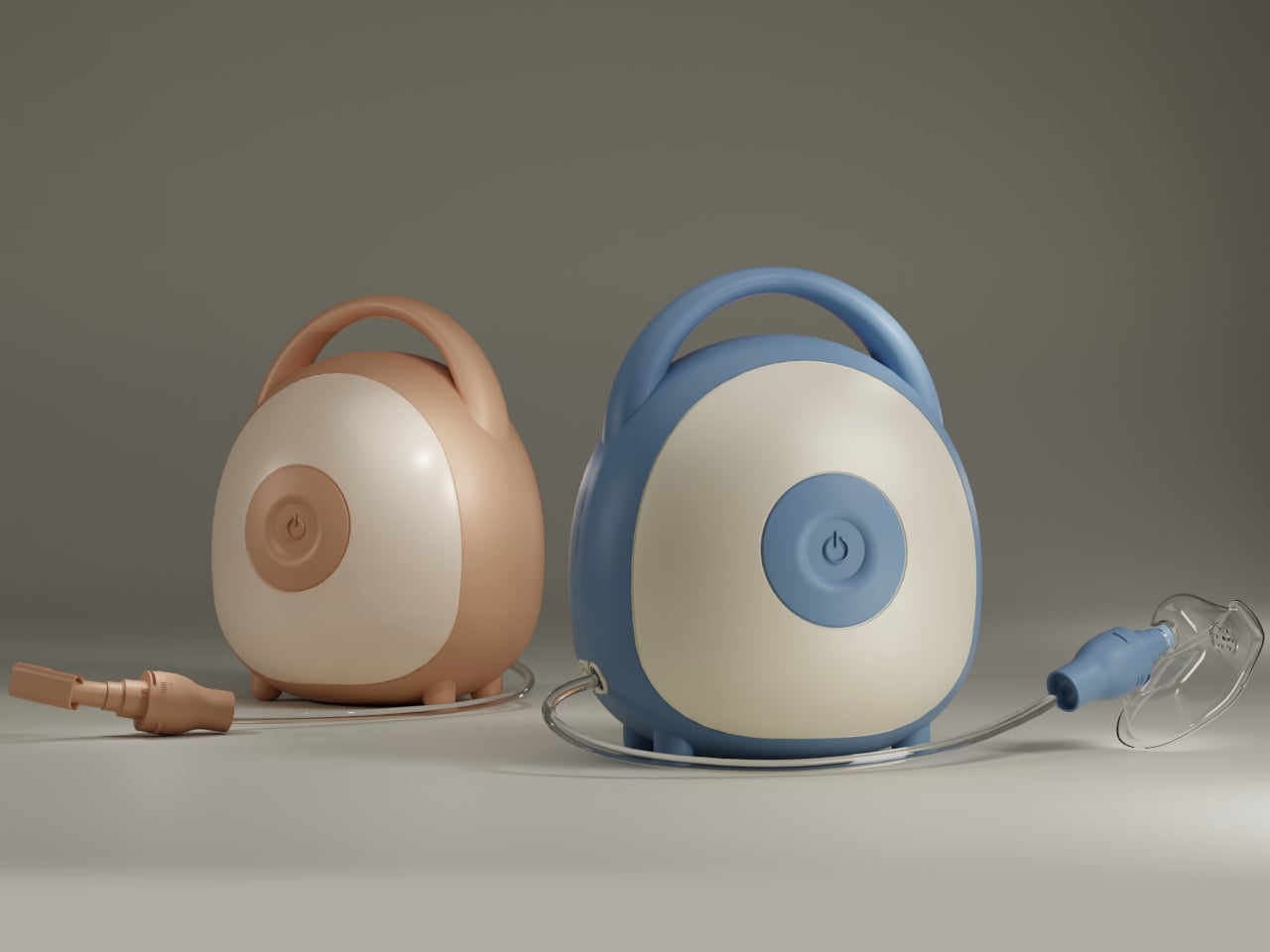
Breevo is a concept that tries to reframe the home nebulizer as a calm, approachable object. It keeps the familiar compressor mechanism inside but wraps it in a soft, rounded shell with an integrated handle and a single front power button. The goal is to make therapy feel less like plugging into a machine and more like interacting with a friendly household gadget that happens to deliver aerosol medication.
Designer: Neha Pawar
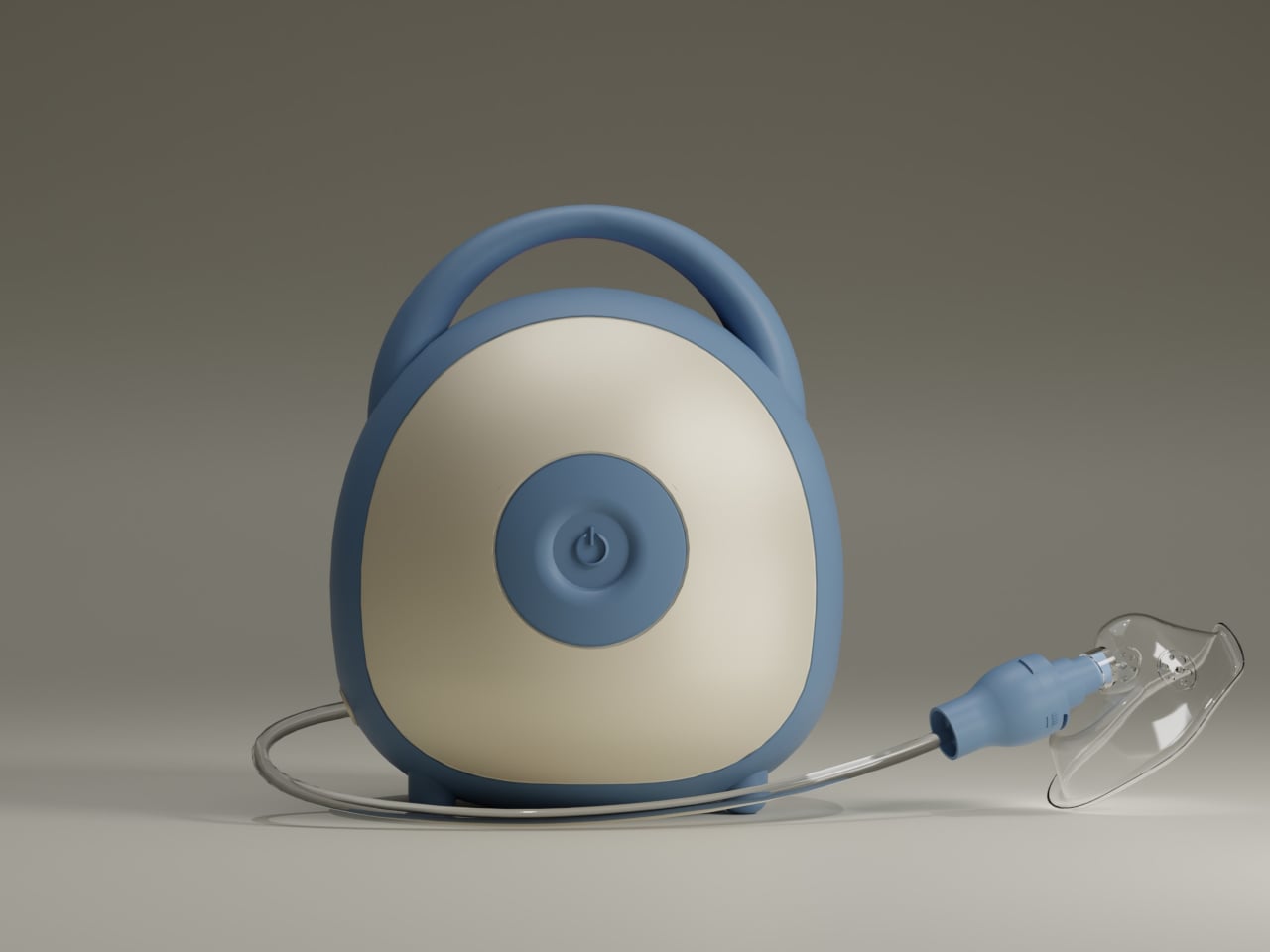
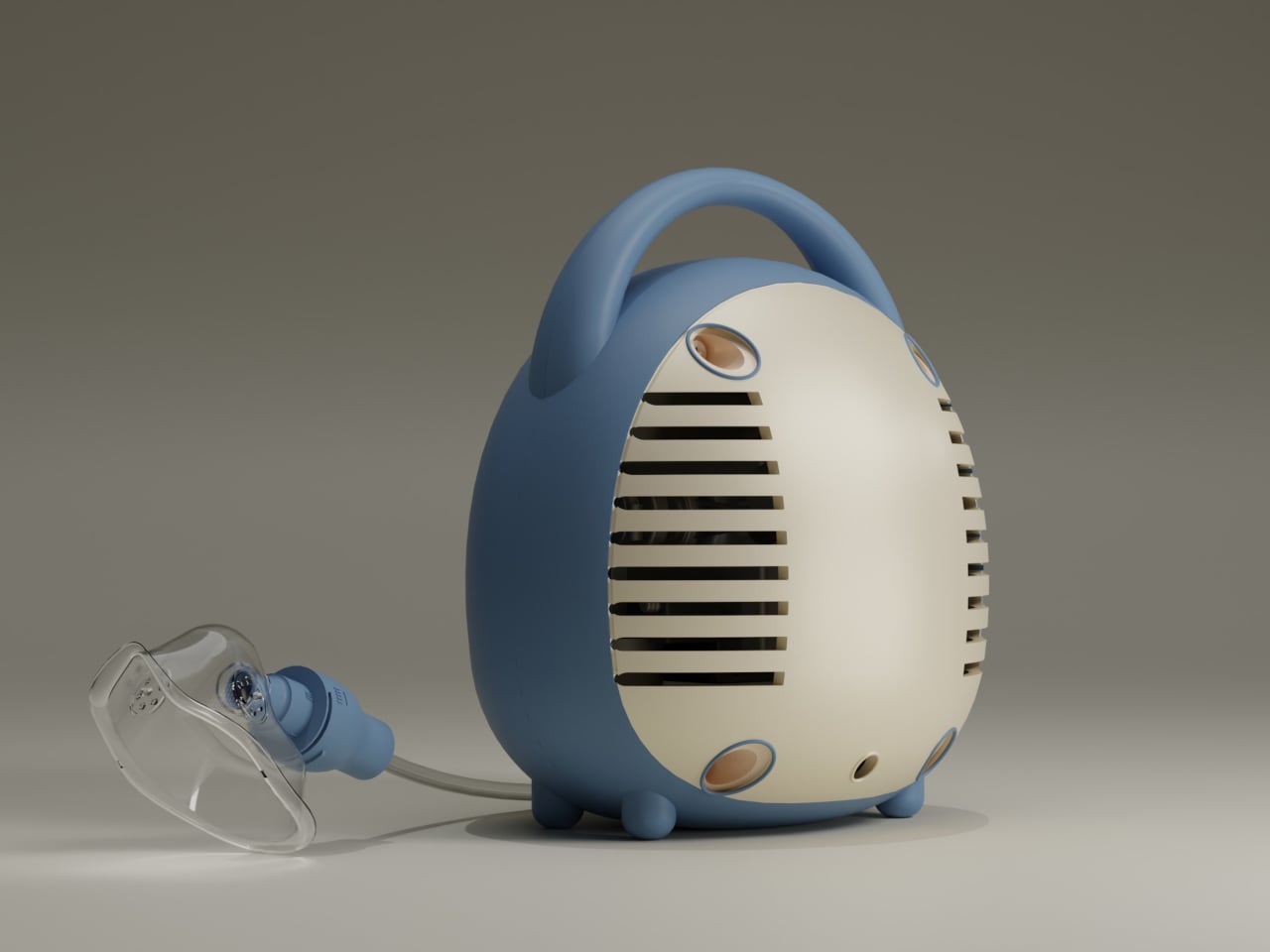
Picture a parent grabbing Breevo by its handle and carrying it from a shelf to the child’s room, setting it down without rearranging furniture. One large button starts the session, the tubing connects cleanly to the front, and the child focuses on breathing rather than switches and gauges. The compact footprint and simple interface reduce setup friction when treatments are frequent and time-sensitive, turning a stressful ritual into something a little more routine.
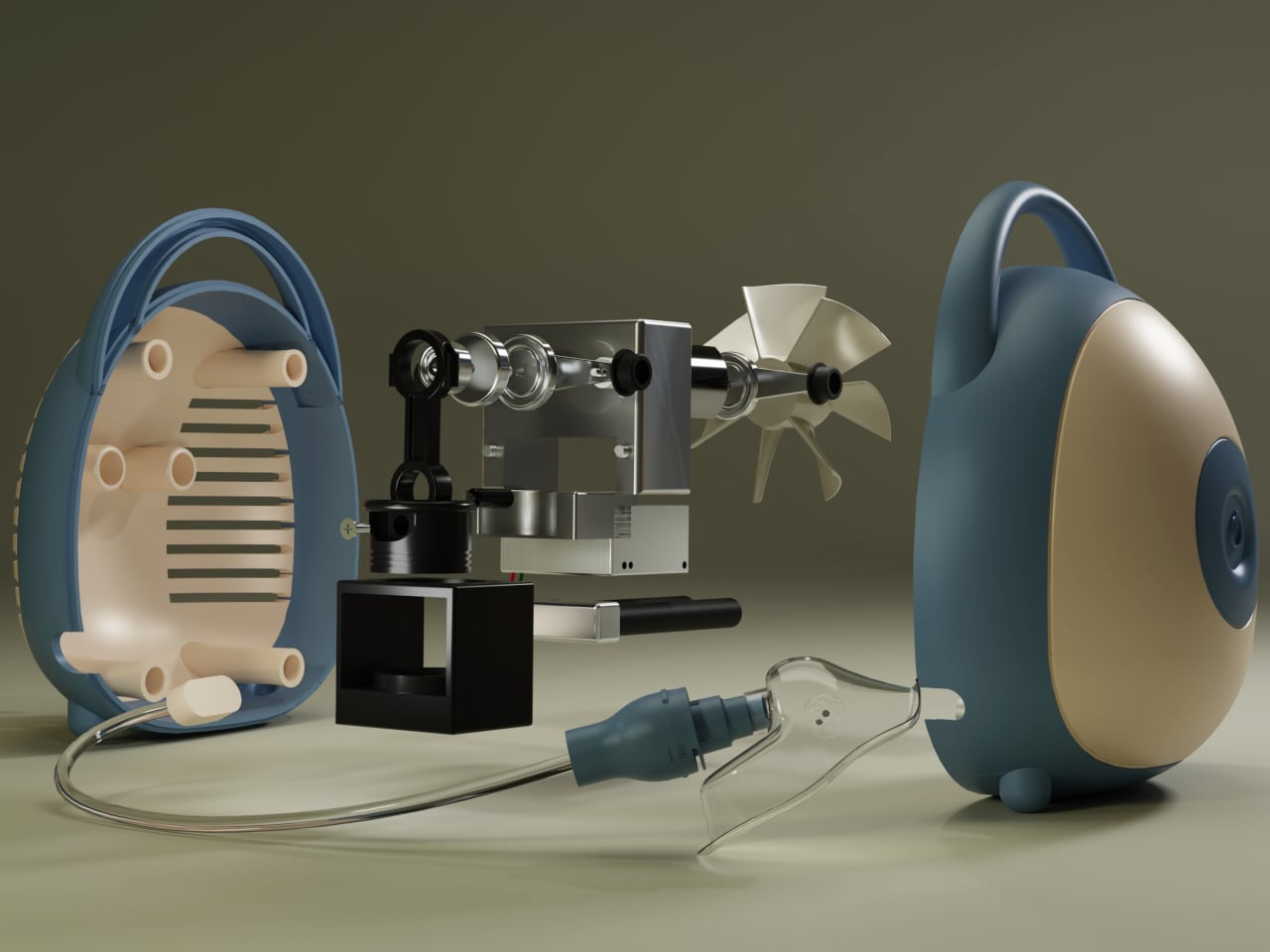
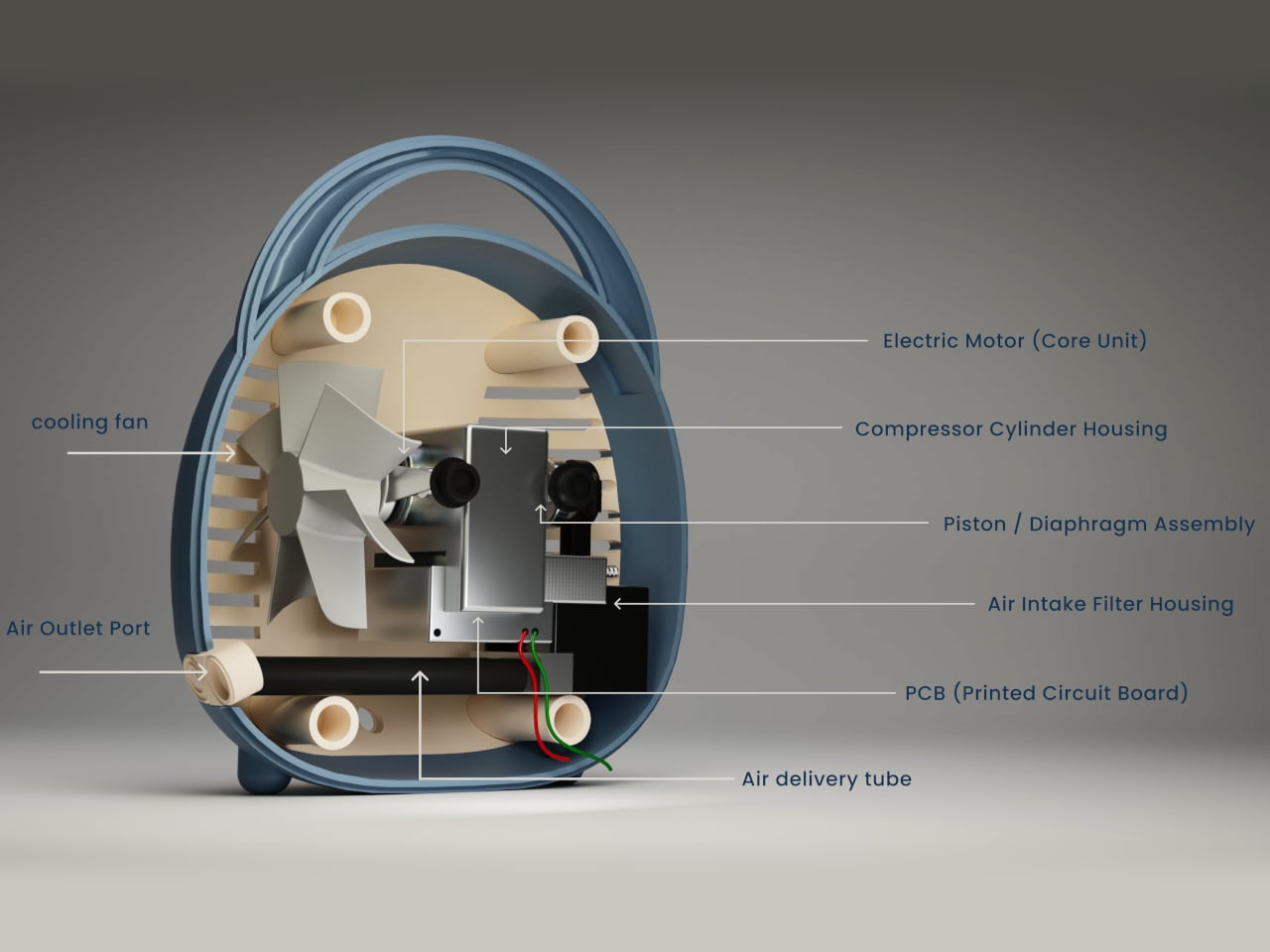
Under the shell, Breevo still uses a piston or diaphragm compressor, cooling fan, and medical-grade nebulizer cup and mask. The design doesn’t reinvent nebulization technology but just packages proven hardware in a way that makes sense for bedrooms and playrooms instead of hospital wards. The compressor drives air through the medicine cup to create aerosol, the same way every other home nebulizer works.
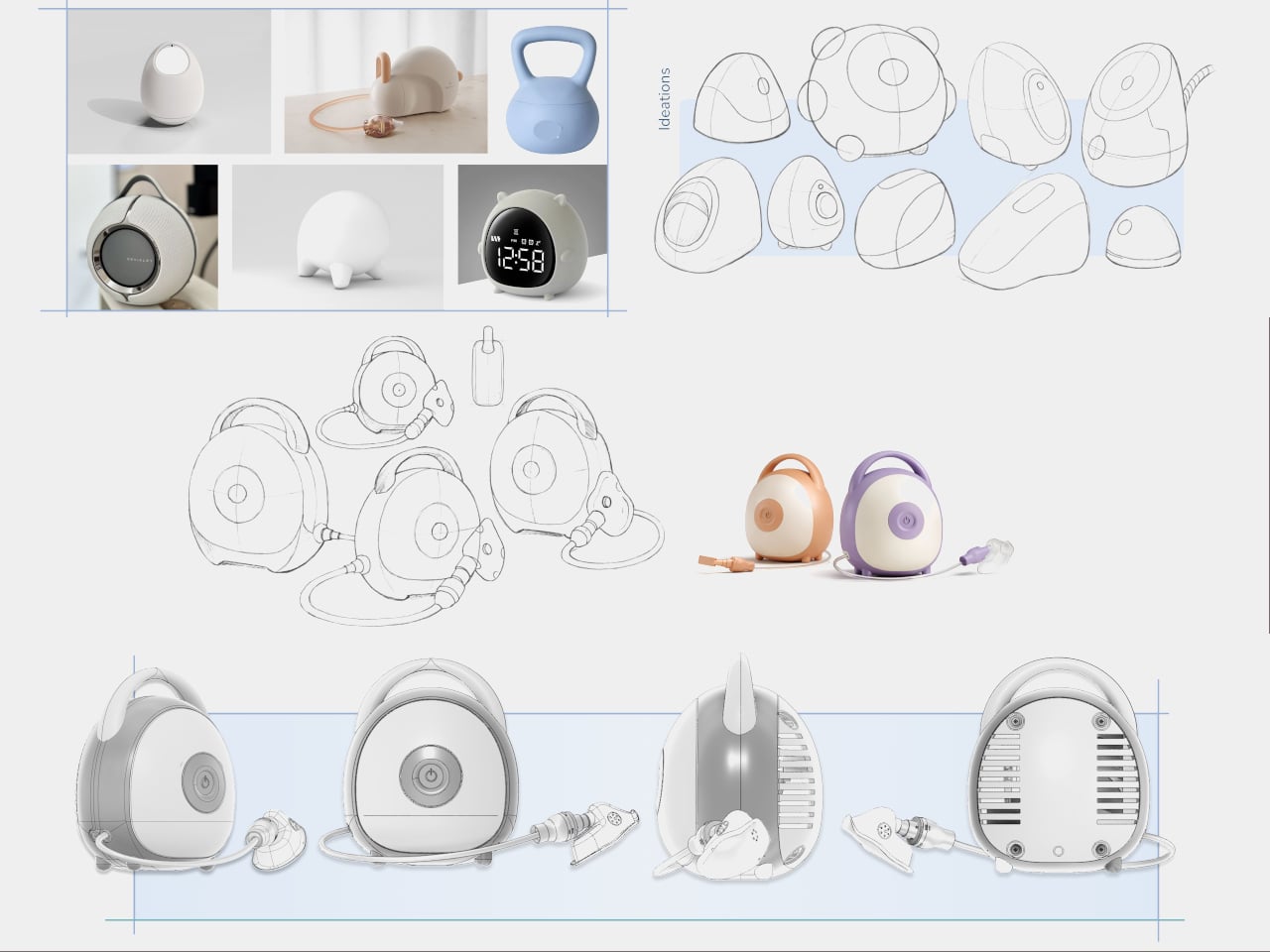
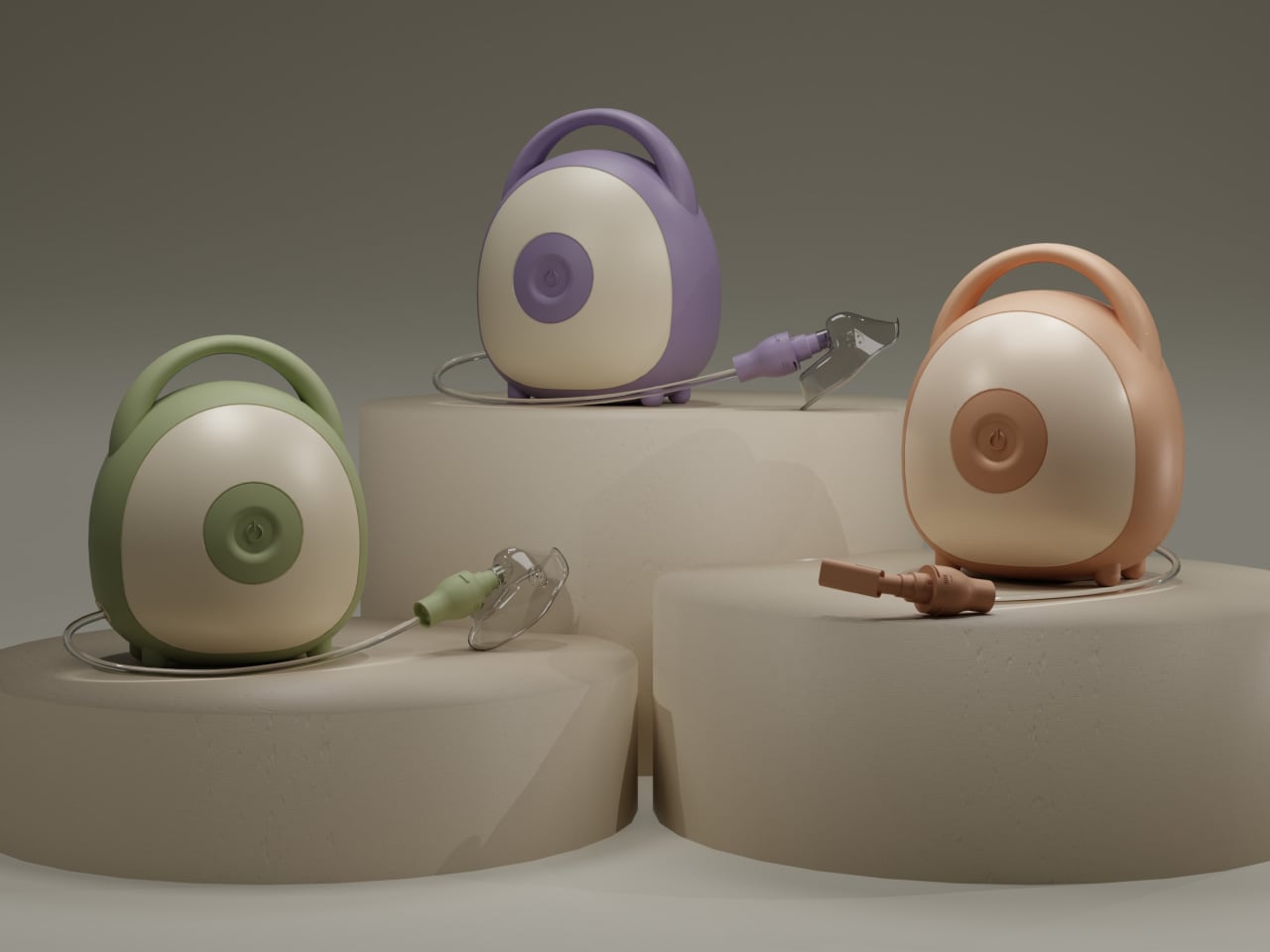
The exterior uses soft geometry and pastel colorways that make Breevo feel closer to a toy storage bin or portable speaker than medical equipment. The rounded body and integrated handle invite touch, and the two-tone front face with its central button gives kids a simple focal point. That shift in visual language matters when you are asking a six-year-old to sit still with a mask on their face, day after day, often without much choice.
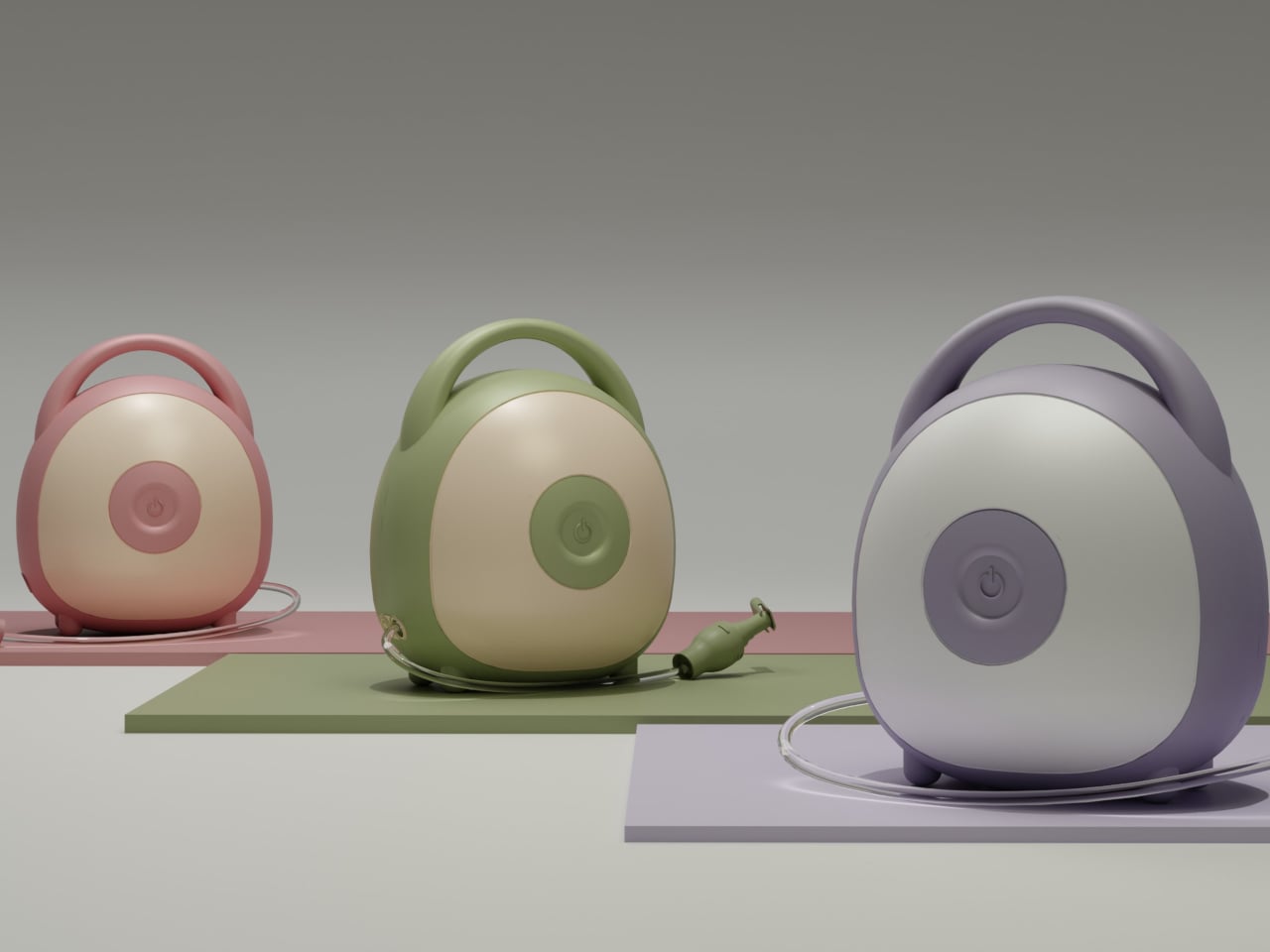
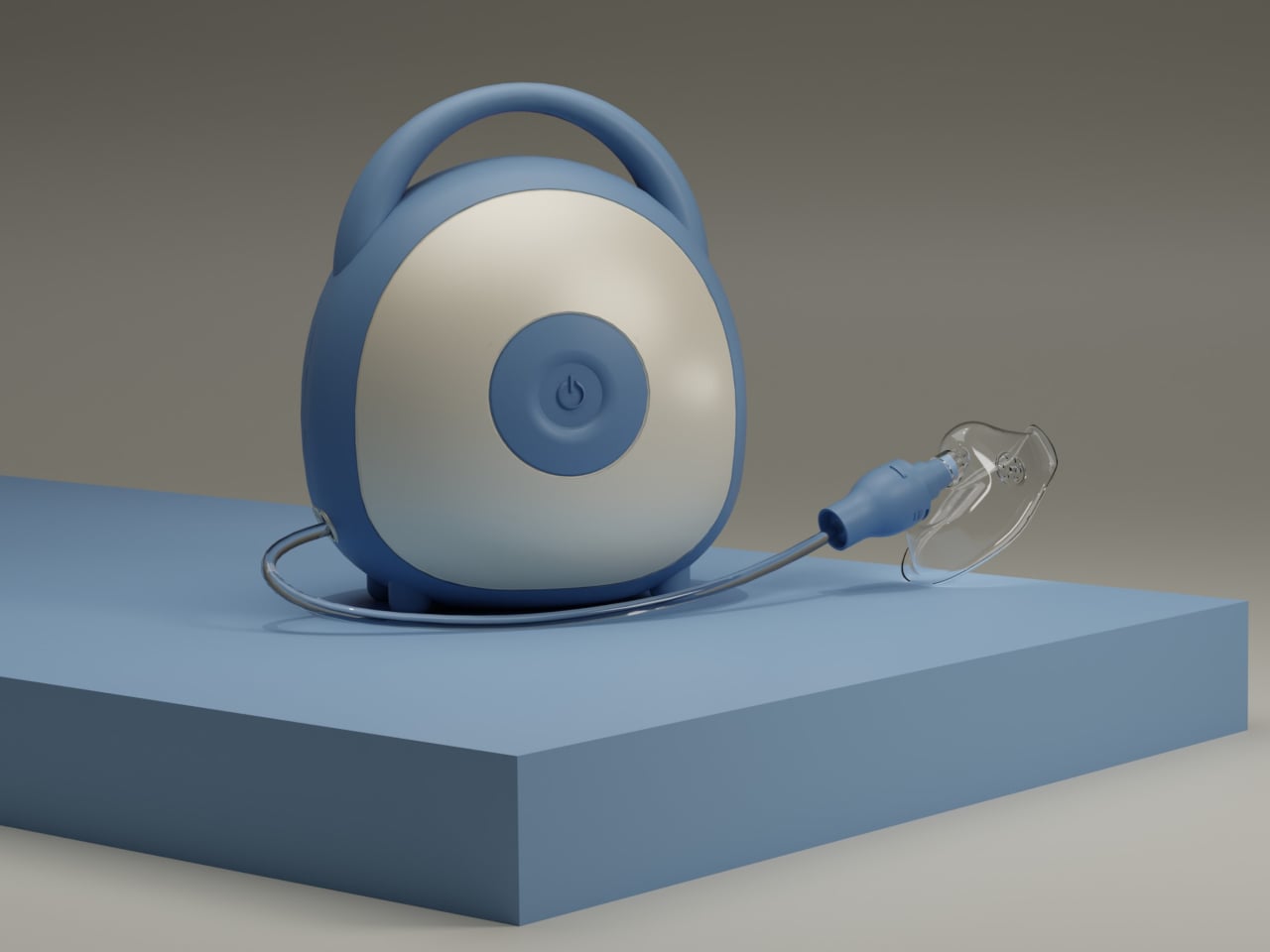
The integrated handle and relatively light ABS shell make it easy to move Breevo between rooms or stash it away when not in use. Parents can carry it in one hand while managing tubing and a child with the other. The quieter, less clinical presence means it can live on a shelf without constantly reminding everyone of illness, which is its own kind of psychological relief in homes managing chronic respiratory conditions over months and years.
Breevo treats the home as the primary care environment, not just a place where hospital gear is parked temporarily. By focusing on form, tactility, and intuitive interaction, it suggests that medical devices for chronic conditions should be designed like any other long-term roommate, something you can live with visually and emotionally, not just something that meets a spec sheet and gets hidden between treatments when guests come over.
SHARE