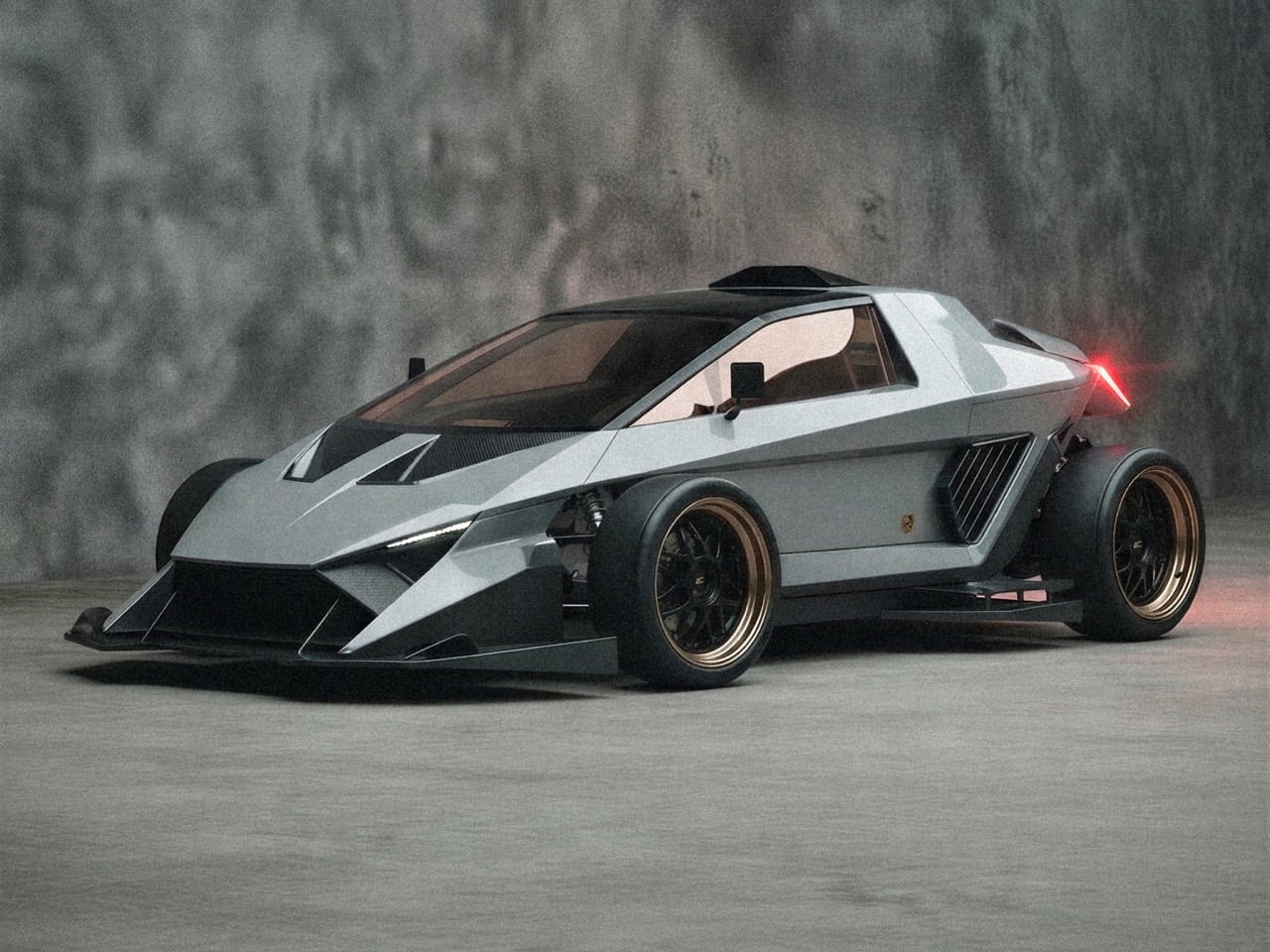
Someone decided the Lamborghini Countach needed to mate with a dune buggy and maybe a stealth fighter. Looking at Alex Casabo’s buggy concept, that’s not hyperbole or some lazy automotive journalism comparison. This thing genuinely looks like it crawled out of the wedge-era supercar playbook, did some thinking about what parts of “street legal” actually mattered, and concluded the answer was “none of them.”
Most supercars maintain this pretense that yes, technically, you could drive this to the grocery store. Casabo’s design skips that entire conversation. The suspension geometry isn’t hidden behind sexy bodywork, it’s showcased like mechanical jewelry. Those bronze-finish wheels and exposed A-arms aren’t apologizing for being visible. This is a track toy that knows exactly what it is, and there’s something refreshing about a design that doesn’t hedge its bets.
Designer: Alex Casabo
The design language pulls directly from that late ’70s and early ’80s moment when Marcello Gandini was drawing supercars with a protractor and an apparent vendetta against curved lines. Every surface on this buggy looks like it was folded from sheet metal by someone who studied origami and decided subtlety was optional. The wedge profile, the angular body panels, the way the whole thing seems to be made of intersecting planes rather than flowing shapes. These are all callbacks to an era when automotive design was less about wind tunnel optimization and more about making something that looked impossibly fast while sitting still.
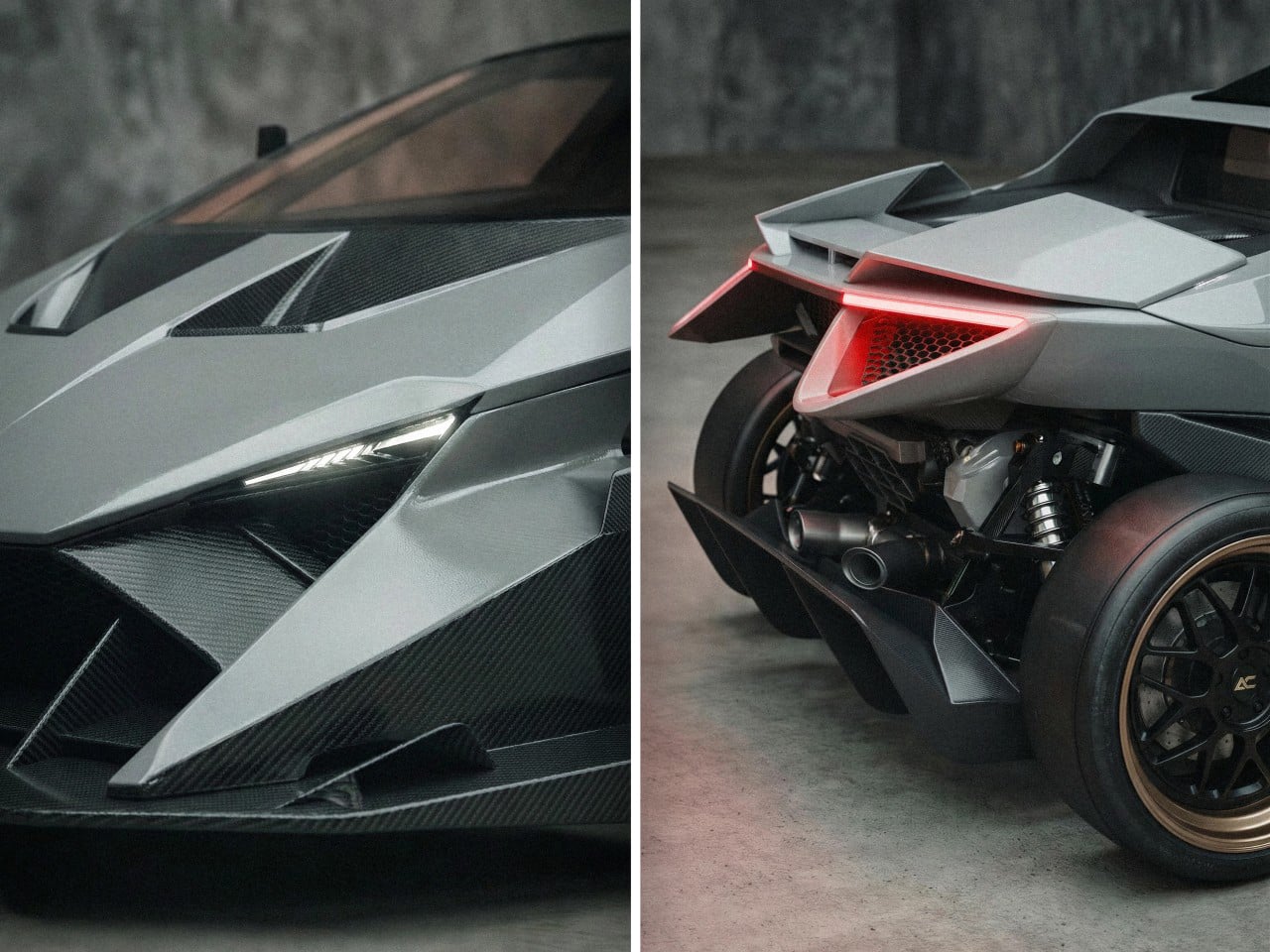
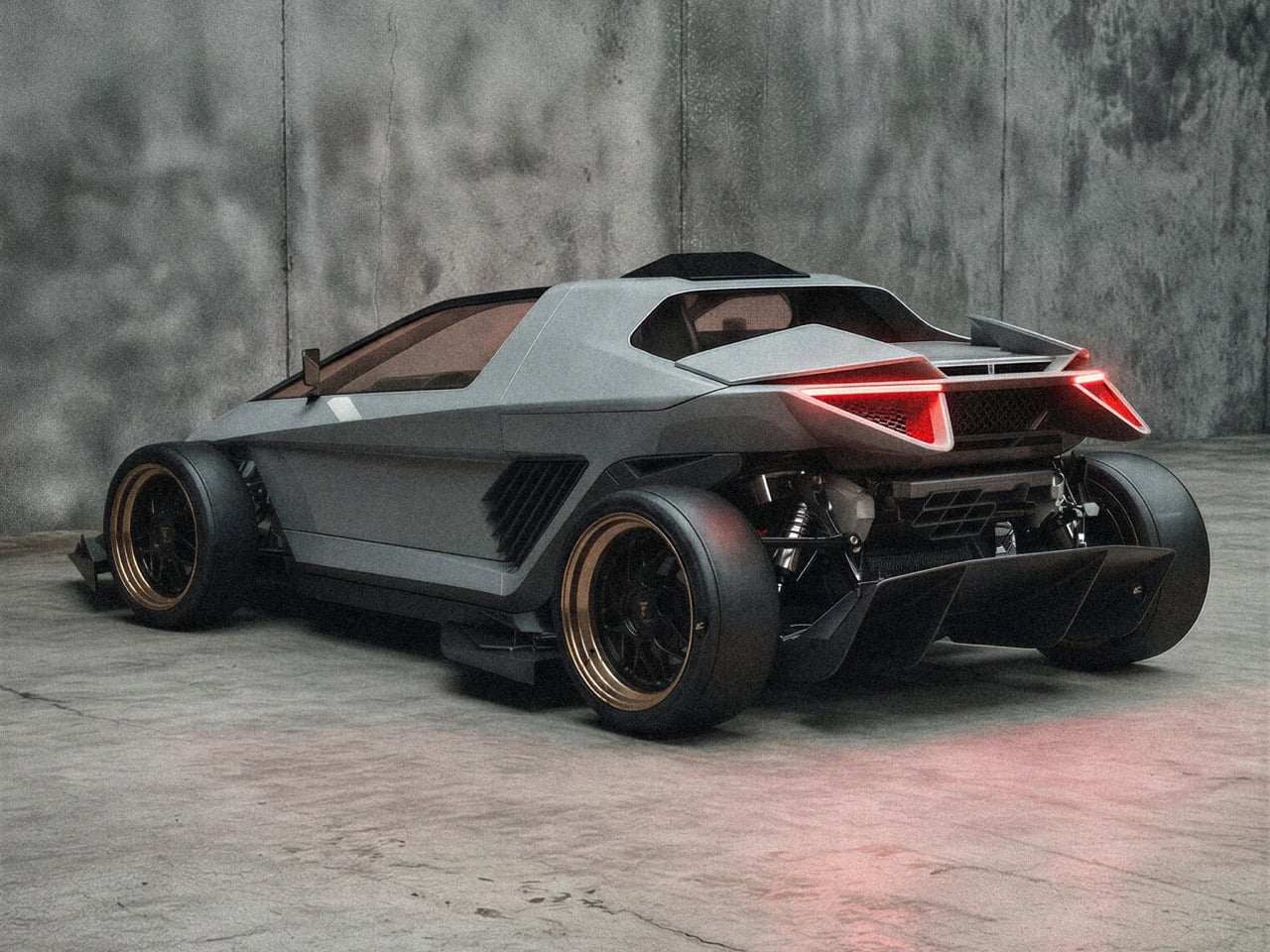
The AC Buggy, as Casabo calls it, combines the supercar aesthetic with the mechanical transparency of something like an Ariel Atom or a radical Group B rally car. Those exposed A-arms and coilovers aren’t there because the budget ran out before they could design proper body panels – they’re deliberate, turning functional components into visual elements. The bronze-finished wheels and visible hardware give the whole thing a motorsport-meets-military-prototype vibe that somehow works with the stealth fighter angles of the body. You can see the engineering, and that visibility becomes part of the appeal rather than something to hide.
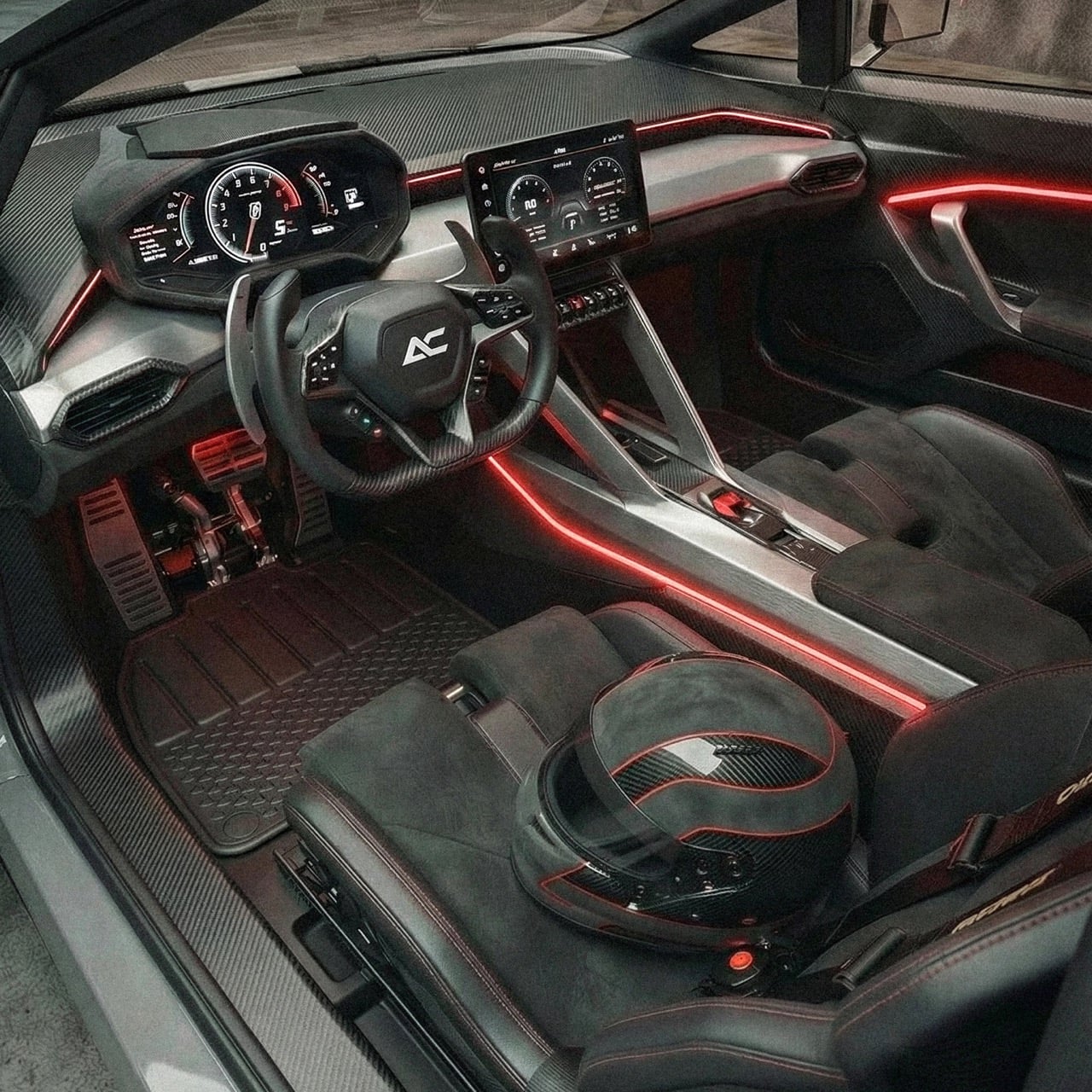
The interior follows the same path of aggressive minimalism wrapped in carbon fiber. Red accent lighting traces the cabin architecture, highlighting the angular dashboard and center console. There’s a center-mounted touchscreen flanked by what looks like a traditional instrument cluster on the driver’s side, creating this hybrid of digital and analog that mirrors the exterior’s blend of supercar drama and track-focused functionality. Toggle switches populate the lower console, the kind of tactile controls that suggest actual mechanical connections rather than electronic intermediaries. The seats are heavily bolstered with quilted inserts, held in place by a competition-style harness setup. Even the steering wheel gets the carbon treatment, with a squared-off bottom and integrated controls that keep your hands on the wheel rather than reaching for stalks or buttons.
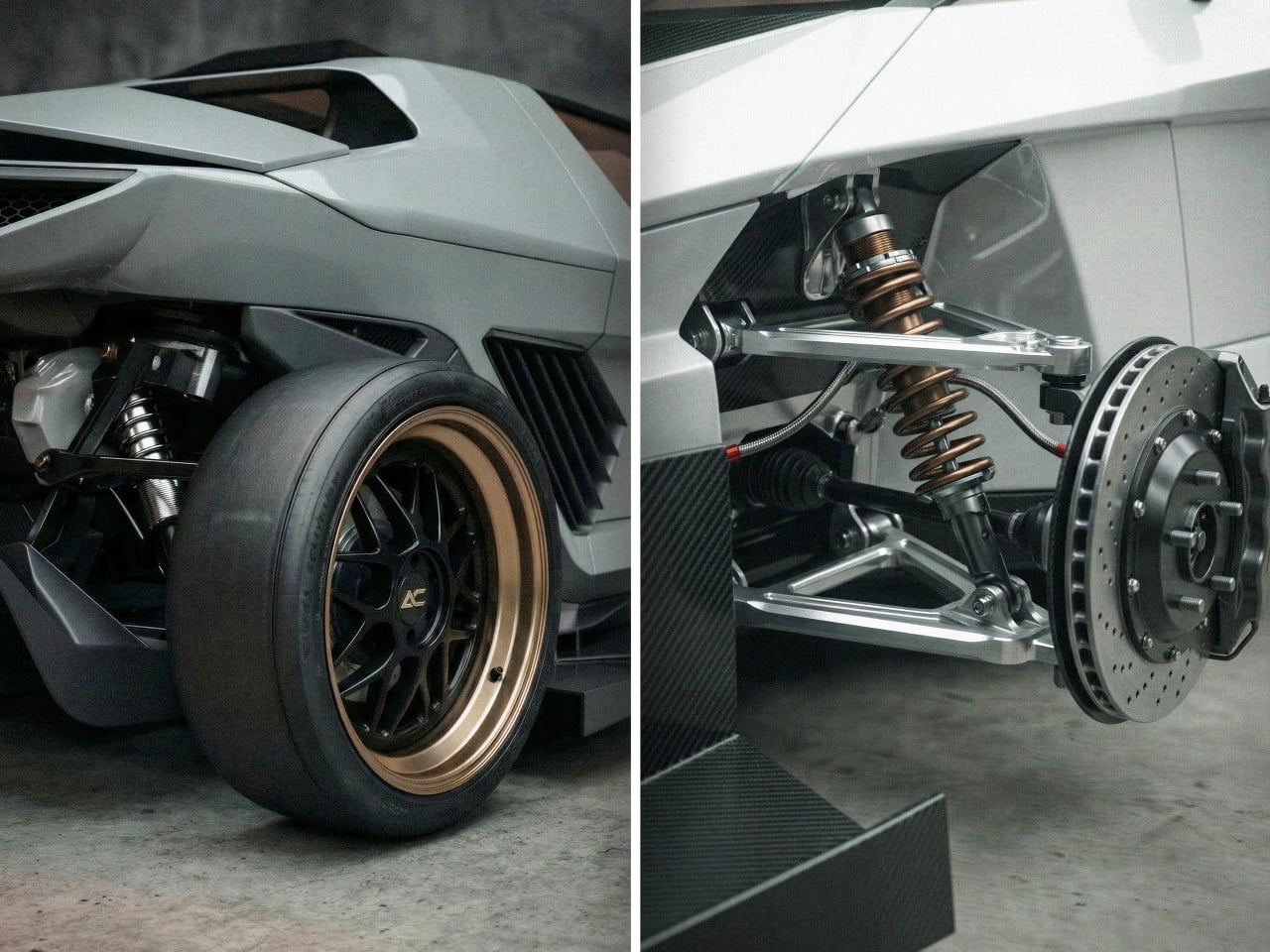
The rear suspension setup shows off machined aluminum control arms and what look like properly specced coilovers with remote reservoirs. The drilled brake rotors are substantial, and the whole assembly sits exposed behind those distinctive geometric body panels with their triangular lighting elements. The taillights themselves use a honeycomb mesh pattern behind red-tinted lenses, continuing that angular aesthetic even in the smallest details. There’s an air intake vent on each rear quarter panel with horizontal slats, feeding what we can assume is some kind of powertrain tucked into that compact rear section.
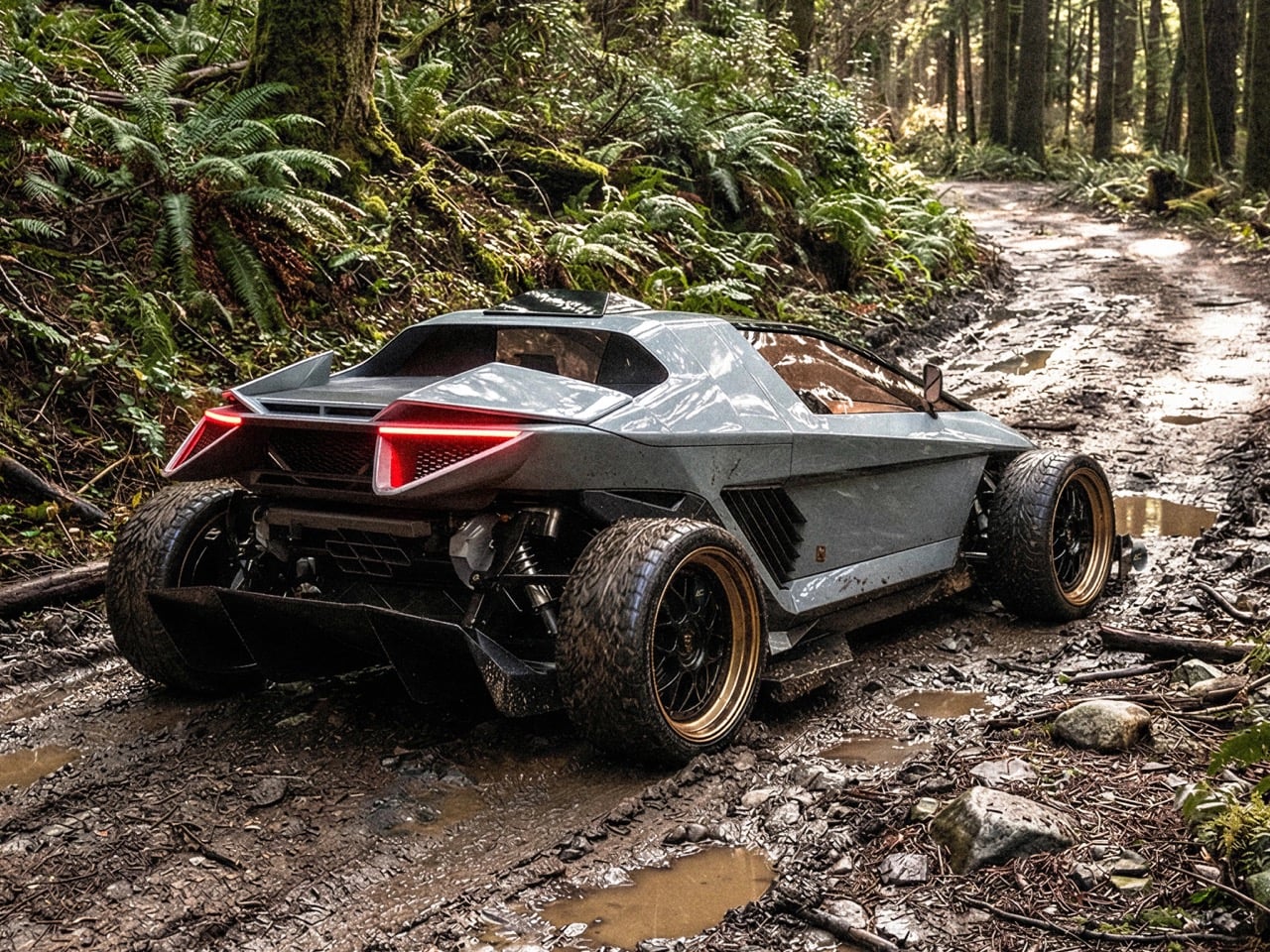
The car was crafted entirely using a combination of design and AI tools as a part of Casabo’s explorations of integrating AI into the design workflow. Casabo lists his tools as Midjourney and Vizcom for the AI-enhanced ideation and CAD, along with Photoshop as a finisher to create the set of images. Whether this car is practical or not becomes irrelevant at this point, because Casabo’s vision is just to see how effectively AI can help enhance the creative process. Visually, it looks great on paper, although just seeing the output, I don’t think we’re too far from having an actual AI-generated concept car prototyped to life.
SHARE