Sounds radical, doesn’t it? The Touch Bar was such a waste of space on the MacBook Pro when it was first introduced exactly a decade ago in 2016. It shipped with a lot of potential but barely any real-world use, and Apple even considered swapping it out for a slot that housed the Apple Pencil back in 2021. While that feature never really came to pass, something else happened in 2021 that blew everyone’s minds – OpenAI’s Dall-E. For a lot of people, this was the first time you could just ‘tell’ an AI to make an image for you and it would. It was the birth of generative AI, and only a year later, OpenAI would break the internet with ChatGPT.
This is also around the time that Apple quietly killed the Touch Bar, but here’s my opinion… bring it back. Maybe not on the MacBook, but the Touch Bar definitely deserves a place on any independent wireless keyboard. With AI LLMs, progressive web apps, widgets, and vibe-coding going mainstream, a Touch Bar on a keyboard finally makes sense. It’s a place for your AI agent to live, alongside tasks, shortcuts, toolbars, and widgets. Apple pioneered the Touch Bar, but one could argue they were way too early to realize its potential. Now, a concept keyboard by Eslam Mohammed and Ahmed Yassen shows how the Touch Bar should be resurrected.
Designers: Eslam Mohammed & Ahmed Yassen

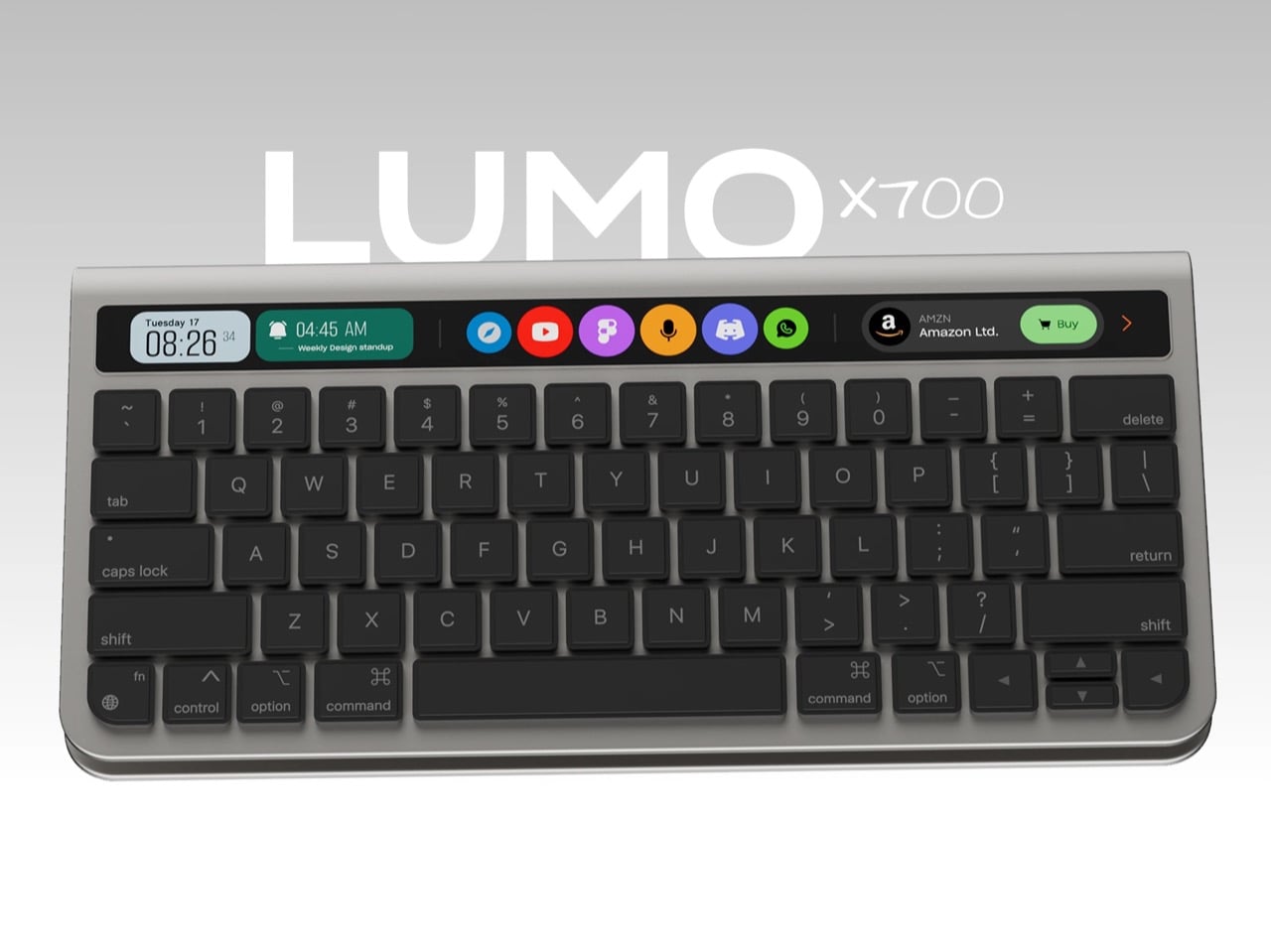
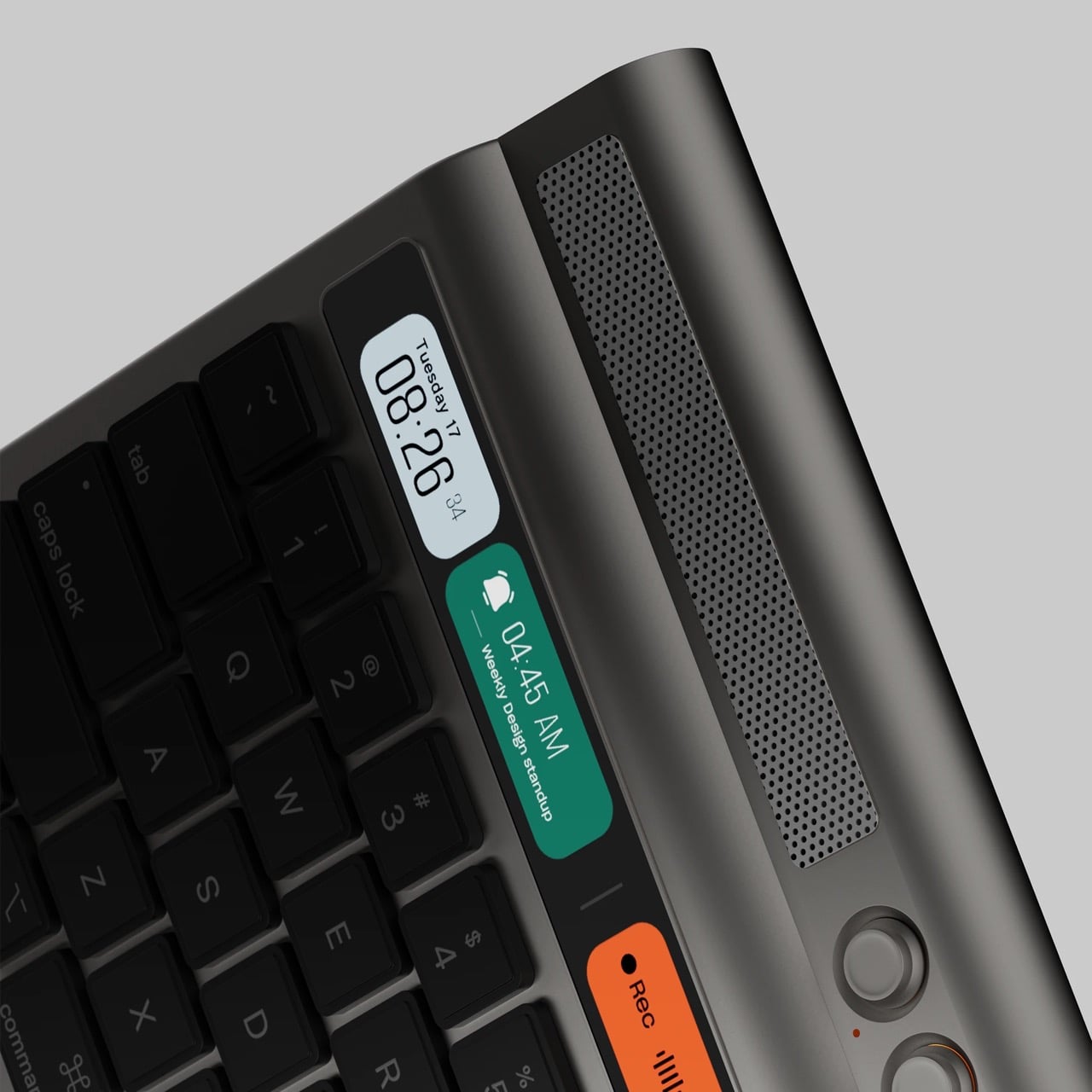
Mohammed and Yassen’s LUMO x700 keyboard comes with a few tricks up its sleeve. Sure, it sports a sleek, metal-forward Magic Keyboard-inspired design, but the thing also packs an end-to-end Touch Bar that’s about as tall as your standard key, making it a lot more usable than the actual Touch Bar, which was just as slim as the function key row. However, that isn’t all there is to this. A snap-on module turns the keyboard into a music player so you aren’t listening to tunes on your iMac or laptop’s fairly tinny speakers. All in all, this turns your keyboard into something a little more versatile than just ‘something you type on’. It now has an identity of its own, and can channel a level of productivity you’d only get with an Elgato-style accessory.
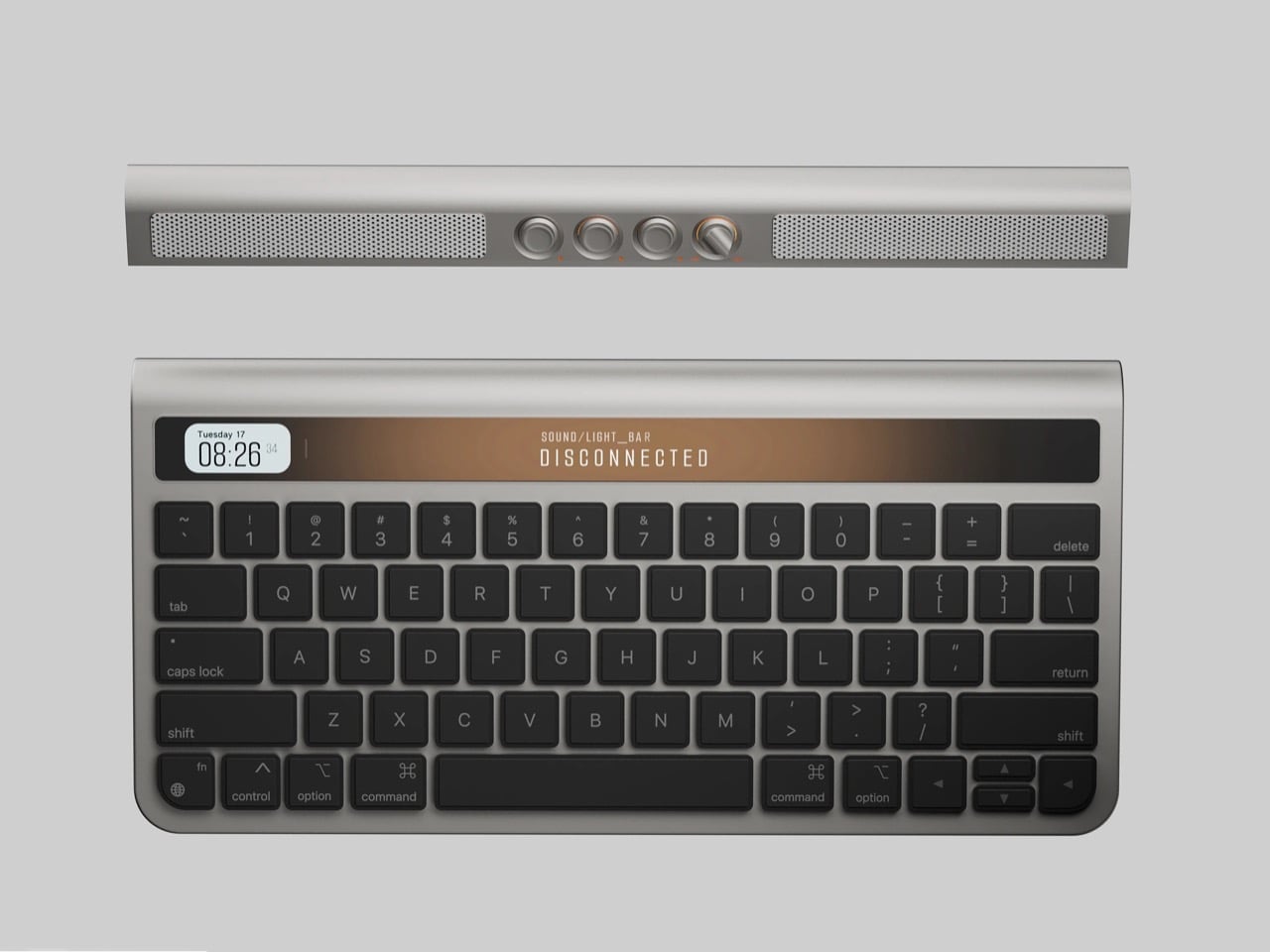
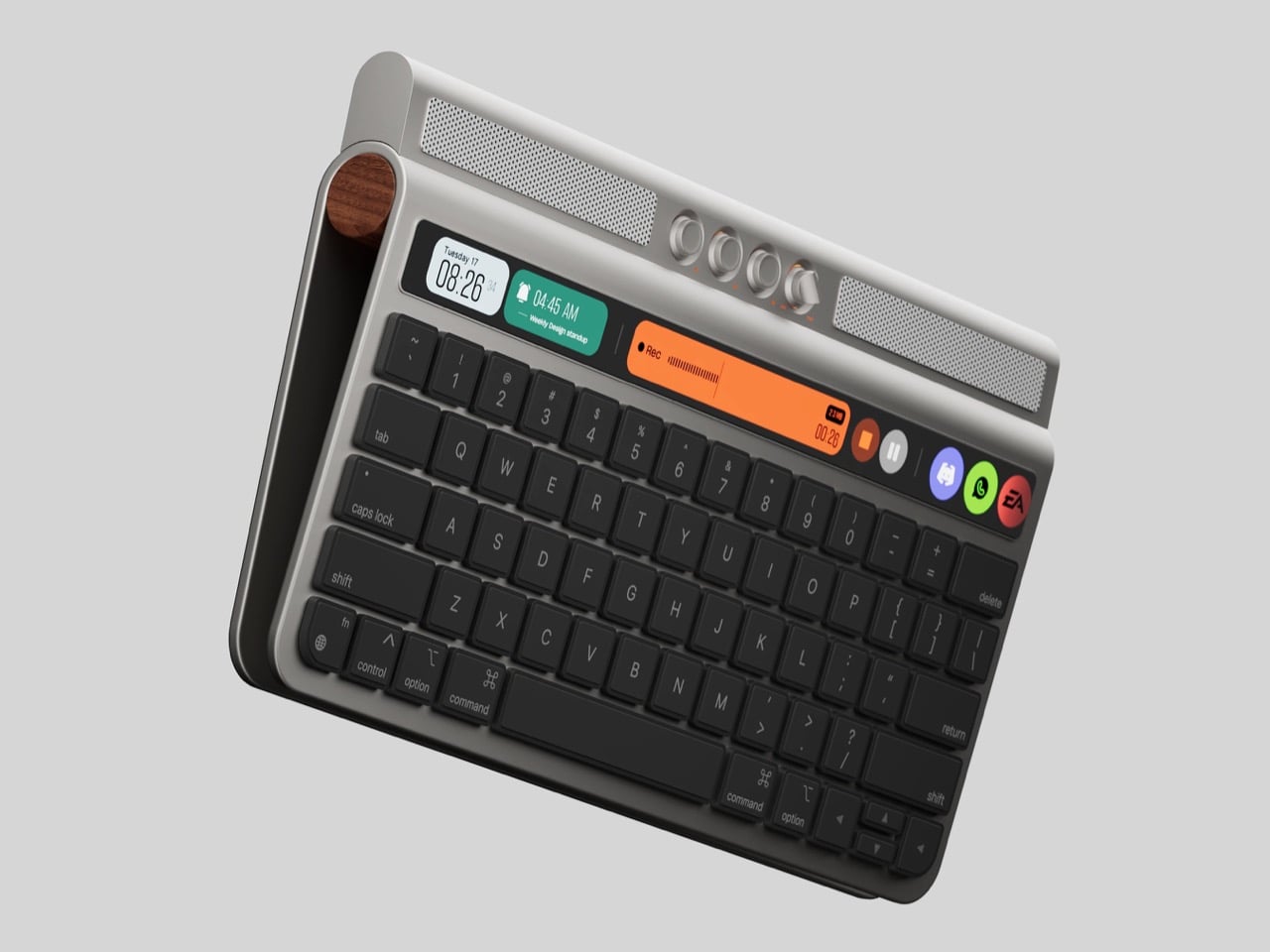
But wait! That modular soundbar isn’t just keyboard-dependent! It works independently too, allowing you to place it underneath the monitor or anywhere else on your desk for a wireless sound experience. The dual speakers fire stereo audio, buttons and a knob help tweak volume and playback, and the part that attaches to the LUMO x700 keyboard, well, there’s a hidden light-bar there to give your desk some ambient lighting. It’s all cleverly designed to ensure the module isn’t useless on its own. However, that Touch Bar is my predominant focus.
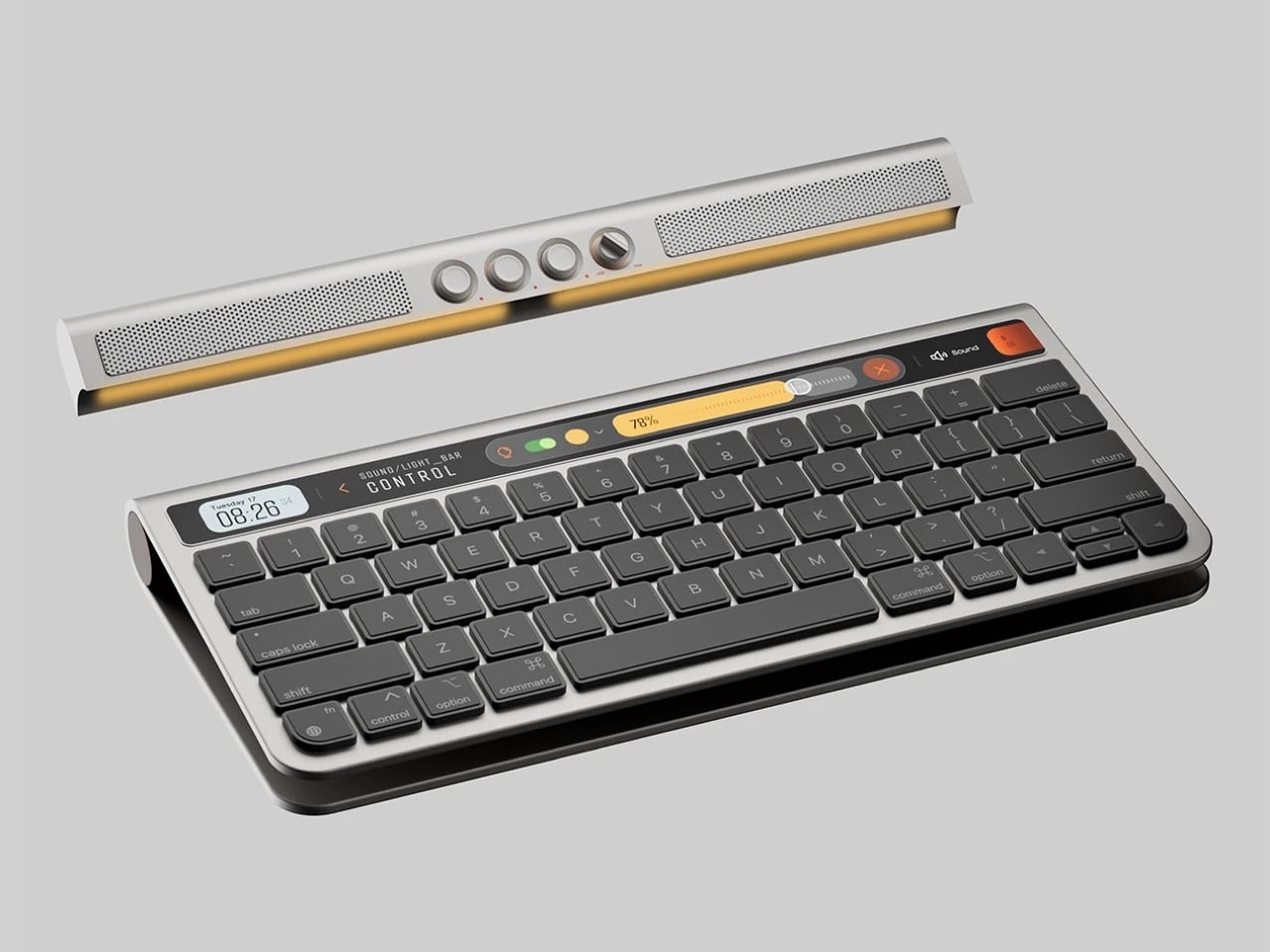
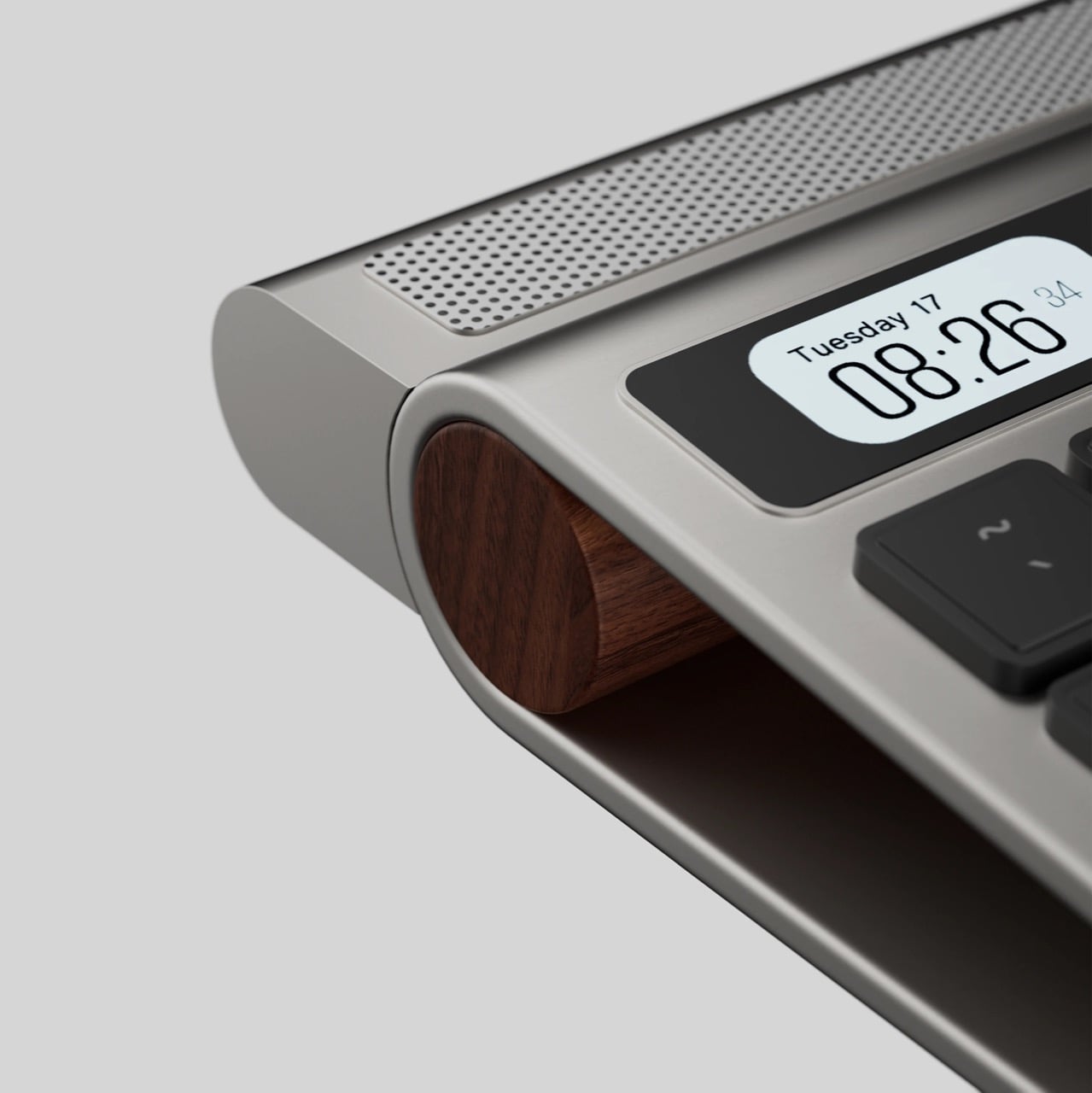
Why does a Touch Bar matter now more than ever? Well, we’re all multitasking, we’re all looking for extra real estate for displays, and almost all of us are running agents of some kind to automate tasks. That’s what this Touch Bar is for. Shortcuts to apps live in the center, widgets on the left, and maybe an AI chatbot on the right that you can deploy to talk to, ask questions to, or delegate tasks to. Claude just debuted a desktop-controlling agent called Claude Cowork that can run tasks and perform duties on your desktop on your command, and the infamous OpenClaw’s been taking the internet by storm for doing pretty much the same thing too. Obviously, such an AI will need to be vetted, and probably contained by a set of restrictions so it doesn’t go around leaking your data on a ‘Reddit for AI Agents’ or spending your cash (as OpenClaw has done in a few instances).
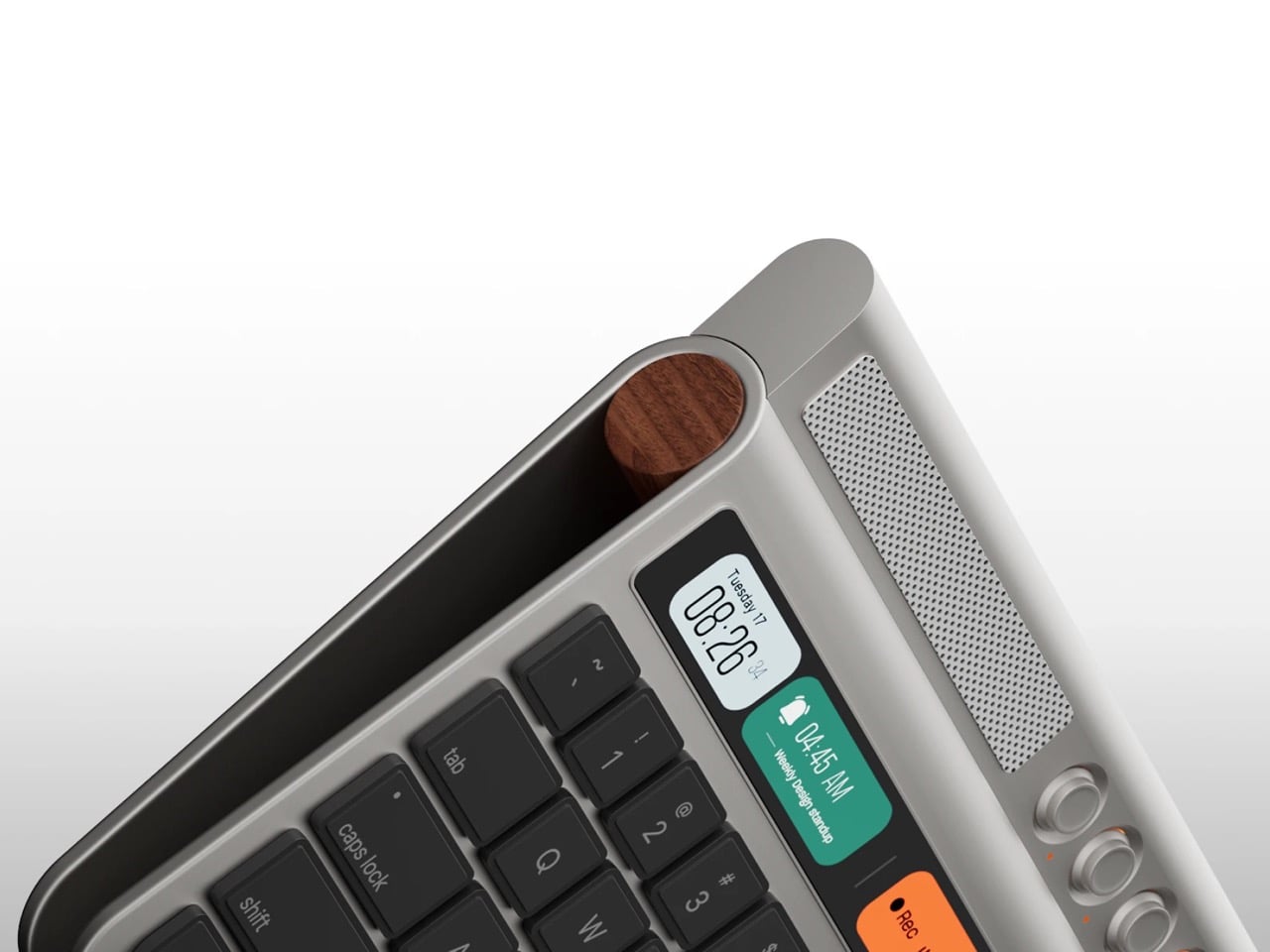
The rest of the Touch Bar experience goes on as originally intended. Active programs can reside within the bar, like a recorder interface, the player for music or video apps, allowing you to seek to different parts of a song/video, or even the emoji keyboard that lets you easily cycle through emojis before pasting them. The potential is endless, and while independent Touch Bars like this one exist, we need to design one for an era of AI agents, applets, shortcuts, and widgets. It really is about time.
SHARE