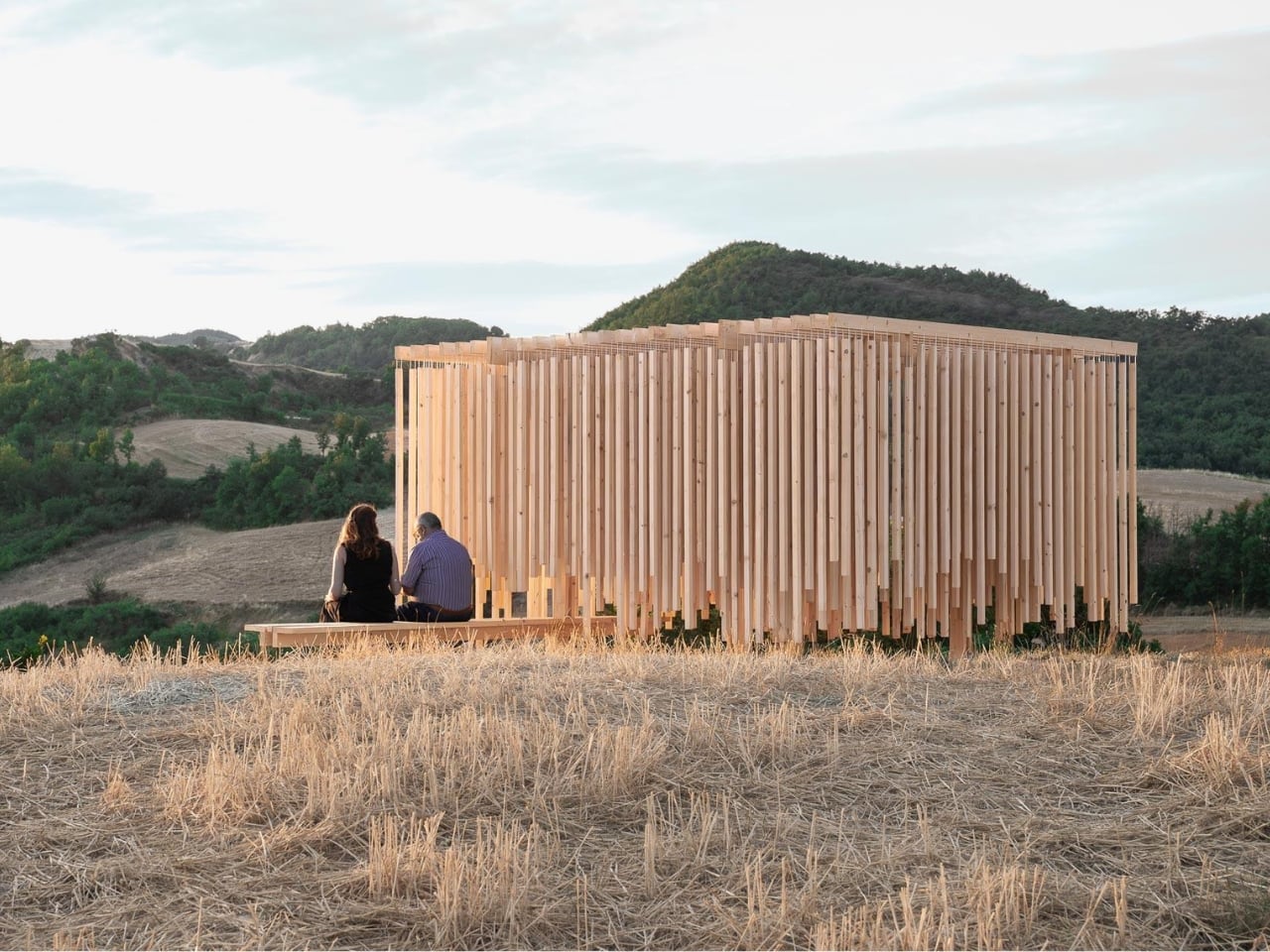
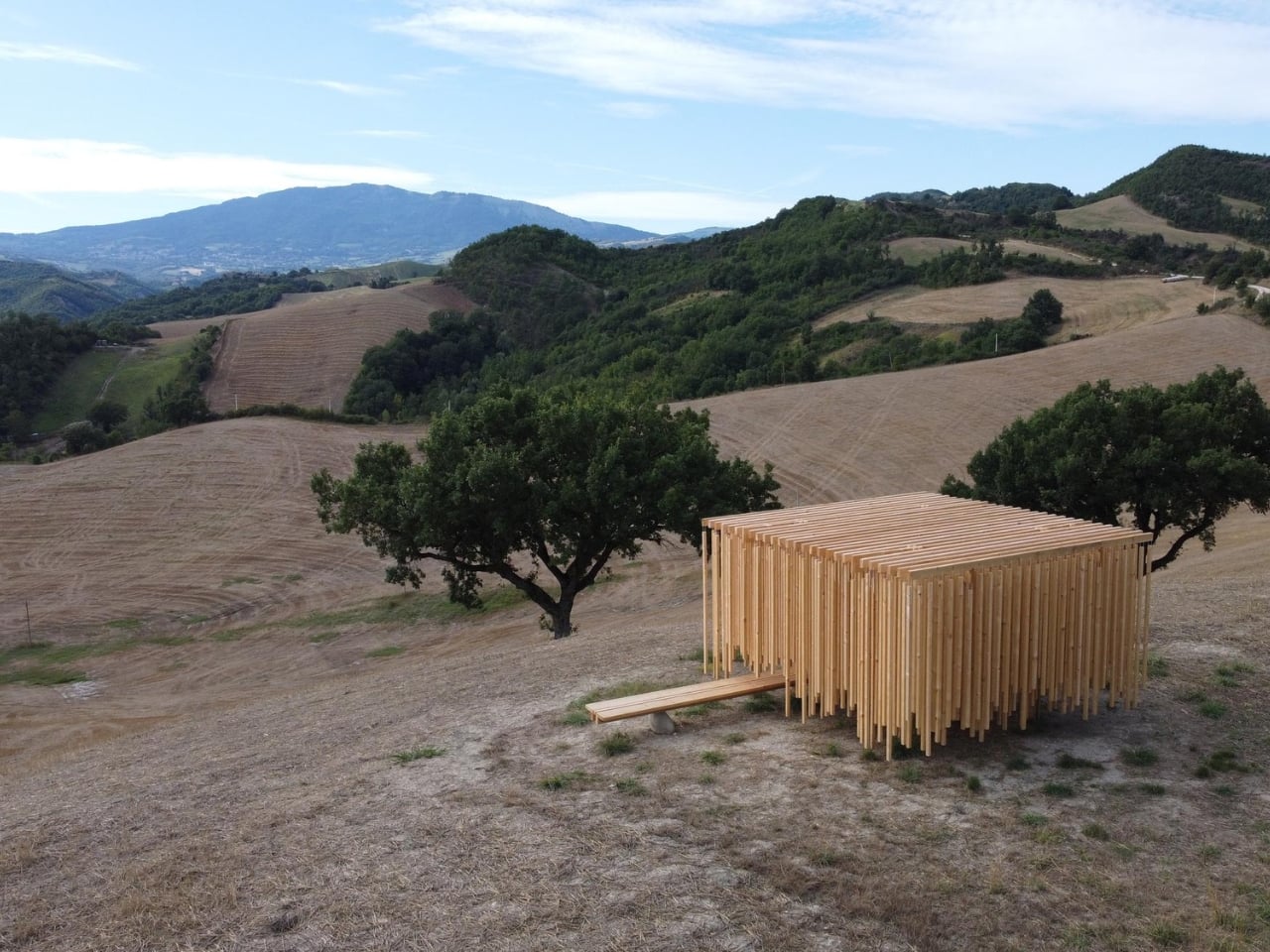
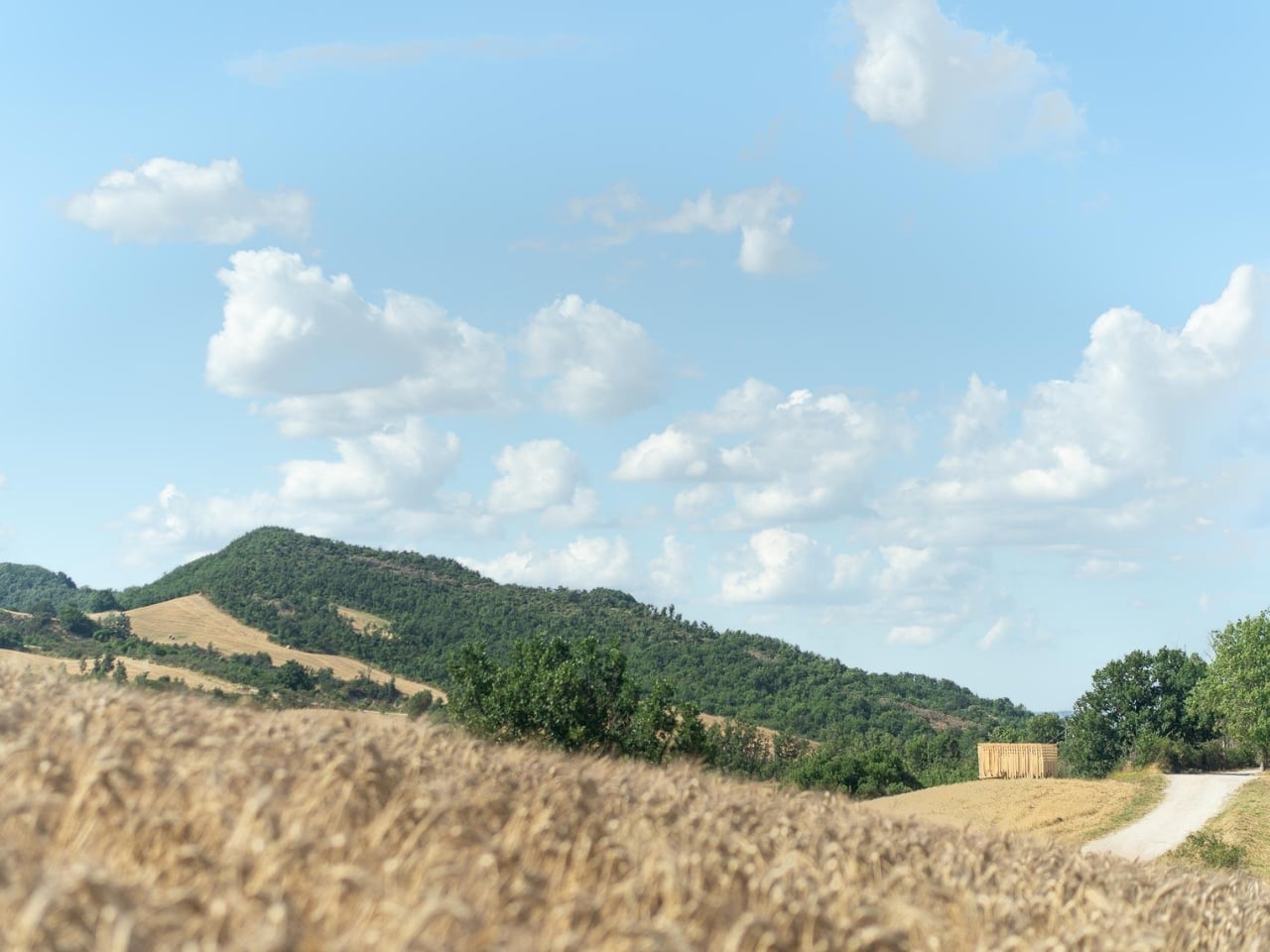
Picture a structure that looks like it’s floating in a grain field, its wooden slats hanging down like a delicate curtain swaying in the breeze. Now imagine that when the wind picks up, this architectural installation doesn’t just move, it sings. That’s exactly what Studio Carraldo has created with the Cappella del Suono, or Chapel of Sound, nestled in the rolling hills of Lunano, Italy’s Marche region.
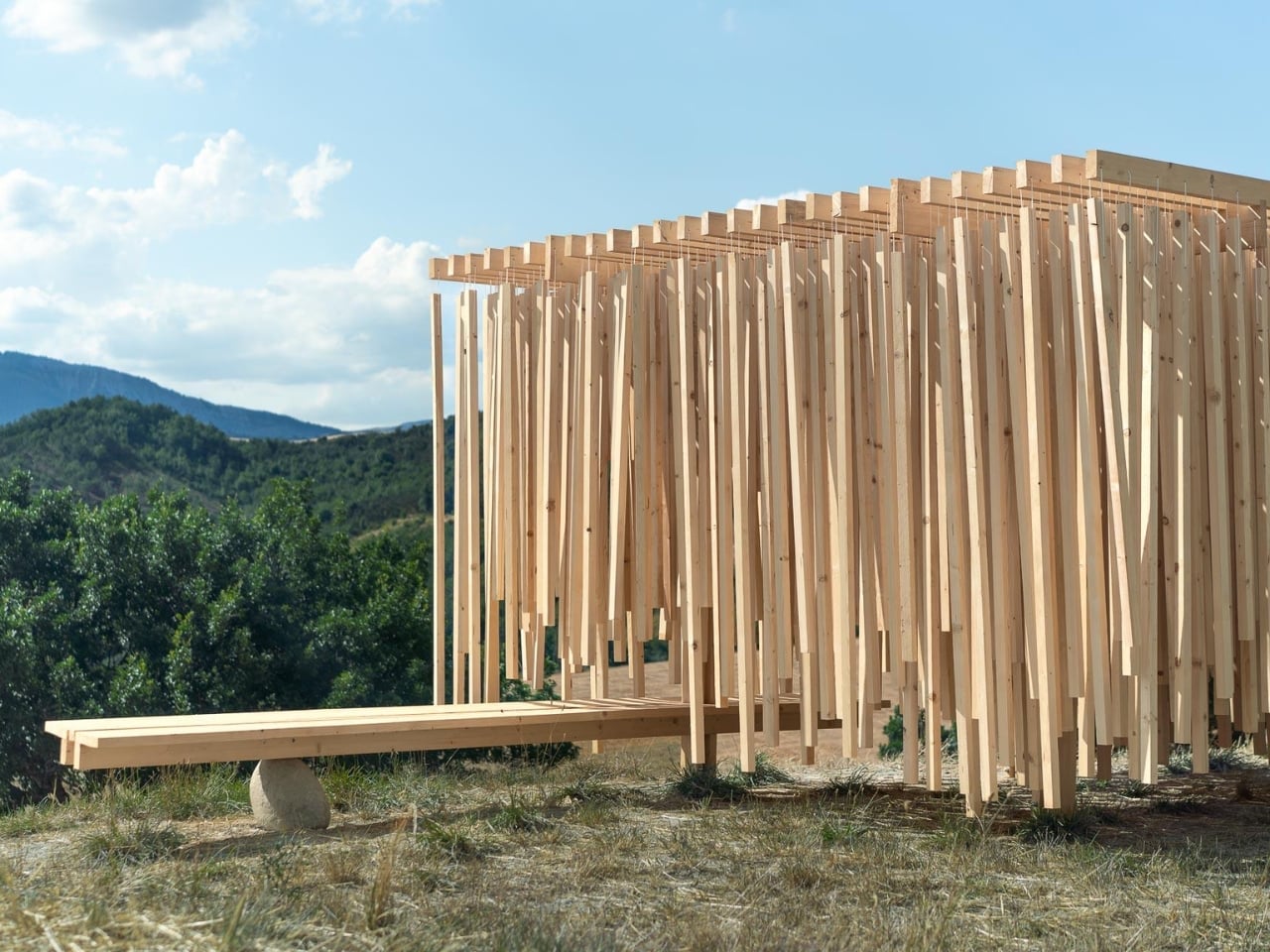
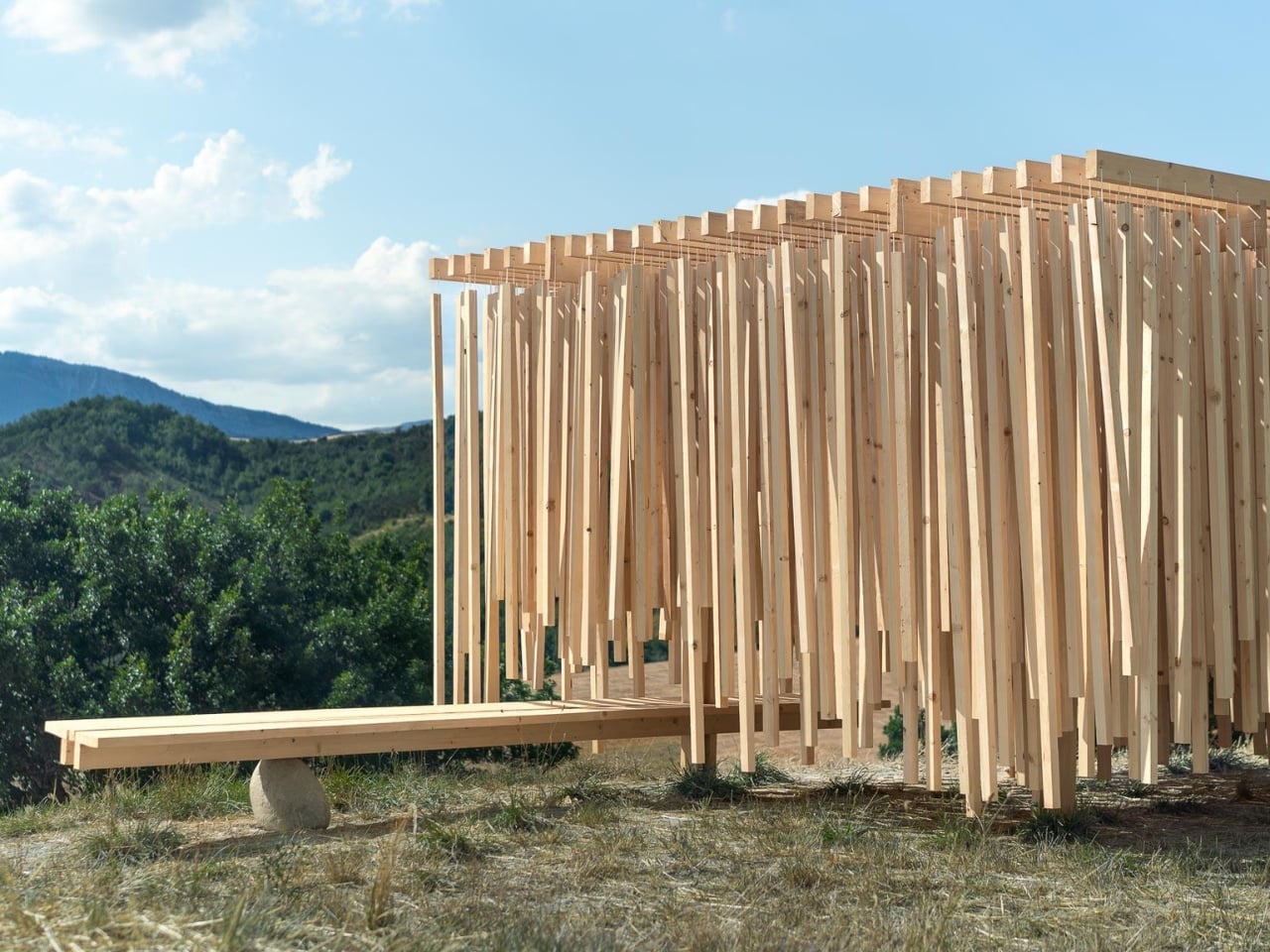
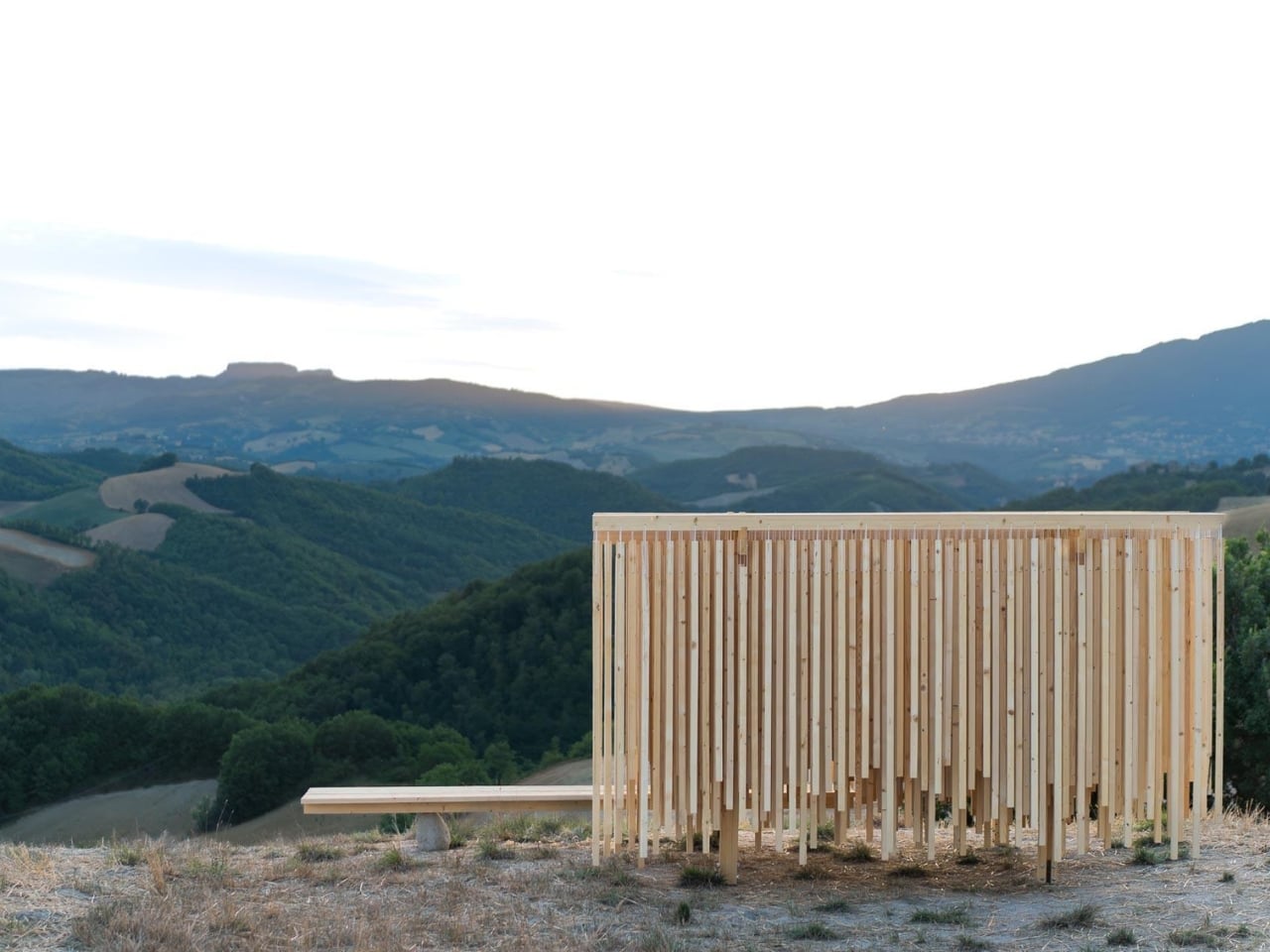
The pavilion is deceptively simple at first glance. It’s a 16-square-meter wooden grid structure made entirely of vertical slats, but here’s where things get interesting. These slats aren’t cut to a uniform length. Instead, they’re suspended at varying heights, creating an undulating bottom edge that resembles a hanging wooden curtain dancing just above the landscape. This isn’t just an aesthetic choice, though it’s certainly beautiful. It’s what makes the structure come alive.
Designer: Studio Carraldo
Each wooden element has been carefully drilled with holes at specific points. When the wind moves through the structure, or when someone walks through and brushes against the slats, these pieces knock together and create sound. Not just any sound, but layered acoustic experiences that shift and change depending on wind strength and direction. On particularly breezy days, the sounds produced by the colliding slats can echo the distant church bells from the nearby Convento di Monte Illuminato, creating an unexpected dialogue between contemporary installation art and historic religious architecture.
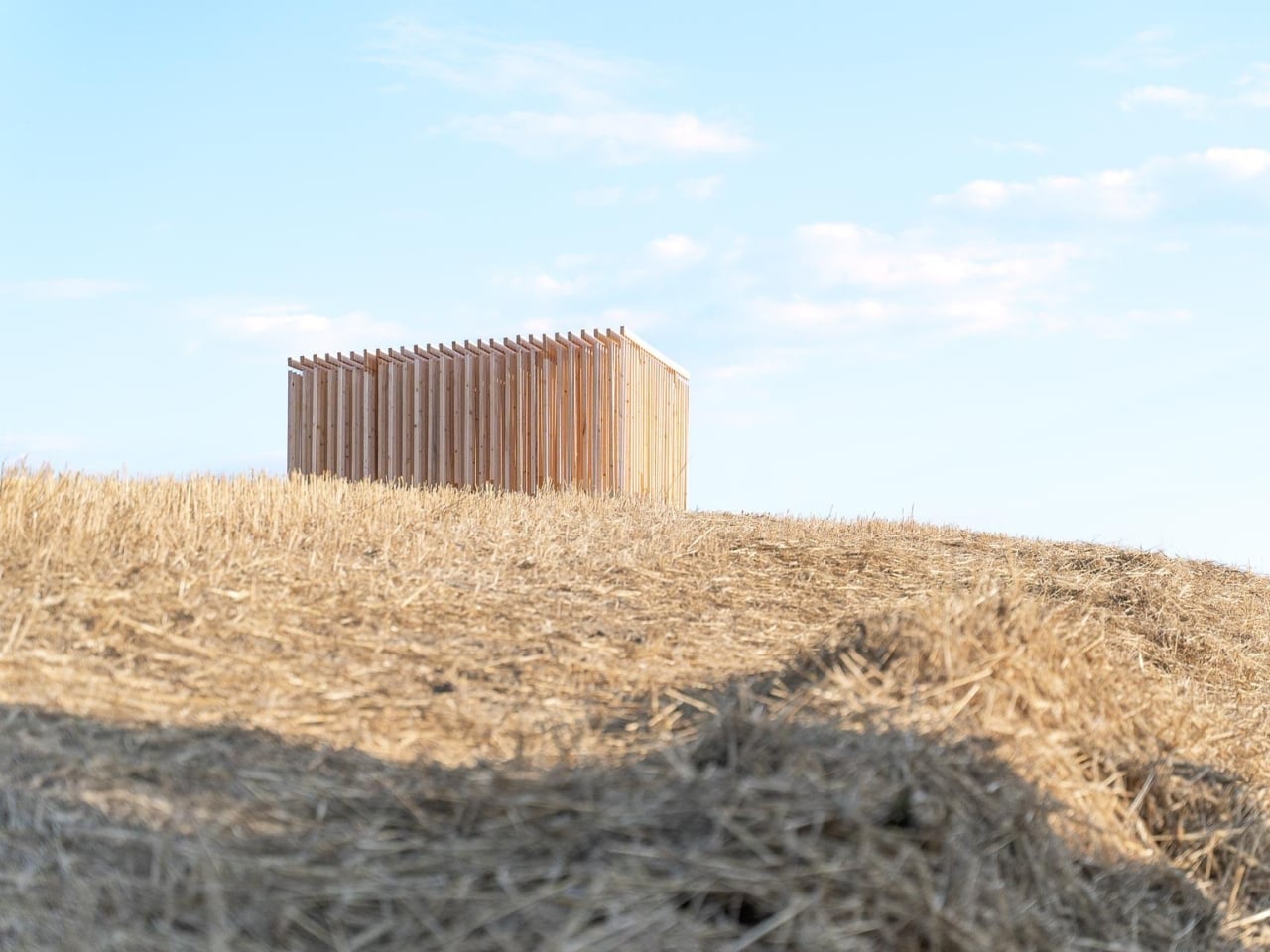
What makes this project so compelling is how it refuses to behave like traditional architecture. Most buildings try to keep the elements out, but the Cappella del Suono invites them in. It’s permeable by design, allowing wind, light, and views to pass through freely. The structure doesn’t dominate its surroundings, it blends into them. Rising from the grain fields like it grew there naturally, the pavilion manages to be both a distinct architectural place and completely part of the landscape.
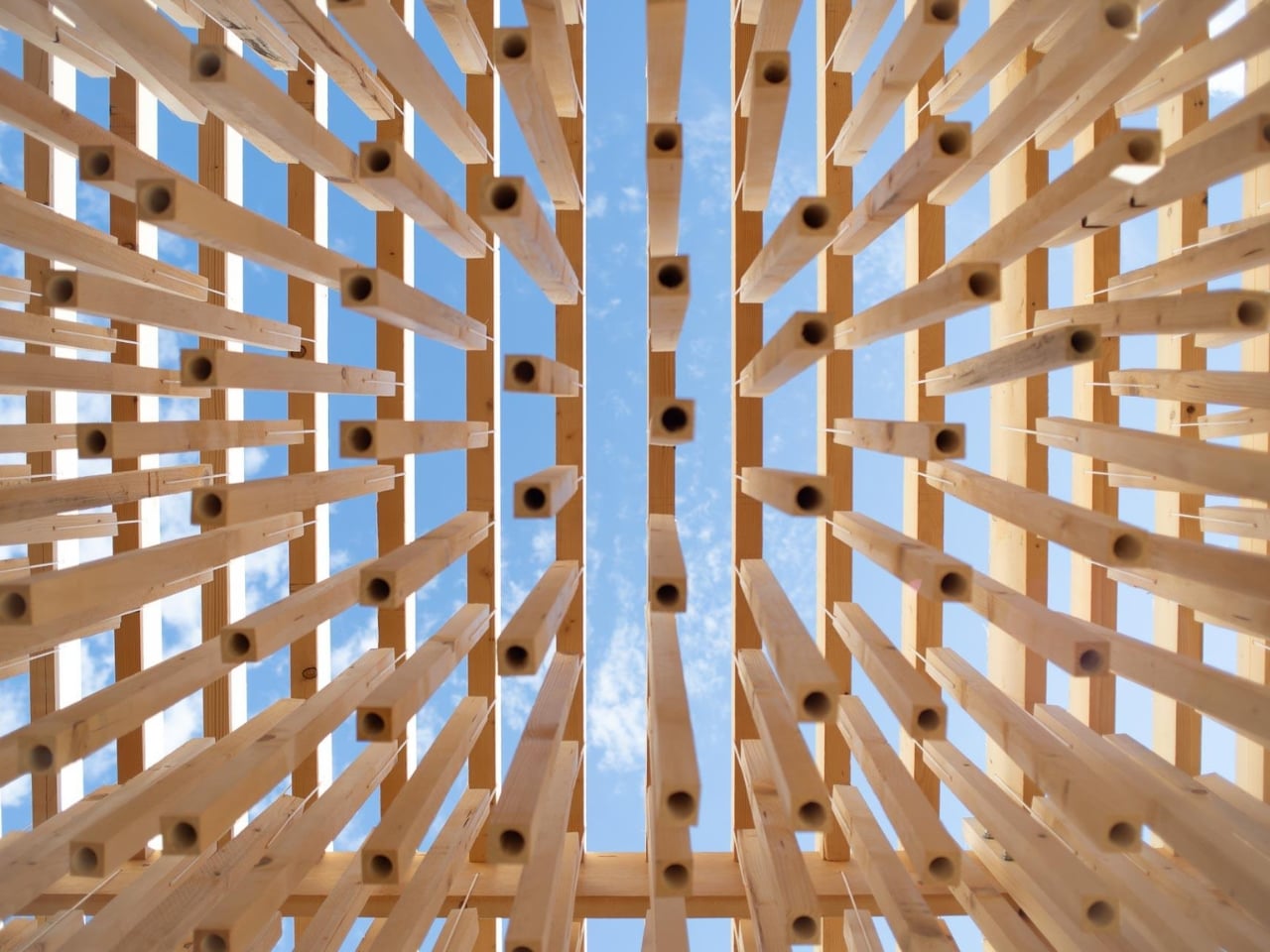
The experience changes dramatically throughout the day. Morning light filters through the vertical slats, casting long shadows that shift and dance across the ground. By afternoon, the patterns have transformed entirely, creating what Studio Carraldo describes as a richly atmospheric space that’s never quite the same twice. It’s architecture as performance, constantly responding to its environment.
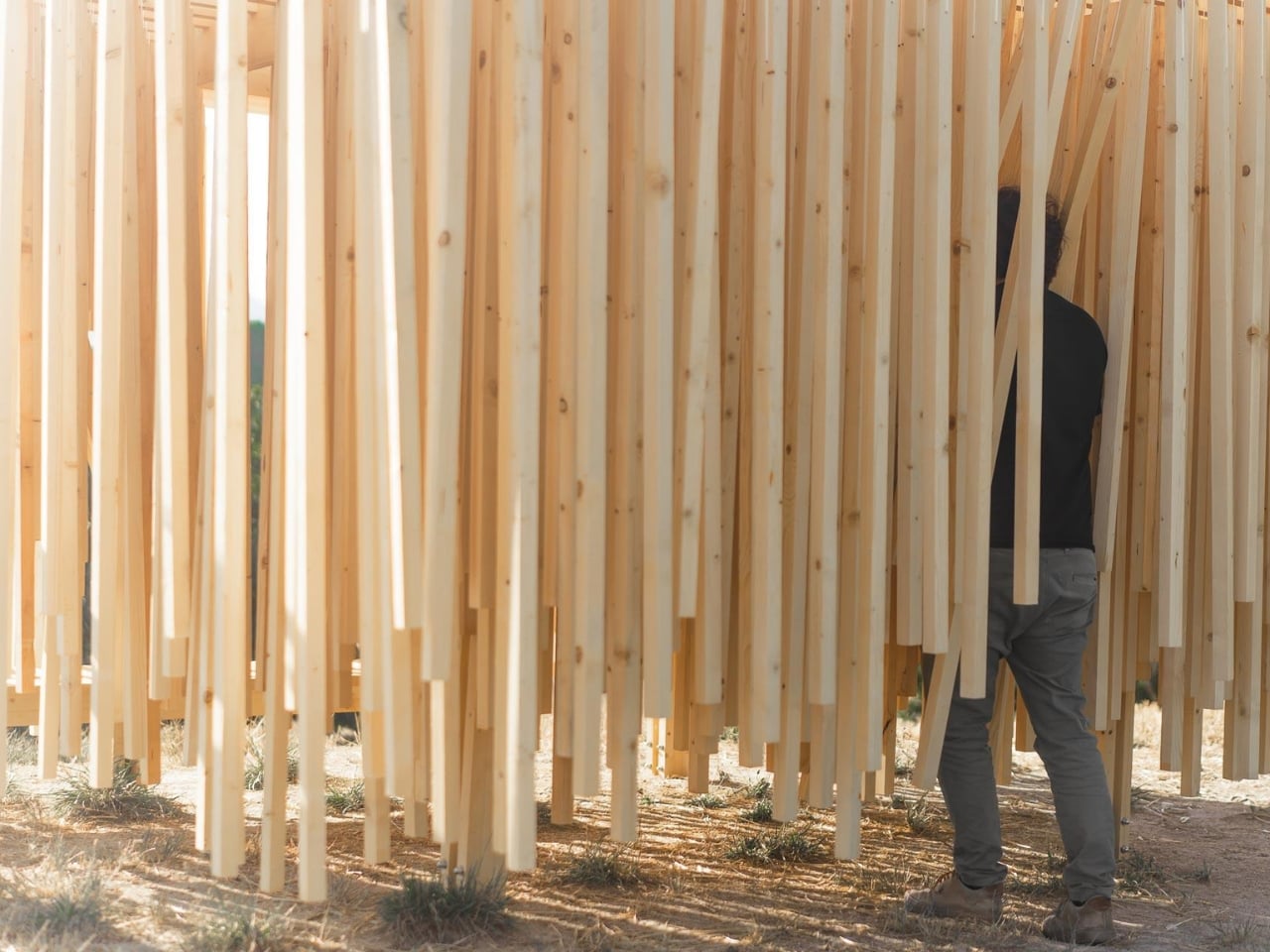
There’s a bench that runs through the space, extending from the interior to the exterior, which perfectly captures the project’s philosophy. Where does inside end and outside begin? The answer is intentionally unclear. Visitors can sit and experience the space while still feeling completely connected to the surrounding hillside and fields. The structural approach is refreshingly minimal. Slender vertical supports are simply anchored to the ground, emphasizing the temporary and non-invasive nature of the installation. There’s no heavy foundation, no permanent alteration to the landscape. It’s the kind of design that respects its context rather than imposing upon it.
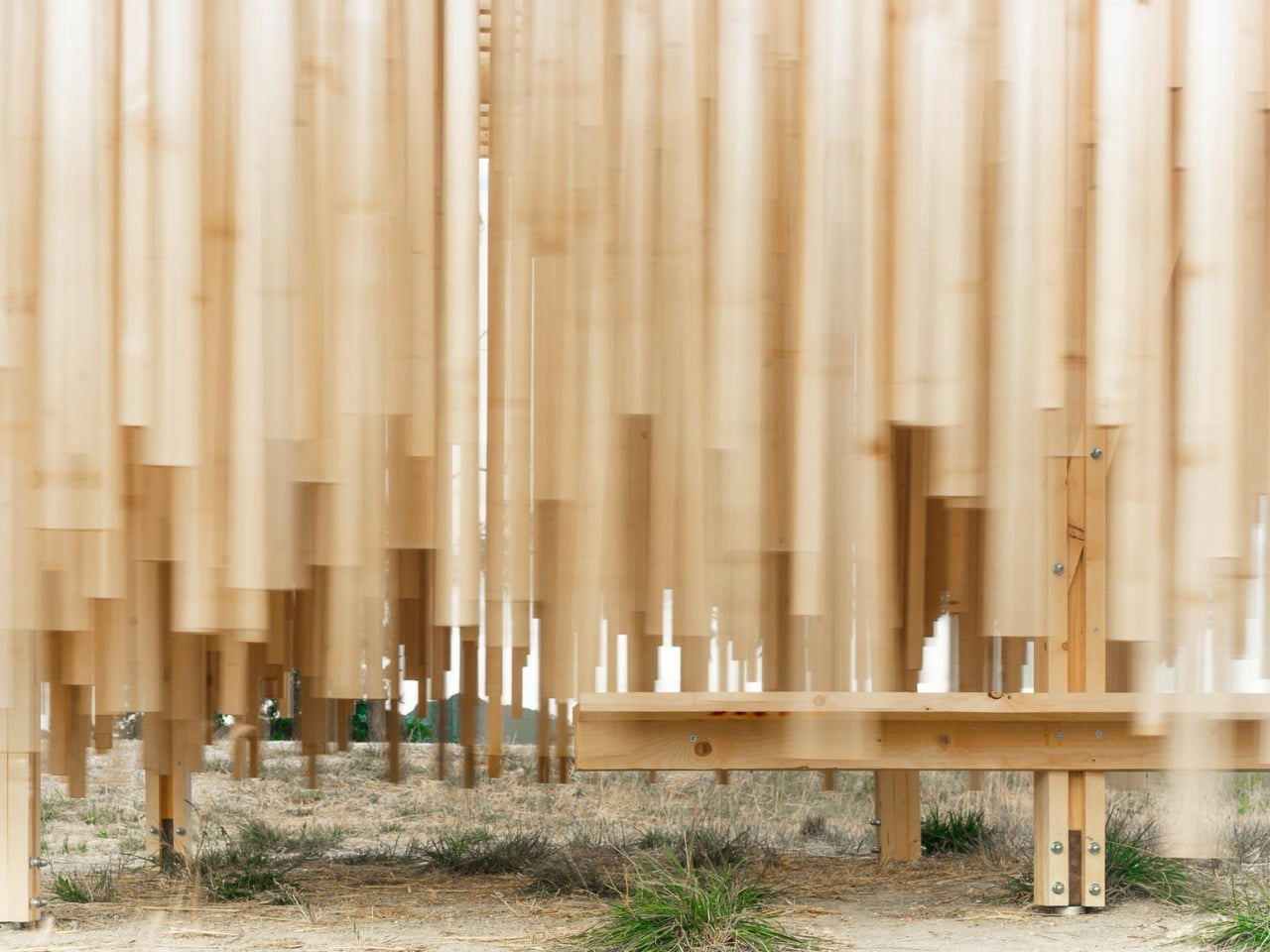
What Studio Carraldo has achieved here goes beyond creating an interesting structure. They’ve made architecture that engages multiple senses simultaneously. You see the geometric pattern of the wooden grid, you feel the breeze moving through it, you hear the percussion of wood on wood, and you experience how all these elements combine to create something that’s part sculpture, part instrument, part shelter.
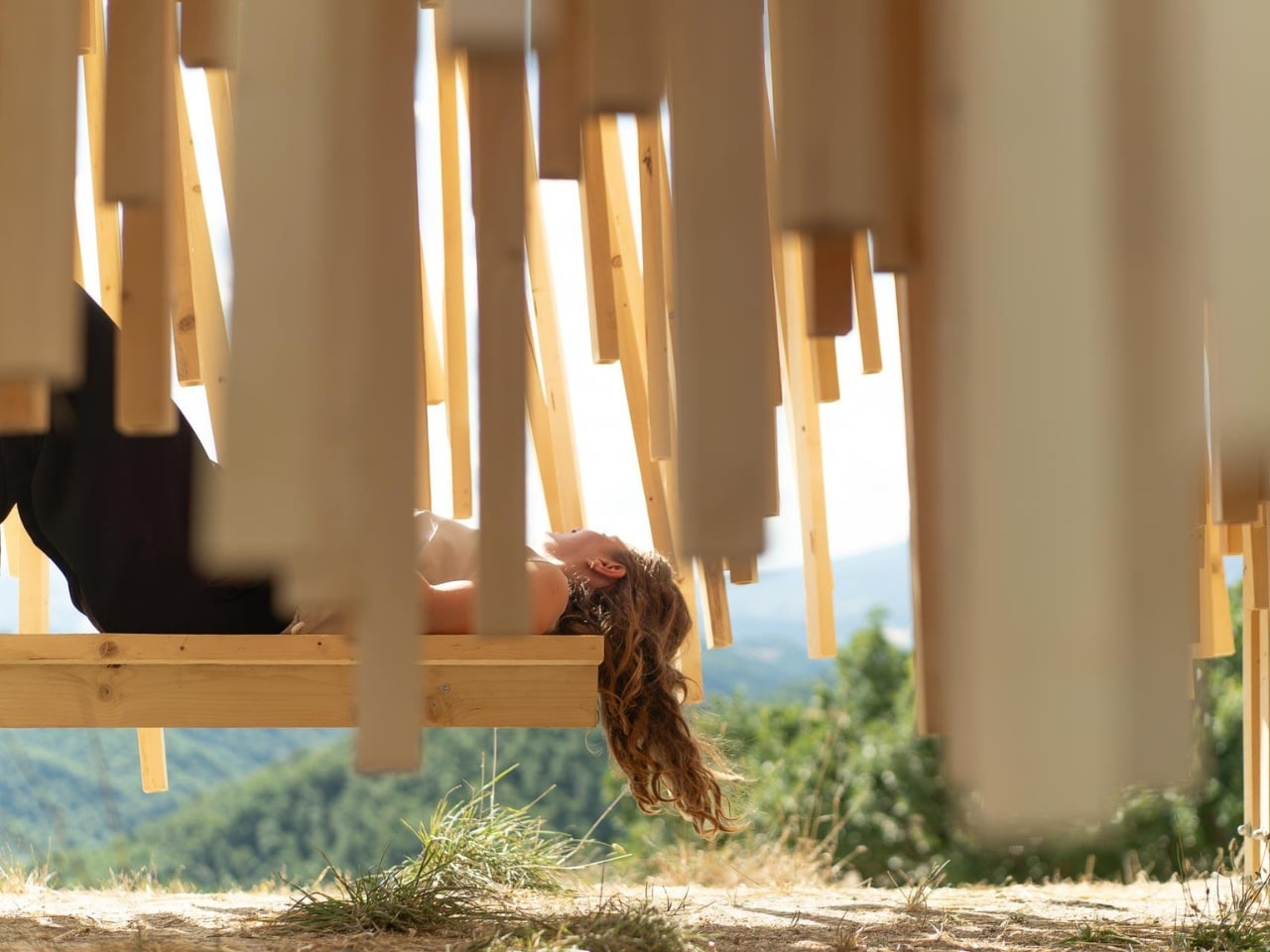
The project challenges our expectations about what architecture should do. Instead of providing solid walls and protection from the elements, it celebrates permeability and responsiveness. It doesn’t try to be timeless, it embraces its moment-to-moment changeability. Every visitor’s experience will be different depending on the weather, the time of day, and even how they move through the space.
In our era of smart buildings and high-tech architecture, there’s something refreshing about a structure that uses no electronics, no motors, no digital controls. Just wood, wind, and thoughtful design creating an experience that’s as ancient as wind chimes yet feels completely contemporary. The Cappella del Suono proves that sometimes the most innovative architecture comes from working with nature rather than against it.
SHARE