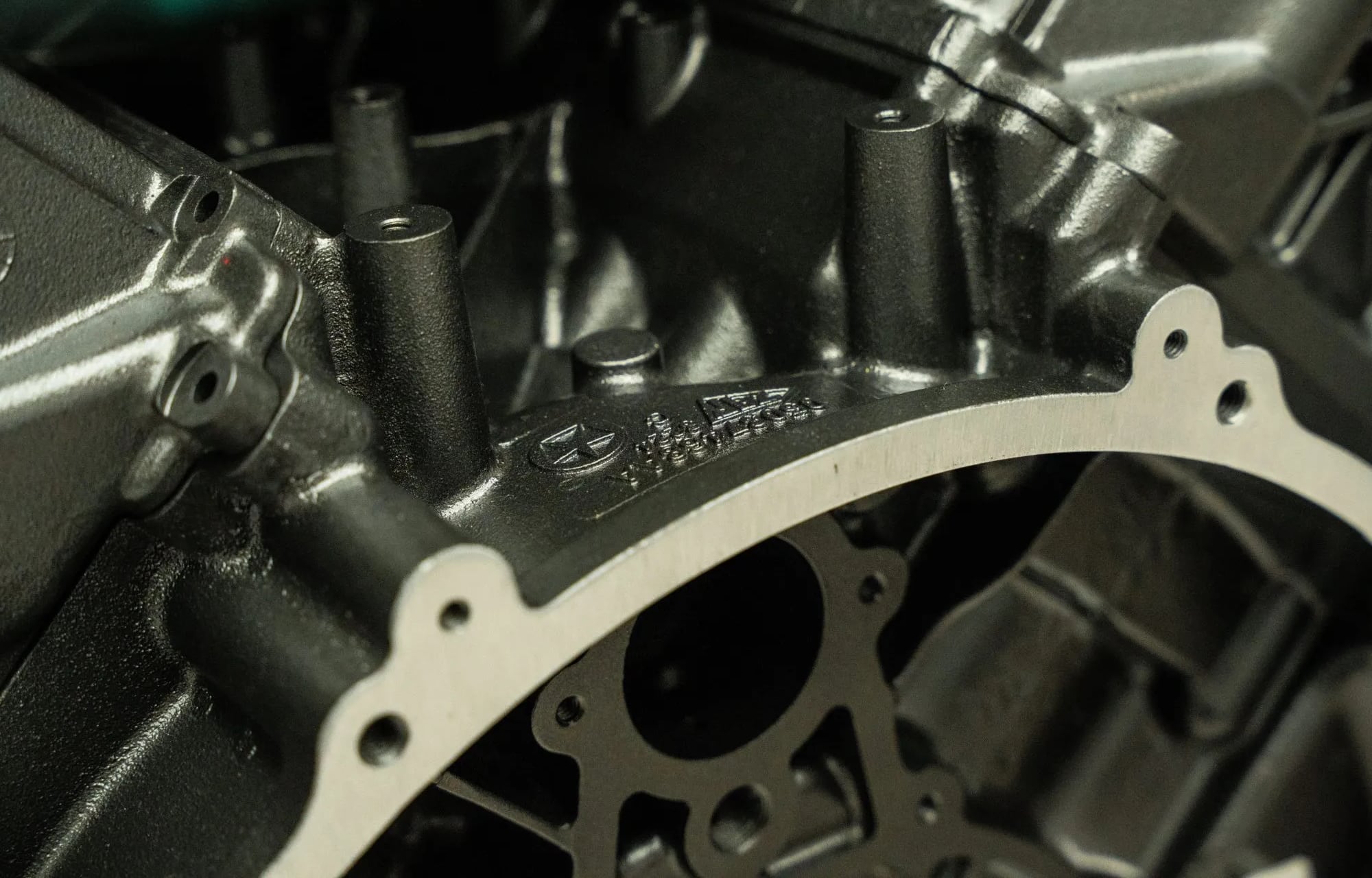
A V10 engine block possesses a particular kind of architectural presence that most furniture actively avoids. The cast aluminum surfaces carry tooling marks from industrial machining. The bolt patterns follow functional logic rather than decorative intent. The mass distribution reflects combustion dynamics, not ergonomic considerations. When this assemblage becomes a coffee table, the object enters a different conversation entirely: one about what happens when mechanical purpose gives way to spatial presence, and whether the transformation honors or obscures the original form.
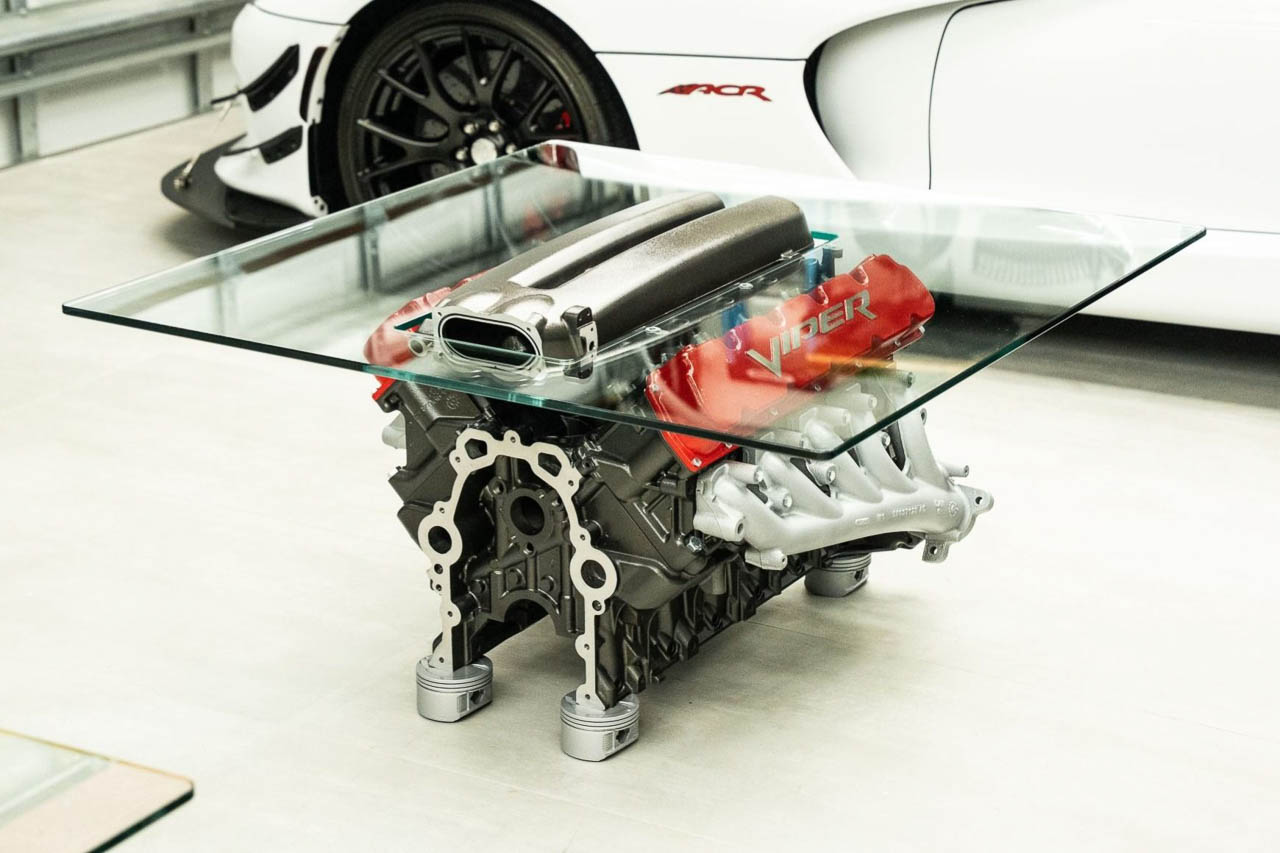
The piece that sold on Bring a Trailer for $6,350 approaches this question with unusual directness. JcCustoms finished a pieced-together V10 powertrain in black, capped it with red valve covers bearing Viper script, and placed the entire assembly beneath glass at conventional coffee table height. The result reads as neither automotive memorabilia nor standard furniture, but as something closer to an industrial artifact placed deliberately in domestic context. The 350-pound mass anchors itself to the floor with repurposed pistons serving as feet, completing a material vocabulary that runs consistently from base to crown. Every surface announces its origin. Every bolt pattern declares that this object once served a purpose far removed from supporting coffee cups and design magazines.
Form Language and Color Strategy
The color palette operates through deliberate contrast rather than subtlety. The black engine block and black intake manifold establish a dark, absorptive core that reads as negative space beneath the glass surface. Red valve covers provide the primary chromatic accent, positioned to catch light and draw attention to the components that would matter most in a functioning engine. Silver exhaust manifolds sit outboard, reflecting ambient illumination and creating a metallic counterpoint to the matte aluminum and gloss-painted surfaces at center.
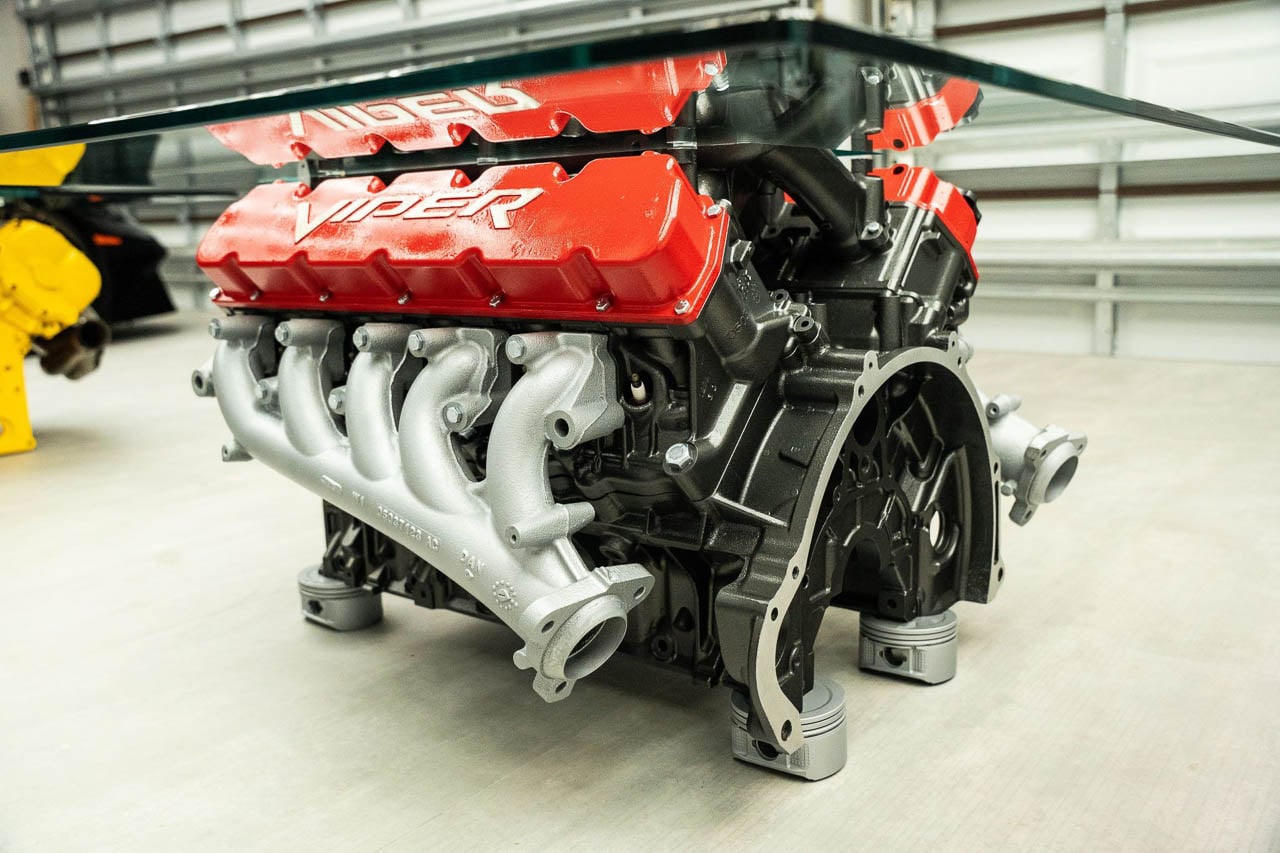
This arrangement follows a logic rooted in automotive presentation rather than interior design convention. Performance vehicles use red accents to signal aggression. Black components suggest technical seriousness. Silver hardware implies precision engineering. The table inherits these associations without requiring explanation, communicating through a visual language that anyone who has walked past a car dealership will recognize on some level. The meaning transfers even when the machinery no longer functions.
The Manifold Penetration
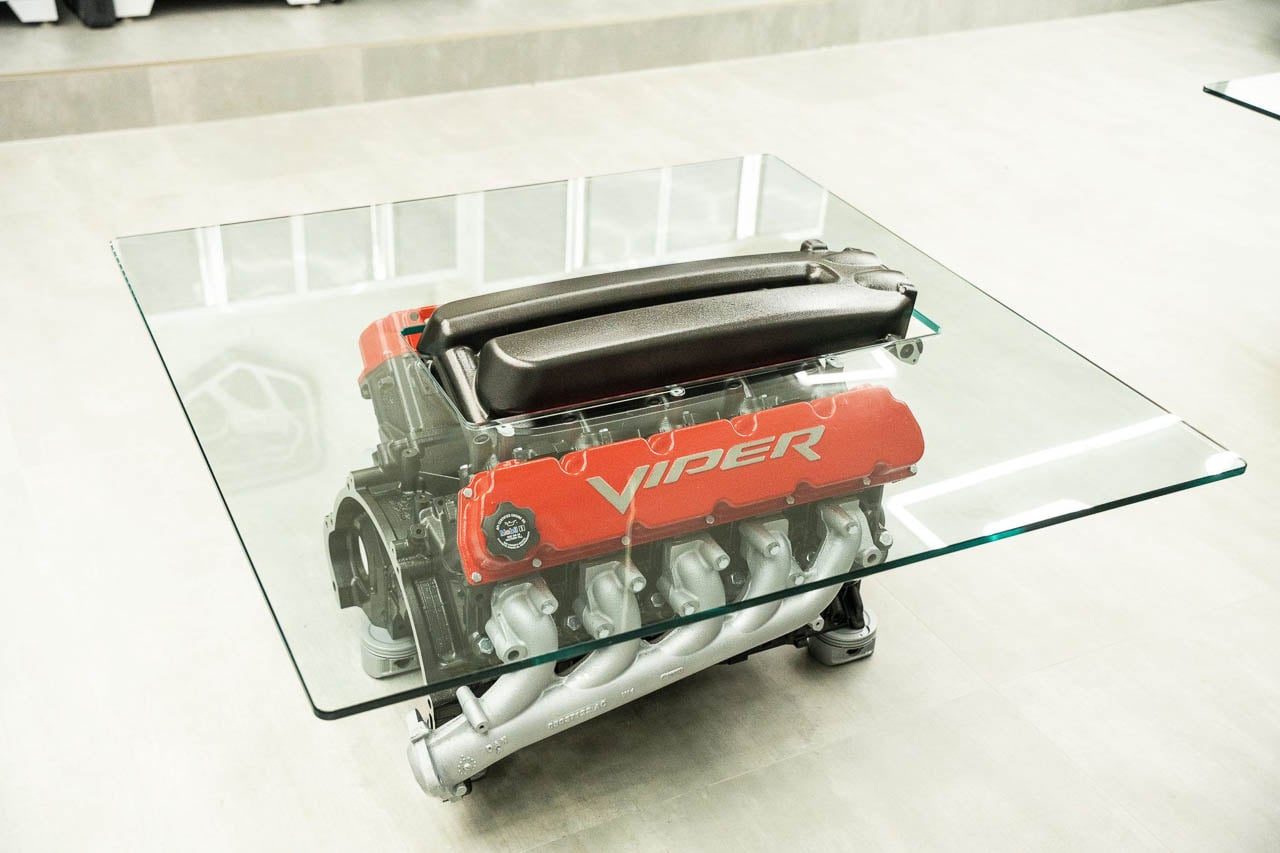
The most consequential design decision involves the intake manifold’s relationship to the glass top. Rather than sealing the engine beneath a continuous surface, the builder cut a central aperture that allows the manifold to pass through the plane of the glass and emerge into the user’s space above. This gesture transforms the table from a display case into something more spatially assertive: the manifold becomes a vertical element, almost sculptural, rising from the mechanical base like an industrial totem.
The penetration creates several simultaneous effects. It breaks the expected boundary between object and surface. It introduces vertical rhythm to a horizontal form. It makes the table physically difficult to use as a conventional surface, since the manifold occupies prime real estate at center. Most significantly, it declares that the engine’s form matters more than the table’s function, that the manifold’s sculptural presence justifies the functional compromise of a smaller usable area around its edges.
Materiality and Construction Logic
The glass top measures approximately 44 inches square and positions the overall height at roughly 21.5 inches from floor to upper surface. These dimensions place the object within conventional coffee table parameters, suggesting that whoever built it understood the constraints of living with furniture even while prioritizing visual impact over utility. The footprint works in most residential configurations. The height allows seated users to reach across the surface. The proportions read as intentional rather than accidental. Standard furniture dimensions applied to non-standard furniture content creates a productive tension: the object fits spatially while refusing to fit conceptually. This deliberate mismatch between expected form and unexpected content drives much of the piece’s visual interest, forcing viewers to reconcile the familiar coffee table silhouette with the unfamiliar mechanical presence beneath the glass.
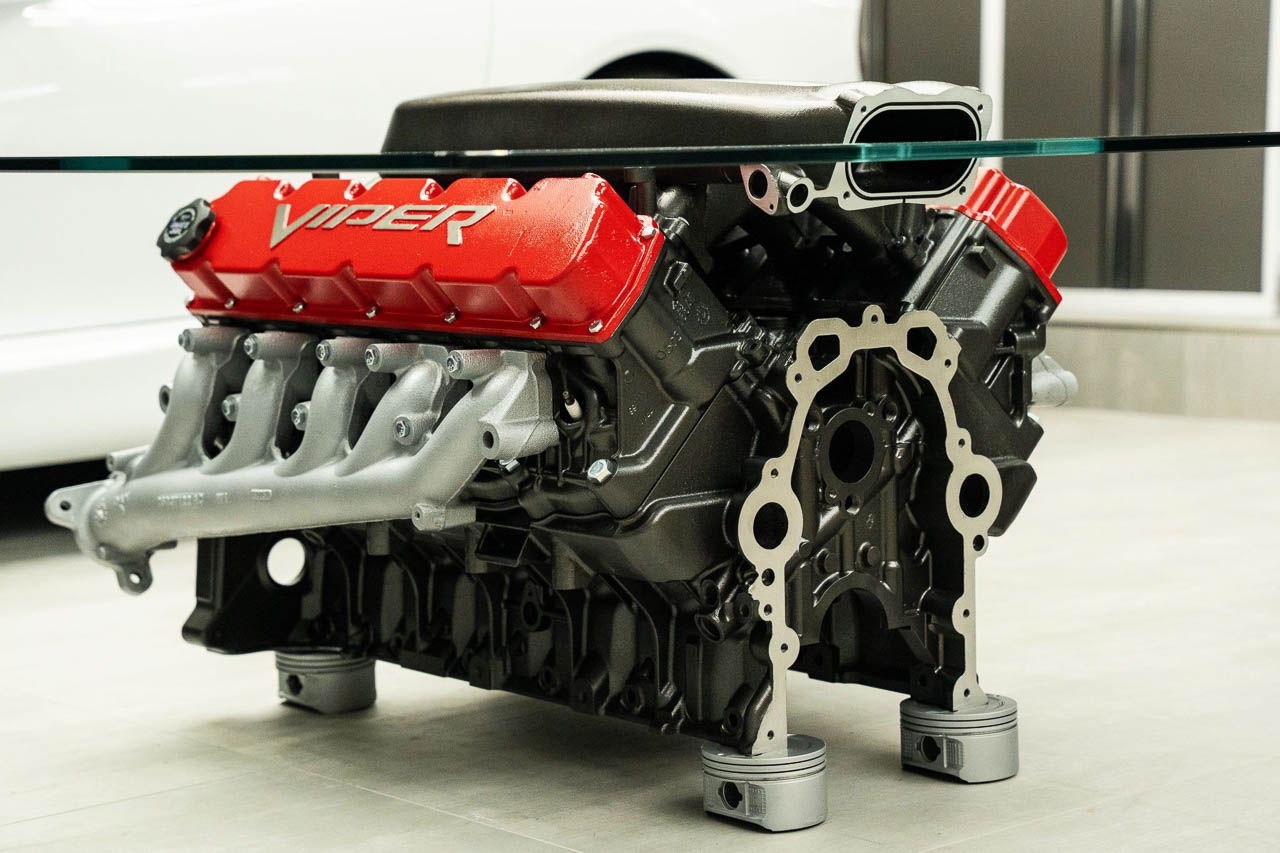
Below the glass, the engine assembly reveals its pieced-together origins. Commenters on the auction identified components that appear more consistent with Ram SRT-10 truck applications than pure Viper specification, and noted that certain valve covers may have been installed in reversed orientation. These observations matter for collectors concerned with authenticity, but they matter differently for design evaluation. The object never claimed mechanical integrity. It claimed visual coherence, and the assembled components deliver that coherence regardless of their original applications.
The pistons repurposed as feet extend the material language vertically and provide stable support for the substantial mass. This detail demonstrates the builder’s commitment to vocabulary consistency: rather than hiding the base beneath generic leveling feet, the design incorporates additional engine components to maintain the automotive reference from every viewing angle. The gesture costs nothing functionally while reinforcing the object’s identity at every point of contact with the floor.
Spatial Implications
Placing this object in a room reorganizes the space around it. The 350-pound mass cannot be casually repositioned. The visual intensity demands clear sightlines from seating areas. The scale requires sufficient floor area to breathe, ideally with circulation paths that allow viewers to approach from multiple angles. The table functions best in spaces designed around its presence rather than spaces that accommodate it as an afterthought.
This inversion of the typical furniture-space relationship aligns the piece with sculptural installation logic. A Brancusi or a Serra reorganizes the gallery around itself. This engine table, at a different scale and in a different context, performs a similar operation on domestic space. The living room becomes a setting for the object rather than the object becoming a component of the living room. Whether this constitutes design success depends entirely on whether the owner wants a room that serves the furniture or furniture that serves the room. The answer varies by temperament. Some inhabitants will thrive with an anchor piece that organizes everything else around it. Others will find the gravitational pull exhausting.
The Transformation Question
What distinguishes this execution from cruder automotive furniture attempts is the clarity of the design position. Many engine tables bury the machinery beneath excessive glass, padding the visual impact with transparency until the mechanical forms become background texture. Others over-restore the components, chasing a showroom cleanliness that erases the industrial character. JcCustoms found a middle register: finished enough to read as intentional, raw enough to preserve the material authenticity that makes the object interesting in the first place.
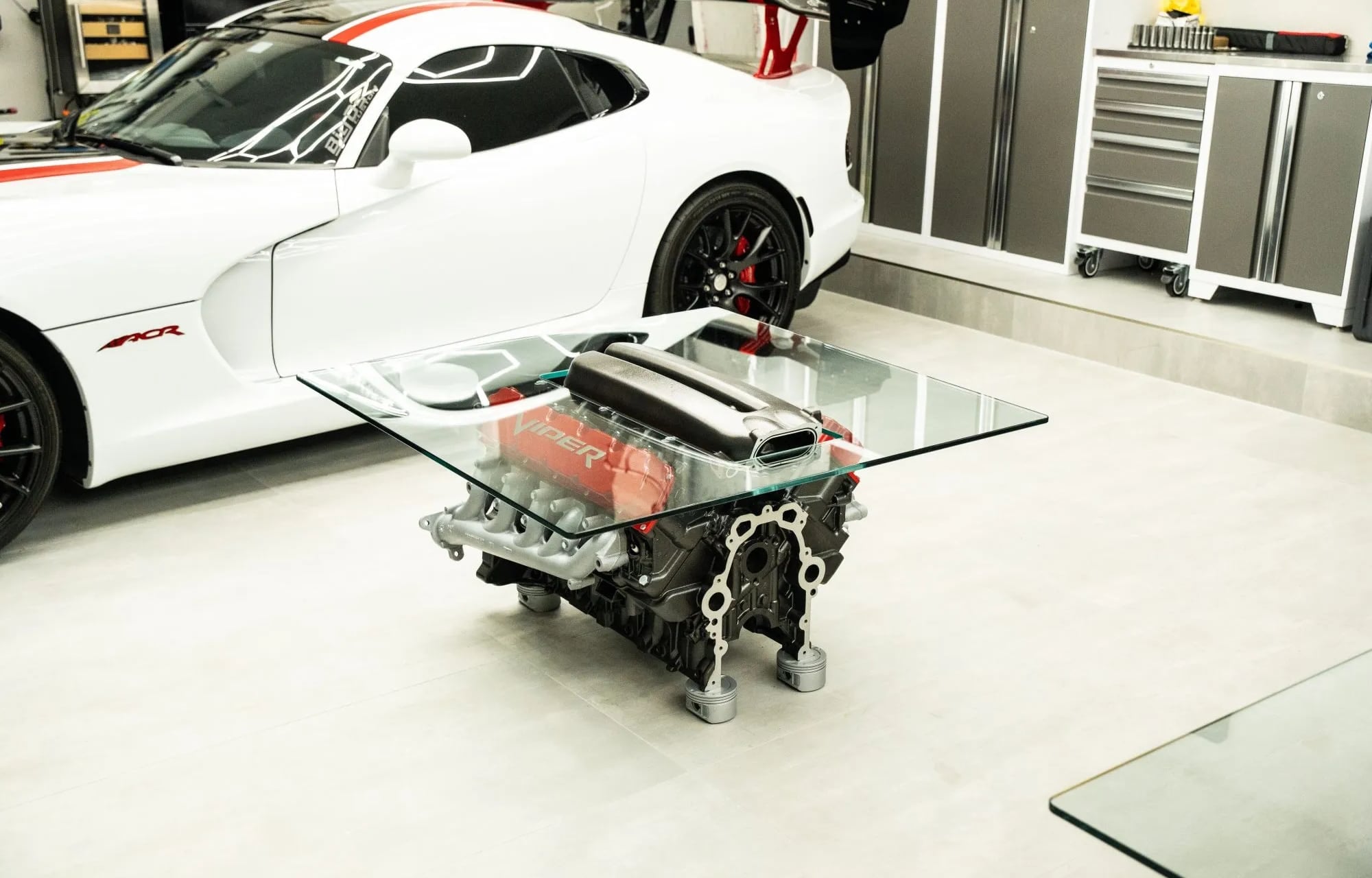
The black-and-red palette references Viper identity without reproducing it literally. The aperture asserts sculptural ambition without abandoning table function entirely. Each decision reflects restraint as much as assertion, suggesting a builder who understood that engine tables succeed or fail based on what they choose not to do as much as what they add. Knowing when to stop matters as much as knowing what to include. JcCustoms stopped at the right moment.
Object Status After Function
The $6,350 hammer price establishes this piece as serious furniture for a narrow audience, but the design implications extend beyond market validation. This table represents one answer to a question that contemporary culture increasingly confronts: what happens to mechanical objects when their original purpose ends? Engines fail. Vehicles get scrapped. Components enter a liminal state between artifact and waste. Someone chose transformation over dissolution, preservation through reimagining rather than preservation through stasis.
One response treats these objects as raw material for recycling, melting the aluminum back into commodity feedstock. Another response preserves them as static memorabilia, freezing the machinery in museum context. This table proposes a third path: transformation into new objects that acknowledge their origins while serving different functions. The engine remains recognizable as an engine. It also becomes furniture. Both identities coexist in the finished piece, neither fully displacing the other.
The buyer who claimed this object now owns something that occupies multiple categories simultaneously. It functions as a table, barely. It functions as sculpture, more convincingly. It functions as automotive artifact, somewhat ambiguously given the mixed-source components. It functions as conversation anchor, inevitably and permanently. The object will outlast the buyer’s patience for explaining it, will survive the inevitable scratches on its glass, will persist through changes in interior design fashion, will remain exactly what it is regardless of how the surrounding room evolves around it. Mechanical objects built for permanence tend to achieve it, even when their original function disappears.