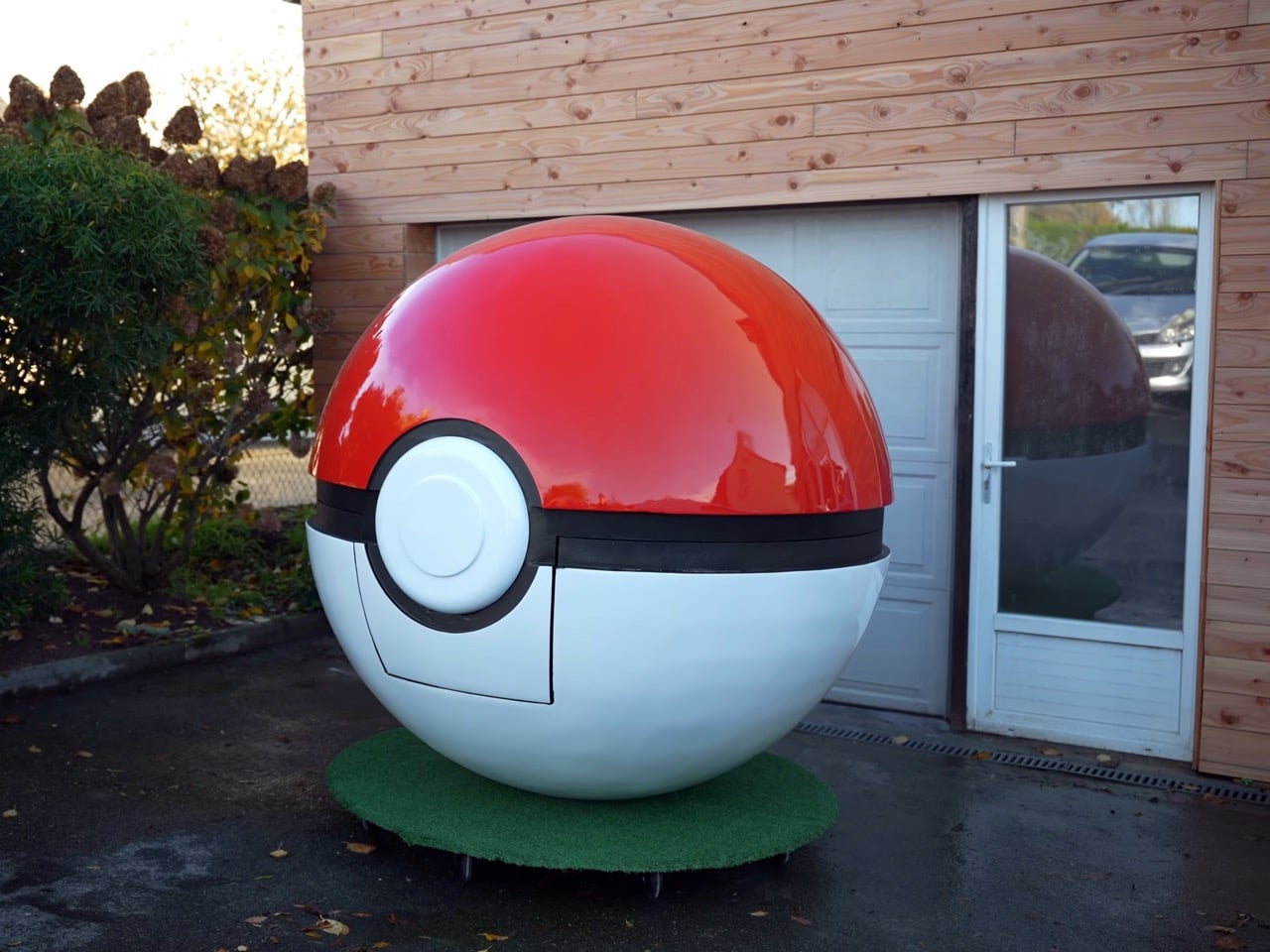
Someone finally built a life-sized Pokéball you can actually climb inside, and honestly, it’s about damn time. For nearly three decades, we’ve been throwing these things at Pidgeys and Rattatas without ever really knowing what happens when that button clicks and the whole thing seals shut. The anime gave us vague red-light-energy-conversion-something explanations, the games treated it like a loading screen, and the trading cards just showed them closed. The mystery has persisted through 1,000+ Pokémon species, countless regional variants, and enough spin-off merchandise to fill a Snorlax’s stomach. Now a maker has gone full obsessive and constructed a 2-meter diameter functional Pokéball with a gaming room inside, and the build process is as chaotic as you’d expect when someone decides to turn childhood curiosity into a construction nightmare.
The project started with a simple question that’s plagued Pokémon fans since 1996: what’s inside a Pokéball? Instead of accepting Nintendo’s hand-wavy “they’re converted to energy” explanation, this builder decided to answer it the only way that makes sense for a ’90s kid: put a Nintendo 64 running Pokémon Stadium inside one. The irony is perfect. You’re sitting inside the device that’s supposed to contain Pokémon while playing a game about battling those same Pokémon on a console from the franchise’s golden era. It’s meta in the best possible way, and it scratches that specific nostalgia itch that only people who spent hours trying to catch Mewtwo with a regular Pokéball can appreciate.
Designer: Carlos 3D World
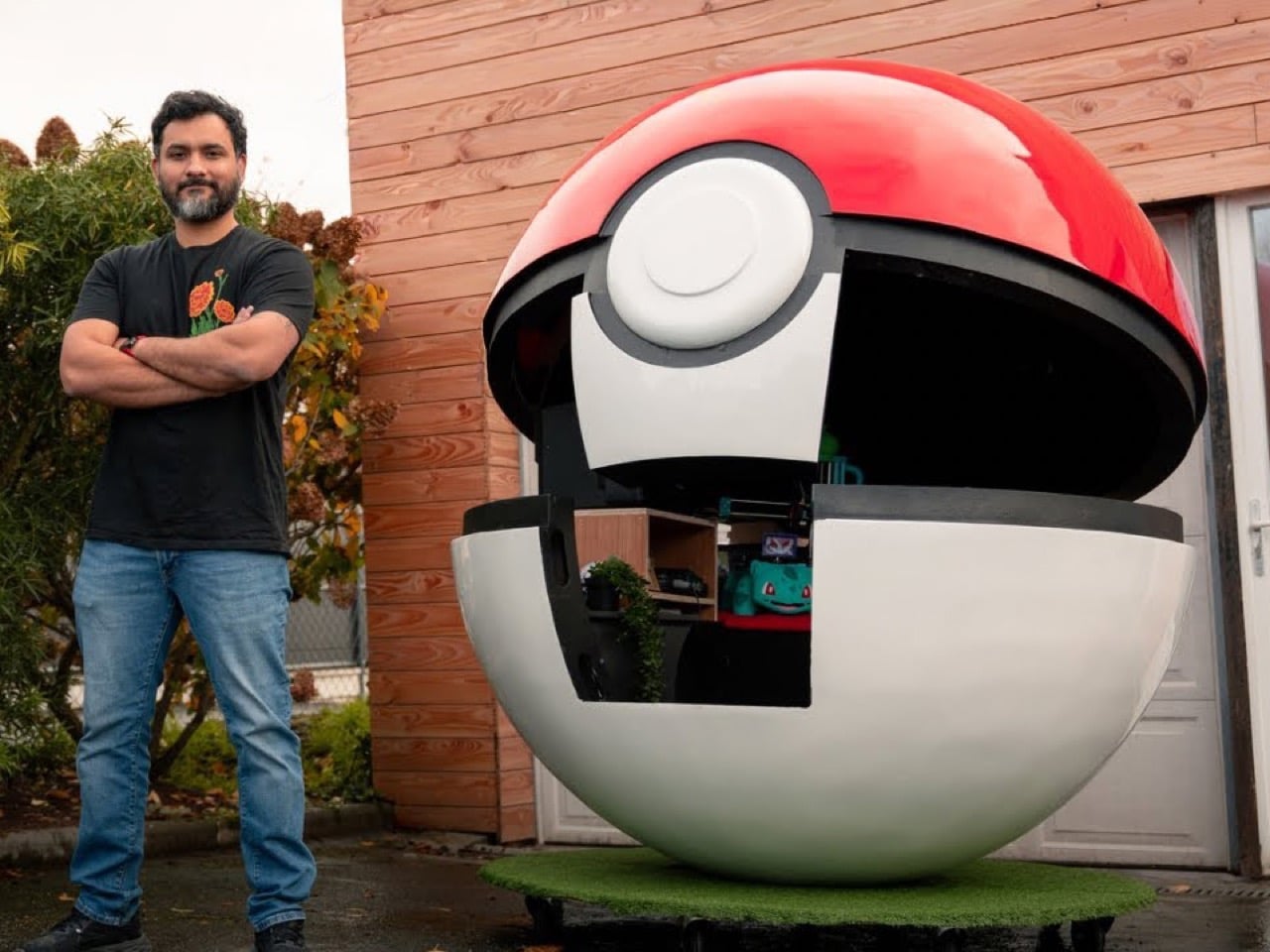
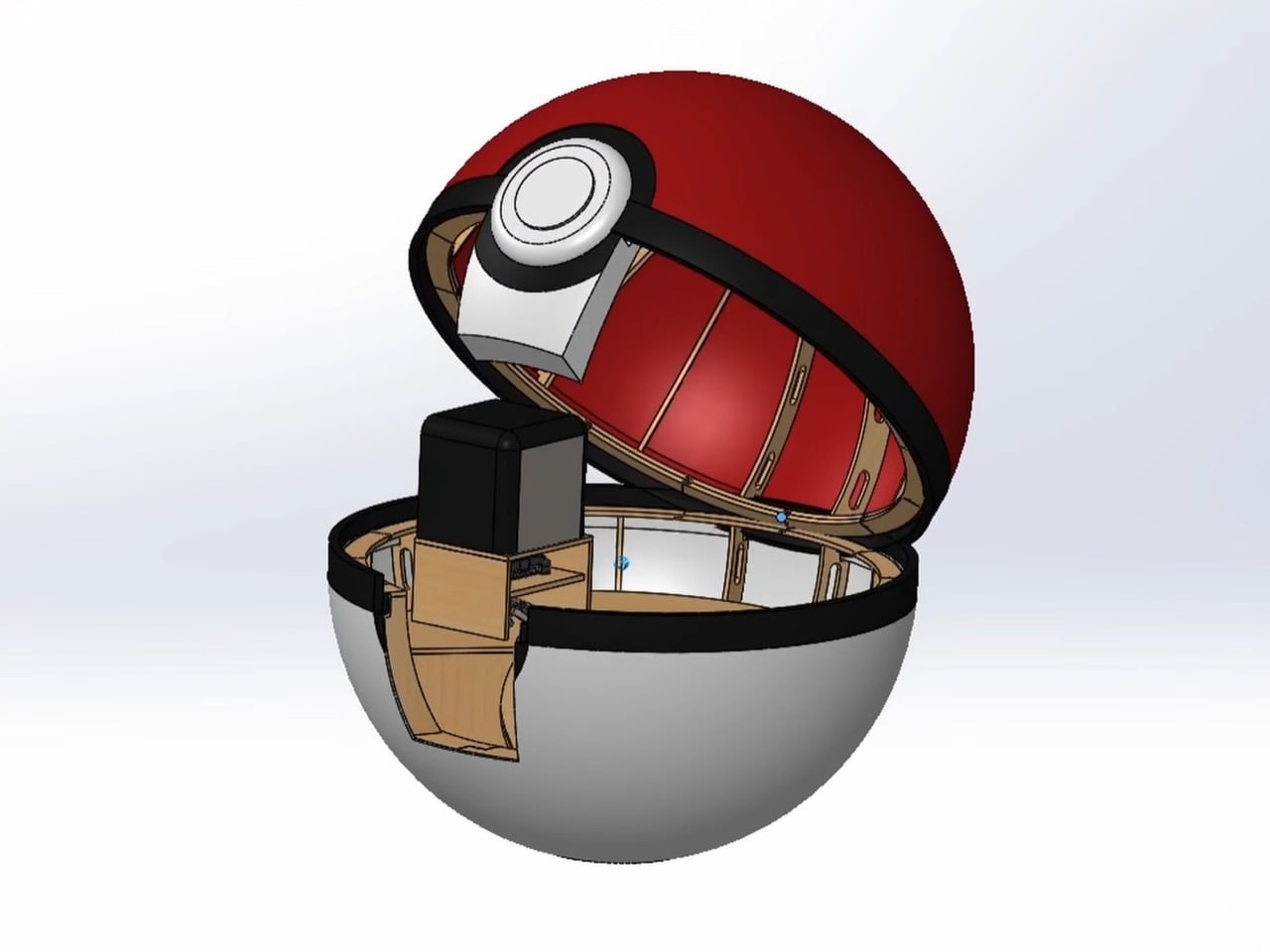
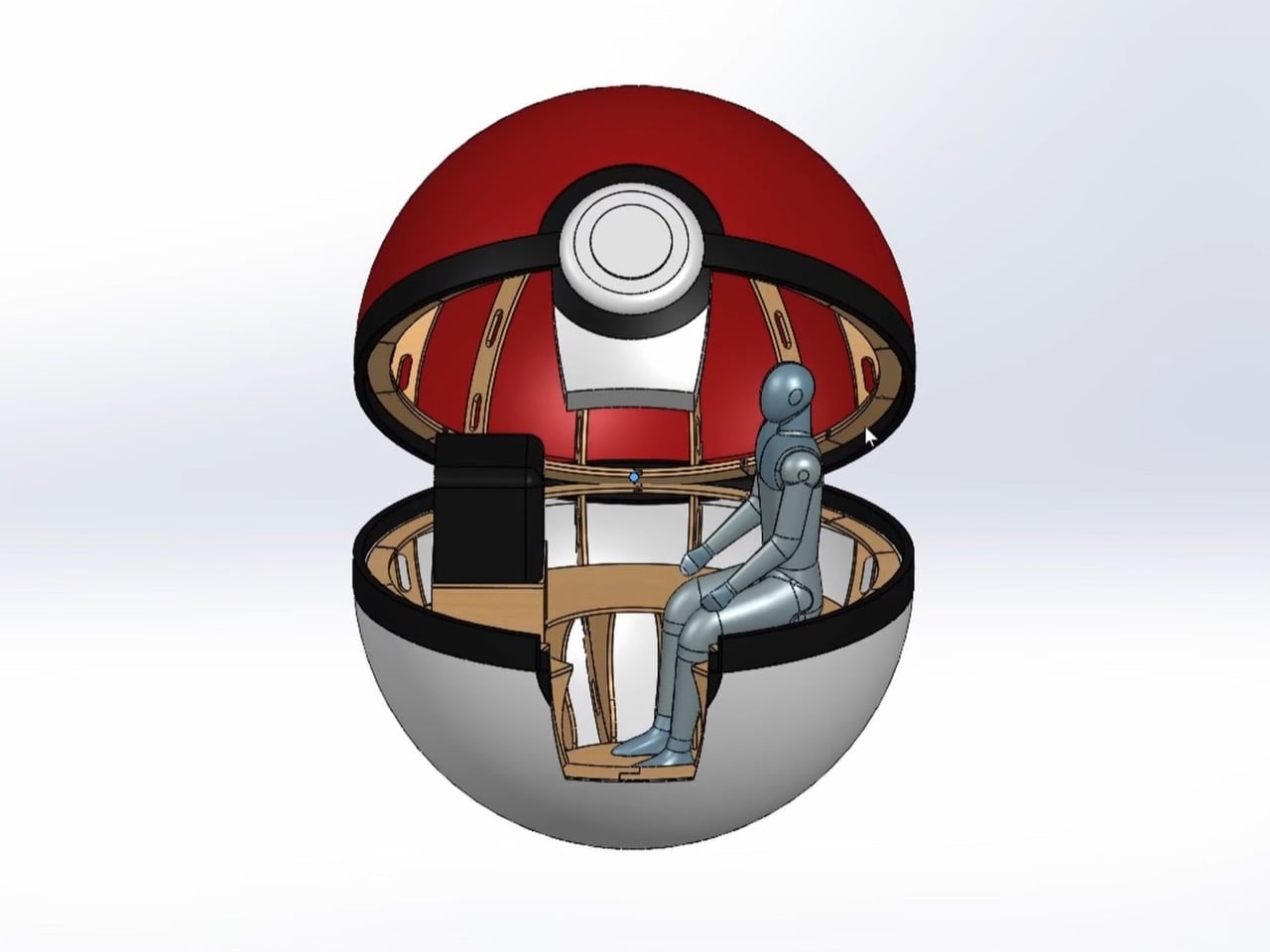
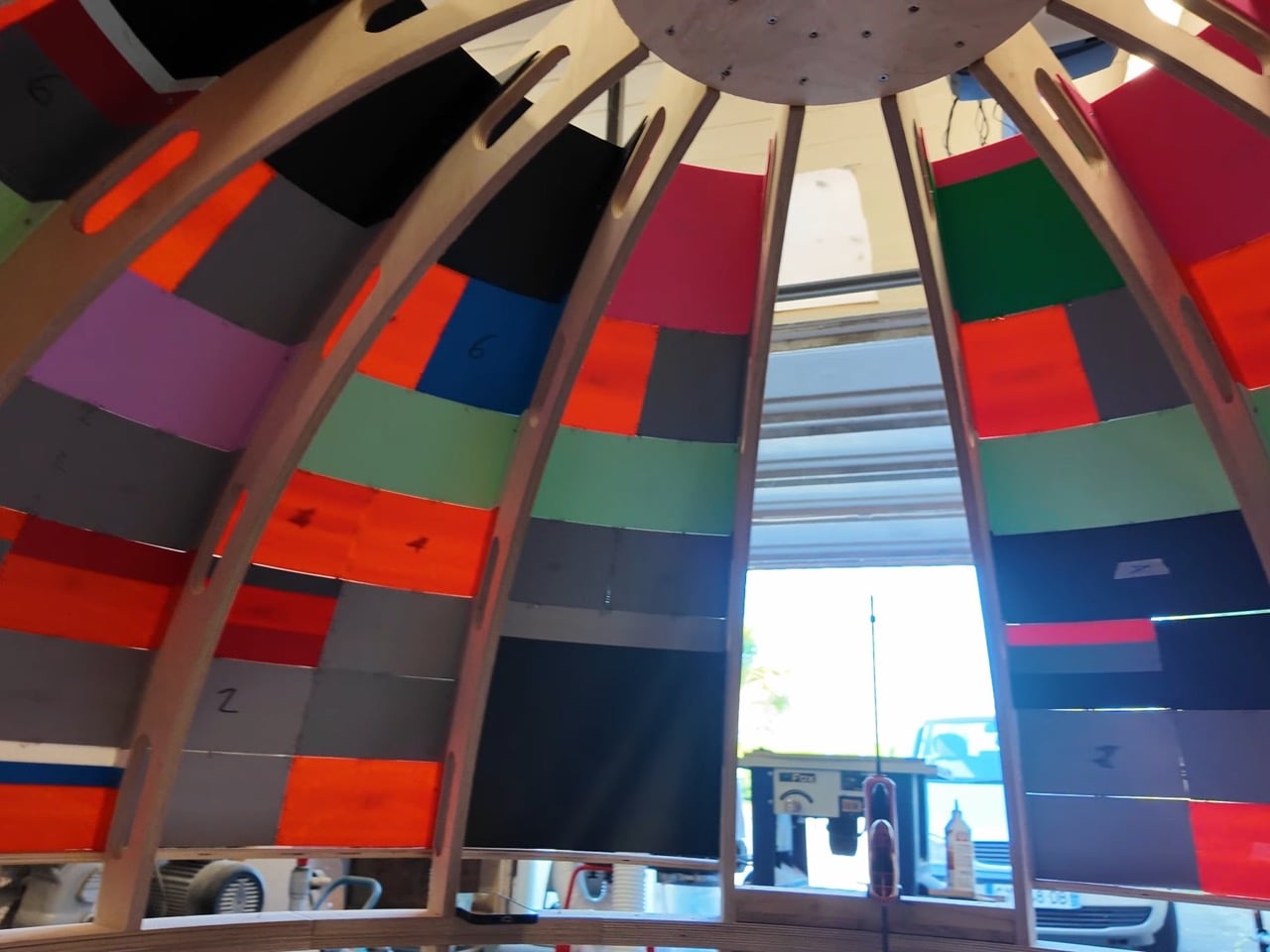
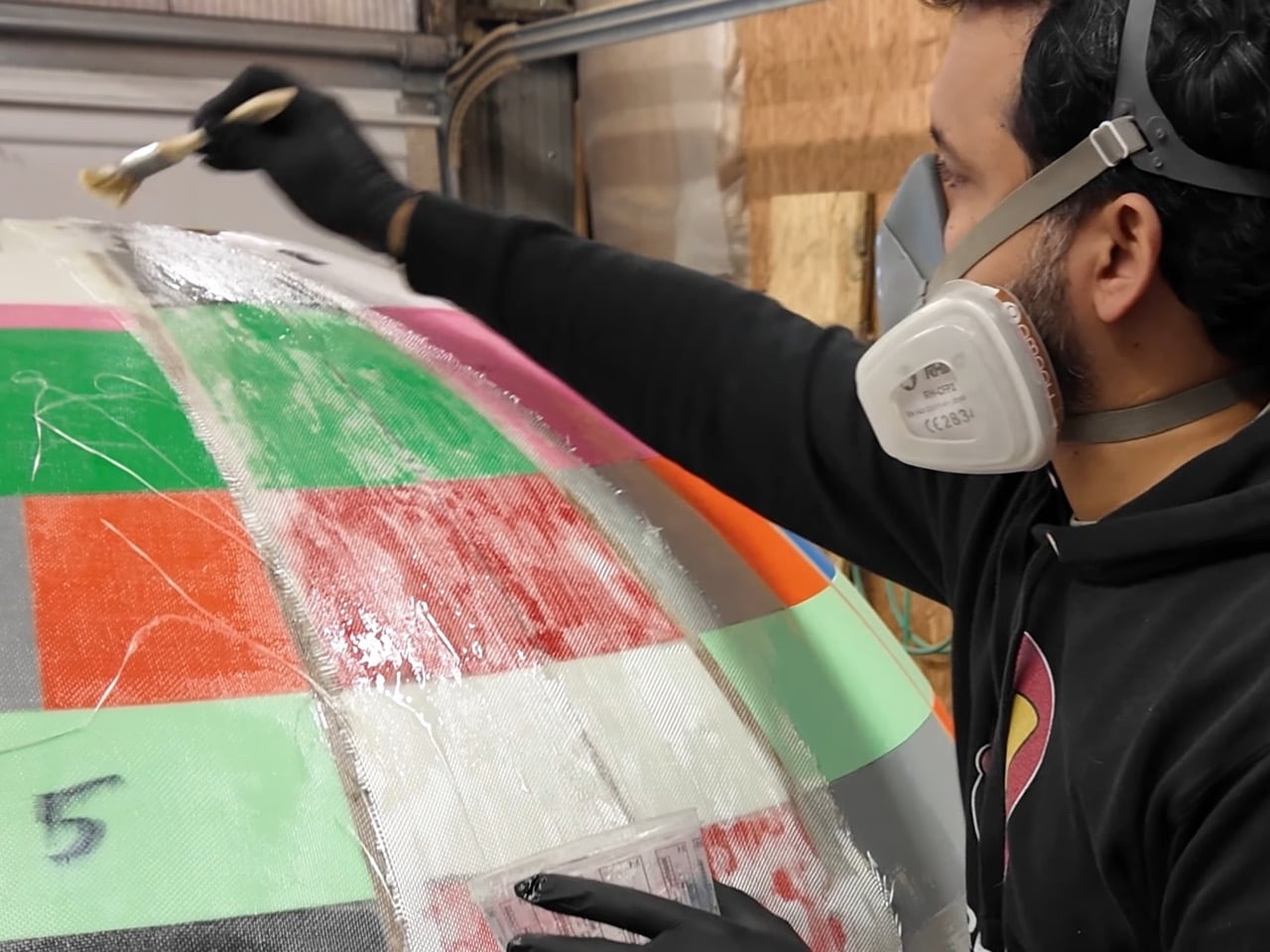
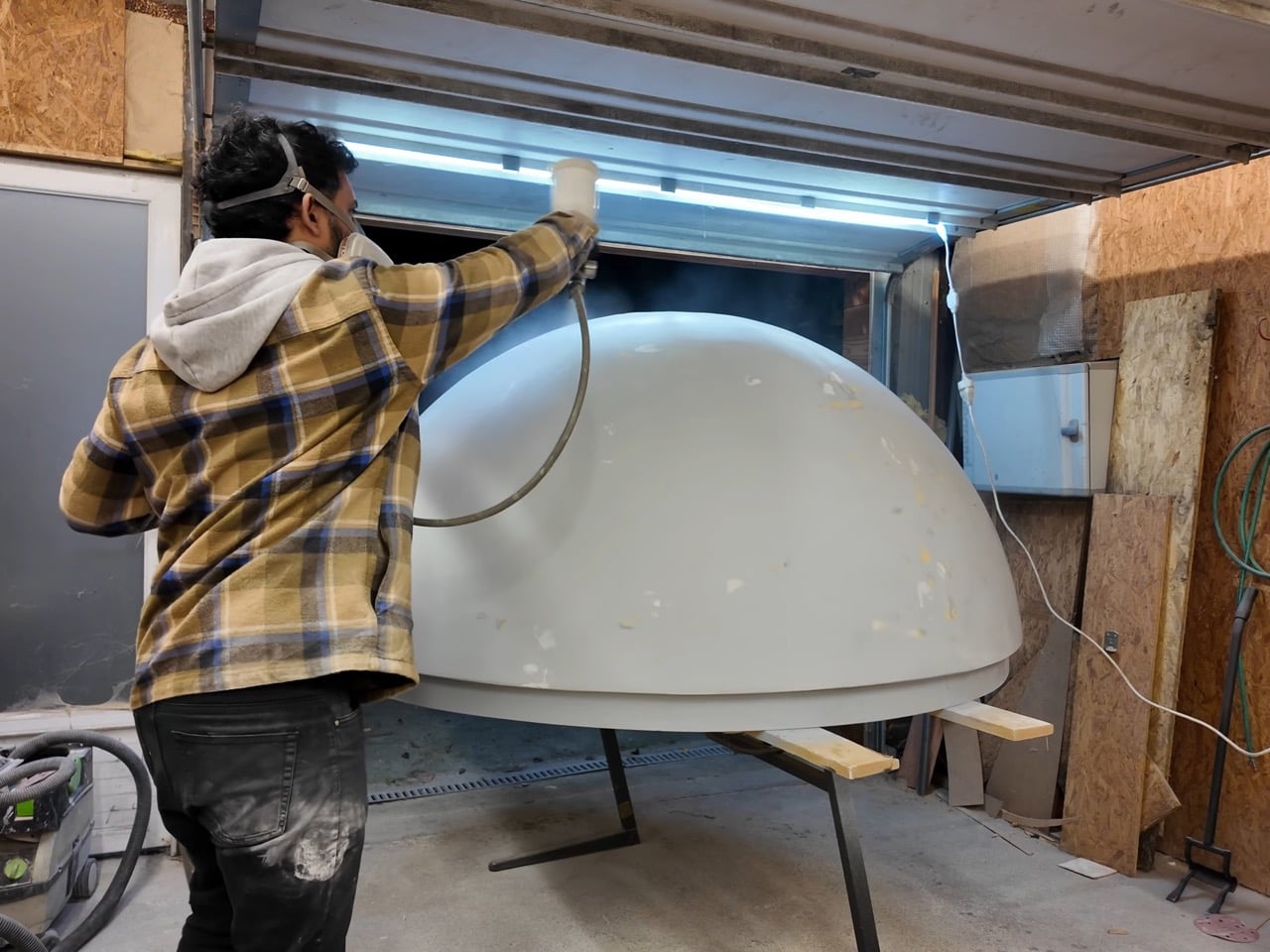
Building a 2-meter sphere that doesn’t look like low-poly trash is harder than you’d think. The structure uses CNC-cut plywood ribs as the skeleton, over 400 individual 3D-printed panels for the shell, then fiberglass and resin for strength. But getting there took multiple spectacular failures. Flexible MDF sheets? Kept breaking. Polystyrene construction material? Dimensional inconsistencies everywhere. The 3D printing solution worked but meant running multiple printers for weeks, upgrading to 0.8mm nozzles just to speed things up, and still ending up with 400+ pieces that needed assembly, alignment, and somehow had to form a smooth sphere. Each piece was 3mm thick, split in half to fit inside the printer beds, then glued back together with hot staples and jigs to maintain the curve. It’s the kind of project where you’re two months in and questioning every life choice that led you here.
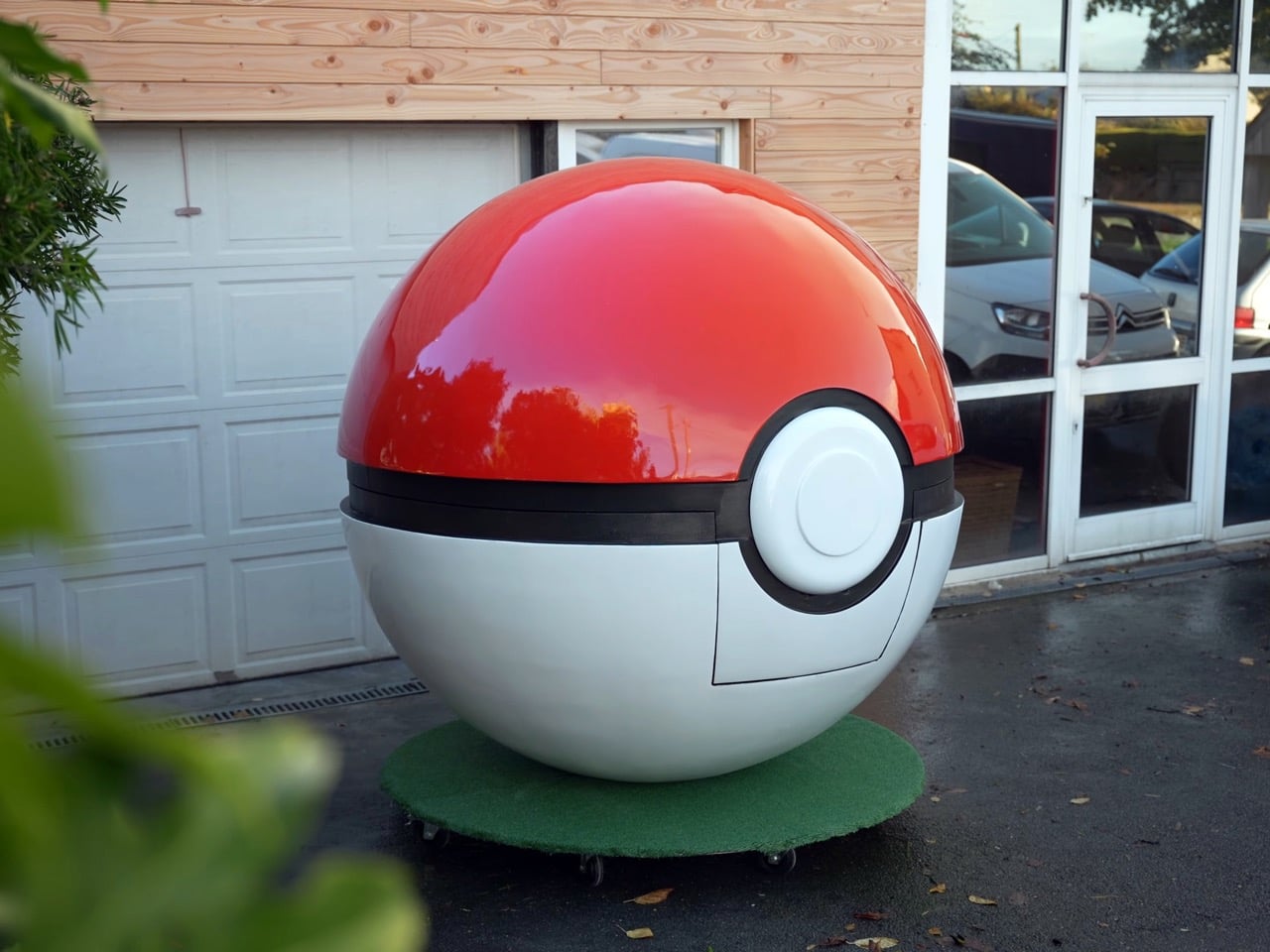
The entry door required a minor compromise, but for a better user experience. Instead of splitting the Pokéball at its natural center line where it actually opens, there’s a cutout near the bottom. A proper equator split would mean climbing over a one-meter ledge every time you wanted to play some Pokémon Snap, which sounds cool in theory until you’re the third person trying to haul yourself up without spilling your drink. The lower door lets you walk in like a normal human while still maintaining that iconic spherical silhouette from the outside. It sits on hidden wheels under a green turf mat, so it looks like it’s chilling in tall grass but can actually roll wherever you need it. Practical design choices matter when your art project weighs several hundred pounds and needs to fit through doorways.
Finishing this thing was apparently hell. You’ve got 400+ 3D-printed segments meeting wood meeting fiberglass meeting resin, and every joint is a seam that needs smoothing. The builder slathered on putty, sanded away 90% of it, repeated that process until their arms fell off, and somehow got the surface smooth enough for that glossy red and white paint job. This is the part that separates people who finish ambitious projects from people who have half-built things decomposing in their garage. Weeks of sanding with respirators, dealing with dust everywhere, trying to make a sphere that’s technically made of hundreds of pieces read as one continuous surface. Nobody posts Instagram stories about the sanding phase, but it’s where most of the actual work happens.
Inside, there’s a Nintendo 64 hooked up to a CRT television, custom curved furniture, framed Pokémon cards, and lighting that makes the whole space feel intentional. The electrical system uses a disconnect plug so you can unplug the whole Pokéball and move it without rewiring, which is the kind of forethought that shows someone actually planned to use this thing beyond the initial build photos. Sitting inside while playing Pokémon Stadium on hardware from 1996 creates this recursive loop of nostalgia that works way better than it should. You’re experiencing the franchise through its original medium while physically occupying the space that defined how we interacted with these creatures. It’s experiential design that actually commits to the bit instead of just looking cool in photos.
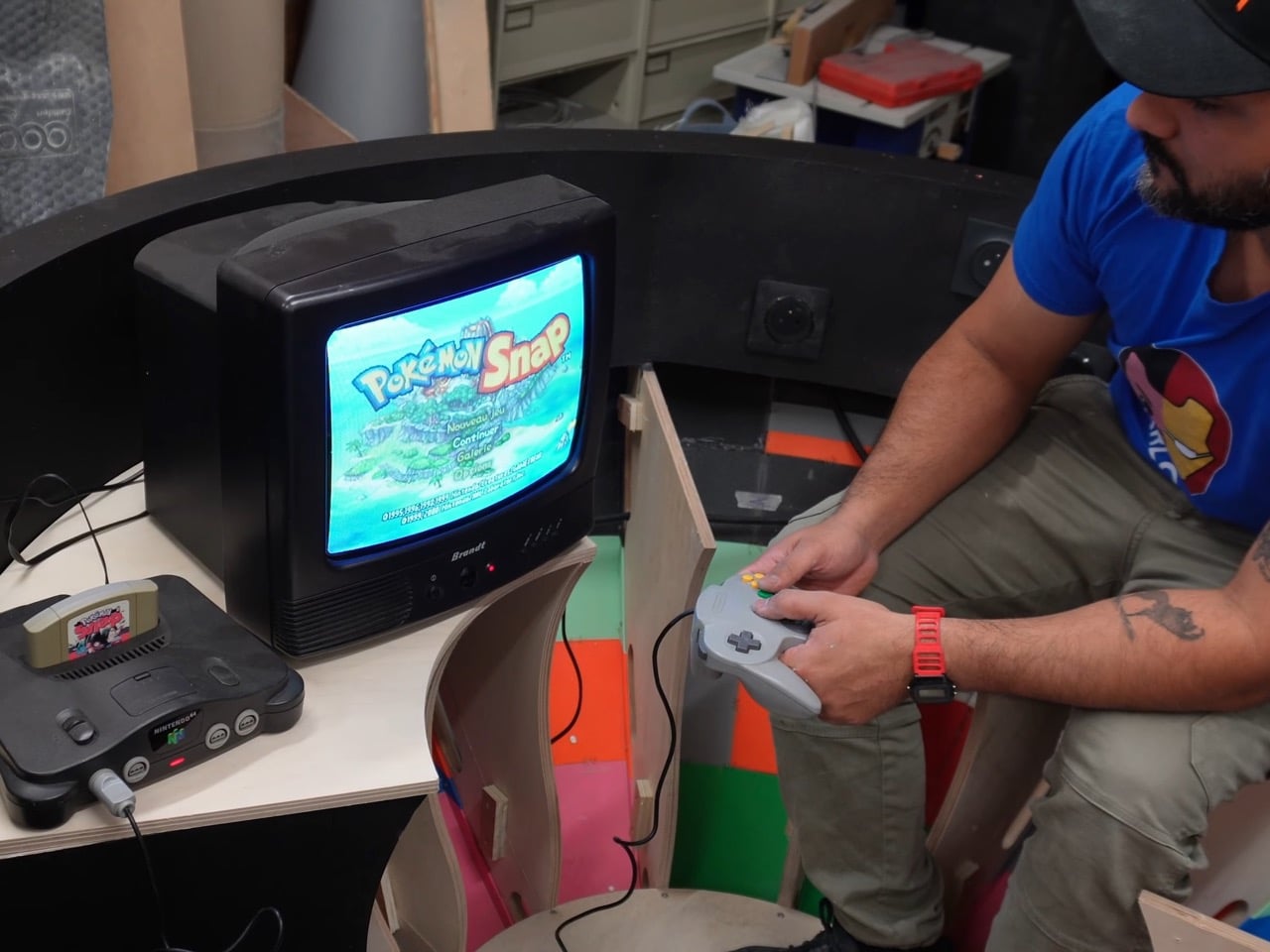

Pokémon has always worked because it left gaps for imagination. How does a 32-foot Onix fit in there? What does it feel like inside? The games and anime never really explained it, so millions of kids filled in those blanks themselves (Are all humans vegans? We’ve never seen them eating Pokémon). Building a giant Pokéball with a gaming setup inside doesn’t answer the canonical questions, but it does something better. It takes that childhood wonder about what’s inside and makes it real in the most fitting way possible: by putting the games that started everything right at the center. You climb inside, pick up that three-pronged N64 controller, and suddenly you’re back in 1998 trying to beat the Elite Four while your mom yells that dinner’s ready. Except now you’re doing it from inside the icon that defined the entire franchise, which is exactly the kind of full-circle moment that makes you understand why someone would spend months building this thing in the first place.
SHARE