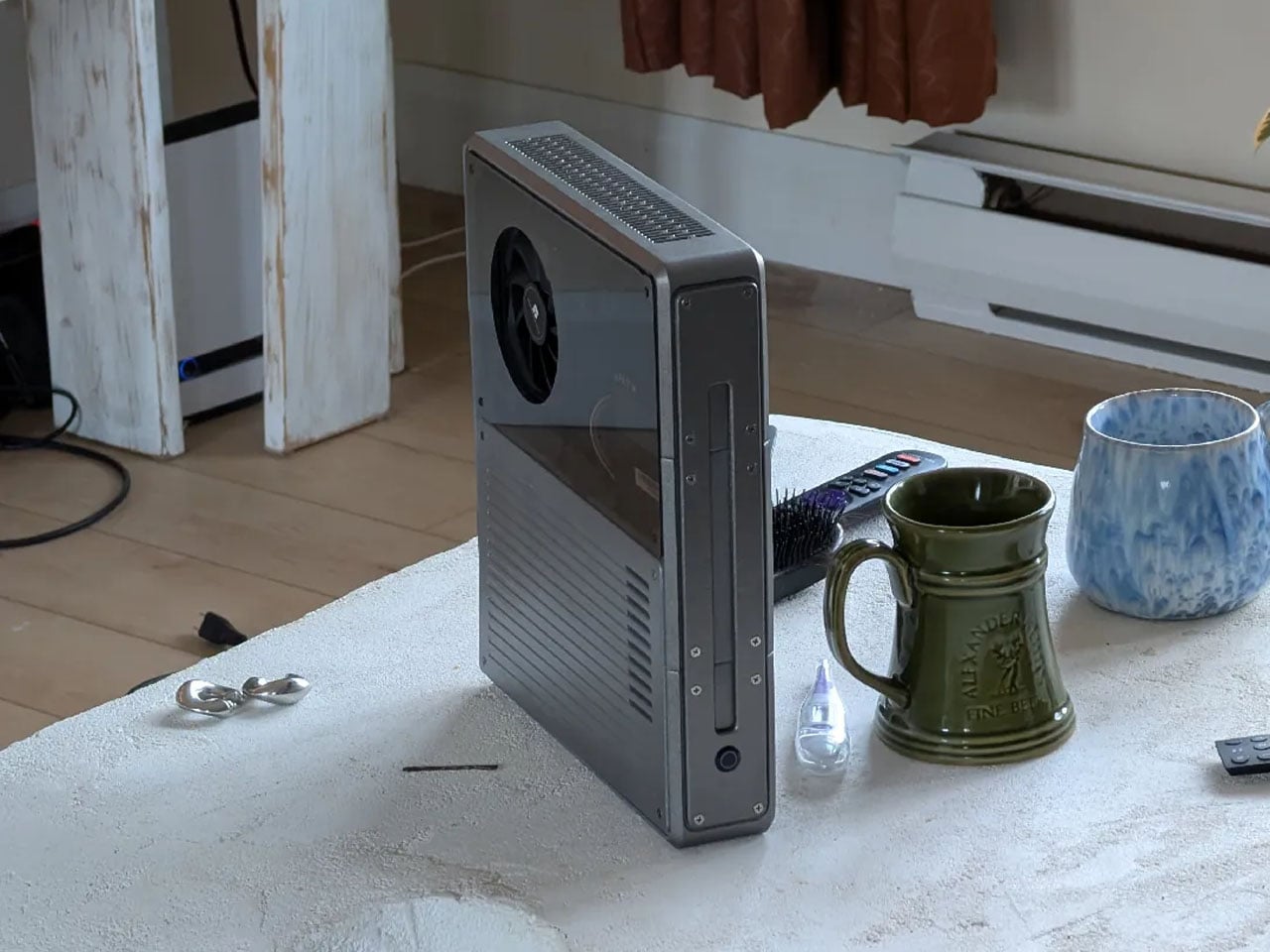
Gaming desktops are usually associated with bulky towers, while gaming laptops trade some performance flexibility for portability. HobbyBoi, a PC enthusiast and maker, has explored something radical by designing and 3D-printing a custom computer enclosure that brings desktop hardware into a considerably smaller package. Measuring just 4.8 liters, the finished system is compact enough to fit inside a standard laptop bag or backpack while retaining a desktop-class processor and dedicated graphics card.
The project started with a practical requirement. HobbyBoi wanted a portable machine capable of handling CAD applications, 3D rendering, video editing, coding, and occasional gaming without relying on a conventional laptop. Commercial small-form-factor cases were either too expensive or larger than he wanted, prompting him to design an enclosure from scratch. The complete build cost approximately $1,000, largely thanks to sourcing used and discounted components.
Designer: Hobbyboi
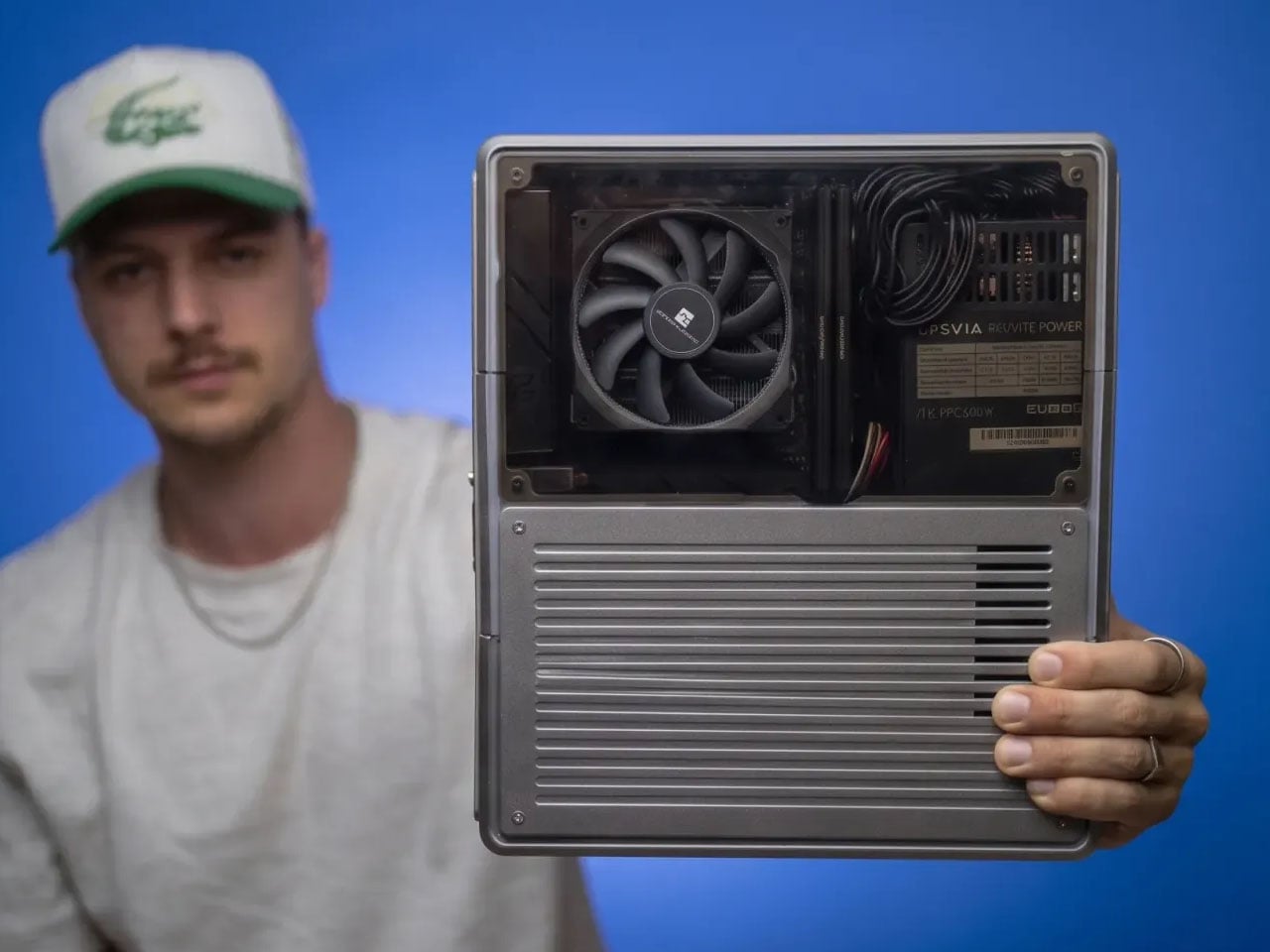

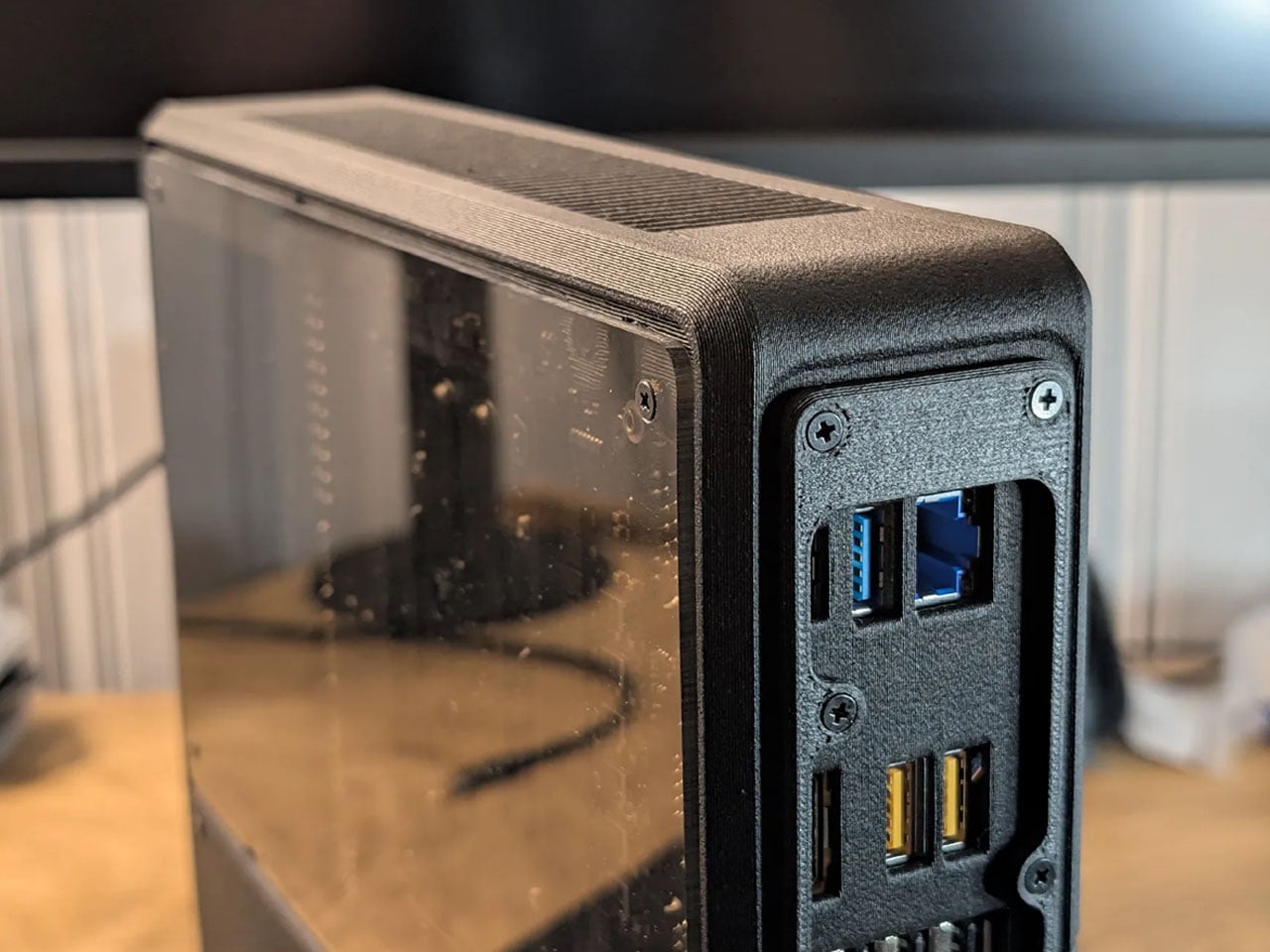
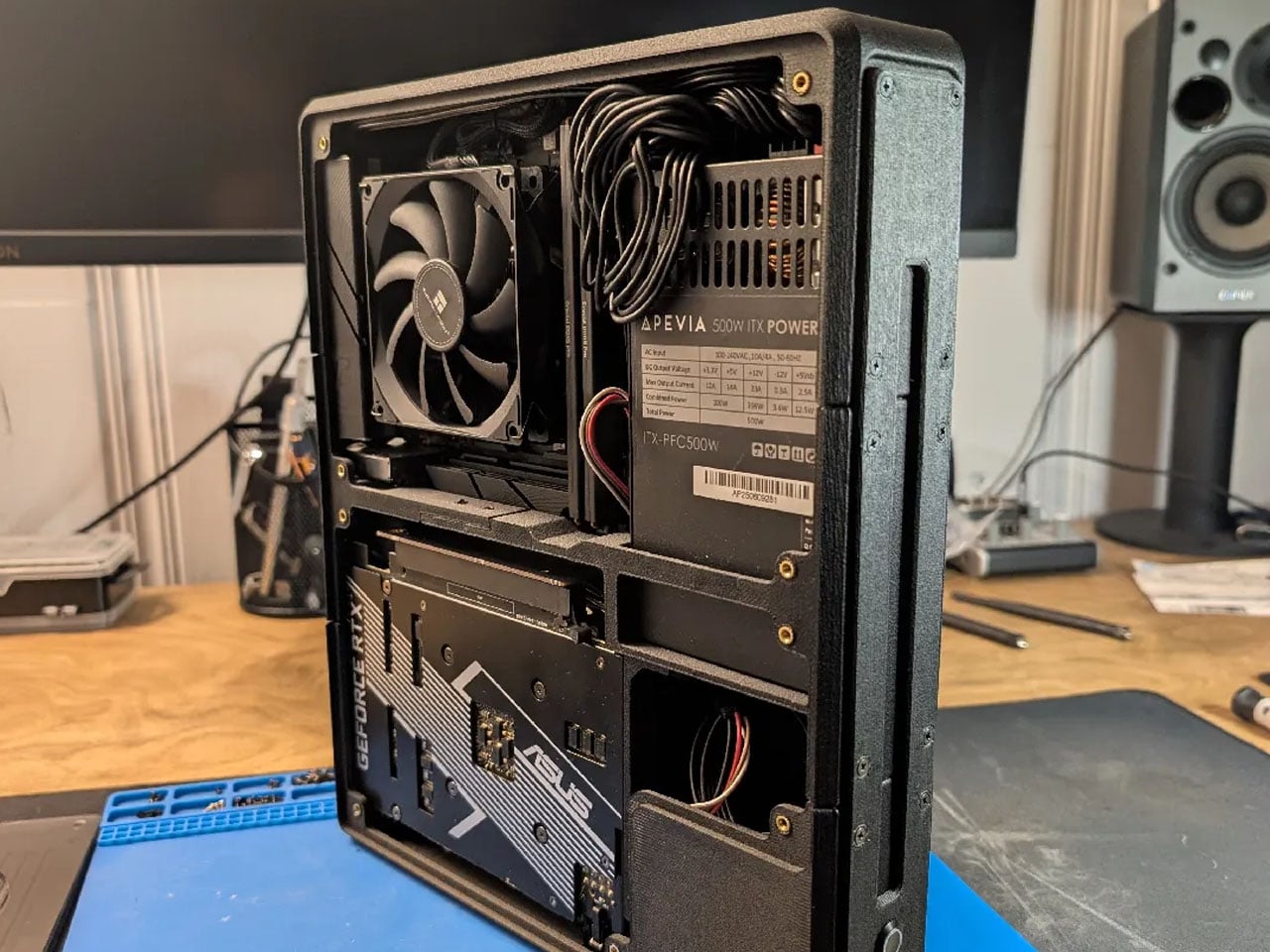
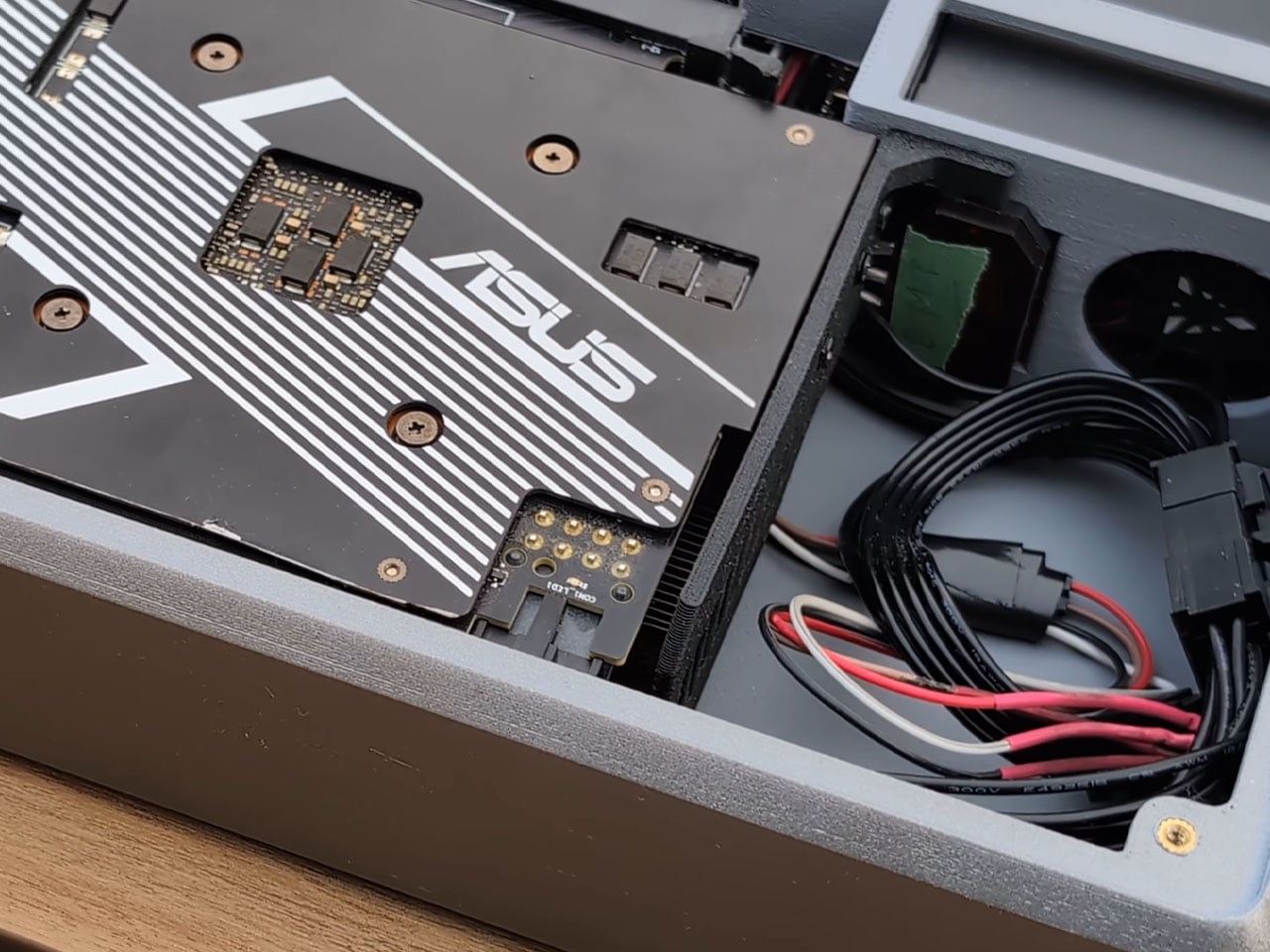
At its core, the system uses an AMD Ryzen 9 7900X processor paired with an ASUS Phoenix GeForce RTX 3060 featuring 12GB of graphics memory. The configuration also includes an ASRock B650I Lightning WiFi Mini-ITX motherboard, 32GB of Crucial DDR5-6000 memory, a 1TB WD Black SN770 NVMe SSD, a Thermalright AXP90-X36 low-profile CPU cooler, and a 500W Apevia Flex-ATX power supply. The processor operates in its 105W Eco Mode with an undervolt and an 85-degree temperature limit to manage heat within the restricted enclosure.
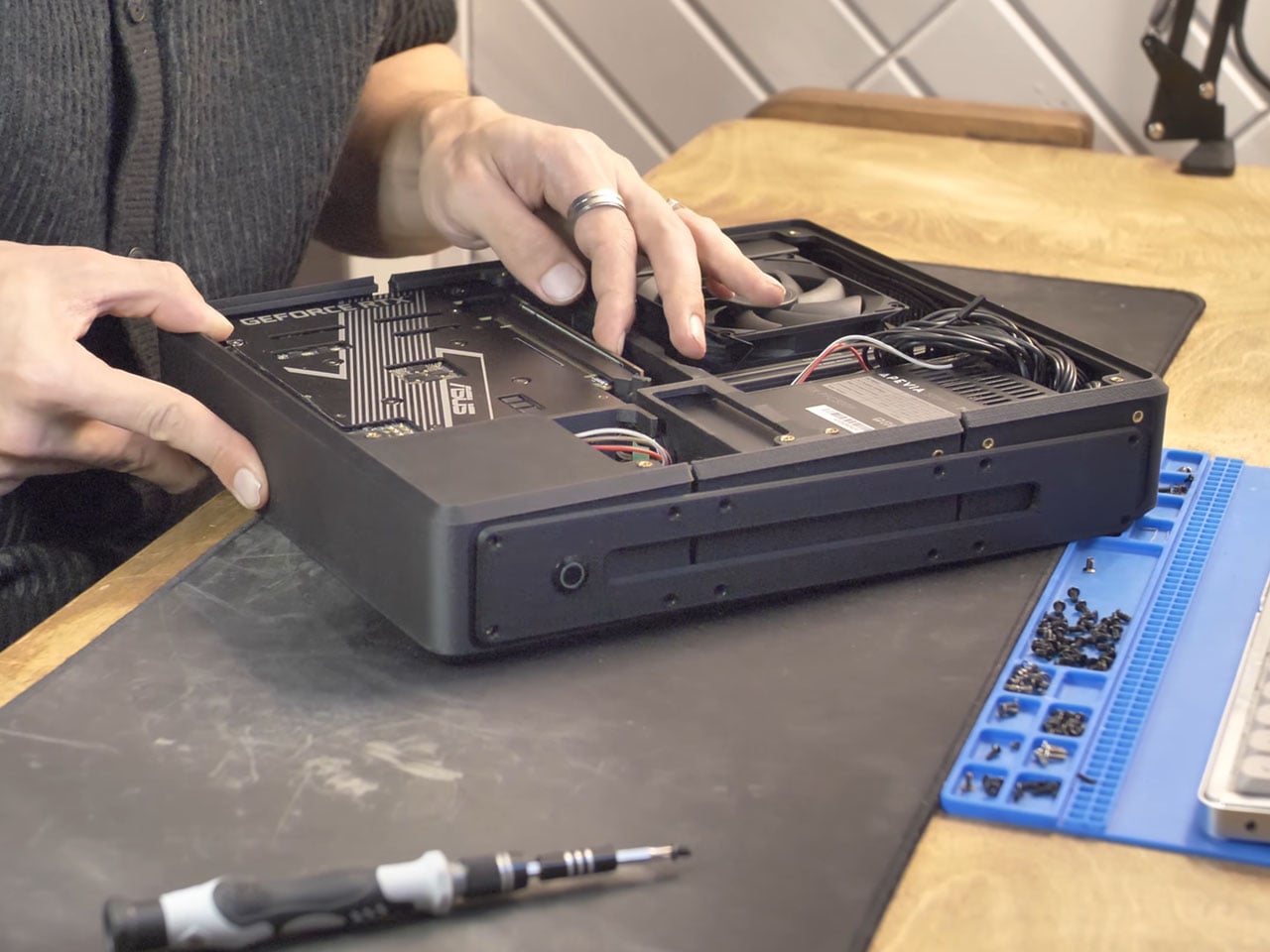
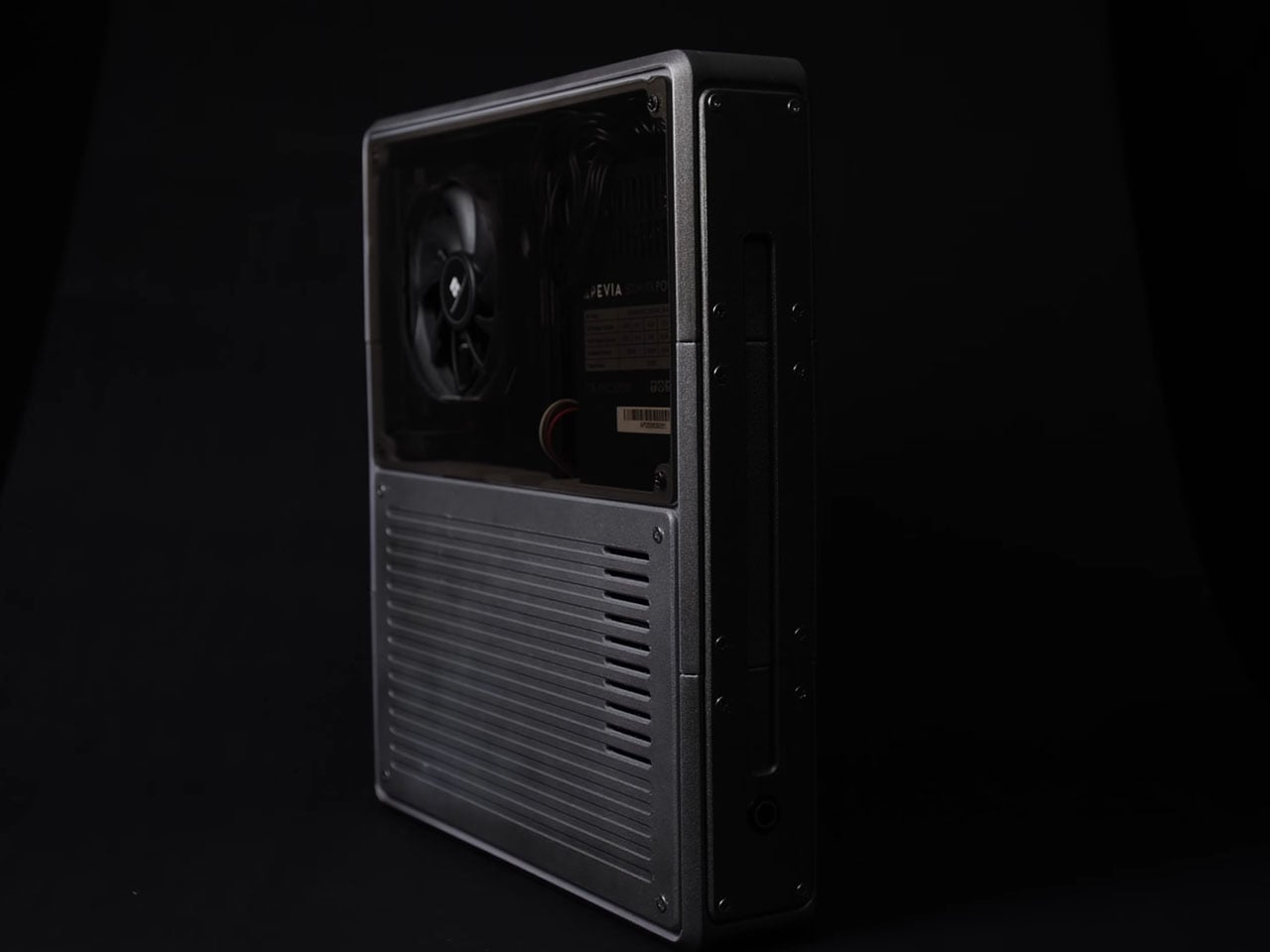
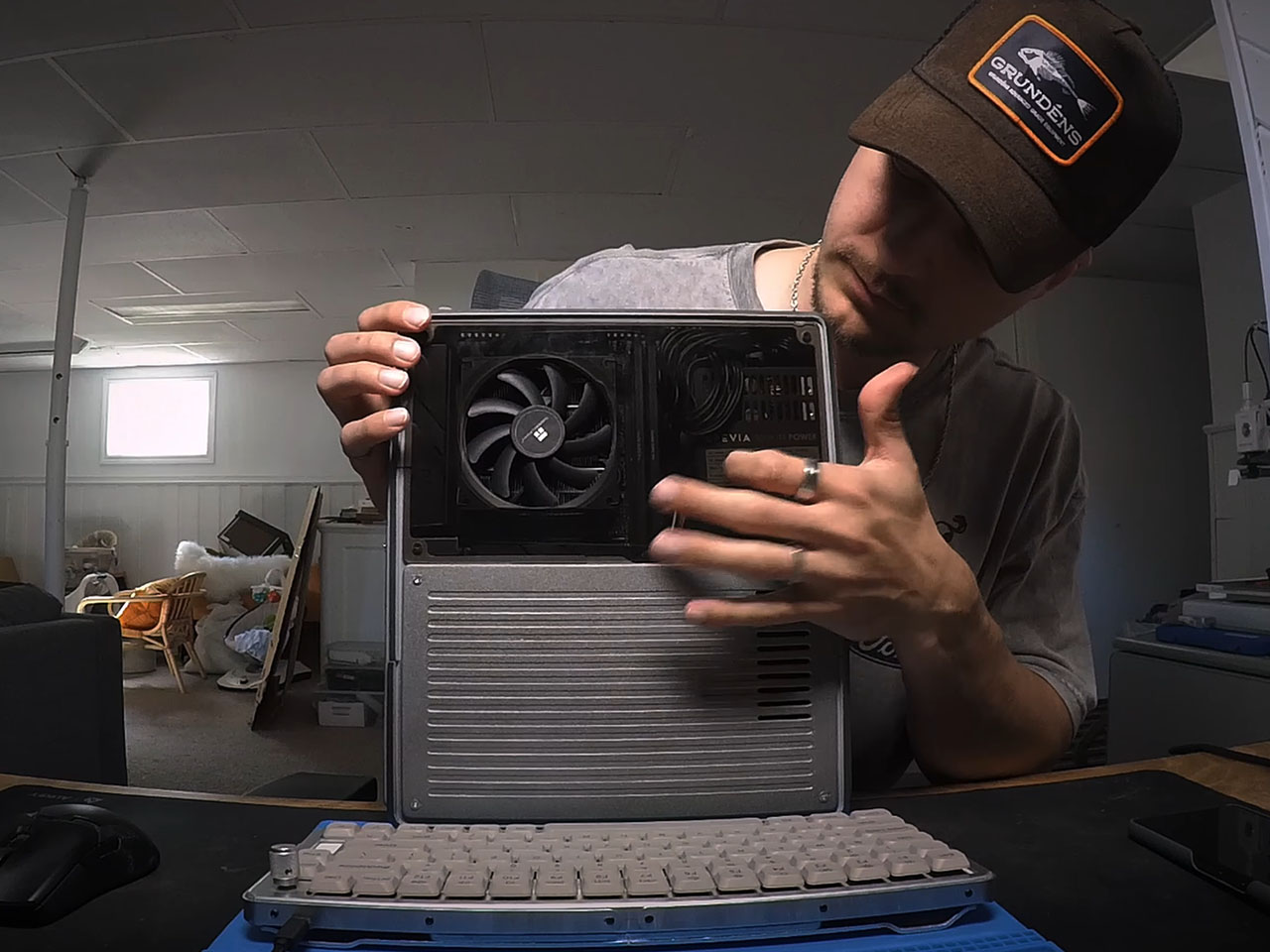
The enclosure’s layout is central to making everything fit. Instead of stacking components vertically, HobbyBoi positioned the motherboard on one side and the graphics card and power supply on the other. This creates a slim, console-like profile while leaving room for cable routing and potential graphics card upgrades. Structural bracing reinforces the central section, while mounting tabs and exposed exterior fasteners give the chassis a functional, industrial appearance.
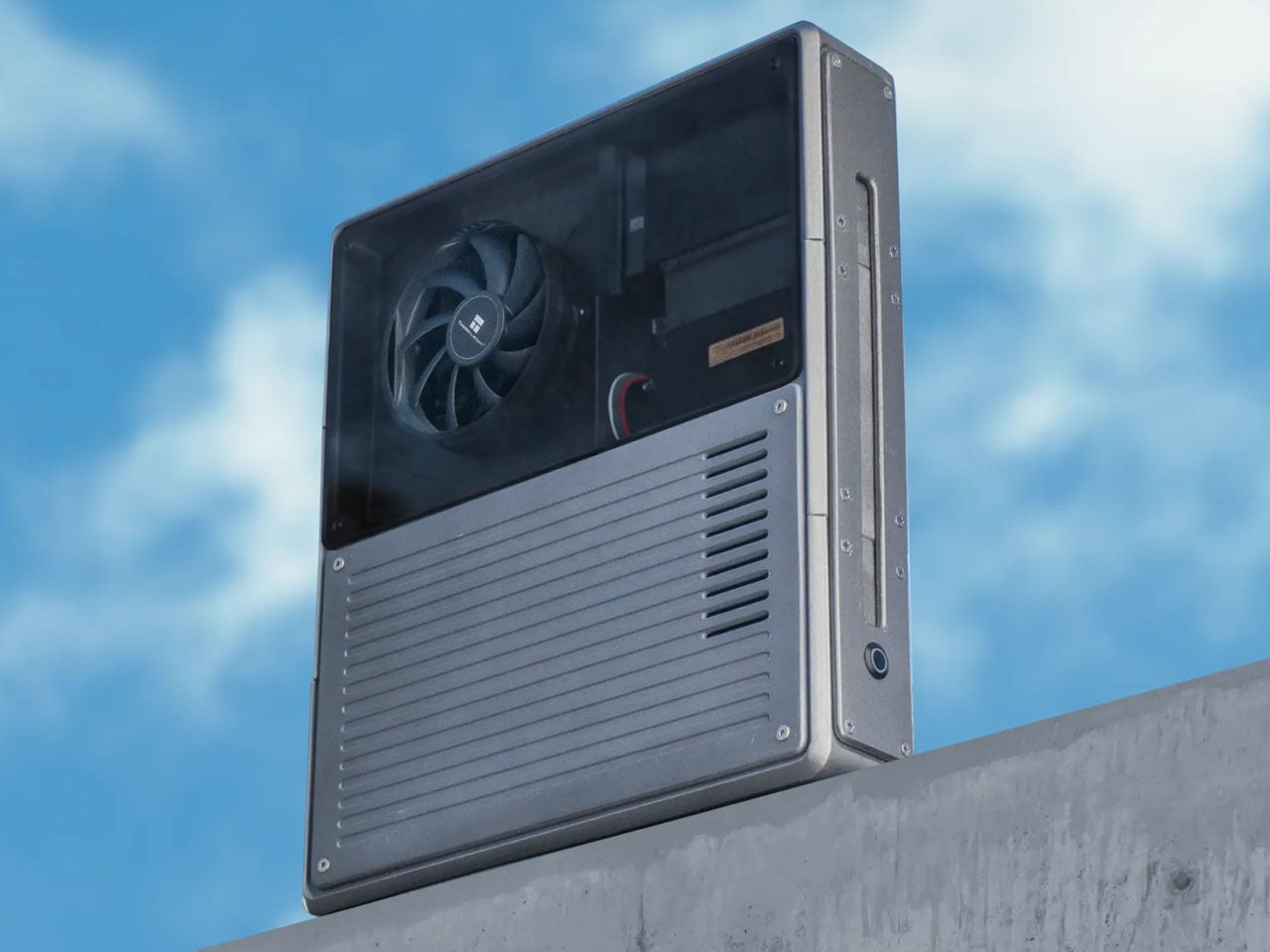
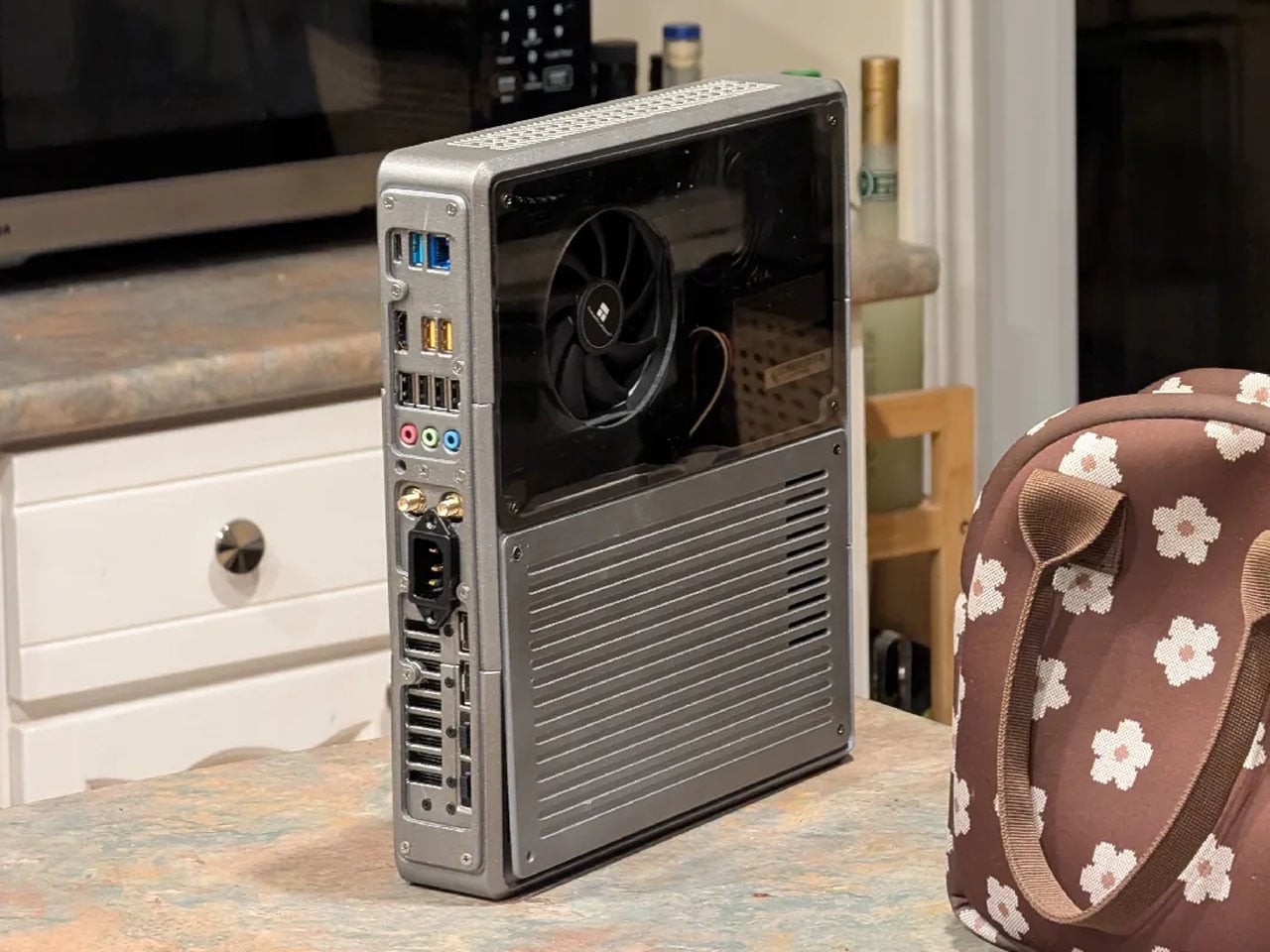
Since the printer bed could not accommodate the entire enclosure, the design was divided into four printable sections: front, rear, top, and bottom. HobbyBoi used high-temperature, glass-fiber-reinforced PLA to produce the components. After printing, the surfaces received primer, sanding, and soft iron spray paint to create an aluminium-like finish. Tinted acrylic side panels complete the enclosure, offering a view of the internal hardware without compromising its clean appearance.
Fitting desktop components into such a restricted space required some compromises. The motherboard’s aluminium I/O shroud was trimmed, the 24-pin power cable shortened, and sections of the graphics card’s housing and backplate modified. The GPU’s original fan shroud was also removed to accommodate its placement.
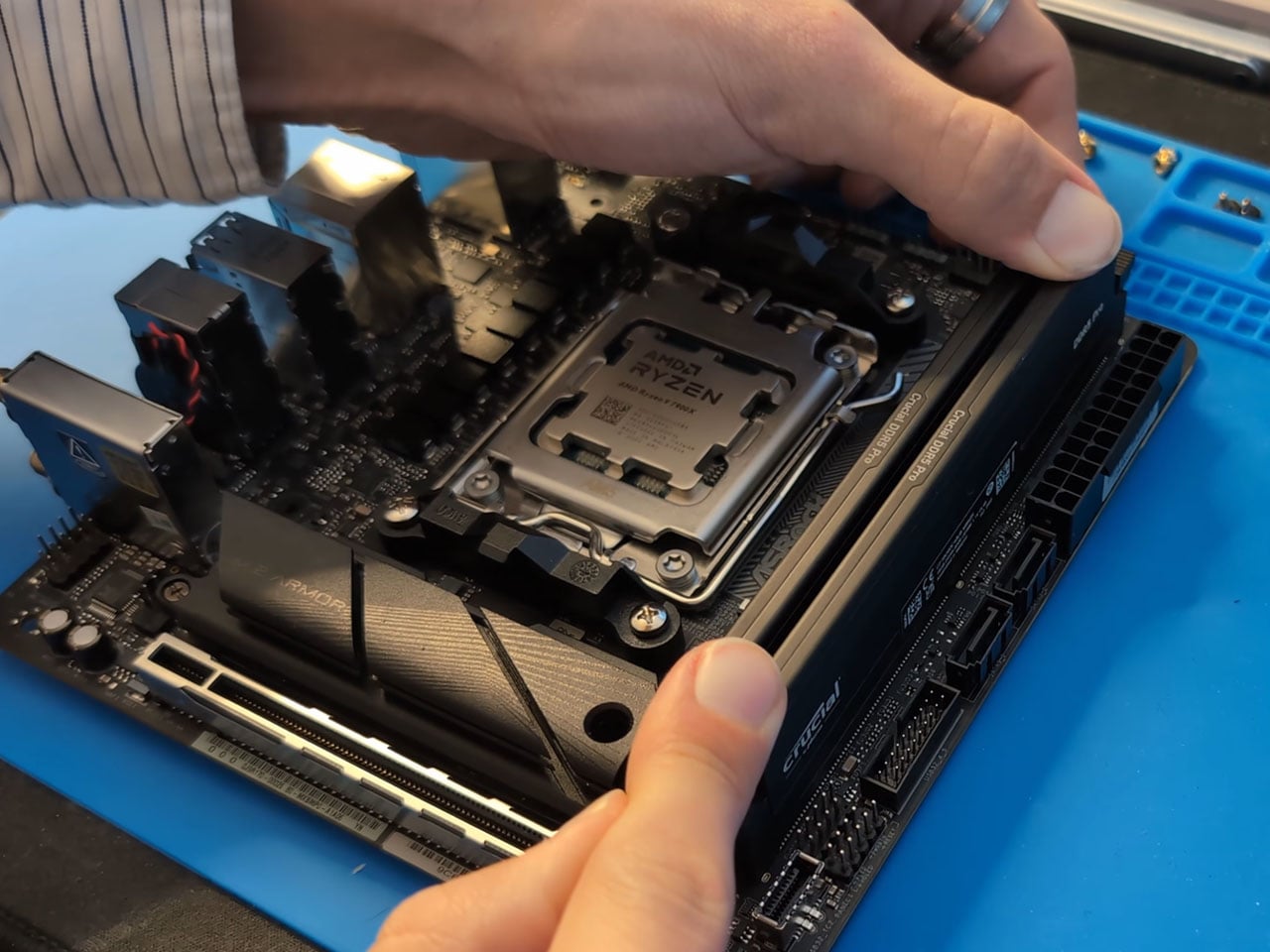
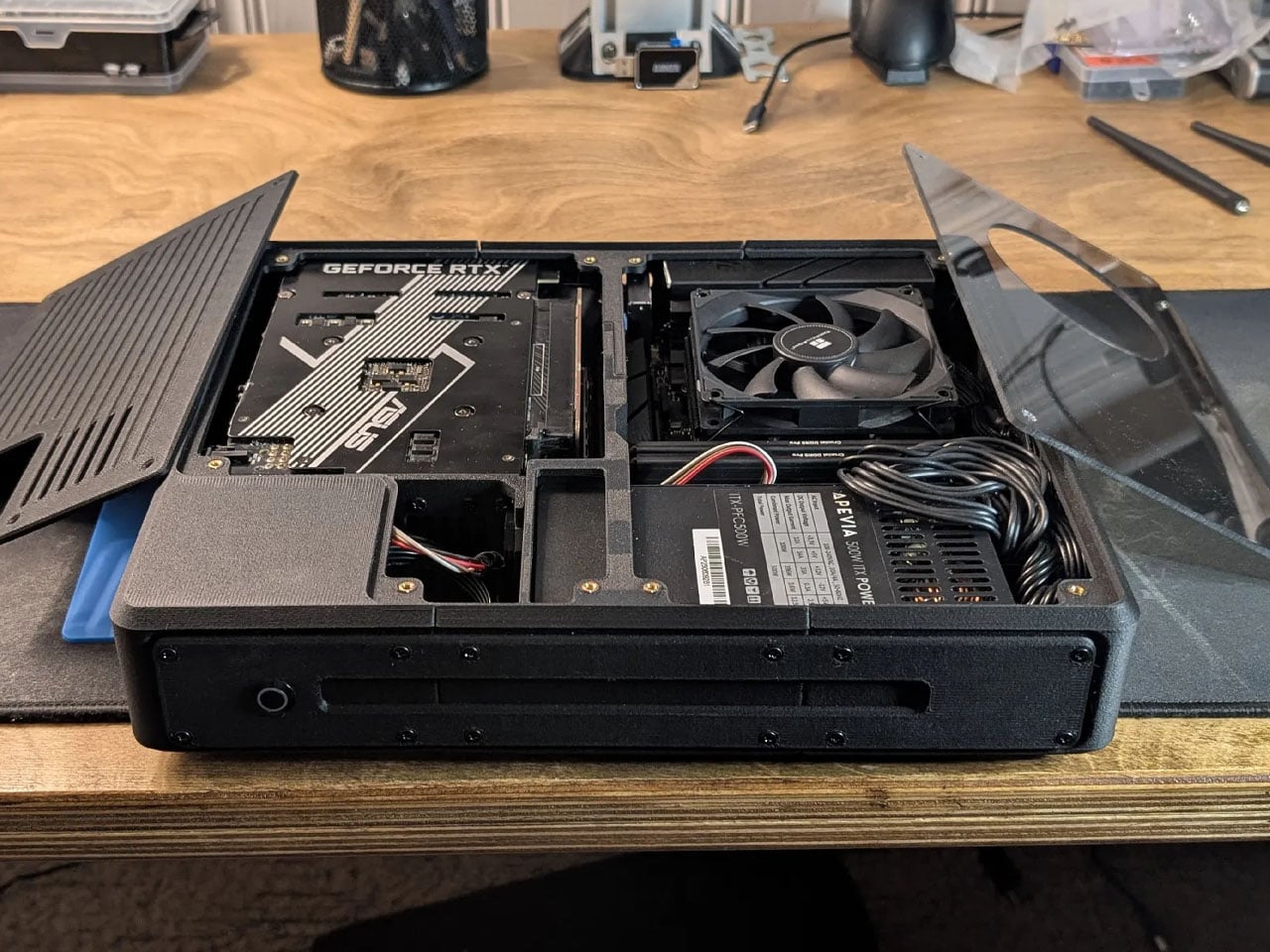
Performance testing suggests the compact design can handle demanding workloads. The Ryzen 9 7900X maintained approximately 4.8GHz during Cinebench multi-core testing at 117W, reaching 85 degrees Celsius. The RTX 3060 sustained around 1,900MHz, with its hotspot reaching 90 degrees Celsius under load. In 4K gaming, Fortnite delivered approximately 70–90 frames per second at maximum settings, while Outer Wilds managed 45–50fps.
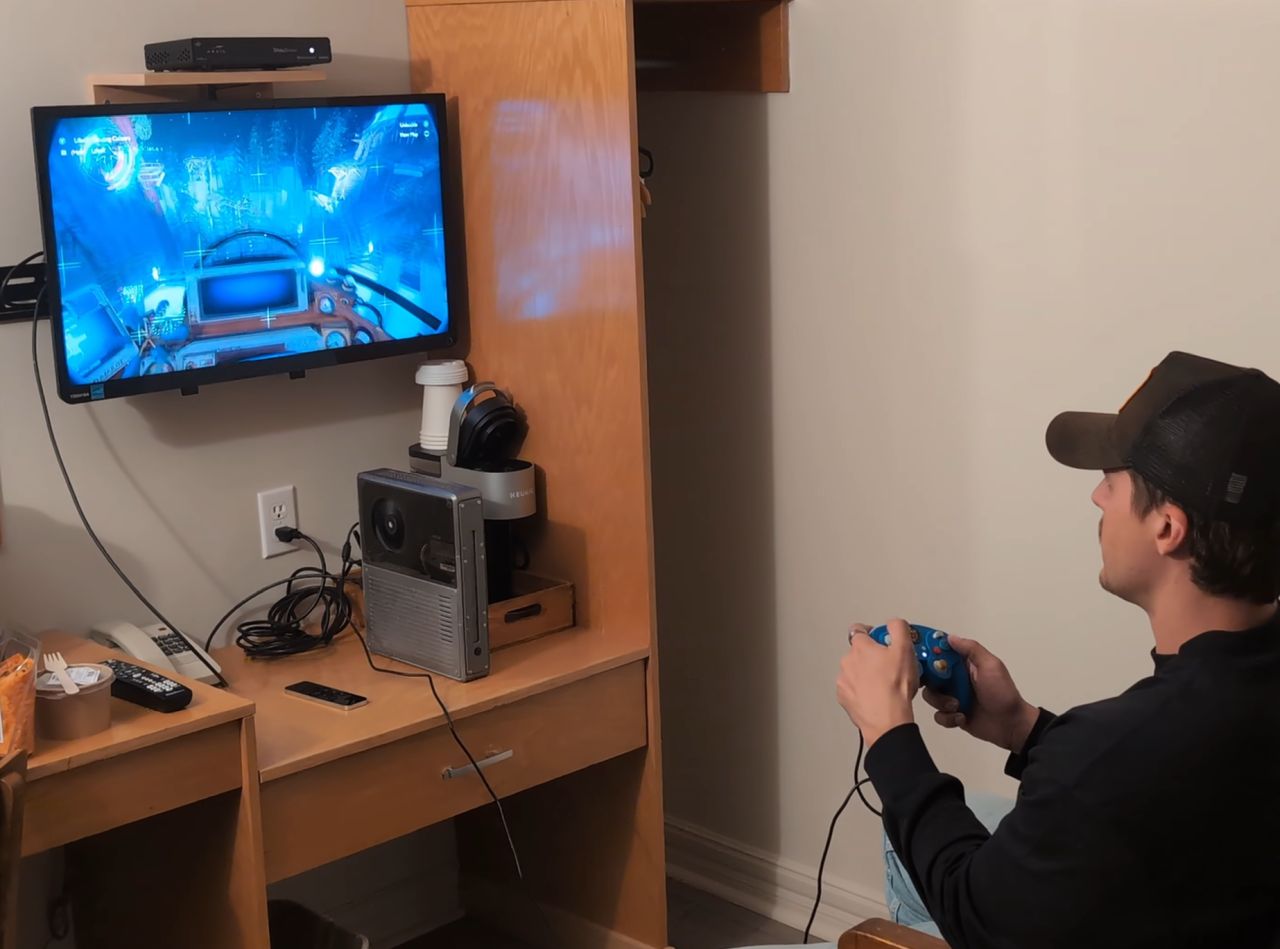
The system has also moved beyond the workbench. HobbyBoi recently took it to Canada, where he connected it to a hotel television, demonstrating how the compact desktop can serve as a travel-friendly workstation and gaming machine. The design files are available on Printables and MakerWorld, although the enclosure is tailored to this particular hardware configuration and would require adjustments for different components.