
Back in 2022, Insta360‘s big drone product was a camera you strapped onto somebody else’s drone. The Sphere clamped around DJI‘s Mavic Air 2 and erased the aircraft from your 360 footage, which was clever but also a bit like borrowing your rival’s car to win a race. Three years later, Insta360’s drone brand built its own aircraft, the 8K 360 Antigravity A1. Now a leaked photo suggests the company has DJI’s most popular little drone in its sights. Shared by leaker Igor Bogdanov, the image shows a small Insta360 drone with guarded props and a tiny screen, apparently aimed straight at the DJI Neo.
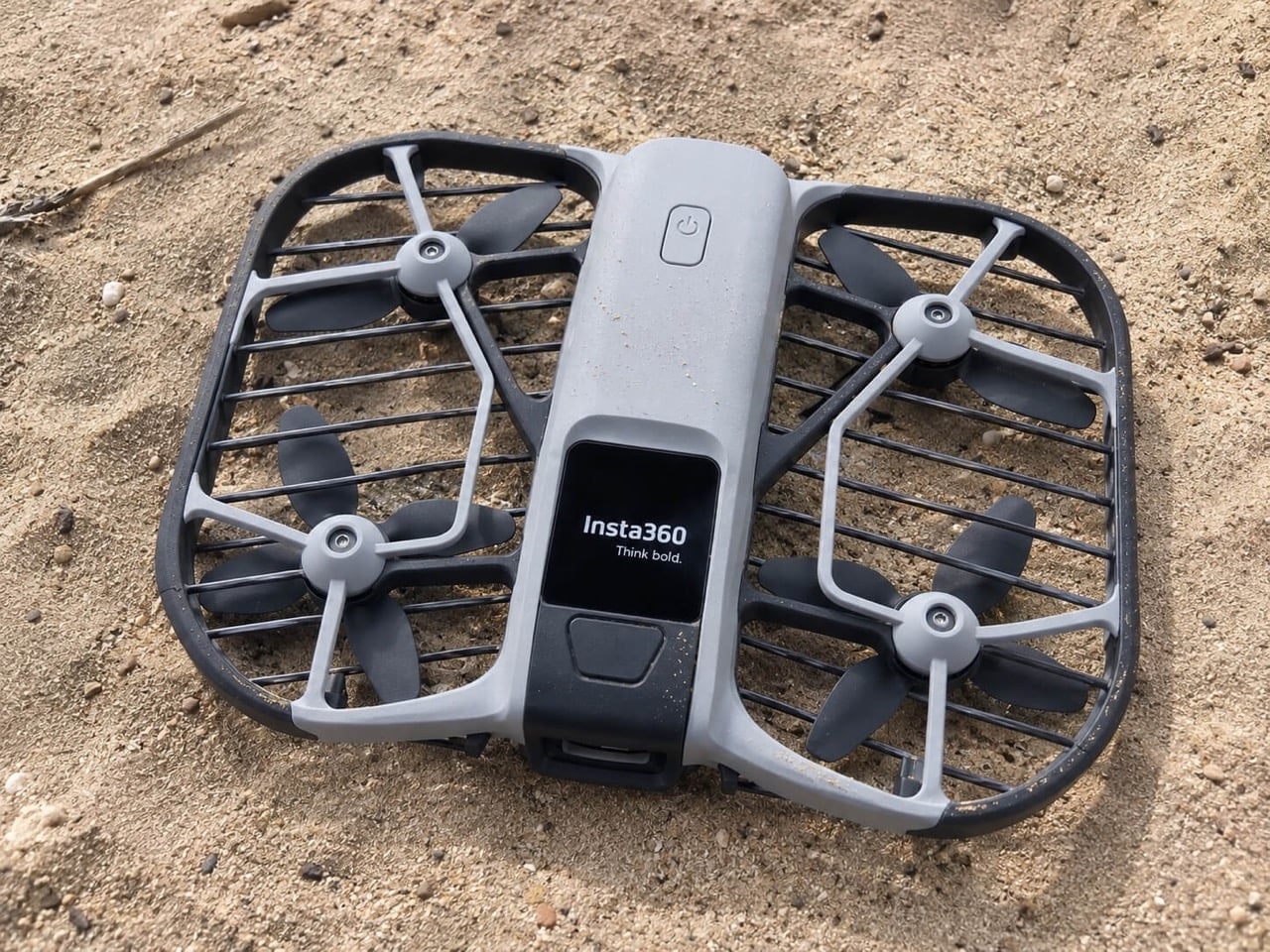
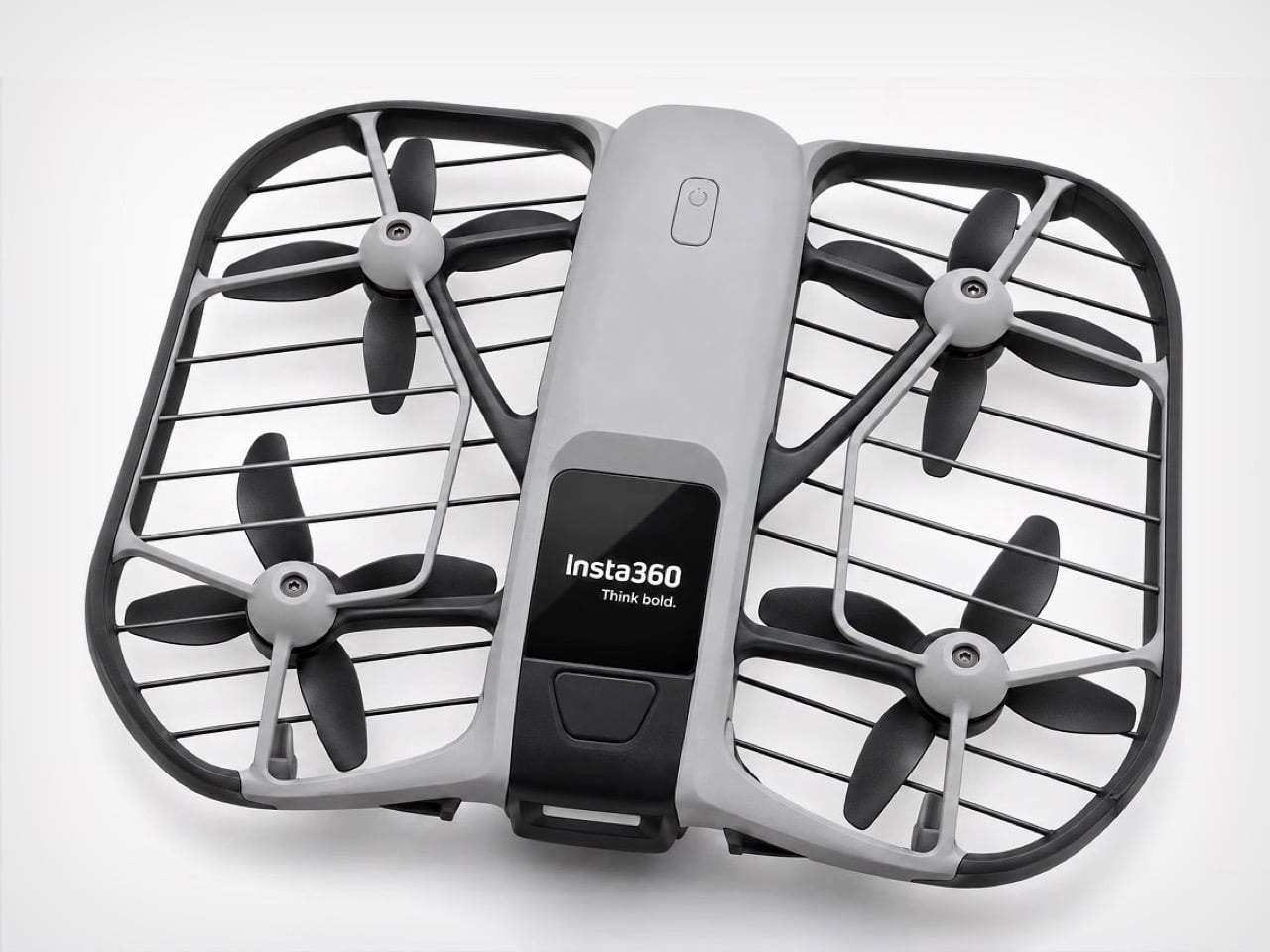
The A1 is a $1,599 flying 360 camera with goggles, which is a lot of drone for someone who just wants a clip of themselves on a hike. This new prototype looks like a simpler proposition. It has a compact body, enclosed propellers, a power button, and a small glowing panel showing the Insta360 logo. Follow-up leaks point to a conventional front camera, and a patent published in February describes folding arms that lock into the body. Insta360 hasn’t confirmed anything yet, and with new foreign-made drone models facing FCC approval restrictions in the US, American buyers may be in for a wait.
Designer: Insta360
Guarded props, folding arms, and a tiny screen on board
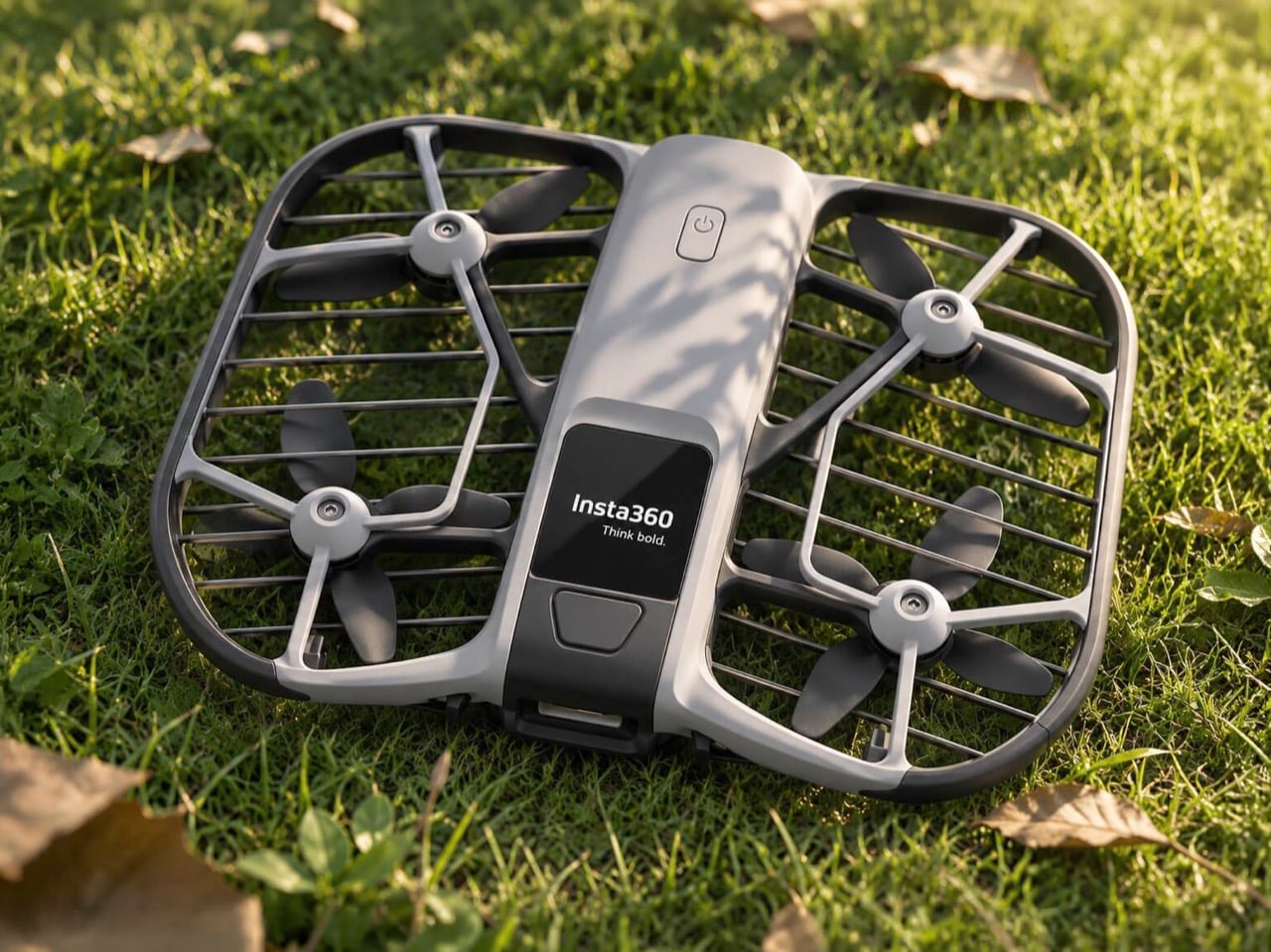

The photo shows a compact body wrapped in protective guards, black on the outside with lighter supports inside, designed to keep your fingers and the propellers from meeting. A Chinese patent from Insta360’s parent company, Arashi Vision, published on February 3, describes arms that nest into the chassis and lock shut. If the prototype uses that design, it could fold down to pocket size. Follow-up photos from TheNewCamera show a central lens in a black rectangular module, flanked by small round sensors that could handle tracking or obstacle detection. Nobody knows yet whether a mechanical gimbal sits behind that lens. My money says Insta360 leans hard on its FlowState electronic stabilization either way, since that’s the company’s home turf.
Every pocket drone maker has its own answer to the guard problem. DJI’s Flip uses folding ducts and got dinged for being bulky when folded and louder than the Mini 4 Pro. HoverAir, which helped establish this genre, folds its X1 shut like a clamshell, while the Neo 2 wraps full cages around a fixed body. Insta360’s patented nested fold could land somewhere in between, small in a bag and fully caged in the air. That little glowing panel is another detail worth watching, since the Neo 2 added an onboard screen and the leaked Neo 3 reportedly comes with a screen-equipped remote. More controls are moving off the phone, and Insta360 appears to be thinking along similar lines.
Insta360’s next drone controller might live on your wrist

Subject tracking, auto reframing, and one-tap edits are already baked into Insta360’s cameras, and that’s exactly the skill set a follow-me drone needs. Antigravity has been testing wearables too. In October it launched a Watch Remote with a 1.72-inch screen that shows a live view and combines the watch’s GPS with the A1’s visual tracking, intended to keep the drone following when you duck behind a tree. A 0.3-ounce Ring Remote adds gesture control, and pairing the two unlocks what Antigravity calls a wireless selfie stick mode, where rolling your wrist pulls the drone closer or pushes it away. Insta360 hasn’t said these will work with the new drone. Still, the invisible selfie stick has never had a more literal sequel.
The DJI Neo 2 sets the bar at 5.3 ounces (151 grams), with 4K at up to 100fps through a two-axis gimbal and an omnidirectional obstacle-detection system using vision sensors and forward LiDAR. Its rated 19-minute flight time can shrink in wind or during aggressive tracking, an obvious gap for a challenger to attack. The Neo 3 is still unannounced, though leaks point to a 6.8-ounce (192.7-gram) body, a square 1/1.1-inch sensor, and a 1,800mAh battery with roughly 64 percent more energy than the Neo 2’s. If Insta360 wants this fight, longer real-world flights and tracking that never loses you will count for more than any spec sheet. A cute screen won’t save a drone that lands after twelve minutes.
The US door is open for Insta360 cameras, and trickier for its drones
DJI never officially launched the Neo 2 in the US, so American fans of this category have been stuck with the original Neo or a HoverAir. The FCC added new foreign-made drones to its Covered List on December 22, 2025, blocking fresh equipment approvals unless a model clears an exemption or waiver process. Insta360 itself isn’t named on that list, so its cameras keep landing in American stores. The Antigravity A1 got its FCC approval right before the rule kicked in and sells here for $1,599. A brand-new Chinese-made pocket drone faces the same approval hurdle as everyone else, which makes US availability the biggest blank on this drone’s spec sheet.
TheNewCamera expects a launch in the first half of 2027, and no FCC filing for the drone has surfaced yet. That timeline could let Insta360 watch DJI play its Neo 3 hand first. HoverAir is still in the ring as well, with the $699 X1 ProMax and the waterproof Aqua that floats. Insta360’s smartest move is to skip the flight-control arms race DJI has spent twenty years winning and chase ease instead, building a drone you toss into the air, let follow you, and come home to footage that already looks edited. Four years after strapping a camera onto DJI’s drone, that would make one heck of a revenge story.