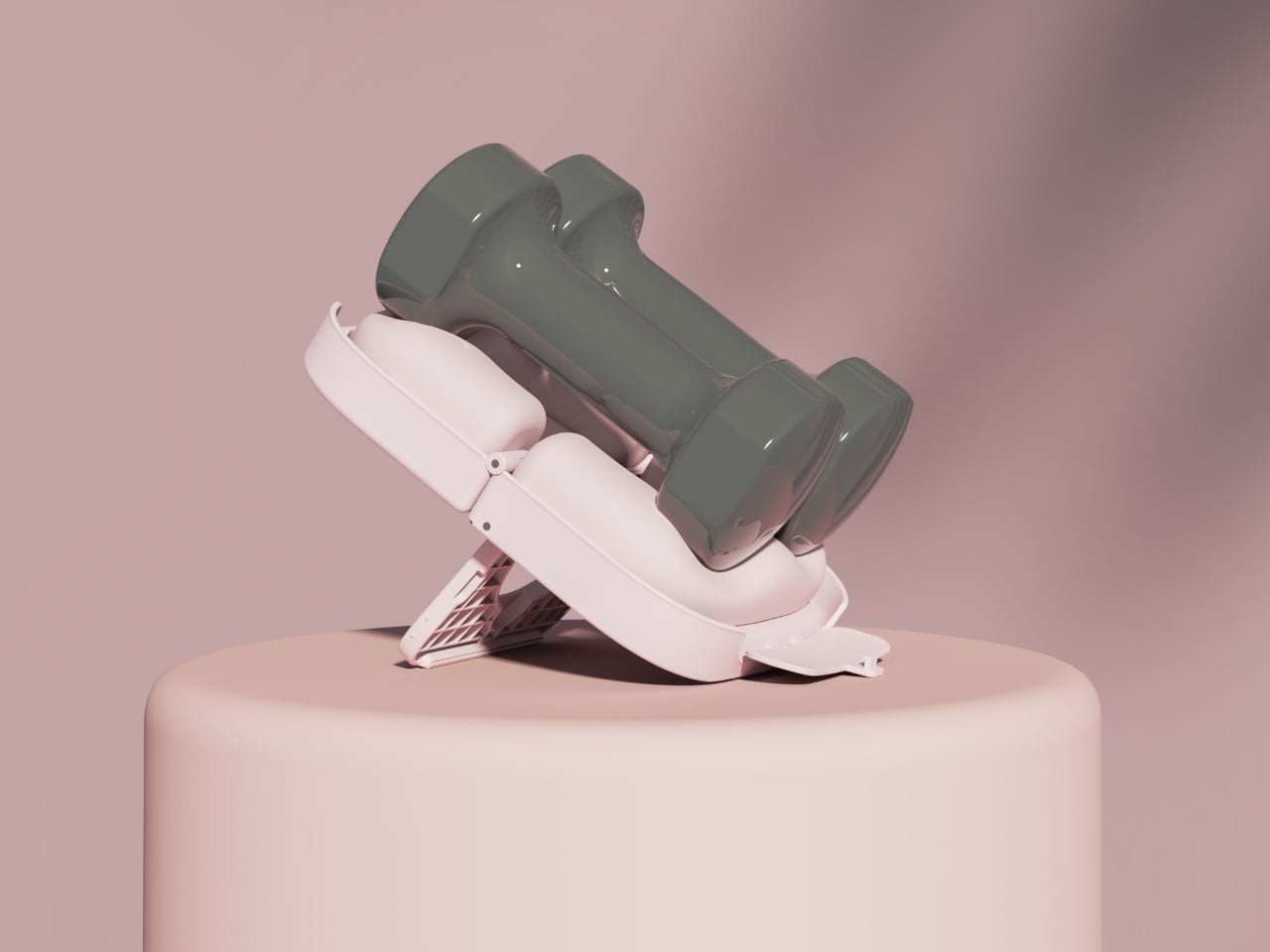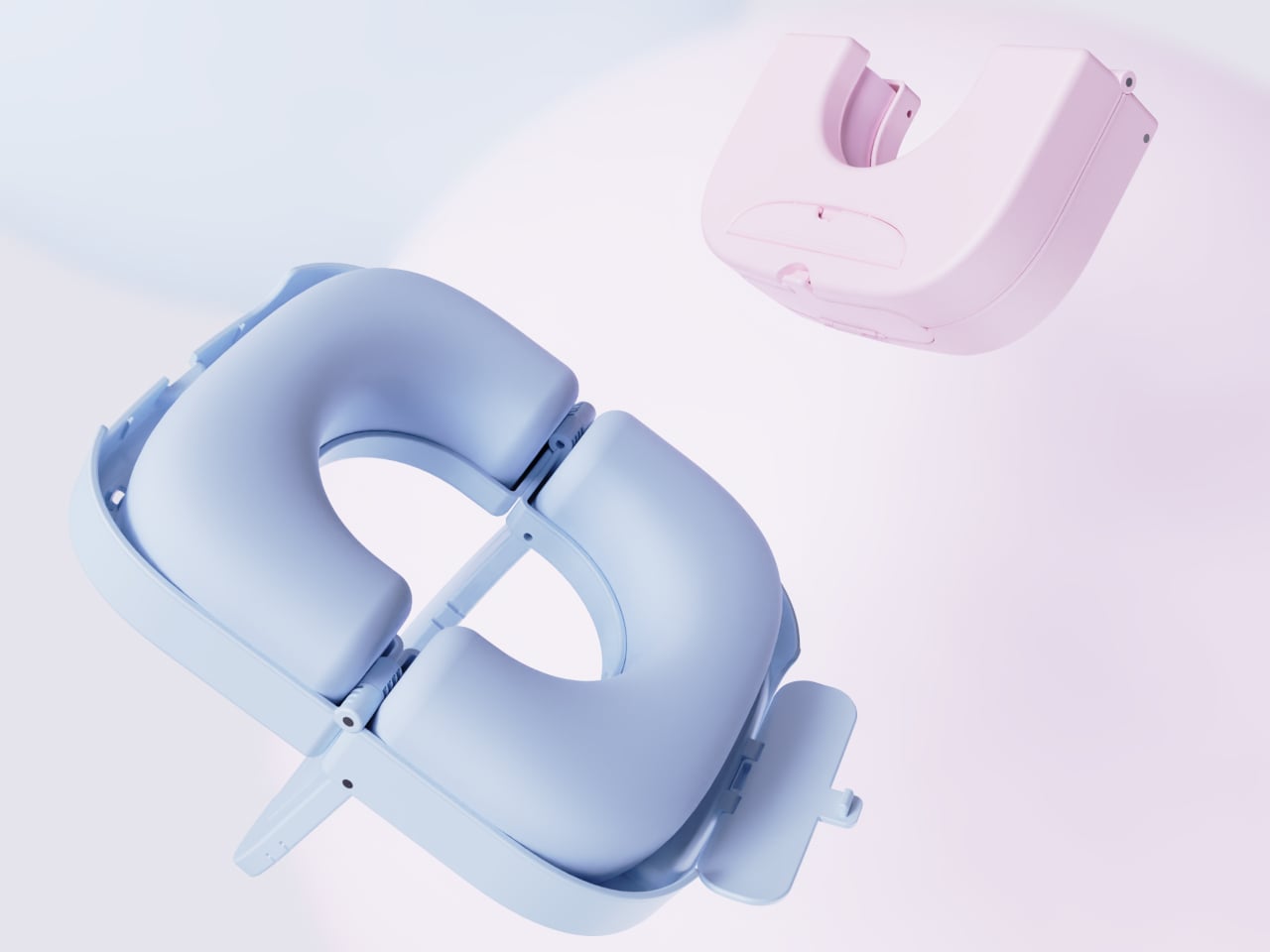

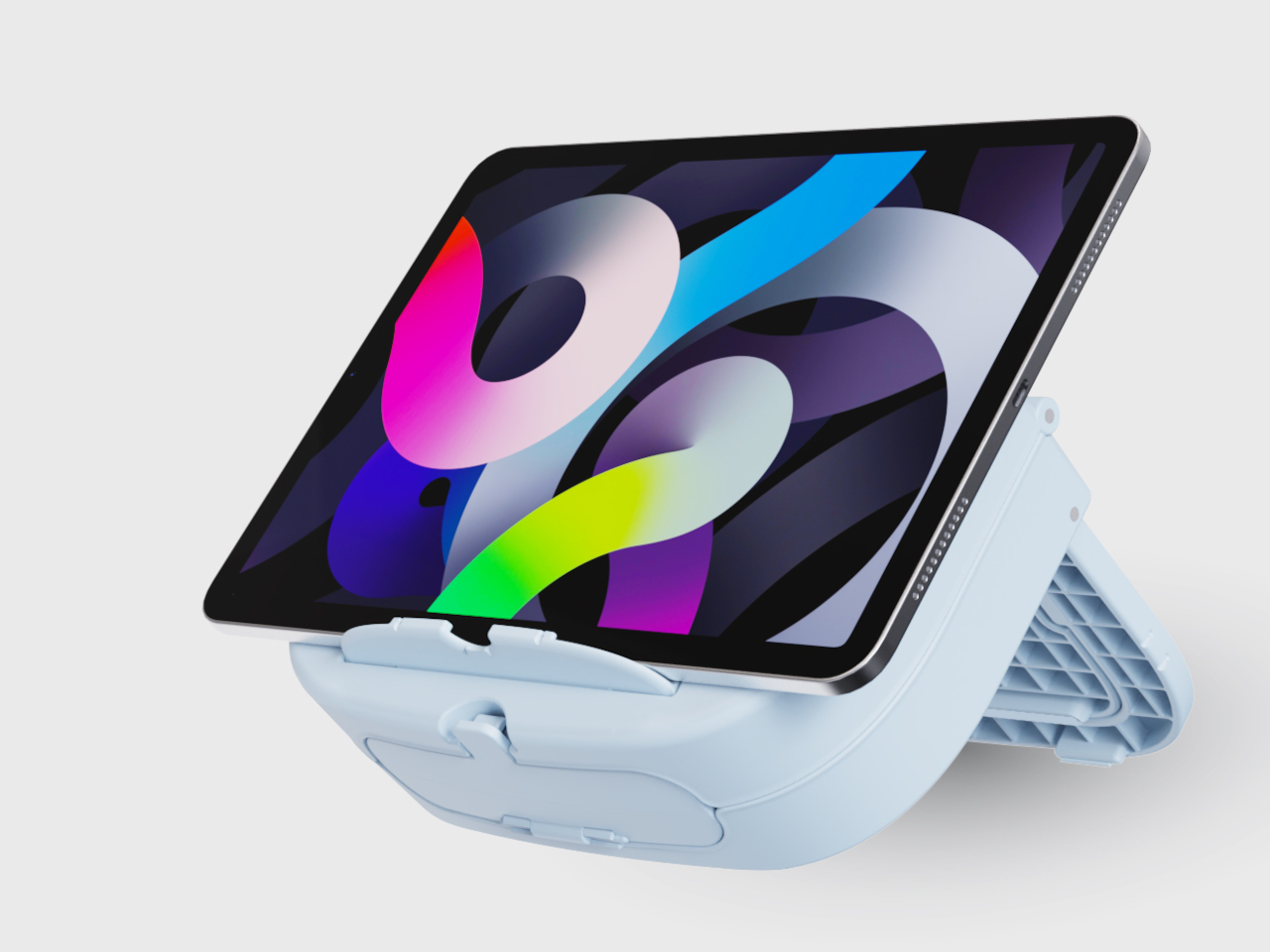
Nap Pillow has a rather unusual second job for something meant to help you switch off. Fold it closed, and its shell becomes a stand for your tablet or phone. Open it up, and the cushions form an angled headrest for a desk nap. Still a concept, it combines a pillow, storage case, and screen support without asking you to carry three separate objects.
Packing a conventional cushion usually involves finding room for an object that doesn’t become much smaller when you’re finished using it. This design splits the padding between two hinged halves, which fold inward to form a compact U-shaped case. The stated folded footprint is approximately 8.15 by 5.43 inches, although that doesn’t tell us how much room its thickness would actually occupy.
Designer: HonGa Design
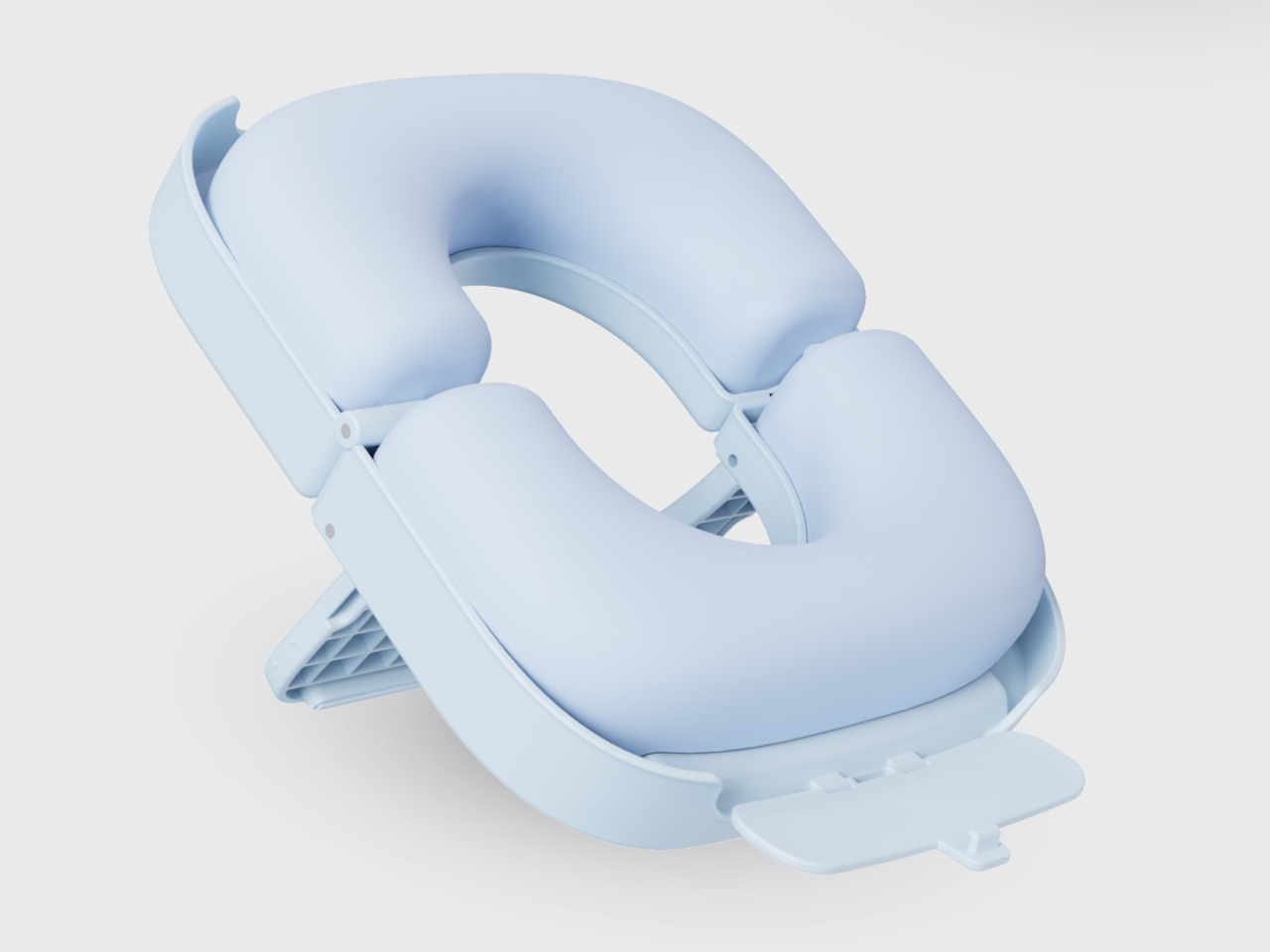
Unfold those halves, and the two curved cushions surround a central opening, intended to accommodate your face when you lean forward. The arrangement has more in common with a padded face cradle than a miniature bed pillow. Rather than burying your nose in a solid block of cushioning, you’d rest against the surrounding pads while the opening leaves space in the middle.
A folding support behind the shell sets the incline, allowing the resting angle to change rather than committing everyone to the same position. That’s a useful consideration for an object that has to negotiate different desks, chairs, and people. You’d still need to lean toward the tabletop, of course. The mechanism adjusts the pillow, not the furniture you’ve been given to use.
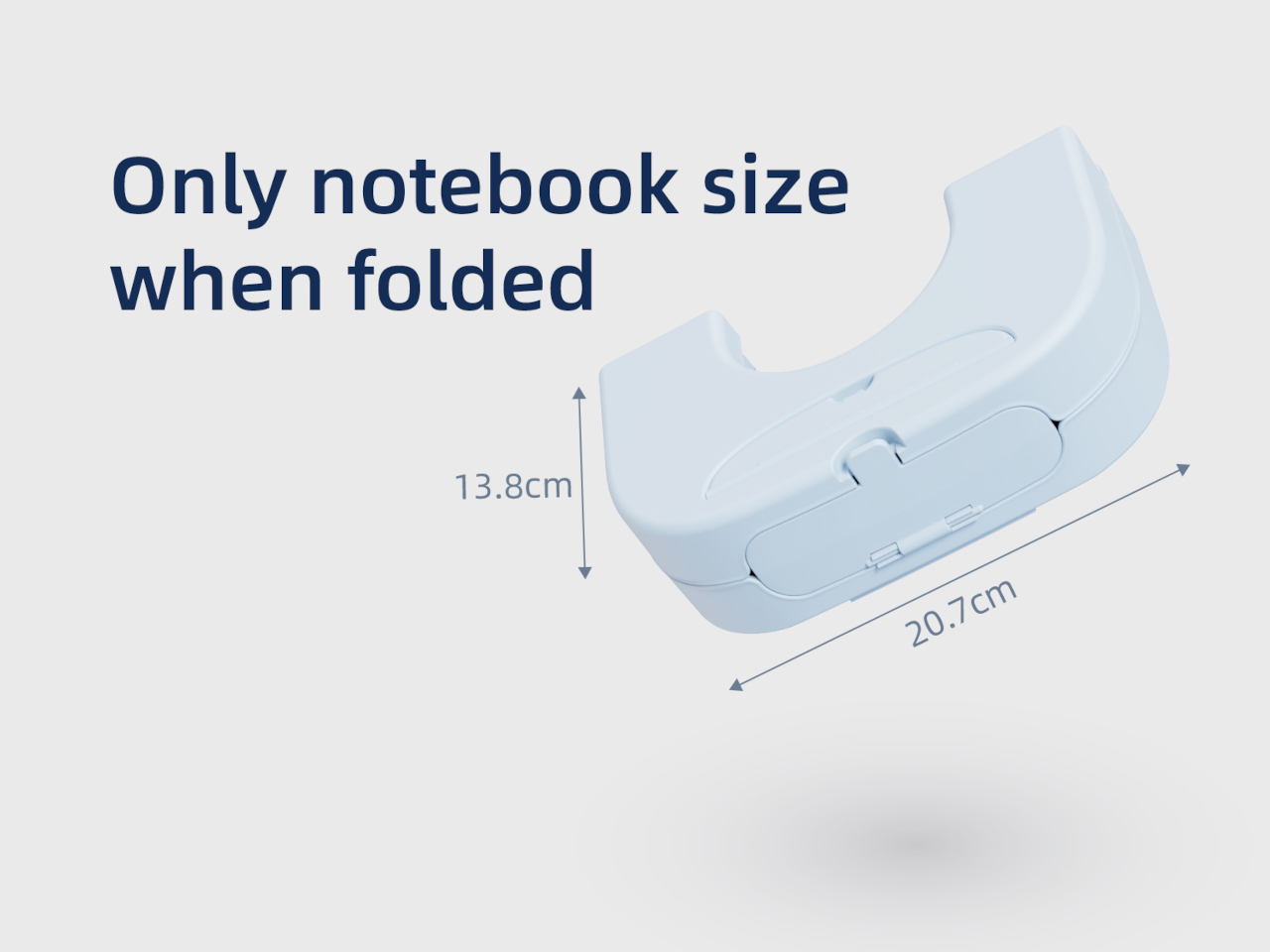
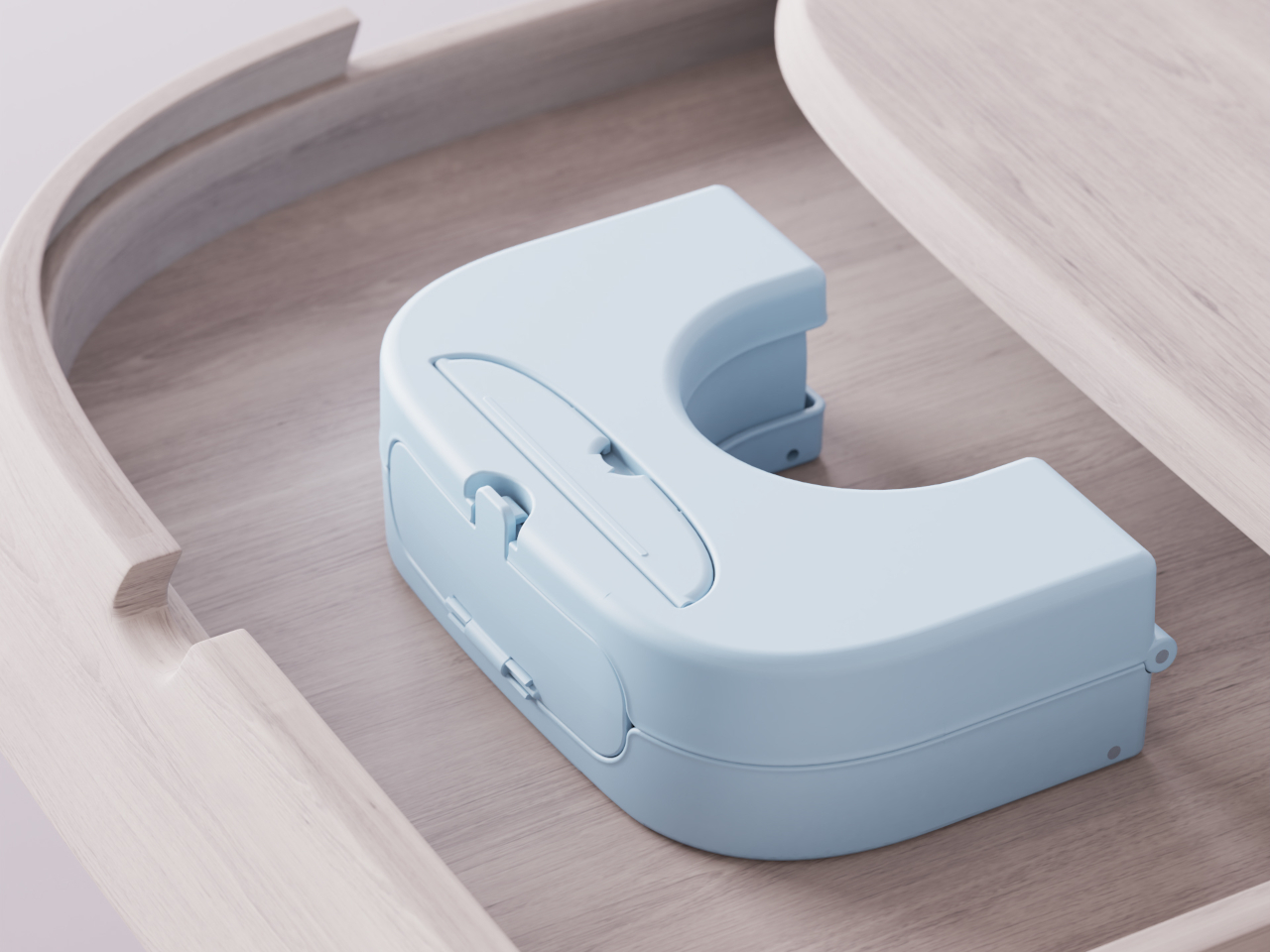
The cushion covers use what the project describes as cool-touch fabric, intended to make contact feel less stuffy during an afternoon break. Pale blue and pink treatments keep the object visually gentle, with rounded edges carrying that softness into the shell. Even closed, the case retains its U-shaped outline rather than pretending to be another rectangular gadget competing for space on your desk.
Closing it puts the padded surfaces inside the case, with the shell acting as a barrier between them and the other things in your bag. At a shared desk, that also gives you somewhere to put the pillow when the break is over. There’s no separate pouch to keep track of or loose cushion left balanced on top of your unfinished paperwork.
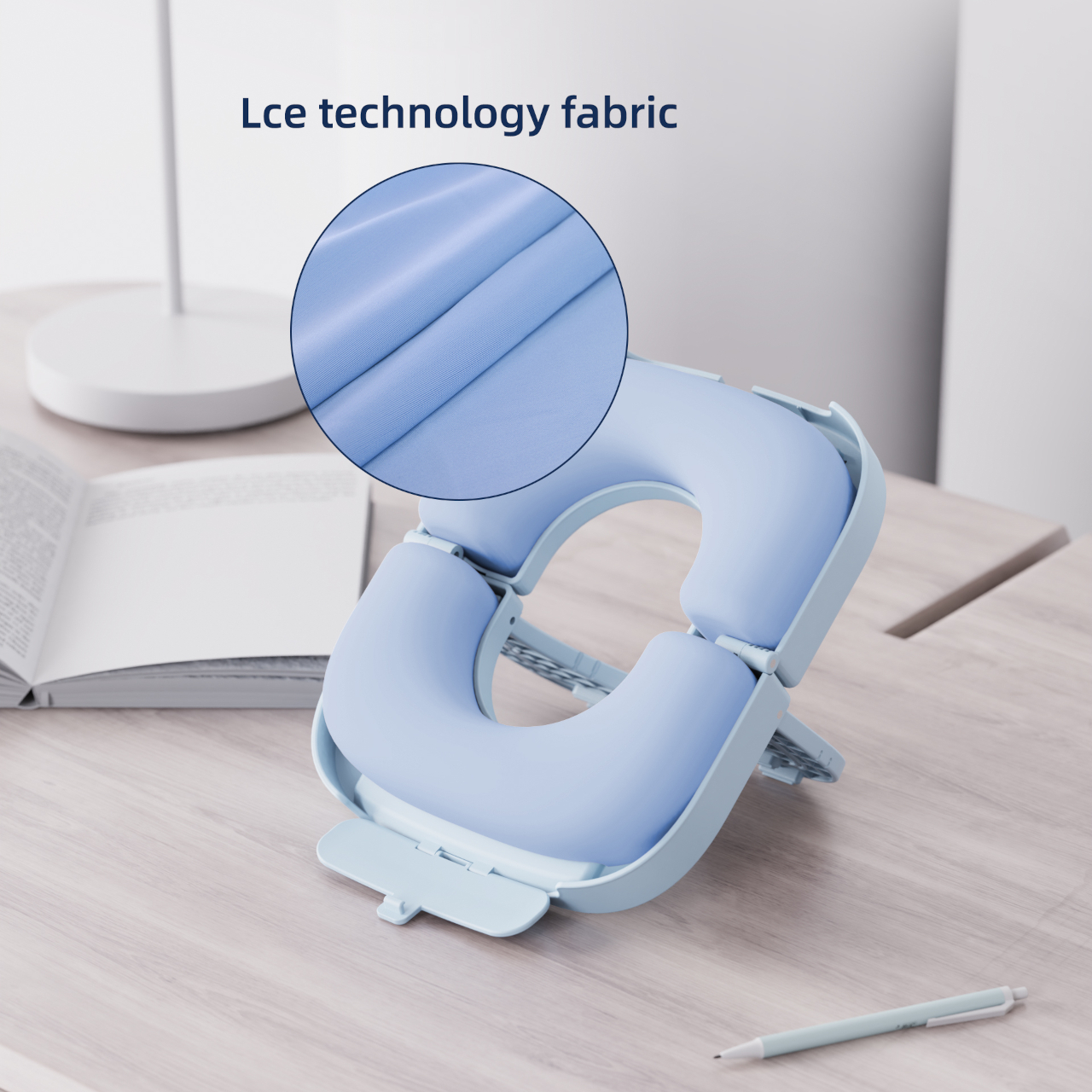

The shell gets a second shift when you want to watch something over lunch. With the support deployed and a small front ledge holding the device’s lower edge, it becomes a stand for a phone or tablet. The same structure that sets up a nap can therefore keep a screen propped up afterward, instead of occupying desk space until you’re sleepy again.
There’s still a difference between a clever folding arrangement and a headrest that stays steady under pressure. The project doesn’t provide a tested load rating, actual weight, or details about washing the covers. Those omissions matter more here than another color option. A tablet can sit still on a stand; a drowsy person will shift around and expect the support to stay put.