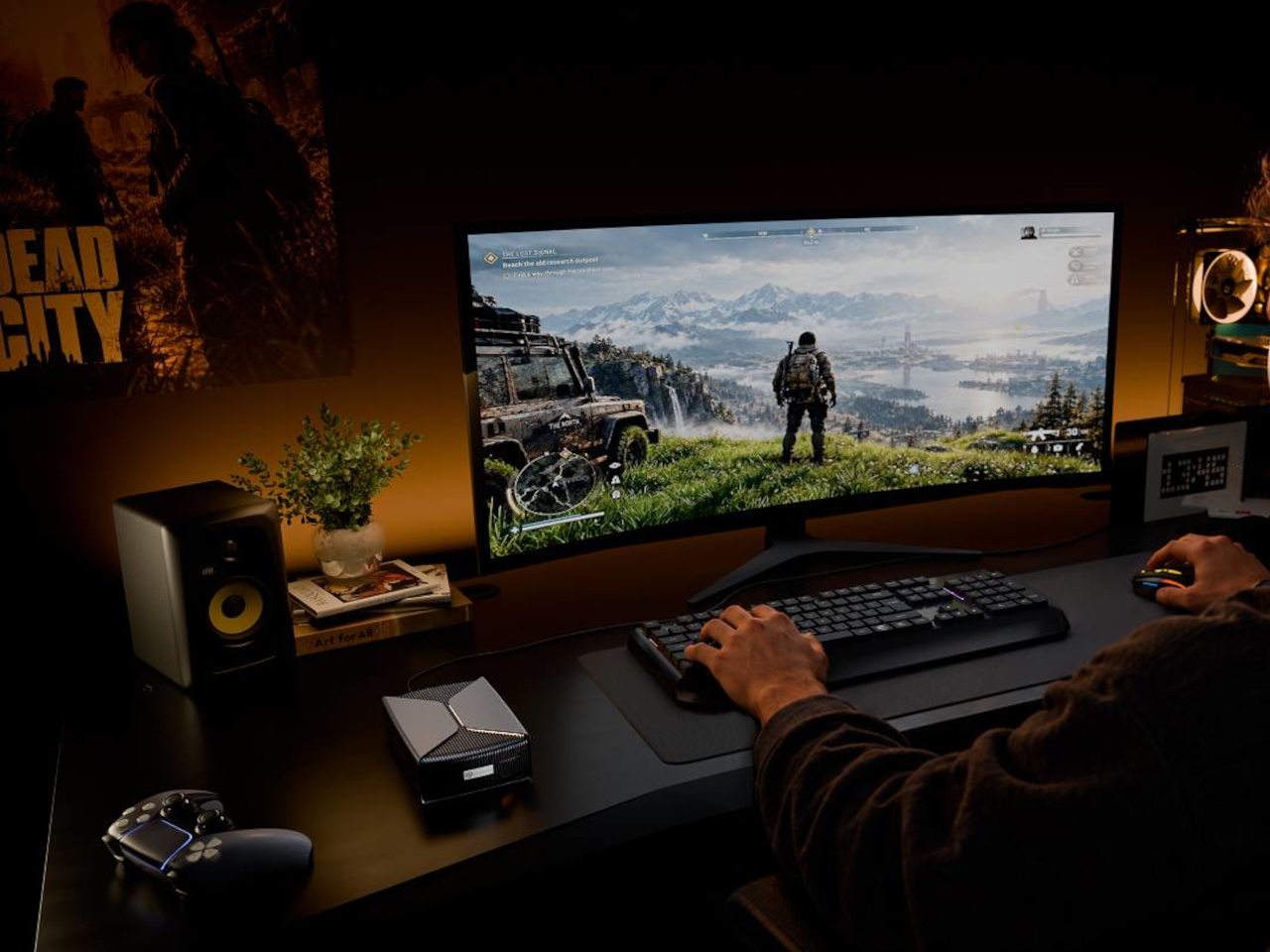
Keeping a game library on a hard drive and your current favorites on an SSD sounds sensible, until you’re constantly moving things between them. Seagate’s FireCuda Forge puts both types of storage inside one desktop enclosure, promising that its new Alkemi technology will be the one to handle that sorting. It comes with an 8TB or 20TB hard drive, but requires an SSD you supply.
That enclosure certainly isn’t trying to disappear behind your monitor. Dark, angular top panels sit above deeply ribbed surfaces, with programmable RGB lighting picking out their edges. It has more in common with a gaming desktop than a discreet pocket drive, giving the hardware a conspicuous place beside your keyboard. Anyone hoping for an anonymous black box might find the styling rather enthusiastic.
Designer: Seagate
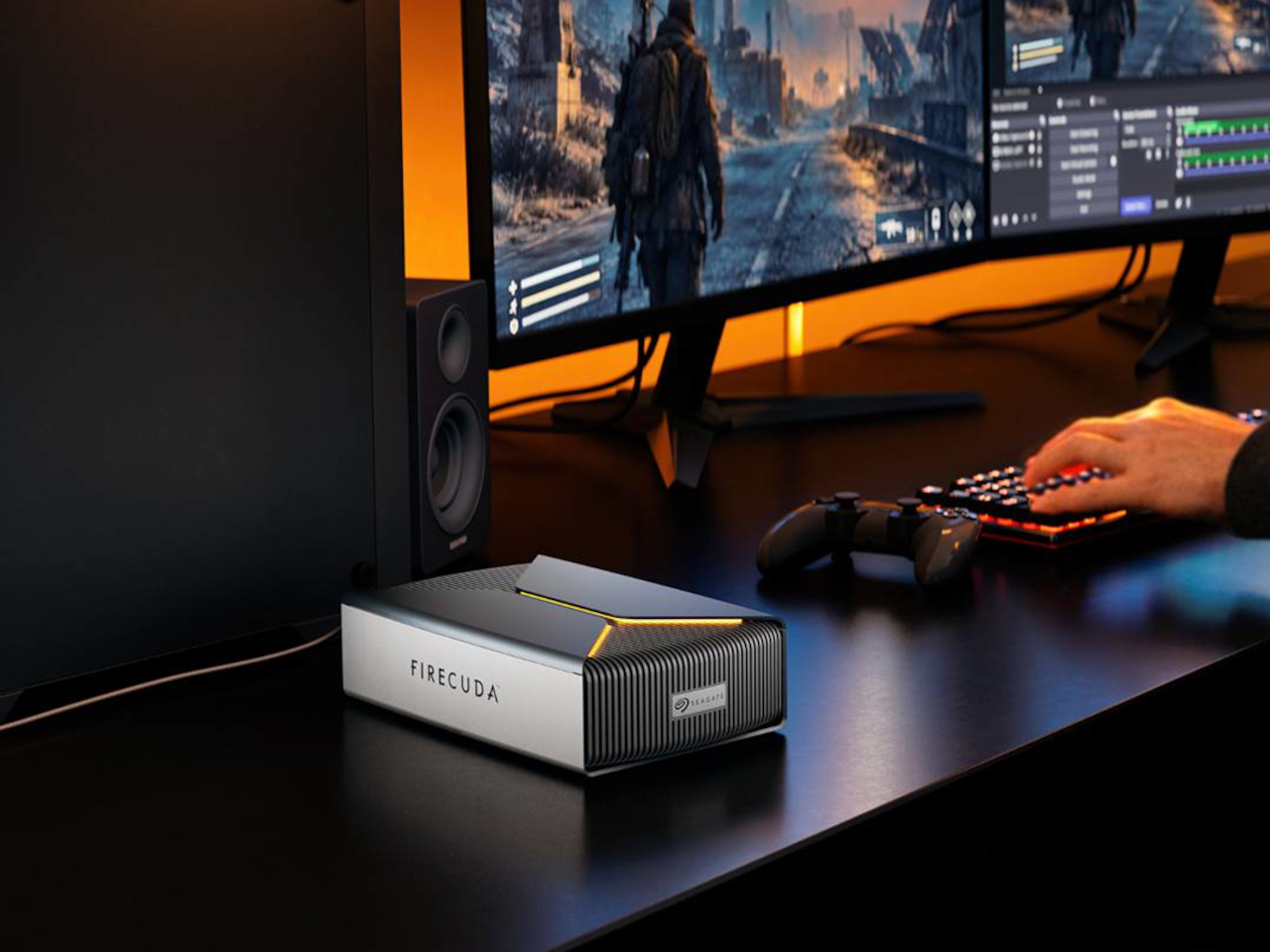

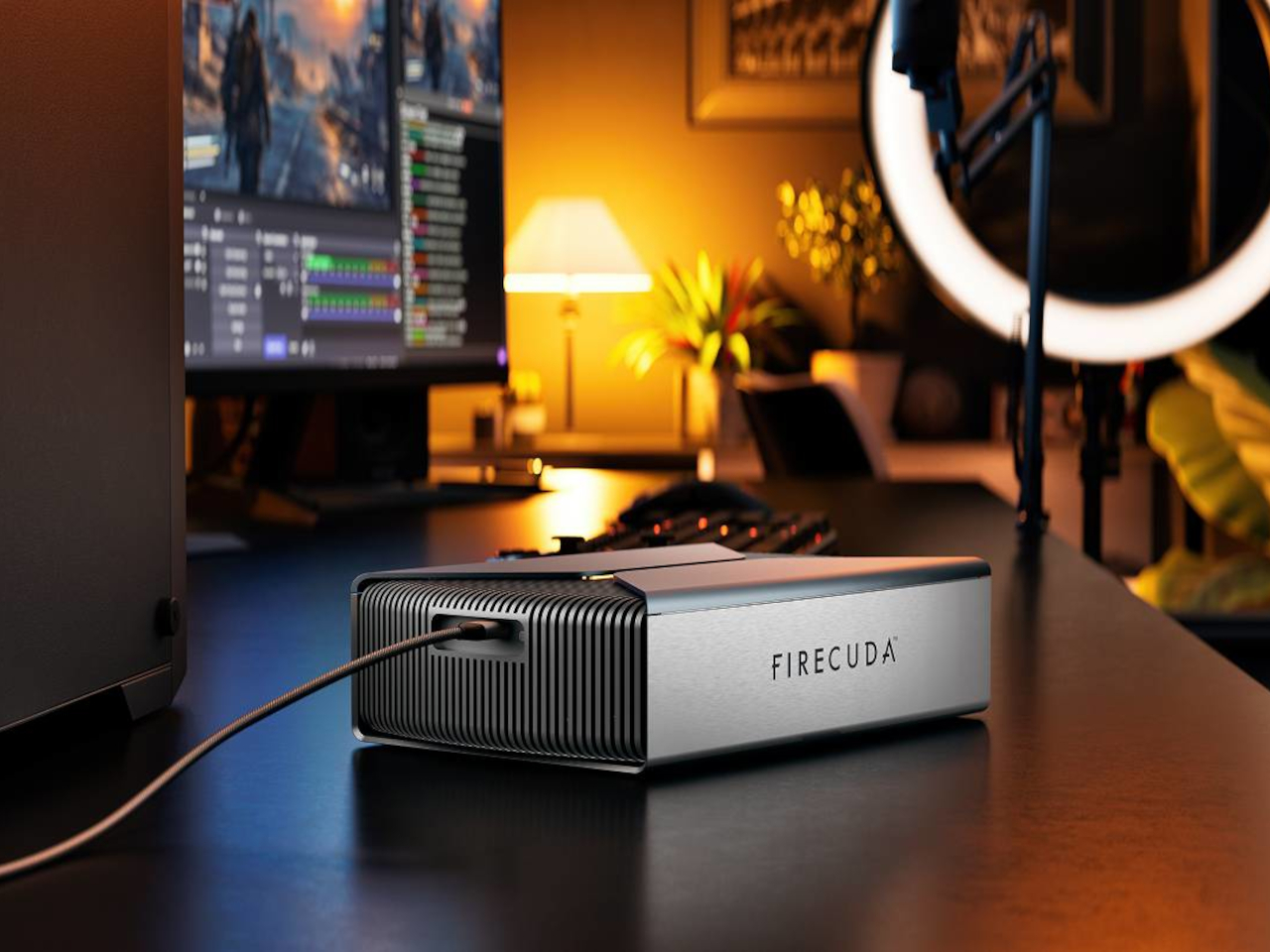
Inside, the SSD works as a cache rather than another storage compartment you manage yourself. Seagate says Alkemi follows usage patterns and prioritizes frequently accessed data on that faster drive, while the hard drive accommodates the broader library. Your computer sees one volume, and the SSD doesn’t add to its capacity. An 8TB model stays an 8TB model after installing flash storage.
That arrangement could suit someone who spends weeks playing one title before returning to something else. Instead of deciding which games deserve the fast drive, you’d let the enclosure respond as your habits change. The same logic applies to a video editor revisiting project files while keeping older footage nearby. The appeal is less digital housekeeping, rather than making every file equally fast.
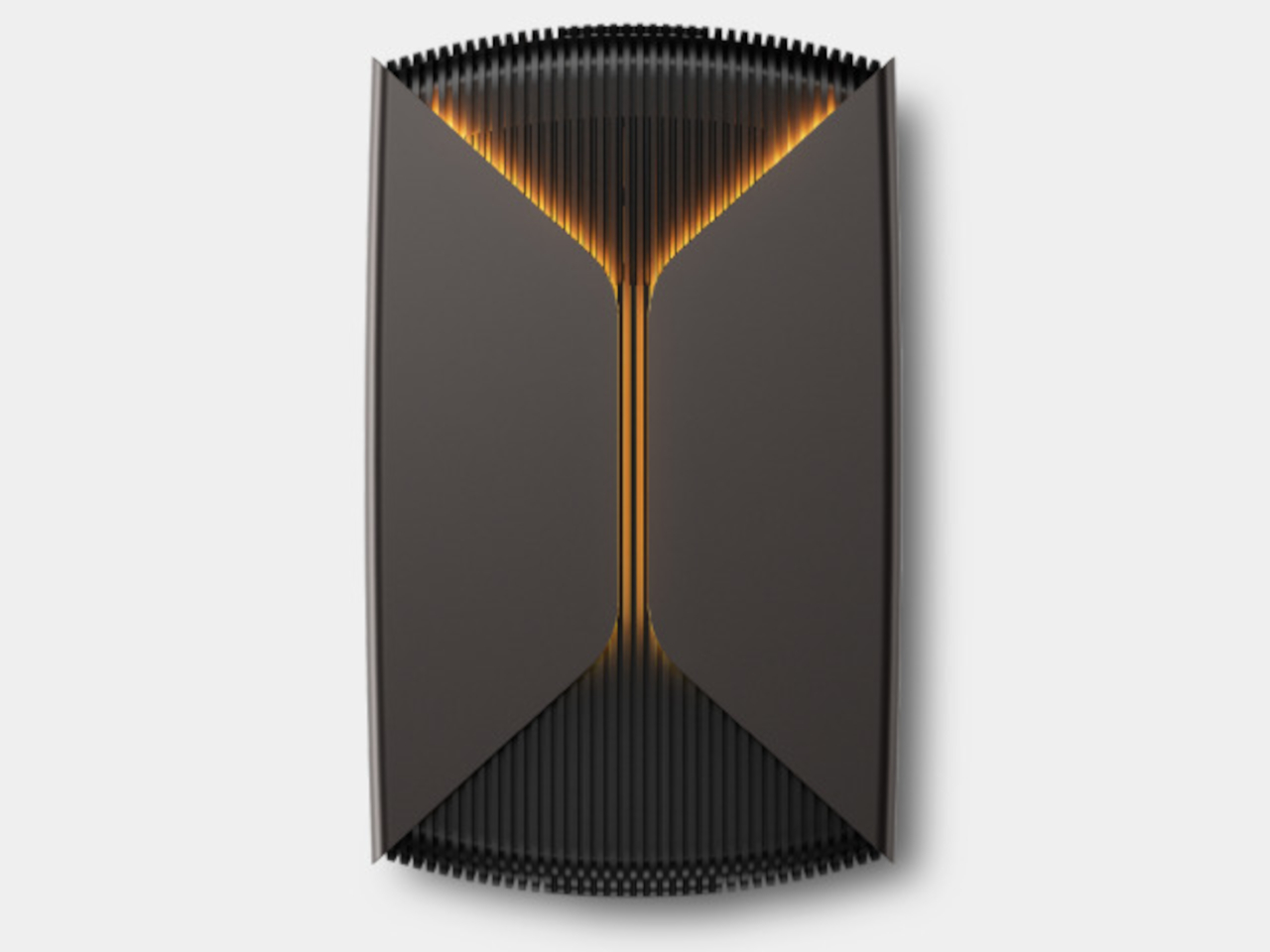
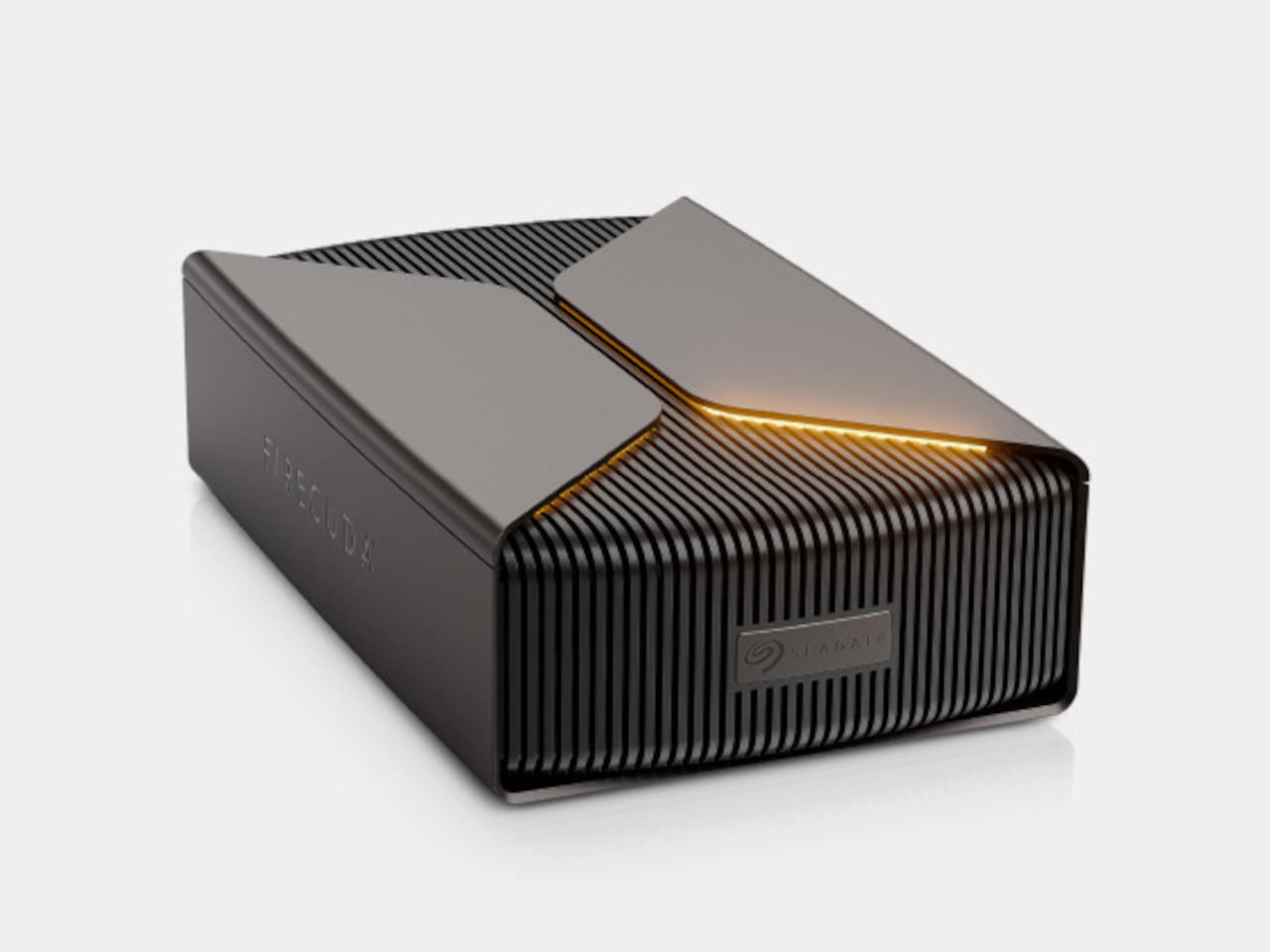
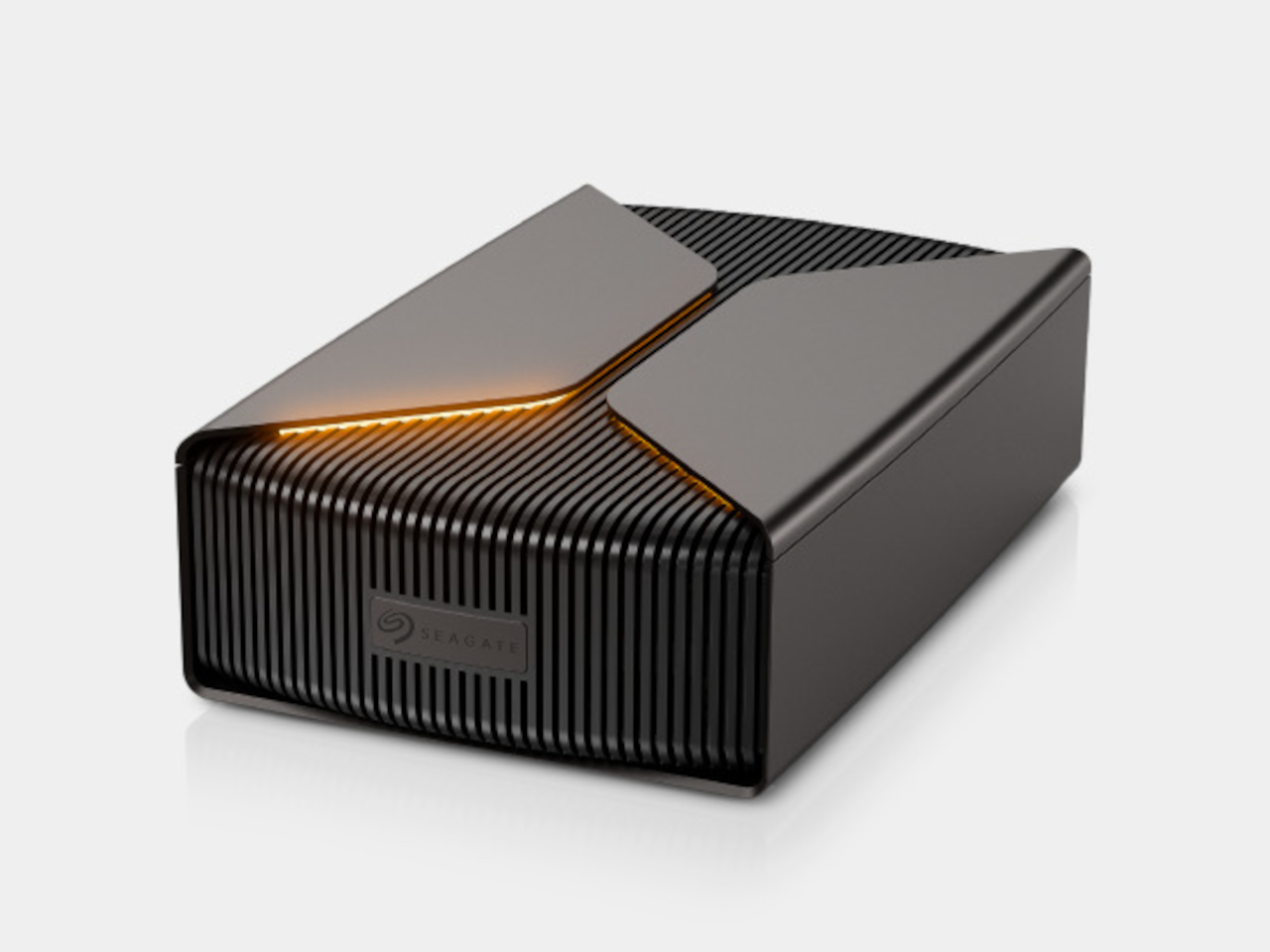
Before any of that happens, though, there’s some assembly required. Seagate specifies an M.2 2280 NVMe SSD, with PCIe Gen3 or newer connectivity and a 1TB maximum. The mounting screw, thermal pads, and hex screwdriver are included, but the SSD isn’t optional: the system won’t operate without it. Choosing your own flash storage brings flexibility, along with another item on the shopping list.
Over USB4, Seagate advertises read speeds up to 2,500 MB/s and writes up to 2,000 MB/s on compatible systems. Those figures aren’t a promise that a forgotten game buried on the hard drive will suddenly behave like an SSD installation. Seagate itself acknowledges that new data may not immediately benefit from established usage patterns. The cache needs useful activity to learn from.
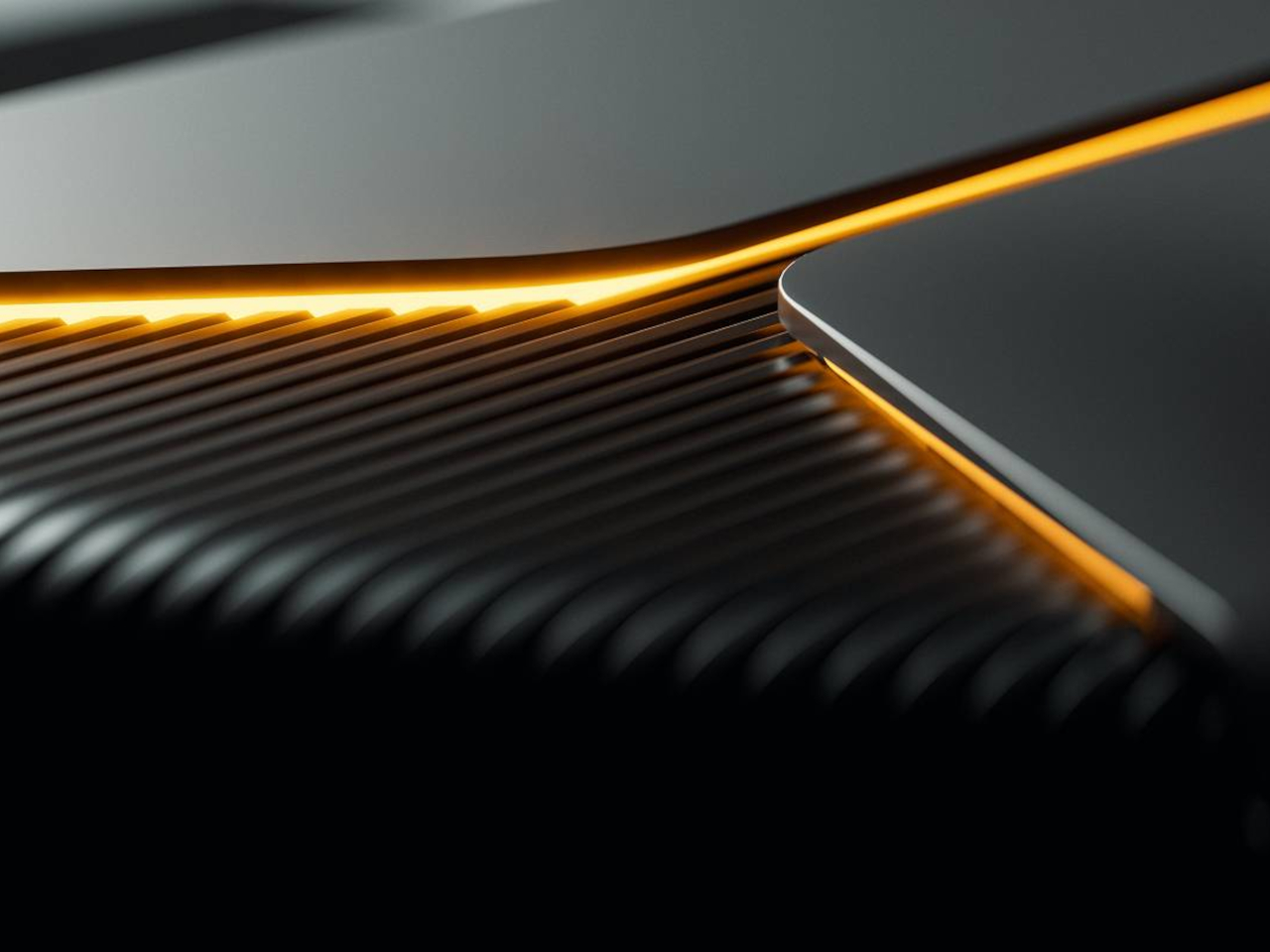
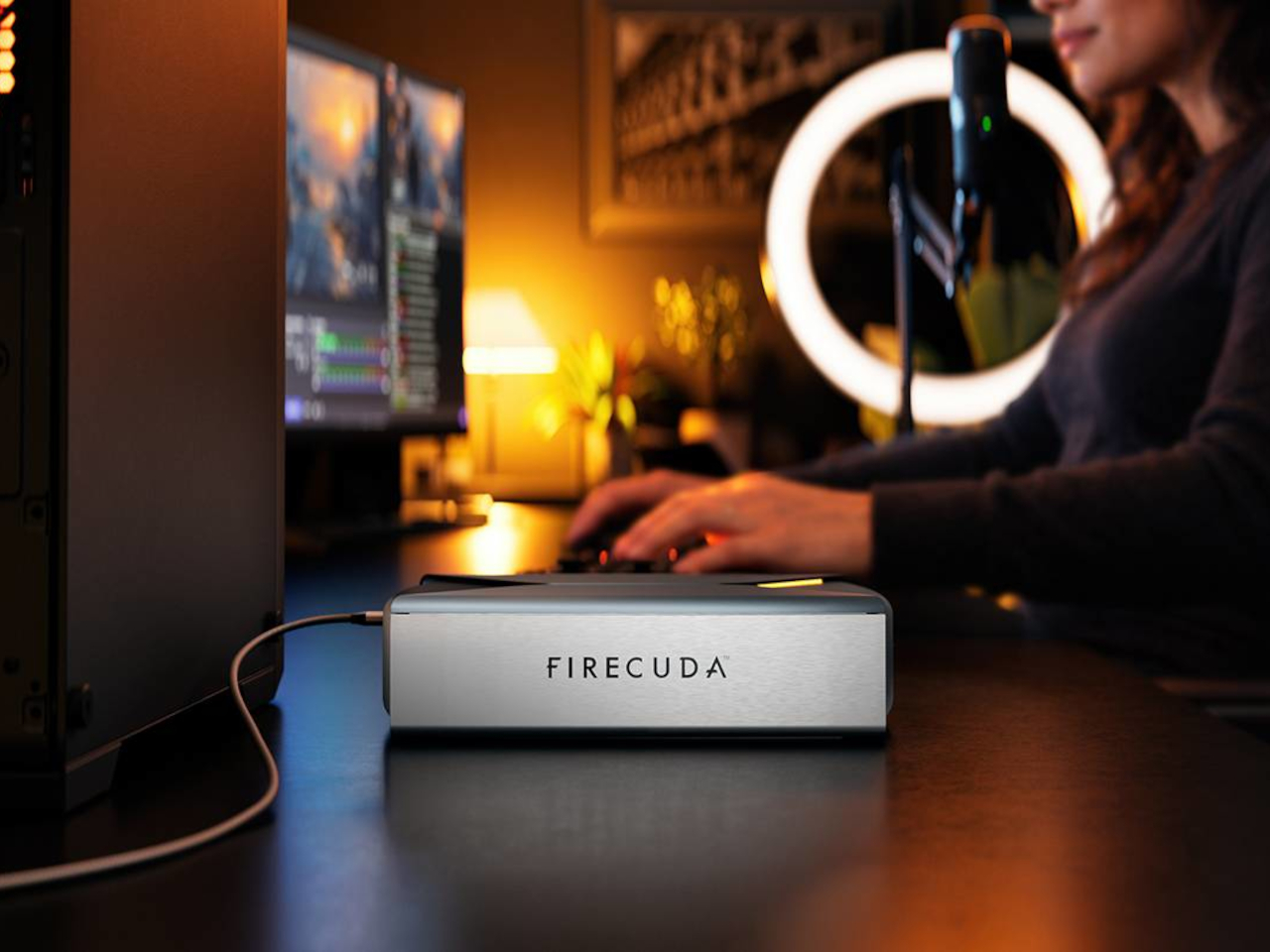
The Forge also expects a dedicated patch of desk rather than a pocket in your laptop bag. The 8TB unit measures about 9.46 x 5.78 x 2.57 inches and weighs roughly 4.1 lbs. It needs an external power adapter alongside its USB-C cable, too. On the practical side, Seagate makes the hard drive upgradeable, leaving room to expand beyond your initial purchase.
Seagate’s announced prices start at $699 for 8TB and $899 for 20TB, before adding that required SSD. Already owning a suitable spare would make the proposition easier to consider, especially if you’re tired of shuffling files between drives. Otherwise, the automatic management comes with another purchase to make before the system works, despite all that storage already sitting inside its conspicuous enclosure.