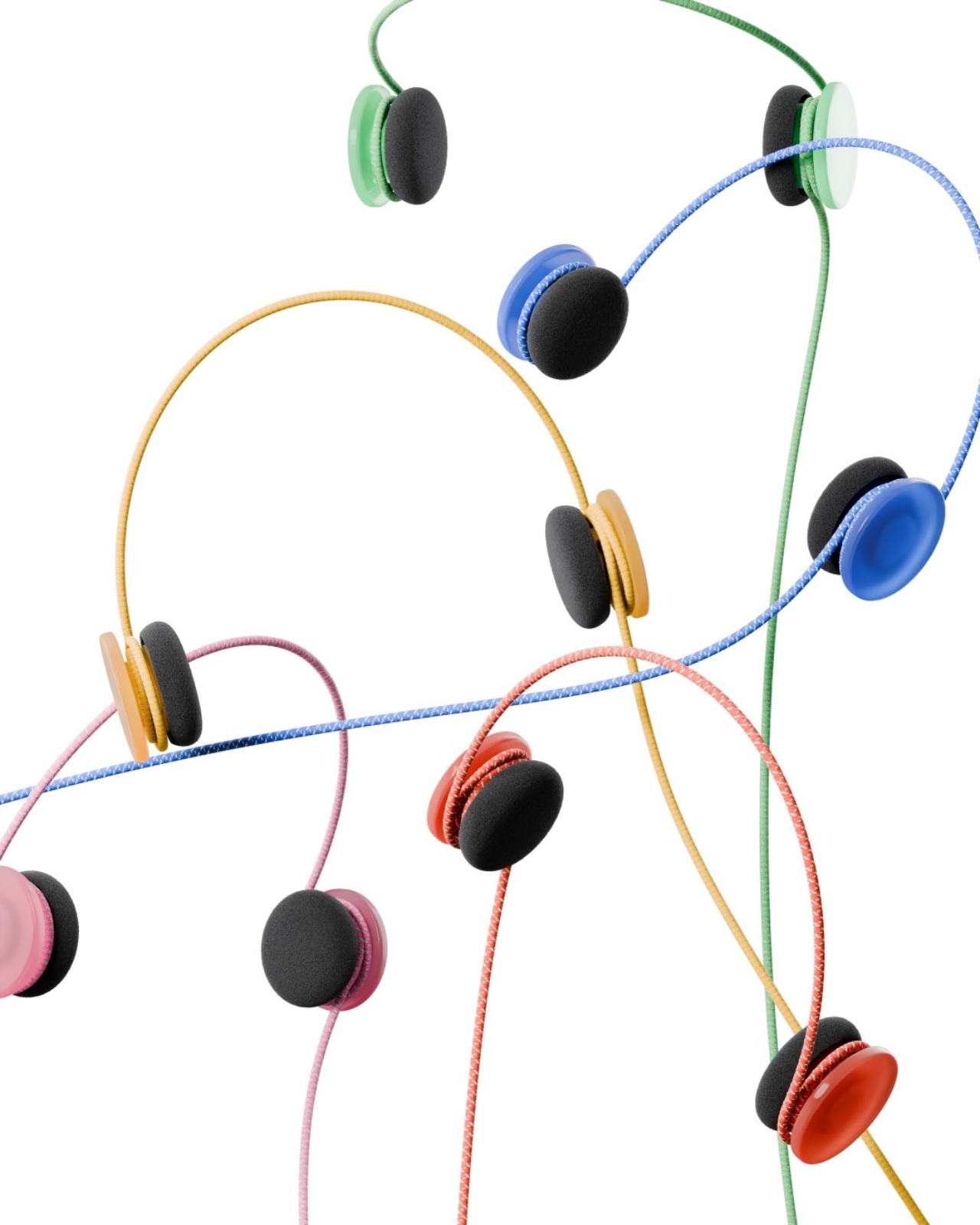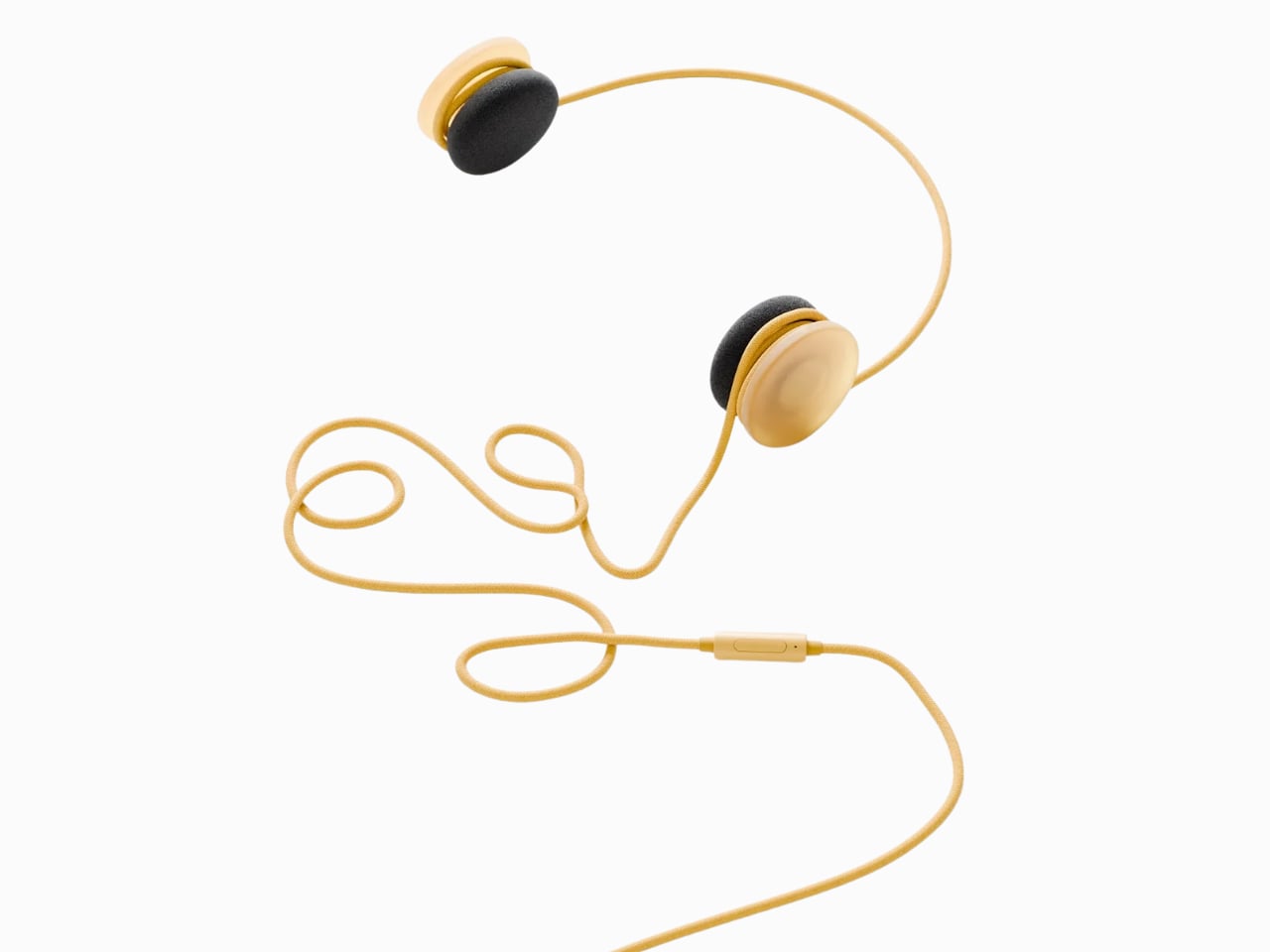

A headphone cable usually gets treated as the part you tolerate. It hangs off the ear cup, catches on things, and rarely contributes much to the design beyond getting sound where it needs to go. Jojo, a wired headphone concept by All Design Lab, gives it another job. The cable becomes the headband, addressing the visual bulk of a separate support structure and replacing sliding fit adjustments with rotating ear cups.
I like that the studio hasn’t tried to make the wire disappear. Instead, Jojo asks how much of the object that wire could become. That’s a more interesting starting point than dressing up another familiar headphone silhouette. It also makes the design easy to understand: two ear cups, black cushions, and a cord tracing an uninterrupted route between them.
Designer: All Design Lab

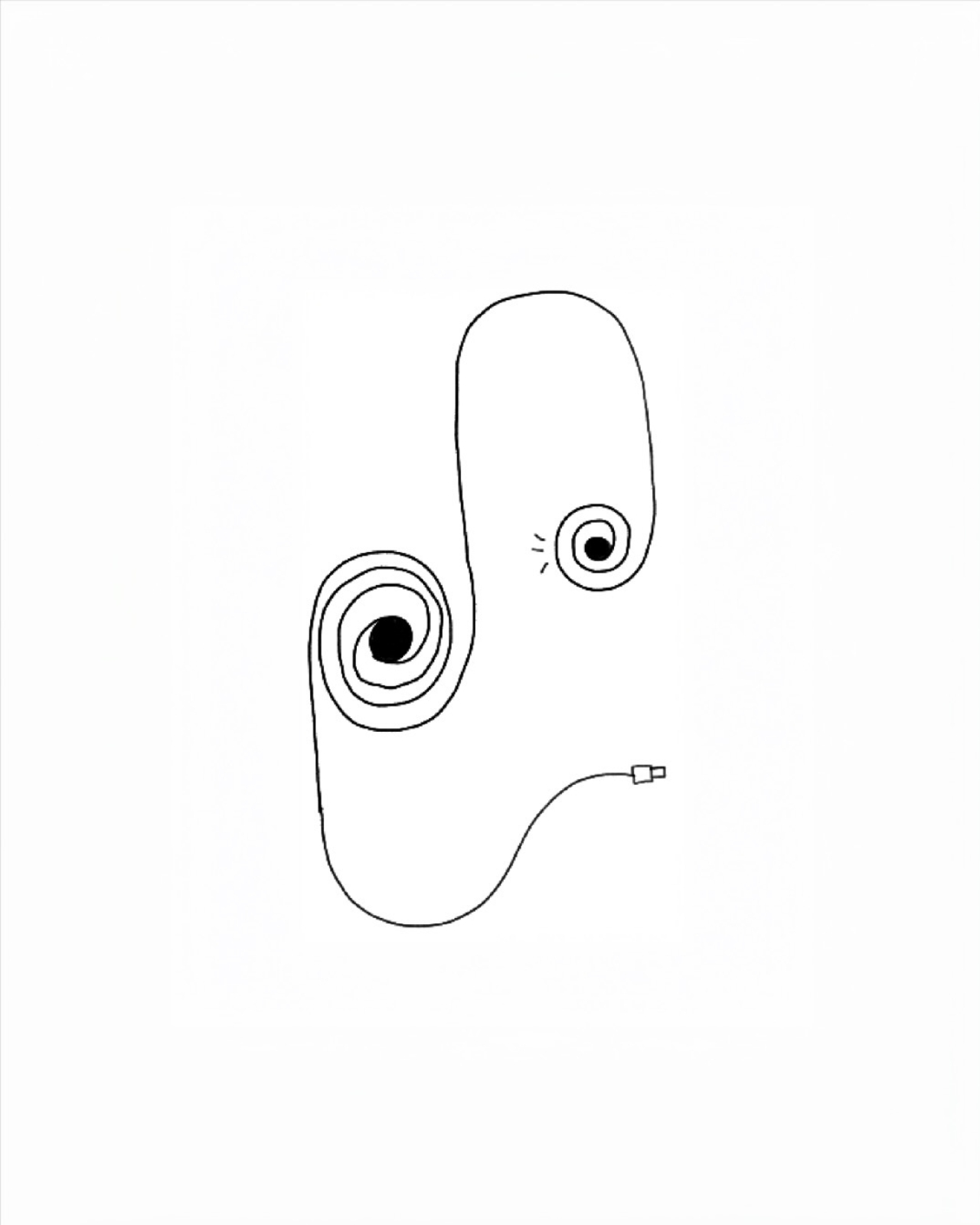
That route starts at a USB-C plug, passes through an inline remote, and winds into the first ear cup. From there, the cable arches over the head to form the band before winding into the second cup. The single-cable idea refers to this continuous path, not a claim that the headphones contain no other components. There are still drivers, cushions, covers, and an internal adjustment mechanism.
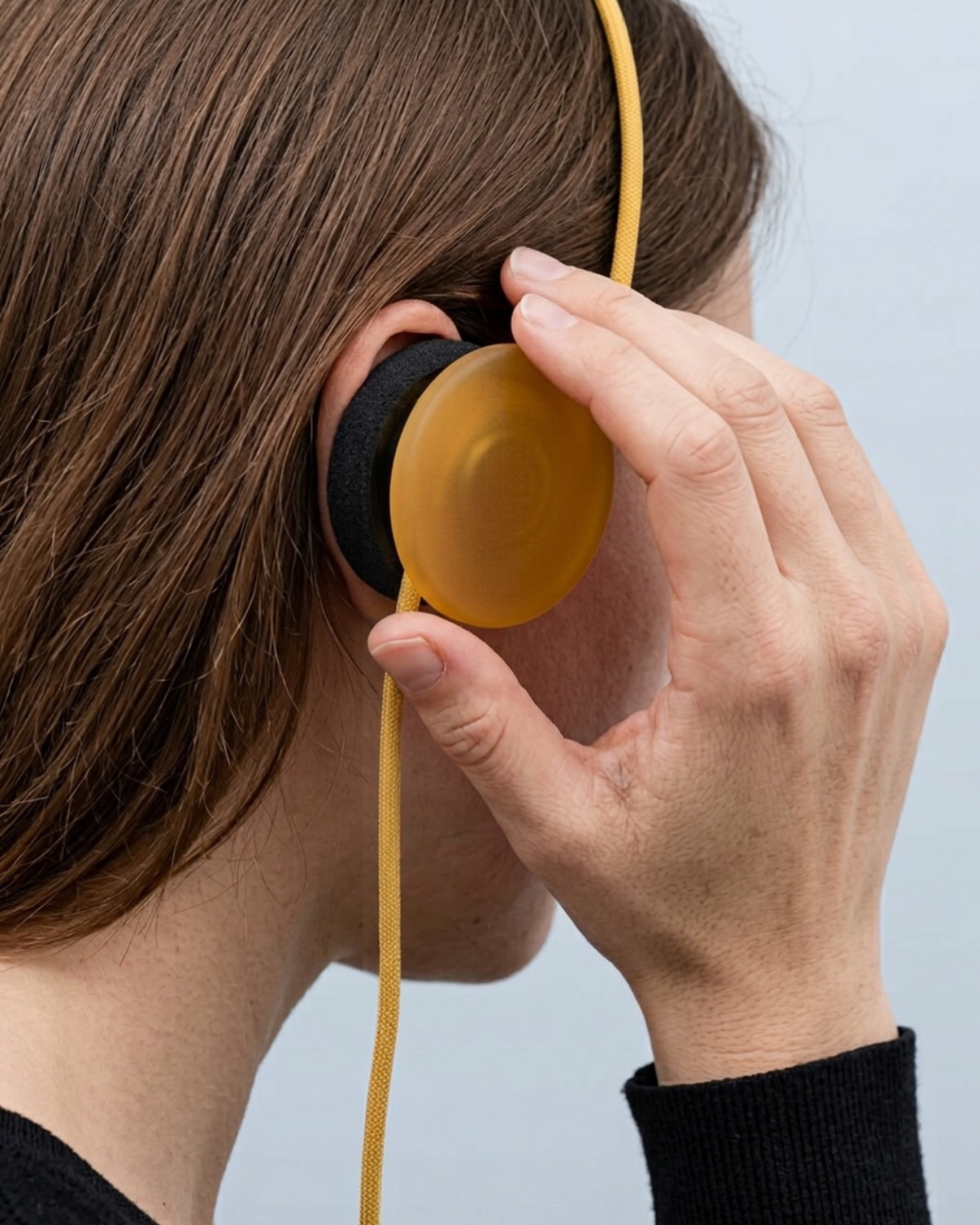
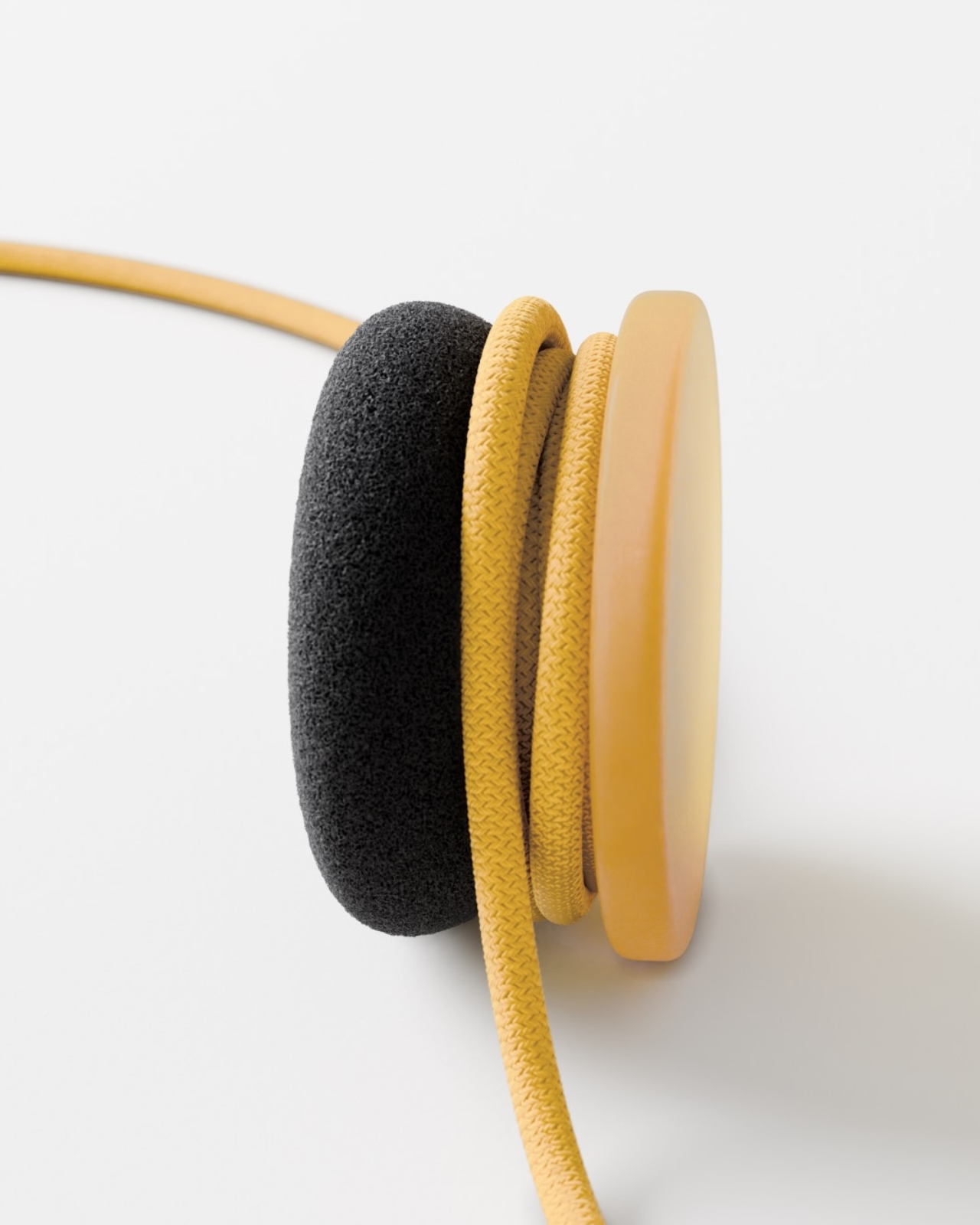
The yo-yo comparison explains the interaction. Turning an ear cup’s outer cover winds cable in or lets it out, changing the length available for the headband. Rather than pulling an arm out of a housing, you rotate a disc beside your ear. On paper, that feels like a satisfying way to connect an adjustment to the shape of the thing you’re holding.
A ratchet inside the hub provides small, stepped adjustments and holds the cable at the selected length. Crucially, the cushion is intended to stay still against the ear while the outer cover, hub, and driver rotate together. Keeping the contact surface stationary is a thoughtful detail. Having foam drag across your ear every time you adjusted the fit would take the charm out of that interaction pretty quickly.
The proposed materials give the mechanism a fitting visual language. A braided textile cable would make the headband read as a cord rather than a conventional rigid support, while frosted translucent covers could offer a partial view of what happens inside the cups. Black foam cushions keep the contact surfaces visually straightforward. I like the decision to give the cable such prominence instead of disguising it as a more familiar headphone component.
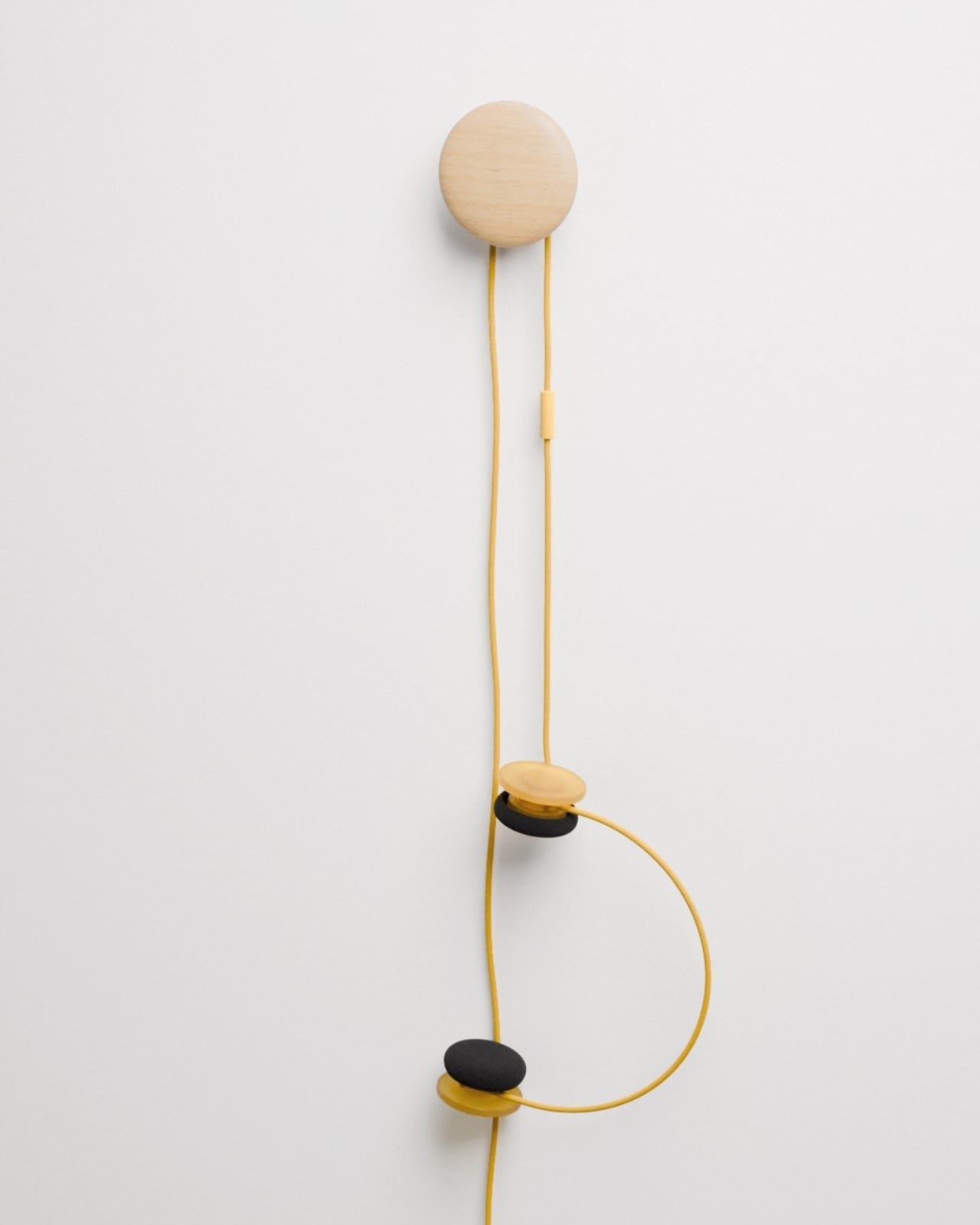
The compact inline remote follows the same restrained approach, housing a microphone and volume rocker. Keeping those controls on the cable leaves the ear cups dedicated to their more unusual job. That separation makes sense to me. You wouldn’t want a routine volume adjustment to become confused with changing the fit, especially when rotating the outer covers is the design’s defining interaction.
The larger practical question is how that narrow cable would behave as a headband. It needs enough structure to maintain its arch and help position the ear cups, yet enough flexibility to wind around the hubs. I’d want to know how pressure feels across the top of the head and how securely the cups stay put during movement. Neither question can be settled by the concept description.
Repeated winding also deserves scrutiny. The cable is doing electrical and structural work, so its bending behavior matters beyond keeping the object tidy. Repairability would be another consideration: a continuous cable is an elegant visual decision, but that alone doesn’t make replacement straightforward. These are development questions worth asking because the core idea is strong enough to deserve answers, rather than a reason to dismiss it.
Jojo remains a concept, rather than a demonstrated listening experience. Its appeal, for me, is the proposed adjustment: a familiar little twist that visibly changes the fit. If that gesture can feel dependable without making the headband uncomfortable, the cable will have earned its unusually prominent place.