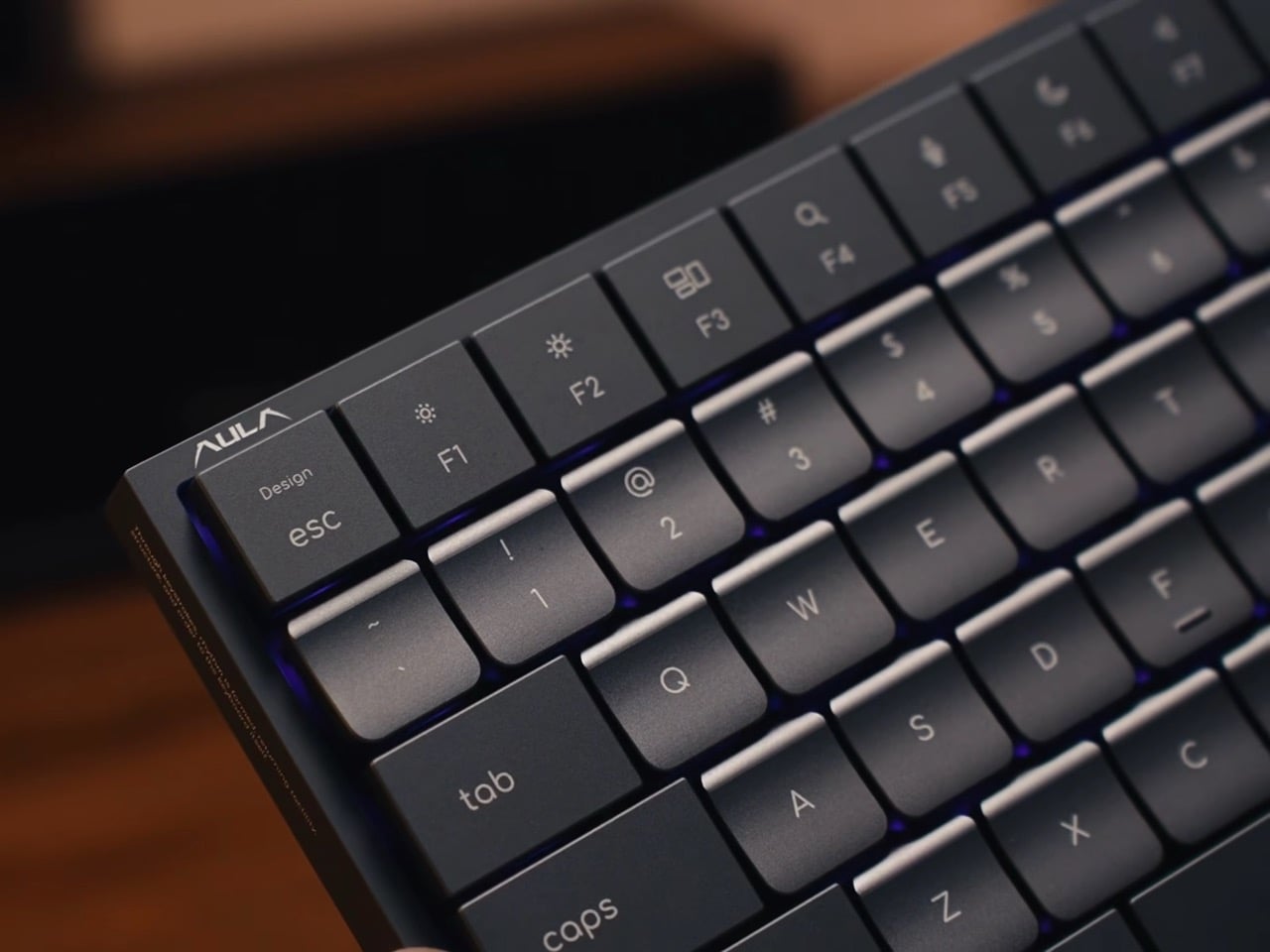
A company named after a tarantula just launched a keyboard with finishes named after gods, and I’m still processing it. AULA’s Chinese name translates to tarantula, and the brand built its reputation on RGB-soaked gaming boards that cost less than a decent pizza night. Creepy-crawly branding and rainbow lighting were basically the whole identity. Then the Neos 75 showed up with an all-aluminum body, metal keycaps, a color screen, and a launch manifesto about the Renaissance. Somewhere inside AULA, a team of designers clearly read a little too much art history, and I’m thrilled about it.
The Neos 75 comes from AULA.New Renaissance, a new in-house team of product designers, structural engineers, and keyboard nerds, and it’s their first product. It’s a 75% low-profile mechanical keyboard with 84 keys, a CNC-machined aluminum chassis, and custom Kailh switches. The party trick sits on the right, where a color screen, two slotted metal knobs, and chunky round media buttons form a console that looks borrowed from a Teenage Engineering synth. Preorders opened in China on October 23, with a global release listed as coming soon.
Designer: AULA.New Renaissance
A Tiny Hi-Fi Deck Lives on the Right Side
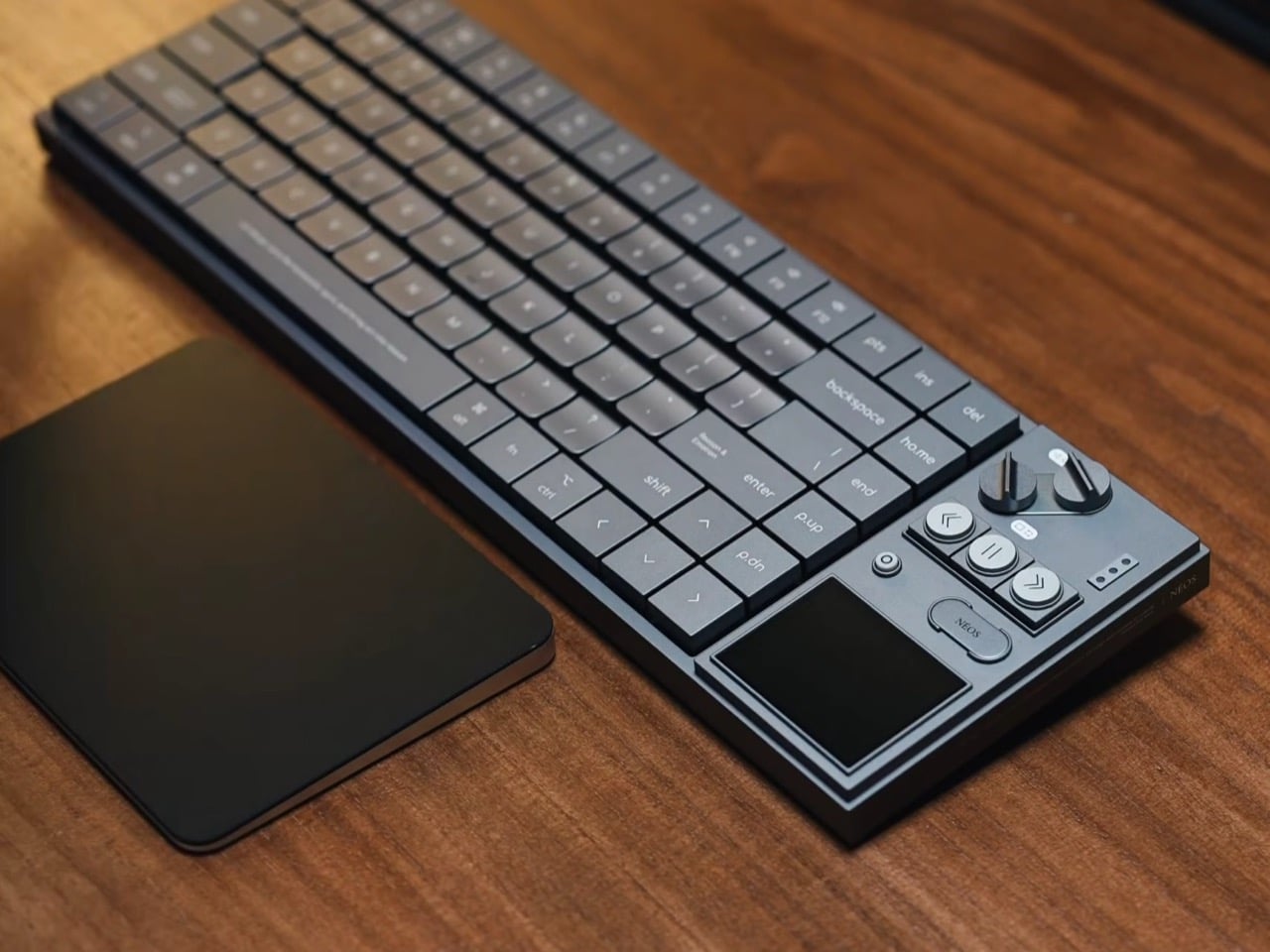

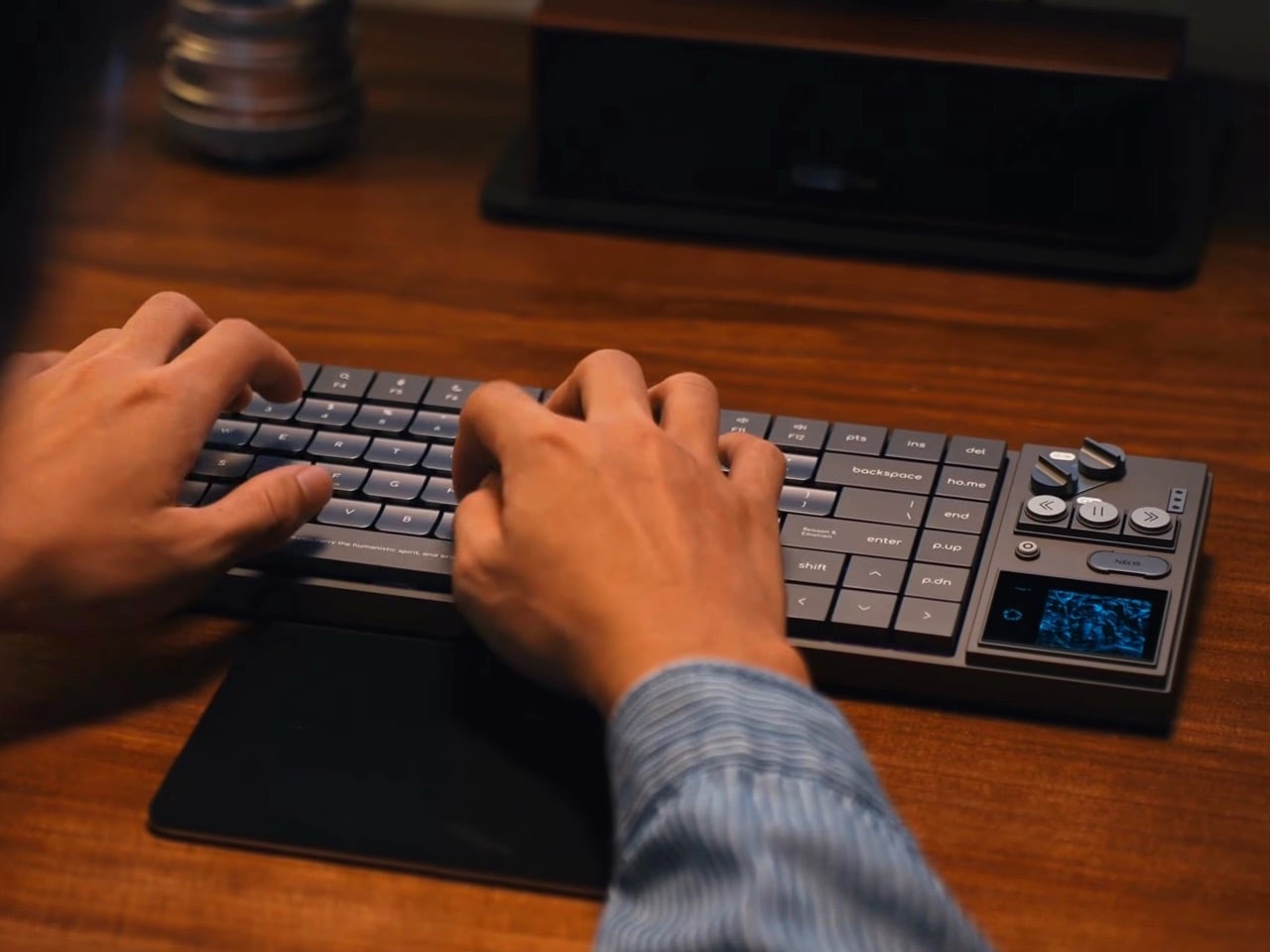
Two slotted metal knobs crown the console, each shaped like an oversized screw head you could almost turn with a coin. The upper one is removable and damped, handling volume and mute. The lower knob flips through screen pages and even pulls up a built-in calculator, which spreadsheet people will appreciate more than they’ll admit. Below them sit three round metal buttons for rewind, pause, and fast-forward, plus a pill-shaped NÉOS button and a small round key. All of these controls can be remapped in AULA’s driver.
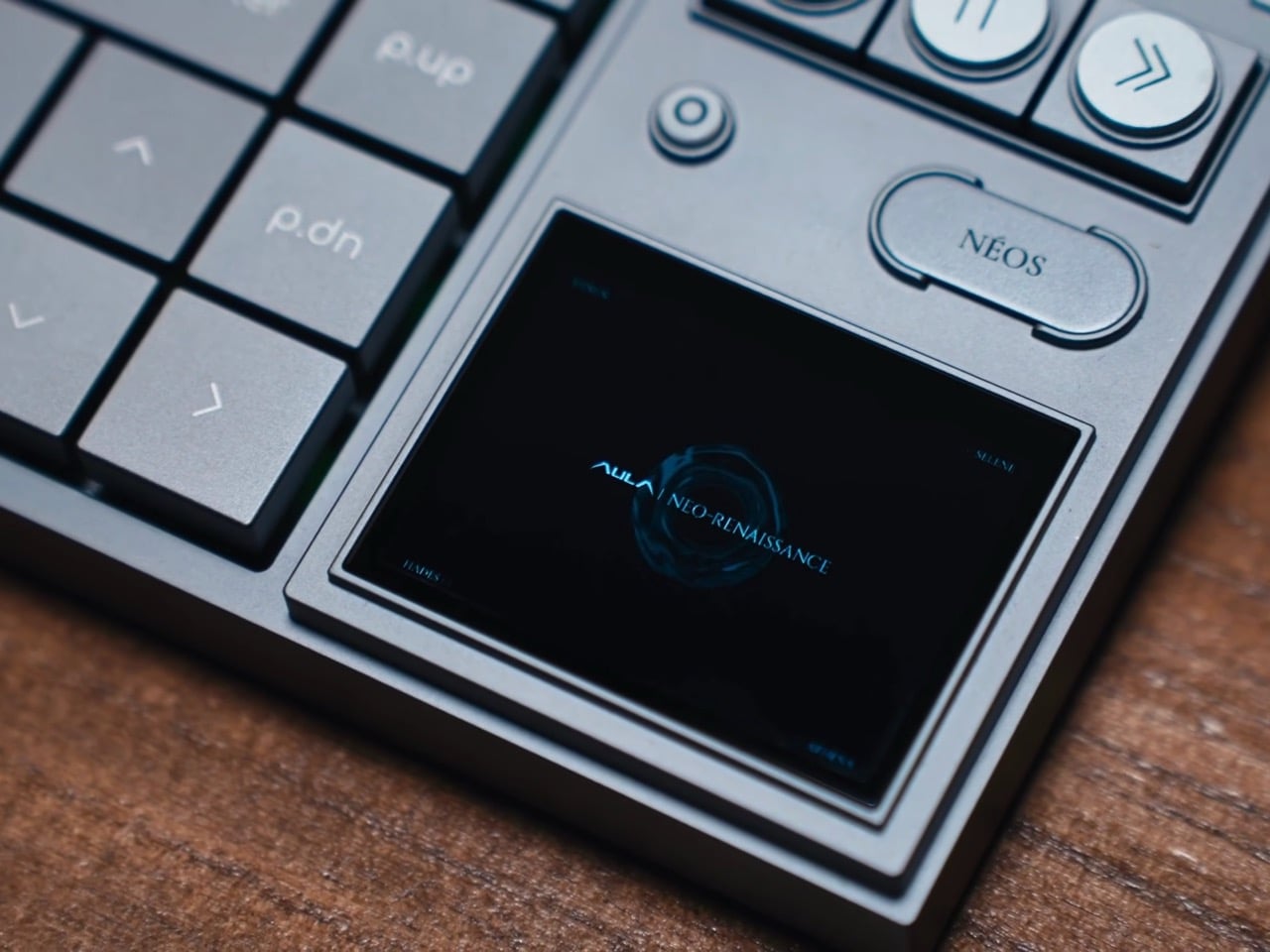
That cluster recalls Dieter Rams’s Braun radios and record players of the 1950s and 1960s, with their round buttons and tidy control layouts. The same influence runs through Teenage Engineering’s OP-1, the OP-1 Field, and the all-black OP-XY. The Neos 75 borrows that visual language and places a 2.3-inch, 480 × 360 color display beside the controls, showing the clock, battery level, and artwork. The whole corner looks like a portable music player attached to a keyboard. Some Chinese forum users called the console a lump, but I’d call it the entire personality.
Dressed Like a Museum Piece, Named Like a Pantheon
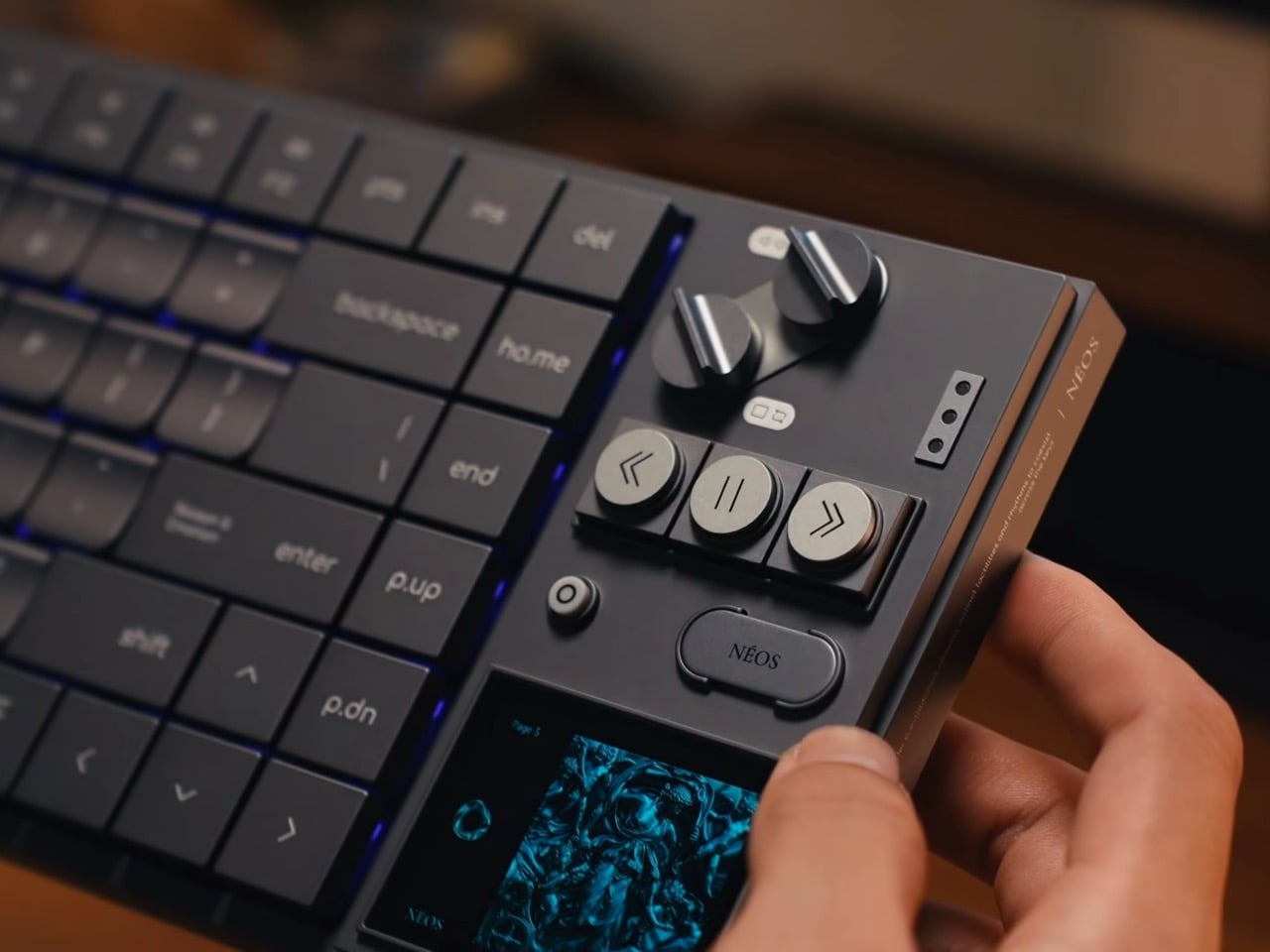
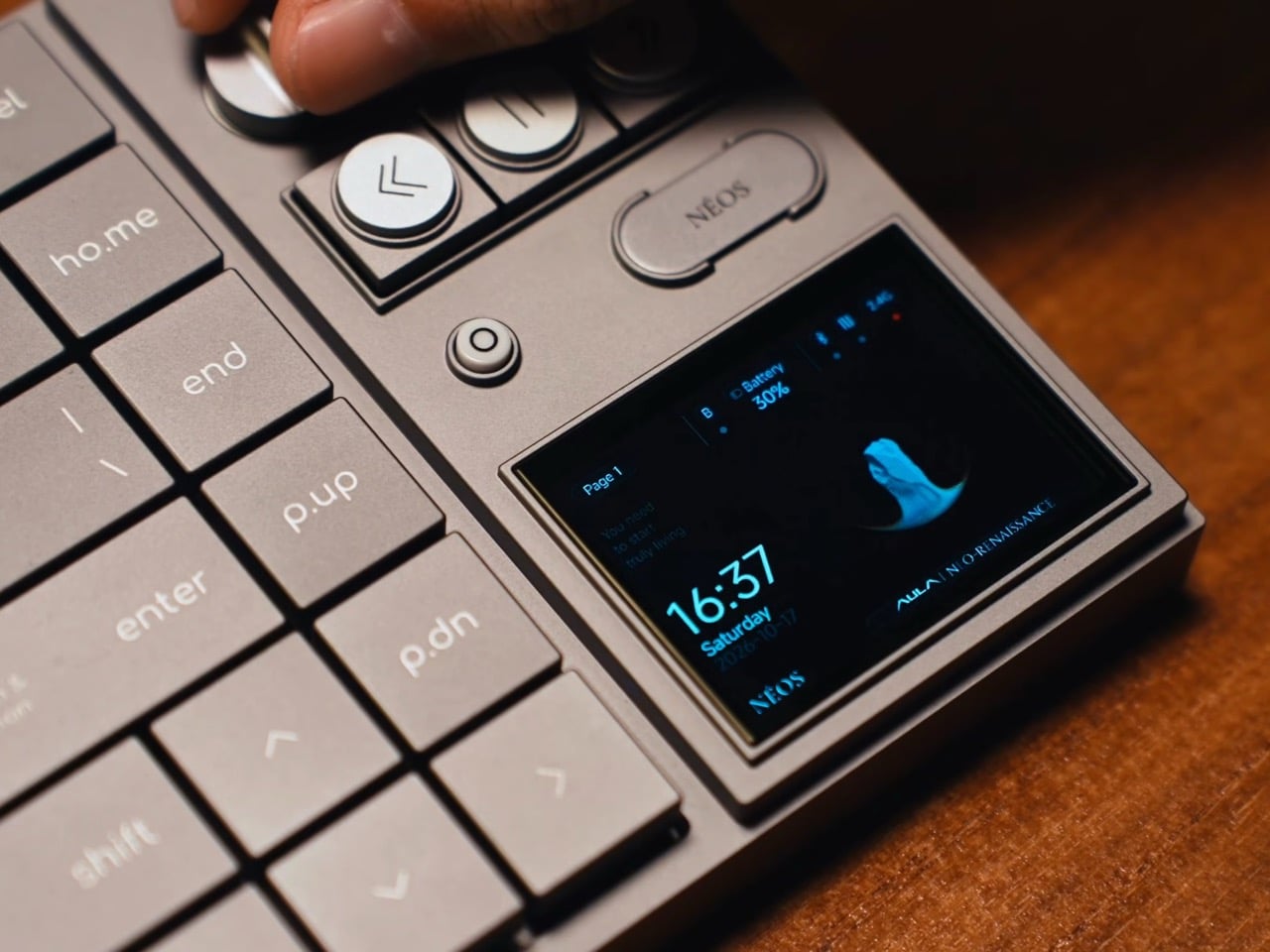
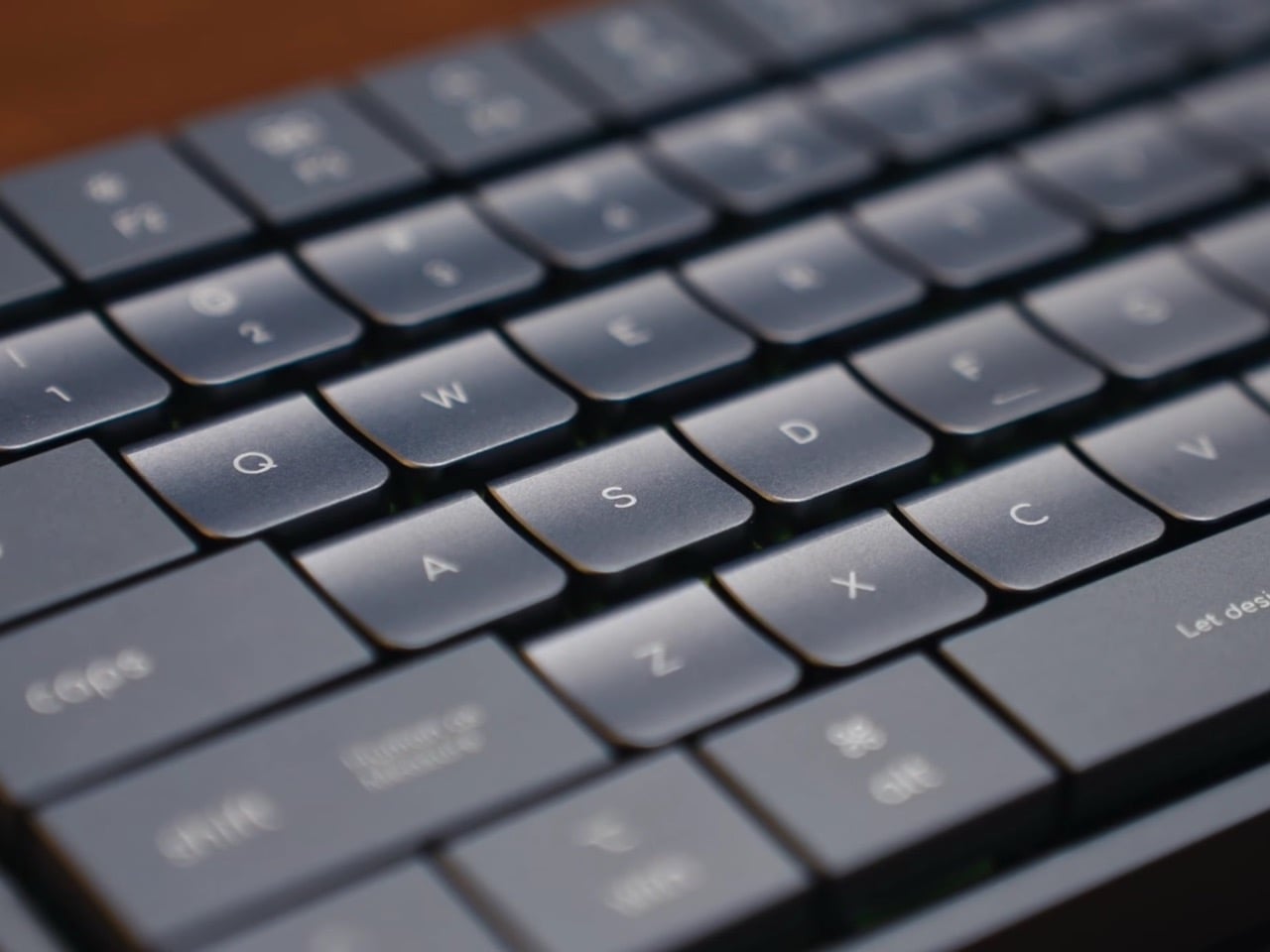
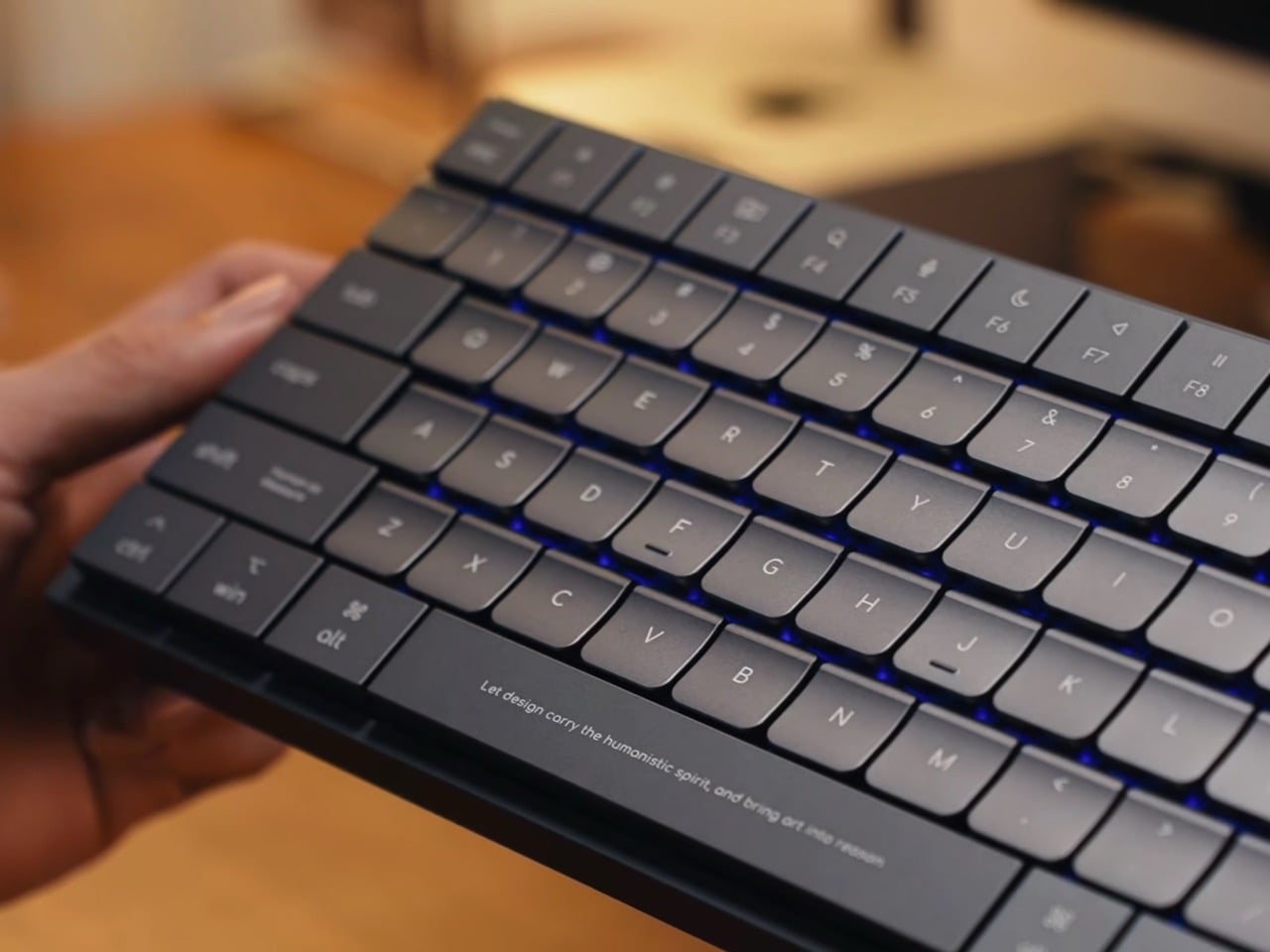
AULA CNC-machines the one-piece chassis from aluminum, then finishes it in one of four colors named after deities. Venus is anodized silver, Hades anodized black, Selene anodized gray, and Athena gets an electrophoretic white coating. Bonus mythology lesson: Venus is Roman, so one deity snuck in from the neighbors. The keycaps are aluminum too, flat around the edges with a gentle curve in the center. Full metal keycaps are still a rarity on mass-produced boards, and on a walnut desk the whole thing looks like it belongs in a museum gift shop.
AULA’s manifesto argues that the Renaissance put people back at the center of the world five centuries ago, and that the Neos 75 now puts the keyboard back in human hands. It’s a big claim for a typing device, and the copywriting got roasted online. The details are more interesting. Lowercase legends like “ho.me” and “p.up” give the keys a playful voice, and “Reason & Emotion” is printed on the Enter key. A line of text runs along the spacebar, and the screen’s default face pairs the clock with a glowing statue. Teardowns also show a custom curve across the letter keys and fold-out feet.
Gasket Guts and a Price Tag Worth Talking About
Inside, a gasket mount cushions the typing assembly, backed by layers of PORON foam, an IXPE switch pad, and a PET sheet intended to shape the sound. The switches are custom low-profile units built with Kailh, sitting in hot-swappable sockets, with linear and tactile options available. The board supports wired, 2.4GHz, and Bluetooth connections, with a 4,200mAh battery housed in its own compartment. VIA compatibility and AULA’s A HUB 3.0 software provide remapping options on Windows and macOS. The board measures about 14.7 × 4.8 × 1.2 inches (372.8 × 122.3 × 29.65mm), including the extra console.
China preorders opened at ¥1,299.1 (roughly $180), down from a list price of ¥1,599.1 (about $225). Official US pricing hasn’t been announced, and AULA lists the global launch as coming soon. This is the brand’s first move into four-figure RMB pricing, putting it up against low-profile favorites like the NuPhy Air75 and the Lofree Flow. Neither combines a screen, metal knobs, and aluminum keycaps in one package.