Stopping for a few minutes shouldn’t always require buying a coffee. Yet a walk through a neighborhood can offer plenty of places to spend money and surprisingly few places to simply sit. I have a soft spot for design that takes that small inconvenience seriously. A bench might not sound like an ambitious architectural assignment, but giving people somewhere to pause is a worthwhile starting point.
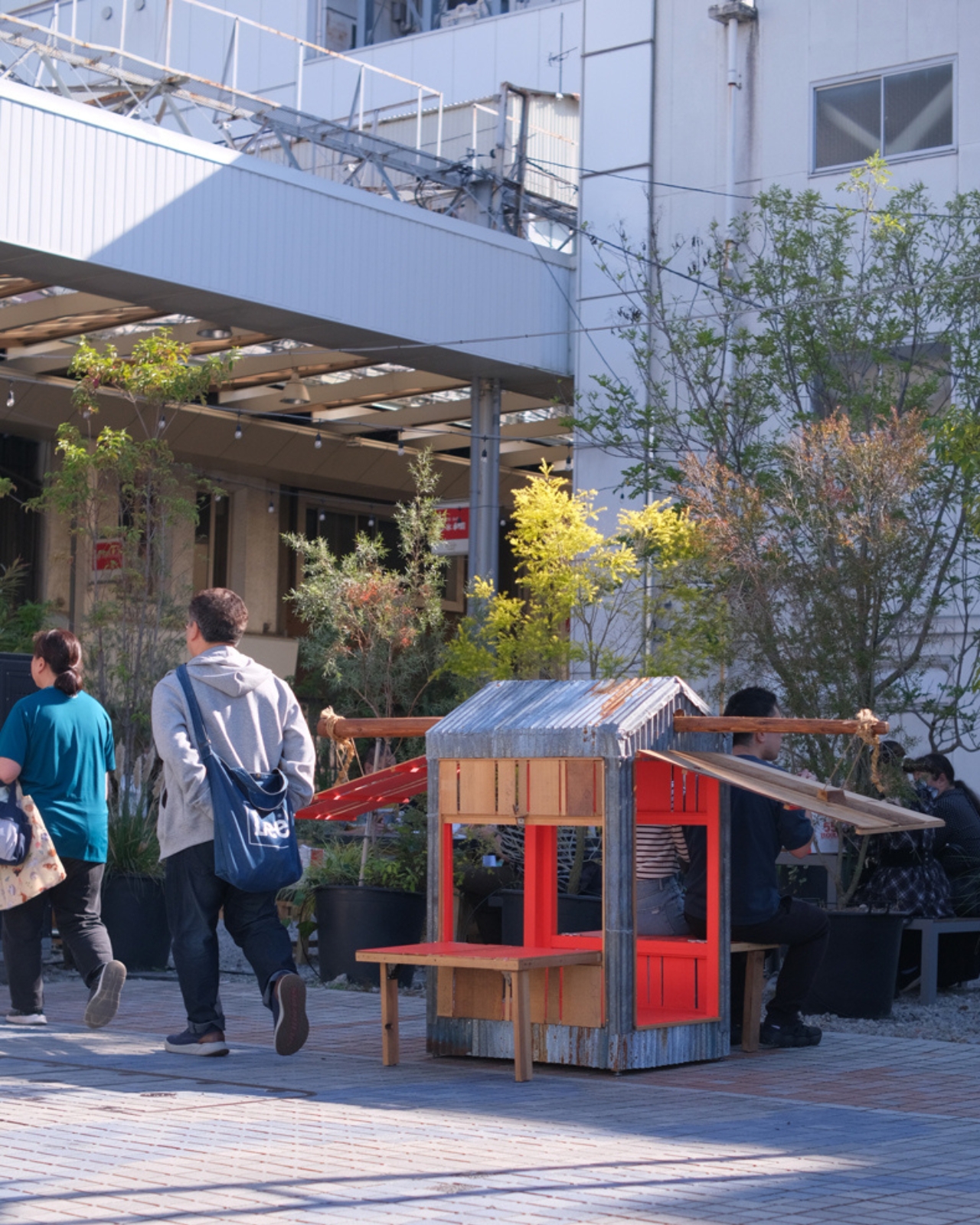
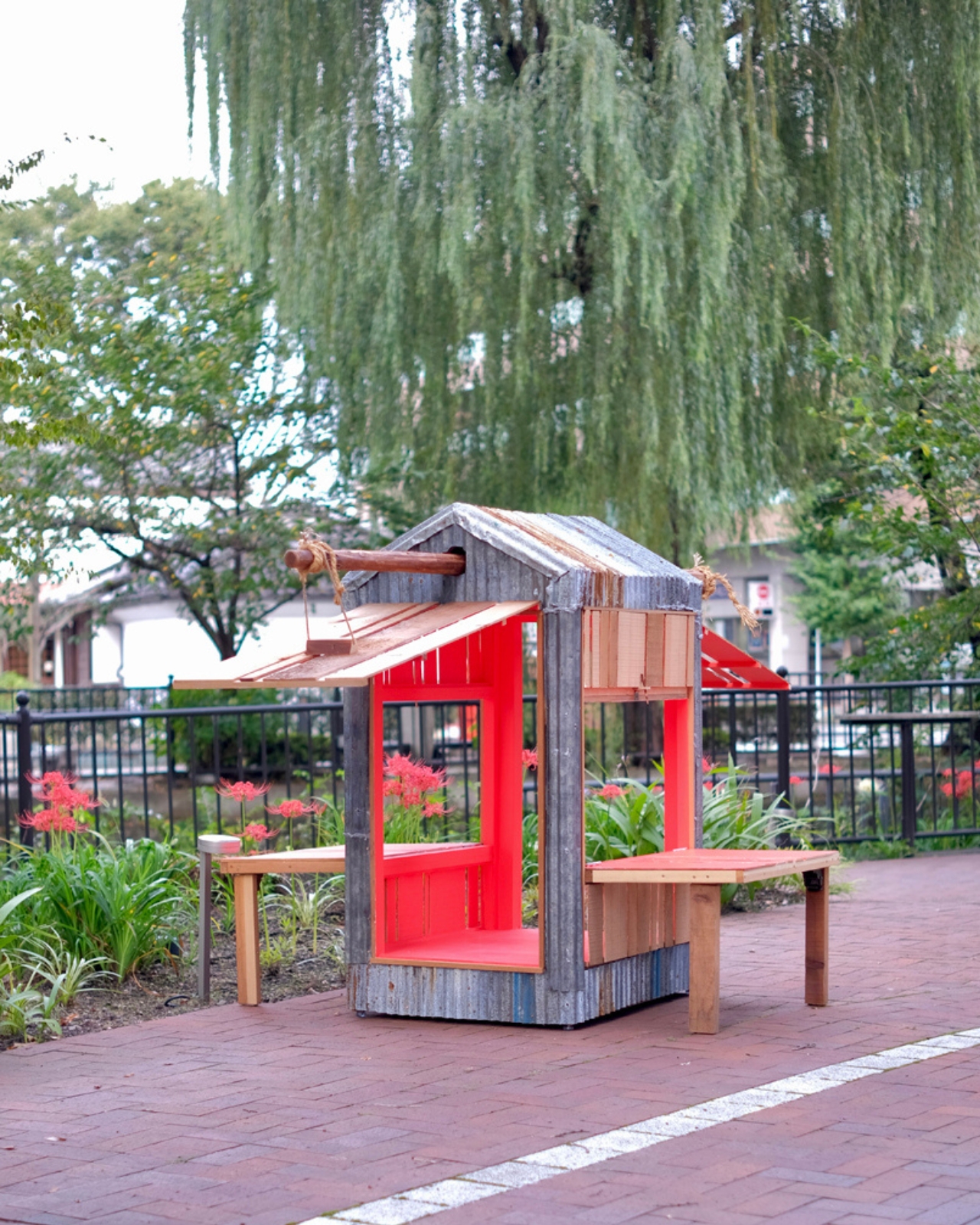
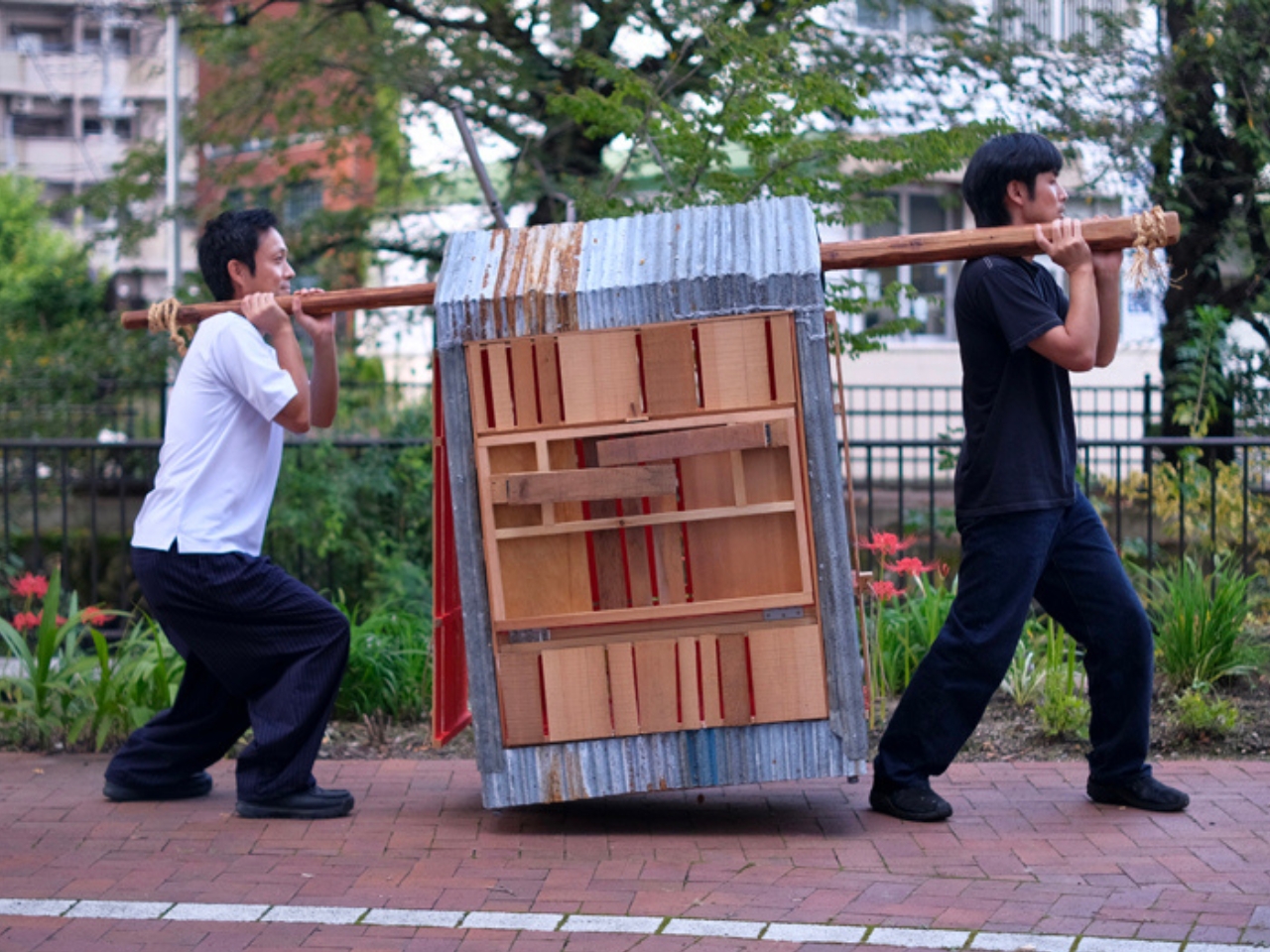
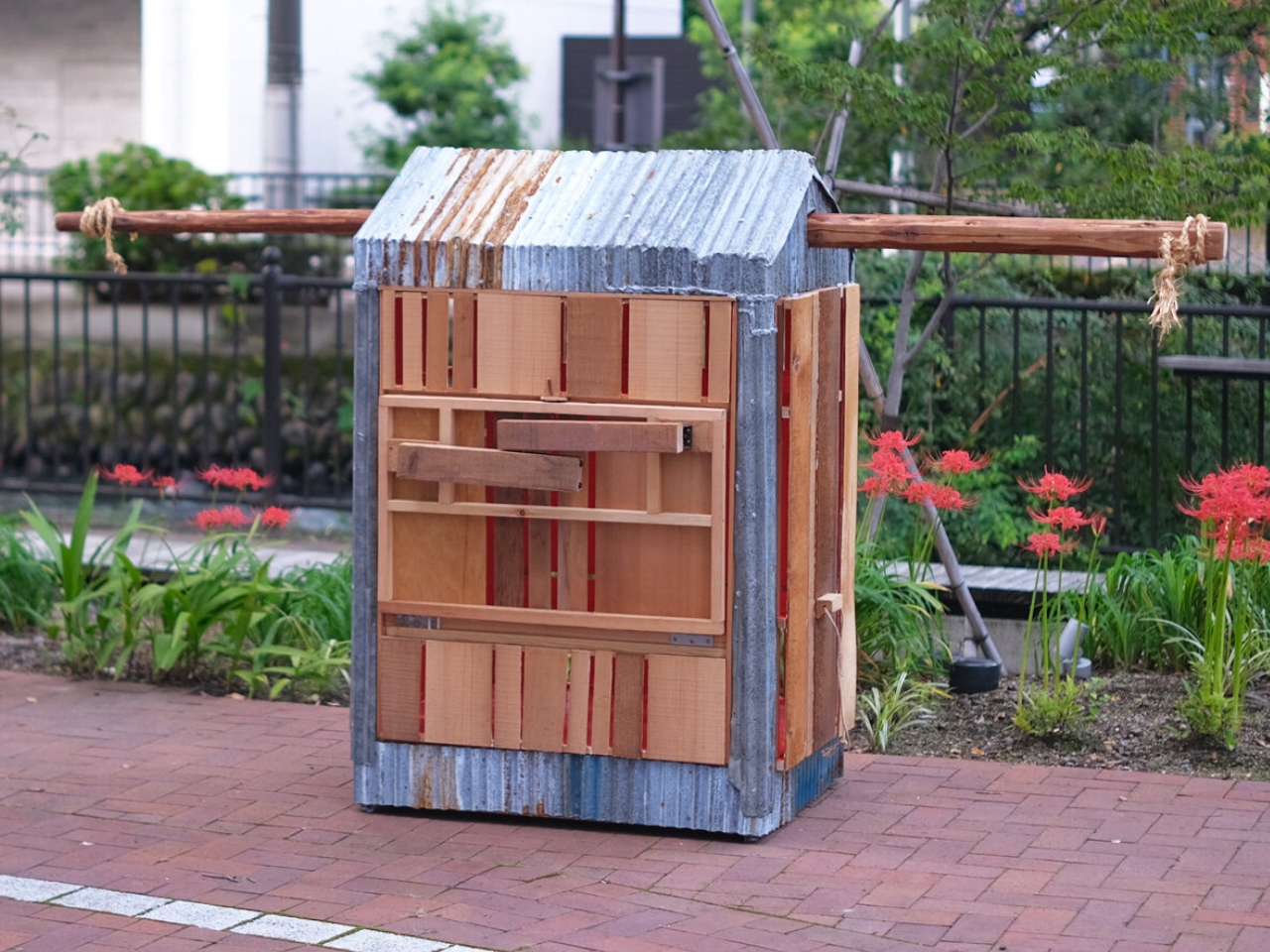
Japanese practice dobedo studio approaches that problem with ehho!², a built, portable pavilion whose wooden sides fold down into benches. Two people carry the structure between locations, bringing seating to wherever it stops. Its materials come from an agricultural barn dismantled in Gunma Prefecture, Japan. Reclaimed boards, structural logs, corrugated iron, and hand-woven ropes give pieces of that building another job, this time at a much smaller scale.
Designer: dobedo studio
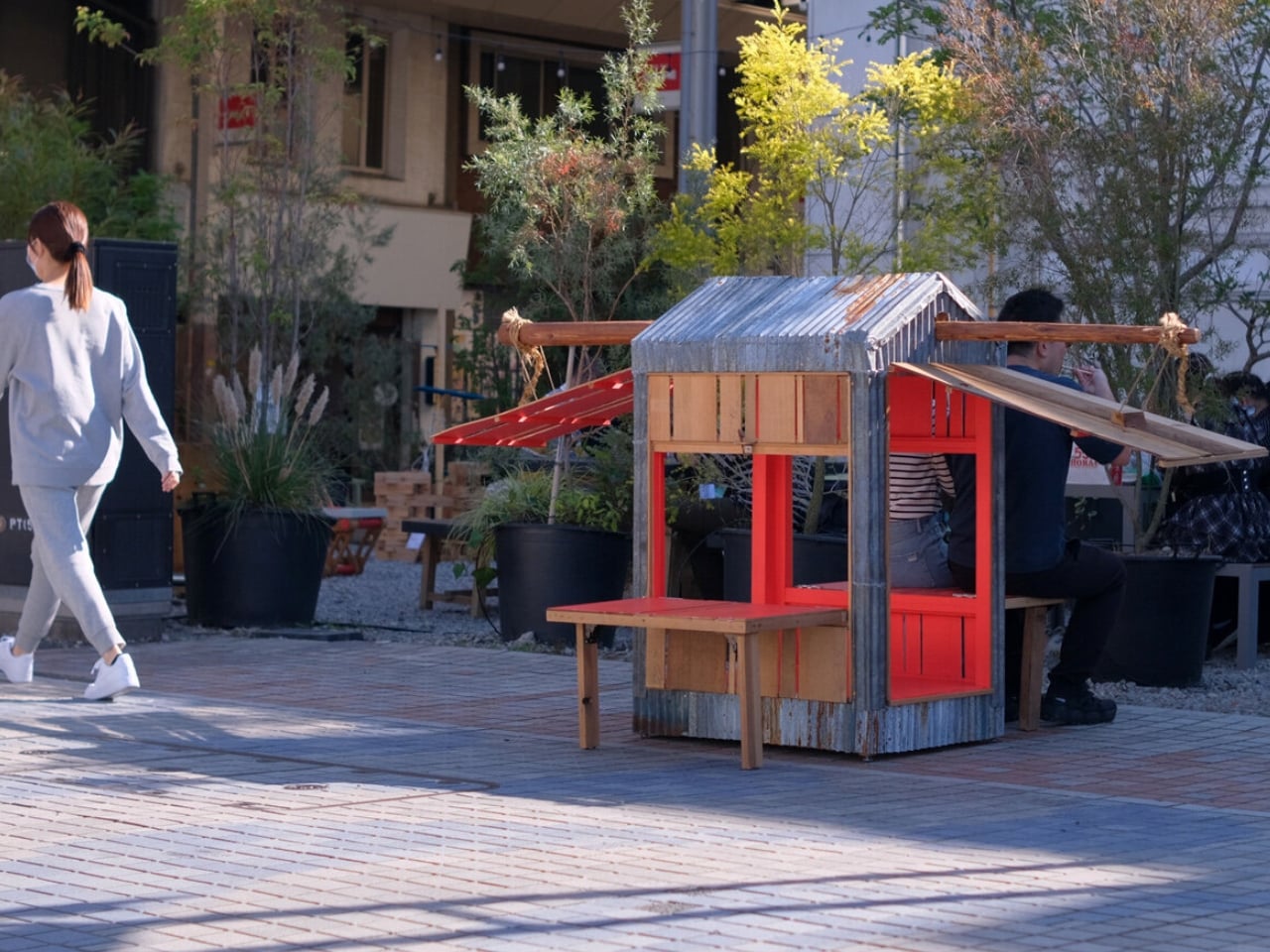

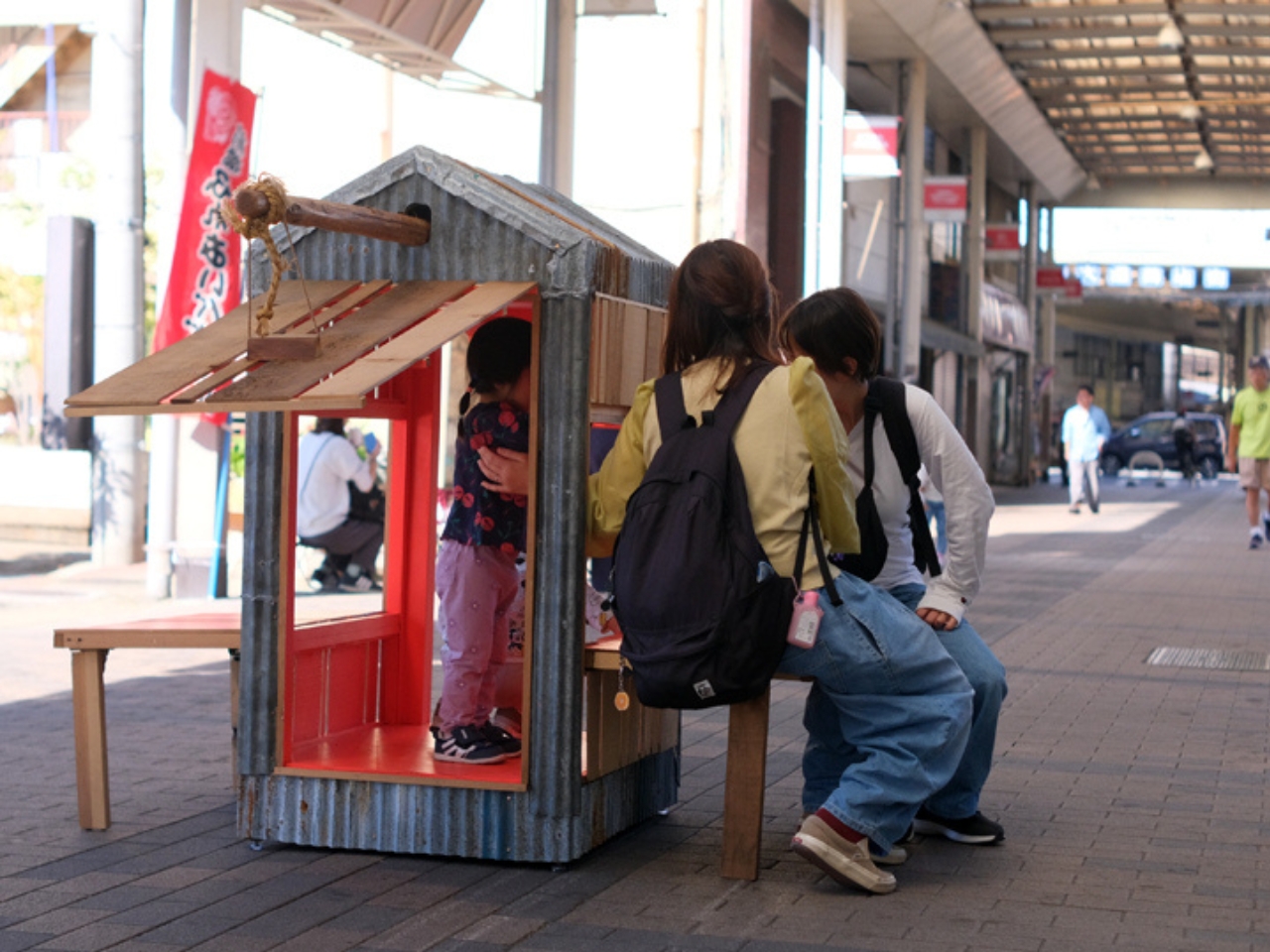
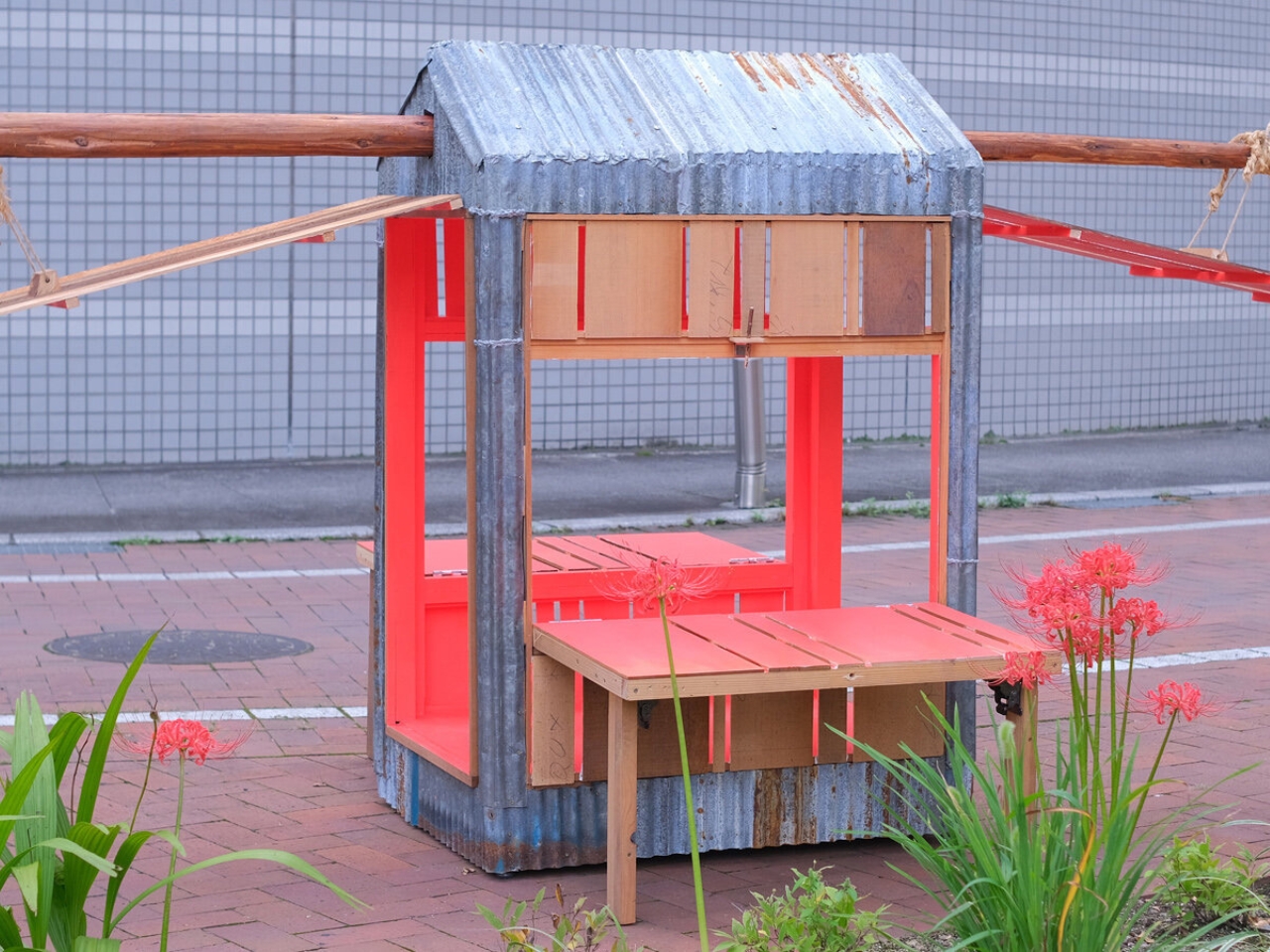
The folding panels are the central design move. Closed, they form the sides of a miniature building beneath a curved metal roof. Lowered on their hinges, they become exterior seats and open the structure to people around it. I like how plainly the transformation communicates its purpose. You don’t need to understand the project’s architectural references to recognize that a wall has become somewhere you’re welcome to sit.
That change also reveals a crimson-painted interior. The studio connects the color to local red spider lilies, known as higanbana, giving the pavilion a reference to its surroundings beyond the reclaimed materials. It’s a welcome interruption to the weathered exterior. An entirely muted palette would have been the obvious choice here, but the red makes opening the panels feel like a deliberate reveal rather than a purely practical operation.
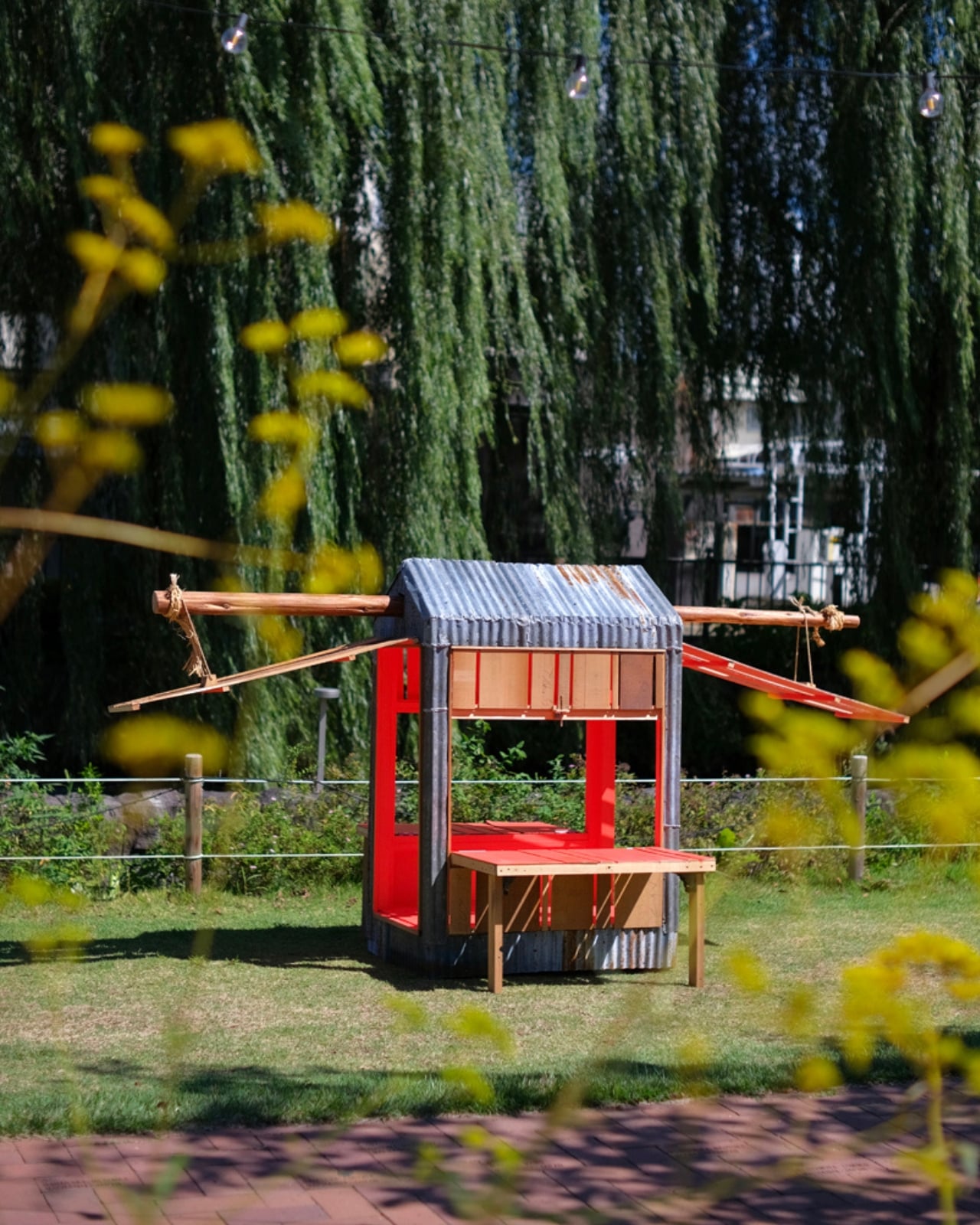

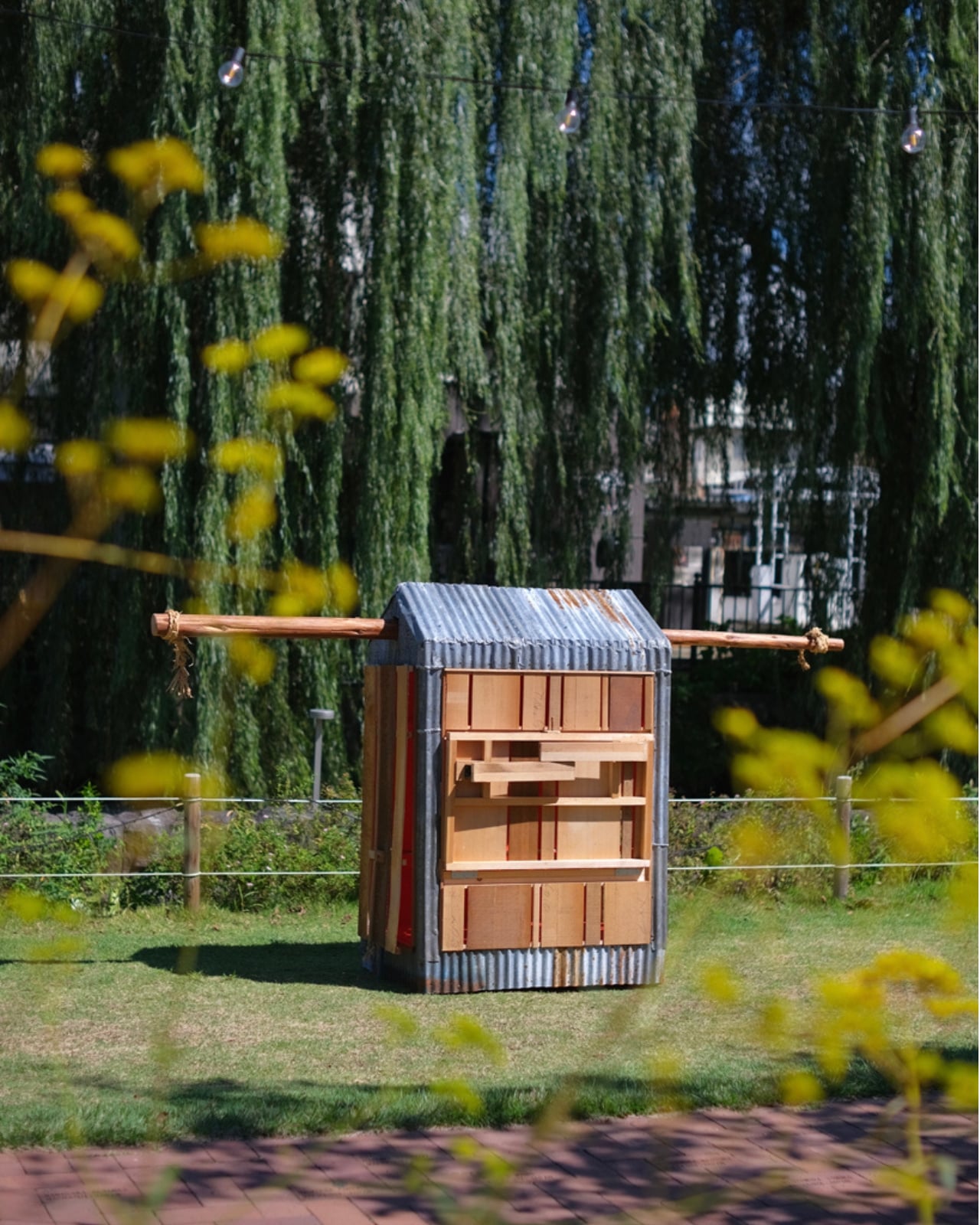
The transportation method takes inspiration from the traditional Japanese kago, a hand-carried palanquin. Here, the passengers arrive after the carrying is over. Two people move the pavilion, then unfold its seating for others to use. There’s an appealing social logic to that sequence, although it also establishes a real constraint. This is portable architecture that needs cooperation, not something one person casually picks up on the way out the door.
My favorite detail is considerably smaller: pieces of tree branch serve as latch pins, holding the folding panels closed during transport. According to the studio, a lost pin can be replaced with a suitable fallen twig. That’s an unusually approachable replacement strategy. Rather than requiring an exact proprietary component, the mechanism allows some flexibility in what can do the job. “Suitable” still matters, of course. Any random stick shouldn’t be assumed to secure a moving structure safely.
The material reuse is similarly direct. Corrugated iron becomes the curved roof, while reclaimed timber forms the pavilion’s structure and panels. Their previous life remains part of the project without preventing a different use. I prefer that approach to treating every salvaged board as too precious to alter. Keeping old materials useful can involve cutting, painting, and rearranging them, not simply displaying their age.
It would be easy to imagine ehho!² at a neighborhood gathering or a temporary street event. Those are possibilities, not documented applications, and a successful outing would depend on more than its charm. Weight, carrying distance, seating capacity, and stability on uneven ground would all influence where it makes sense. Accessibility deserves attention, too. An inviting appearance alone doesn’t establish that a seat will work comfortably for everyone who might need it.
Still, I don’t think an experimental pavilion has to answer every public-furniture question to offer a useful observation. Fixed benches serve an essential purpose, but temporary gatherings can create a need for seating elsewhere. Bringing an entire little structure rather than a stack of chairs adds complexity, yet it also creates a recognizable meeting point. The architecture gives the stop an identity.
That feels like the most persuasive reason for ehho!² to exist. It makes a place to pause out of materials from a building that could no longer stay standing. The hinges let it welcome people; the carrying arrangement limits how easily it gets there. Between those two facts is a modest, thoughtful experiment in where a bench can belong.