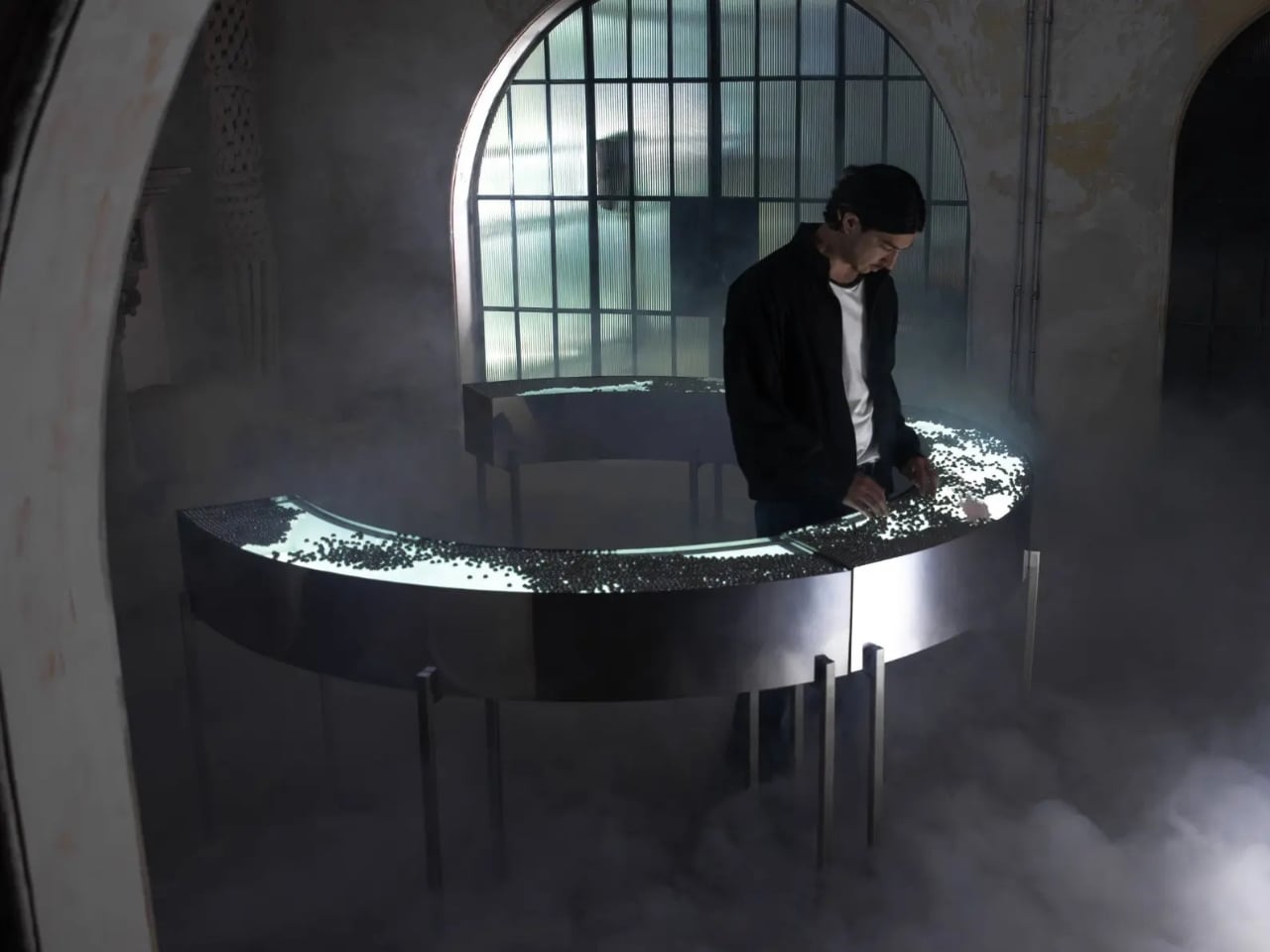

A field of tiny steel spheres is an unusual way to introduce a perfume. It also addresses a familiar problem with fragrance displays: the bottle is visible, but the thing you’re supposed to care about isn’t. Matter / Memory, an interactive installation by Leonardo Garza for BYREDO, gives that invisible subject a physical form you can explore with your hands.
Commissioned for BYREDO’s introduction to Mexico, the installation appeared at the brand’s October 7 launch event in Mexico City, with Artsynonym handling the curation. It’s a spatial artwork, not a new fragrance or an object headed for your bathroom shelf. I like that distinction. It gives the project room to interpret perfume rather than explain why you should buy another bottle.
Designer: Leonardo Garza for BYREDO
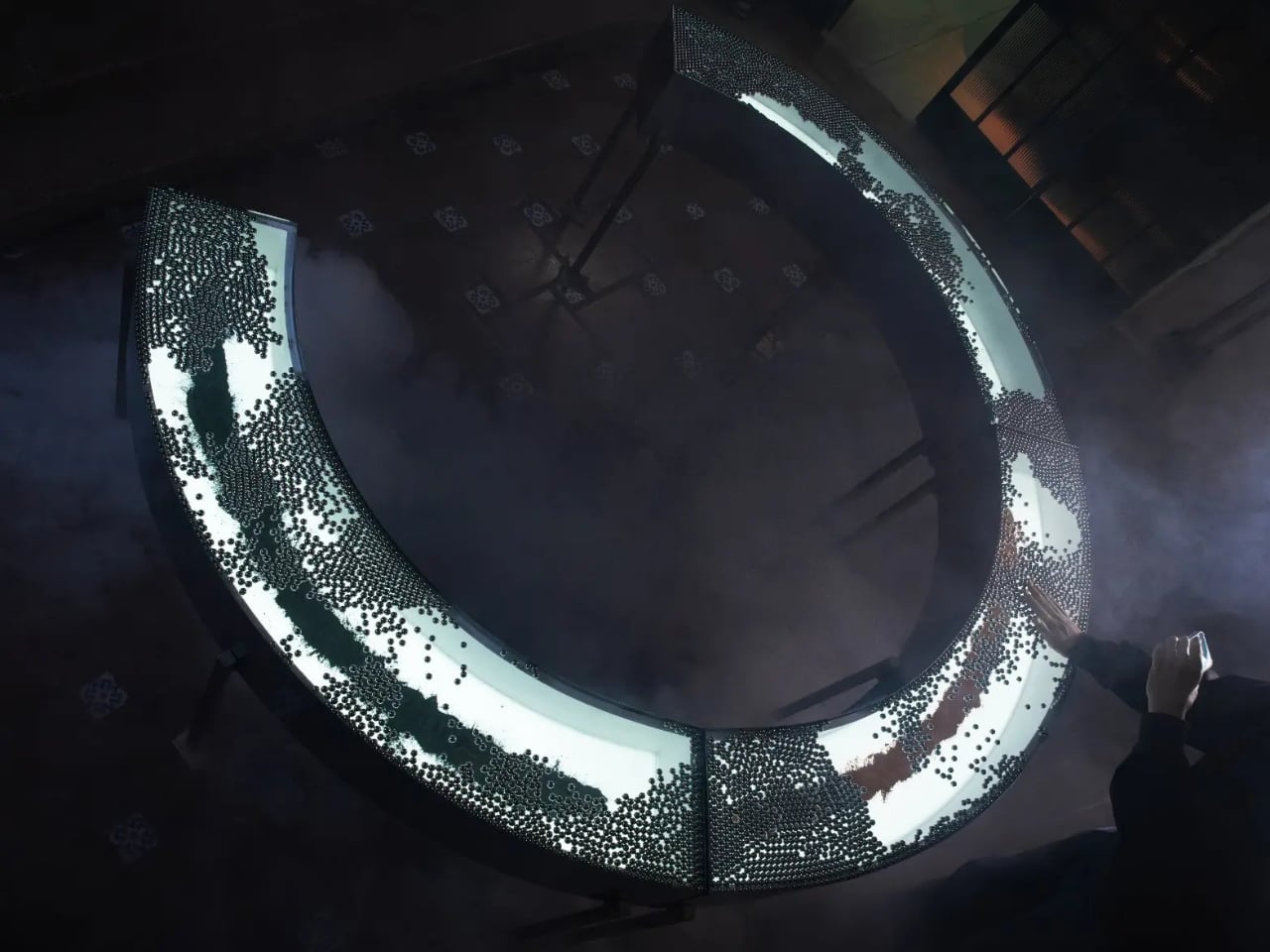
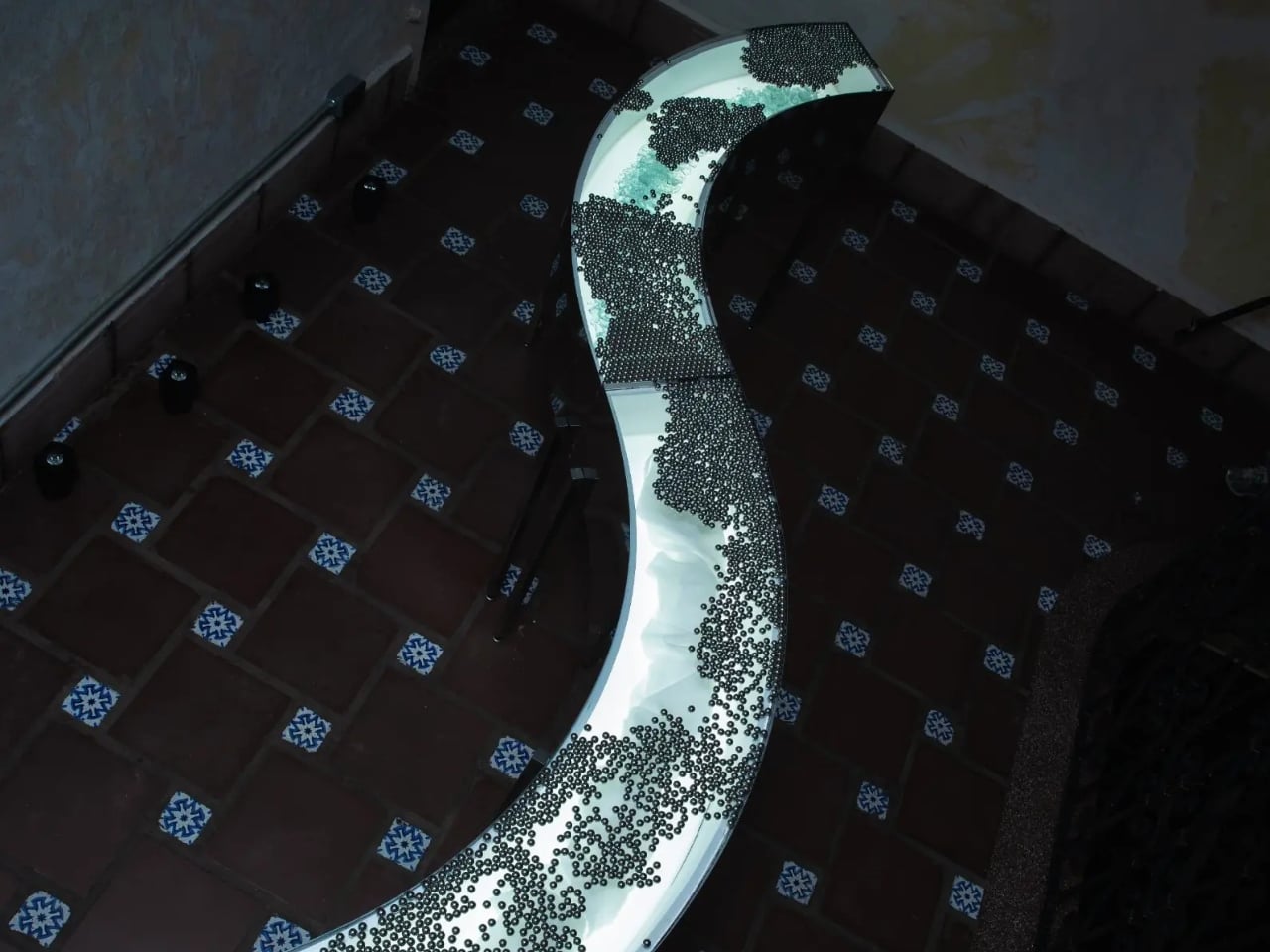
The construction consists of five curved sections, each holding a different material composition beneath a transparent surface. Thousands of stainless steel spheres partially obscure those compositions. Visitors can push the spheres around, opening patches through which the contents become visible. Their movement also produces subtle metallic sounds. The interaction is refreshingly legible: move your hand, change the view, hear the result. You don’t need a tutorial to understand the invitation.
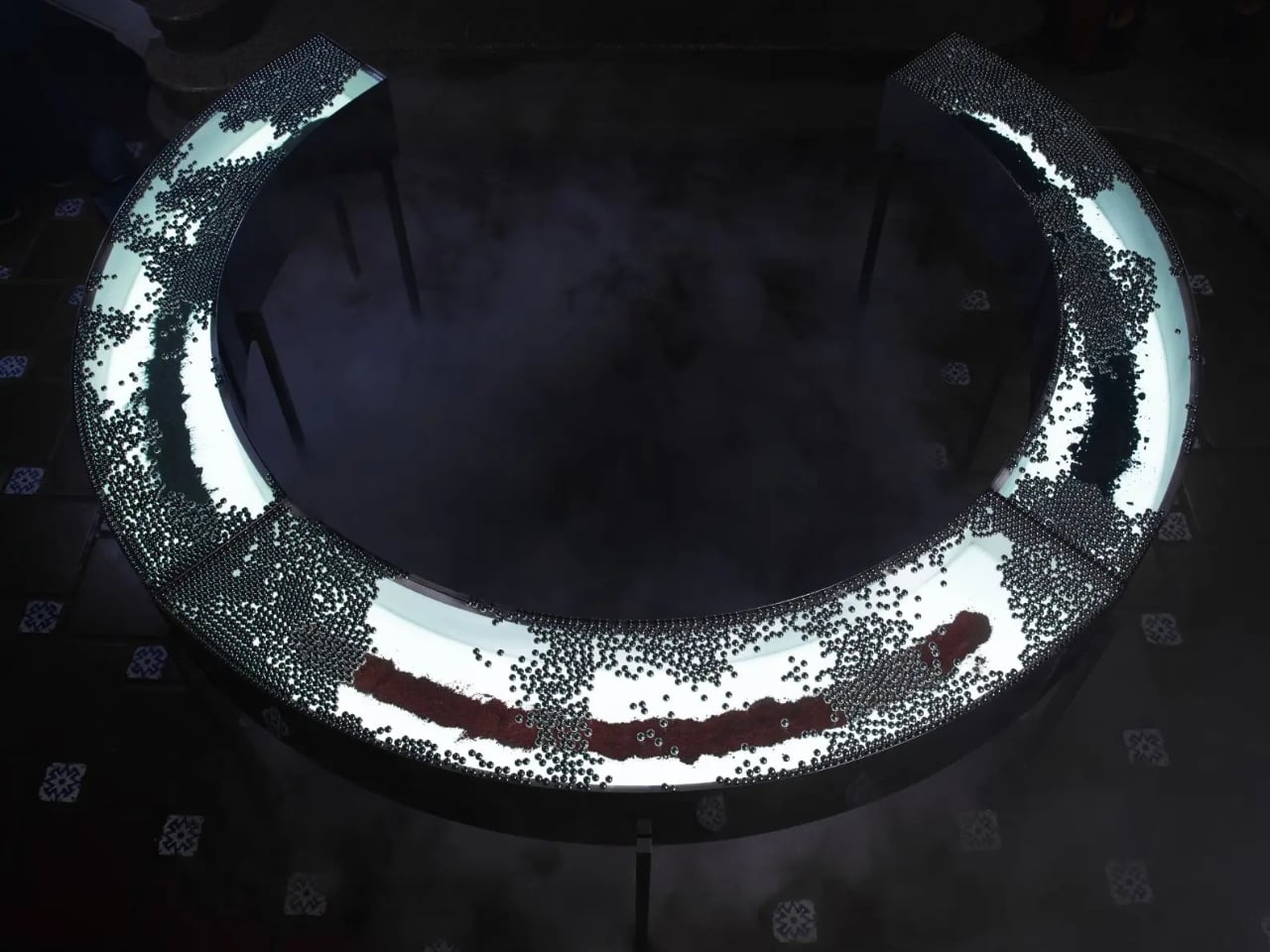
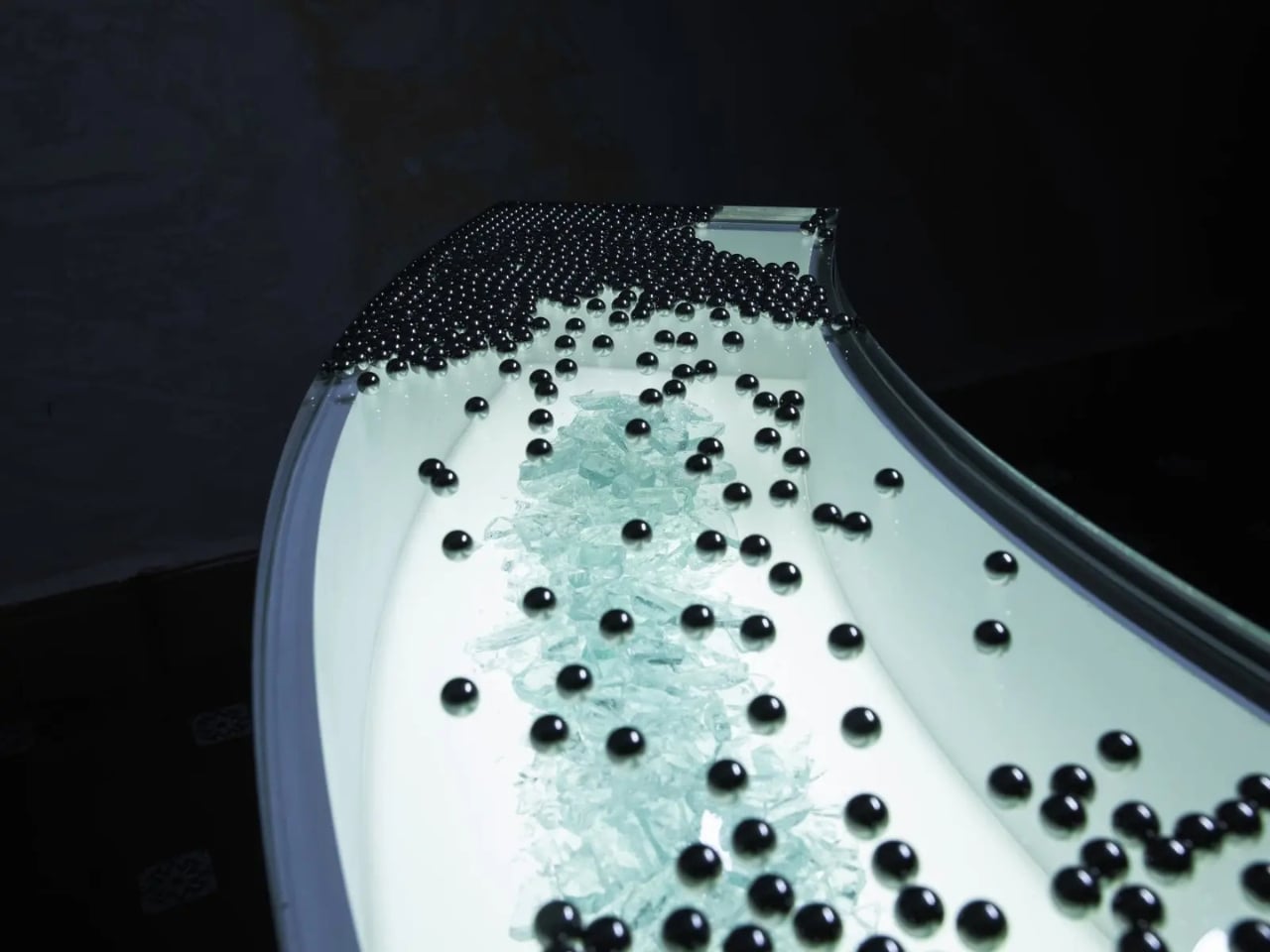
Each section corresponds to a BYREDO fragrance. Gypsy Water becomes charcoal and ash; Rose of No Man’s Land is interpreted through fractured glass. Mojave Ghost takes the form of mineral dust, while Bal d’Afrique becomes red ochre earth. Blanche gets folded white textile. These are Garza’s material interpretations, not a display of perfume ingredients, and that difference matters. You’re being offered associations to consider, with no requirement to agree with them.
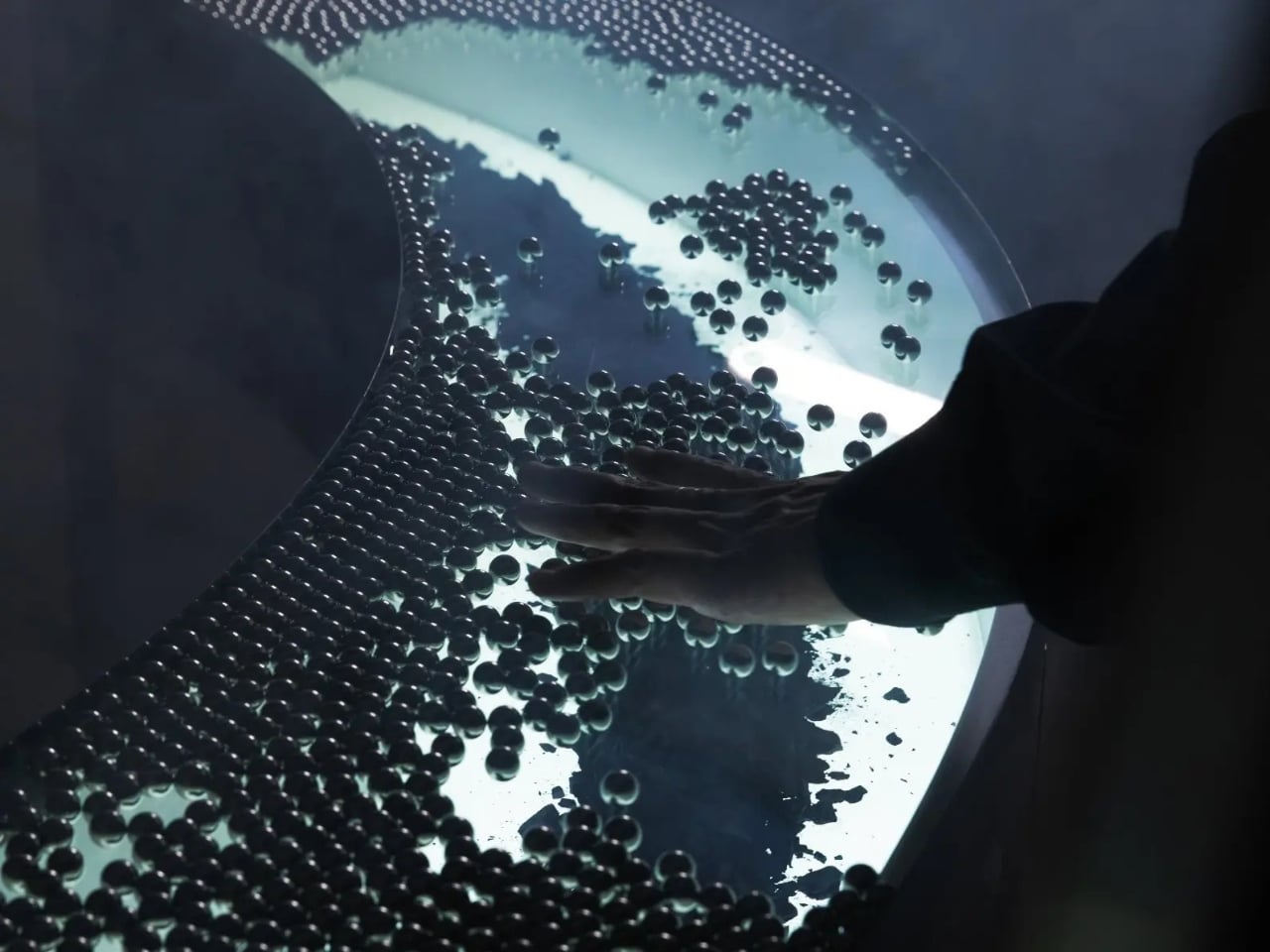
The charcoal and broken glass are especially compelling choices to me. Ash suggests an aftermath, while fractured glass carries a vulnerability that a pristine perfume bottle would struggle to communicate. Neither is an obvious shortcut to luxury. That makes the selection more interesting than a literal arrangement of flowers or fruit. It leaves enough ambiguity for a visitor to bring a different reading, which feels appropriate for something as personal as fragrance.
In the photographs, the curved sections form an open, nearly circular arrangement on slender supports. Light beneath the transparent tops makes the steel spheres appear dark in some areas and sharply reflective in others. Pushed into clusters, they create irregular borders around the exposed compositions. I’m drawn to that contrast between the controlled geometry of the structure and the loose, changeable patterns across its surface. It gives a carefully staged installation some welcome disorder.
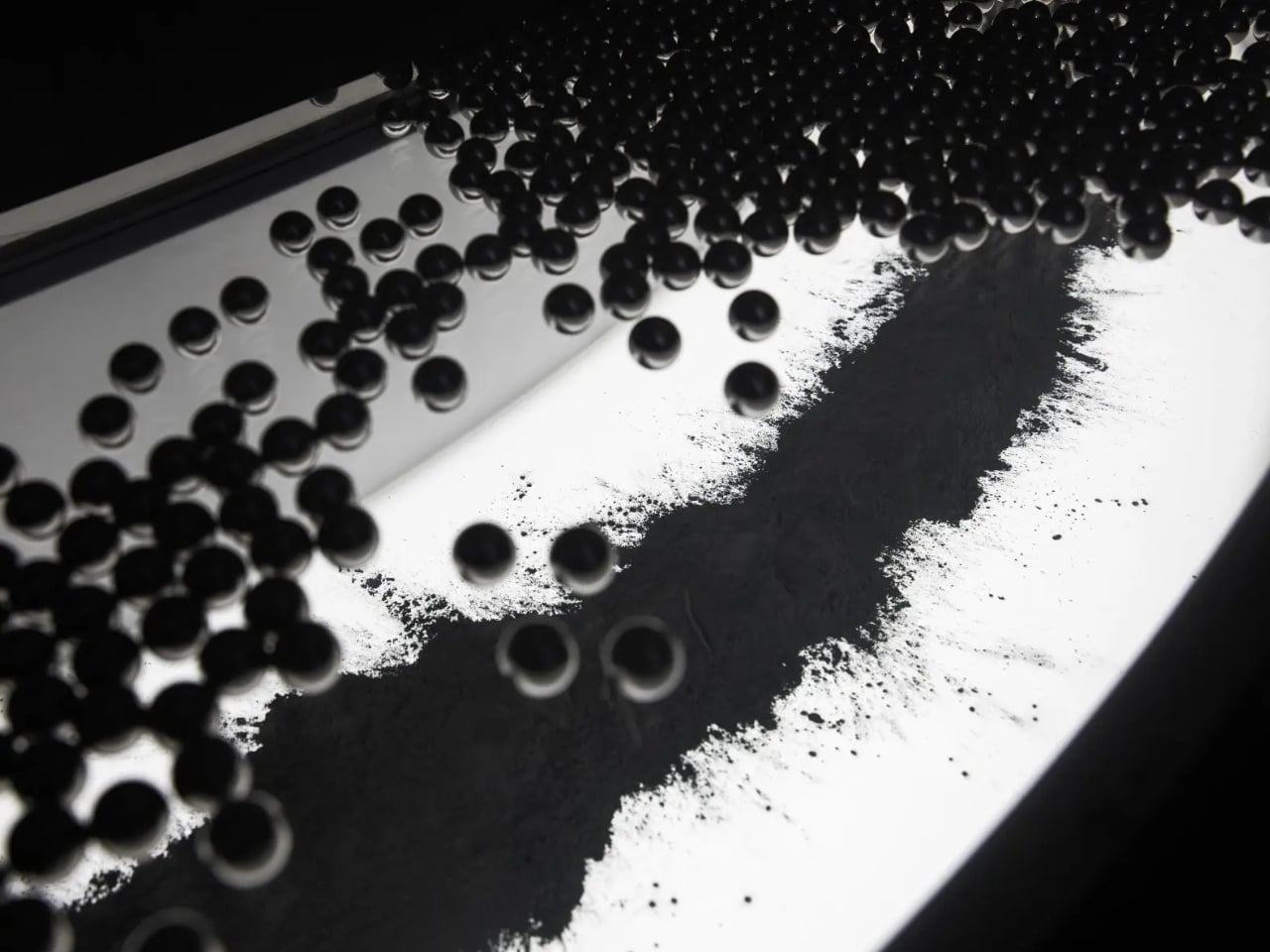
The transparent covering is an important detail, too. The fractured glass sits beneath the interaction surface; visitors move the spheres above it rather than handle the shards. That separation creates a useful tension. You can alter what you see without rearranging the material composition itself. To my eye, the most effective design decision is this limited permission: enough freedom to participate, enough structure to preserve the scene Garza has composed.
A low layer of fog supplies the theatrical atmosphere. It’s the element I’m least convinced the piece needs. The illuminated curves and movable steel already offer a strong visual language, and mist risks making the installation feel like a luxury campaign set. Still, the hand-operated interaction gives it something a photograph alone can’t fully deliver. The visitor has an actual role beyond standing in a flattering pool of light.
Of course, none of this tells you how a fragrance will smell on your skin. I wouldn’t expect it to. Its value, for me, is in giving the encounter a little duration: looking, moving, uncovering, making an association. The steel spheres put a small, satisfying task between the visitor and the display. For a project about memory, that feels like a sensible place to start, with something you did rather than another image you saw.