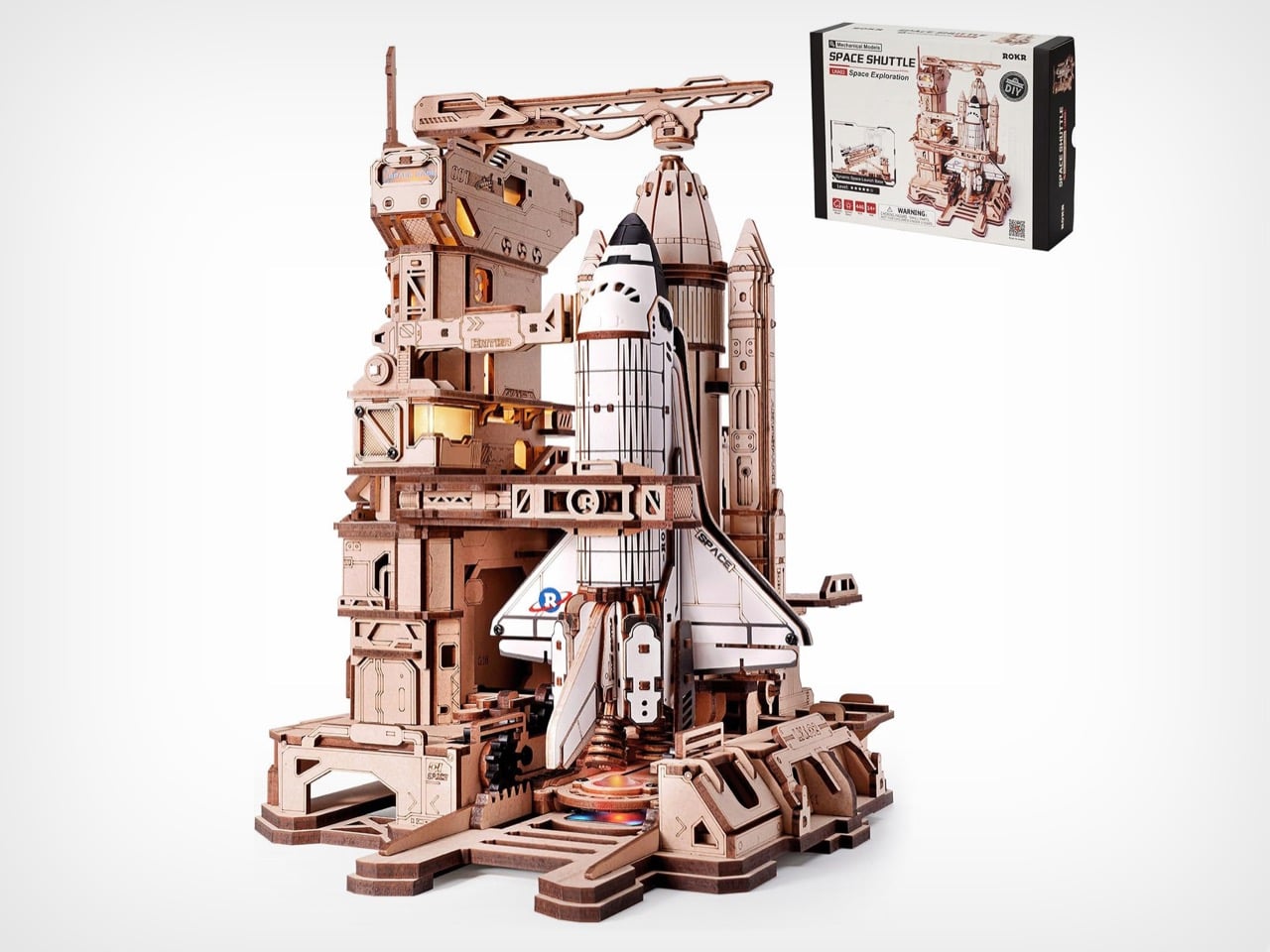

A fun bit of trivia for ruining dinner parties: NASA never tilted its space shuttles upright at the launch pad. The orbiters were stacked vertically inside a giant building in Florida and crawled out to the pad already standing, at roughly one mile per hour. ROKR’s wooden Space Shuttle kit does the dramatic tilt anyway, and honestly, good call. The 446-piece model uses a motor and a gear rack to swing its orbiter from horizontal to vertical before a light-show countdown. It costs $59.99, and it’s the most fun I’ve seen a piece of plywood have.
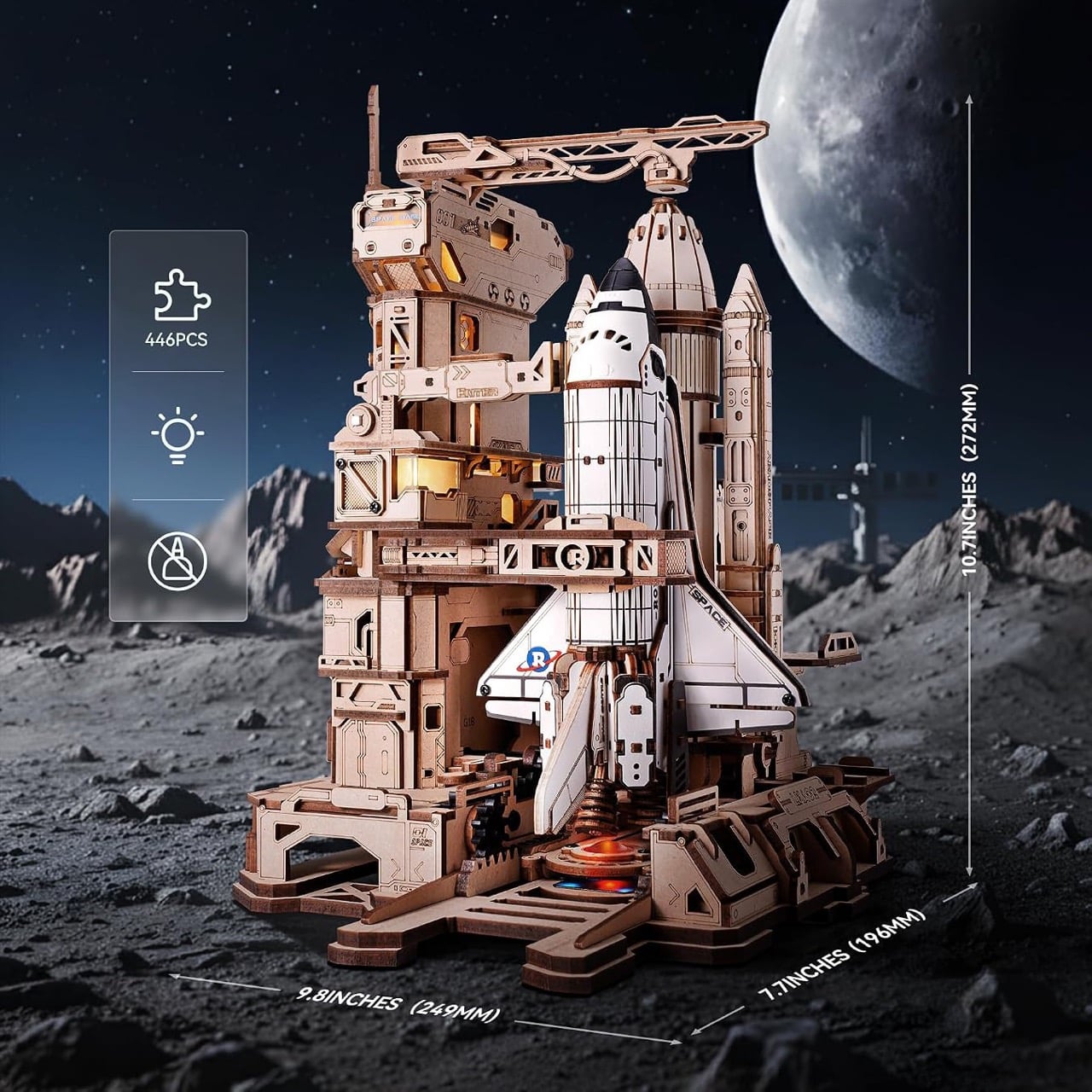
The horizontal-to-vertical move comes from the Soviet playbook, where rockets like Soyuz and the Buran shuttle’s Energia launcher rode to the pad lying down and got hoisted upright by a giant transporter-erector. The one built for Energia-Buran weighed 2,756 tons, which makes ROKR’s little motor look charmingly modest. ROKR blends that Baikonur trick with a Kennedy-style tower, complete with swing arms that rotate 90 degrees and retract, plus a crane boom hovering over the fuel tank’s nose. The result is a tiny Cold War mashup that stands 10.7 inches tall (272mm) on your desk. Robotime, ROKR’s parent company, rates the build at five stars of difficulty and estimates about six hours.
Designer: ROKR (Robotime)

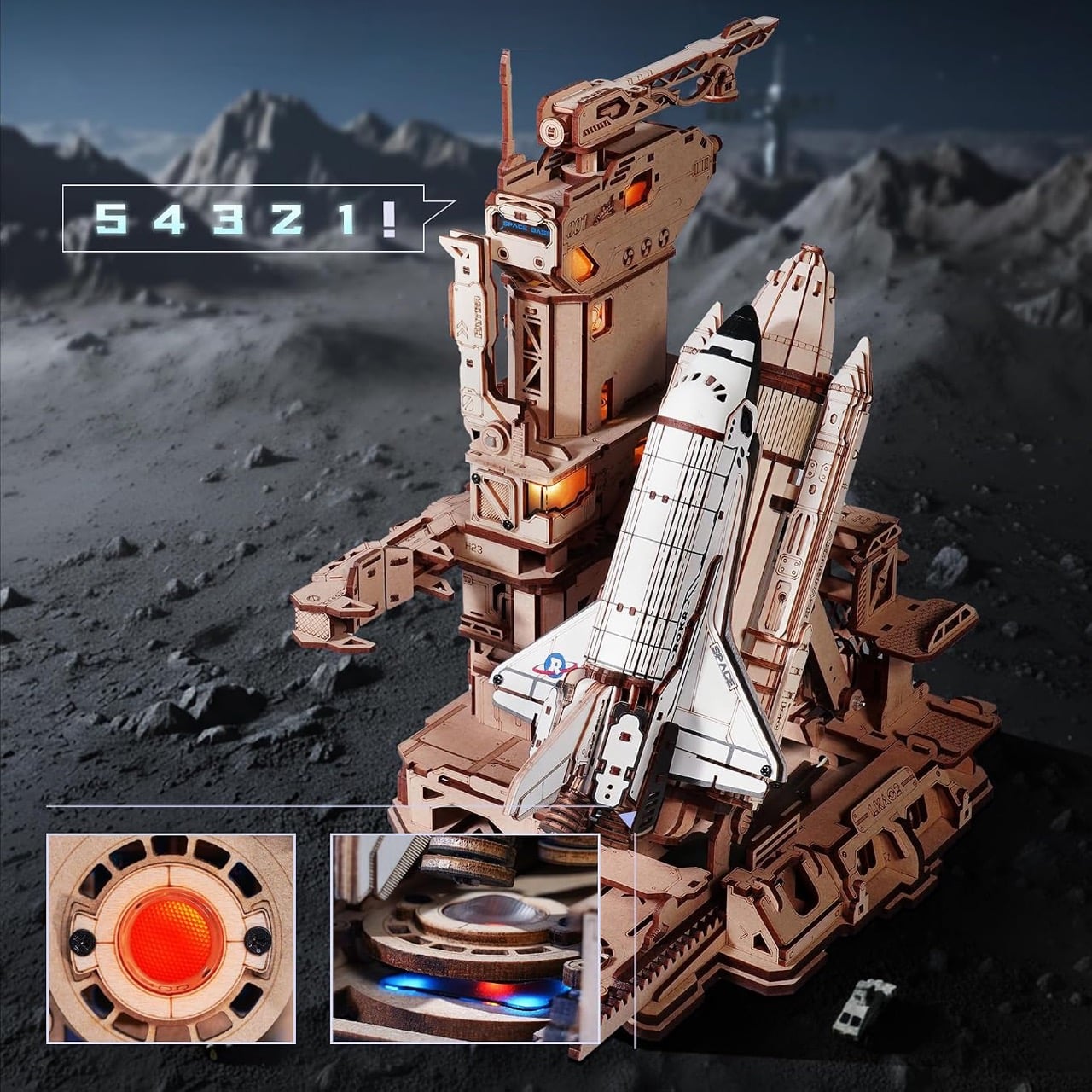
A toothed rack runs along the base, and a linkage arm pushes the shuttle’s cradle through horizontal, 45 degrees, and a full 90 degrees. It is a rack-and-linkage setup that turns sliding motion into a smooth tilt, the same family of tricks that tips a dump truck bed. Robotime credits a four-stage gear system and a reduction motor, and the slow speed is the point, since a fast launch pad looks like a toy and a slow one looks like a procedure. A sliding master switch powers the pad, and a touch button starts the sequence. Once the orbiter is upright, the arms swing clear, the tower flashes six times, and orange and blue LEDs glow under the engines.
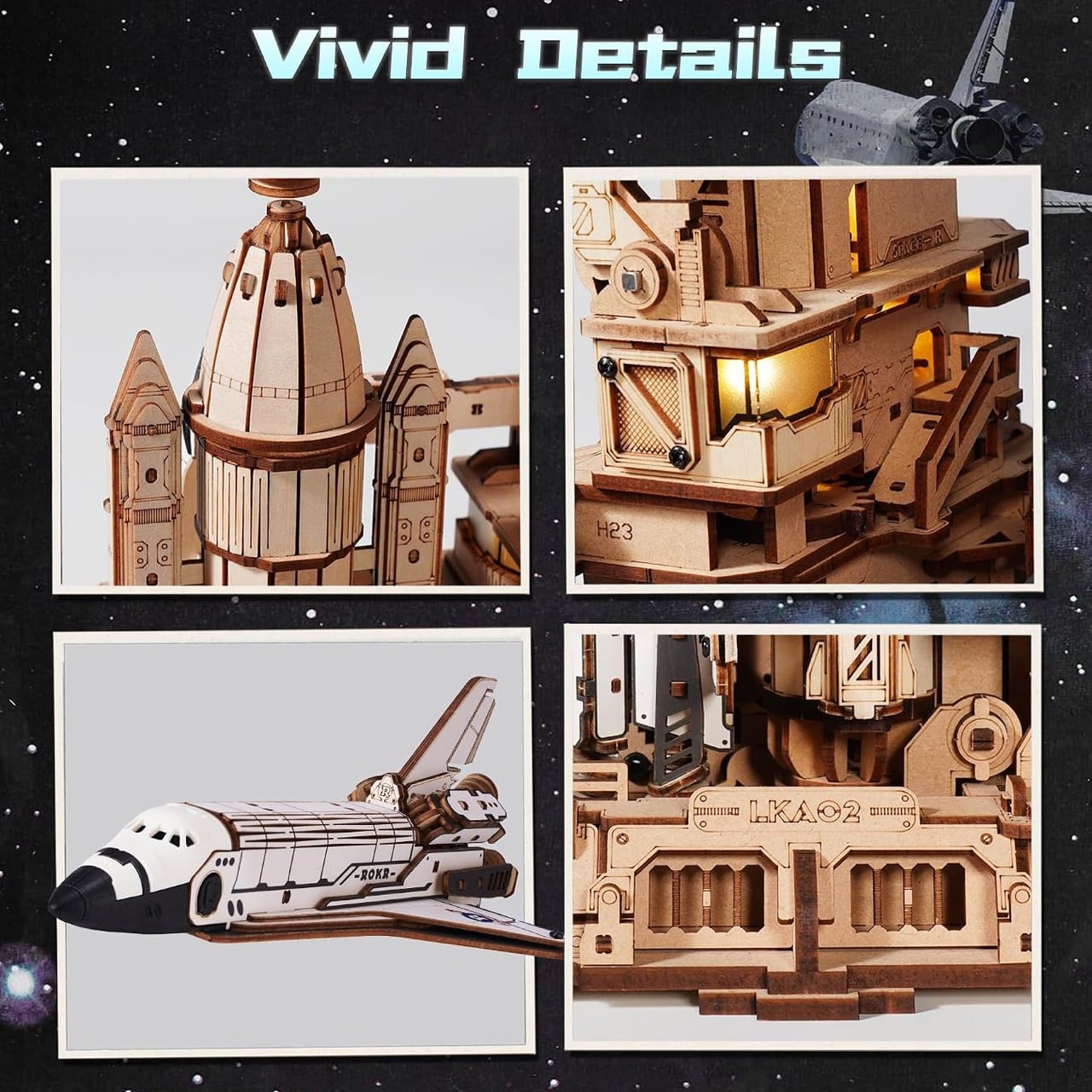
Robotime calls the tower a seven-deck terminal with separate command and test zones, and its plywood panels are engraved with codes like LKA02, H23, and SPACE-R. Warm LED windows glow across the tower’s decks, which gives the whole thing a late-night mission control mood. Kennedy’s real service structure was an open steel lattice topped with a lightning mast, while ROKR’s version is chunky, paneled, and marked with chevrons, closer to an Alien-era hangar than a Florida launch pad. That makes sense, since laser-cut plywood excels at flat planes and tabbed boxes and would snap if asked to imitate thin truss work. The material picked the style, and the style looks great glowing amber in a dark room.

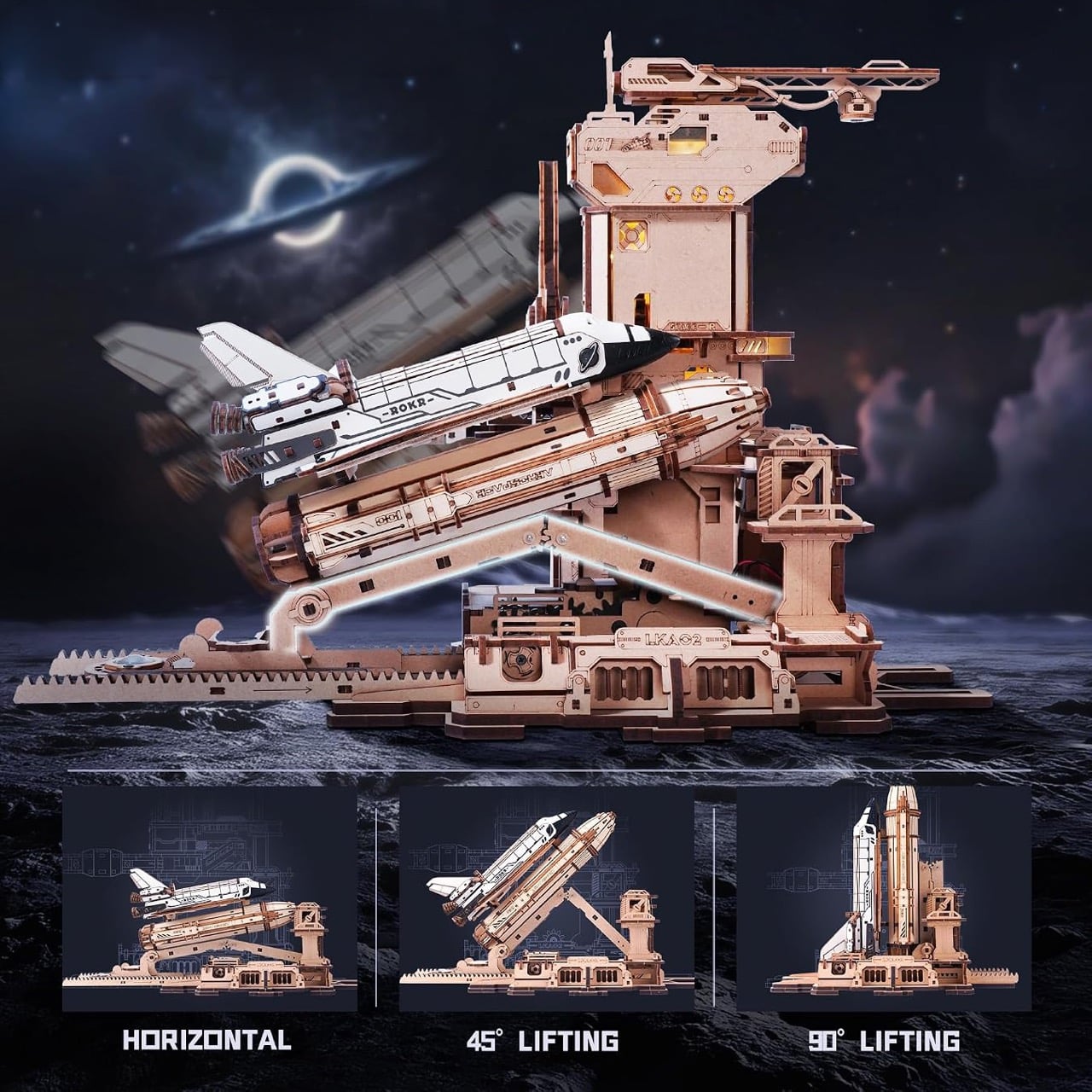
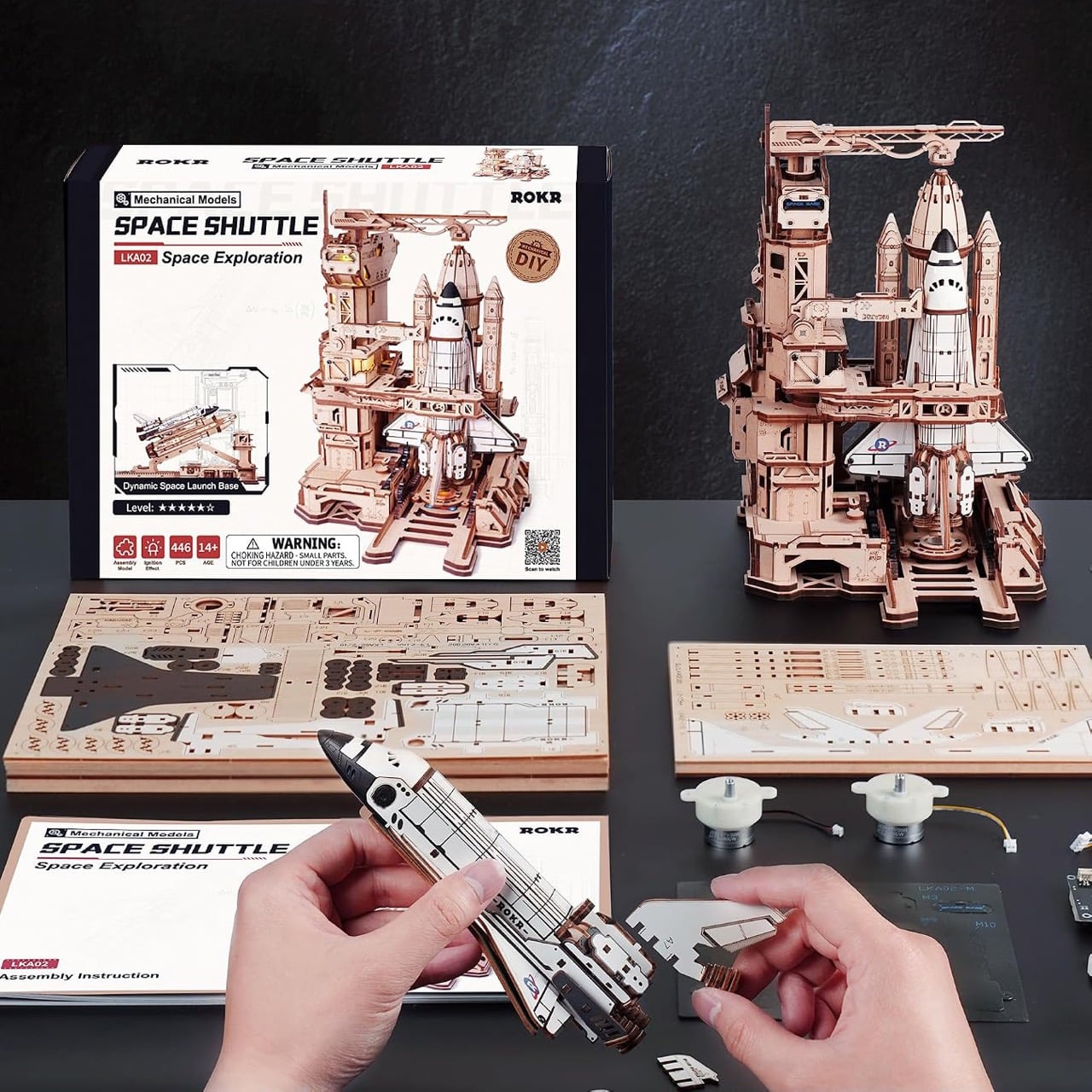
Most of the model is laser-cut plywood joined with mortise and tenon joints, which means no glue and no mess. The orbiter gets an ABS cabin with crisp white panels, because plywood and a rounded shuttle nose do not get along. That swap gives the shuttle a clean white finish and a smooth nose, and it makes the orbiter pop against the warm wood tower. It also nails the shuttle’s most recognizable silhouette, with delta wings, a tail fin, and a fat central tank hugged by a pair of boosters. ROKR leaves the tank and boosters in natural wood tones, which keeps the spotlight on the white orbiter.
There is no NASA meatball anywhere on this orbiter, which tells you the kit is an homage with its own livery. Instead, the orbiter carries a ROKR logo shaped like a ringed planet, and the wing reads SPACE. The promo shots park the whole scene on a moonscape under a giant moon, so the lore seems to be a lunar spaceport with a very retro taste in rockets. That freedom lets ROKR chase drama over blueprints, which is how you get an exposed gear rack sliding out of the base like a mechanical spine. I’d argue that is the right instinct, since a model that moves should show its working.
The obvious rival is LEGO’s Icons NASA Space Shuttle Discovery (10283), a 2,354-piece set that launched in 2021 at $199.99. LEGO wins on fidelity, with a licensed NASA livery, a real orbiter’s proportions, and a tiny Hubble Space Telescope to tuck into the cargo bay. Once the build is done, it holds a pose, and the moving parts stop at the cargo bay doors and a little robotic arm. ROKR gives up some fidelity for motion, a motor, and a countdown, all for less than a third of the price. The two pair well on a shelf, with LEGO playing the museum piece and ROKR playing launch day.
The ROKR Space Shuttle LKA02 sells on Amazon for around $56. Bring your own USB-C cable (5V input), because the box leaves power to you, and the kit is rated for ages 14 and up. Budget about six hours for the build, which beats waiting out a real scrub. Space shuttles last flew in 2011, so plenty of younger fans have only ever met an orbiter parked behind a velvet rope. Putting the launch under your own thumb is a neat reversal for a program famous for waiting on weather and gremlins.