
About 4,500 years ago, while the Egyptians were busy stacking pyramids, the North Star was a completely different star called Thuban. It sat in the constellation Draco, the dragon, and it held the job for centuries before Earth’s wobble handed the title to Polaris. Astrophotographers have spent the last hundred-odd years obsessing over that pole, because lining a mount up with it (a ritual called polar alignment) is the price of admission for long, sharp exposures. It’s fiddly, it’s cold, and it usually happens in the dark with a red flashlight in your teeth. So I find it delightful that DWARFLAB named its new flagship smart telescope Draco, because the whole point of this thing is letting you skip that ritual altogether.
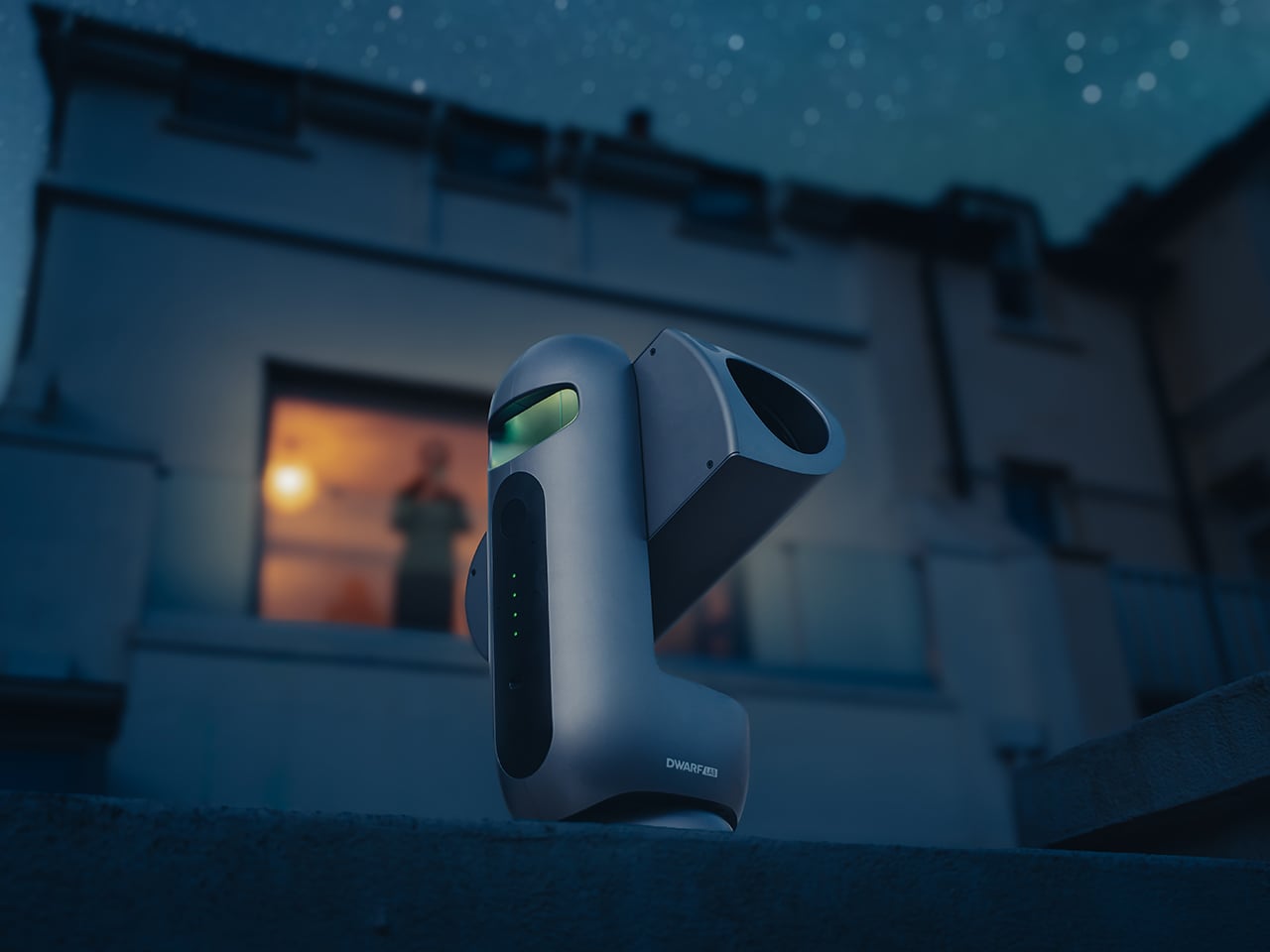
Draco is a 90mm smart telescope from DWARFLAB, the team behind the pocketable DWARF II and DWARF 3, and it argues that serious imagers no longer have to trade ambition for convenience. It packs a folded f/3.8 optical system, a 50MP telephoto camera, a wide-angle camera for Milky Way shots, and a dedicated guide camera into a 12.1-pound (5.5kg) body you carry with one hand. The headline trick is a sensor that physically rotates to cancel out the sky’s spin, which lets Draco hold single exposures for up to 300 seconds on a simple alt-azimuth mount. Your phone handles the rest, from finding the target to stacking the final image. The SHO Edition is up for pre-order at $1,599, while the $1,399 Standard Edition has already sold out.

A sensor that spins with the sky for five-minute exposures
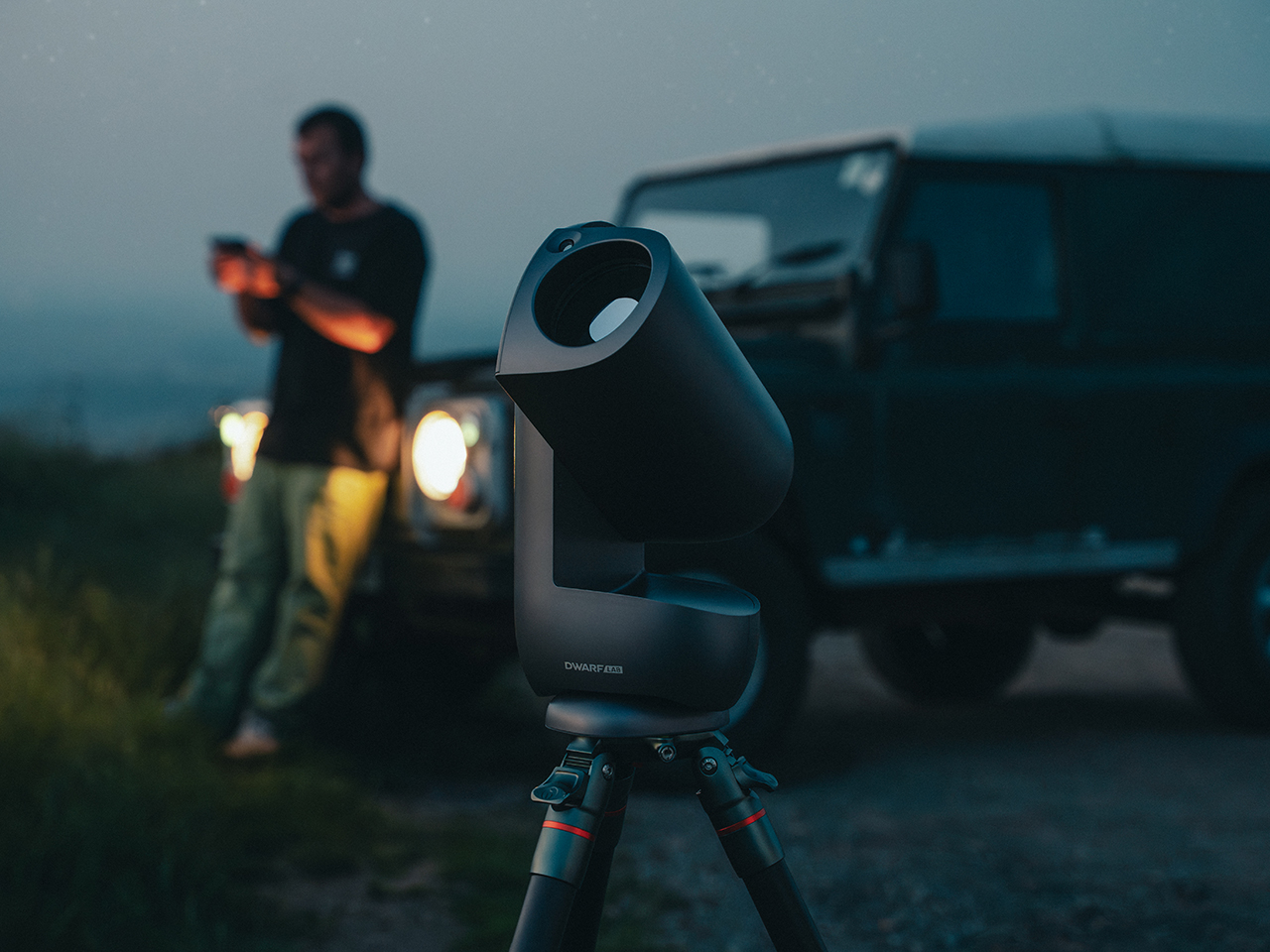
Polar alignment exists because of field rotation. On a simple alt-azimuth mount (the up-down, left-right kind every smart telescope uses), the stars slowly twirl around the center of your frame during a long exposure, turning sharp points into little smears. Draco’s fix is wonderfully direct: the CMOS sensor itself rotates in step with the sky. A separate monochrome guide camera watches for drift and nudges the tracking in real time. The payoff is single frames of up to 300 seconds, when most smart telescopes have topped out around 60, which puts the category in traditional deep-sky territory. The guiding gear that normally takes an hour to balance in the cold now lives inside.
A traditional deep-sky rig is a parts list: optical tube, equatorial mount, polar alignment, guide scope, guide camera, filter wheel, mini-PC, and a nest of cables. Draco folds the optics, mount, guide camera, filters, field rotation, and onboard computing into one 5.5kg body, so the system stops being your homework. Early smart scopes won over beginners with short exposures and heavy stacking, so serious imagers kept their real rigs. For targets almost directly overhead, where rotation speeds up, the all-metal base tilts into Equatorial Mode and the app walks you through the angle. The aluminum tripod weighs about 17 ounces (480g) and opens to a preset angle.
Ninety millimeters of aperture and a sensor that bins four pixels into one
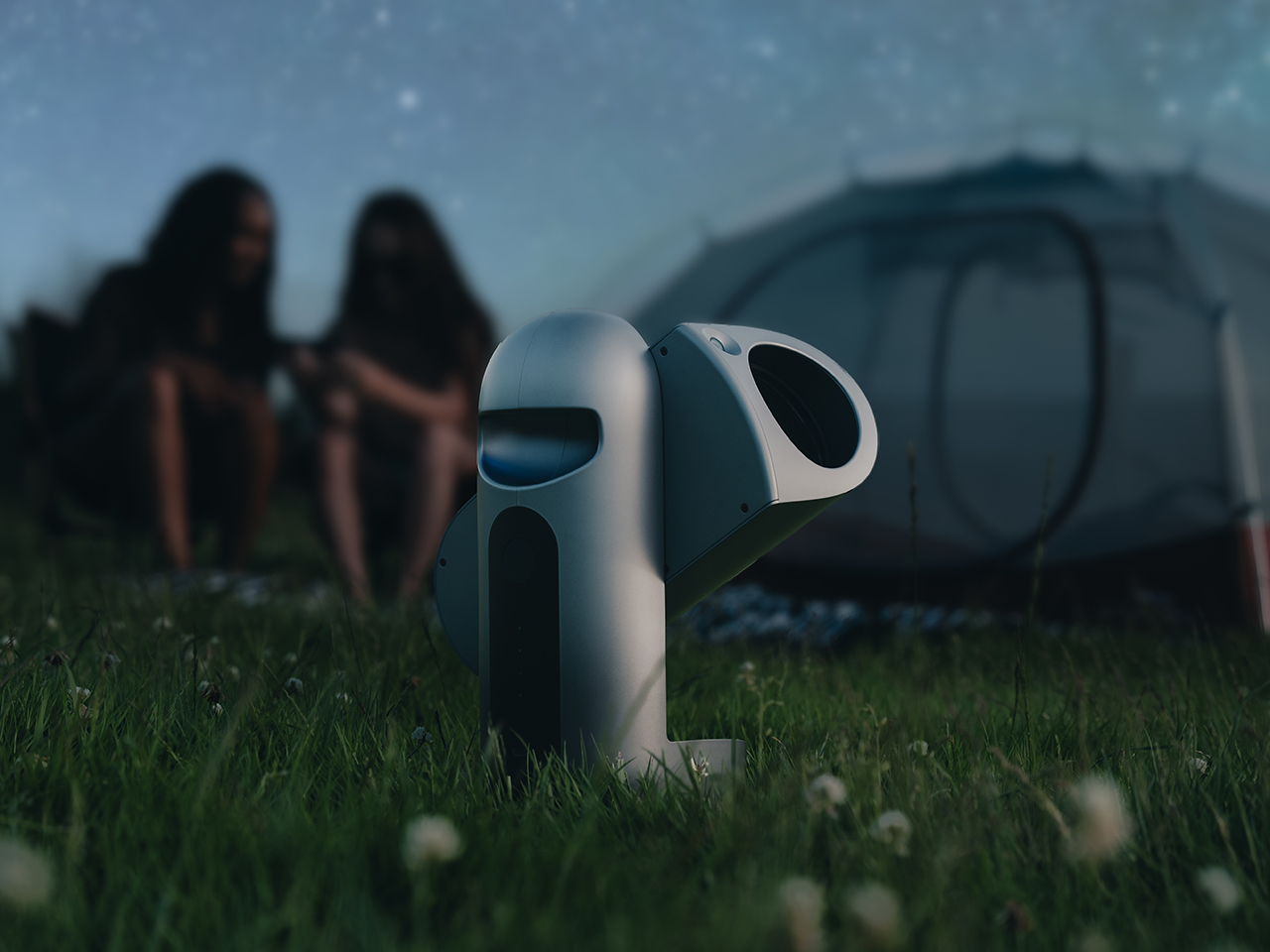
Going from the 50mm aperture common in smart telescopes to Draco’s 90mm gives you roughly 3.2 times the light-collecting area, which is the optical threshold serious imagers demand. The folded optics land at a 340mm focal length and f/3.8, a fast ratio that gathers light quickly, so faint targets build up sooner. An aberration-corrected design keeps stars pin sharp from the center of the frame to the edge. For context, ZWO’s Seestar S50 Pro ($999) runs a 50mm, f/5.2 setup. Draco costs a few hundred dollars more for nearly twice the aperture.
The 1/1.3-inch, 50MP sensor works in two modes. For nebulae and galaxies, it bins 2×2, merging four 1.2µm pixels into one 2.4µm pixel for roughly 12MP images with cleaner faint detail. For the Sun, Moon, and planets, it switches to the full native readout and crops around the target, which is how you get craters, sunspots, Saturn’s rings, and Jupiter’s Great Red Spot. A second camera with a 23.3mm equivalent focal length shoots at the same time, covering an 85.74° diagonal for Milky Way panoramas and star trails. Active TEC cooling and waste-heat dew prevention make thermal management part of the design instead of an accessory bolted on.
The SHO Edition automates Hubble Palette imaging
In 1995, Hubble’s Pillars of Creation image made sulfur, hydrogen, and oxygen glow like a gold-and-teal cathedral, and amateurs have chased that look ever since. The recipe maps sulfur II to red, hydrogen-alpha to green, and oxygen III to blue, each captured through a narrowband filter (one that passes only a thin slice of color, 13nm wide here). The SHO Edition carries an Hα + O III filter and an S II + O III filter, runs them in sequence, and merges the data automatically. Doing this by hand usually means a filter wheel, a laptop, and a weekend lost inside editing software. Draco makes it a native capability, calibration included, and asks for one tap.
Both editions share the Astro filter, a dark-frame shutter, and the Hα + O III filter, which also helps with emission nebulae under light-polluted skies. The Standard Edition ($1,399) adds a built-in ND filter (think sunglasses for a telescope) that swaps into place with one tap for solar imaging. The SHO Edition ($1,599) trades that for the sulfur filter and includes a magnetic external ND filter you snap on before aiming at the Sun. Solar System Mode then centers, focuses, and locks onto the Sun or Moon, so sunspots and eclipses are fair game. Galaxies and the Milky Way still shine brightest under dark skies, which is a fine excuse for a road trip.
A capsule you carry like a lantern and control remotely

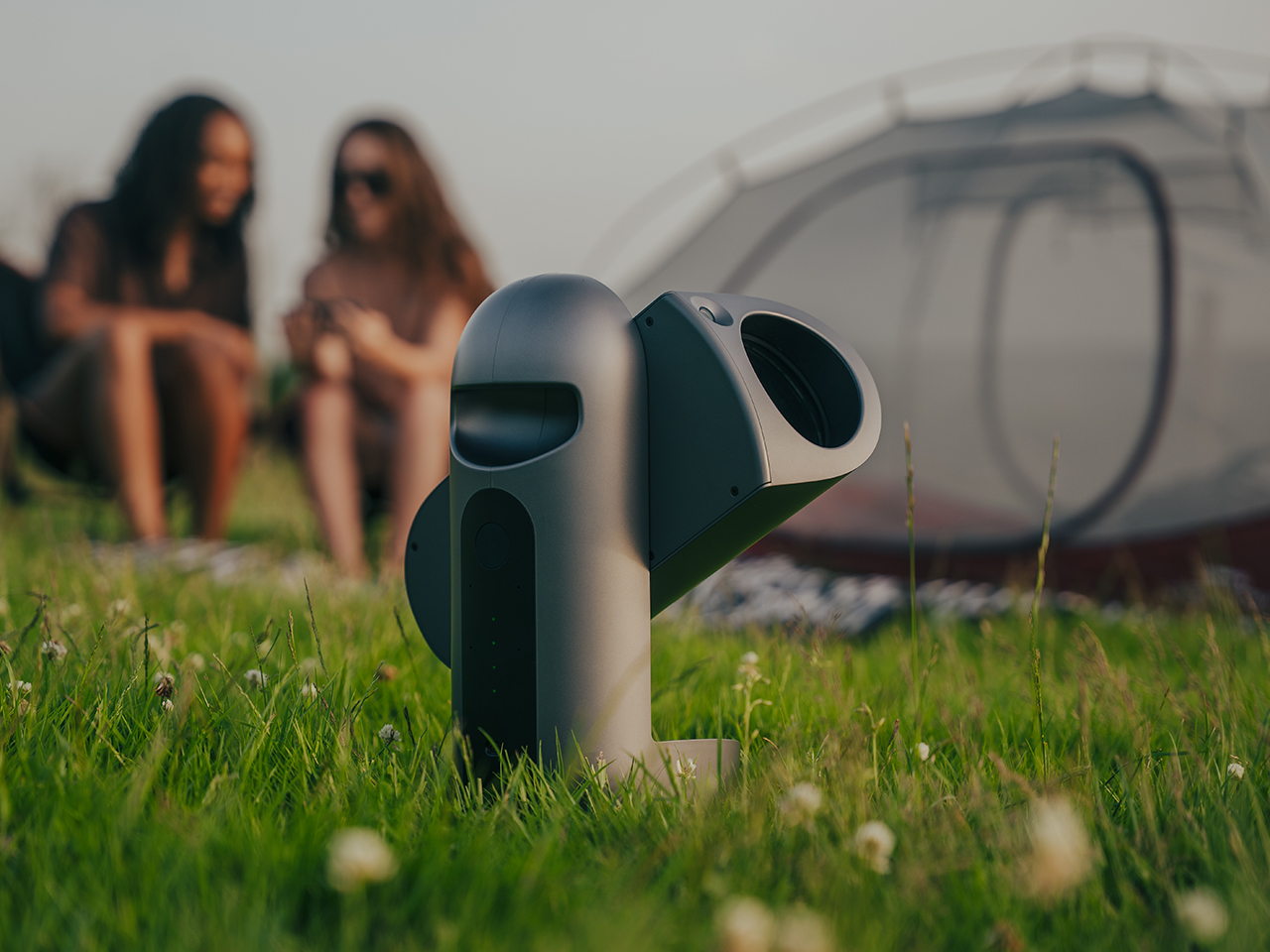
The body is a smooth capsule column with the optical tube hinged off one side, and stowed away it looks like a very expensive thermos or, in the right light, an Among Us crewmate. A recessed grip lets you carry it one-handed from the backyard to the car, and the all-metal base locks into a metal frame for a rigid stance on the tripod. Tap your phone to the body and NFC launches the app, where an AR Sky Finder shows what’s visible overhead, obstructions included. Pick a target, tap GoTo, and Draco handles focus, calibration, tracking, and stacking. The 10,000mAh battery runs roughly five hours.
PhotonLink remote control lets you run Draco from anywhere through the app, and Ethernet over USB gives it a wired connection for long deployments. Schedule a target and it wakes up, finds it, and shoots under clear skies while you sleep, so the hardware runs the session instead of you babysitting it, with Mega Stacking combining nights and Astro Mosaic widening the view. Stellar Studio in the app handles star reduction, star removal, and the Hubble Palette effect, with FITS and TIFF export for your own workflow. Pre-orders are open at dwarflab.com/us, with the SHO Edition at $1,599 and shipping estimated within three months. Traditional astrophotography exposes the system to the user. Draco turns the system into the product.