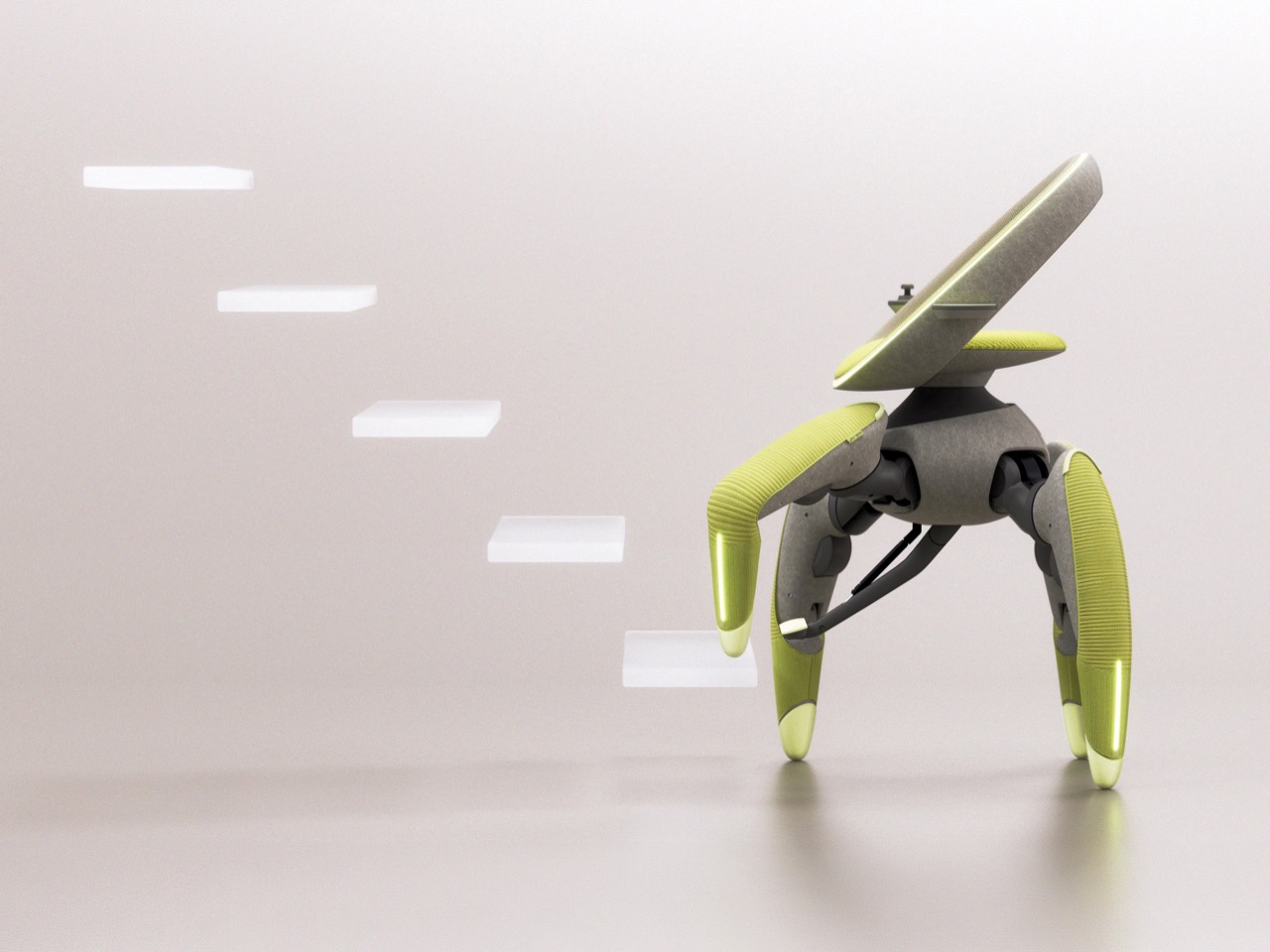

Somewhere around age eight, I decided the coolest vehicles in the universe all had legs. The AT-ATs in The Empire Strikes Back, the mechs in every anime I wasn’t supposed to be watching, all of them walked where cars couldn’t. Toyota apparently had the same childhood, because its four-legged ‘walk me’ chair just won the 2026 Red Dot: Luminary, the highest honor at the Red Dot Award: Design Concept. The difference is that Toyota pointed its walking machine at something useful, helping people with limited mobility get up stairs and over curbs. Meanwhile, the Empire is still building walkers purely for invading ice planets.
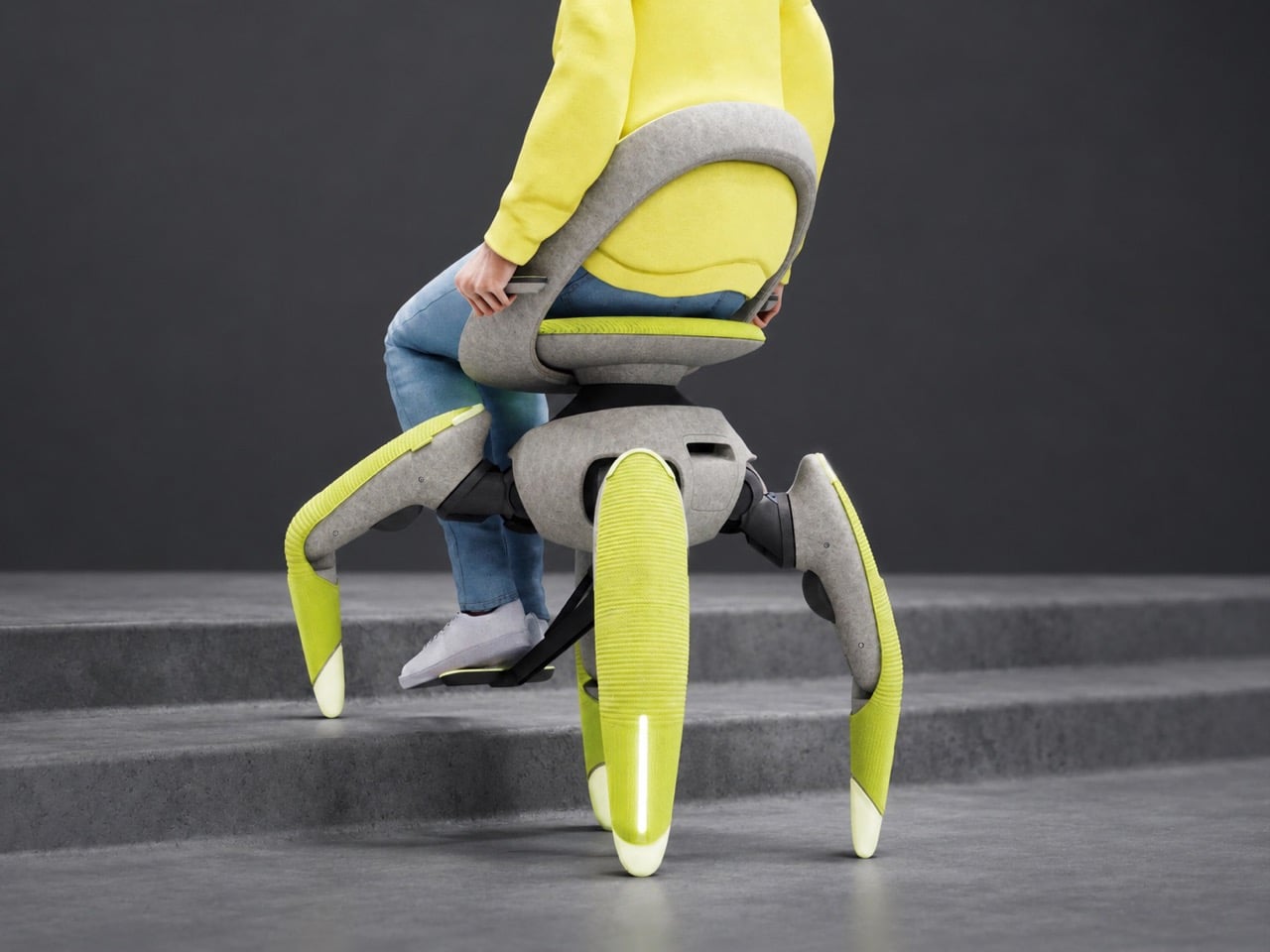
Designed by Misako Kawata under team lead Takashi Nishimura, walk me trades the wheelchair’s wheels for four robotic legs that step up stairs, shuffle sideways in tight spaces, and lift the seat to eye level with standing pedestrians. Toyota skipped the menacing chrome and went soft instead, wrapping the joints in 3D-knitted fabric and a felt-like body with bright chartreuse legs. The result looks like a friendly piece of furniture that happens to climb things. It debuted at last year’s Japan Mobility Show as a concept, and Toyota has announced no price or release date. Mobility for All is the company’s stated mission here, and for once the slogan comes with legs.
Designer: Toyota Motor Corporation
Four Legs are far superior than Four Wheels
Stairs create psychological barriers long before they create physical ones, and Toyota’s own design brief says as much. A wheel looks at a staircase and gives up, so the rider plans the whole day around avoiding them. Walk me swaps the wheels for four robotic legs, which lets one machine link indoor floors, outdoor paths, cars, and public transit. It climbs steps, slides sideways through tight spaces, and generally refuses to treat architecture as a personal insult. Anyone who has ever hunted for the one accessible entrance around the back of a building will understand the appeal.
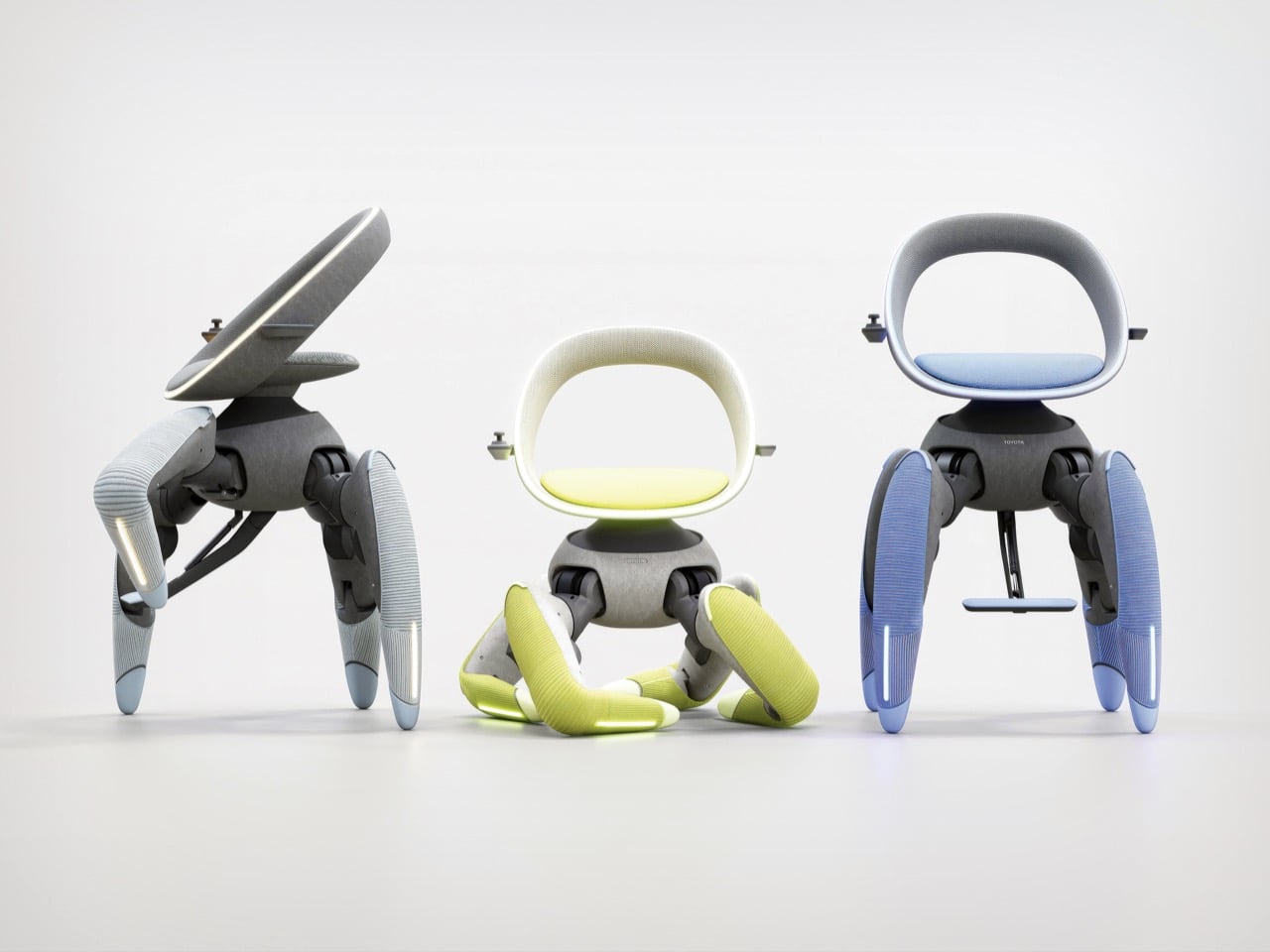
Four legs can crouch for boarding and stand tall to put the rider at eye level with pedestrians, which fixes a problem wheelchairs have carried forever. Anyone who has spent a whole conversation craning upward at a taller friend knows the strain. Wheelchair users deal with that angle daily, and a chair that rises to meet the conversation changes the dynamic. Toyota says the same leg movement also makes getting on and off the chair easier. It’s a small social fix tucked inside a big mechanical one, and I’d argue it’s the most human detail in the whole design.
A polite Japanese gesture, wrapped in 3D-knitted fabric
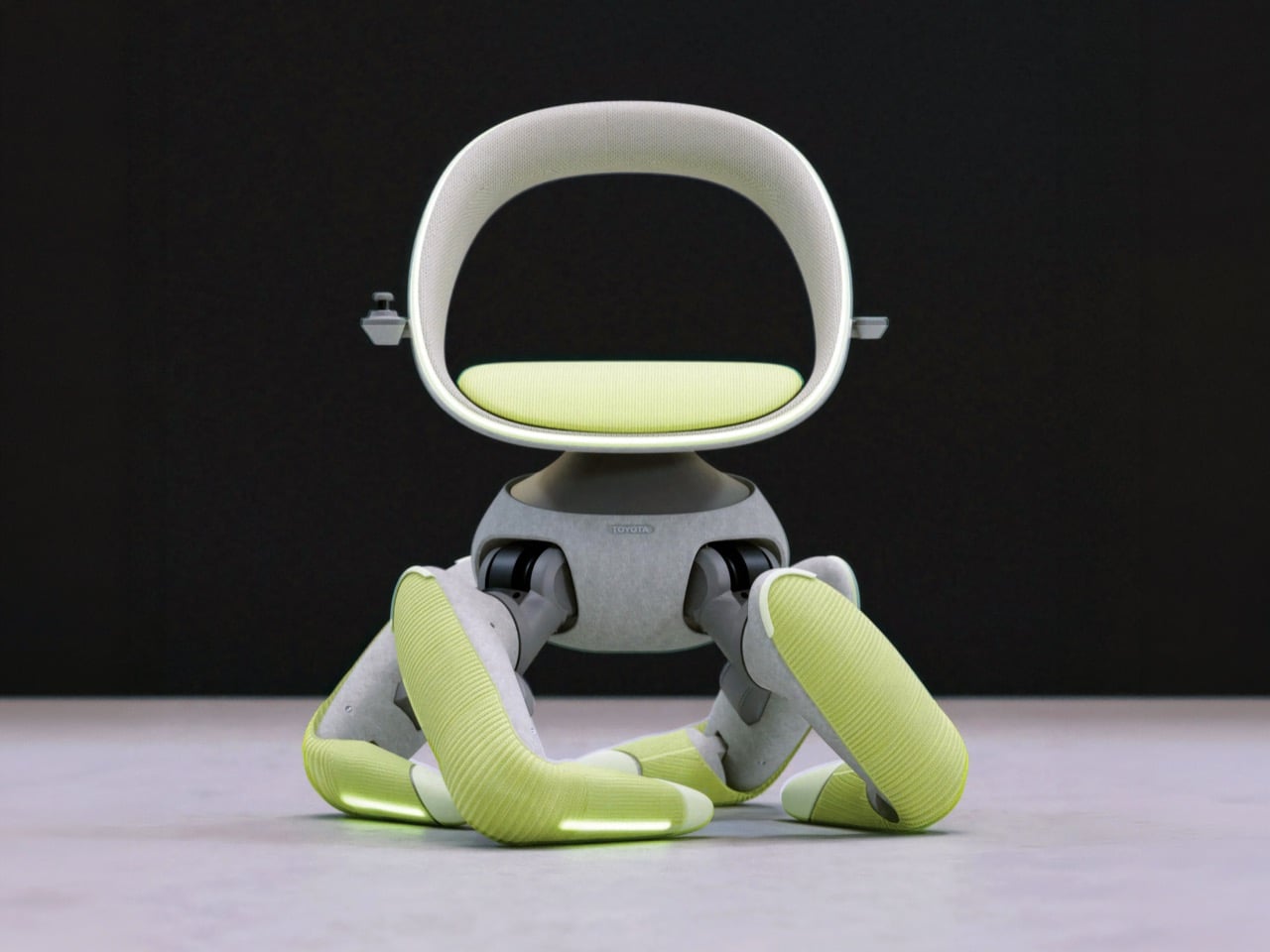
Toyota built the posture around omotenashi, the Japanese spirit of hospitality, so the chair’s stance resembles a polite bow that welcomes its rider. A 3D-knitted fabric covers the mechanical joints, while the warm, felt-like body gives it a friendly, furniture-like silhouette. In the images, the gray hip housing and seat shell read like a premium lounge chair, and the ribbed chartreuse legs add a pop of color that says friendly rather than clinical. I never expected to call a robot cozy, but here we are. Nobody has ever been intimidated by a sweater, and that is very clearly the strategy.
Toyota started as a loom maker under Sakichi Toyoda, so wrapping a robot in knitted fabric reads as a family tradition. Its own Japan Mobility Show booth traced the company’s robotics roots back to the Toyoda Automatic Loom Type G. A century on, textile know-how and robotics meet in a chartreuse-legged chair that bows at strangers. Beneath the fabric sits a topologically optimized internal frame that keeps the structure strong and light while staying completely hidden. Toyota wants you to see an armchair with ambition, and the skeleton is nobody’s business but the robot’s.
Ten months, AI gait control, and a very promising future
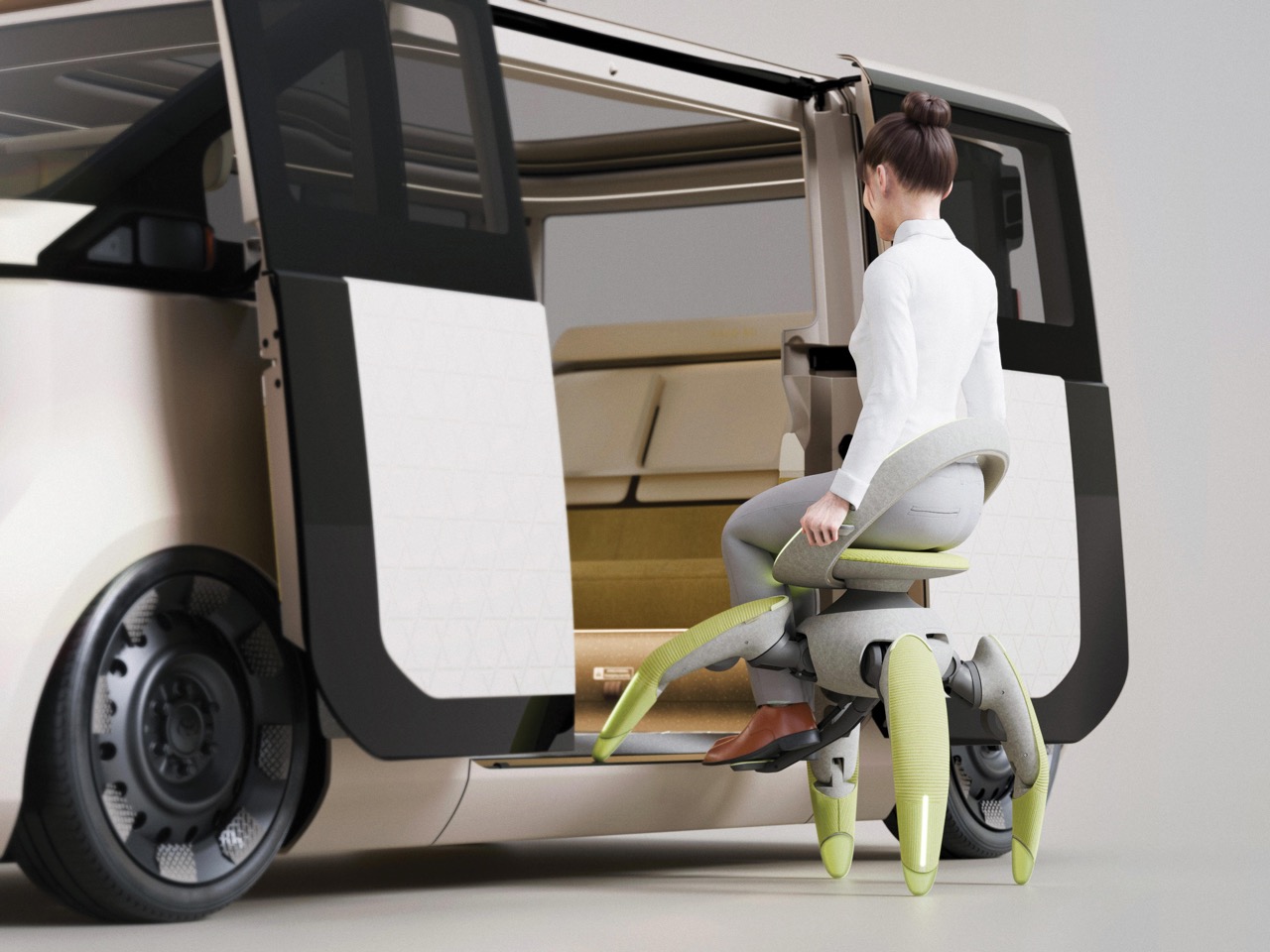
Toyota took walk me from idea to working prototype in just 10 months, which is wild for a machine that has to balance a human being on four legs. AI gait control and low-waste metal additive manufacturing made that pace possible, compressing years of R&D into weeks, according to Toyota. The company calls the chair its North Star for human-centered technology. That technology is meant to deliver dignity, hope, and independence alongside plain old movement. Red Dot’s concept award honors prototypes and ideas rather than shipping products, so the Luminary measures vision more than store-shelf readiness.
Hyundai’s Elevate walking car put wheels at the end of long robotic legs, and Kawasaki’s CORLEO robot horse offers a rideable quadruped for off-road thrills. Those machines chase rescue missions and rugged trails. Walk me points similar legwork at a living room staircase, which is arguably the more relatable terrain. Among this year’s Red Dot: Best of the Best winners, it’s the one the jury crowned with the top prize. It remains a concept with no price, release date, or production plans, but a robot that bows, climbs, and wears a knitted sweater has me convinced that the future of mobility might finally have good manners.