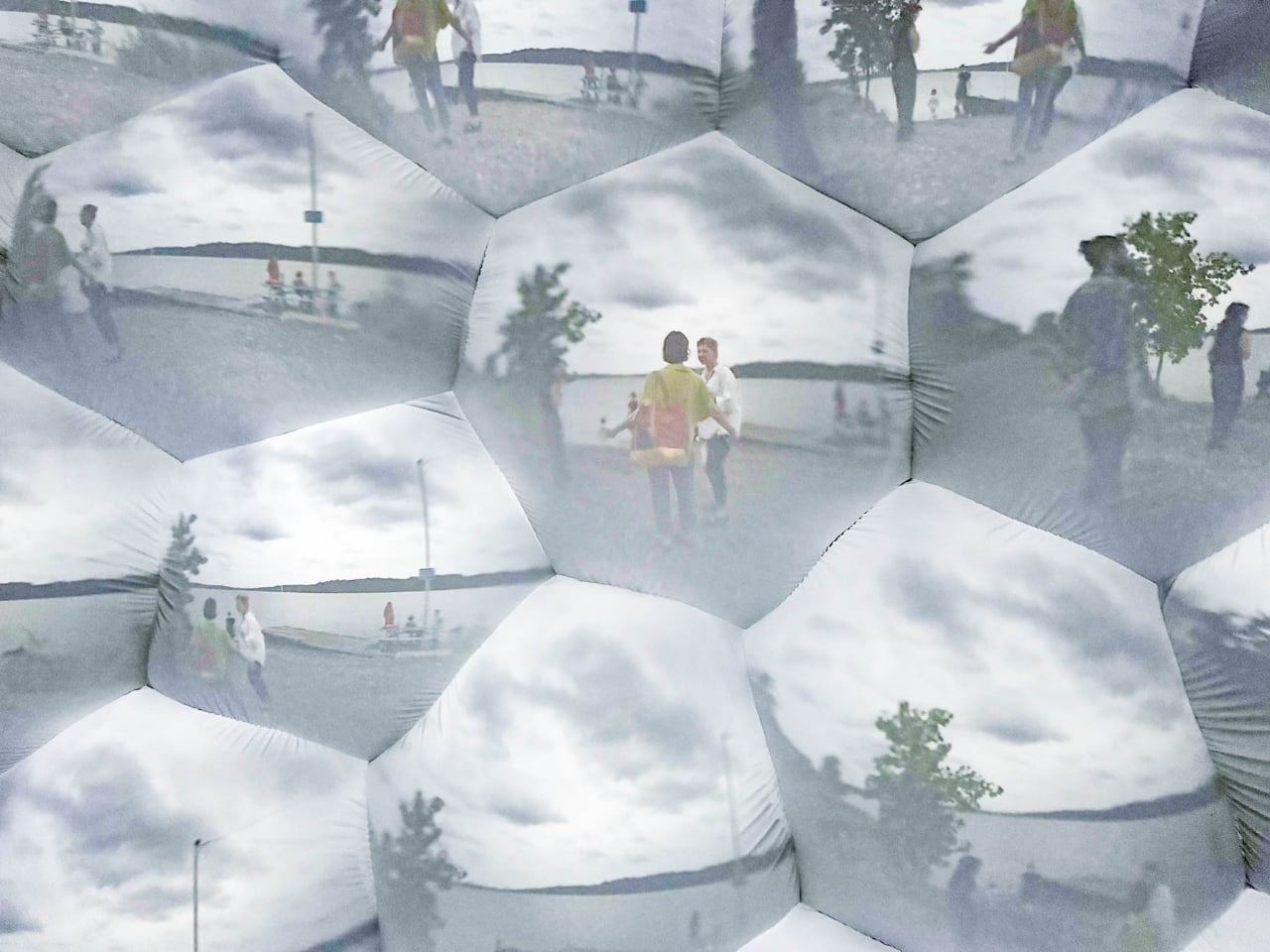

Inside Compound Camera No.3, the outside world becomes a patchwork of light, spread across walls soft enough to press with your hands. Rhode Island studio Pneuhaus designed the inflatable pavilion as a camera you enter, with projected views you can bring into focus by gently pushing its interior surface. After so much looking through screens, I like the idea of giving an image a little nudge rather than another swipe.
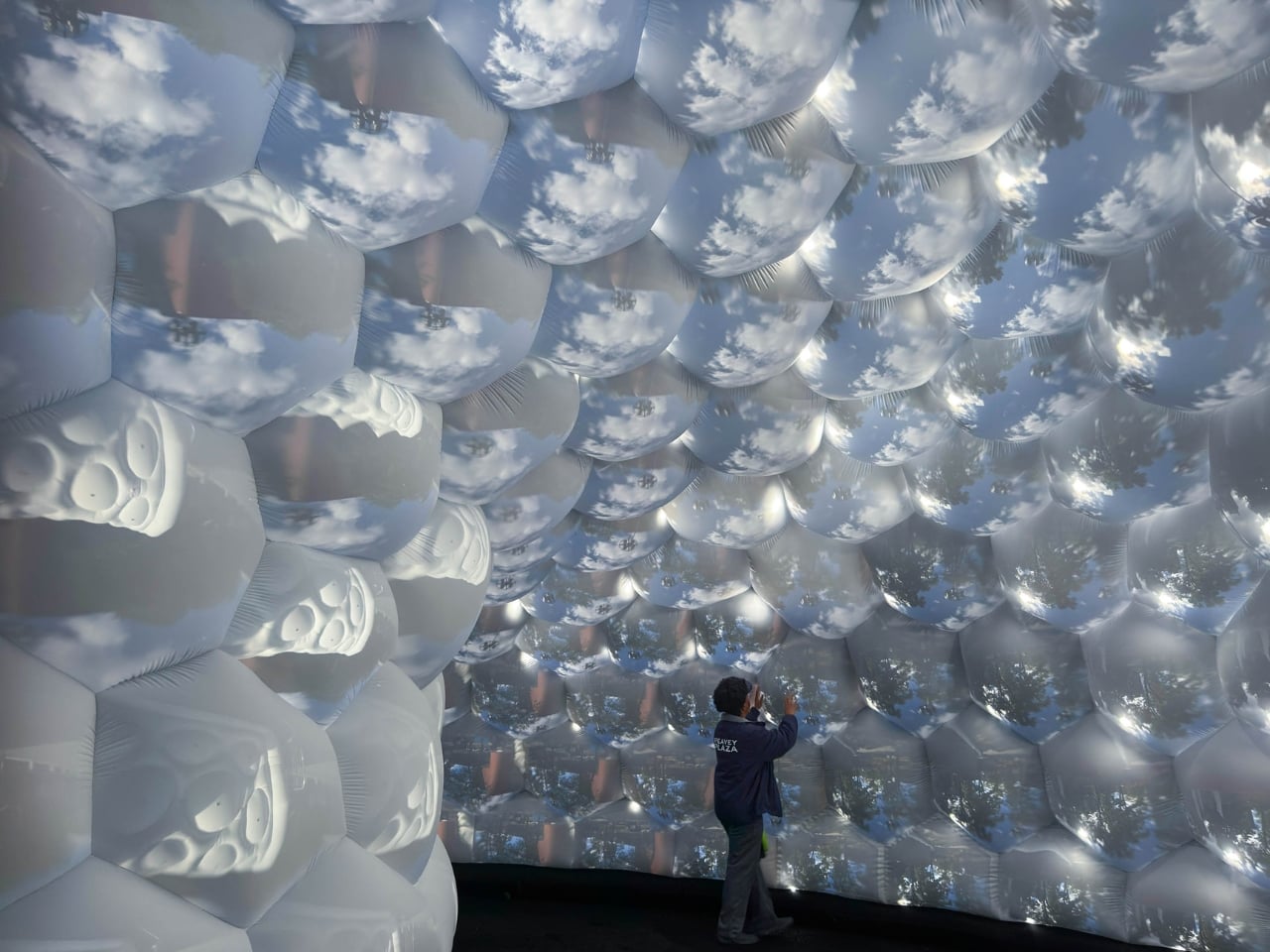
The installation premiered at MODE Fest in Minneapolis from September 18 to 20, 2026. It covers more than 700 square feet and brings together 221 camera obscura cells, which project views of the surrounding environment onto its translucent inner surface. The subject matter is whatever happens to be outside, giving familiar scenery an unusually elaborate viewing room.
Designer Name: Pneuhaus
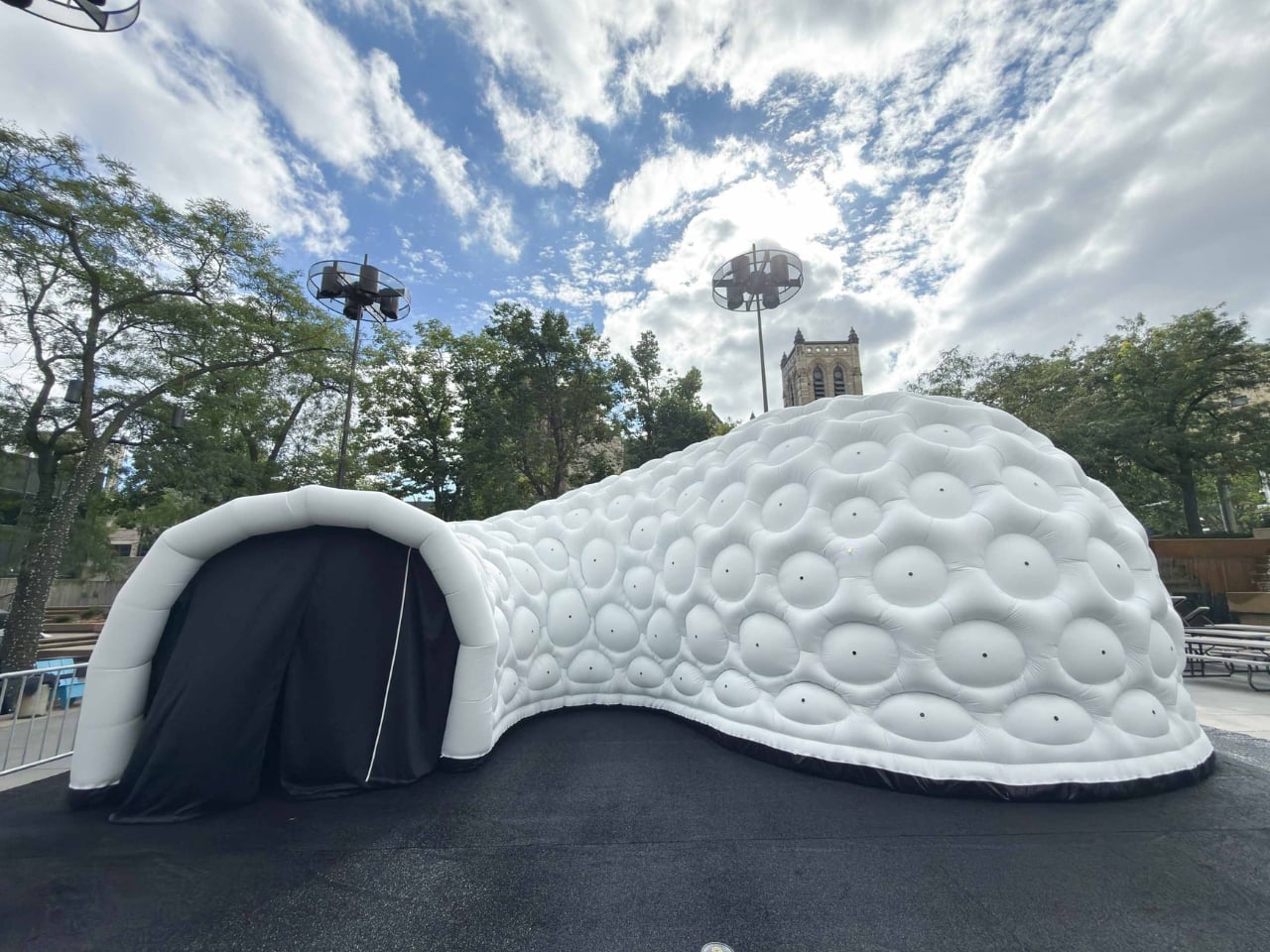
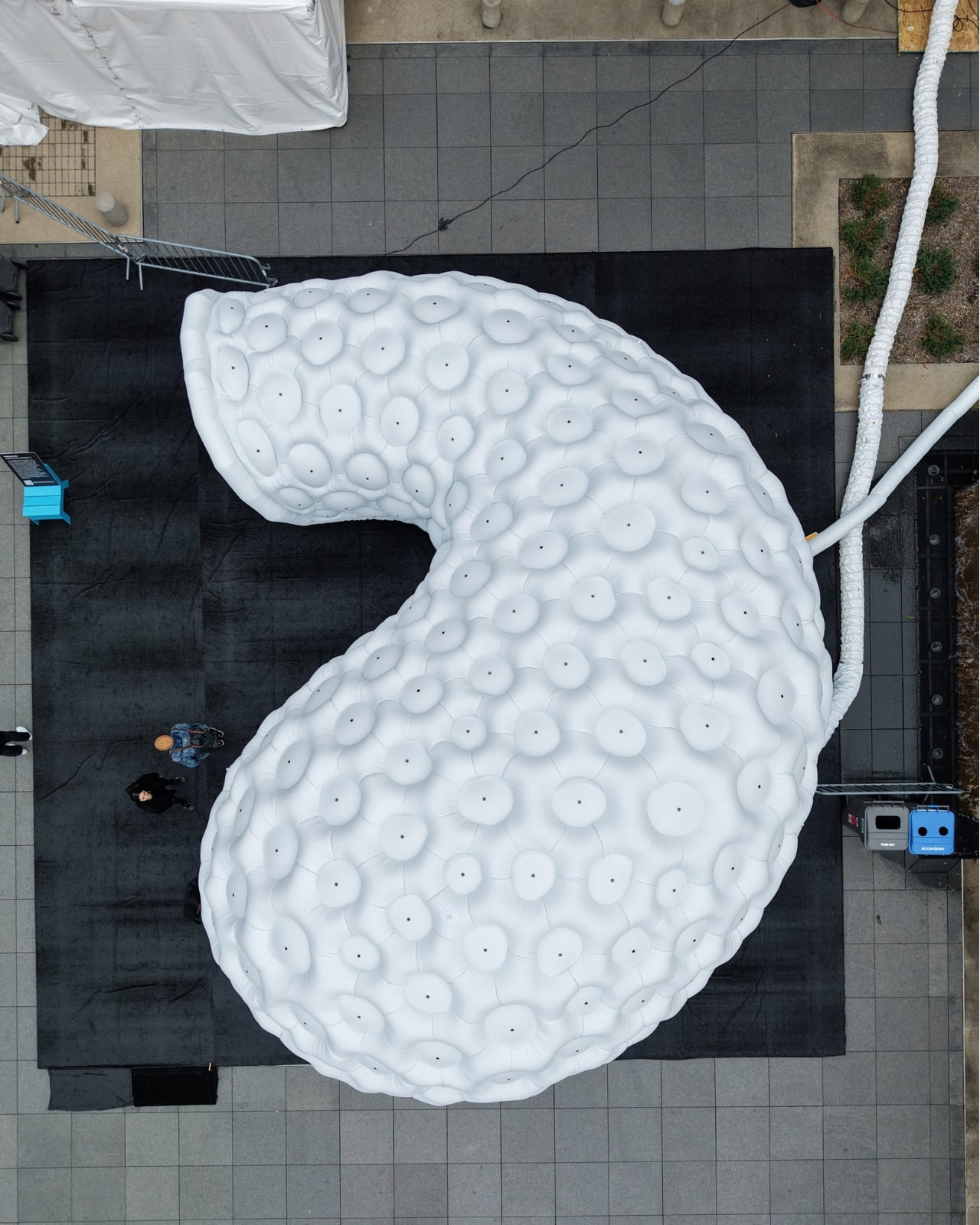
The exterior has the rounded bulk of oversized protective packaging, with a white, inflated shell covered in circular dimples. A low entrance extends from the taller main volume, giving the whole thing a slightly creature-like silhouette. Each little lens sits within its own depression. Even before you understand how it works, that repeating pattern offers a clue that the surface has a job beyond holding the air inside.
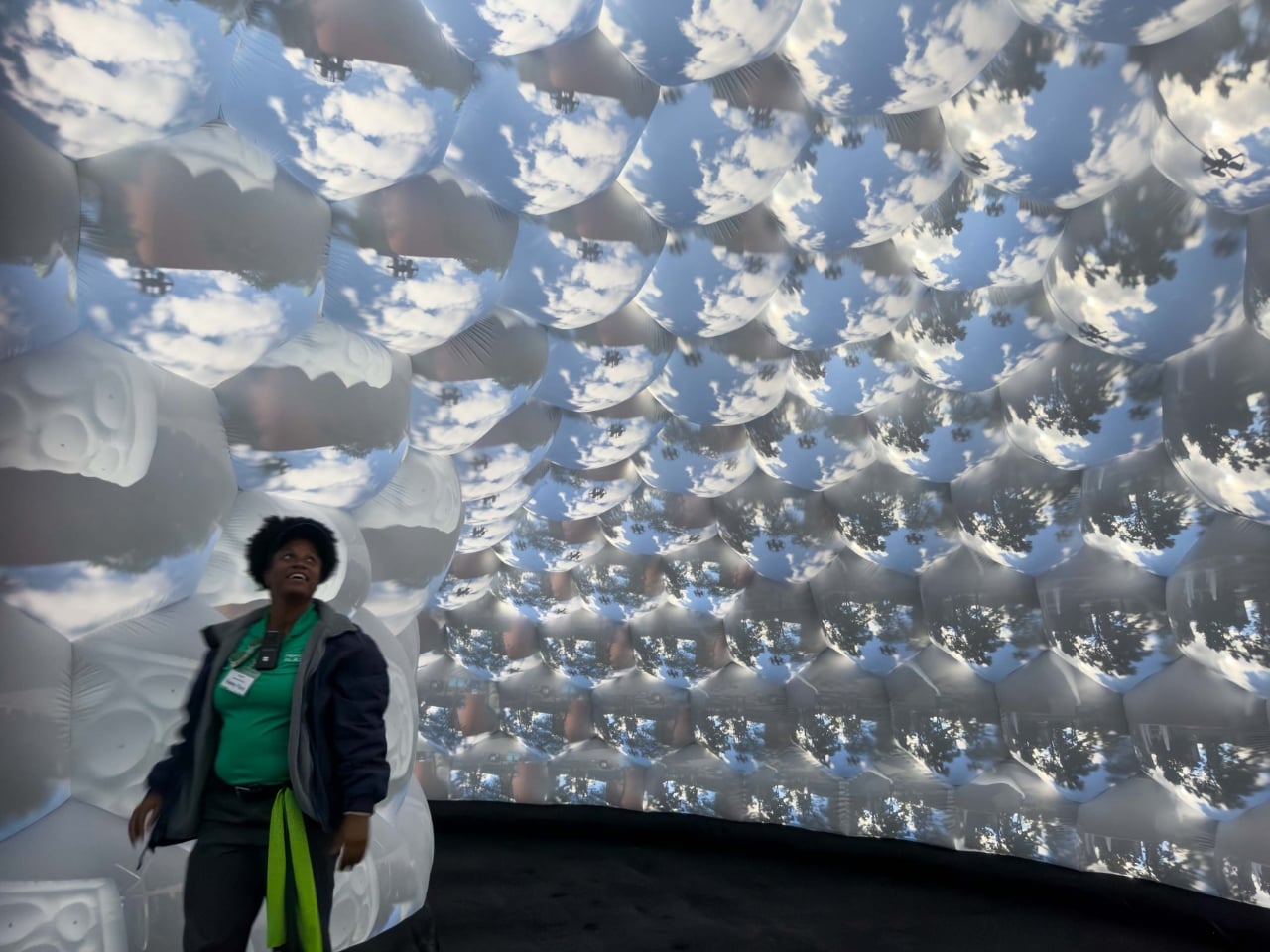
According to the studio’s project details published by designboom, each cell contains a glass double-convex lens. The structure combines those lenses with urethane-coated nylon and air, while an internal baffle layer separates and aligns its inner and outer membranes. Light entering through the lenses forms images on the inner surface. Repeating that arrangement across the pavilion produces a collection of neighboring views, each with its own frame and perspective.
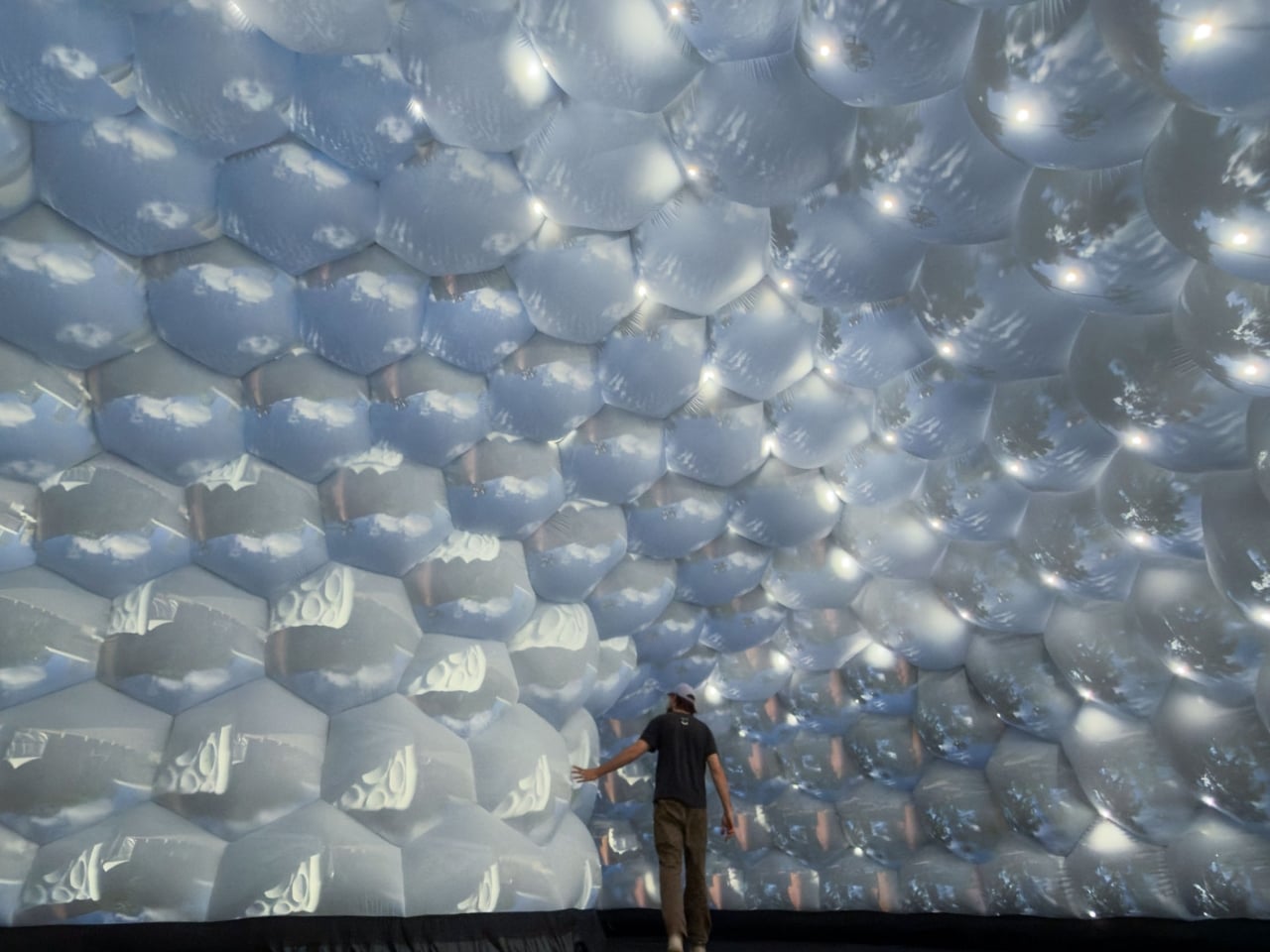
Pneuhaus takes its cue from a dragonfly’s compound eye, arranging lenses along complex curves to gather multiple perspectives at once. The connection works best as an invitation to imagine another way of seeing, rather than a literal simulation of insect vision. As a design choice, distributing the views around a room gives your attention several places to go. You have to decide where to look.
The touch interaction gives that wandering attention something practical to do. Pressing the flexible membrane allows visitors to adjust the focus for different distances, according to Pneuhaus. Softness is essential to the mechanism. A rigid projection surface would remove that particular control. I find the directness appealing: the thing you touch is also the place where you see the result, with very little explanation needed to connect the two.

In Lachlan Turczan’s photographs, patches of blue sky and clouds repeat across the ceiling, while trees and buildings appear in other cells. Some scenes are upside down. The edges remain visible, making the interior read as a room full of individual pictures. Those seams are worth keeping. They make it possible to notice how the same surroundings change from one small optical compartment to the next.
I wouldn’t turn that into an argument against digital art. A screen can do plenty that this pavilion cannot, and an inflatable camera room is hardly a replacement for the phone in your pocket. Its value is more specific. It gives image-making a physical scale, making the relationship between a lens, a surface, and a scene available for people to explore with their bodies and hands.
Pneuhaus lists the installation for rental inquiries, placing it in the territory of festivals, exhibitions, and temporary public experiences. That seems like a sensible home for a project whose appeal depends on entering and exploring it. A shared room also leaves space for people to notice different things. The person beside you might be studying a building while you’re trying to sharpen a patch of leaves.
The ordinary subject matter is part of the appeal. A tree, a cloud, or someone passing outside can supply enough visual interest when the viewing apparatus makes you curious. Given the chance, I’d probably spend longer adjusting one cell than trying to take in all 221. There’s a satisfying modesty to that possibility: an enormous camera whose most engaging control could be one gentle push against a wall.