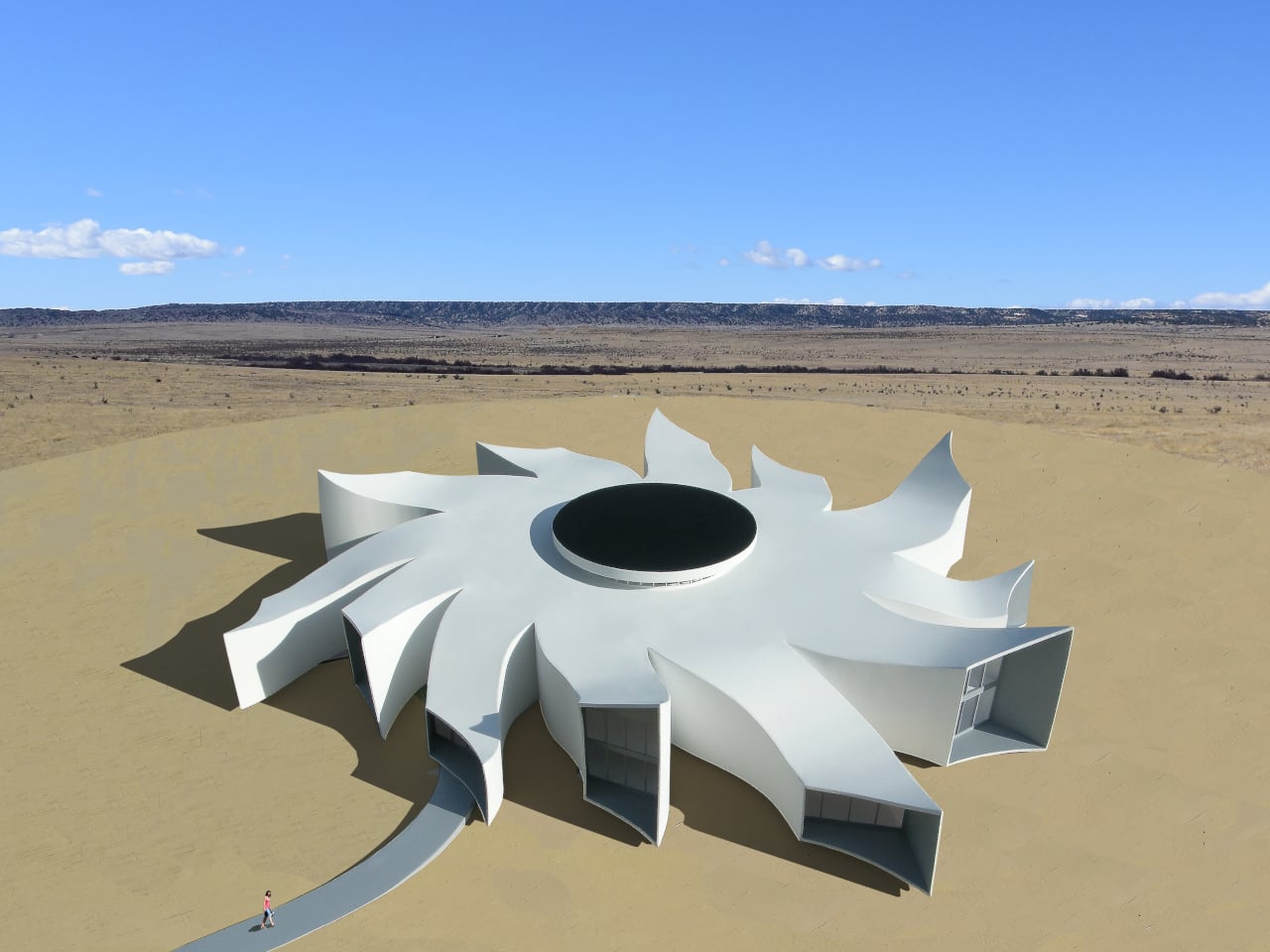

Black holes are notoriously difficult to see, which makes designing a building around one a rather strange idea. The Black Hole Research Center, however, takes that invisible subject and gives it a place people could actually work in. Conceived for a hot, dry climate, the unbuilt research facility spreads its offices and laboratories through a spiraling structure around a dark, solar-powered center.
There is something almost mischievous about putting a black hole on a roof in a place that gets plenty of sun. Rather than swallowing light without a trace, the circular array of photovoltaic cells would turn it into electricity for most of the facility. The idea gives the central opening a practical purpose while keeping the building’s scientific subject impossible to ignore.
Designer: Michael Jantzen
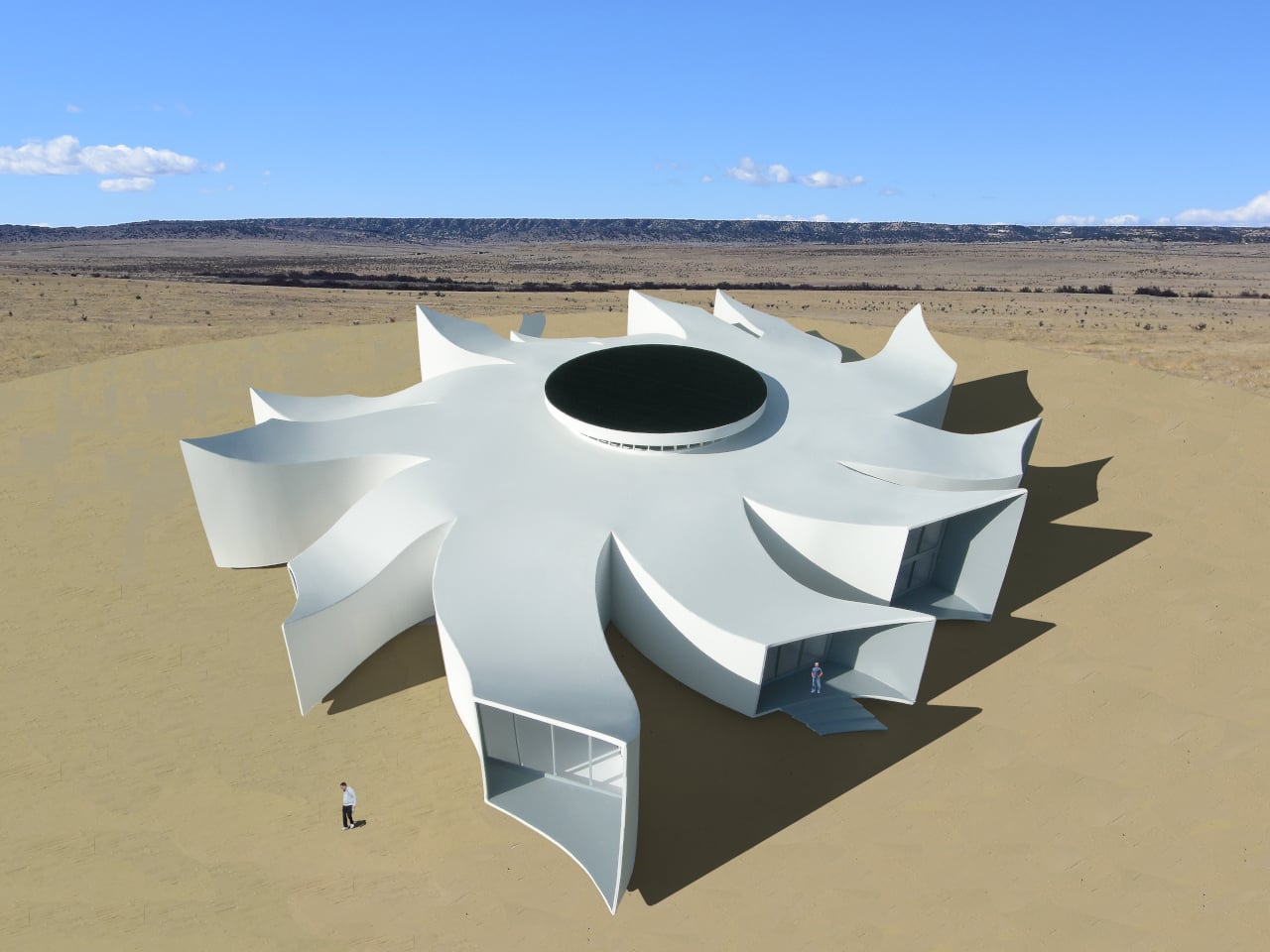
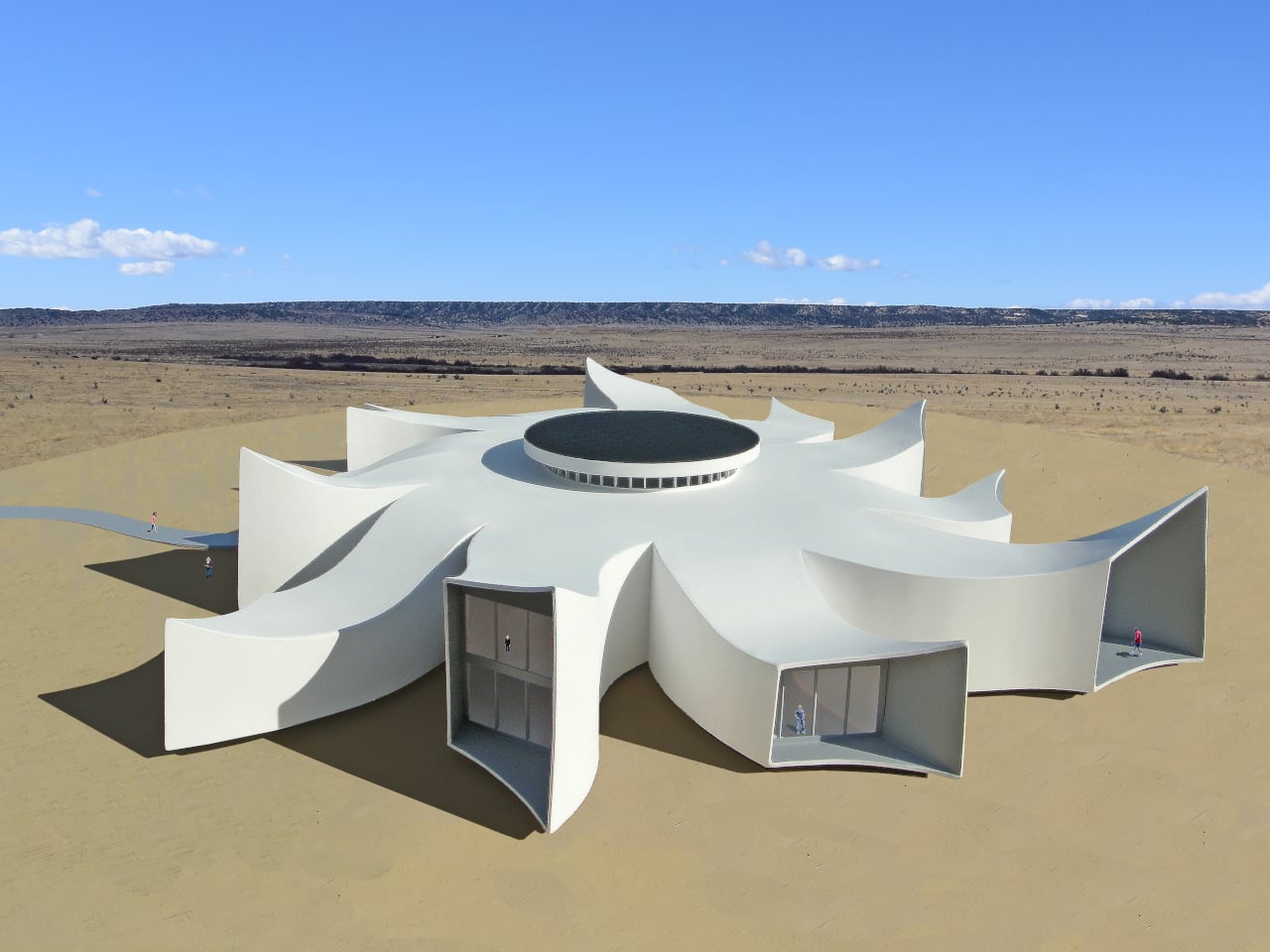
The solar array wouldn’t sit flush against the roof. Raising it creates a gap that would let daylight and air reach the center, preventing the black hole from making the interior feel like an actual one. Around the outer edges, shaded glass doors and windows would admit light and ventilation. It’s a sensible response to a climate where sun can be overwhelming.
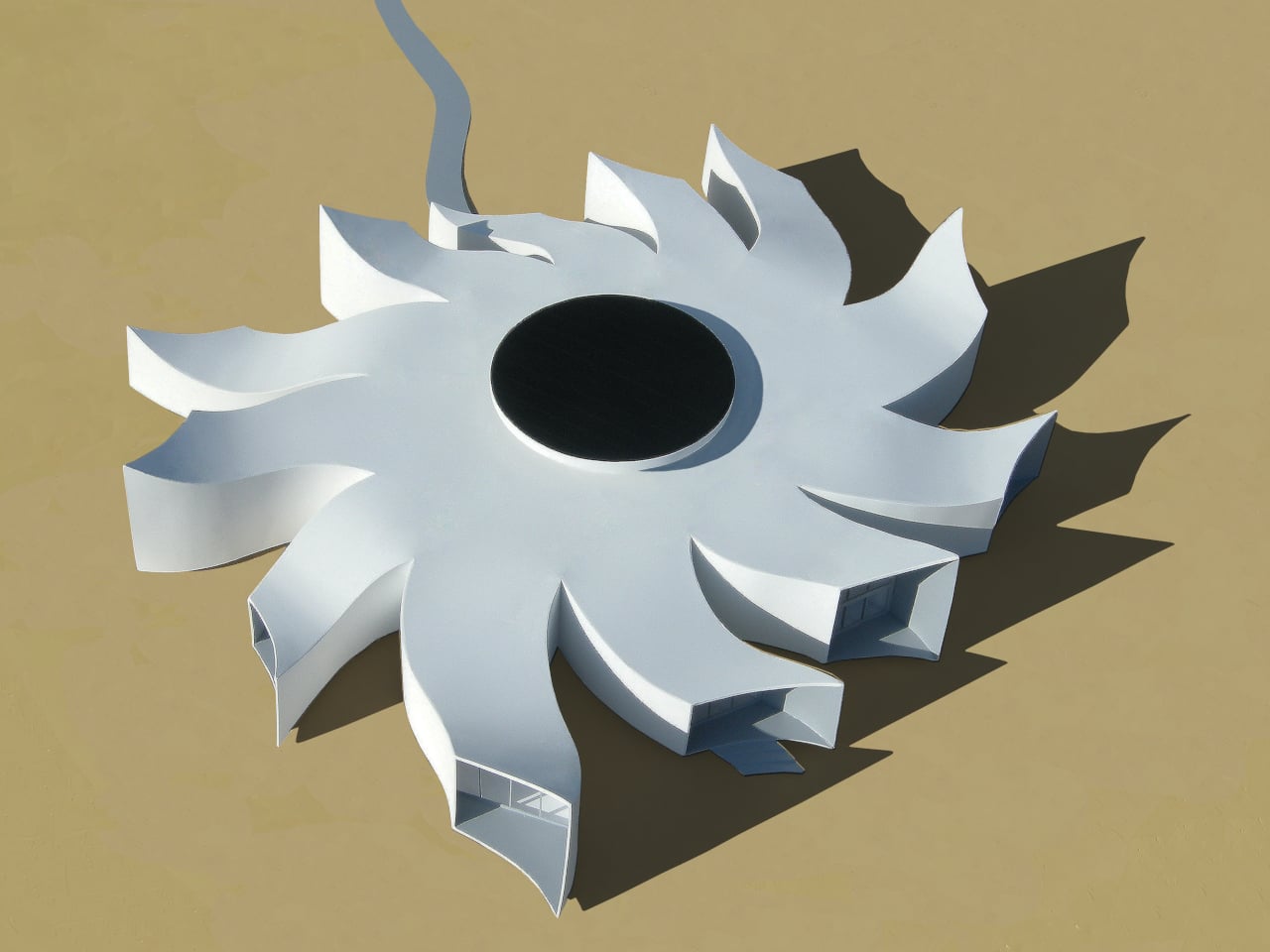
From there, the building unfolds into arms that hold the offices and labs. Half of those arms rise to two stories, adding space without turning the center into a conventional block. Researchers could move between work areas and the shared interior, while the curved layout gives the building its galactic outline. The metaphor becomes the organizing principle, not a shape pasted onto the roof.
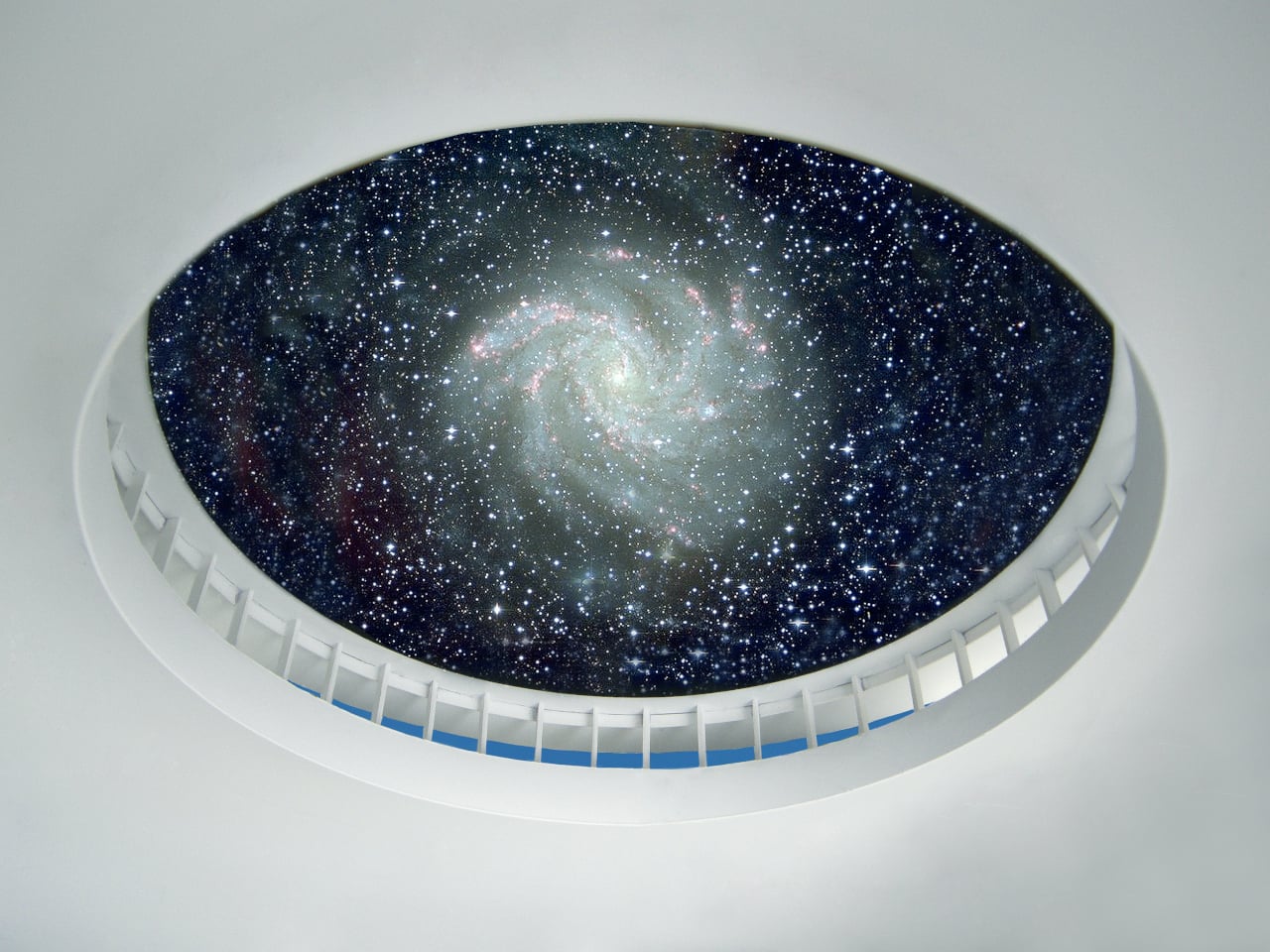
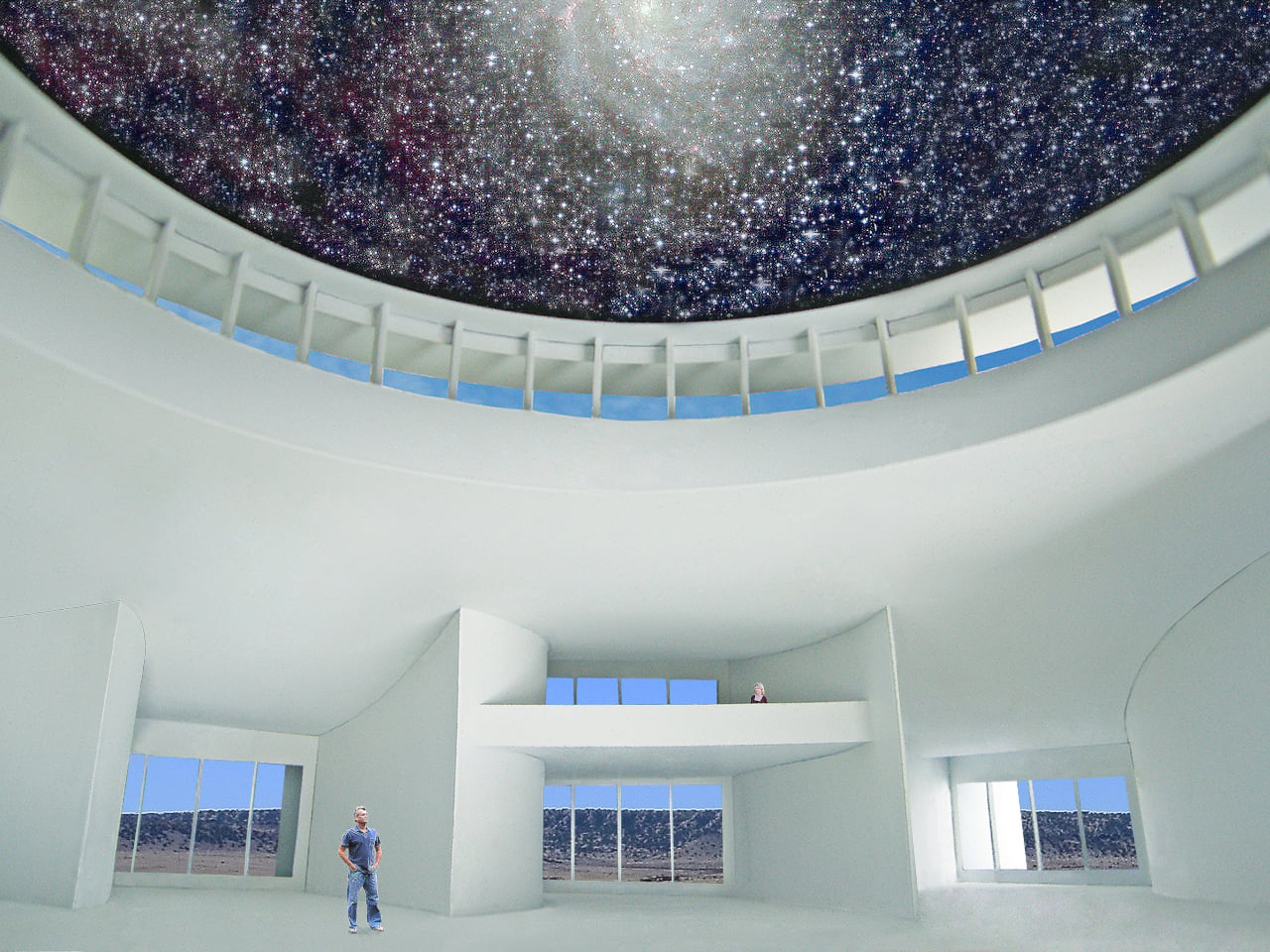
Look up from that interior, and the underside of the solar array could become a giant interactive LED display. Instead of another ceiling, people working there would have a surface for images and sounds drawn from the center’s studies. It’s the kind of feature that could turn a conversation about distant, hard-to-imagine phenomena into something you can experience without leaving the building.
The rest of the roof would have a job. Rainwater could be collected from its surface and kept in underground containers for use inside and around the facility. The lightweight concrete-composite construction is intended to make the sculptural form practical to build. Neither strategy comes with performance figures, but they show how the design tries to answer its surroundings as well as its research brief.
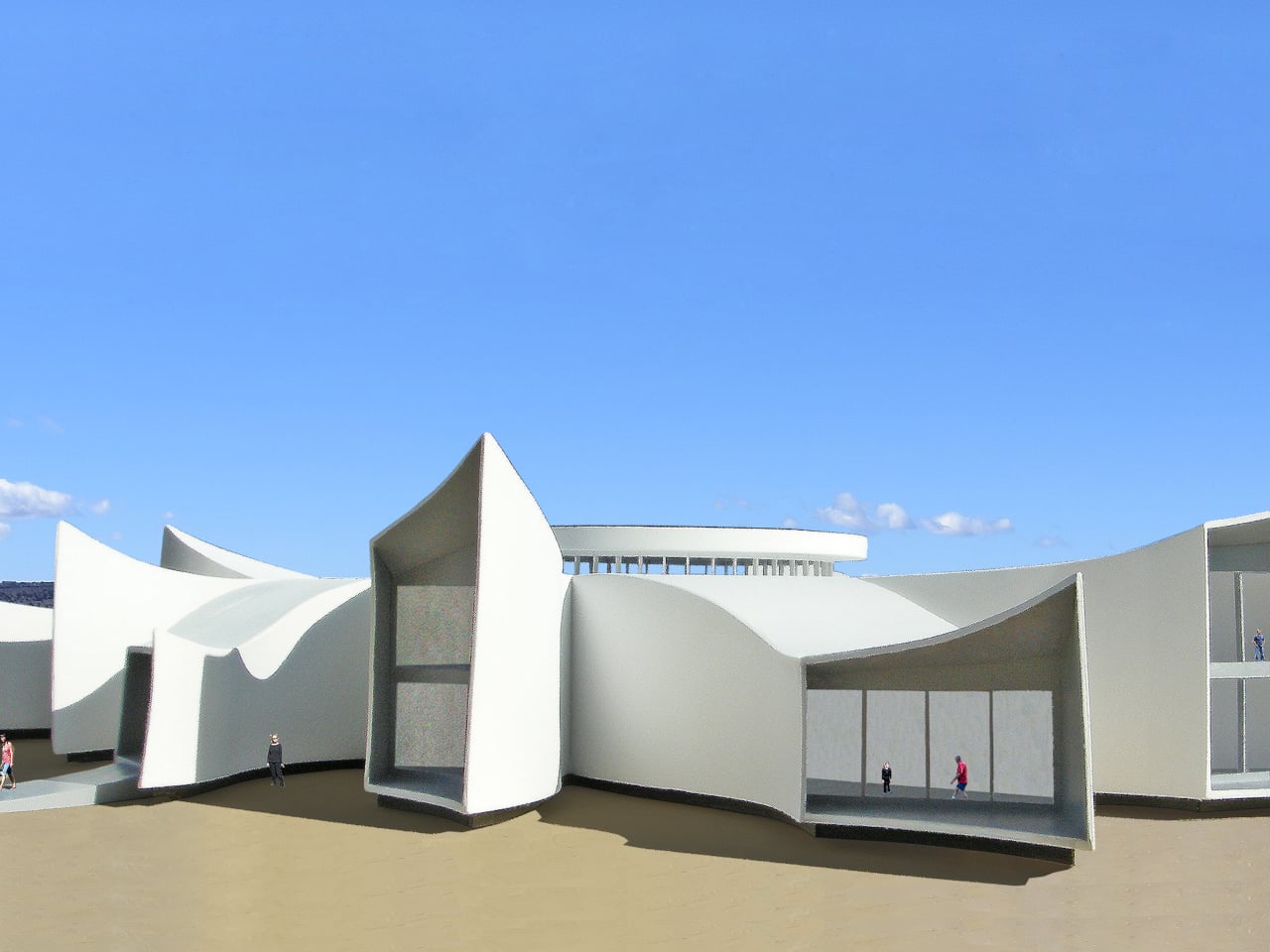
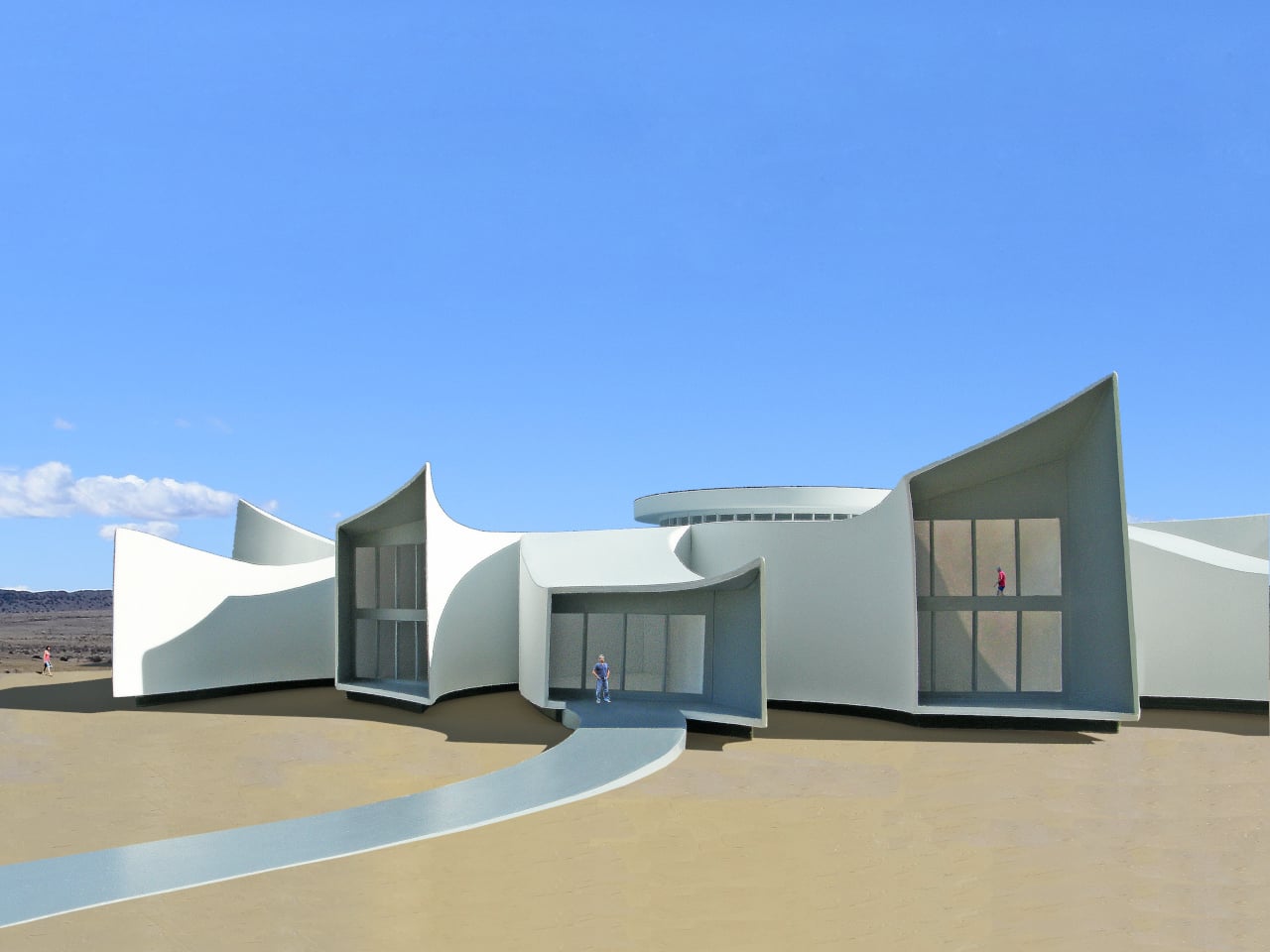
The Black Hole Research Center might not yet host an experiment, but it offers a way to think about scientific architecture. Its dark center would collect sunlight, its raised roof would let air move, and its outstretched arms would house the research itself. For a subject defined by what we can’t observe, the proposal gives people a tangible place to start looking.