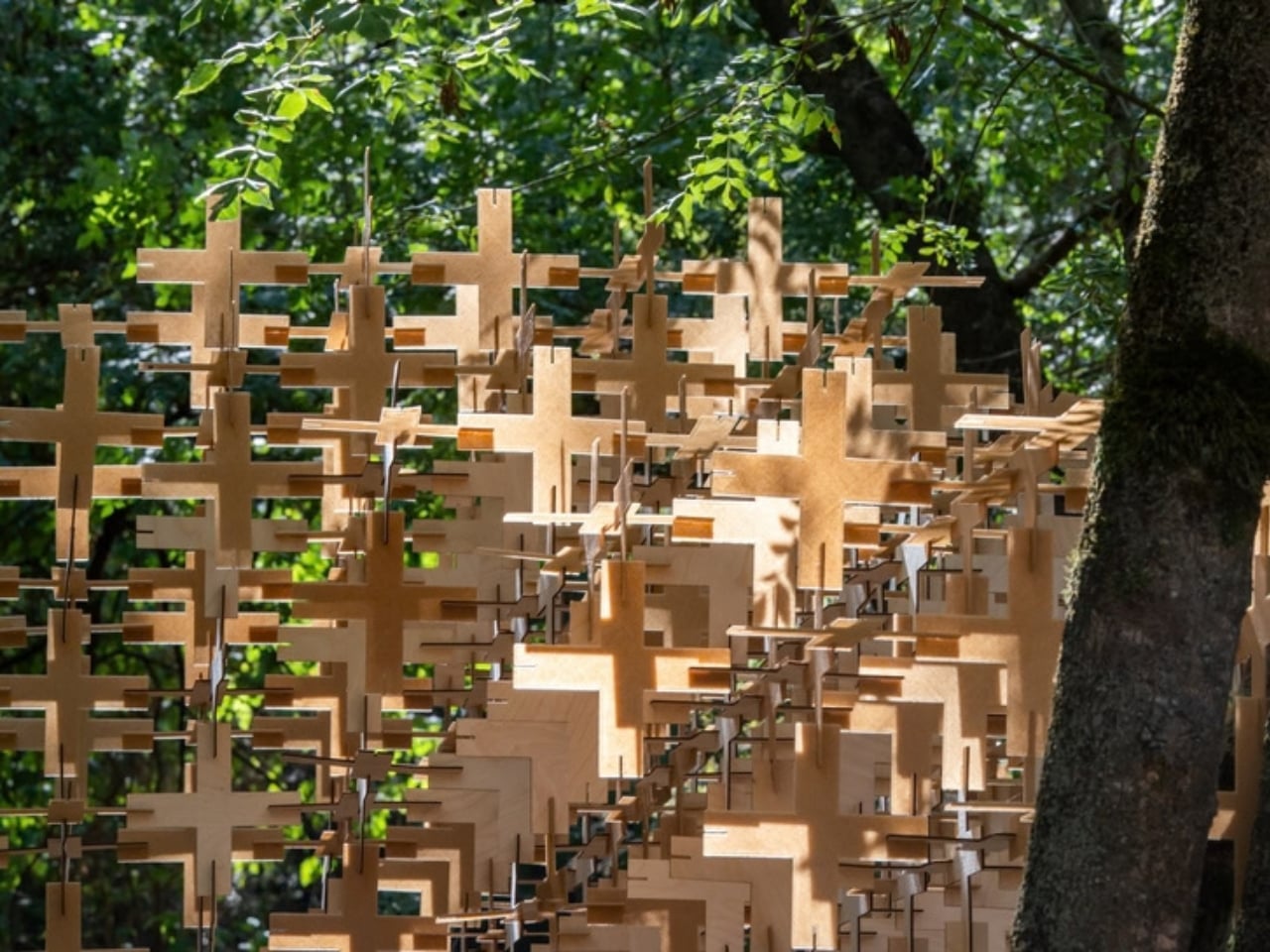

Temporary architecture has a habit of arriving with a big idea and leaving behind a pile of materials. A pavilion can look thoughtful for a few weeks, then become somebody else’s disposal problem. That tension is what makes Woven, a temporary structure by Atelier DARN in Spain’s Les Gavarres landscape, worth a closer look. It treats the end of a building’s life as a design question, not an awkward detail to be handled after the photographs are taken.
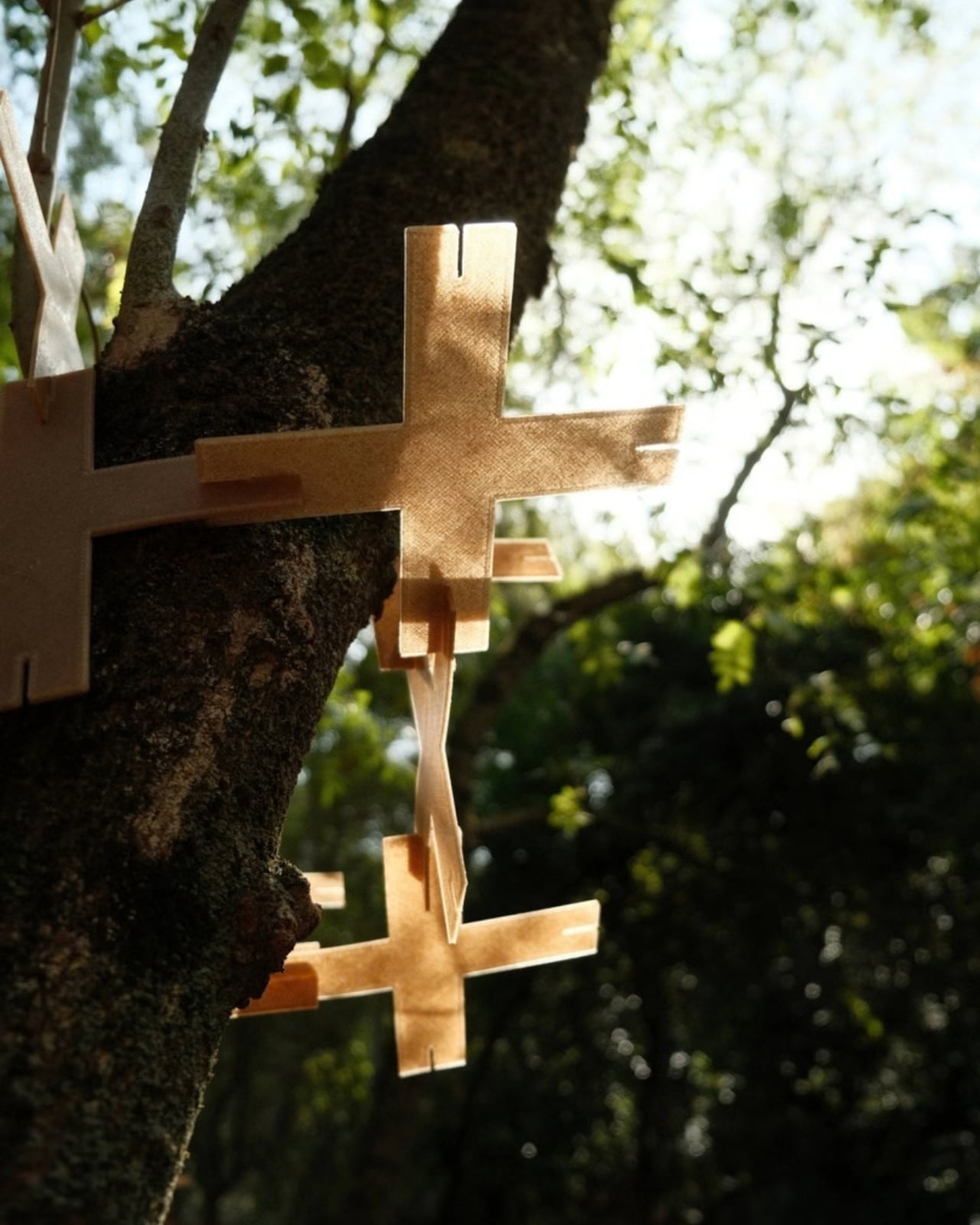
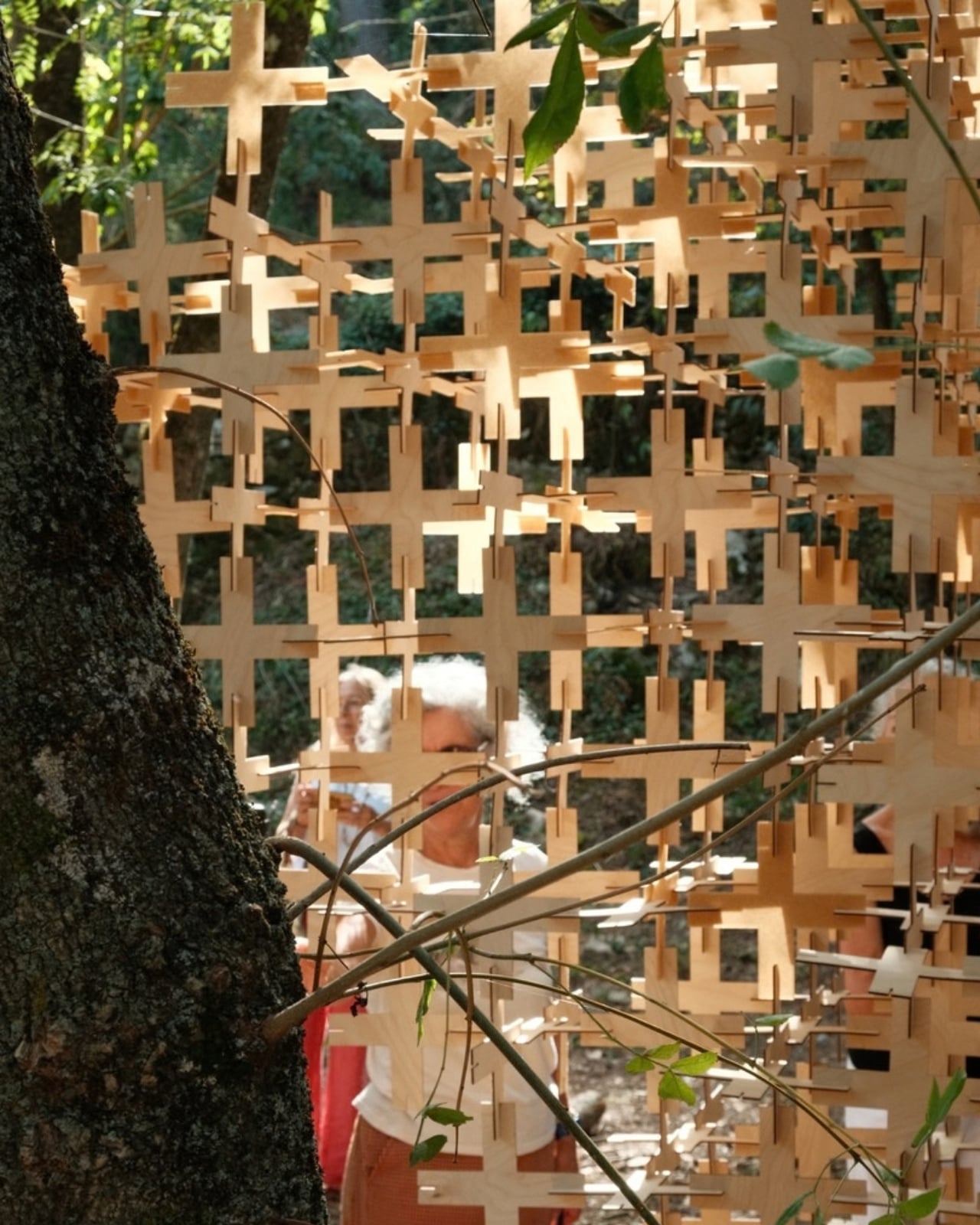
Atelier DARN’s answer is a pavilion made from wood and roughly 700 modular pieces 3D-printed with a biodegradable filament derived from miscanthus, a grass. The pieces interlock, so the structure needs no glue or rope to hold its woven form together. The design also avoids synthetic materials in its assembly. Those decisions address a practical problem: how to make a temporary place without relying on permanent bonds that complicate what happens when it comes apart.
Designer: Atelier DARN
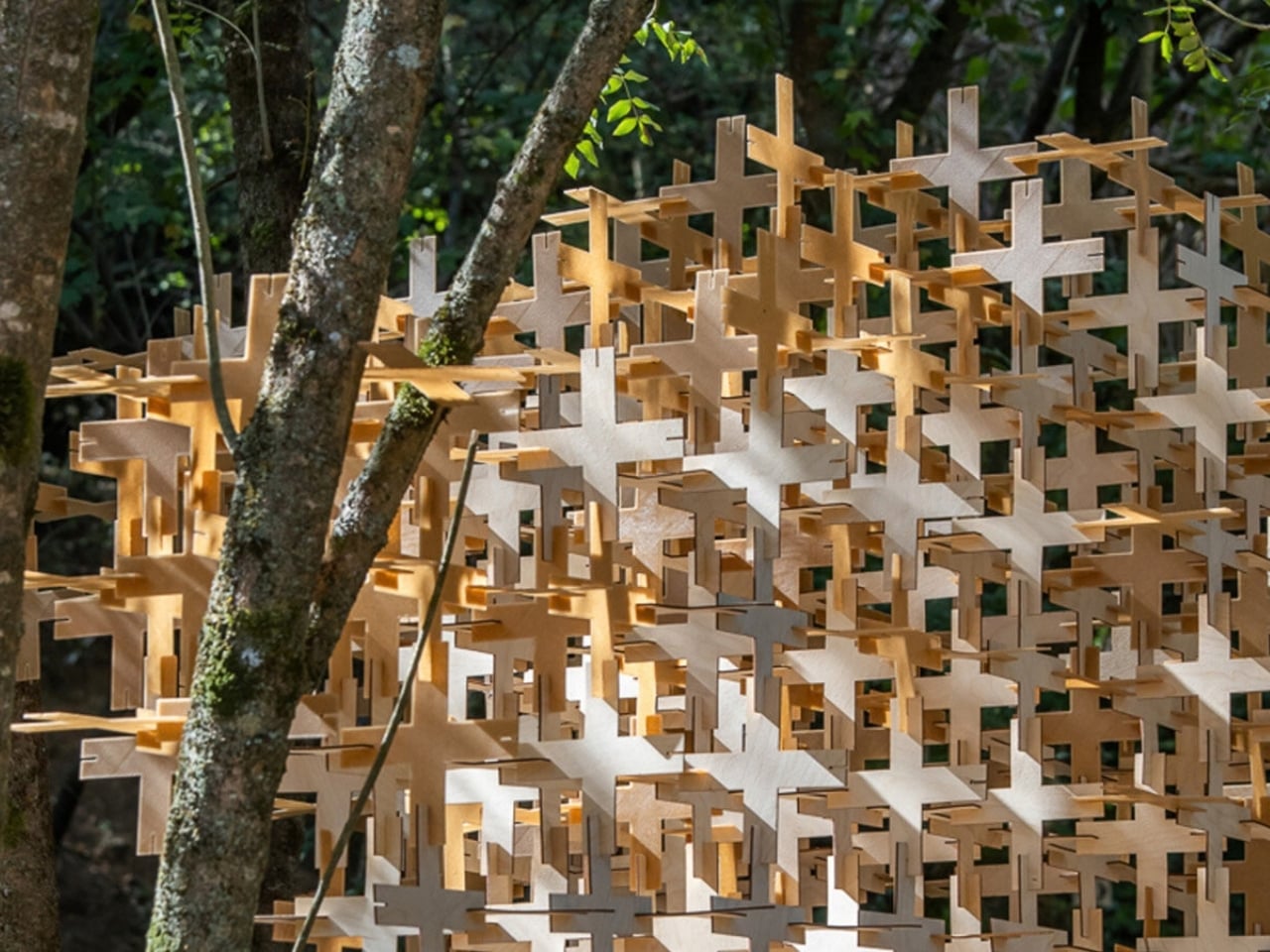
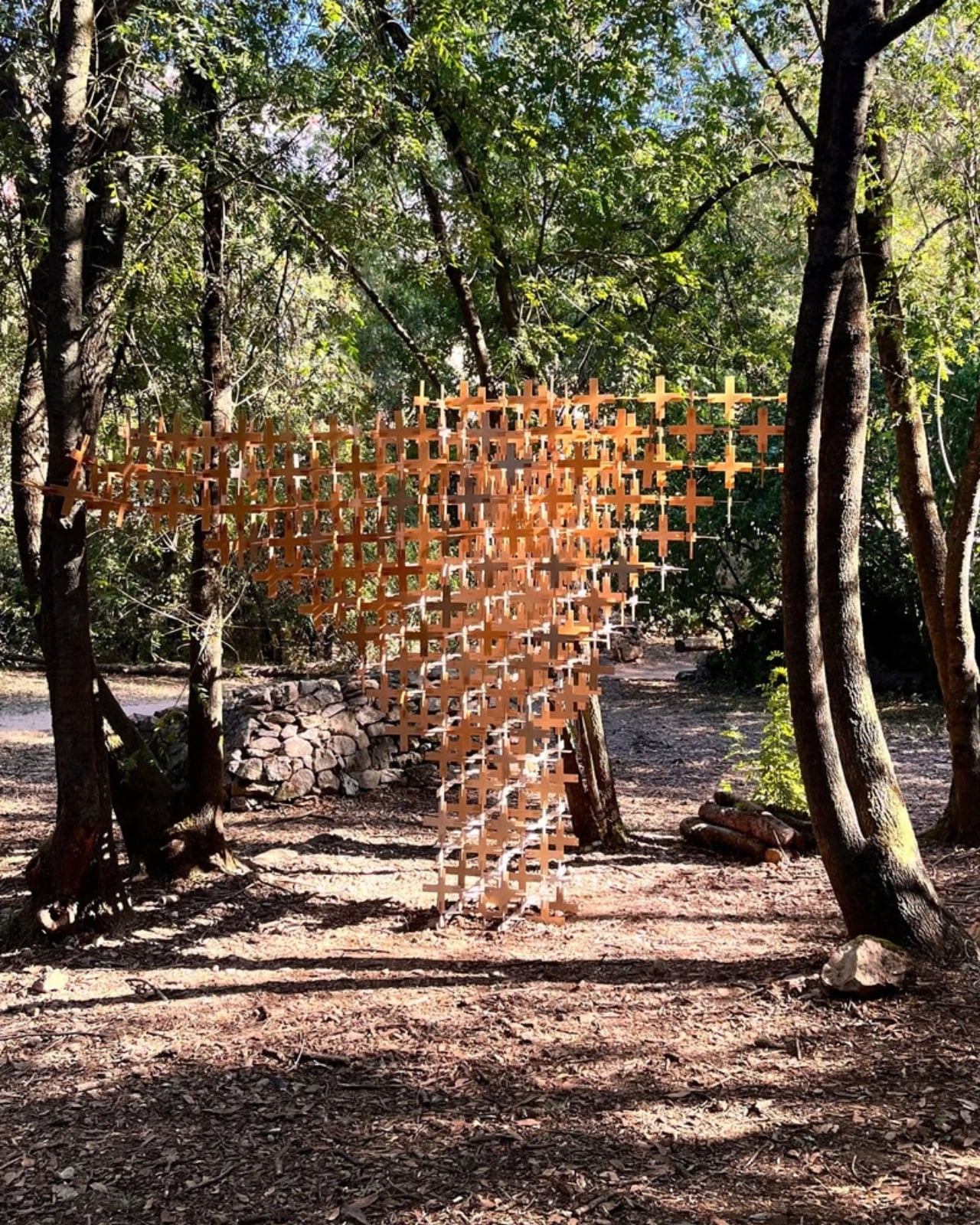

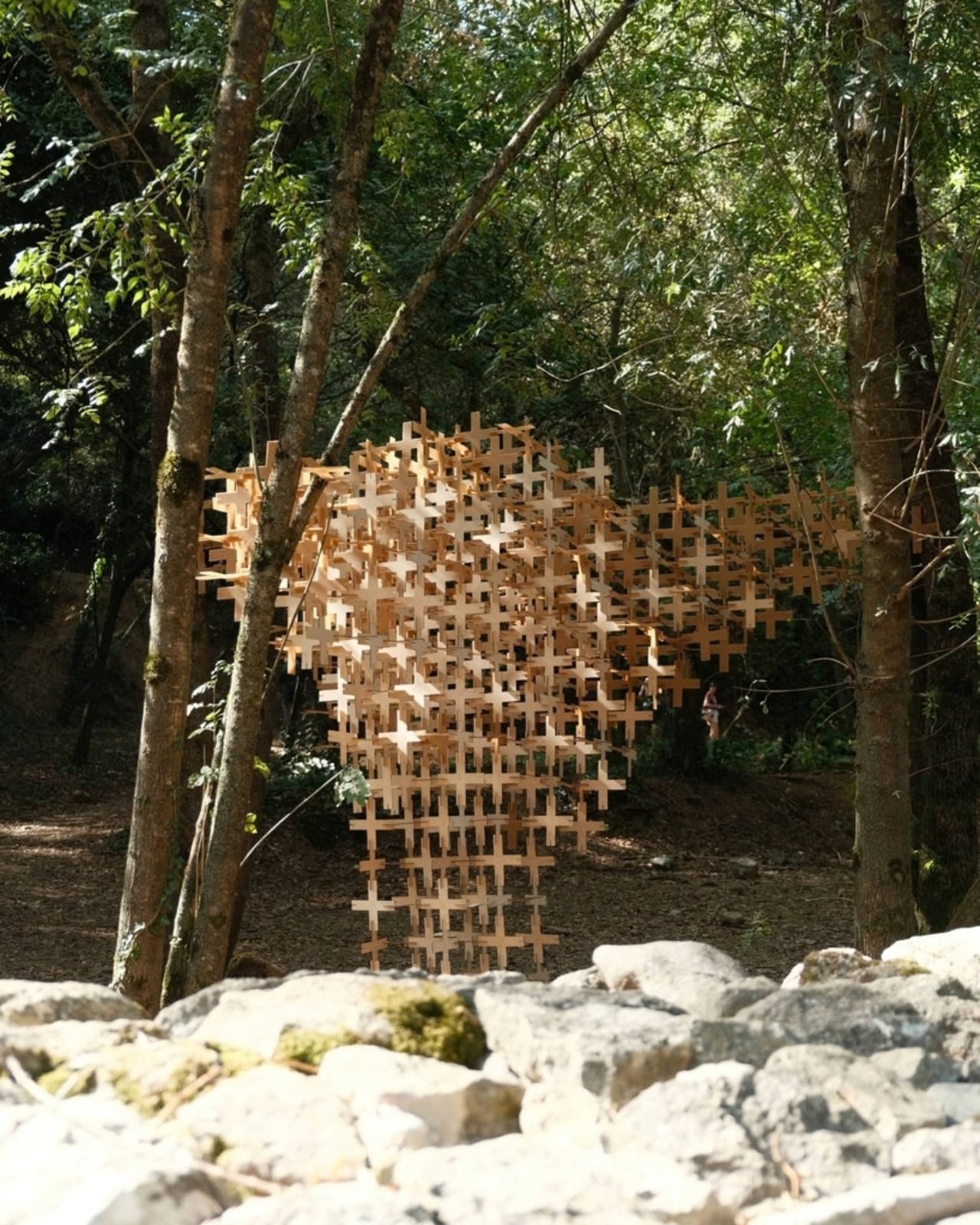
I like that Woven doesn’t appear to apologize for being temporary. Its open pattern climbs from the forest floor toward the trees, looking less like a sealed-off destination than a loose conversation with the landscape. You can see the individual pieces doing their work. That visibility matters. A lot of sustainable design asks us to trust an invisible calculation, but here the construction method is part of what you experience. The pavilion lets its joints make the argument.
The 3D printing is interesting for the same reason. It isn’t being used to produce an impossibly smooth shape that could only have come from a machine. It helps make repeated, cross-shaped components that fit together to create a larger structure. The result pairs a digital fabrication process with a familiar idea: weaving. That combination feels more useful to me than treating new technology as a spectacle in its own right. The technology earns its place by solving a connection problem.
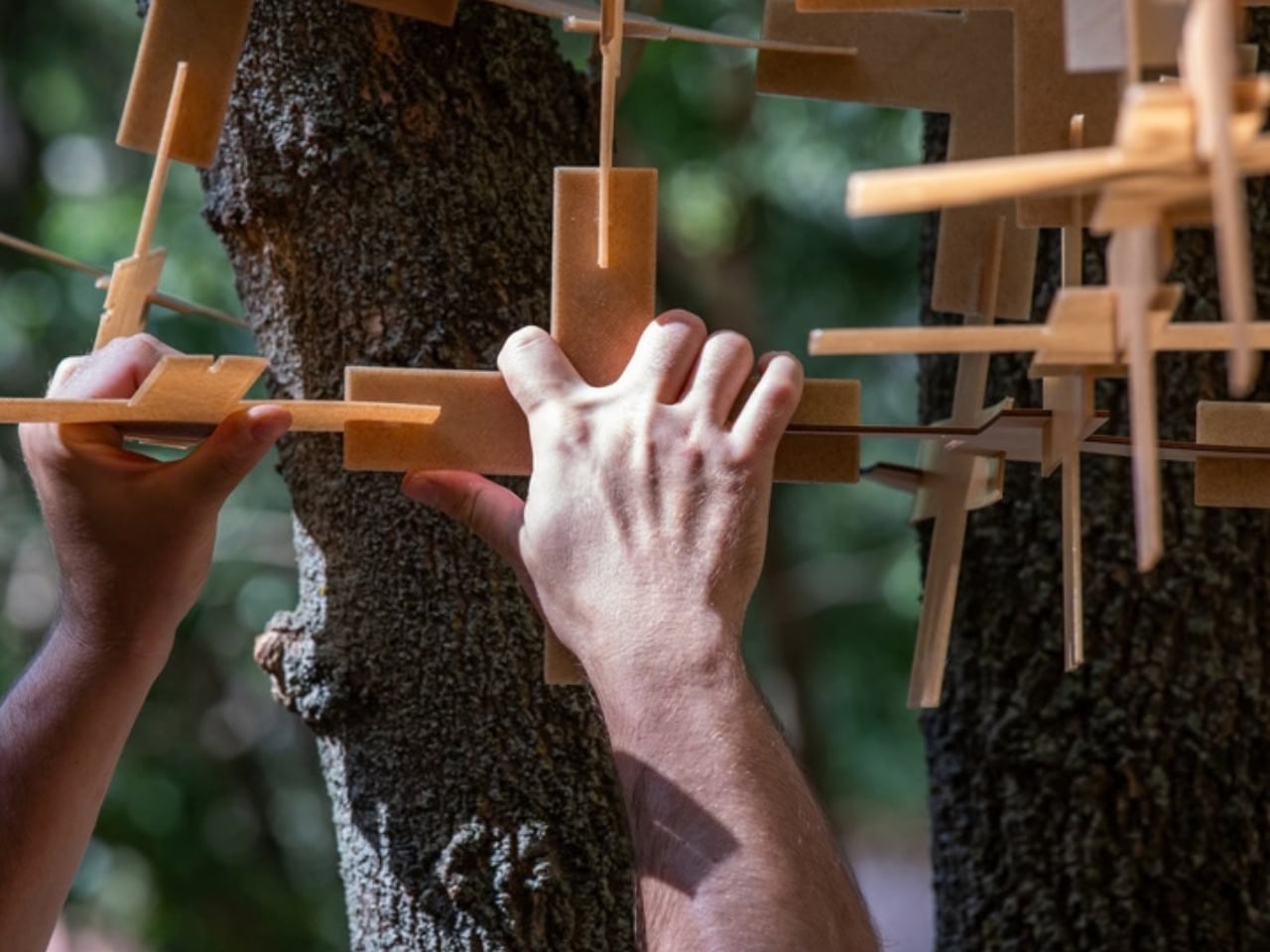
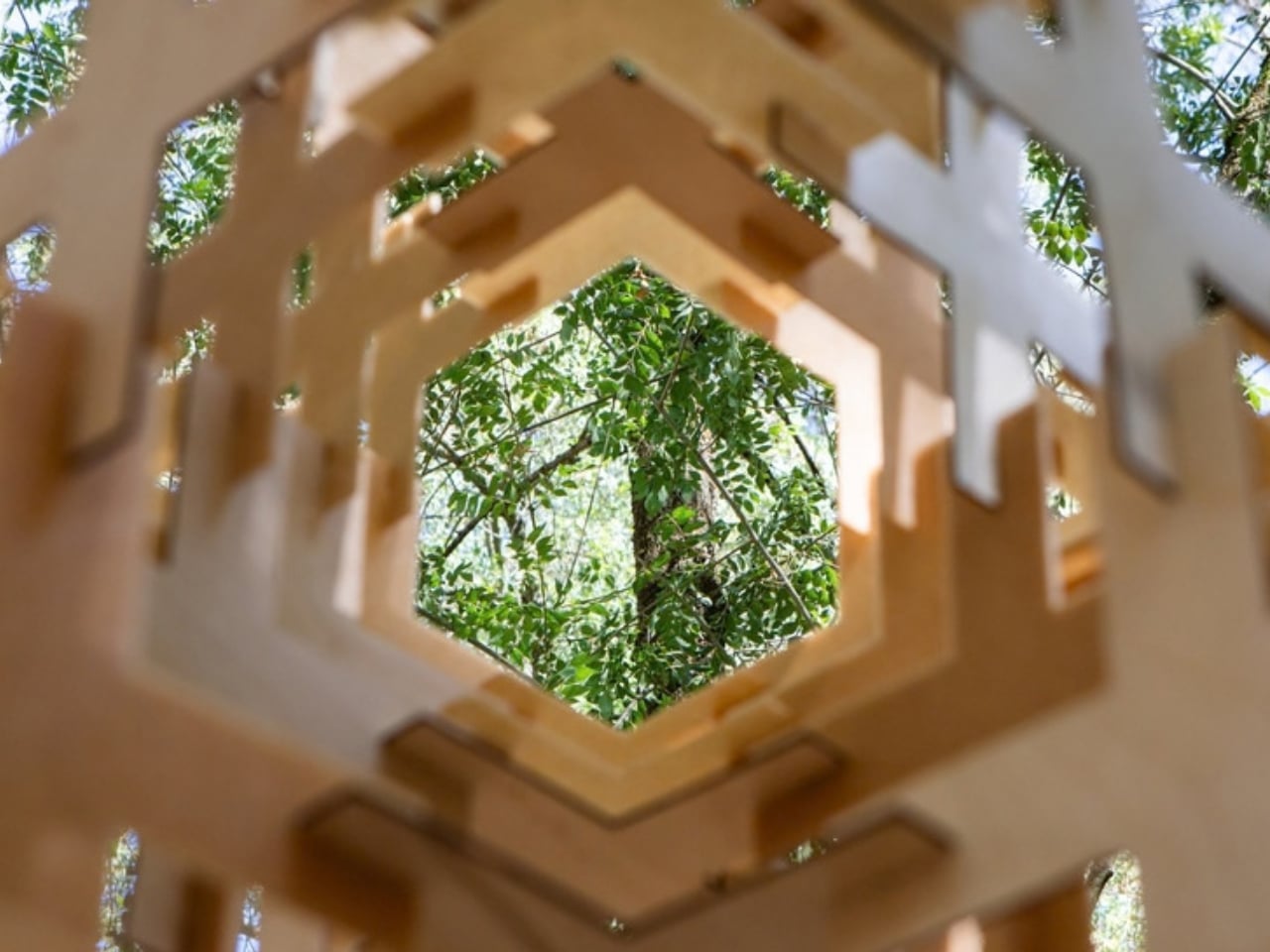
Woven is also meant to change. Weathering and decomposition are part of its intended life cycle, rather than signs that the design has failed. That is an unusually generous way to think about an outdoor structure. We often expect architecture to keep looking like its opening-day photographs, even when it was built to stay for only a short time. Here, the passing of time gets a role in the design instead of being edited out.
That doesn’t mean the word “biodegradable” answers every environmental question. How a material breaks down depends on its conditions, and a project’s full impact includes making the parts and deciding what happens to them afterward. Woven doesn’t need to be a perfect model of sustainability to be worth studying. Its more convincing contribution is narrower: it shows how material choice and the way pieces connect can be considered together, early enough to shape the design itself.
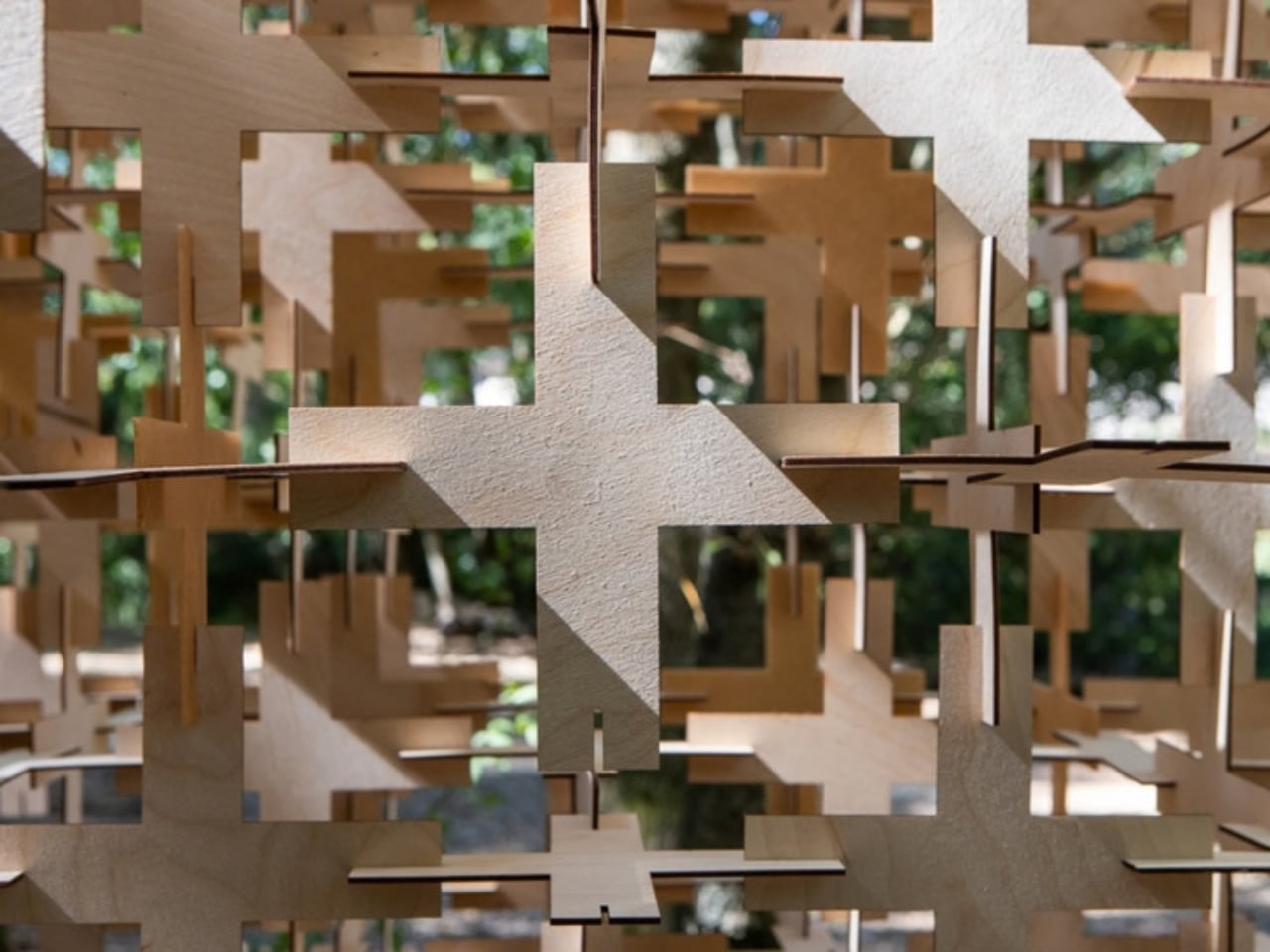
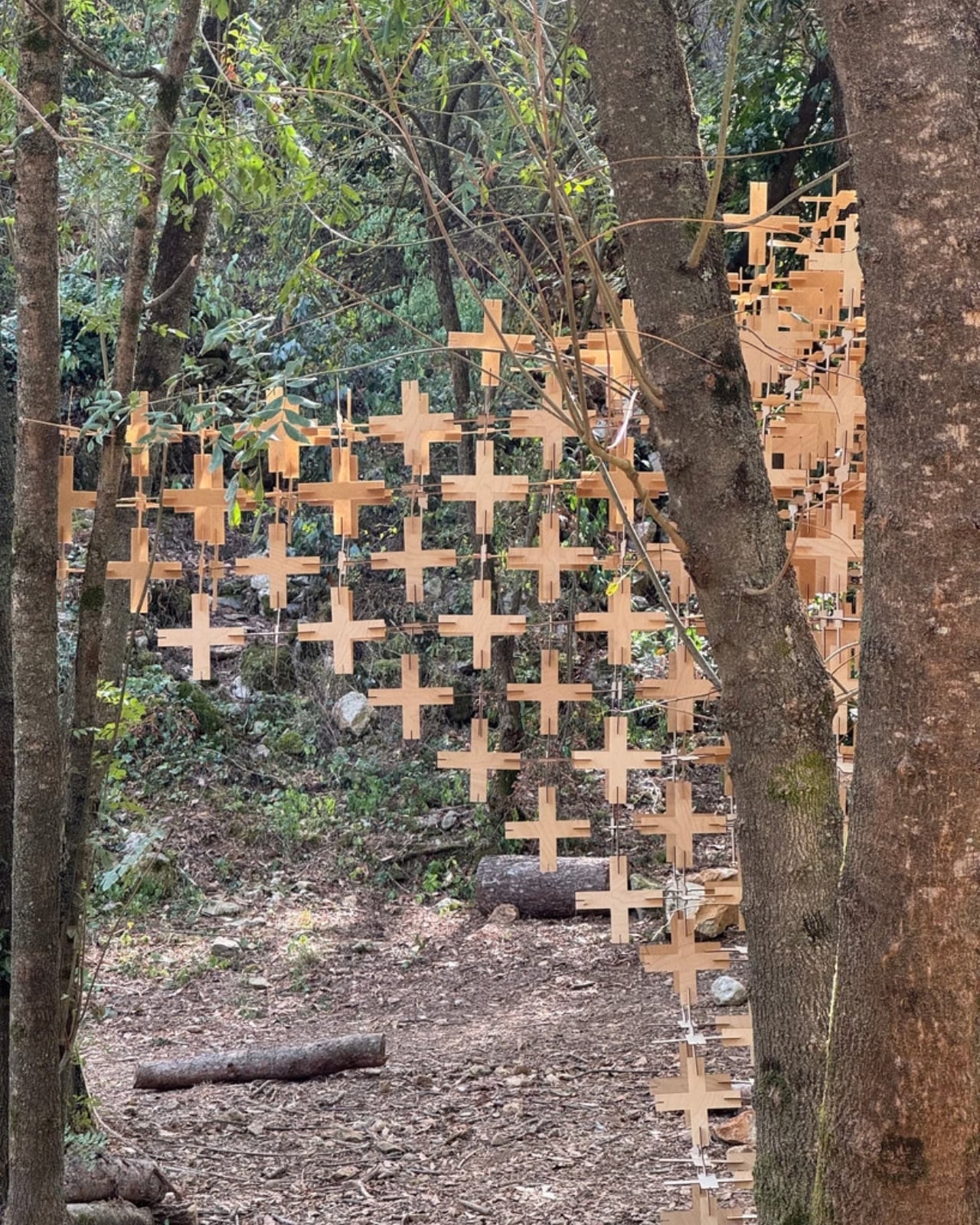
There is a welcome modesty to that approach. The pavilion isn’t asking a forest to serve as a dramatic backdrop for an alien-looking object. Its woven form leaves room for the surroundings to remain visible, while its modular construction gives the eye plenty to inspect up close. I’d want to walk around it slowly, partly to understand how it stays together and partly to see how the changing light alters its pattern. That sounds like a good reason to build a pavilion.
Not every temporary installation needs to disappear into its setting, of course. Some are supposed to be loud, strange, or confrontational. But Woven makes a persuasive case for another kind of ambition: designing a memorable experience without pretending the object must last forever. Its details are compelling precisely because they take a future dismantling or decline seriously. The question shifts from “How do we make this stay?” to “What are we leaving behind when it doesn’t?”
That question reaches well beyond experimental architecture. Pop-ups, exhibitions, and brand installations all have a life after the crowd goes home, whether or not anyone wants to photograph it. Woven cannot solve that larger problem by itself. What it offers is a more honest starting point. If a structure is made for a brief encounter, its departure deserves as much thought as its arrival. For a pavilion in the woods, that feels like the right measure of good design.