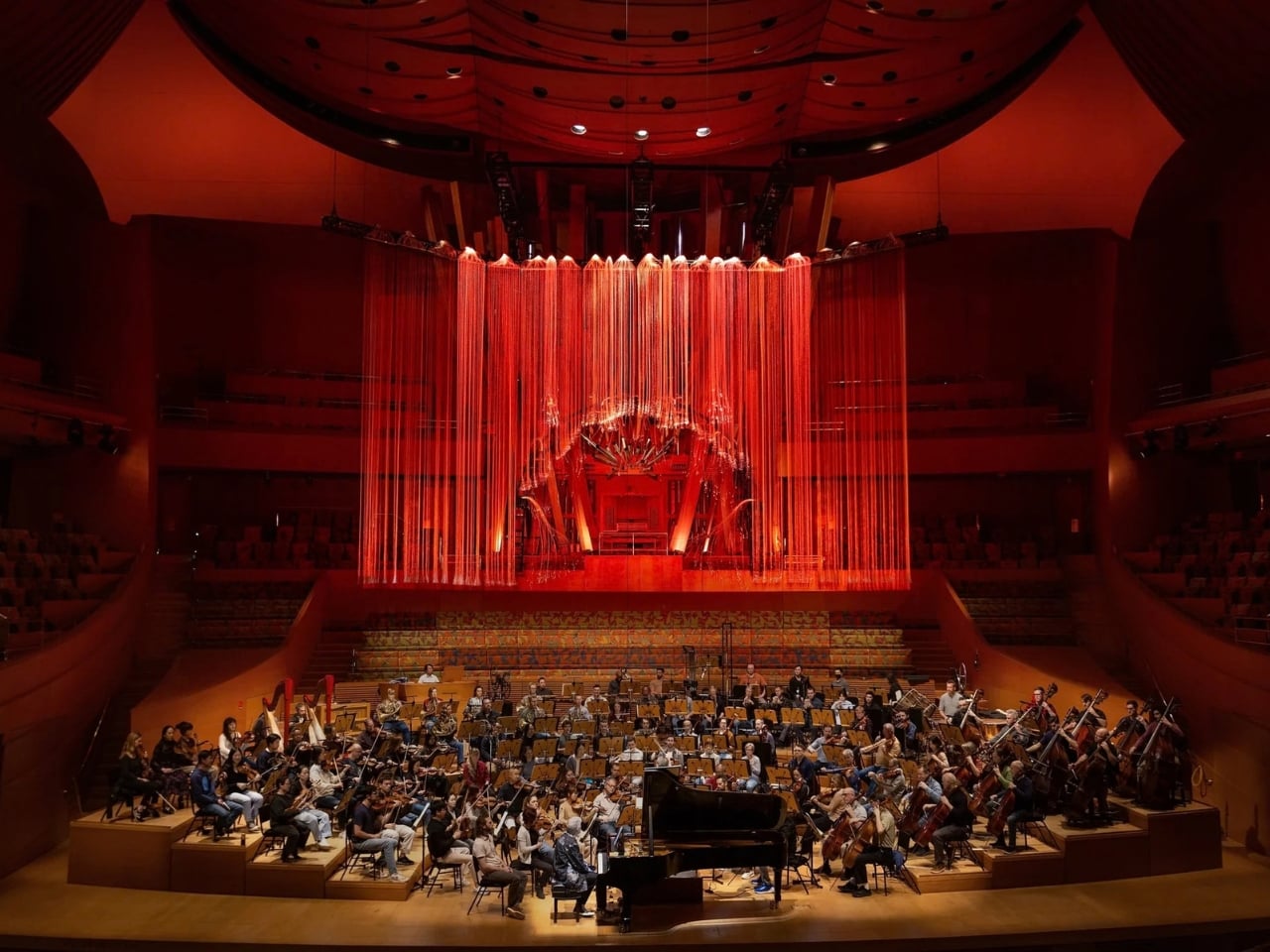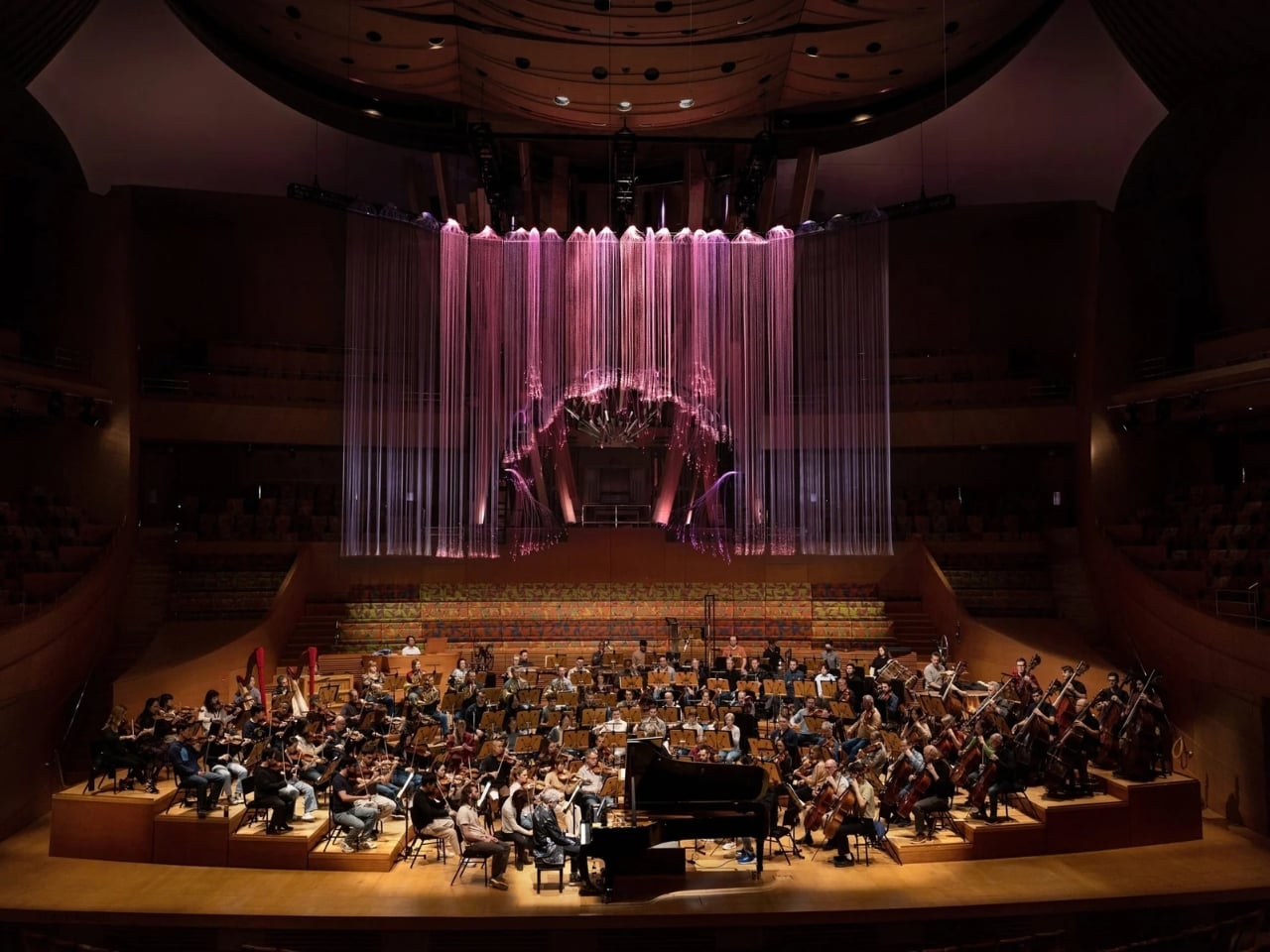

An orchestra can fill a room with sound, yet the experience of that sound is mostly invisible. For someone curious about live classical music, a screen might seem like the obvious way to make a performance feel more immediate. But projected images can also pull attention away from the musicians. Grimanesa Amorós’s Radiance offers a more interesting answer: let the room itself help tell the story.
Commissioned by the Los Angeles Philharmonic, the light sculpture was created for performances of Alexander Scriabin’s Prometheus: The Poem of Fire at Walt Disney Concert Hall. It hung above the orchestra while a programmed sequence of colors unfolded with the music. Amorós also coordinated the hall’s existing lights with the sculpture, so the effect reached beyond the stage and into the audience’s surroundings.
Designer: Grimanesa Amorós
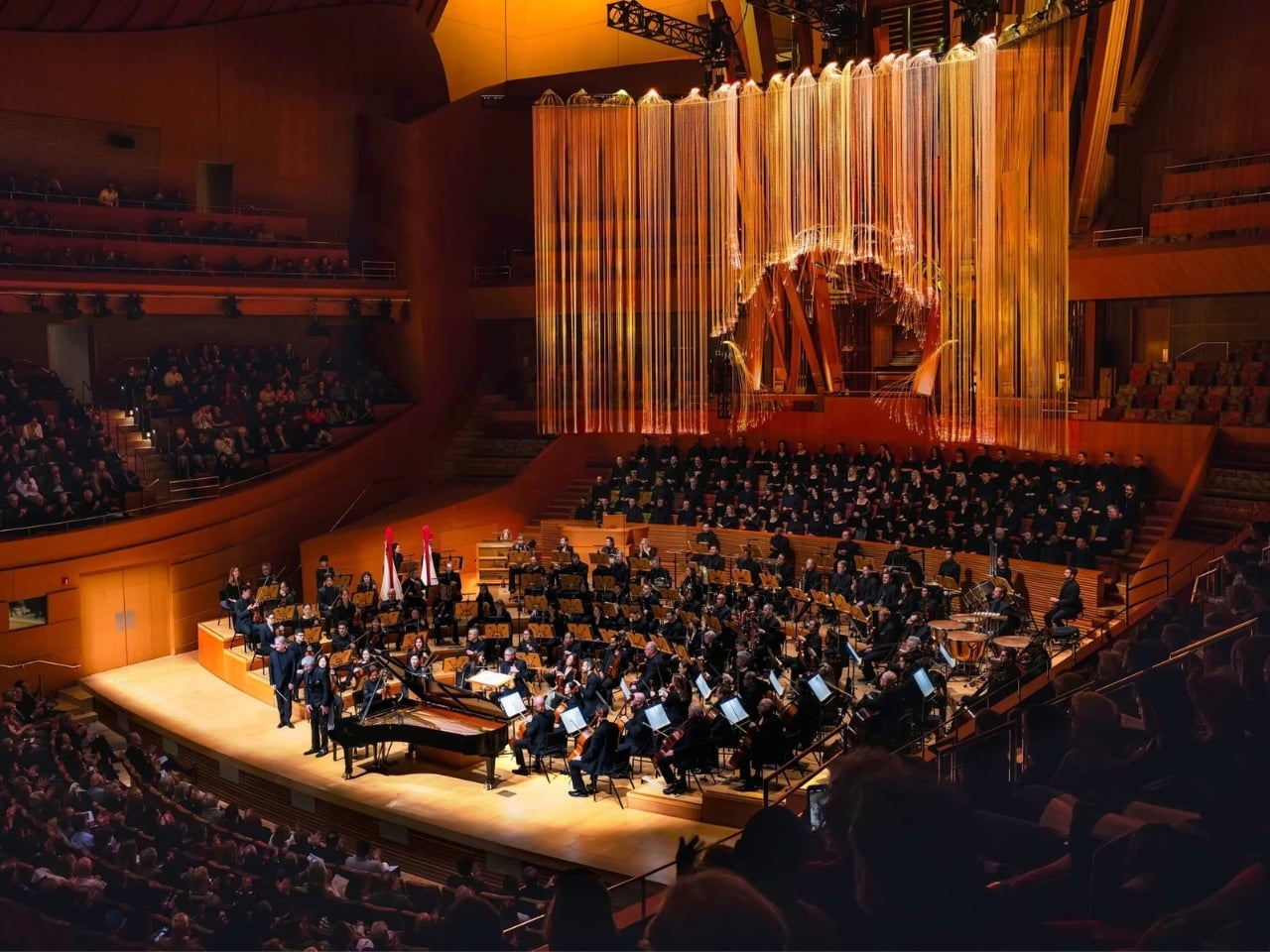
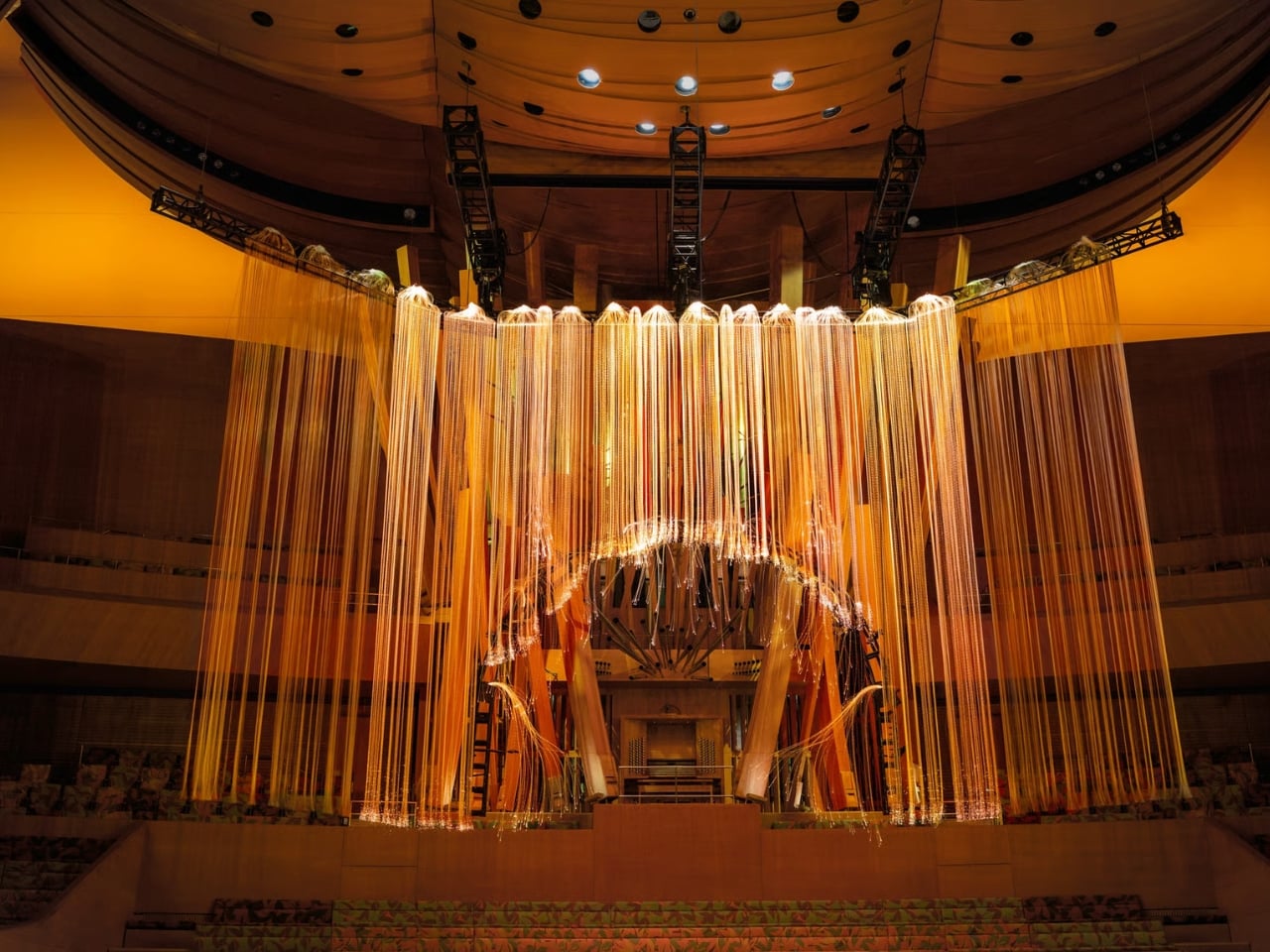
At 60 feet long and 35 feet wide, Radiance has the scale to command a room. It is made with reflective material and rope-like LED tubing that changes color. Those practical details matter because this is not a video pretending to be a physical object. The light occupies real space above real musicians, and its shifting glow can change how the hall feels without replacing the performance at its center.
The sequence was planned second by second around the orchestra, with six major synchronized moments. I like that distinction. A lighting effect that reacts to every beat could easily become a demonstration of clever technology. Here, the programming is closer to staging: deliberate enough to give a musical passage a visual shape, but not so busy that it asks the audience to watch for the next trick.
Fire is the work’s starting point, which makes sense beside a piece called Prometheus. Amorós draws on both the Greek figure who gave fire to humanity and Viracocha, an Incan creator deity. That could have led to a very literal display of flames. Instead, Radiance treats fire as an idea that can move through color, intensity and space. Its subject is transformation, not an illustration of a myth.
That choice gives the installation room to breathe. A red glow above the orchestra can feel urgent; amber spreading across the sculpture, stage and seating can feel warmer and more expansive. Neither color needs to tell viewers precisely what the music means. The visual experience can accompany the sound while leaving people free to make their own connections, which is more generous than spelling out every emotion for them.
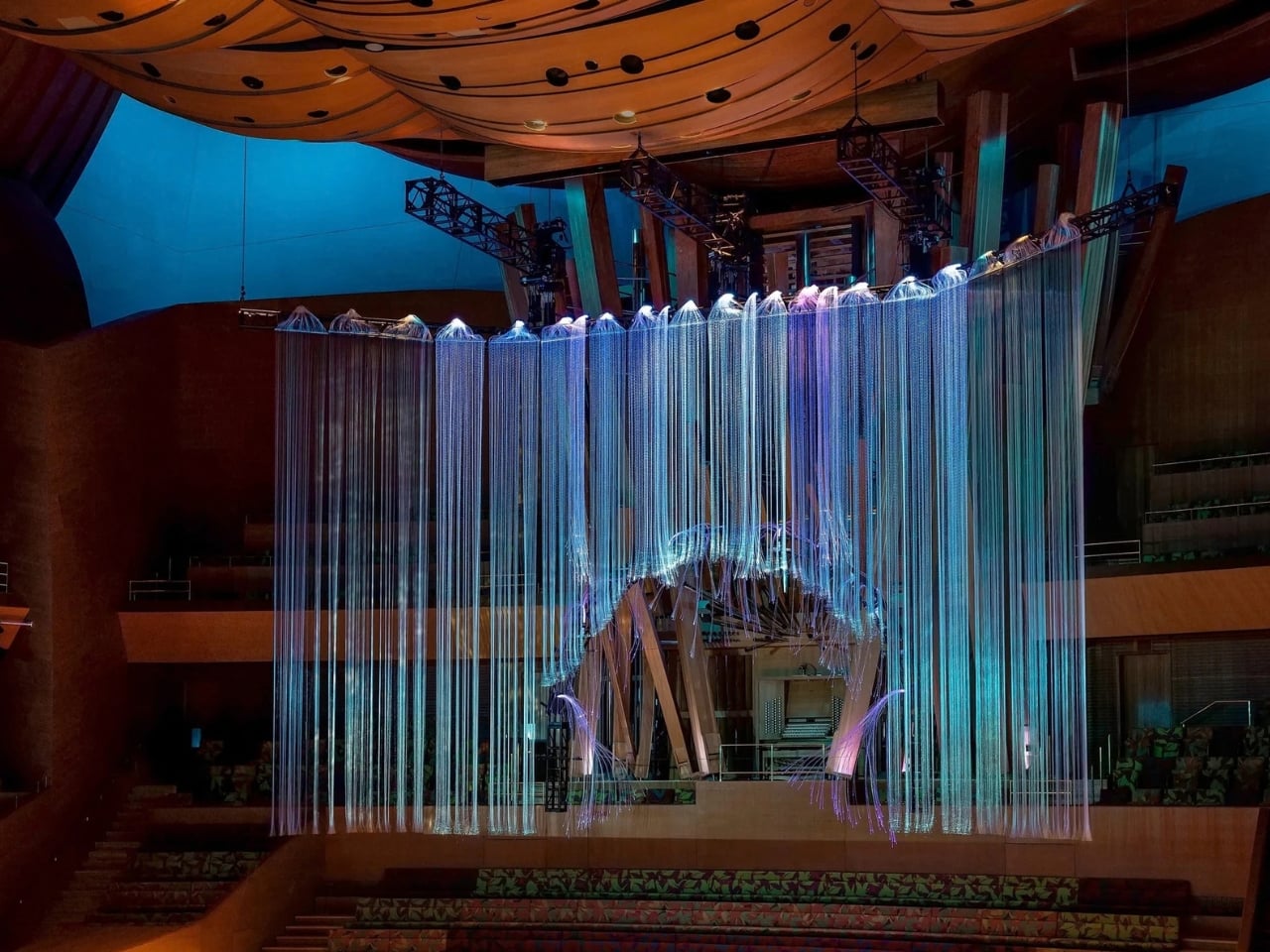
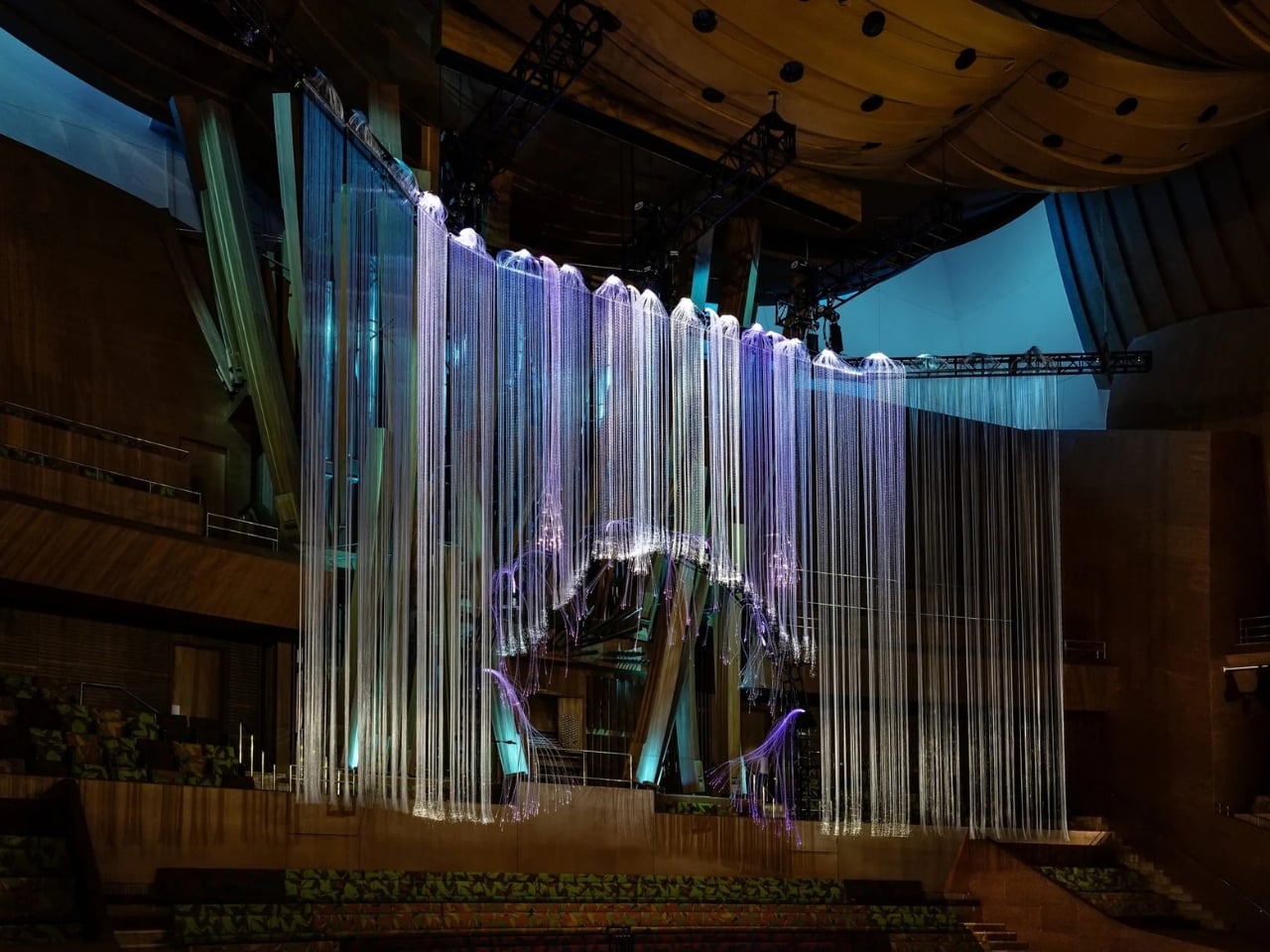
Walt Disney Concert Hall is hardly a blank canvas. Its interior already gives a performance a strong visual setting. Rather than treating that architecture as a backdrop, Amorós made the house lighting part of the same sequence as the sculpture. That feels like the smartest design move here. If the room changes with the music, the audience is included in the experience instead of simply looking up at an object.
It is tempting to describe a project like this as a concert crossed with a light show, but that sells both halves short. The appeal is not that classical music has been dressed up to compete with a pop spectacle. It is that visual design can make an existing performance feel more accessible without demanding a new set of habits from the listener. You can follow the colors closely or let them register at the edges of your attention.
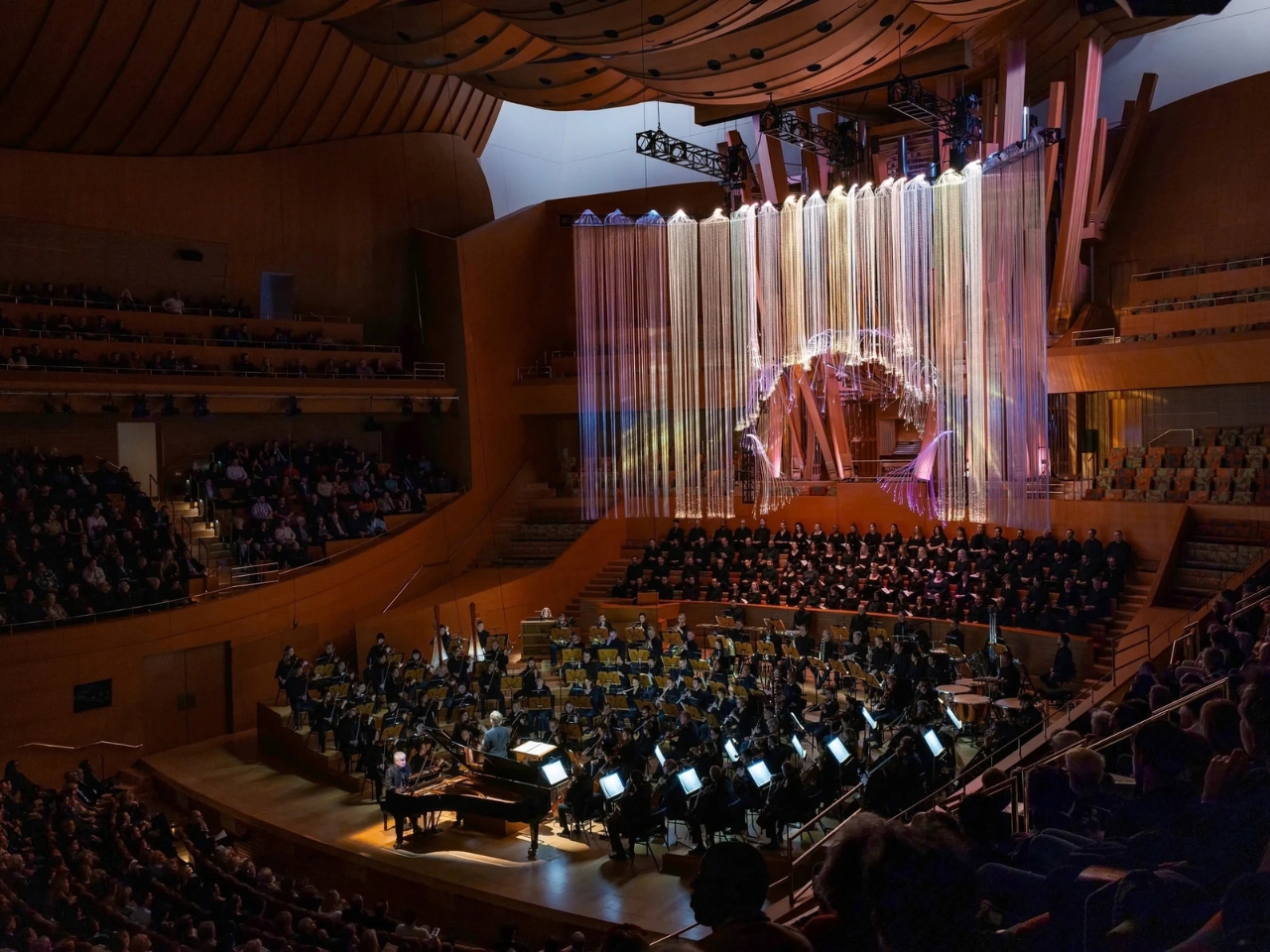
There is a risk with any large-scale installation that the photographs become the main event. Radiance certainly photographs well, especially when its strands glow against the hall’s interior. But its real purpose depended on timing, sound and the shared experience of sitting in the room. Presented across three performances, it was made for a particular encounter rather than an endlessly repeatable display.
That is why Radiance stays with me as a design idea. It does not try to explain Scriabin’s music or promise that light can replace listening. It addresses a smaller, more human problem: how to help an audience feel connected to something they cannot see. By giving the music a presence overhead and around the seats, Amorós made the concert hall feel less like a container for a performance and more like part of it.