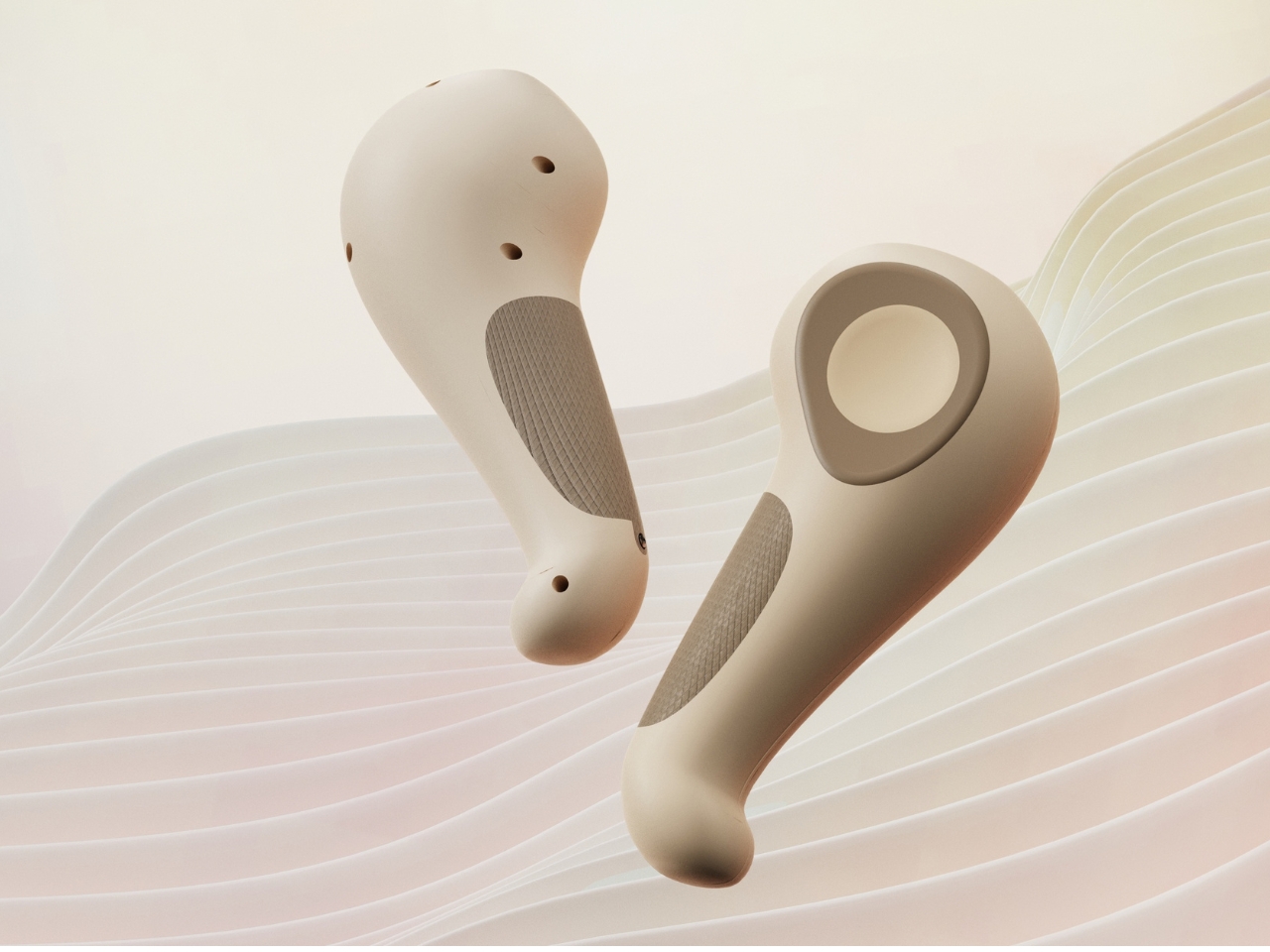

Most gaming controllers are built for an idea of a hand, not an actual one. They’re symmetrical, boxy, covered in ridges meant to accommodate everyone equally, which usually means they fit no one particularly well. After a few hours, your palms cramp, your thumbs ache, and if you’ve been playing anything remotely intense, your grip starts sliding around from sweat. It’s a problem the industry has mostly solved by adding more buttons rather than rethinking the shape itself.
Designer Jiayi Wu’s concept, PALMIO, starts from a different question entirely: what if the controller was shaped around the hand instead of the other way around? The result looks less like a gamepad and more like a smooth stone or a teardrop, something you’d pick up off a beach rather than off a store shelf. It’s a small shift in thinking that ends up changing almost everything about how the object reads.
Designer: Jiayi Wu
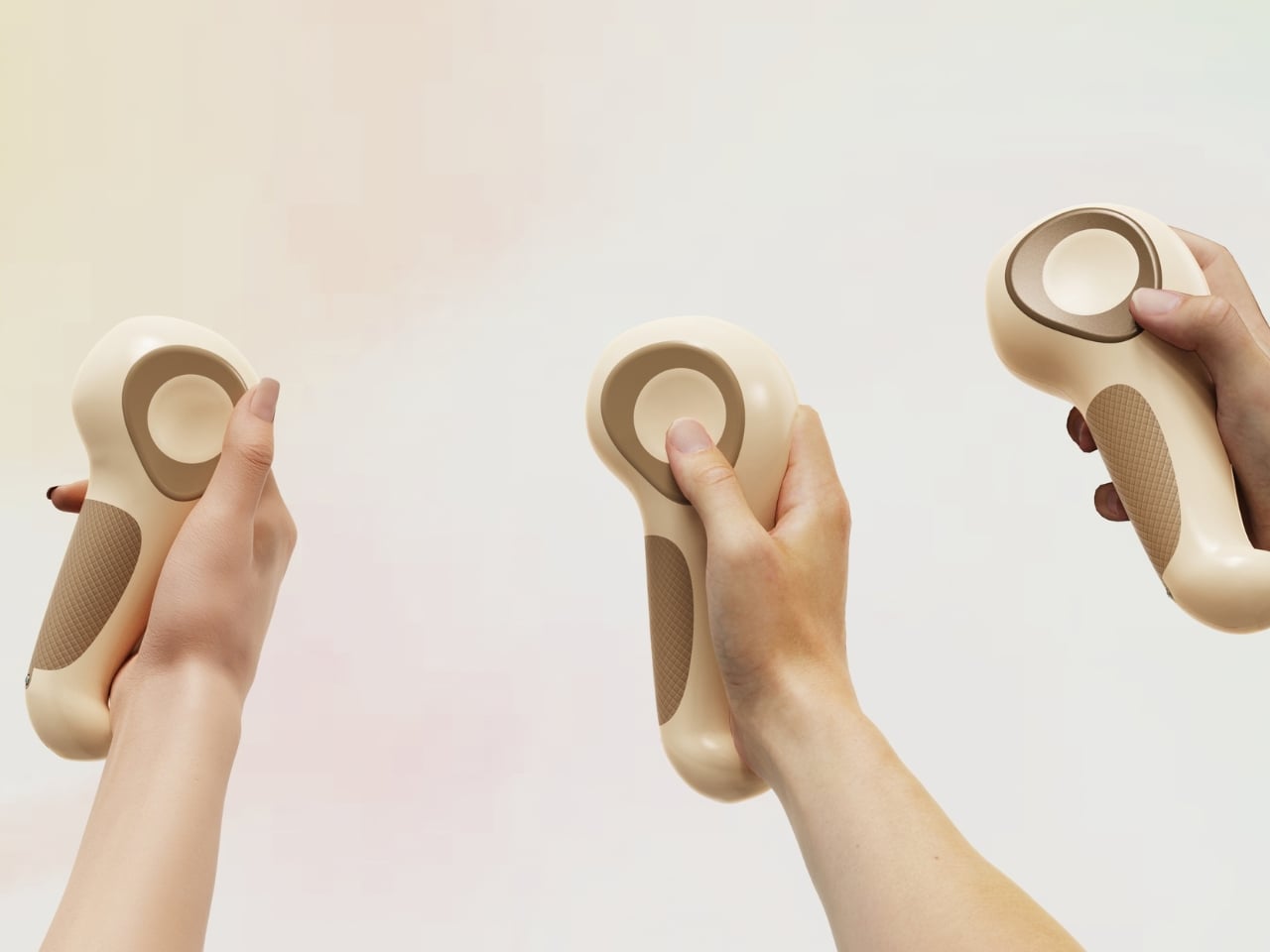
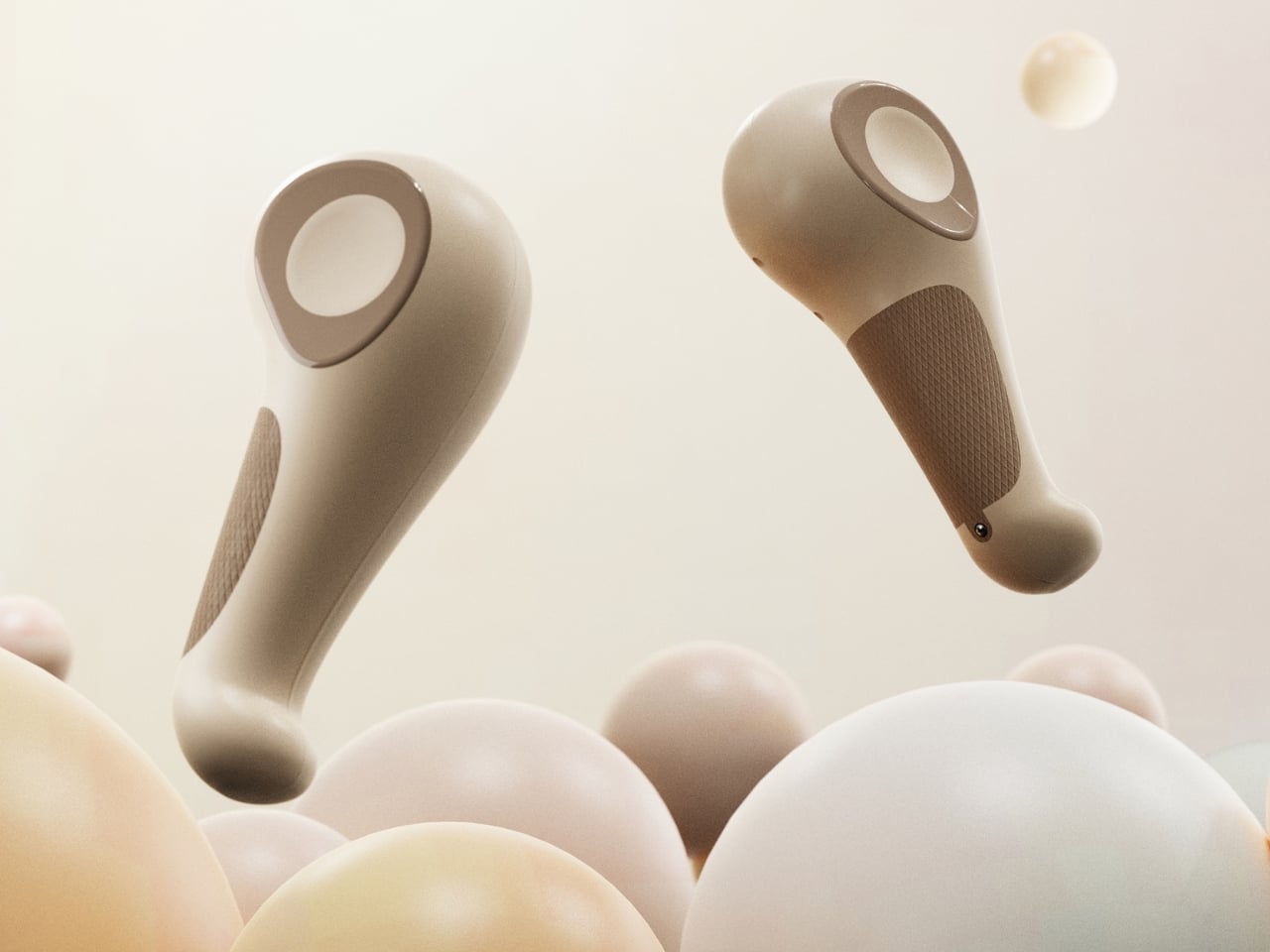
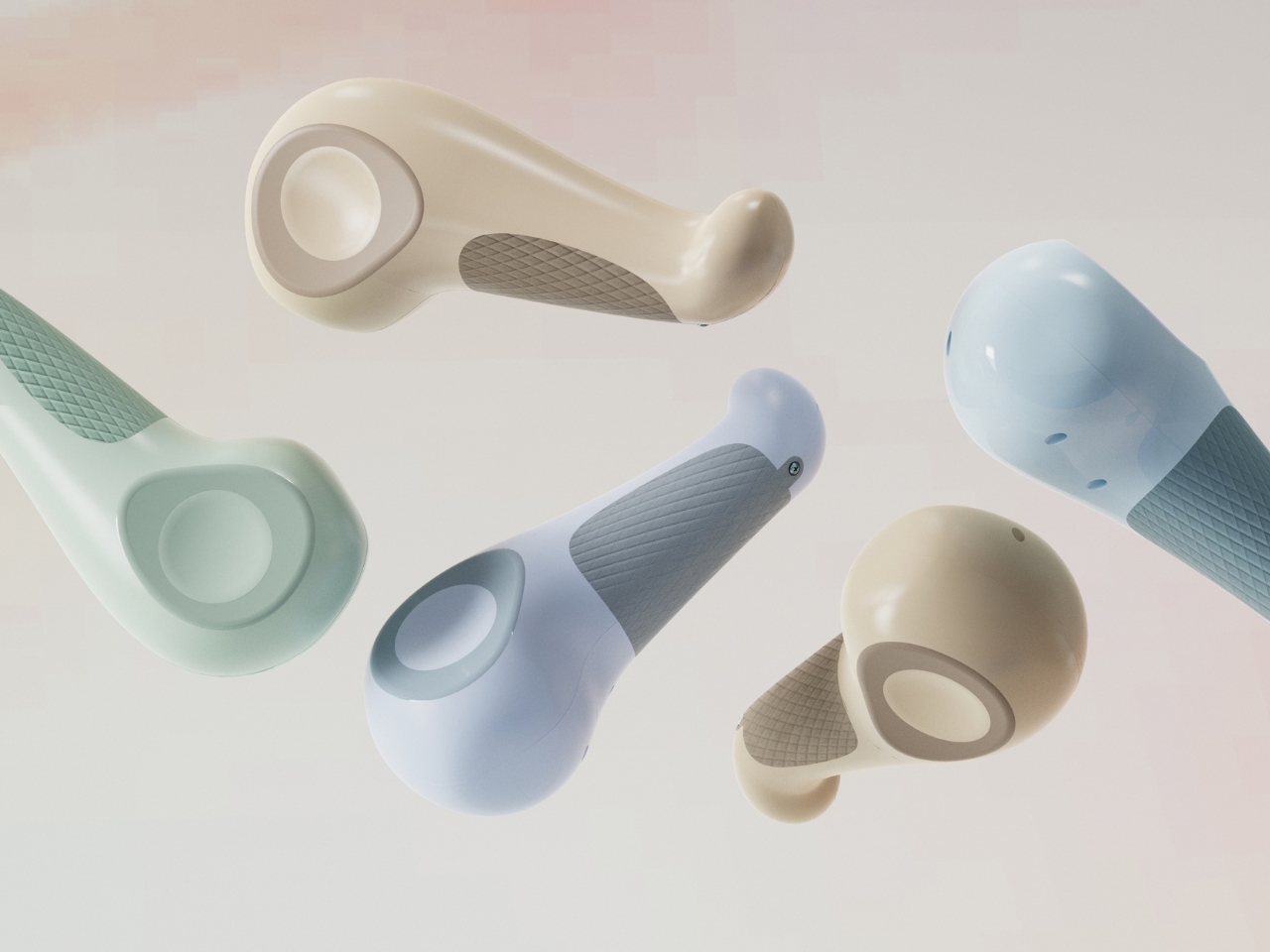
The body curves and tapers, wide at one end and narrowing into a grip that sits low in the palm. Rather than the usual two-handed symmetrical layout, PALMIO appears designed for one-handed use, closer in spirit to VR motion controllers than a traditional Xbox or PlayStation pad. That alone makes it feel less like an accessory and more like a tool you’d hold the way you’d hold a flashlight or a whisk, something with a clear front and back, a natural way in.
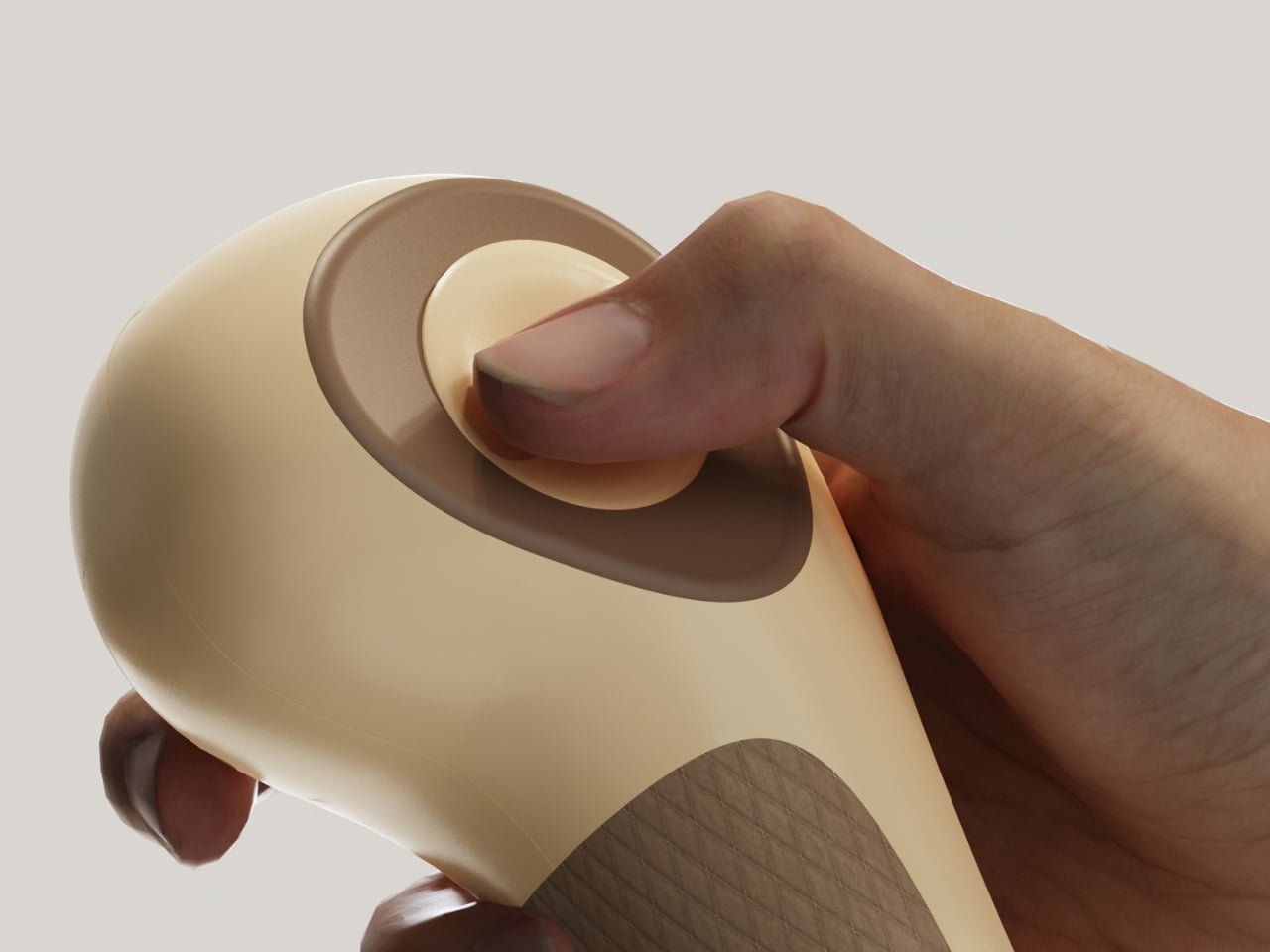
Sitting on top is an oversized circular thumb control, a ring with a raised center that dominates the upper half of the form. It’s an unusual choice to make one input the visual centerpiece of an entire product, but it works because it mirrors how your thumb naturally lands when you pick the thing up. You’re not hunting for a joystick buried among six other buttons. There’s one obvious place for your thumb to go, and the design just gets out of the way after that.
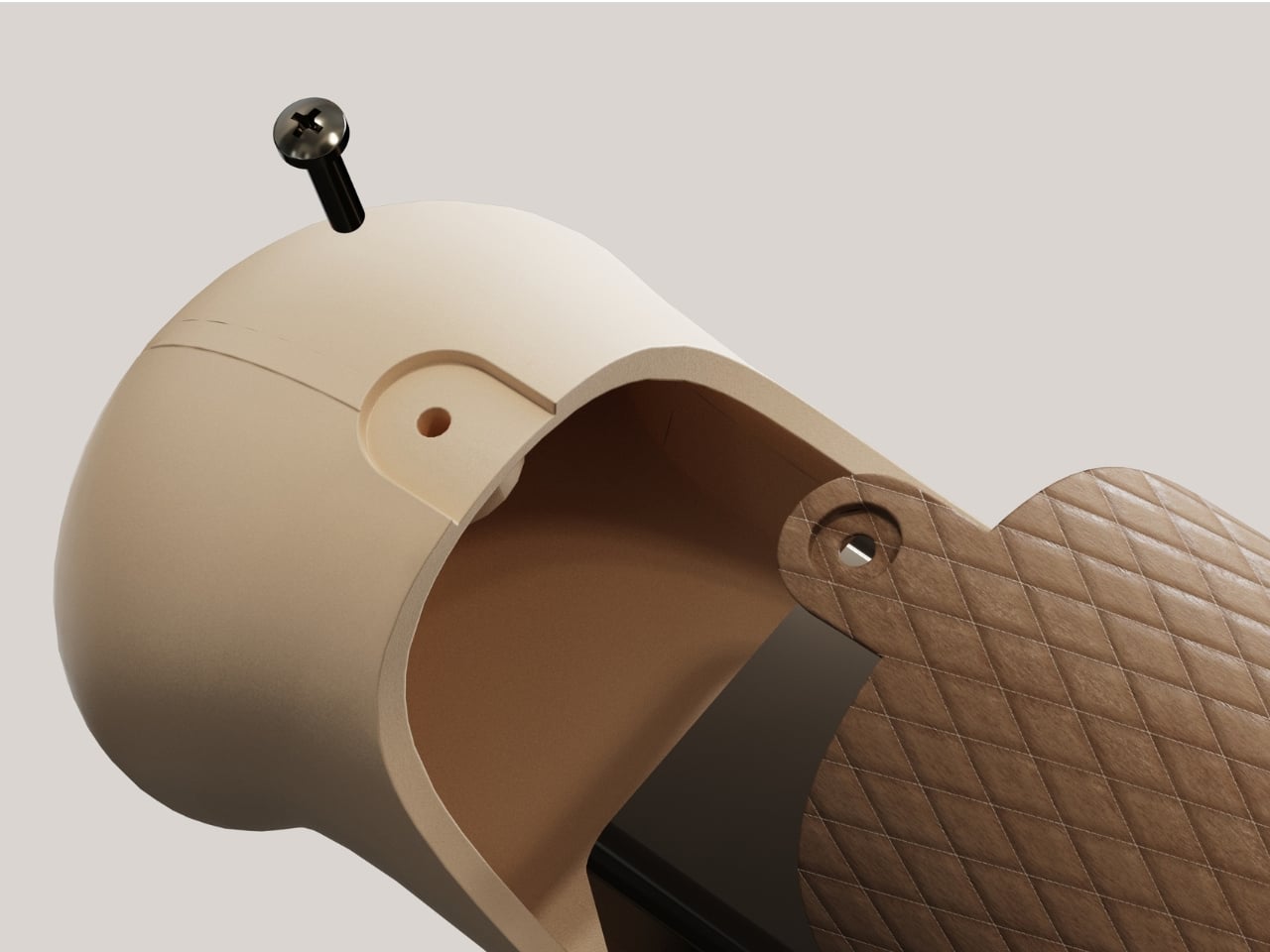
Where the grip meets the palm, a diamond-textured silicone panel breaks up the otherwise glossy shell. It’s a practical fix for slipping hands during a tense match, sure, but it also does something quieter: it tells you where to hold the controller without a single word of instruction. Your hand just goes there. That kind of tactile signage, using texture instead of labels or diagrams, is the sort of detail that separates a design exercise from a genuine product idea.
Then there’s the color story. Cream, sage green, powder blue. None of it screams “gamer” in the way we’ve come to expect from black shells with red accents and aggressive angles. I don’t think that’s an accident, and I don’t think it’s a bad instinct either. Gaming has quietly outgrown its own aesthetic stereotypes for years now, and hardware is only just catching up. A controller that looks like it belongs on a shelf next to a diffuser or a nice speaker isn’t a compromise. It’s an acknowledgment that the people playing games look nothing like the imagined teenager in a dark room that hardware design has been chasing for two decades.
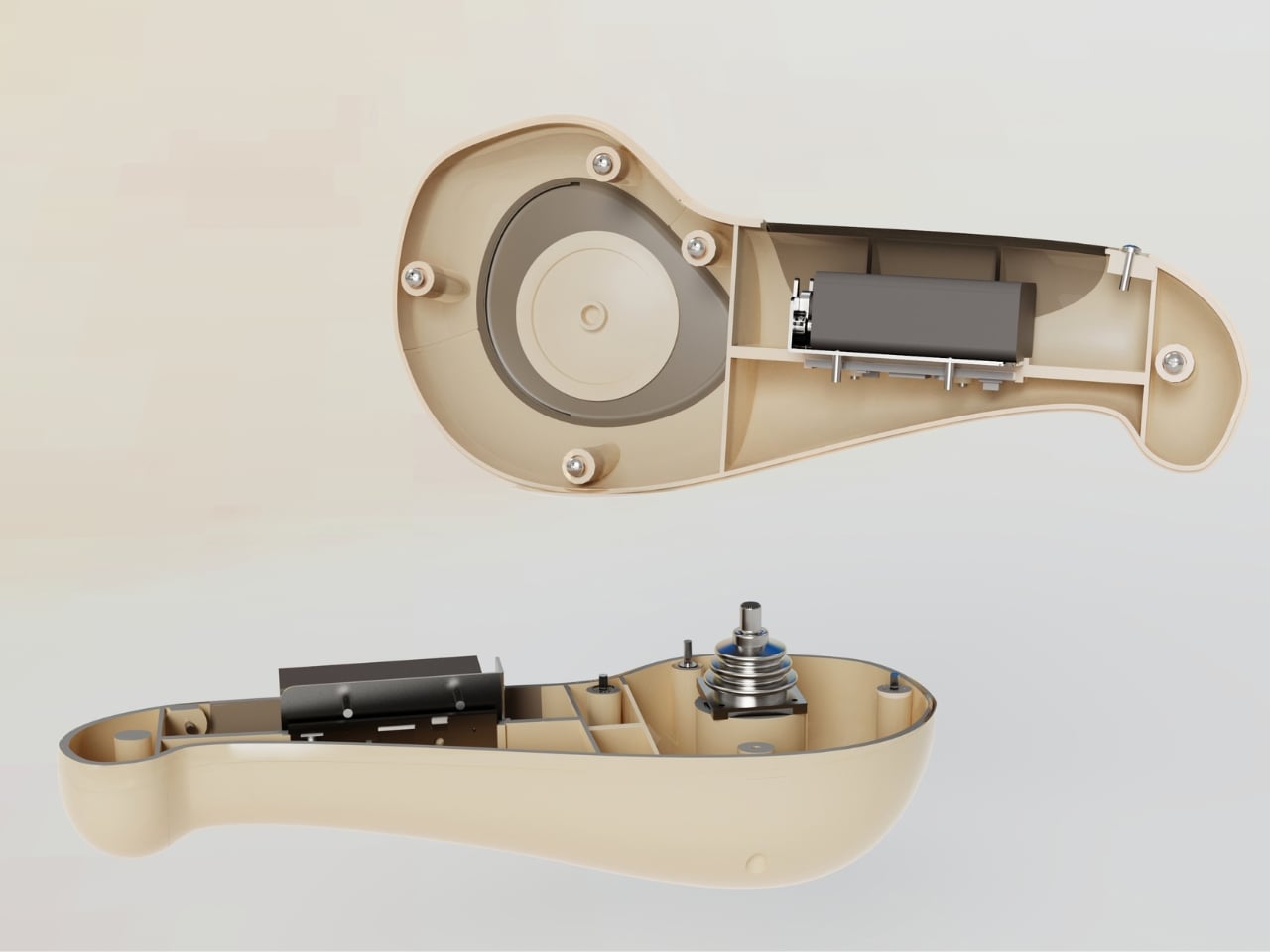
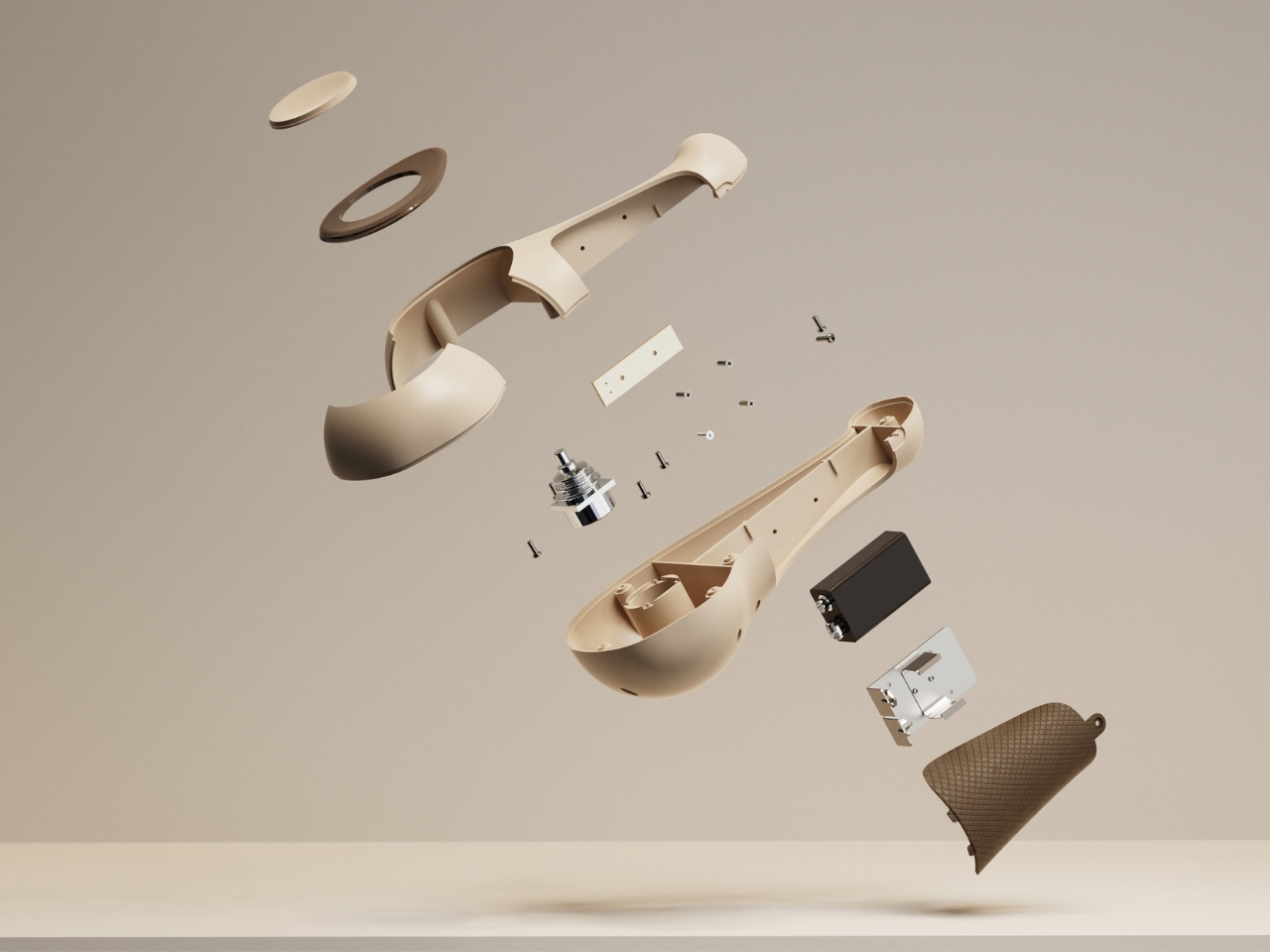
What keeps PALMIO from feeling like a pretty rendering with no substance behind it are the exploded and cutaway views Wu included. Screws holding the battery cover in place, a visible circuit board, a joystick mechanism nested into the shell. Someone thought about how this would actually be built, not just how it would look in a hero shot.
To be clear, PALMIO is a concept, built and visualized digitally, with no functional prototype yet. Comfort claims and control feel are still theoretical until someone actually holds one for an hour-long session. But the direction it points toward, gaming hardware that takes the human hand as seriously as it takes frame rates, is one worth paying attention to regardless of whether this exact object ever ships.