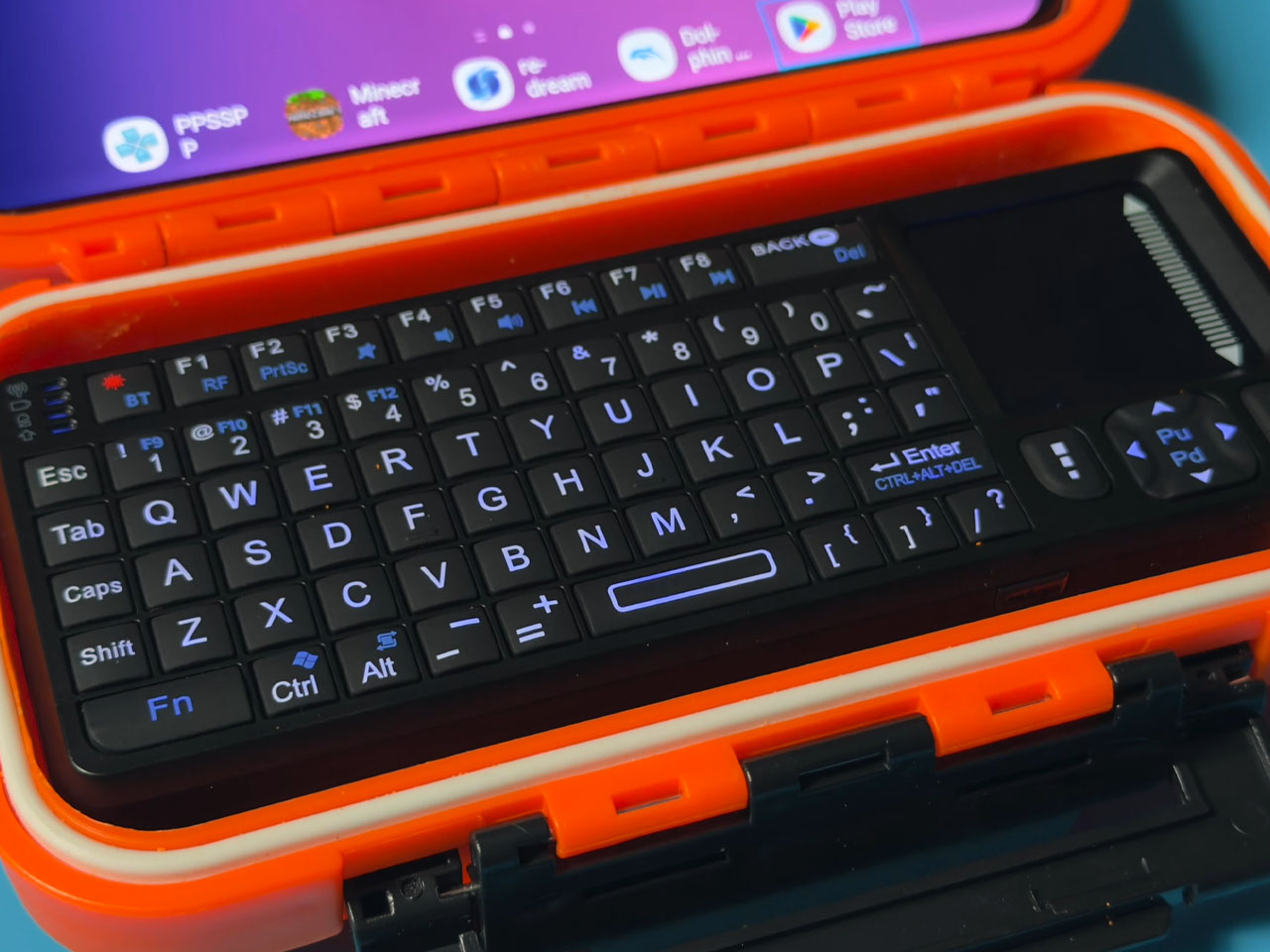
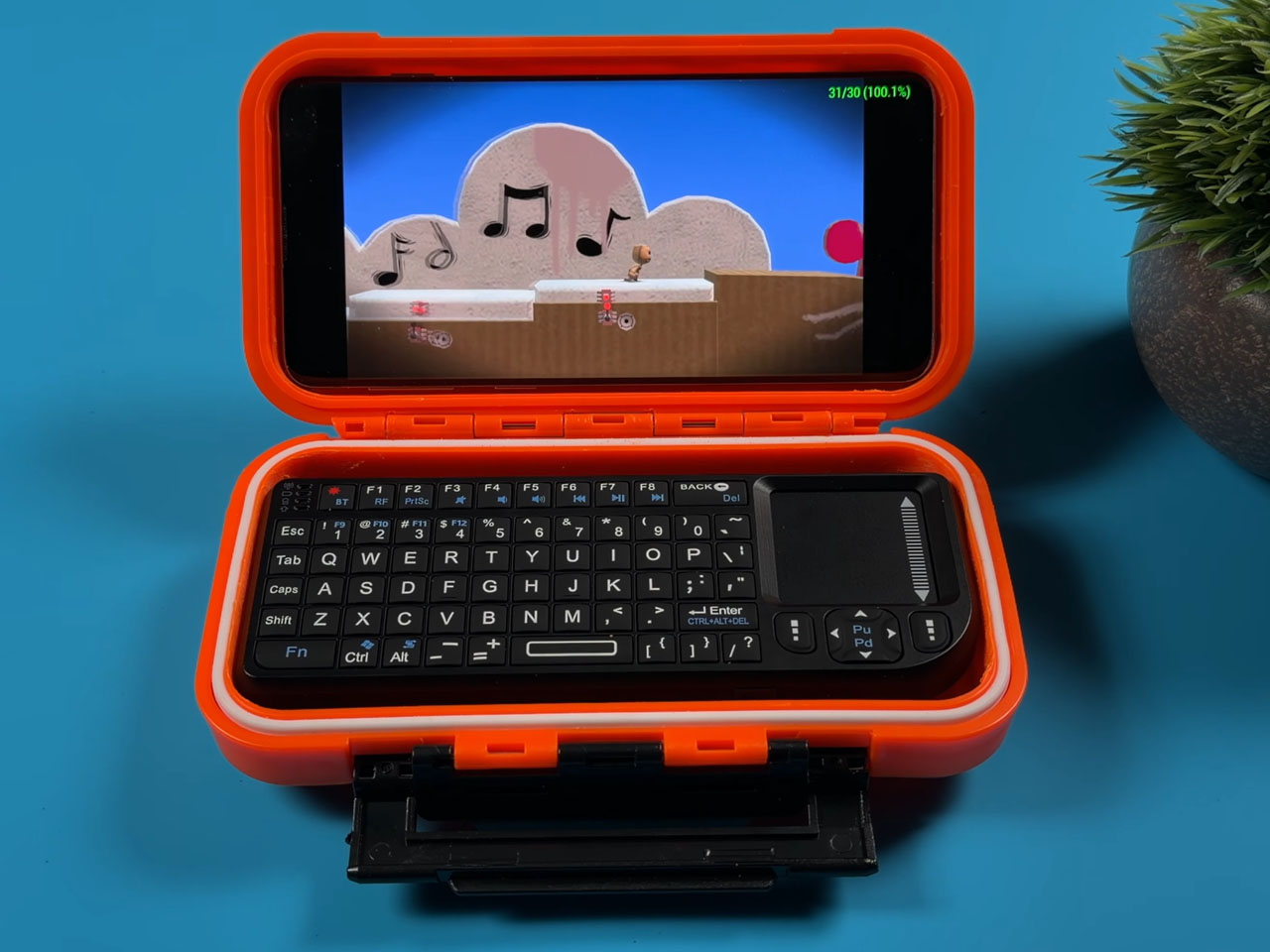
That old phone sitting in a drawer as a backup could have a more interesting second life. ETA Prime’s DIY cyberdeck takes a Galaxy S10, places it inside a compact waterproof mini tackle box, and pairs it with a small Bluetooth RGB keyboard with an integrated trackpad. The result is a piece of hardware that already exists turned into a surprisingly capable portable workstation.
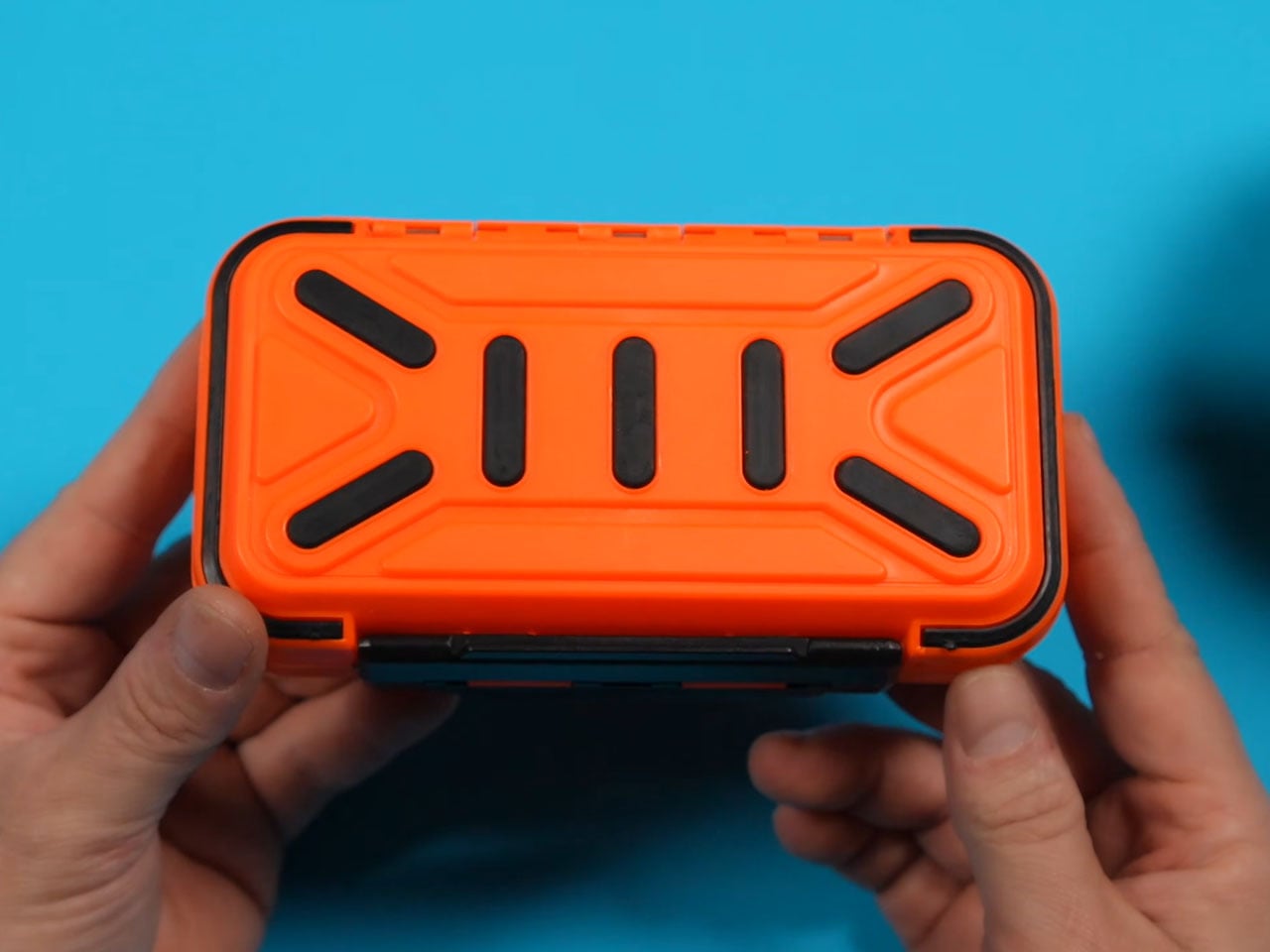
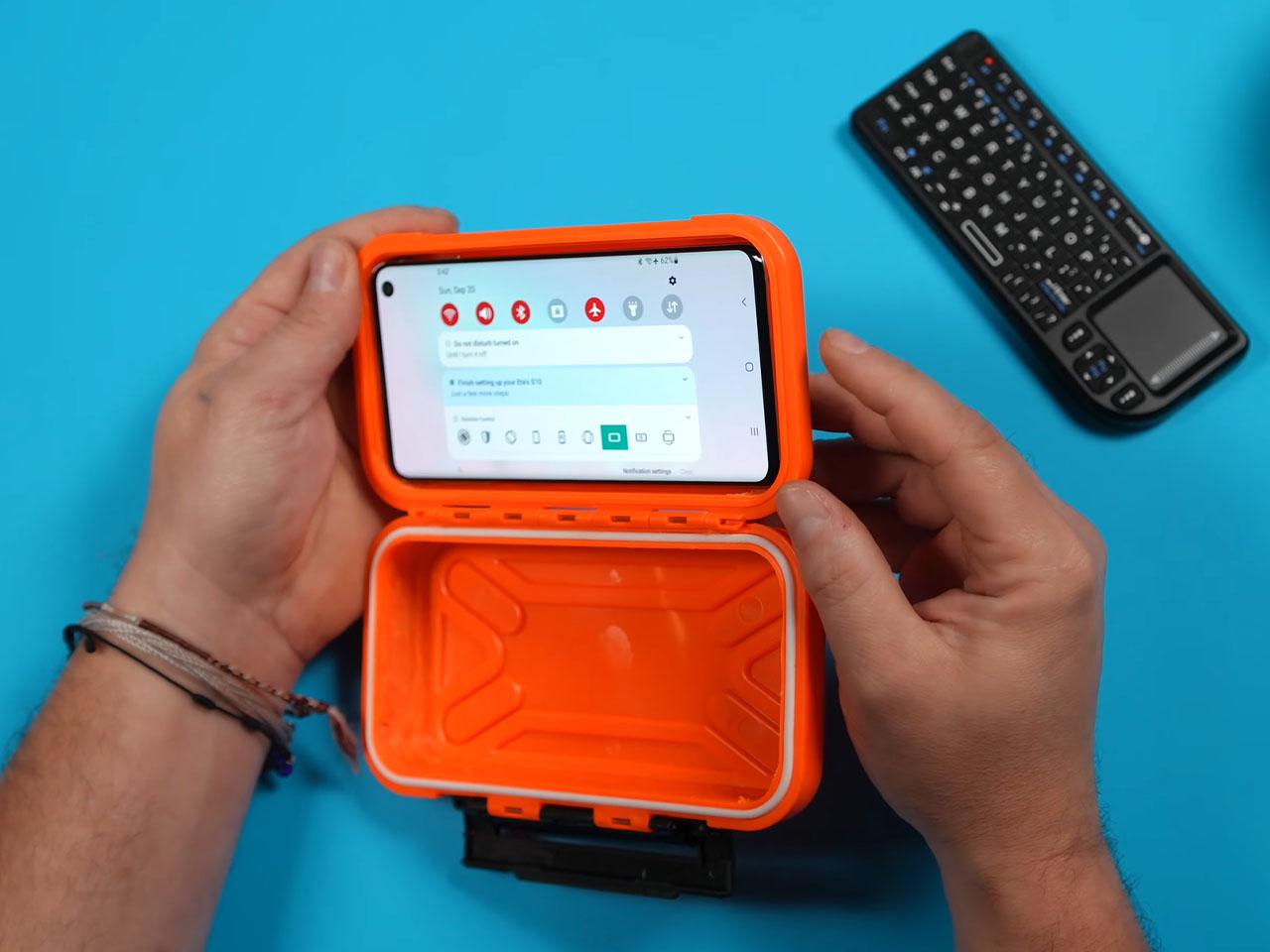
The tackle box becomes the enclosure, with minor modifications made using a Dremel, so the phone and keyboard can sit securely inside. There is no 3D-printed shell or elaborate fabrication involved, which keeps the project accessible to anyone comfortable with basic-level How-Tos. More importantly, the sealed enclosure avoids the need to cut openings for charging ports or physical buttons, helping protect the electronics from dust, moisture, and accidental splashes.
Designer: ETA Prime
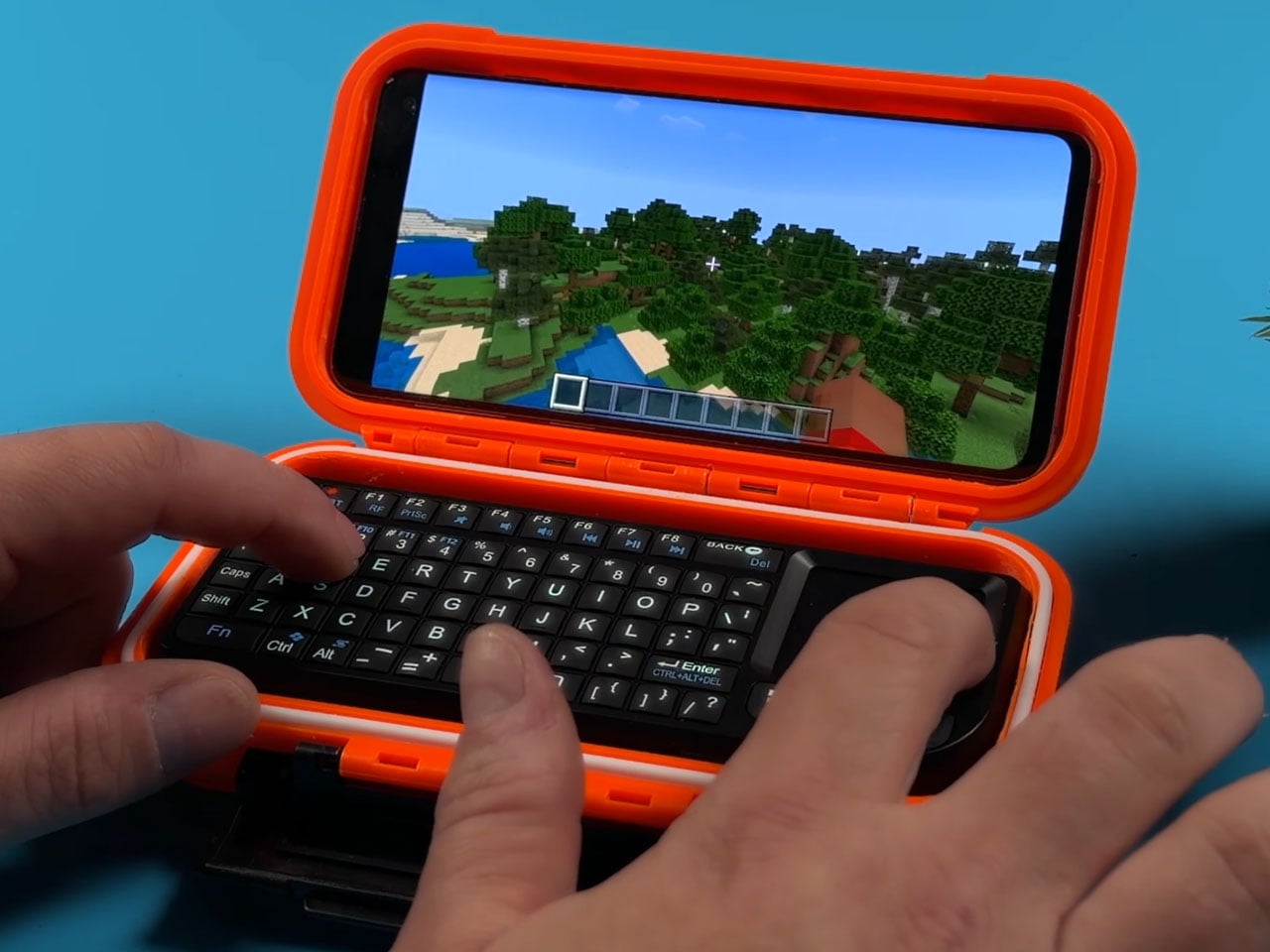

At the center of this project is a Galaxy S10, whose Snapdragon 855 processor, 8GB of RAM, 128GB of storage, and AMOLED display still give this repurposed setup plenty of capability. A Rotation Control app is used to keep the phone’s interface in the desired horizontal orientation, while the Bluetooth keyboard turns it into something closer to a tiny computer. The keyboard also supports RGB lighting, adding a little character to what would otherwise be a very utilitarian build.
The practical appeal shines through when the S10 is used for more than browsing. The hardware can handle Android productivity apps, media playback and retro-game emulation, including demanding platforms such as Dreamcast and PSP. That makes the cyberdeck equally suited to writing on the move, watching videos, experimenting with software, or playing older games without carrying a laptop or dedicated handheld.
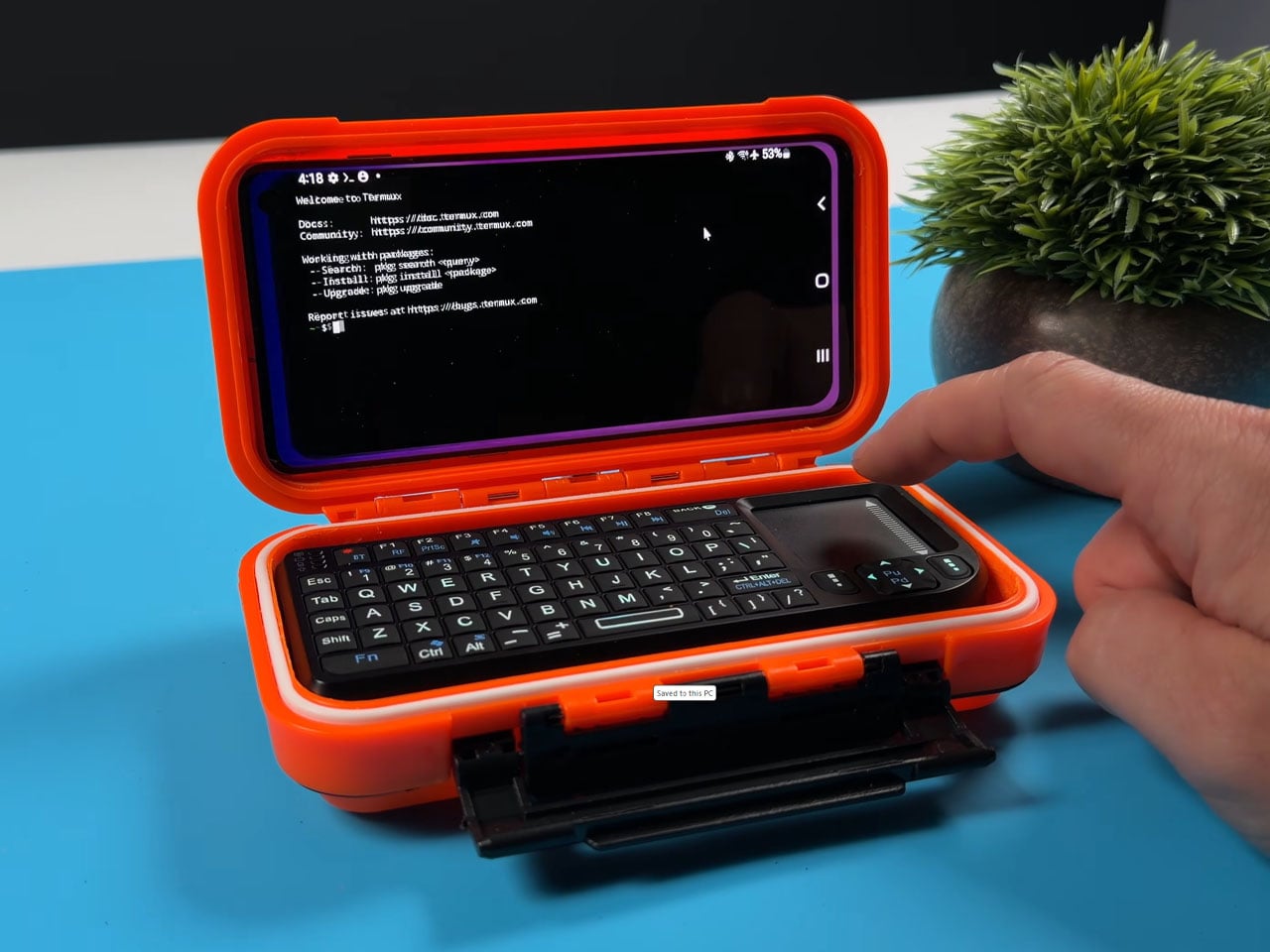
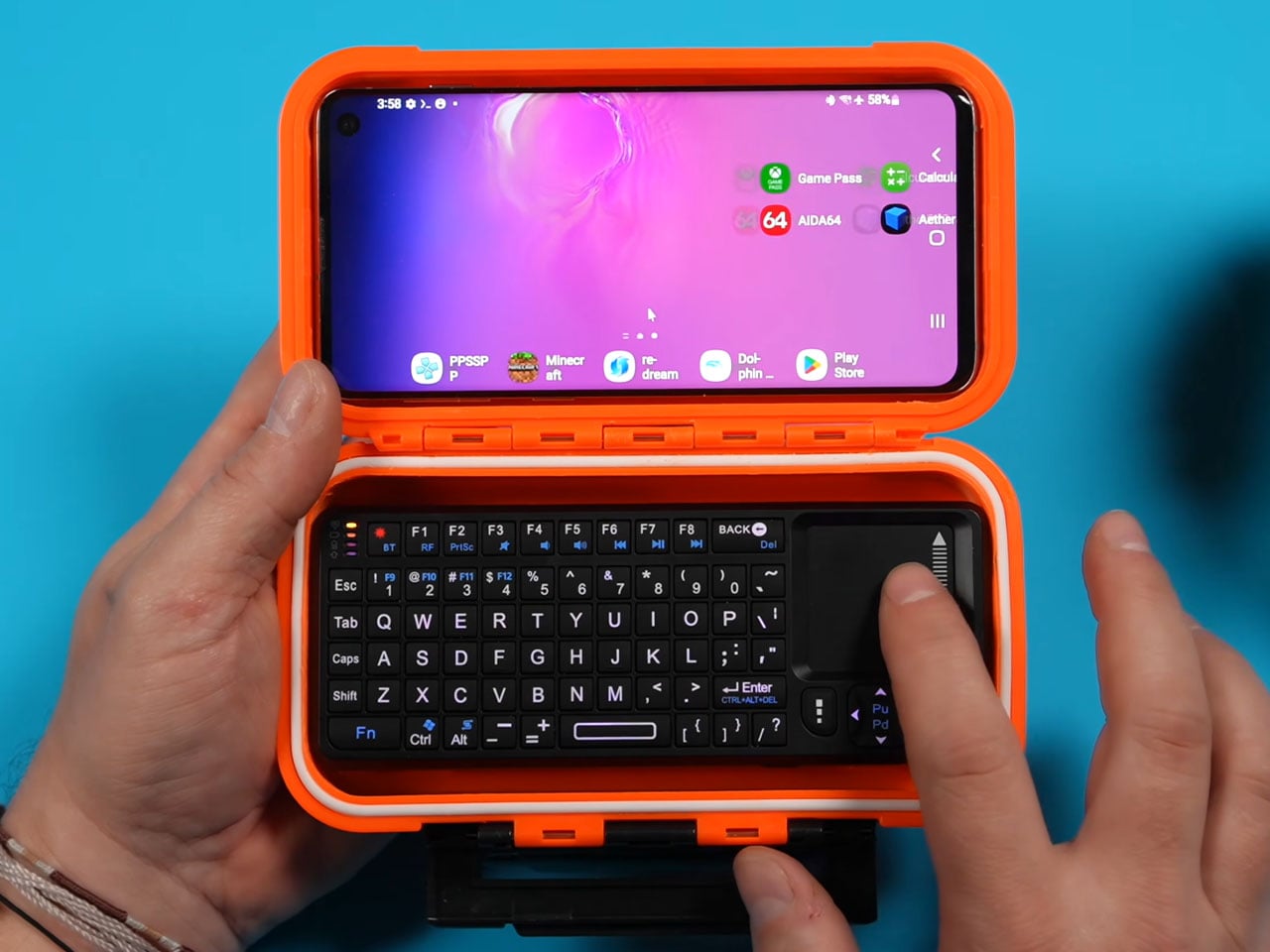
The enclosure is arguably the most interesting part of the design. Unlike many cyberdecks that prioritize a futuristic appearance over everyday practicality, the tackle box gives this one a rugged, purpose-built quality. The rig is compact enough to carry around, while its weather-resistant construction makes it better suited to outdoor use than an exposed phone-and-keyboard combination. That unusual mix of ordinary storage hardware and repurposed electronics is what gives the project its character.
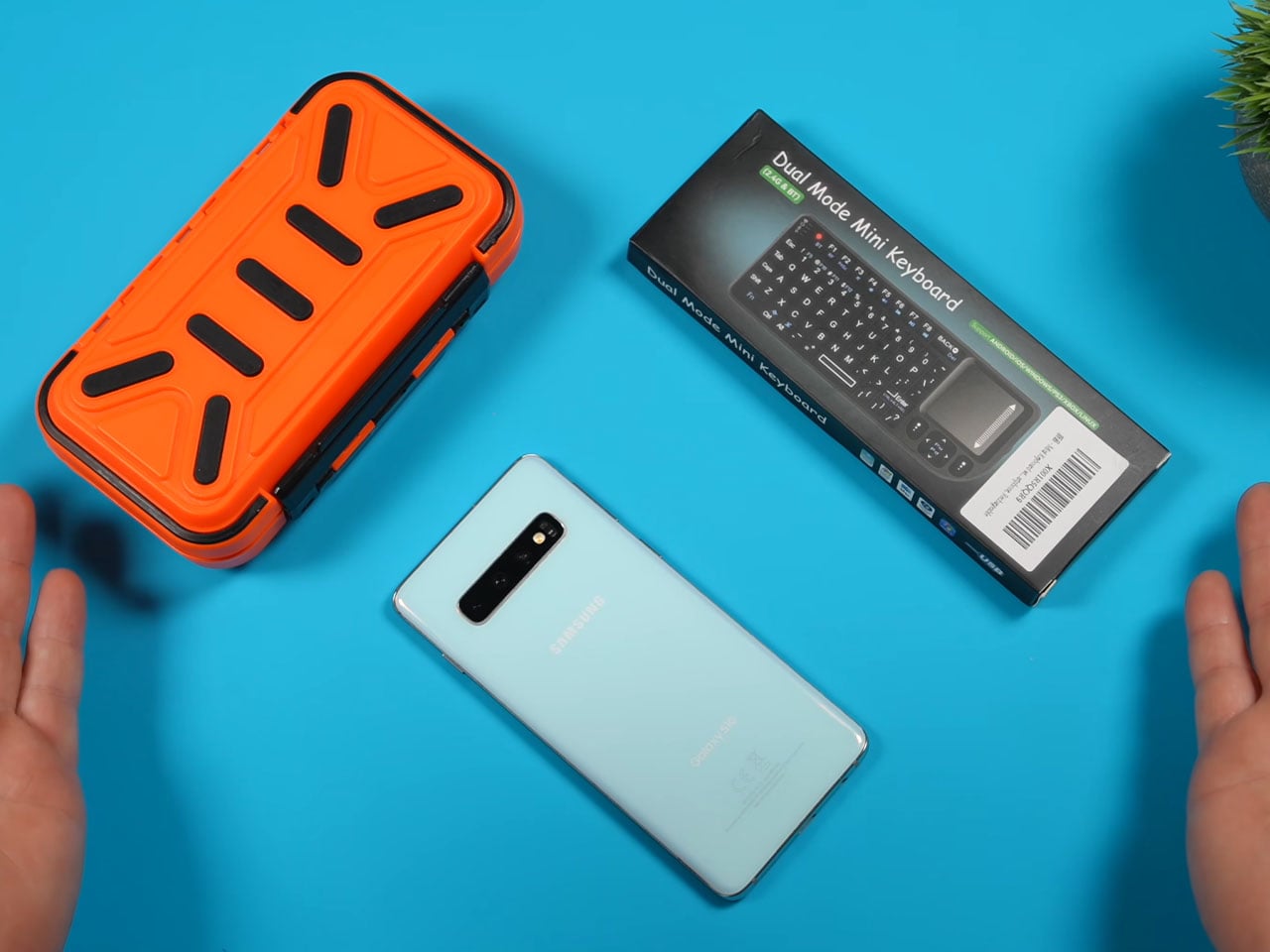
There is also plenty of room for experimentation. A larger battery can be added beneath the keyboard for longer sessions, while a detachable kickstand could make the viewing angle more comfortable. The Galaxy S10 is not necessarily the only possible brain, either. According to the DIYer, the same enclosure concept could accommodate a Raspberry Pi or small-form-factor PC for users who want to explore Linux and other operating systems.
Best of all, the project is quite inexpensive, given the exponentially rising costs of memory modules, and in turn PCs and smartphones. With a used Galaxy S10 potentially available for less than $70 and inexpensive components filling out the rest, the complete build can remain below $100. The clever DIY is very easy to take u unlike some of the more complex cyberdeck builds we’ve seen in the past like the pocket-sized Altoids DIY.