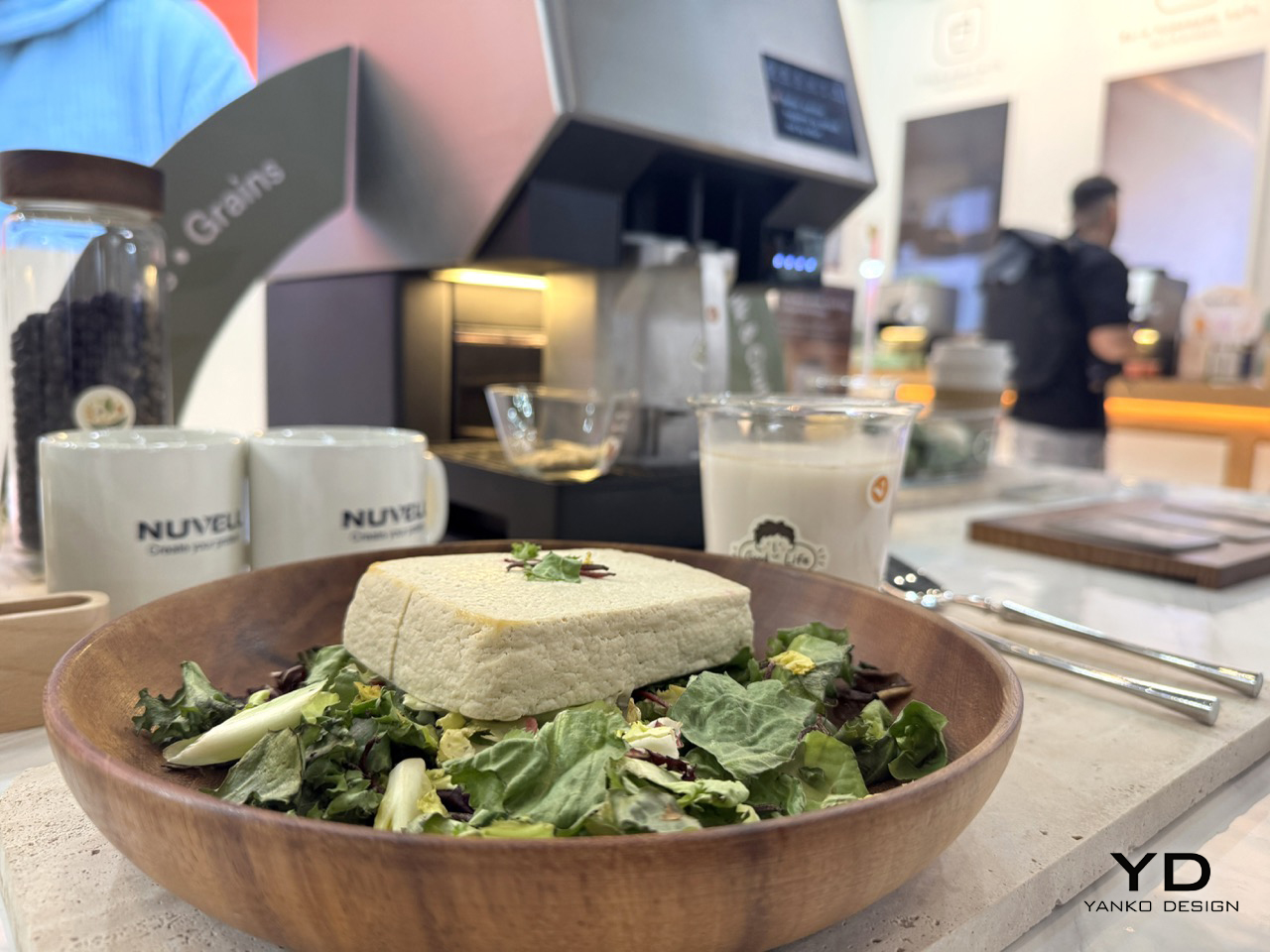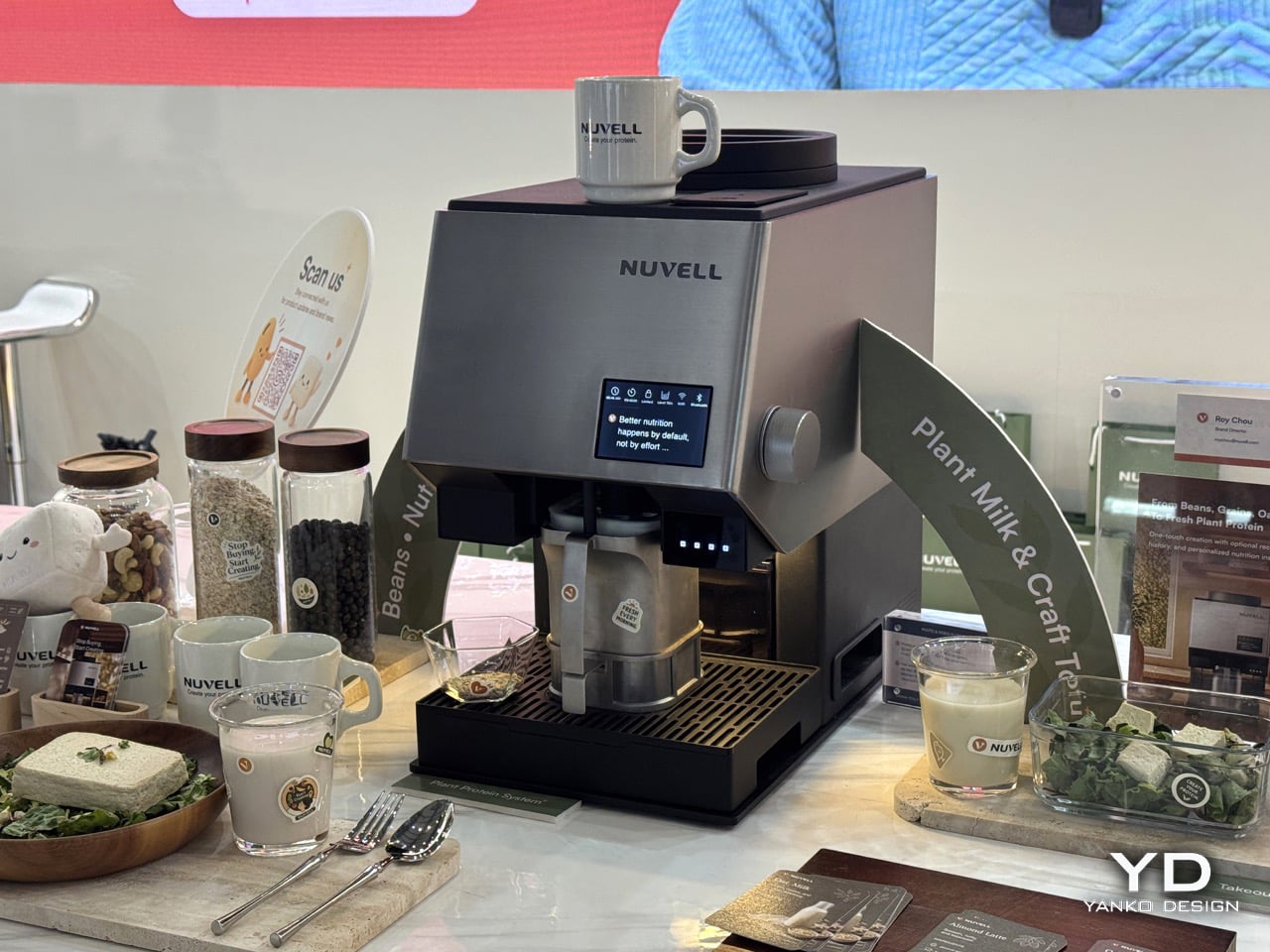

I will admit it outright, I have never once thought about how tofu gets made, the same way most people never think about how gasoline gets made, it is just there, cold and vaguely virtuous in the produce aisle. Roy Chou, brand director at a young company called Nuvell, wants to change that, one countertop machine at a time. At IFA Berlin 2026, his team unveiled the Plantein, built like a superautomatic espresso machine, dial and touchscreen included, except it turns soybeans into warm, fresh tofu in about forty minutes instead of a shot. It also whips up plant milk from oats, almonds, or soy in roughly twenty, no soaking. Chou walked me through it like a proud parent, and I genuinely wanted one on my counter by the end.
The mechanics are simpler than they sound, soybeans and water go in one side, a natural coagulant Chou described as an ocean derived salt goes in too, and heat and pressure do the rest. That coagulant is almost certainly nigari, the traditional Japanese setting agent, which explains why Chou insisted the texture comes out cleaner and sweeter than gypsum set blocks. Firmness gets dialed in by extending the cycle, and Chou hinted at flavored versions already tested in-house, a matcha batch and a berry one meant for dessert. Pre-orders open at CES 2027, with a price tag within the $1000-$1300 range, according to Chou.
Designer: Nuvell
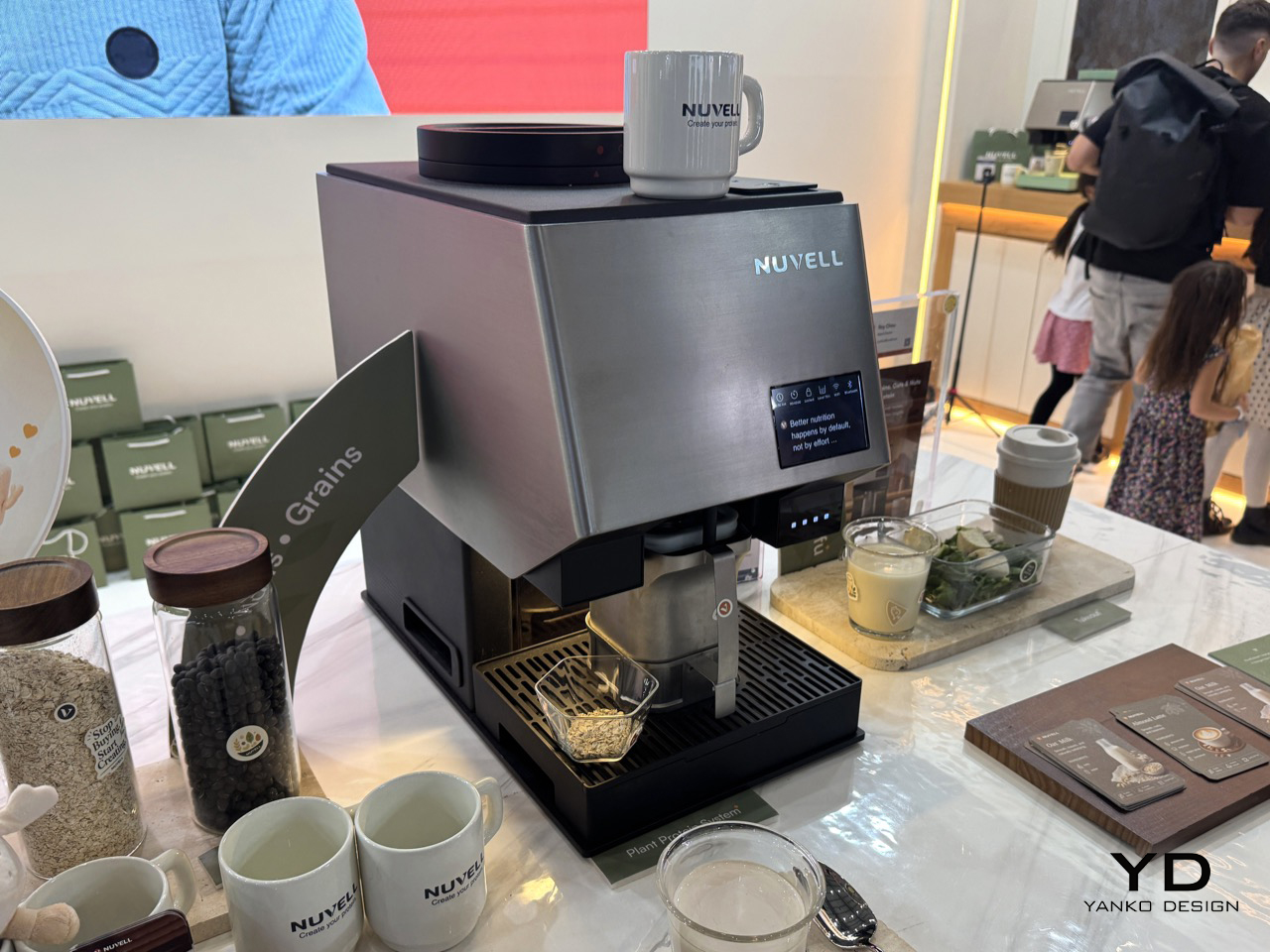
The Plantein wears a brushed stainless front over a matte black chassis, one knurled aluminum dial on its cheek, a small touchscreen up top, and a mug parked on a warming plate exactly where a cappuccino would sit. A swing arm lever holds the press module over a slotted drip tray, and the whole assembly detaches for cleaning the way a portafilter does. It is a smart borrow, since home tofu making has always meant cloth, a mold, and a stack of cookbooks, not an appliance anyone photographed. Leaning on Jura and Breville’s design language buys instant kitchen credibility, even if the guts underneath do something completely unrelated to coffee.
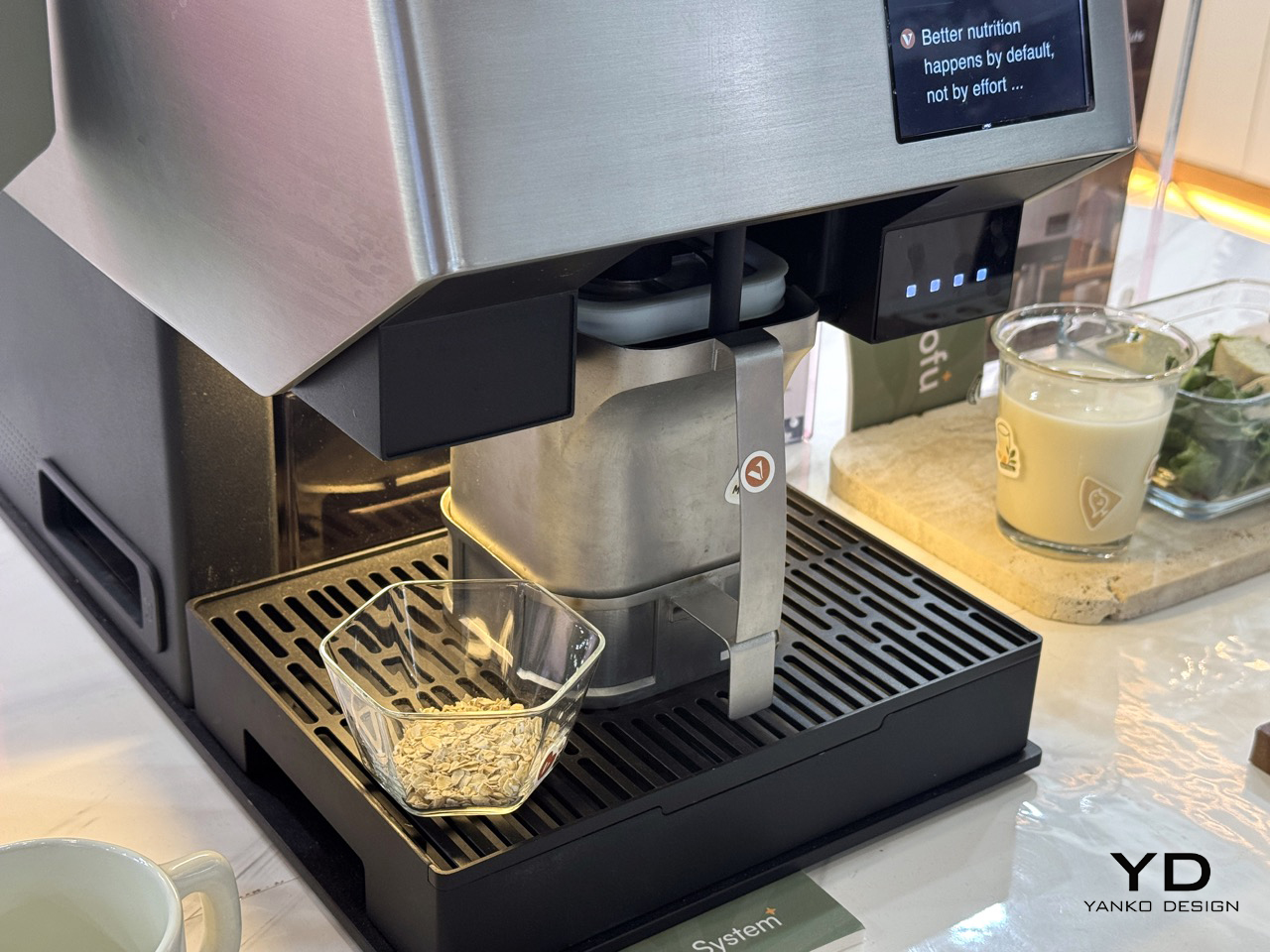
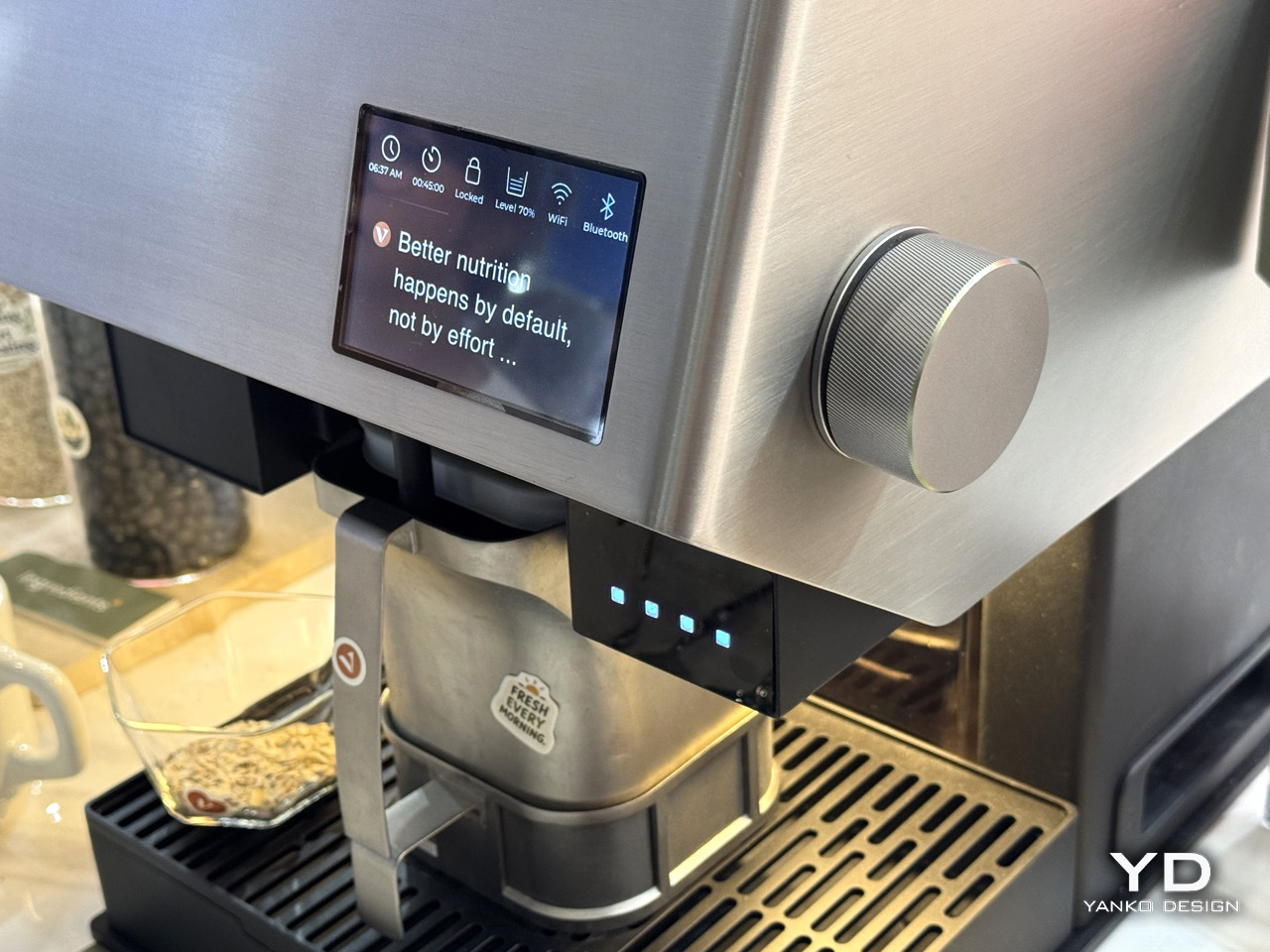
Where Chou got genuinely animated was flavor. He described testing a matcha batch and a ginger and berry version meant to be eaten as dessert, which tracks with how tofu already behaves across Asia, where silken curds get blended into smoothies and sweetened into douhua rather than treated as a meat substitute. That framing does more marketing work than anything else Nuvell said at the booth, since most Western buyers only know tofu as the bland cube used in stir fries and to make plant bacon. It’s only in the past few years that Food YouTubers have extolled the virtues of blending silken tofus to make low-carb high-protein pasta sauces or dessert mousses.
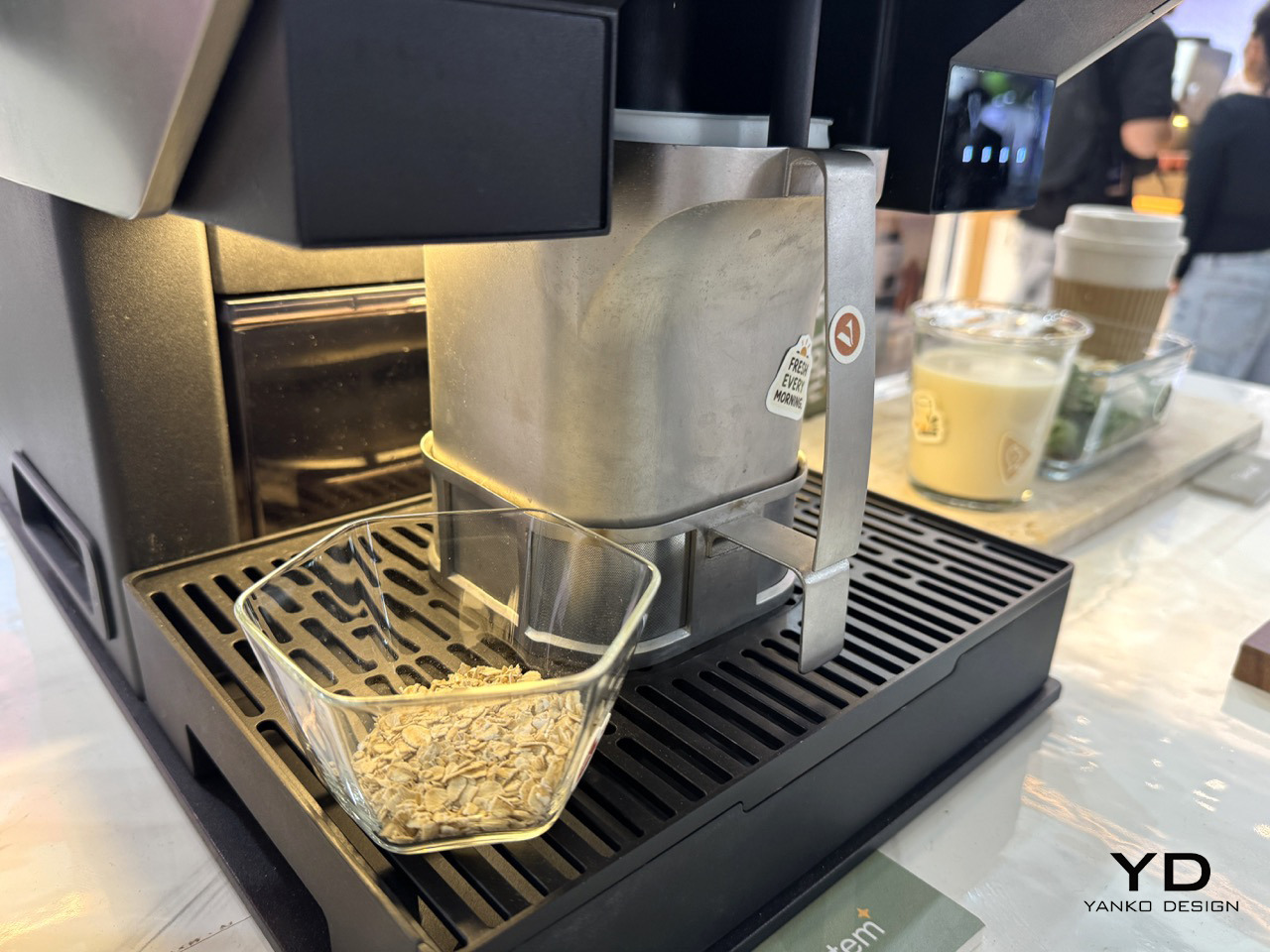
Fully automatic bean to block tofu machines already exist, they just live in commercial kitchens and food plants, built at fifty liter scale for canteens rather than countertops. What Nuvell is actually pulling off, and it is a genuinely new trick, is shrinking that whole process down into something that fits next to your coffee grinder. Pre-orders open at CES in Las Vegas this coming January, with units shipping around February, so the wait is short enough to actually stay excited for. If Chou’s numbers hold, forty minutes for warm tofu and twenty for plant milk turns a genuinely tedious kitchen chore into something you queue up before a shower. I am already thinking about what a matcha version tastes like on toast, and that is a very good sign for a machine that has not even shipped yet.