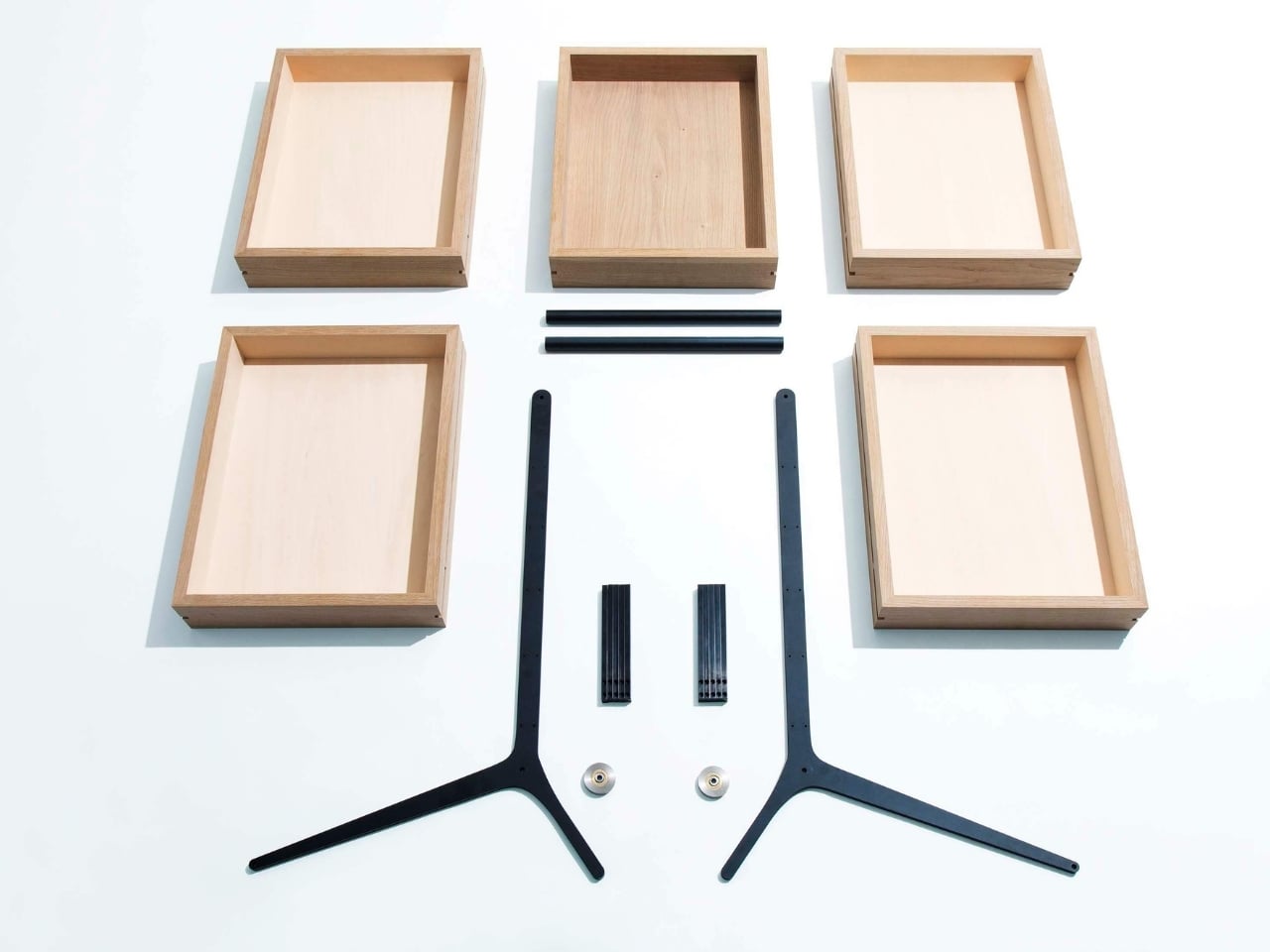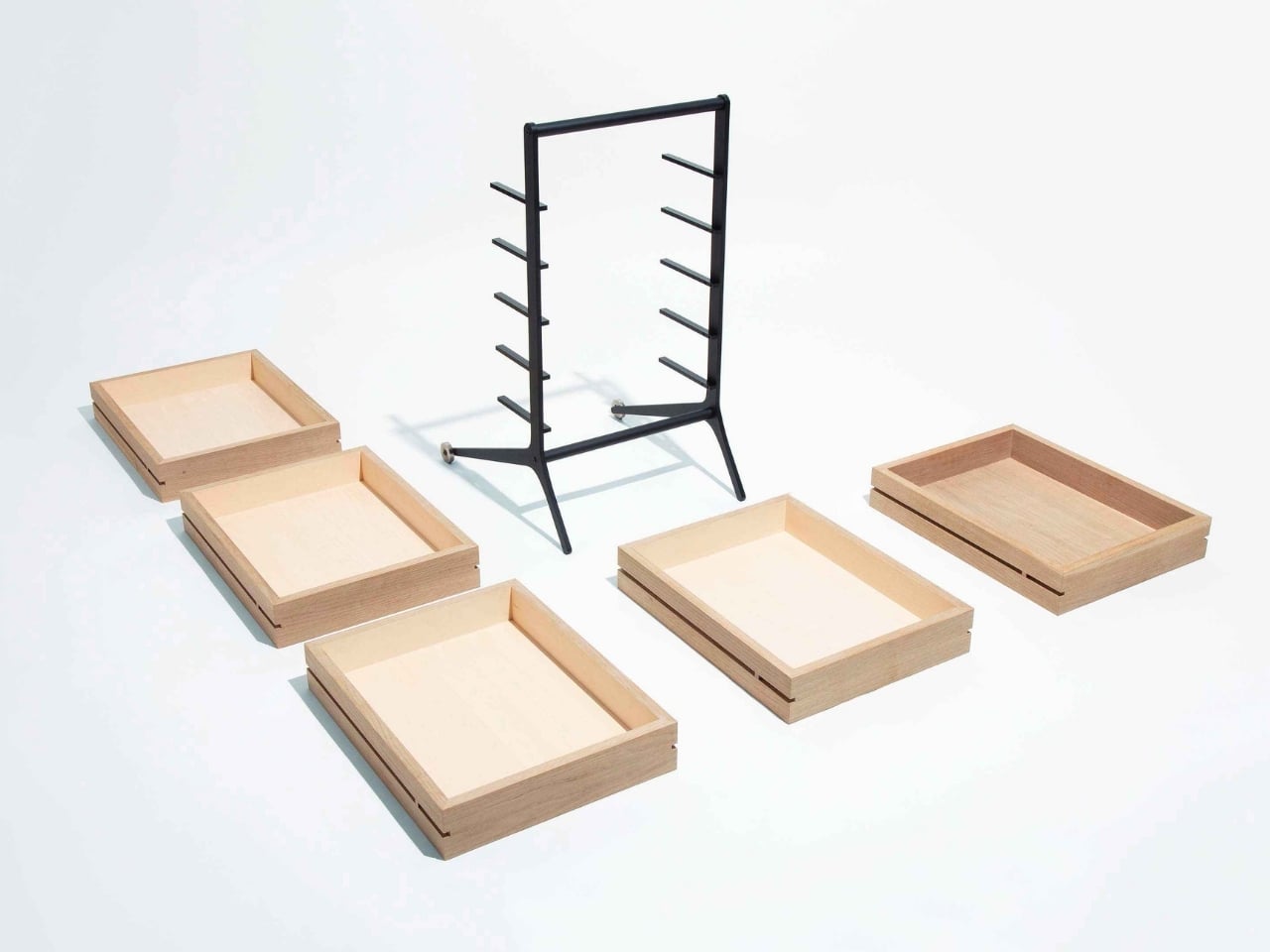

Most storage furniture in an American home falls into one of two categories: too heavy to move without hurting yourself, or too flimsy to trust with anything heavier than folded T-shirts. You buy a dresser, it picks a room, and it stays there until you sell the house or drag it to the curb. There is rarely a middle option, something built to be light, mobile, and honest about the fact that furniture should adapt to how people actually live, not the other way around.
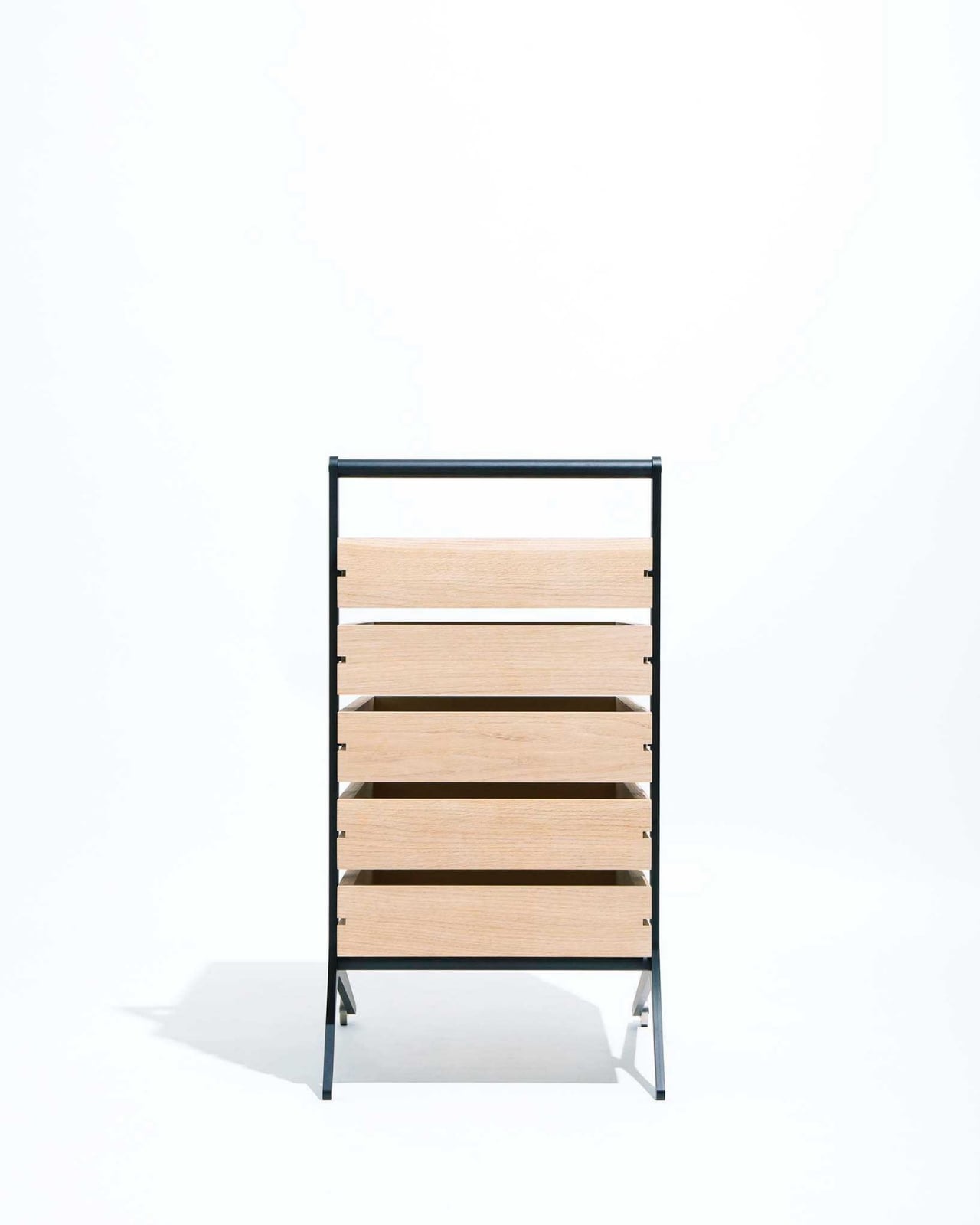
That gap is exactly where Keiji Ashizawa’s “Bon Drawer” sits, even though it was designed back in 2012 and never made it past the prototype stage. The piece is a lightweight steel frame on two wheels holding five stacked trays veneered in oak, and “bon” is simply the word for tray in Japanese, which tells you most of what you need to know about the concept. Pull a tray out of the frame and it stops being a drawer entirely. It becomes an object you can carry across a room, set on a table, hand to a guest. Push it back in and the frame does its job again, quietly, without asking for credit.
Designer: Keiji Ashizawa
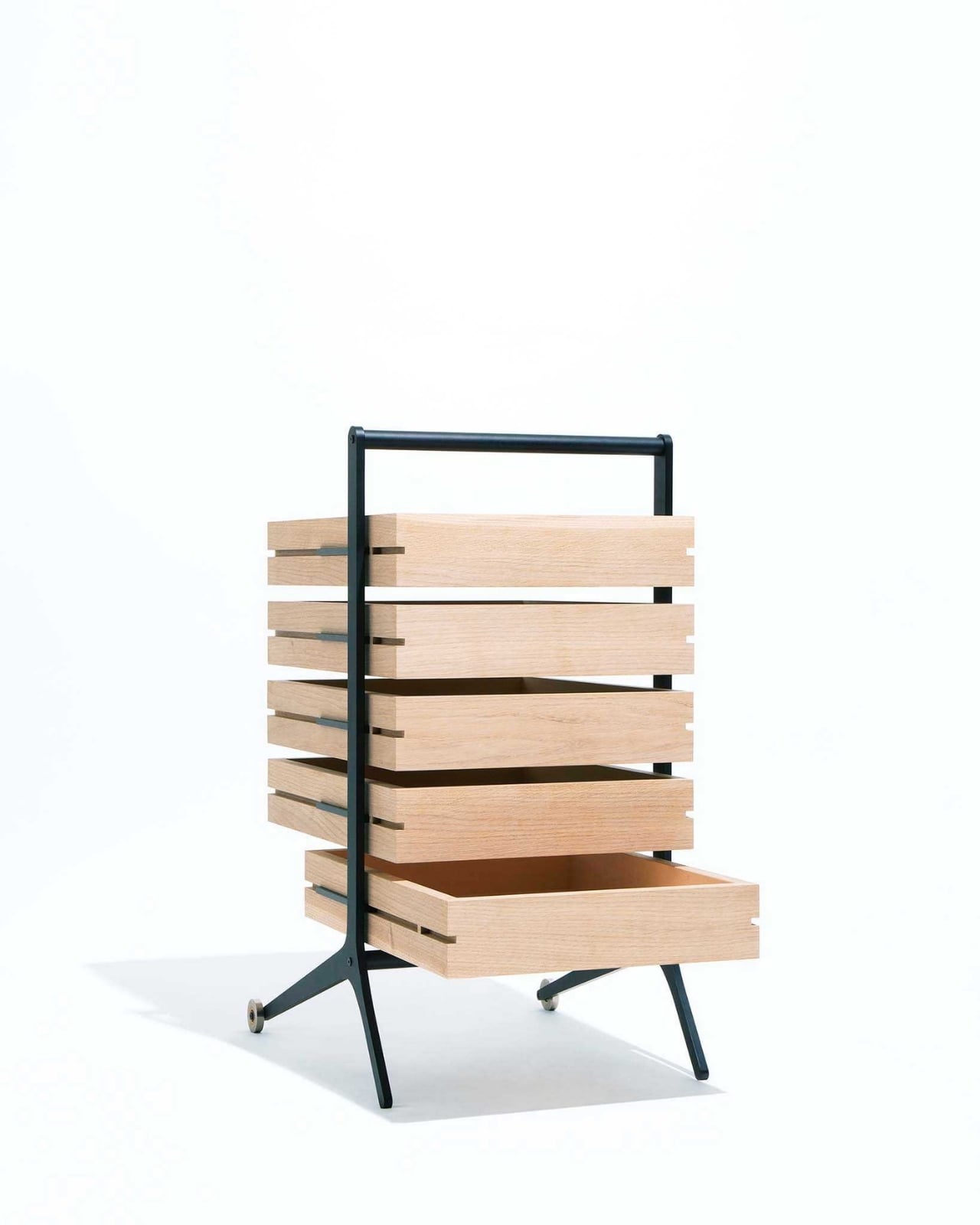

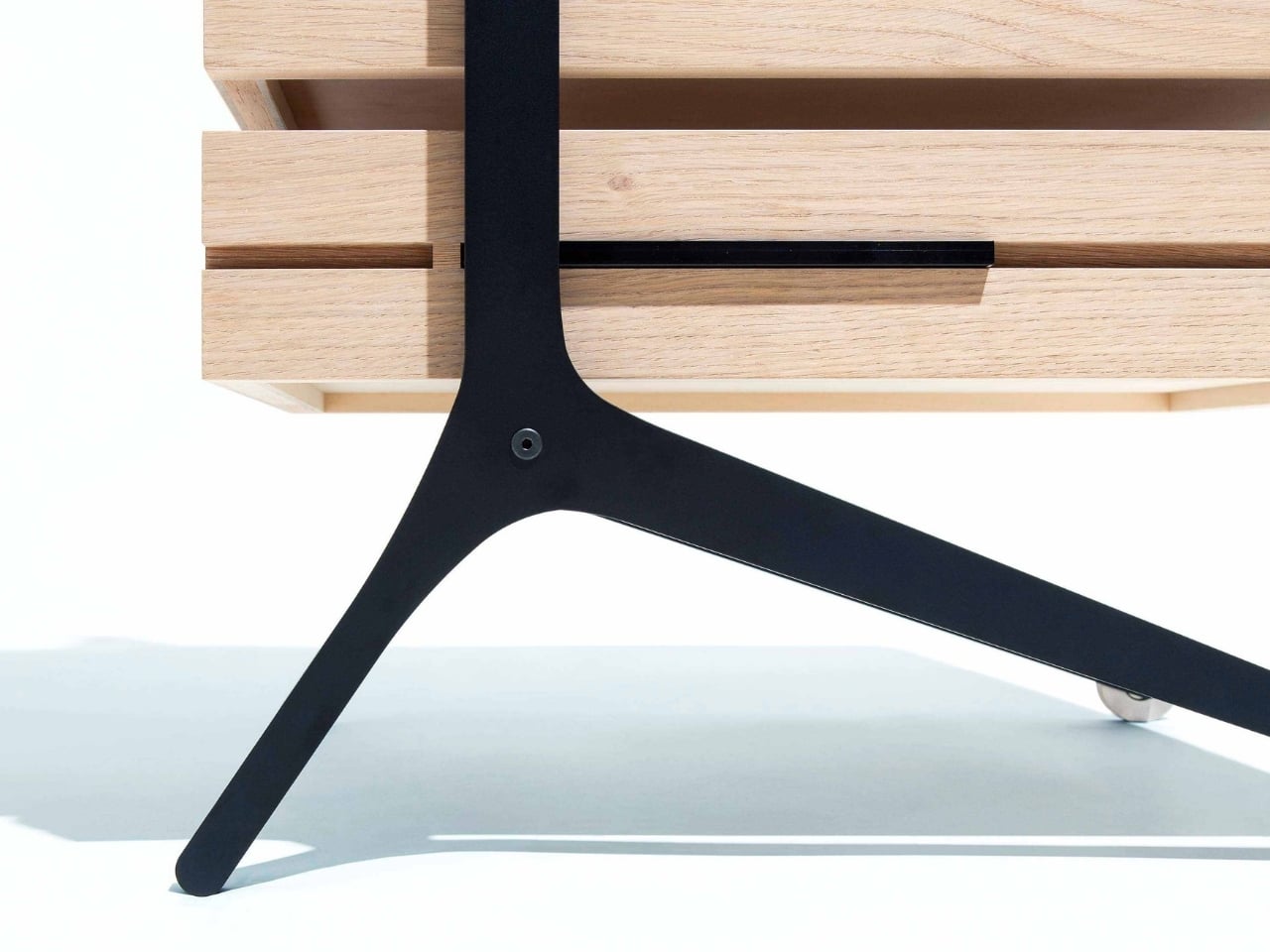
I like that Ashizawa came to this from an unusual angle. He trained as an architect but spent time early on at a metalworking shop that made furniture and lighting, and you can feel that in how sparingly steel gets used here. The rail system is nothing more than a flat bar attached to gestural side supports, with small stops so the trays do not slide out when the whole unit gets tipped back onto its wheels for moving. No hidden mechanisms, no soft-close hardware, no reason to call a repair person in five years. The frame even comes apart for flat storage, which is a small detail that says a lot about how the whole thing was thought through from the start rather than bolted on at the end.
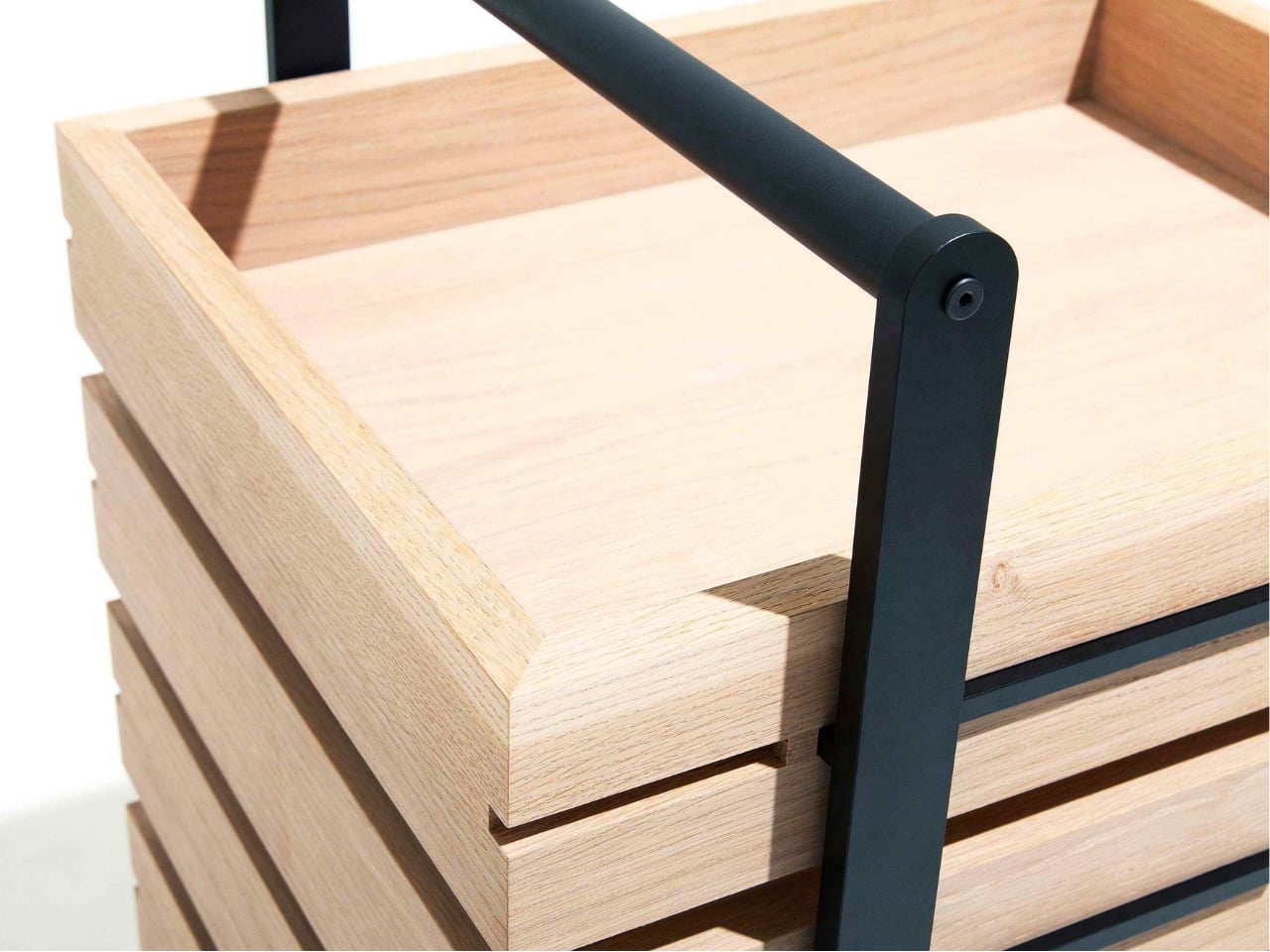
What strikes me is how differently we tend to approach the same problem. American design has spent the last decade chasing modularity through plastic bins, stackable cubes, and closet systems sold in kits. Functional, sure, but rarely something you would want visible in a living room. Bon Drawer solves the same problem of flexible storage without pretending the solution has to look disposable. It reads more like a piece of furniture that happens to be practical than a storage product that happens to look nice.
The part of this story that stayed with me is that it never got made. Ashizawa had it prototyped through Tanseisya and then it sat, undocumented outside a handful of design blogs, for over a decade, until Core77 resurfaced it late last month alongside a sibling piece called SLYBOX. Fourteen years is a long time for a good idea to wait for its moment, and I do not think that delay says anything bad about the design. If anything, it says something about how manufacturing decisions rarely track with how clever an idea actually is. Plenty of forgettable furniture gets mass produced every year. Plenty of smart, useful pieces sit in a portfolio because nobody made the case for them at the right time to the right buyer.
There is a reason Japanese design keeps finding new audiences in America right now, from Muji’s steady expansion to the wave of minimalist kitchenware showing up in design-forward apartments from Brooklyn to Los Angeles. It is not really about aesthetics. It is about restraint as a design principle, about trusting that a good idea does not need extra material to prove it is finished. Bon Drawer never sold a single unit, and it still manages to say more about smart storage than most of what is actually on the market. That is worth sitting with for a moment, especially the next time you are hauling a dresser up a narrow staircase and wondering why furniture has to be this heavy in the first place.