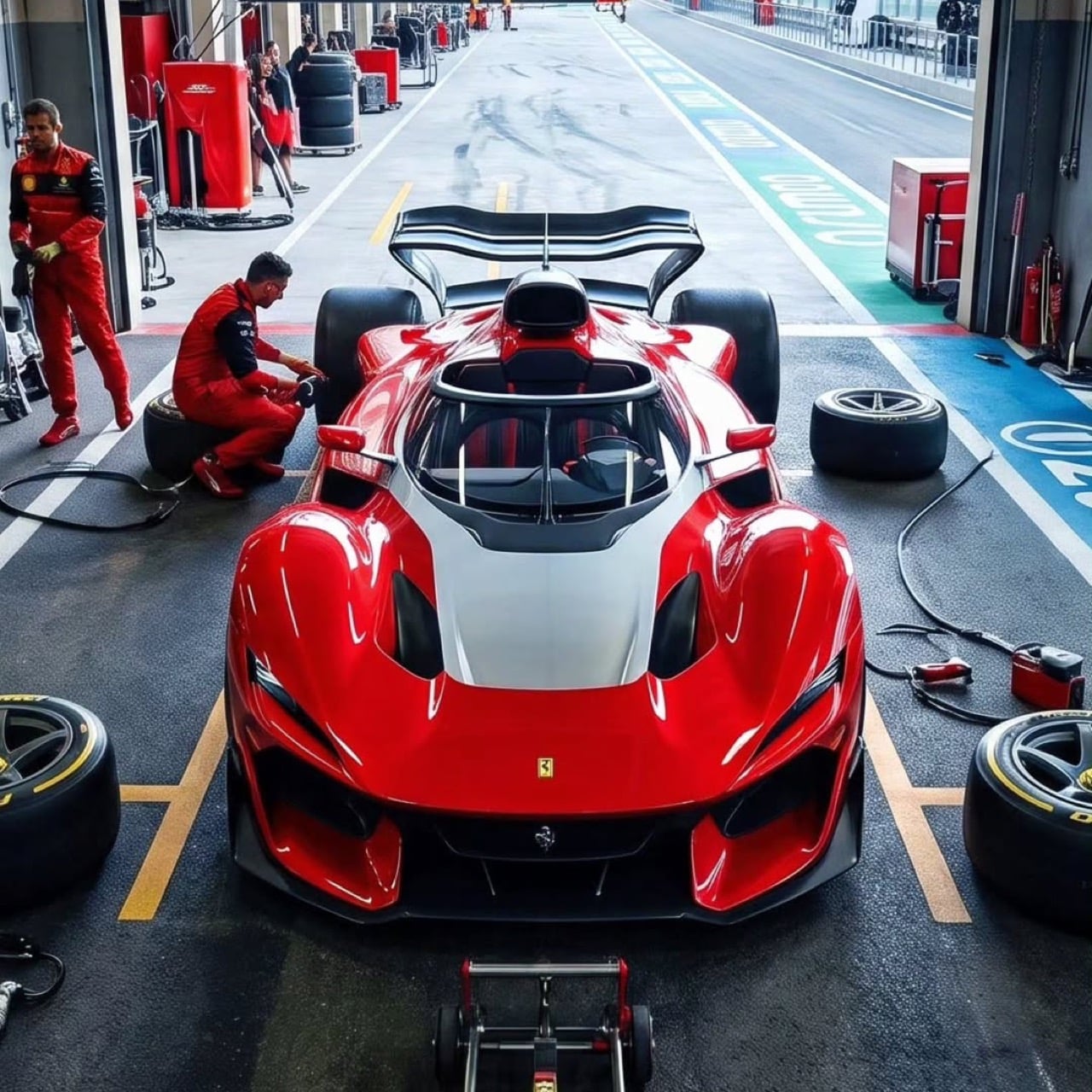

Back in 2015, Ferrari’s own Centro Stile design studio floated a wild pitch: what if F1 cars actually looked cool again, without breaking a single technical regulation? They called it the F1 Concept, gave it a twin deck front wing and bodywork wrapped around the wheels like a second skin, and then, predictably, nothing happened with it. Formula 1 kept getting bigger, heavier, and angrier looking, right up until the FIA finally admitted the cars needed a diet for 2026. A decade later, an Italian designer working out of Modena picked that argument back up and ran with it, and honestly, he might have done Ferrari’s own studio one better.
The car comes from Luca Serafini, who runs LS Design and has spent years building a body of work out of asking what Ferrari would look like if the brand trusted its instincts a little more. He is the same designer behind last year’s alternative take on the 849 Testarossa, done with 3D modeler Aldo Russo, where he argued the goal was updating a heritage cue’s logic rather than copying its shape. That same instinct shows up here. This single seater takes the open wheel racer silhouette everyone knows from Sunday afternoons and smooths it into something closer to sculpture, ditching the sponsor decals and the visual noise of a modern grid car entirely.
Designer: Luca Serafini, LS Design
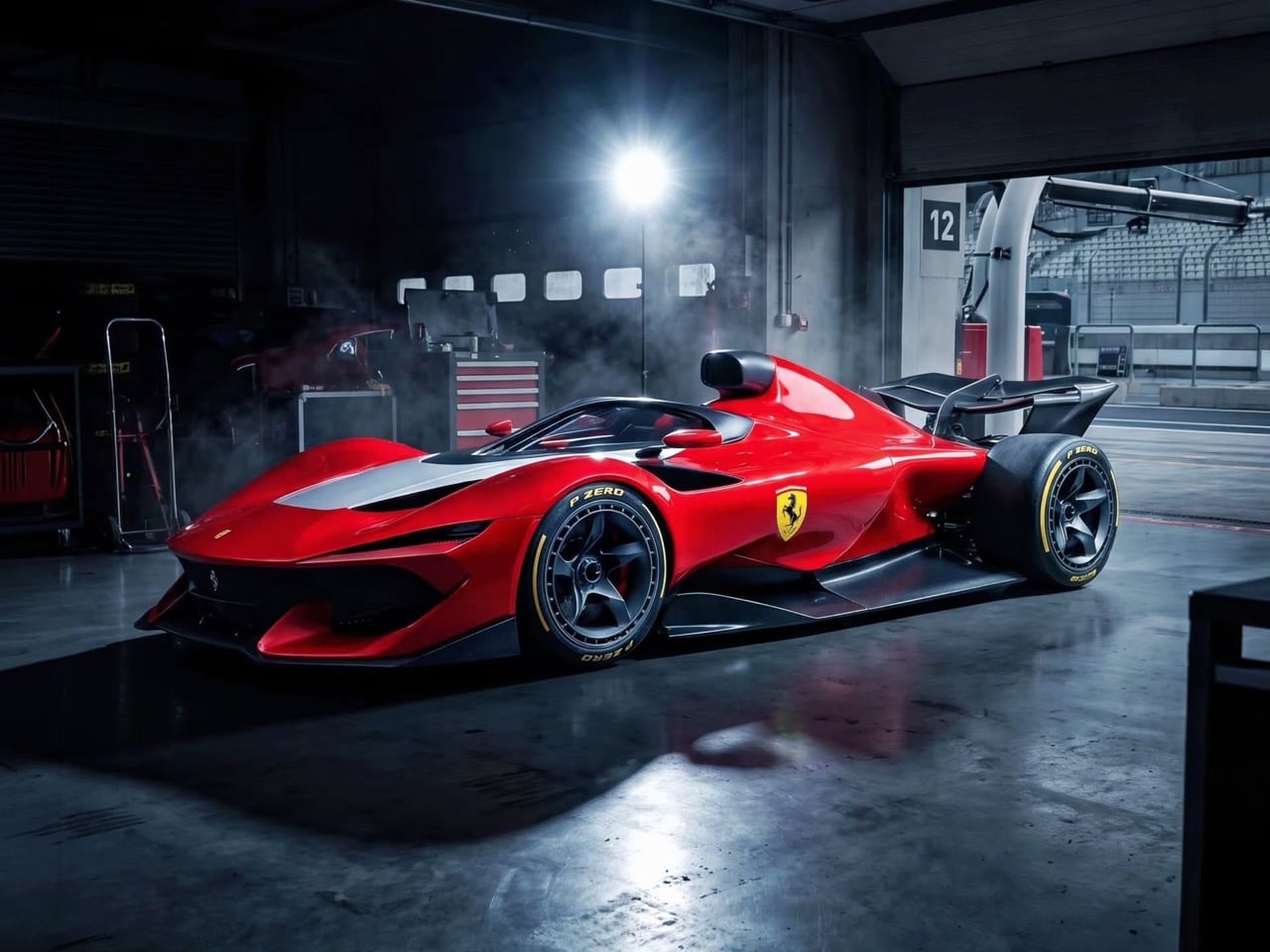
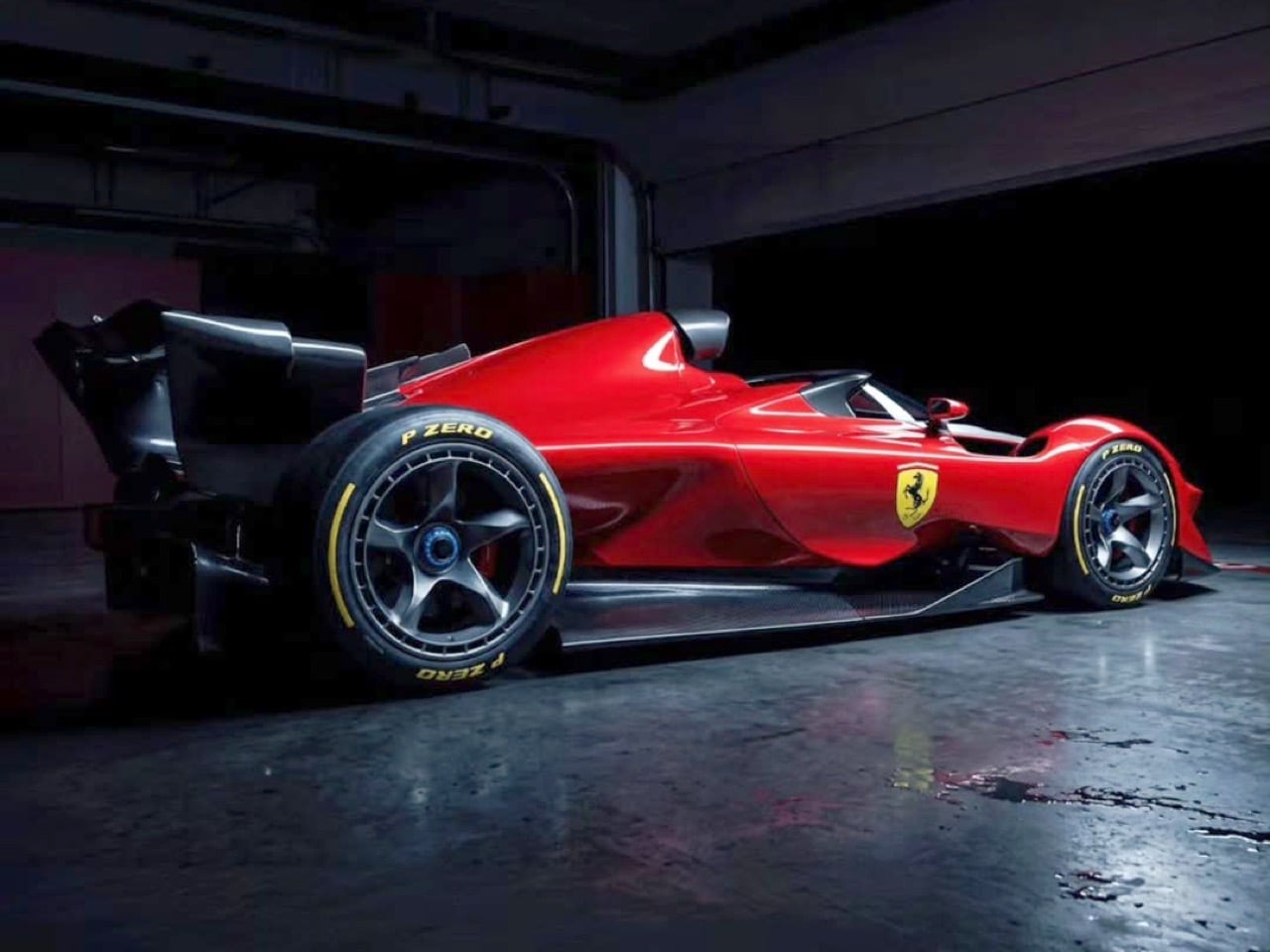
The front wheels get faired into flowing bodywork that flows straight back into the sidepods, while the rears stay fully exposed on yellow banded slicks, which is the whole thesis of the car in one glance. Everywhere else, the surfacing does something almost nobody in real motorsport bothers with anymore. Instead of vanes, barge boards, and serrated flics doing the aerodynamic talking, one unbroken red volume falls from the nose through a soft shoulder into the rear haunch, like the whole car got poured rather than assembled from a parts bin. The black splitter, floor, and rear wing sit underneath like a visible chassis holding the sculpture up.
There is no halo here, which will be the first thing any F1 fan notices. In its place sits a swept structural screen bridging the cockpit opening, more IndyCar aeroscreen than F1 safety cage, with a periscope style airbox scoop rising behind the driver’s head that feels pulled straight out of the 1970s. It is a gorgeous solution and also the most fragile part of the whole pitch, since real single seater regulations exist specifically because open cockpits keep taking hits from flying debris.
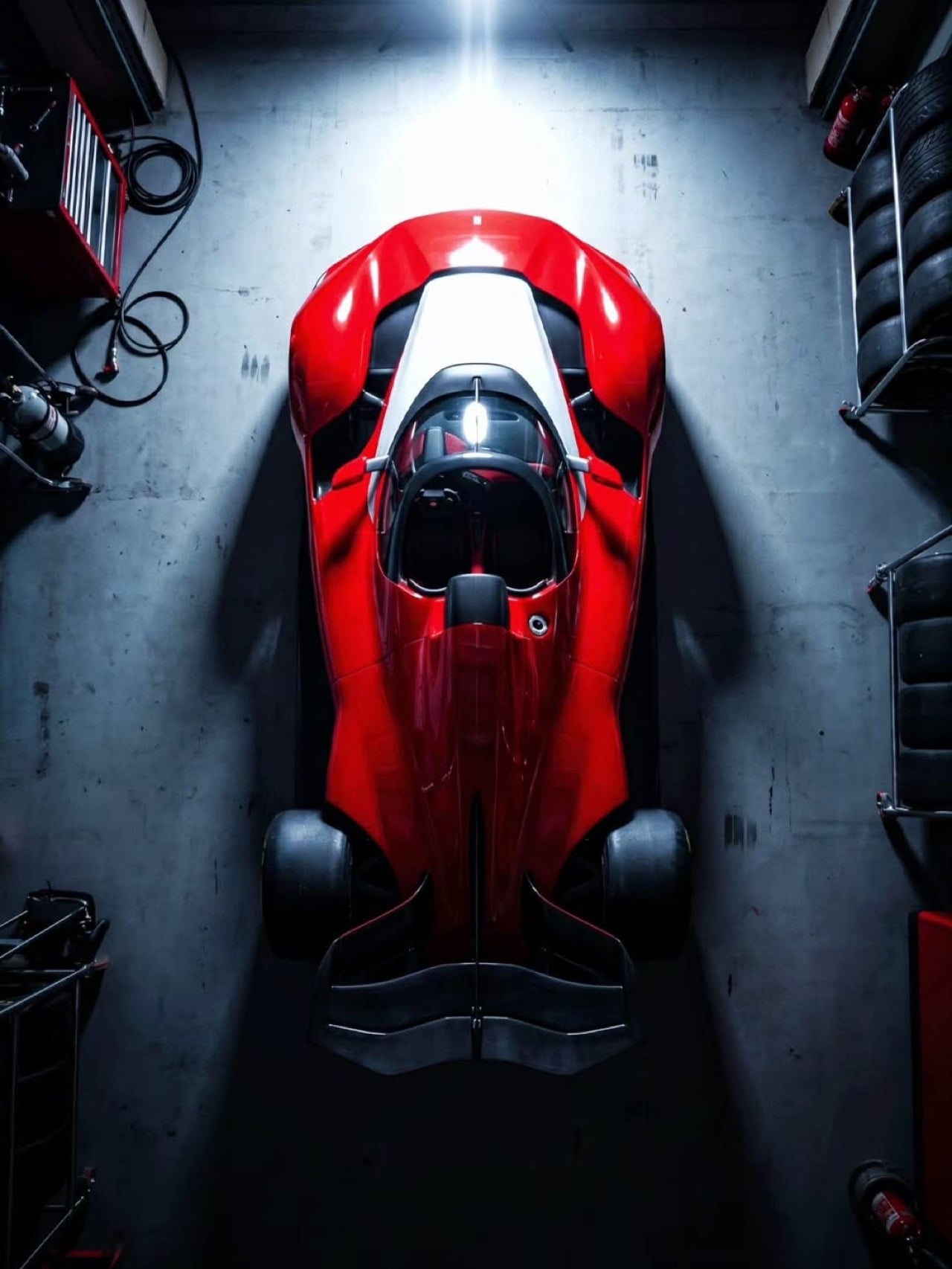

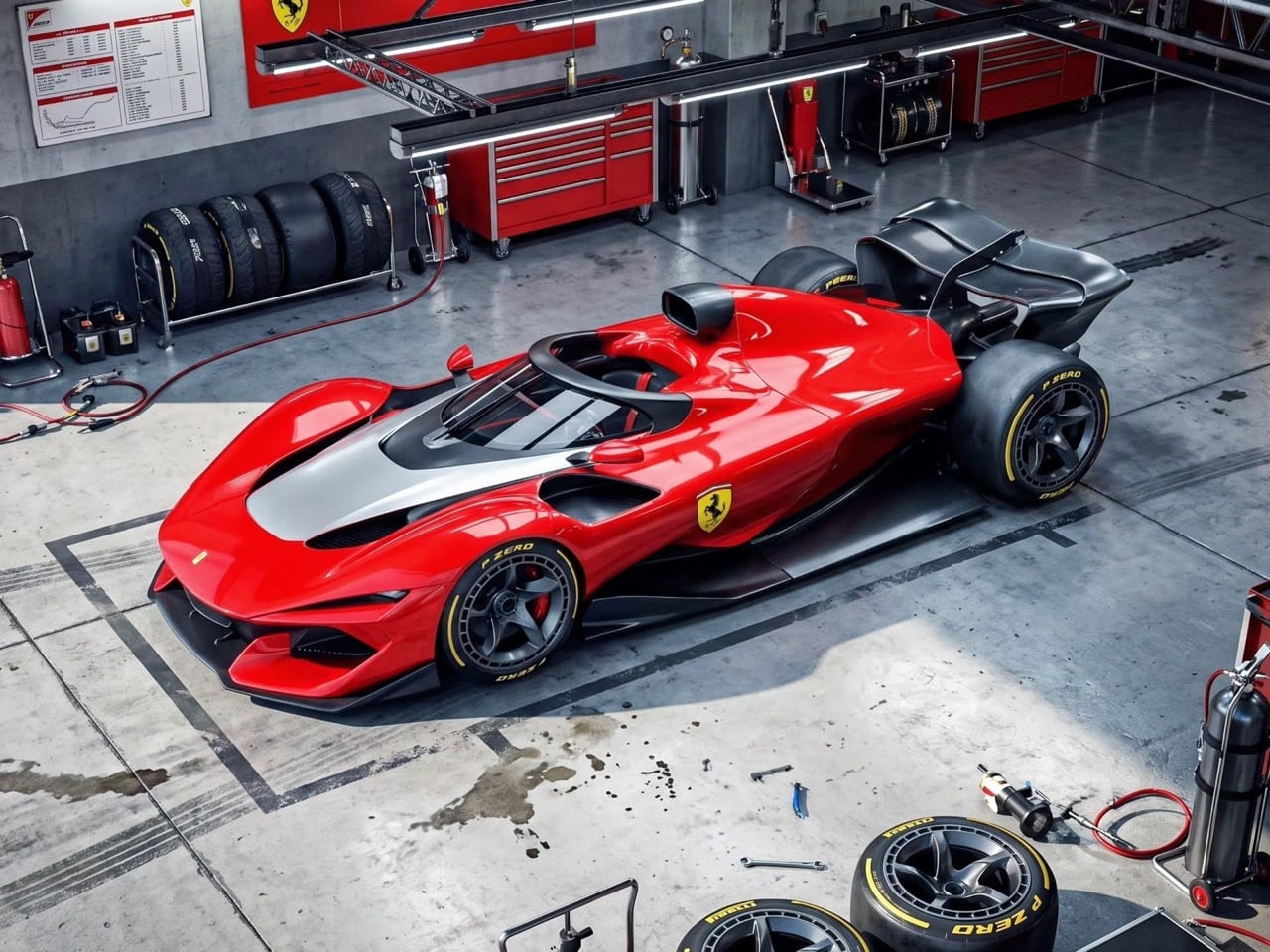
Every render is staged inside an actual Ferrari garage, wet pit apron and all, with mechanics crouched over tire guns and Pirelli racks lined up against the wall like this car is minutes from a real session. The Rosso Corsa paint carries a white central spine from nose to airbox, reading more like a 1960s prototype stripe than anything you would see sponsored on a modern grid. Five spoke centerlock wheels, blue center nuts, a swan neck rear wing. It is close enough to real that you start forgetting it was never built to survive contact with the actual rulebook.
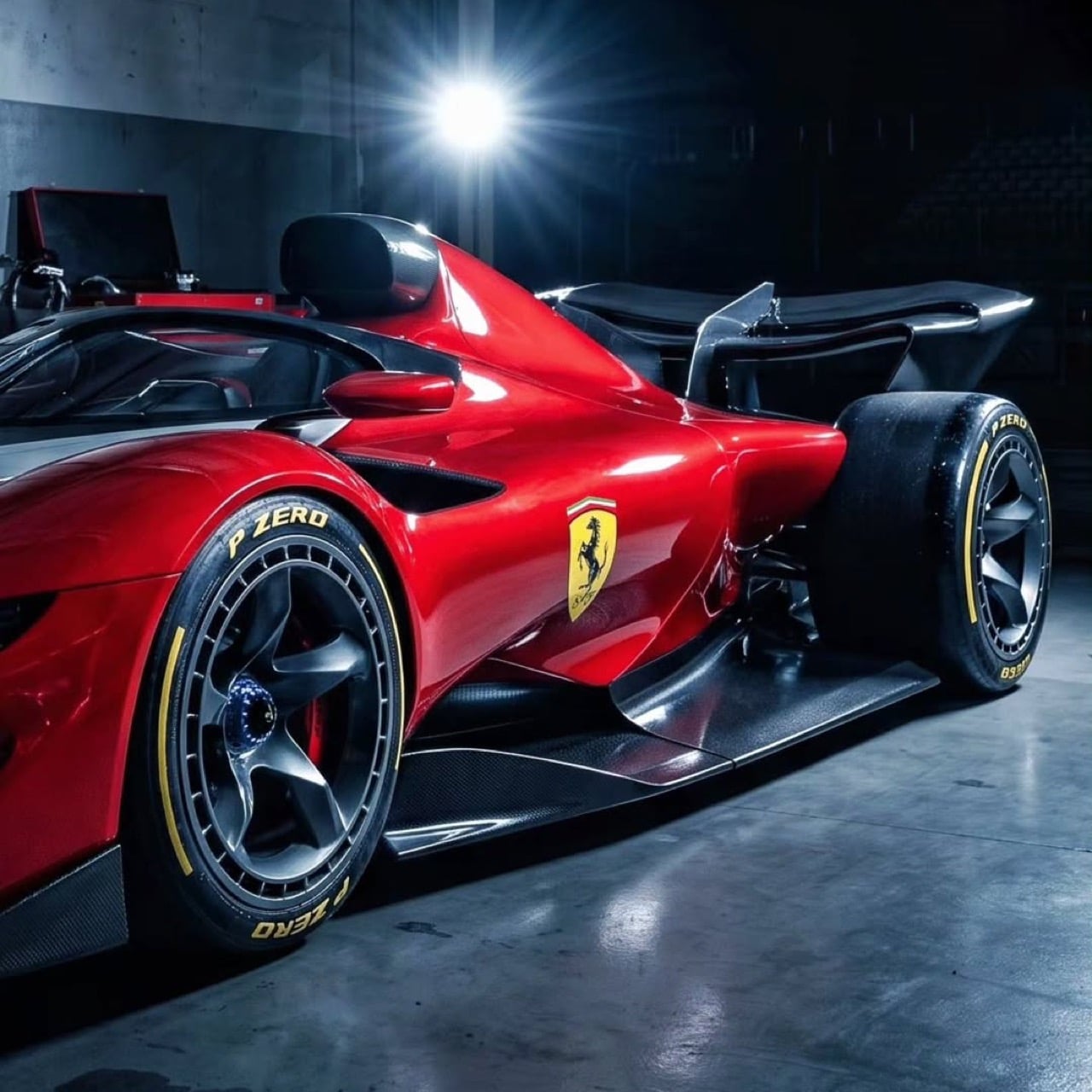

That rulebook, as it happens, just got rewritten against this exact silhouette. The 2026 regulations specifically remove the wheel arch fairings that curved over the front tires on recent cars, bringing barge boards back to manage the wake those fairings used to hide. Minimum weight drops thirty kilograms, wheelbase shrinks two hundred millimeters, and every gram of that smooth, appendage free bodywork Serafini drew would cost real lap time on a real circuit. None of that makes the car worse to look at. It just means this is a styling argument dressed up as a race car, not the other way around, and it happens to be a better looking argument than anything currently sitting on the actual 2026 grid.
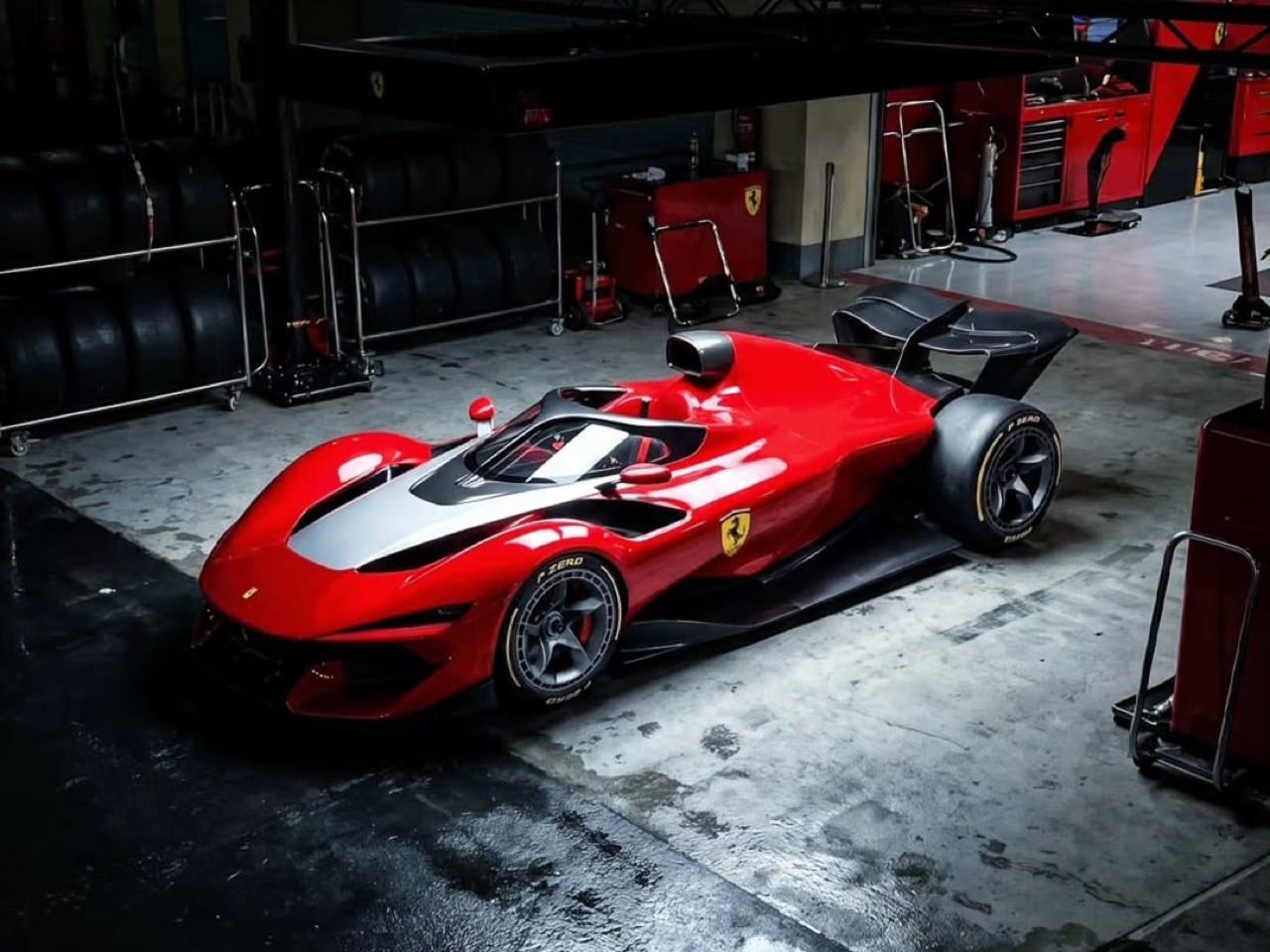
We have seen designers wrestle with cockpit safety before, including Olcay Tuncay Karabulut’s closed canopy F1 concept we covered a while back, which tackled the same halo problem from the opposite direction. Serafini’s screen splits the difference between that fully enclosed canopy and the open halo drivers race with today, and it does not fully solve either car’s problem. What it does is remind you how much personality F1 gave up chasing regulation compliance, one flap and winglet at a time.