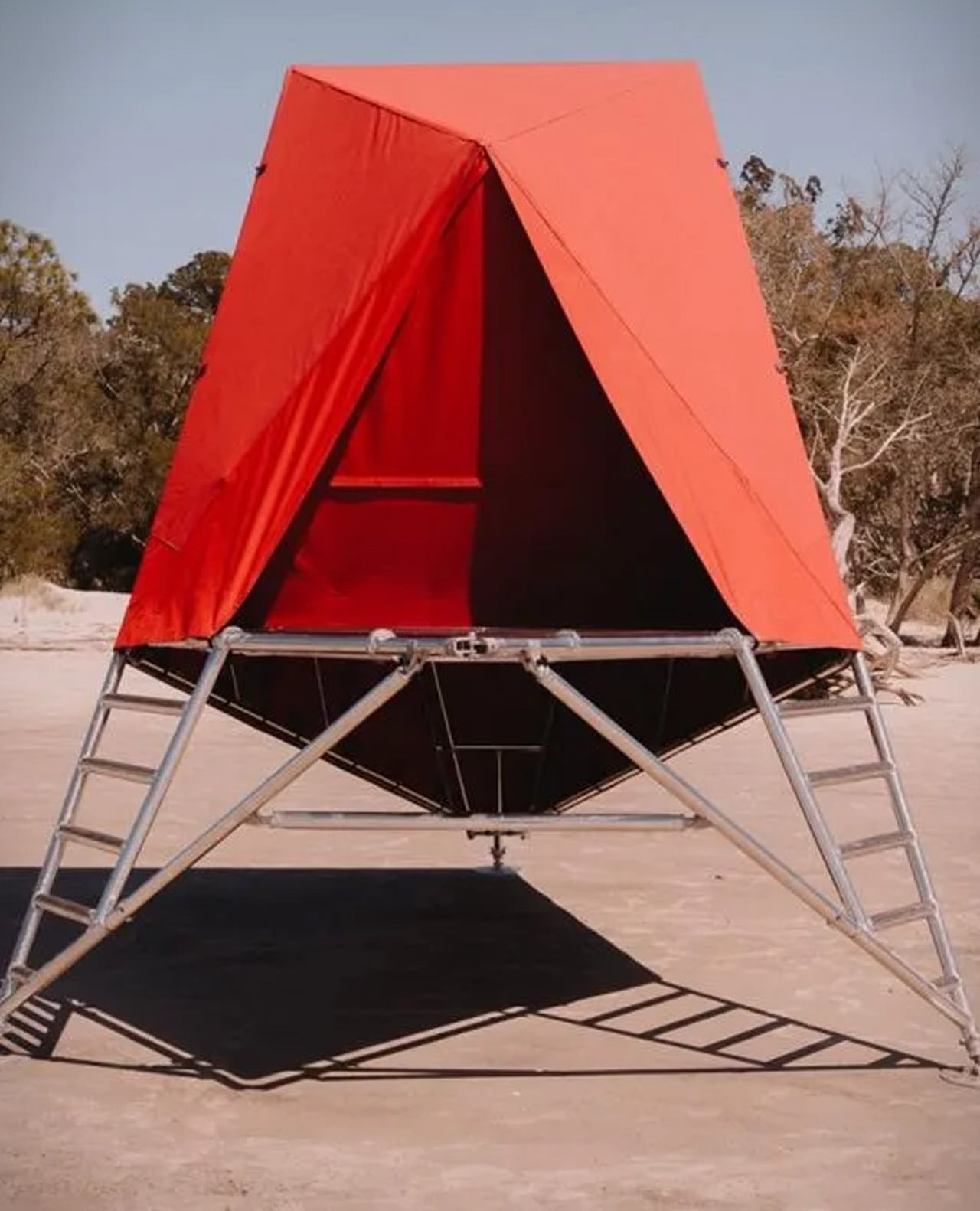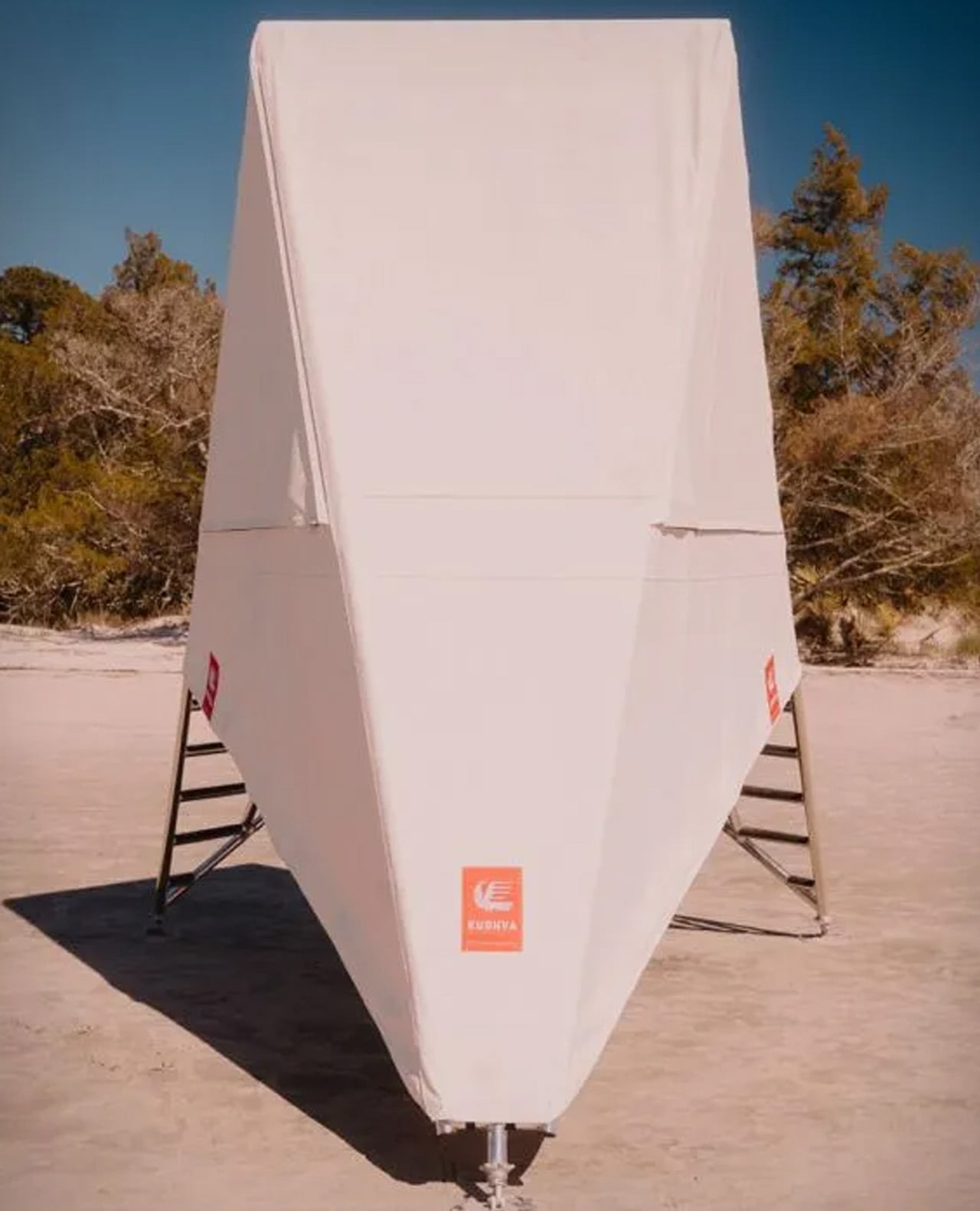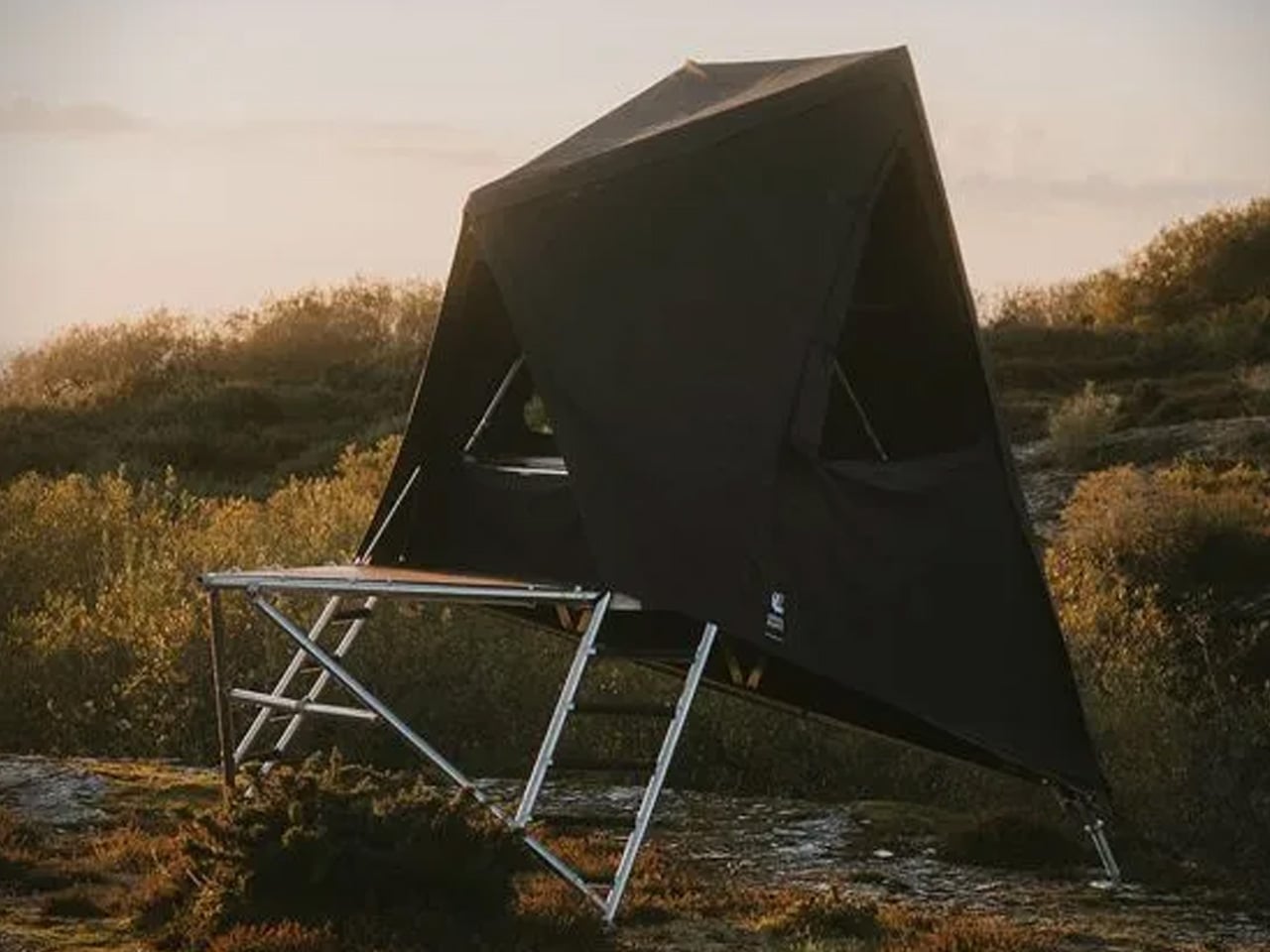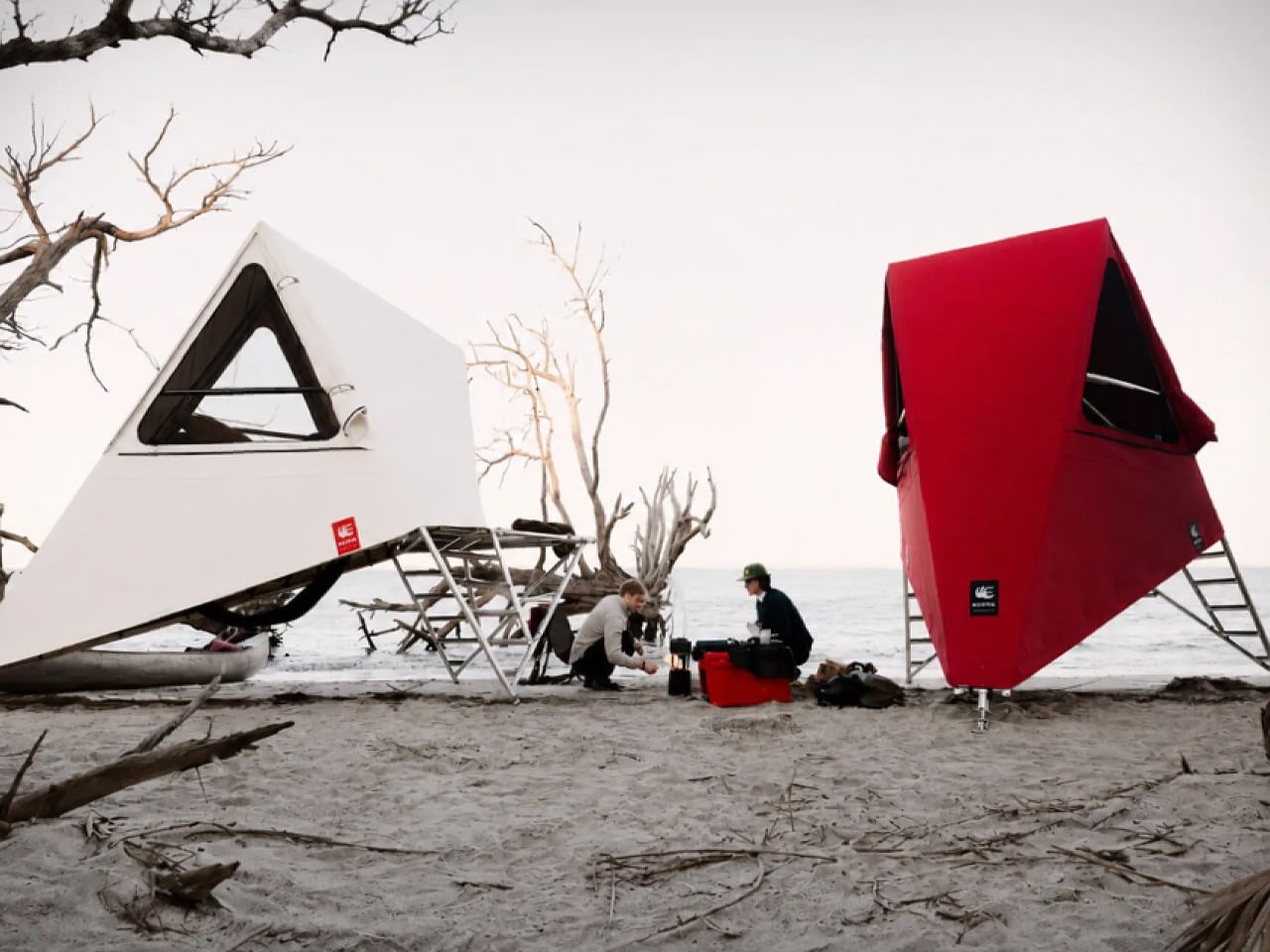

You’ve seen a building so good you immediately wanted to live in it. Ben Huggins built one you can actually move. His latest project, the Kudhva K1, is a portable elevated cabin that somehow manages to feel both seriously considered and completely untethered from the ground beneath it. Huggins is co-founder of Sandford-based New British Design, and the K1 is the kind of thing you design when you love architecture but have no patience for permanence.
The K1 grew directly out of Kudhva, the beloved off-grid retreat carved into a disused slate quarry on the north coast of Cornwall. The original cabins, perched above the landscape on angular stilts, became something of a cult object in British architectural circles. Huggins, working alongside co-designer Hannah Huggins, took that angular, treehouse-like geometry and asked a simple but ambitious question: what if you could move it?
Designer: Ben Huggins of New British Design
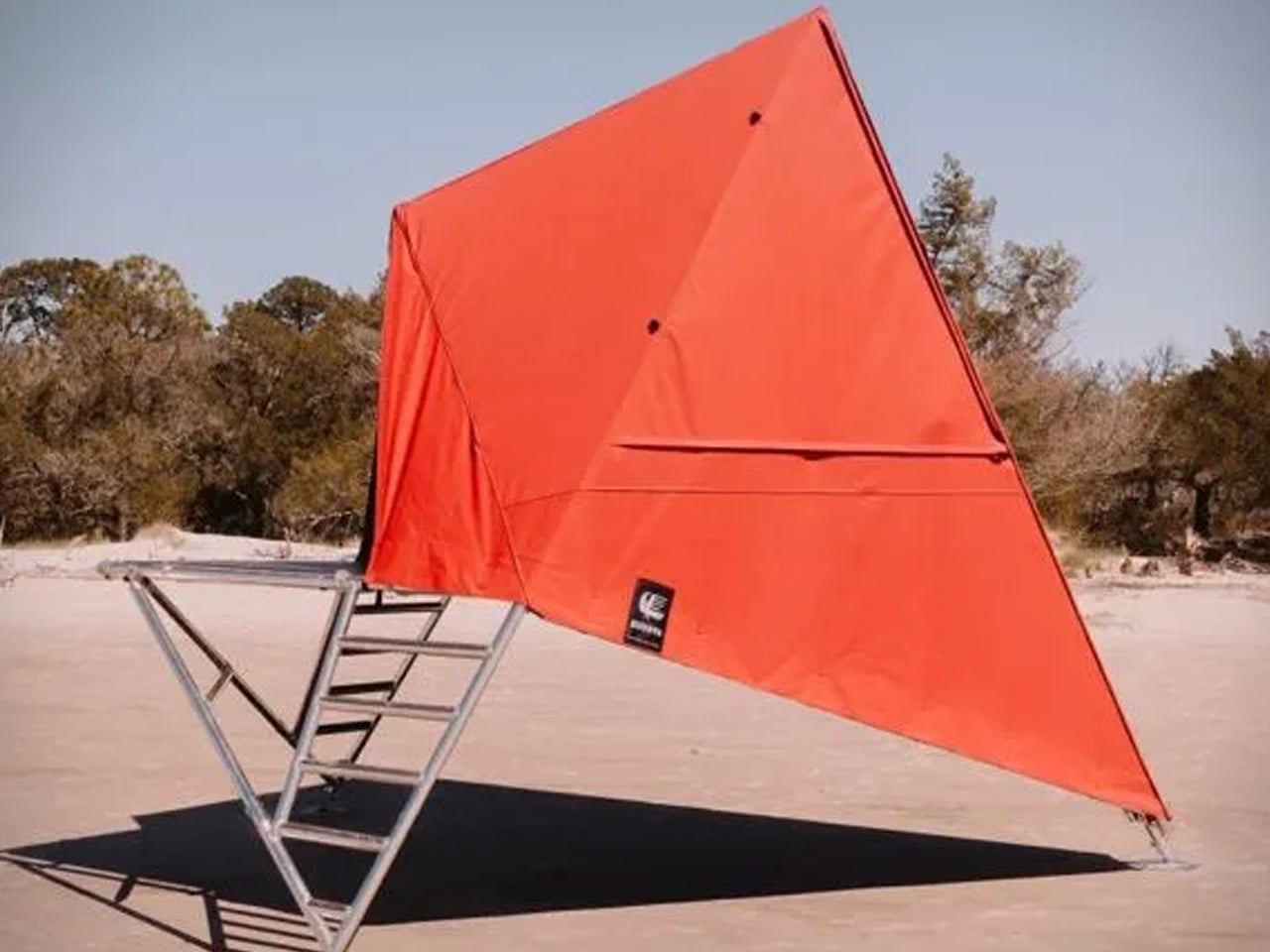
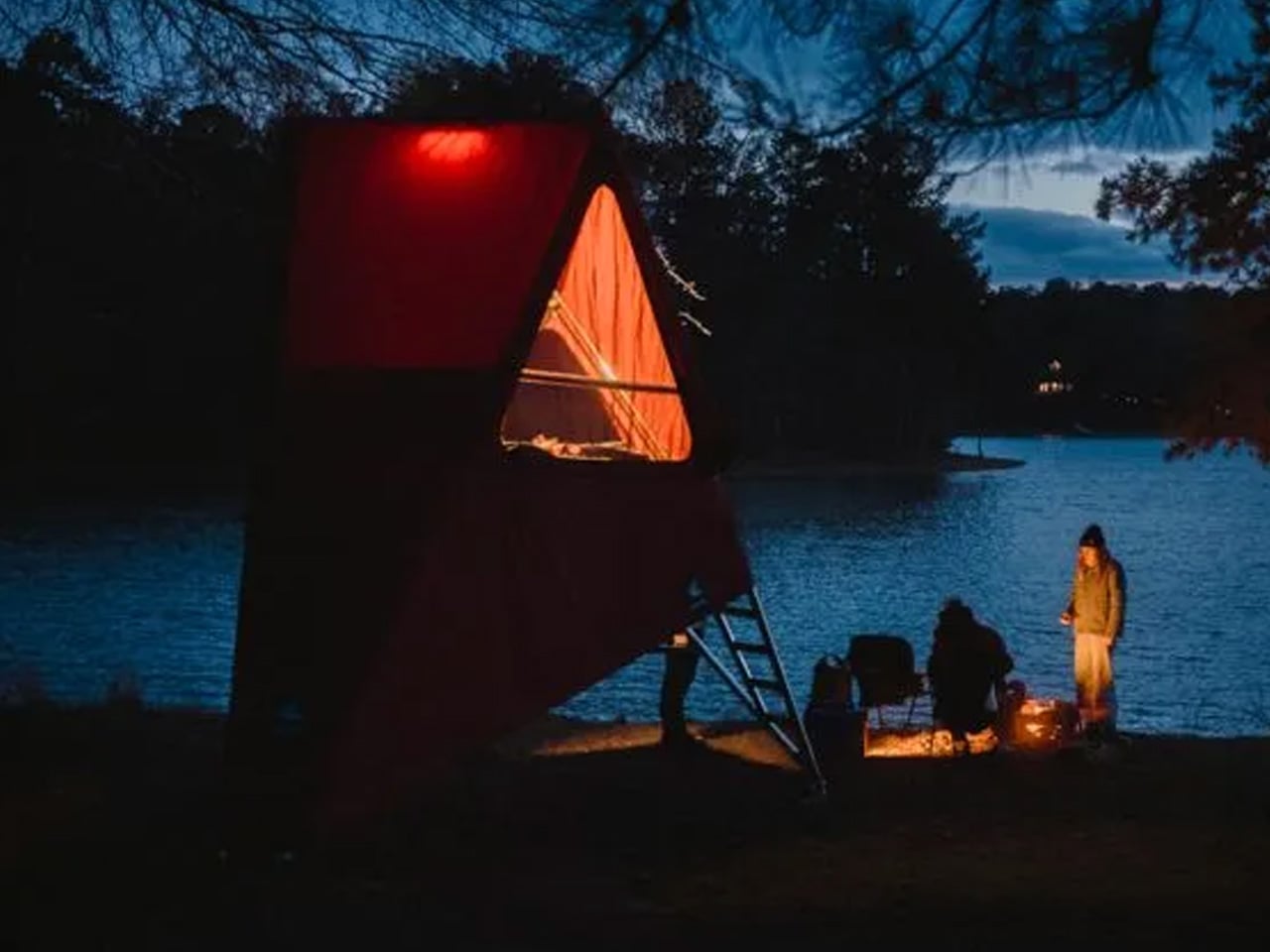
The answer is a structure built around a recyclable aluminum frame wrapped in heavy-duty British Millerain Regentex poly-cotton canvas, rated at 407g/m2. Standing 3.6 meters tall, 3.3 meters wide, and 4.9 meters deep, the K1 isn’t small. An elevated deck extends beyond the entrance, accessed by integrated ladders, giving it a genuinely architectural presence that photographs like a building and packs down like equipment. The tripod leg system adjusts independently, meaning it can sit perfectly level on rocky, sloped, or otherwise uncooperative ground without disturbing a single blade of grass below it.
That relationship with the land matters. The K1 requires no foundation, no planning permission, and leaves no trace when it leaves. Two people can have it standing in 30 to 45 minutes. At 320 kilograms, it isn’t light, but it is relocatable, which places it in a category almost entirely its own: too architectural to call a tent, too mobile to call a cabin.
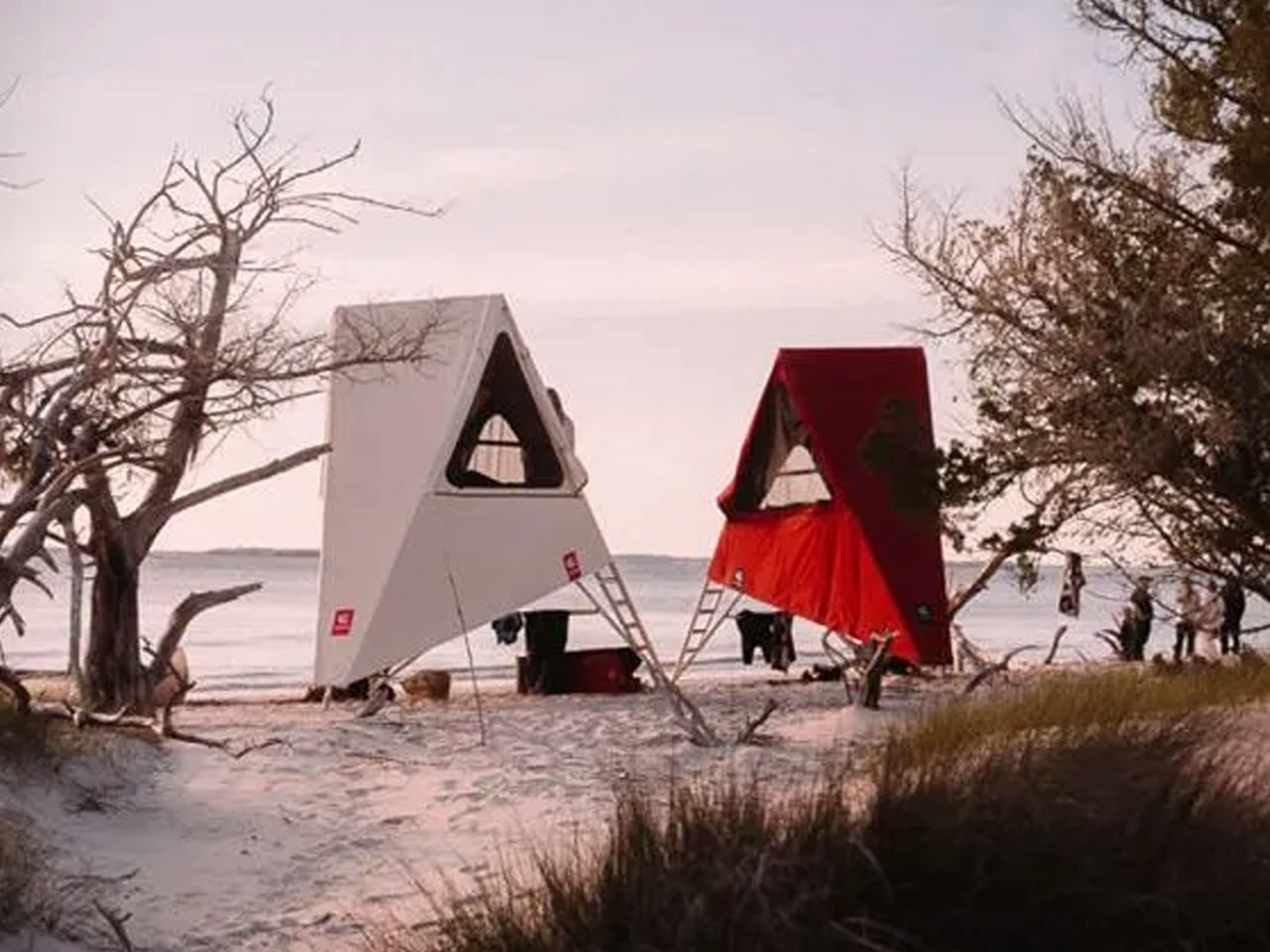
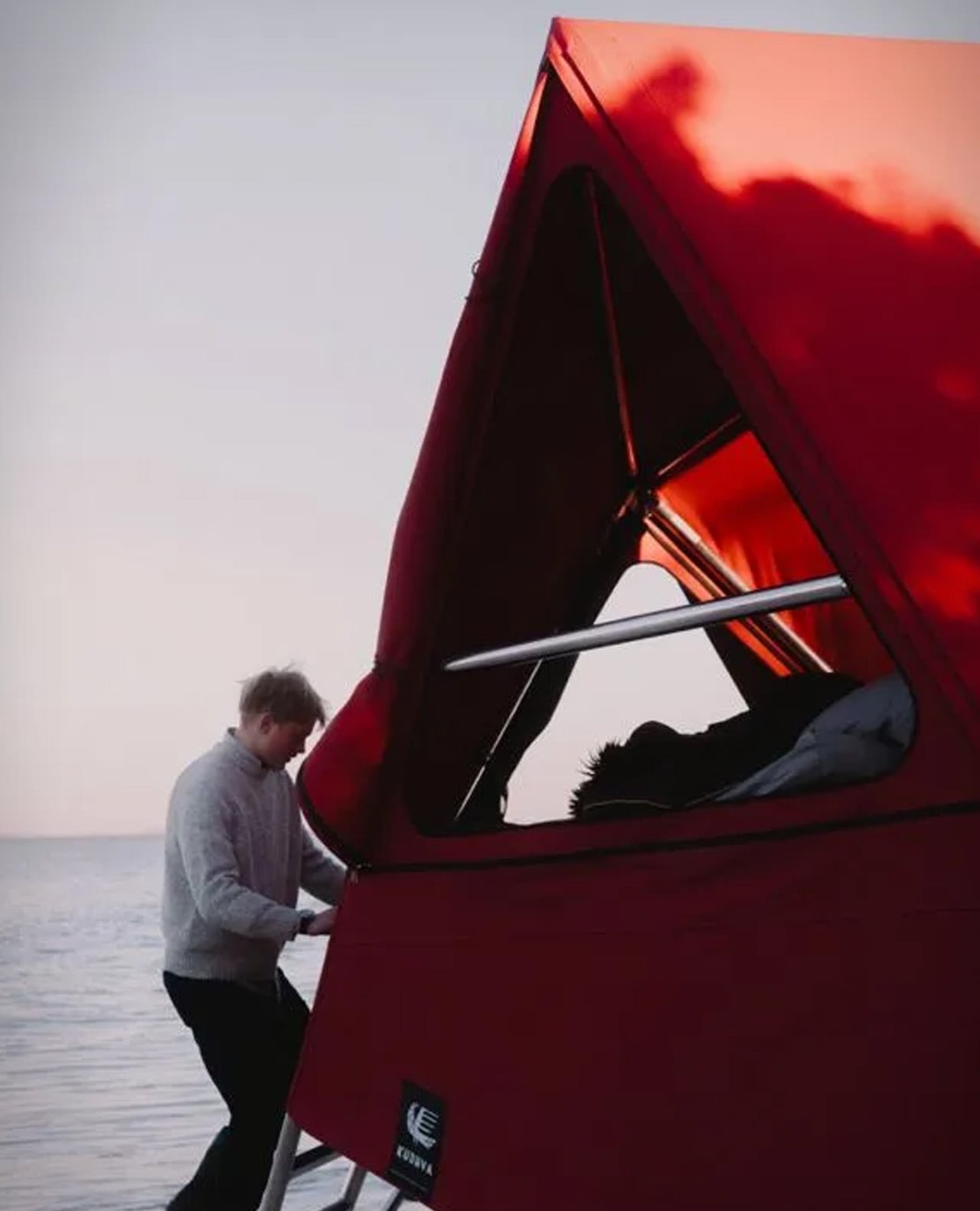

The canvas shell is built to withstand winds up to 80 mph, suggesting a product designed for real weather rather than curated glamping conditions. Inside, the two-person sleeping space carries the same minimal, considered proportions as the original Kudhva structures. The frame is described as infinitely recyclable, which fits neatly within the retreat’s broader ethos of leaving places better than you found them.
Priced at around $15,500, the K1 is now making its way to the United States through British American Camping, with initial deployments planned across glamping destinations in Georgia. The price puts it squarely in the commercial hospitality bracket, though nothing about the design reads like a product built for budget corners. It reads like a building that decided to keep its options open.