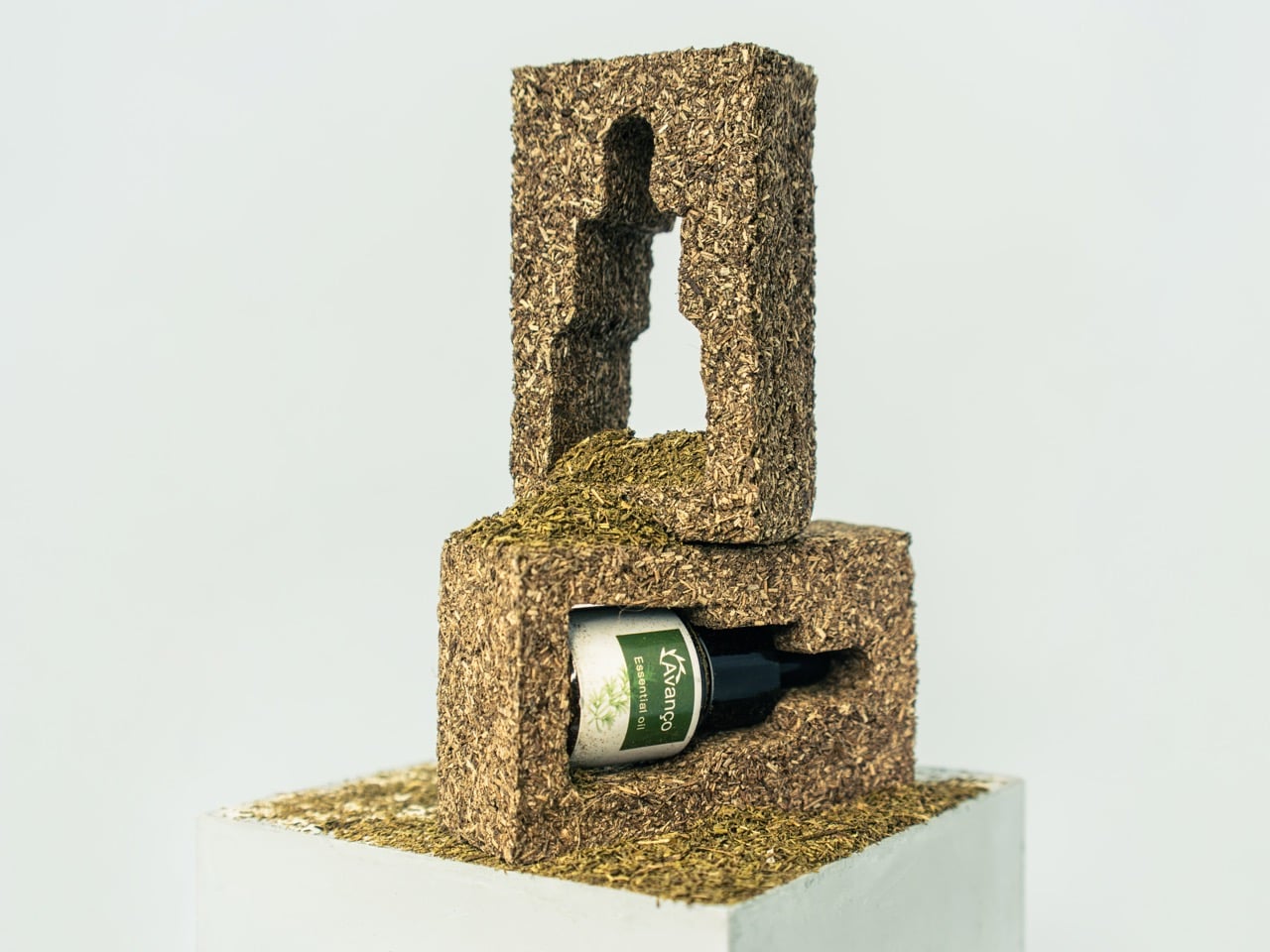

Expanded foam or polystyrene has had a good run as the default packaging filler, mostly because it’s cheap, light, and nobody was really committed to sustainability for the last half century so the industry is pretty set in its ways now. Expanded foam does not decompose, it does not do anything useful once you rip it out of the box, and it has spent decades sitting quietly in landfills being extremely unbothered by the concept of consequences. Designers have been chipping away at its throne for years, swapping in mushroom mycelium, seaweed film, pressed pulp, whatever grows fast and decomposes faster. Scentra joins that lineup with a twist nobody else has really tried. Rosemary.
Instead of growing a material or pulping something into a smooth foam substitute, this one compresses actual rosemary waste, stems and all, into a block held together with a seaweed binder. The result looks rustic rather than manufactured, and it carries the plant’s natural scent right there in the fibers. Crack the box open and rosemary hits you before the product does. Foam never managed that trick, and honestly, it never tried.
Designers: Zhixi Dai, Zhou Yun, Wang Zhan
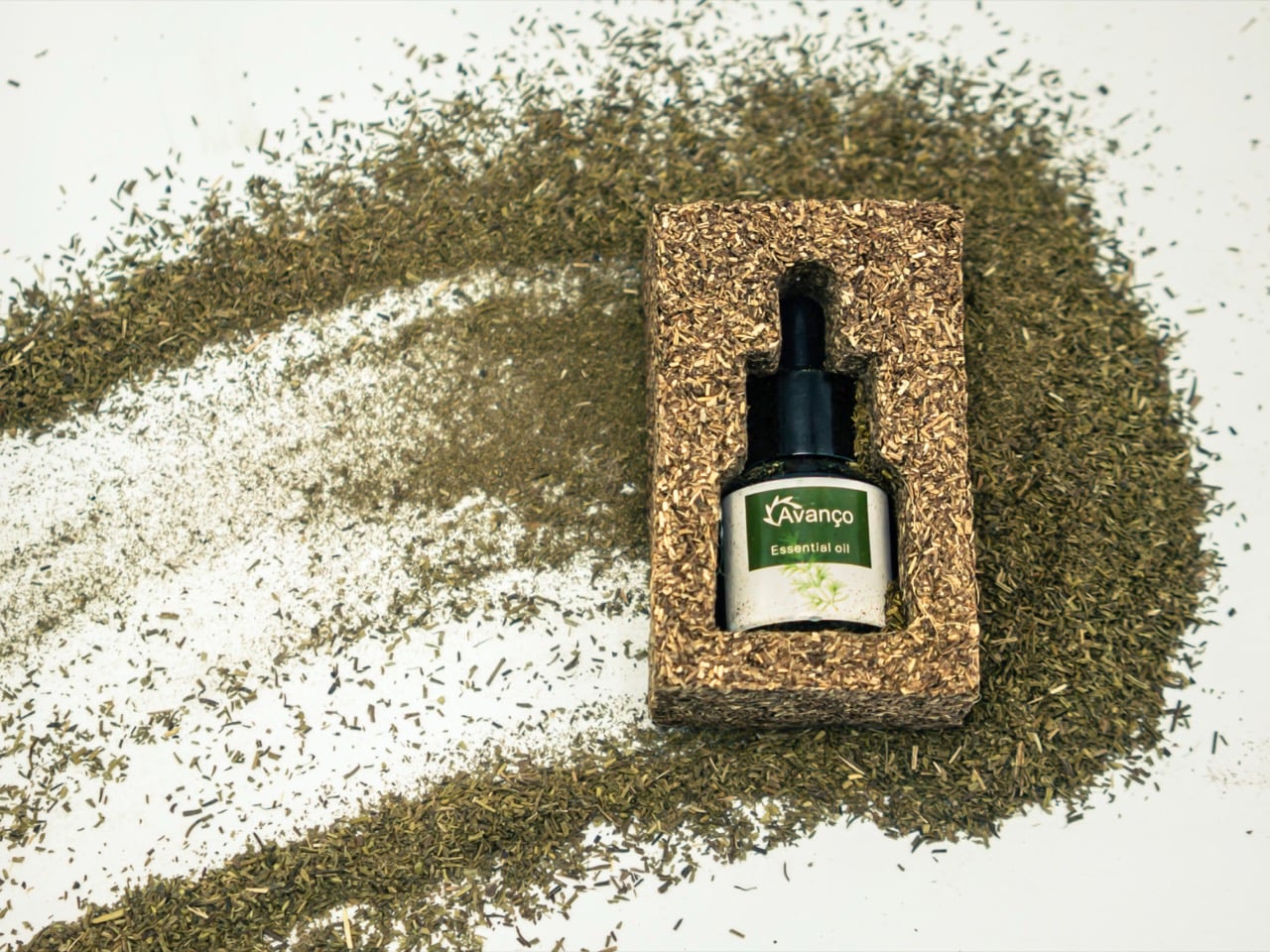
The rosemary itself comes from an organic farm in Guizhou, China, run under Omni Biotech’s AOLUX line, where trimmings that would normally get swept up and discarded are collected instead. The farm also employs local workers from low income families as part of a rural revitalization push, so the sourcing story has a human angle sitting quietly underneath the material one. Designer Zhixi Dai led the project with Zhou Yun and Wang Zhan rounding out the team, and between them they turned a farming byproduct into something structural enough to actually protect glass.
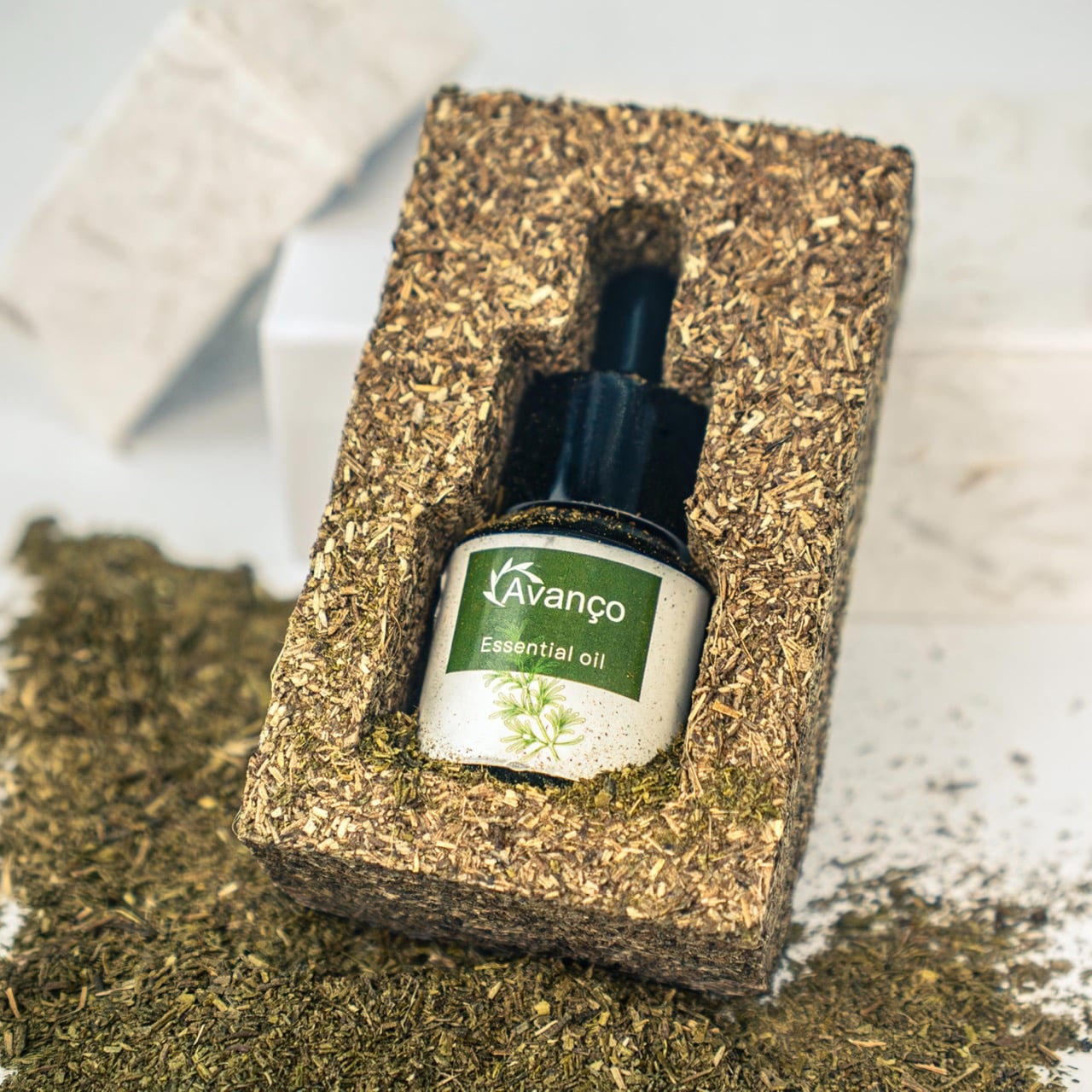

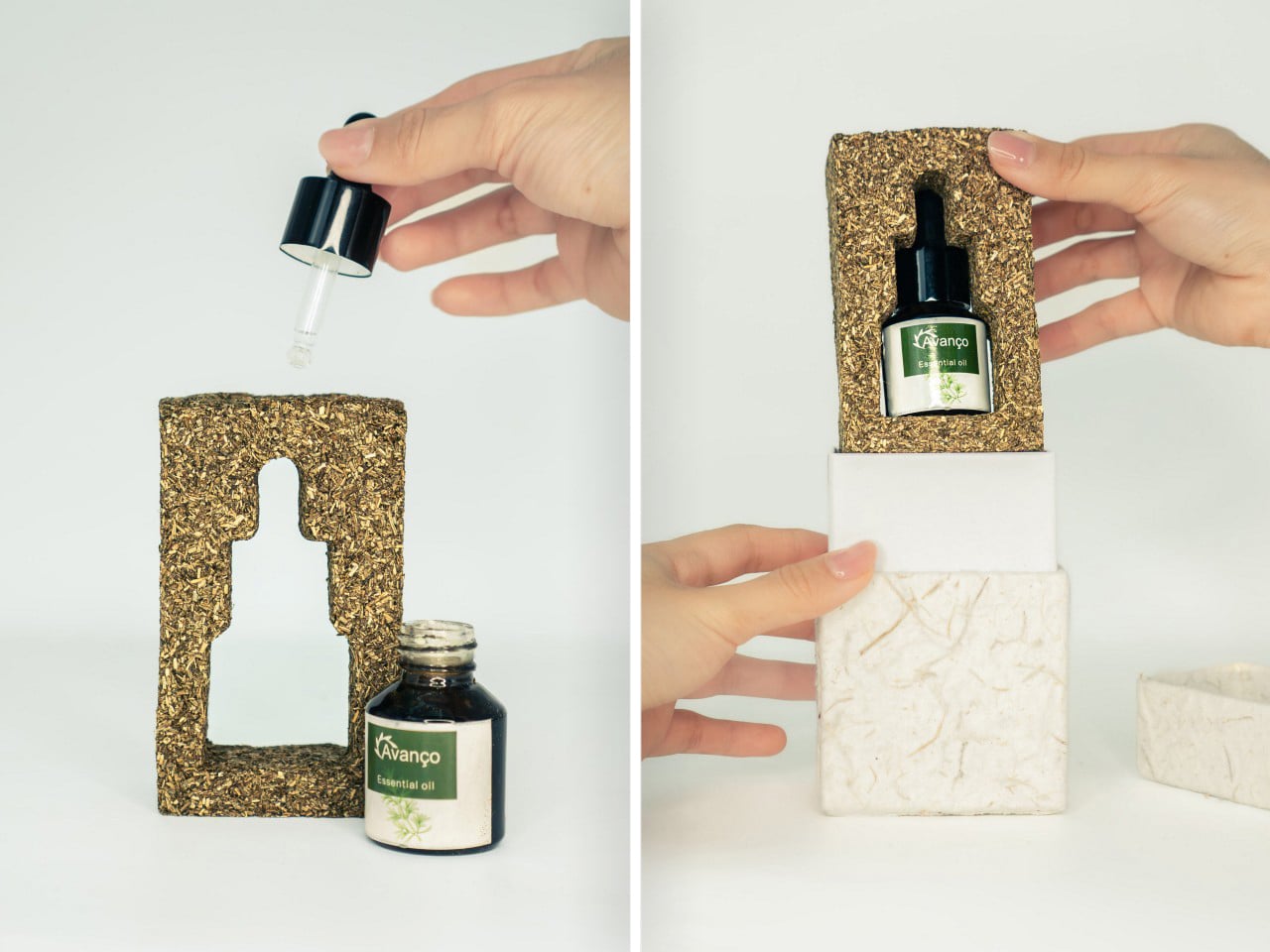
The block is cut with a cavity shaped exactly like the essential oil bottle it holds, silhouette and all, so the packaging reads almost like a little doorway with the product framed inside it. Pull the bottle out and you are left holding a chunk of compressed herb that still smells like the plant it came from. Set it on a shelf, add a few more drops of oil when the scent fades, and it keeps working as a passive diffuser. No batteries, no wiring, no porcelain filter to keep clean. Just plant matter doing what plant matter does.
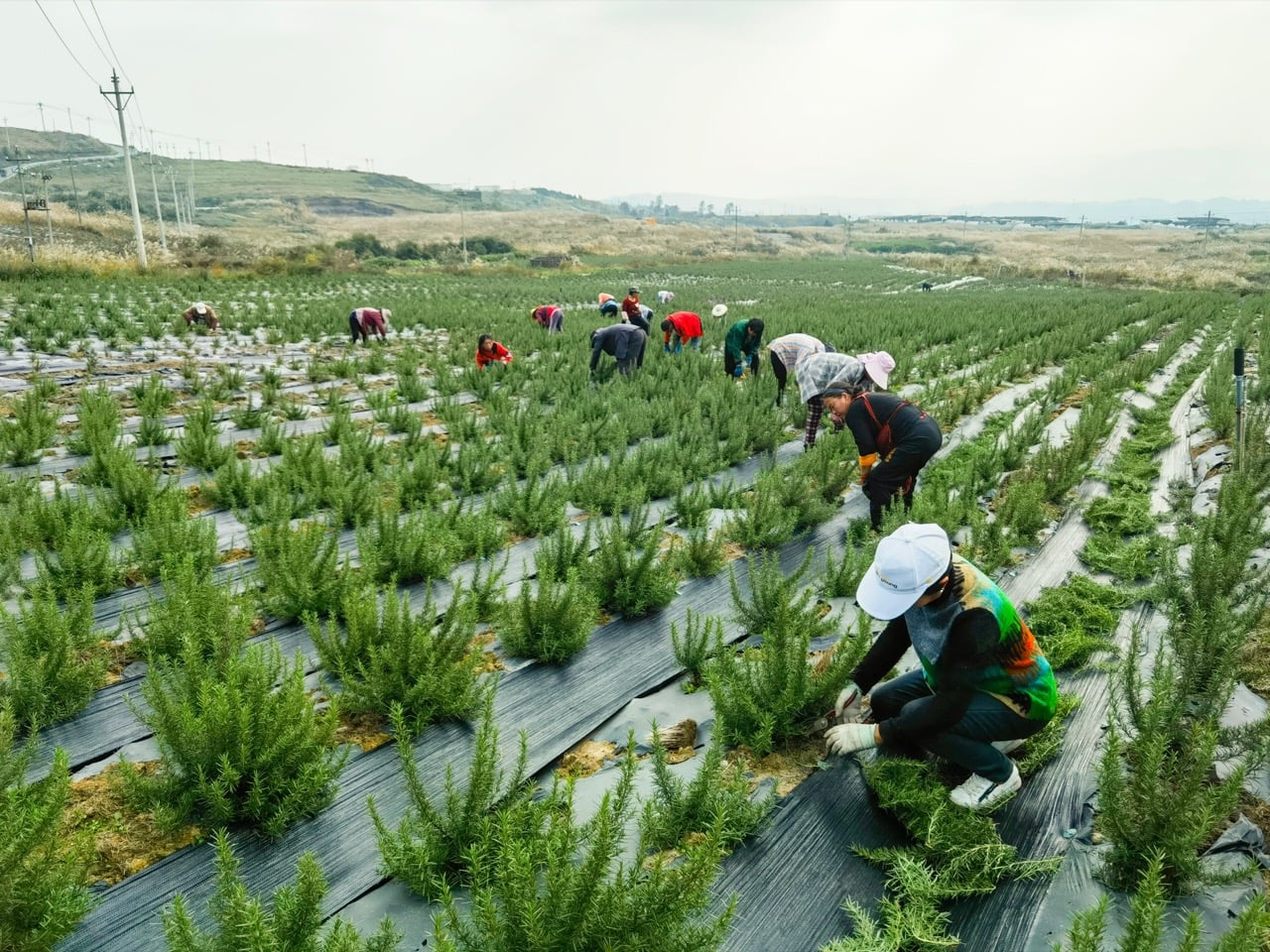
We have seen versions of this waste to material pipeline before. Beer mash has been pressed into leather, spent grain has been molded into stools, rice husk has been packed into furniture. What usually happens in those stories is the waste becomes inert once it is shaped, useful for its structure and nothing else. Scentra skips that step. The rosemary does not stop being rosemary just because it got compressed into a block. It keeps its oils, its texture, its smell, all the things that made it worth growing in the first place.
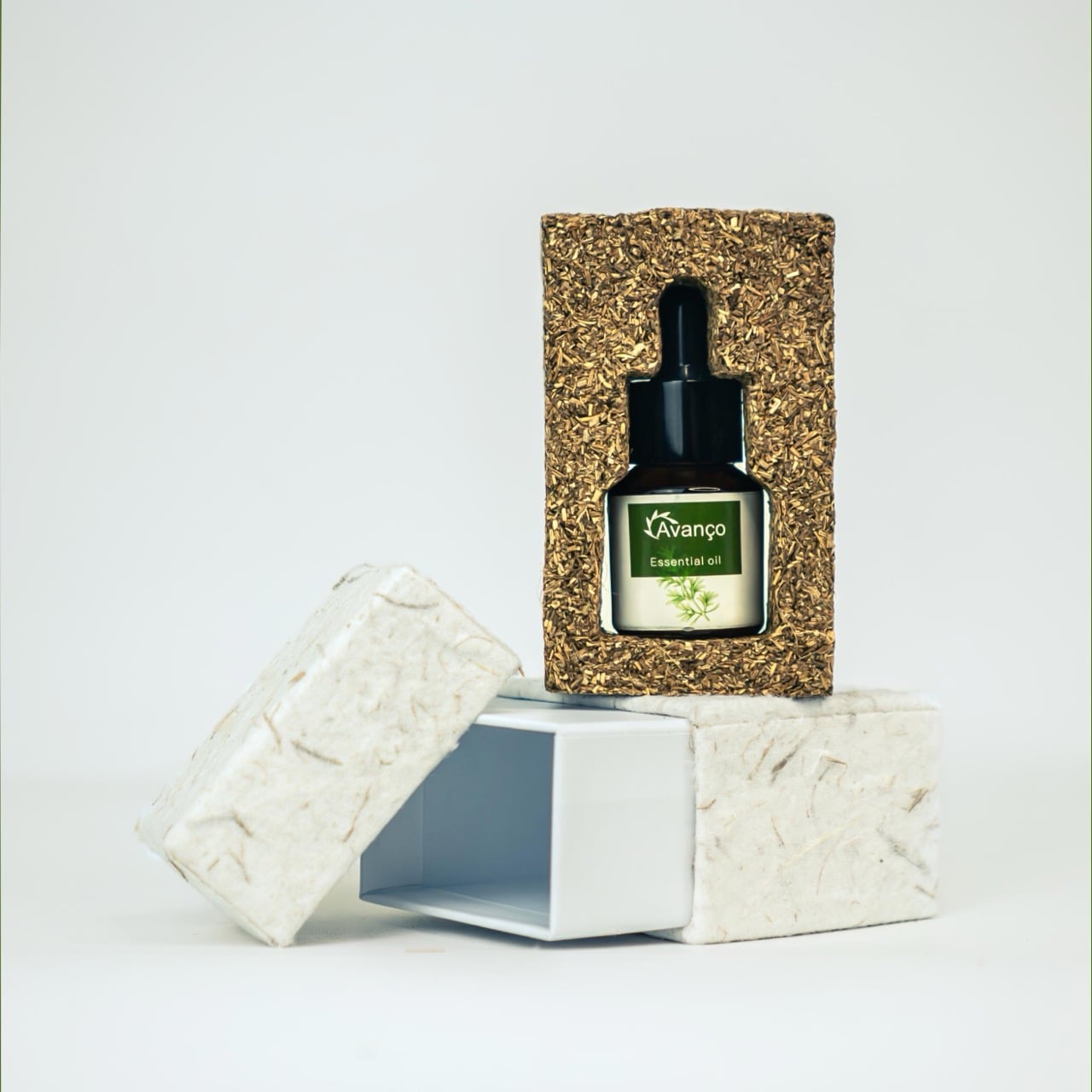
That is really the whole pitch here, and it is a good one. Most eco packaging asks you to feel good about something you cannot see or verify, a recycling percentage or a compostability claim buried in fine print. This one just smells like rosemary. You do not need a certificate for that, though it has one anyway, having picked up the Best Eco Design win at the European Product Design Awards.