
Most audio equipment is designed around the premise of concealment. The drivers are hidden, the wiring is tucked away, the internal mechanics are sealed behind pristine panels of wood or brushed aluminum, and you’re meant to forget that any of it exists. You just press play and trust the box. Hagar Guri, an industrial designer, has a different idea entirely.
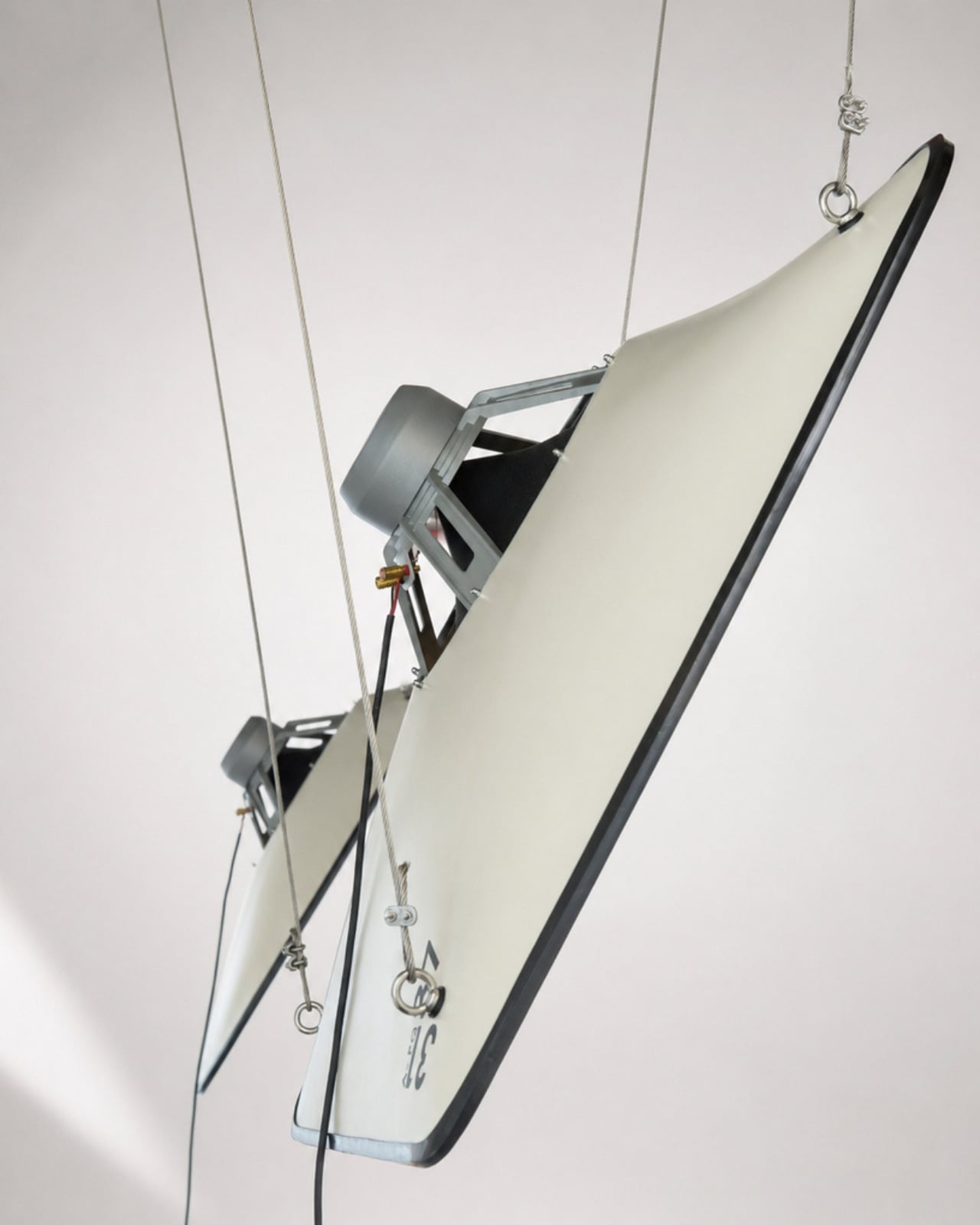
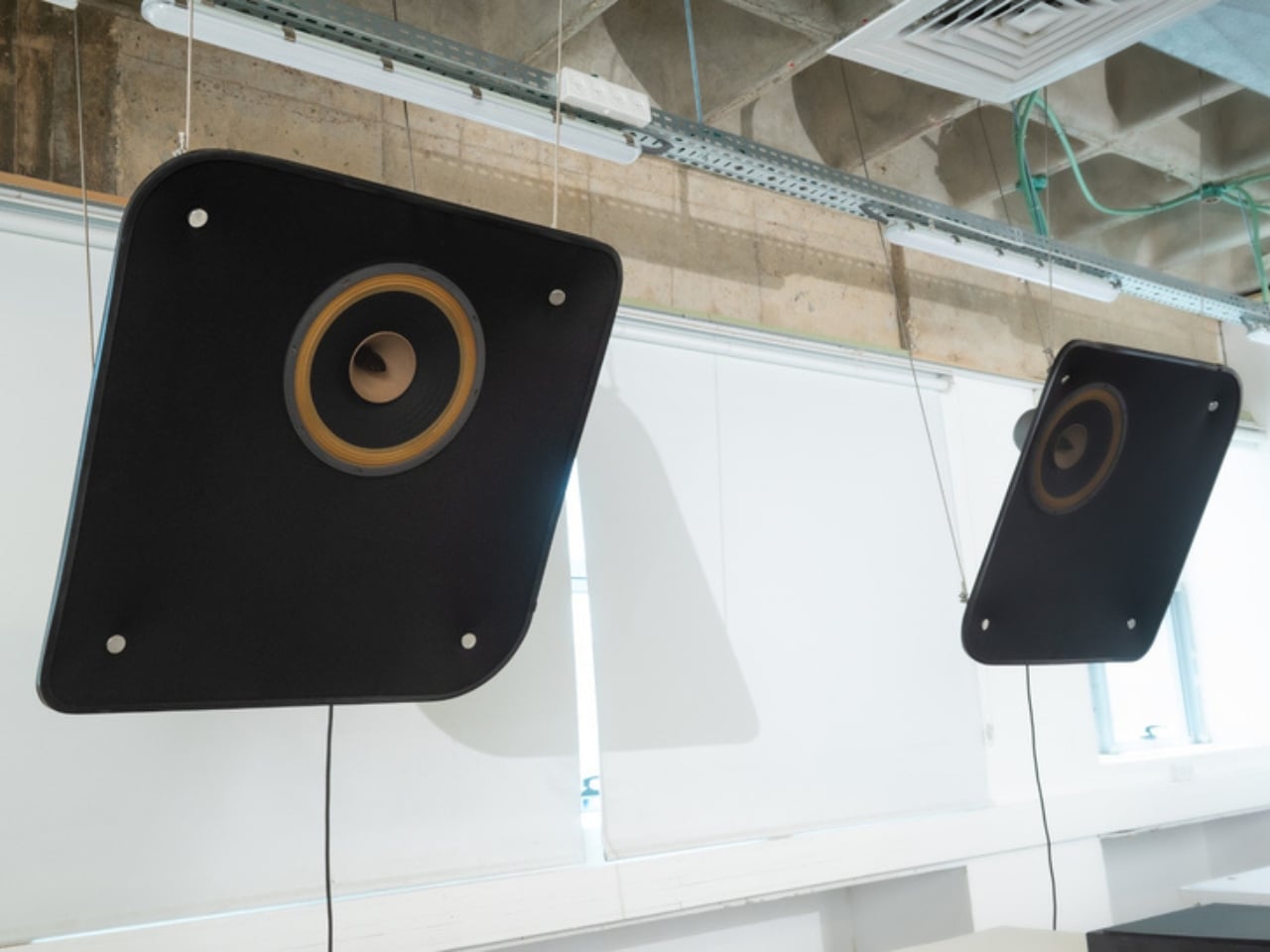
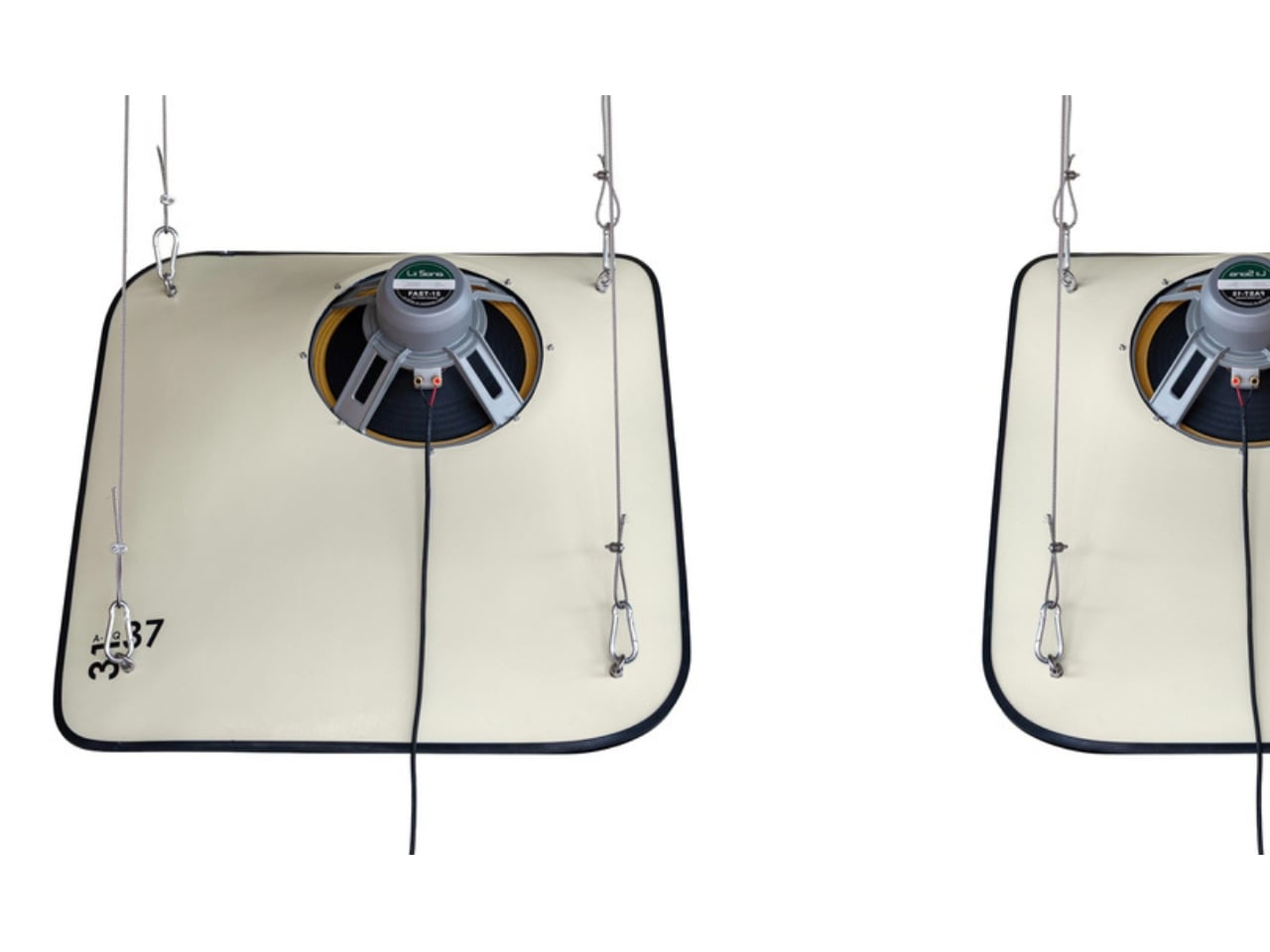
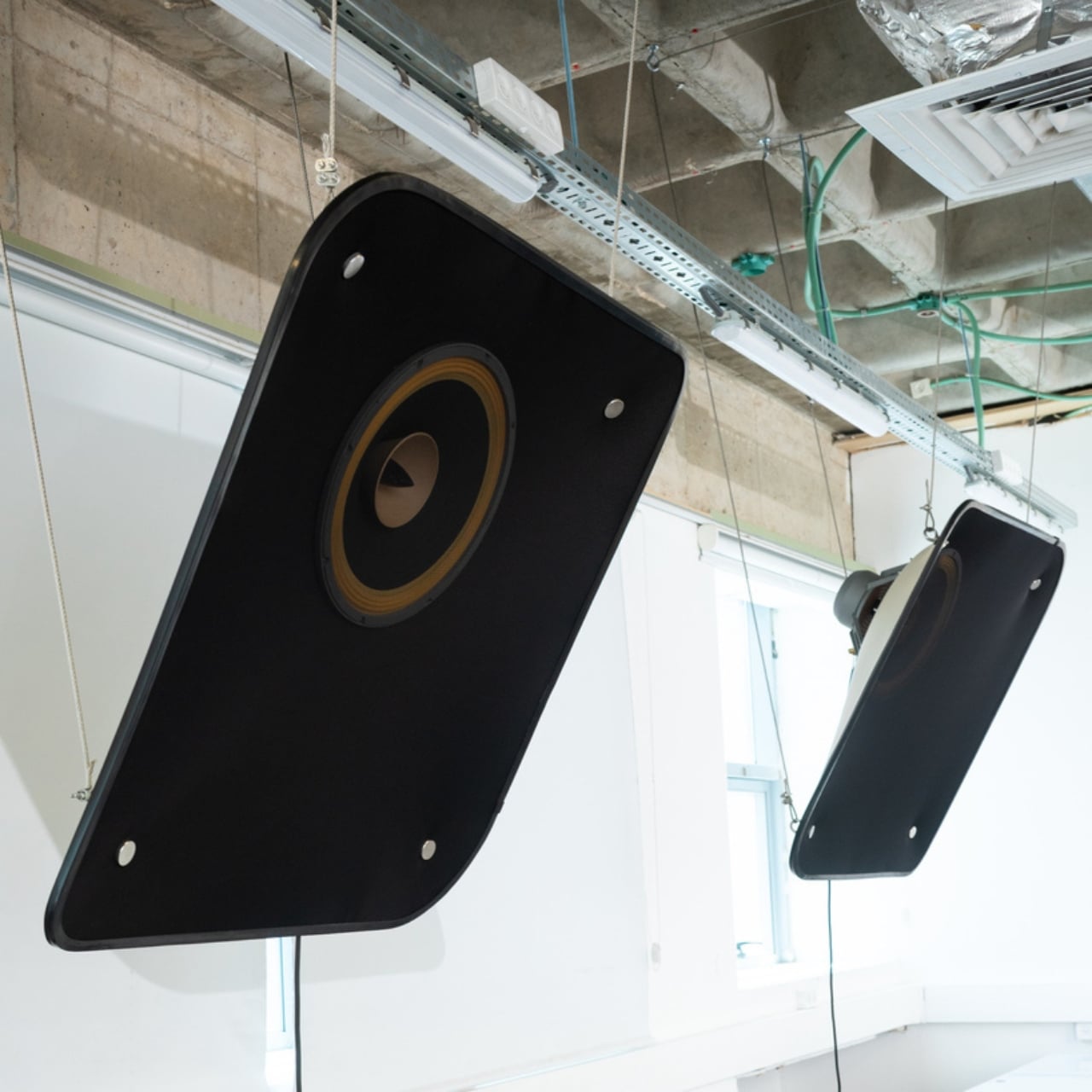
A-PQ 31.37 is a suspended open-baffle loudspeaker system that does the opposite of hiding. Built from concrete canvas, a flexible, fabric-reinforced material that stiffens into a rigid, curved shell when hydrated, the speaker hangs from steel cables and puts everything on display. The driver is exposed. The wiring is visible. The rear radiation surface, the structural elements, the mechanical connections: all of it is part of the visual experience, not an afterthought buried behind a grille.
Designer: Hagar Guri
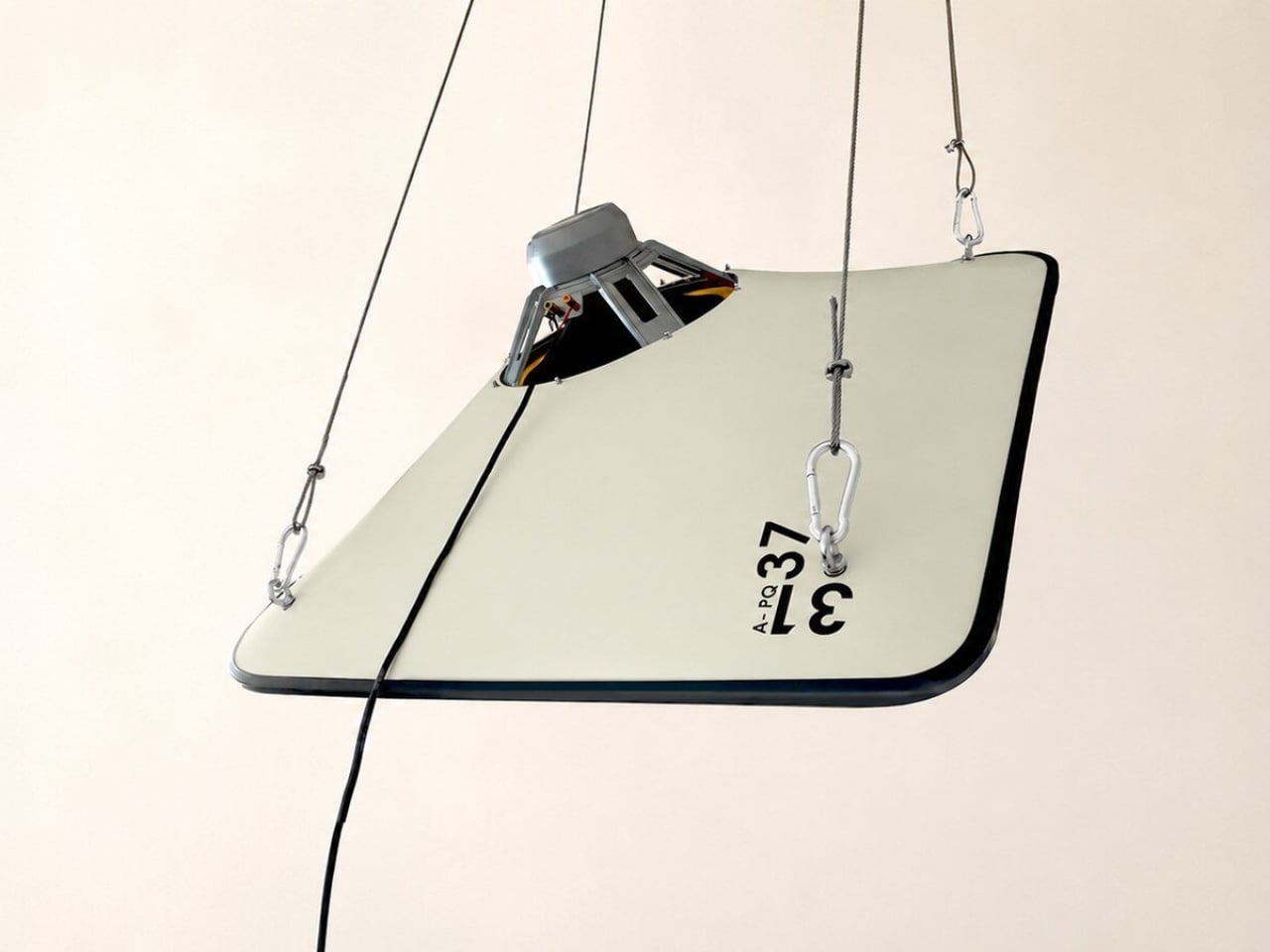
The material choice alone is worth pausing on. Concrete canvas is not a typical choice for audio equipment. It is the kind of material you would expect to see in emergency shelters or civil engineering projects, not hanging in a listening room. But that is precisely what makes it interesting here. It is dense, rigid, and visually raw in a way that synthetic plastics and MDF simply are not. The curved form it takes in A-PQ 31.37 manages to look both industrial and surprisingly refined, which is not an easy balance to strike.

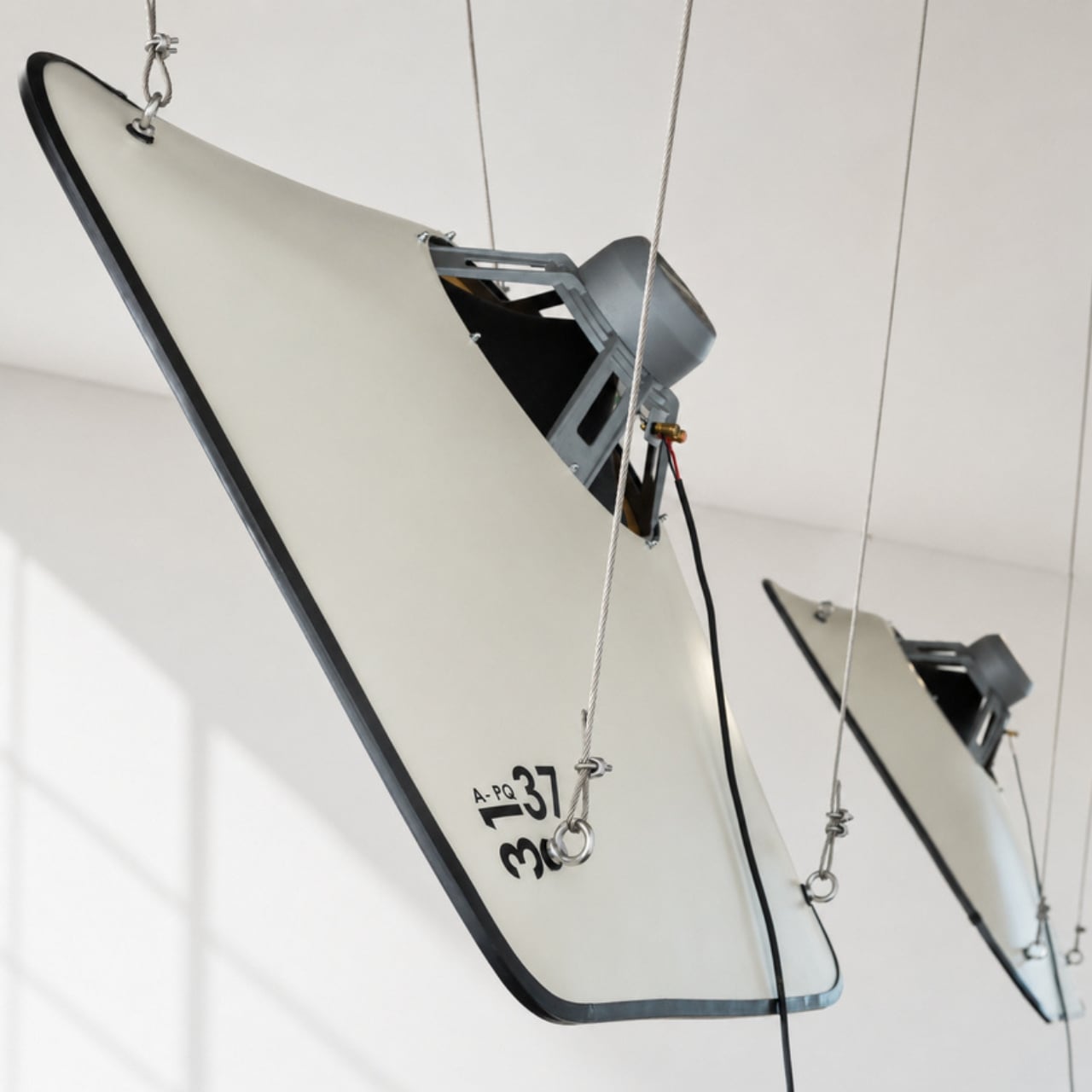

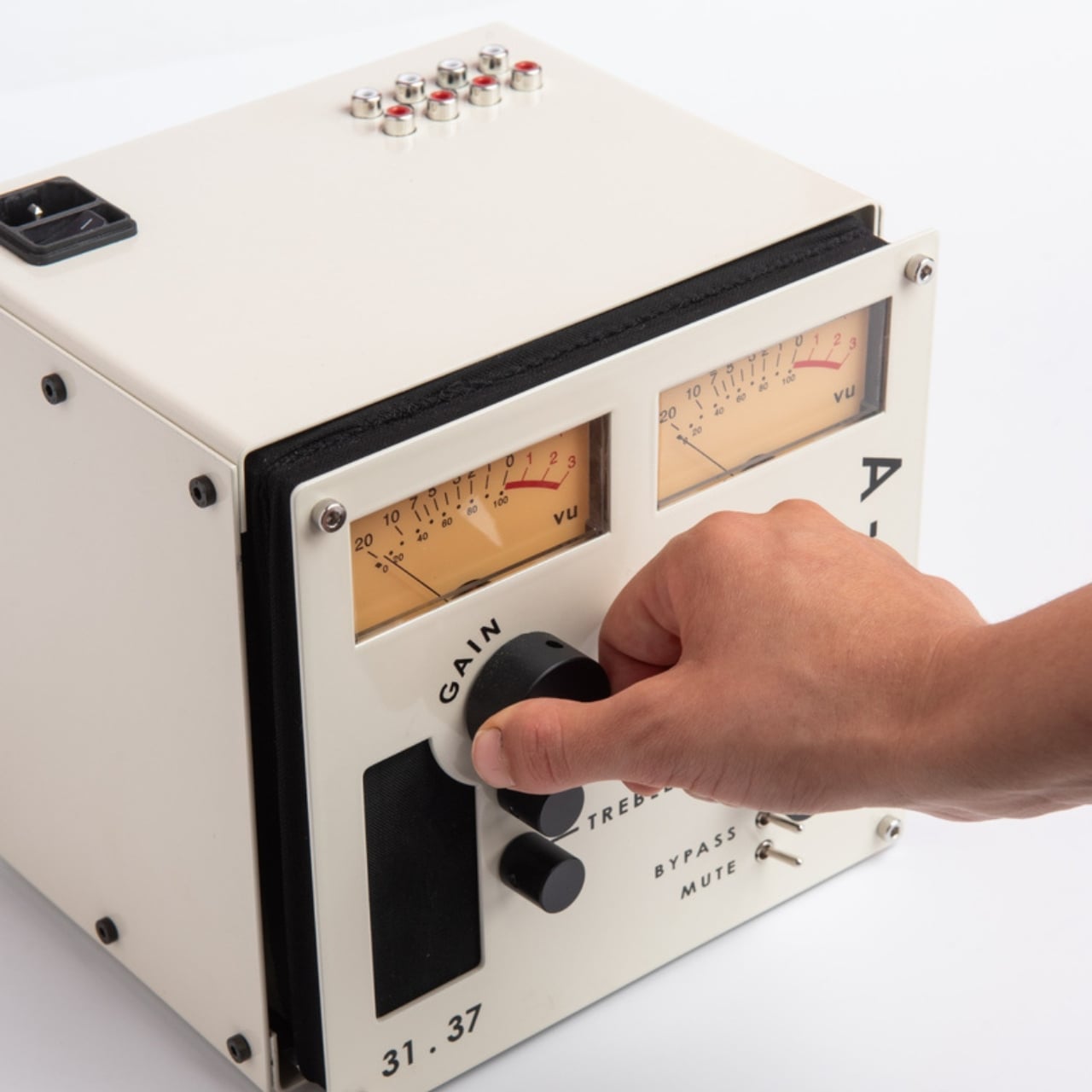
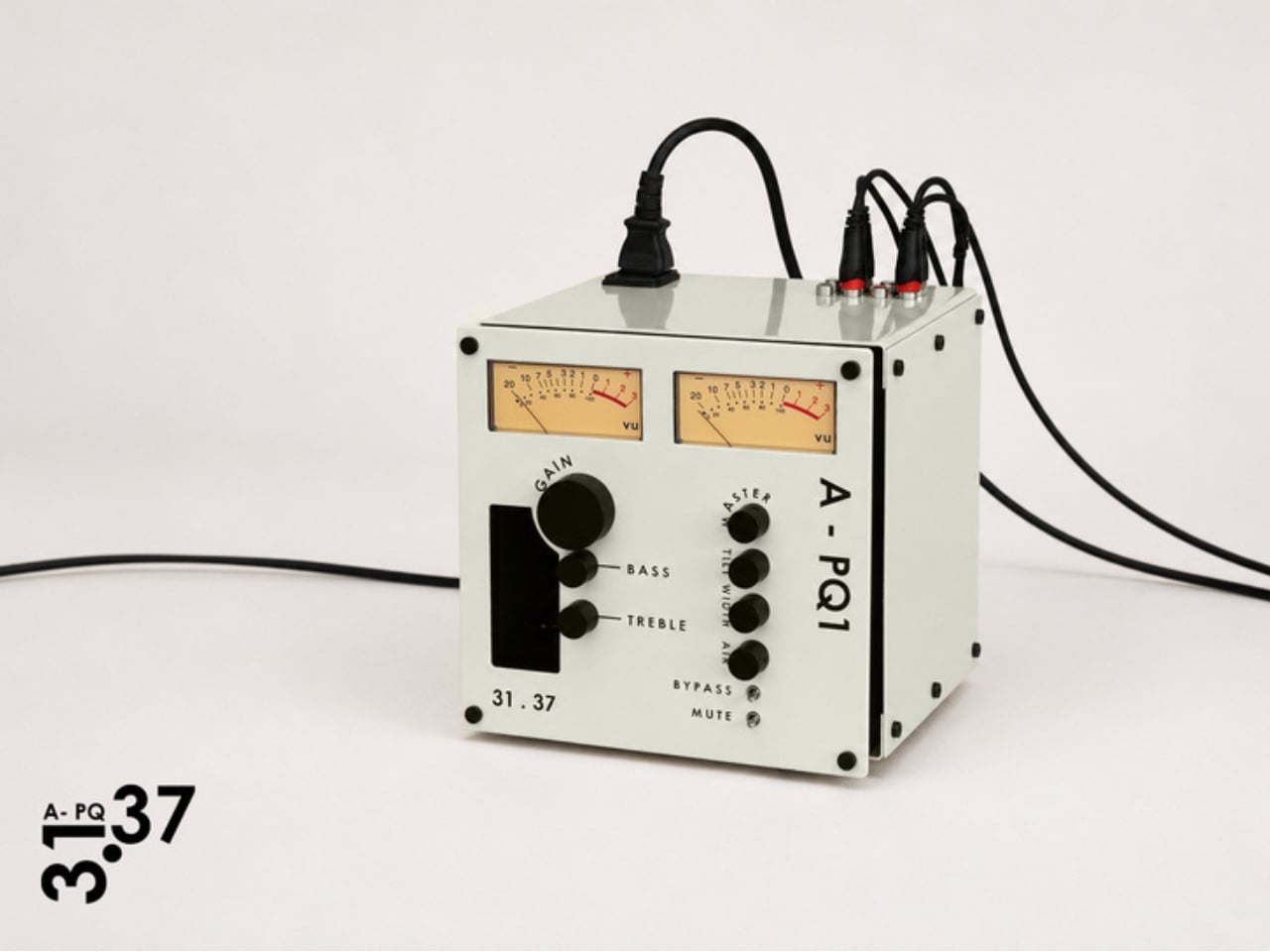
Open-baffle speaker design has existed for decades in audiophile circles, and the community tends to be evangelical about it. The principle is straightforward: without a closed enclosure, sound radiates both forward and backward, creating a more open and spacious listening experience that many describe as more natural. The trade-off is usually in low-frequency performance, which requires careful driver selection and signal processing to compensate. Guri addresses this through a custom control unit built into the system, incorporating digital signal processing, preamplification, and analogue controls. It is a complete system, not just a sculptural object with wires attached.
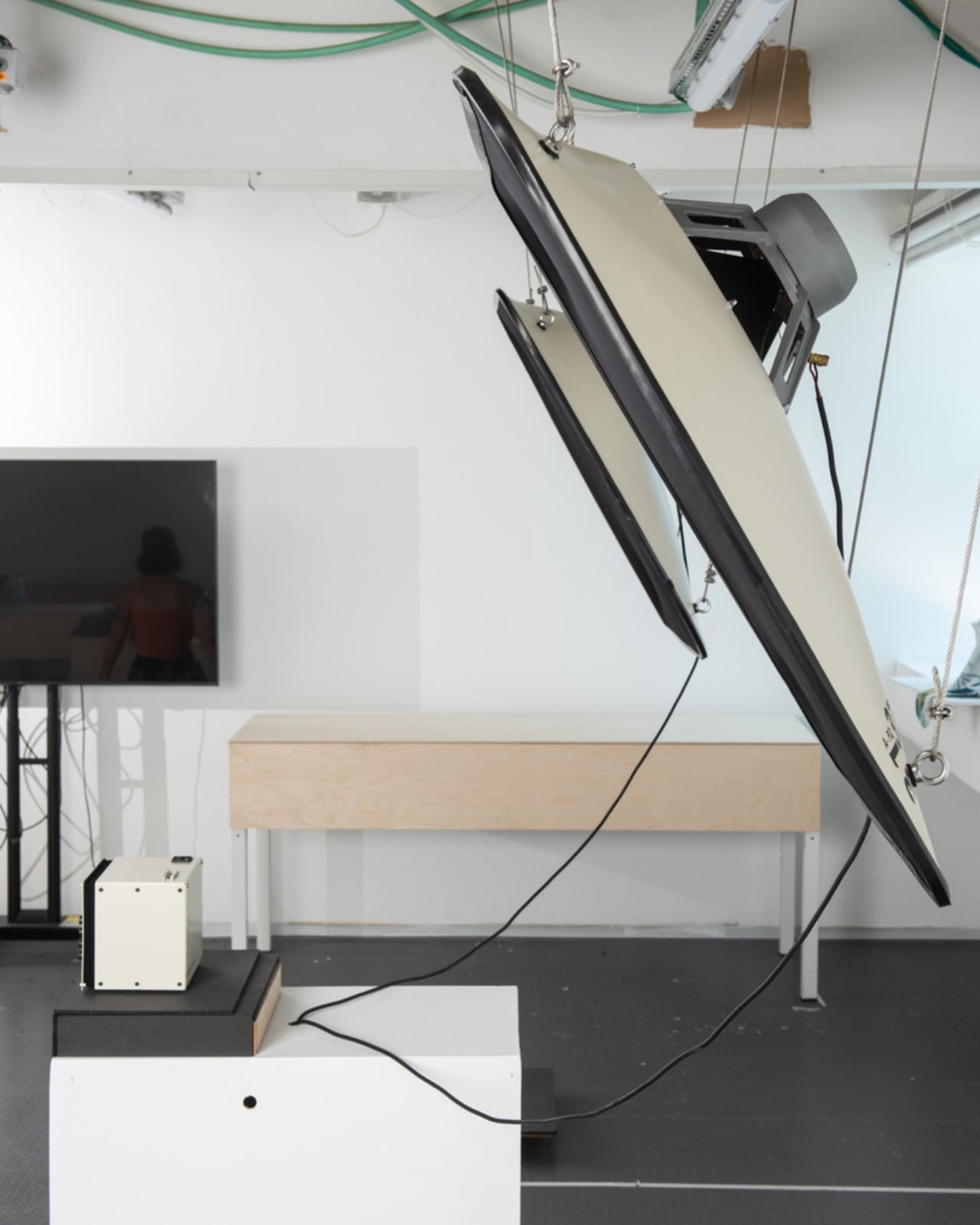
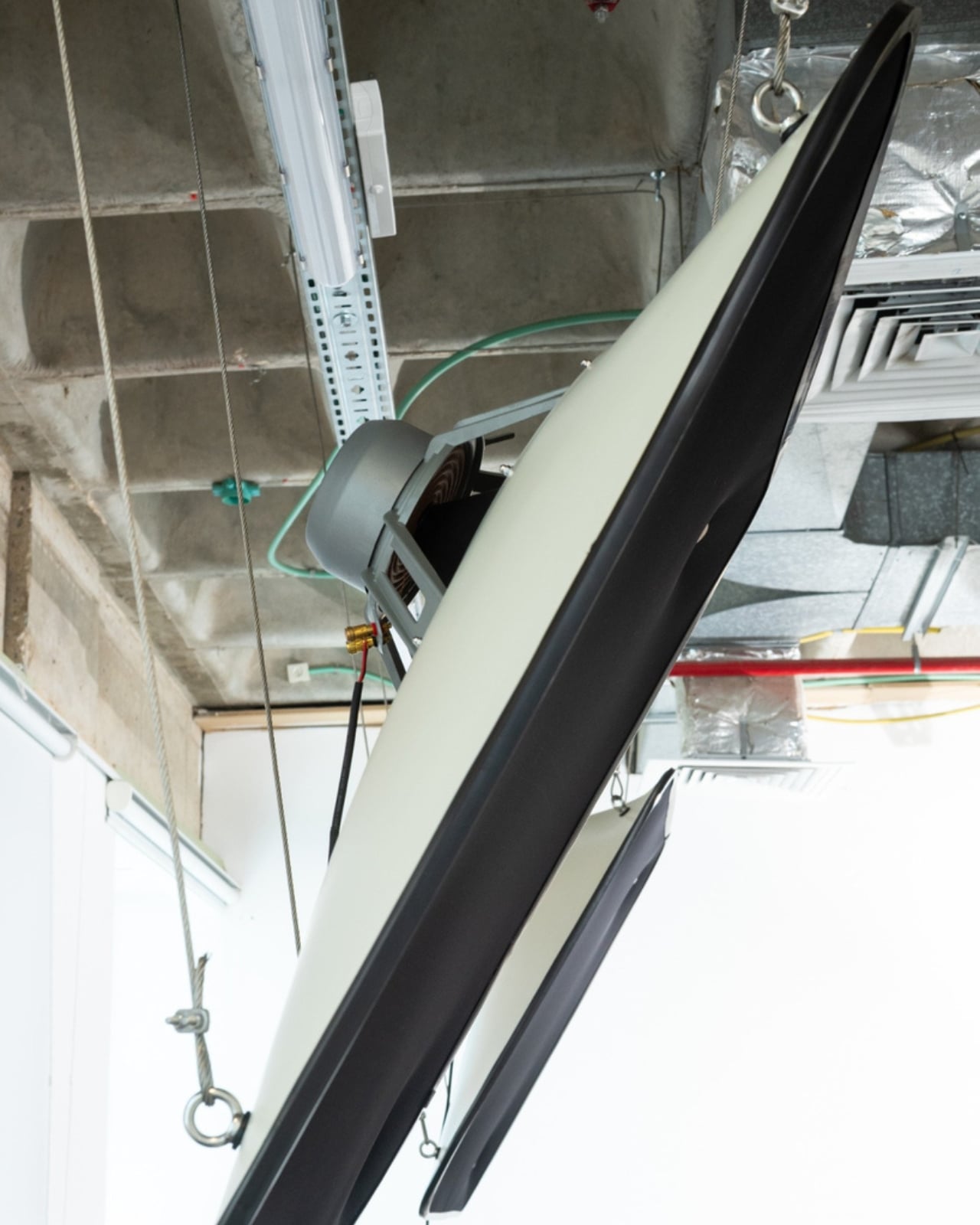
And yet, calling it a sculptural object is not wrong. The speakers are suspended from steel cables and appear almost detached from the floor, interacting with the surrounding architecture rather than sitting against it. It changes the relationship between the listener and the object. You are not looking at a box tucked into a corner. You are looking at something that occupies the room intentionally, that asks to be seen.
Exposed fasteners and typographic elements extend the material language across the system, which tells me Guri was not just thinking about the sound or the form in isolation. The details are consistent. The control unit belongs to the same visual world as the speakers. That kind of coherence at the system level is harder to achieve than it looks, and it is one of the reasons A-PQ 31.37 feels like a fully resolved idea rather than a student experiment that went interestingly sideways.
The broader conversation A-PQ 31.37 is pushing into is one the design world has been circling for a while: what does it mean to make technology honest? So much of our electronics culture is built around the aesthetics of smooth surfaces and hidden complexity. The sleeker and more seamless a product looks, the more sophisticated it is supposed to seem. Guri is suggesting the inverse: that visibility, the kind that shows you exactly how something is built and why it sounds the way it does, can be its own form of refinement.
Whether or not this becomes an influence on mainstream speaker design is genuinely hard to say. Audio equipment is a conservative category. Audiophiles are notoriously attached to conventions that go back generations. But for anyone following the intersection of material research, acoustics, and spatial design, A-PQ 31.37 is exactly the kind of project that makes you reconsider what a speaker is supposed to be. Not just something you listen to. Something you actually look at, and think about, too.