The first time I saw footage of a neighborhood completely leveled by wildfire, nothing left but chimneys and twisted metal, I had the same thought most people do: why do we keep building the same way? We’ve watched communities in California, Colorado, and beyond get erased in a matter of hours, and the standard response has largely been to rebuild in the same spot with slightly better fire-resistant cladding. It’s determined, in its own way. It’s also starting to feel like wishful thinking.
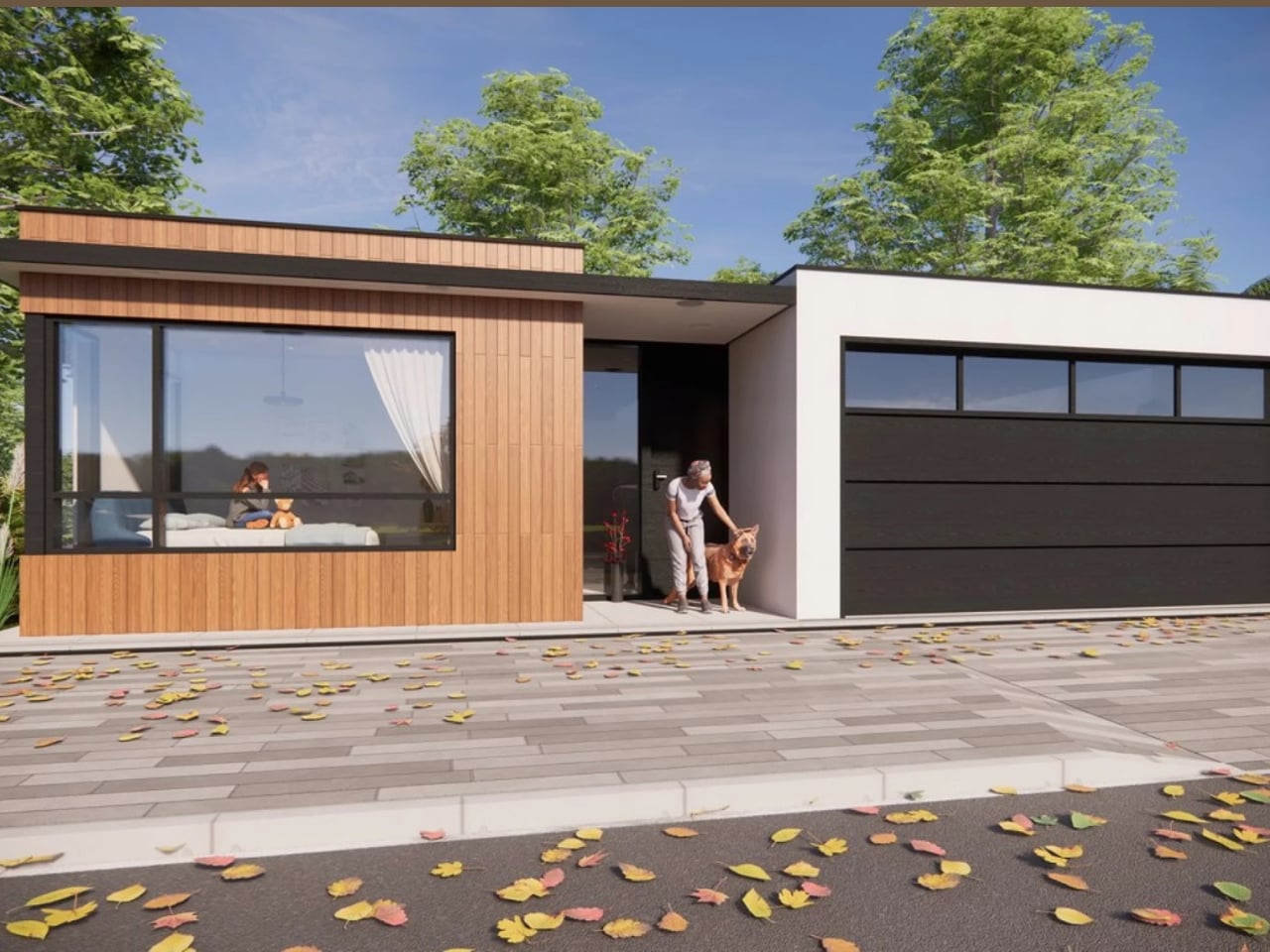
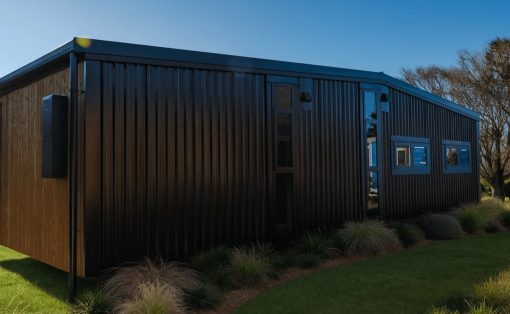
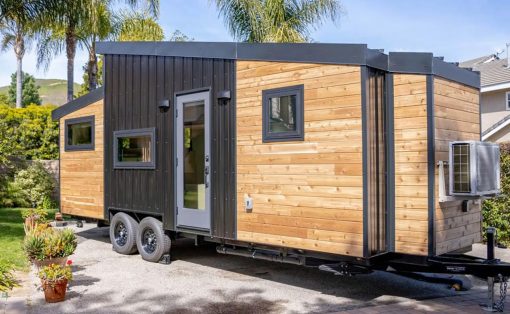
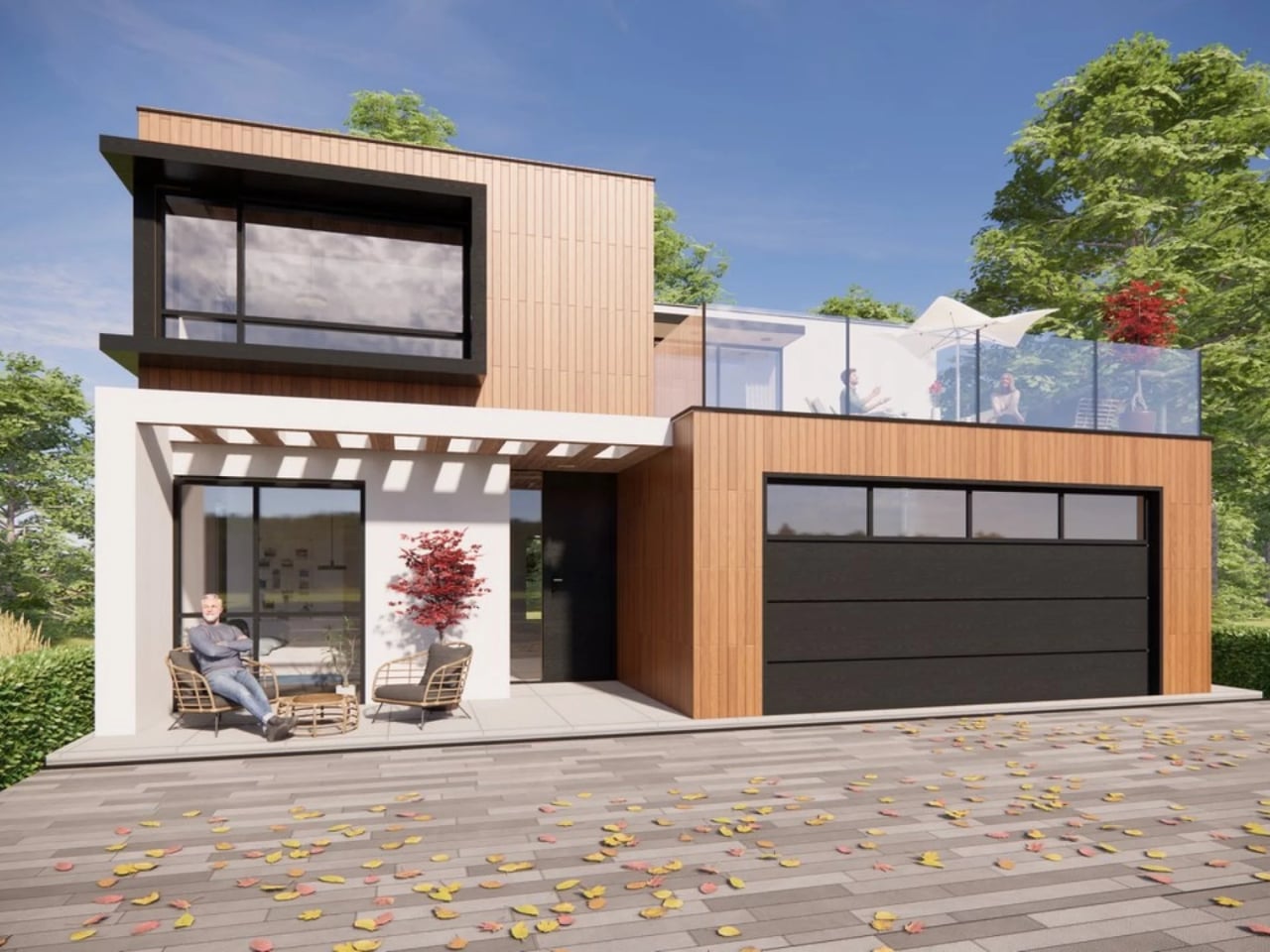
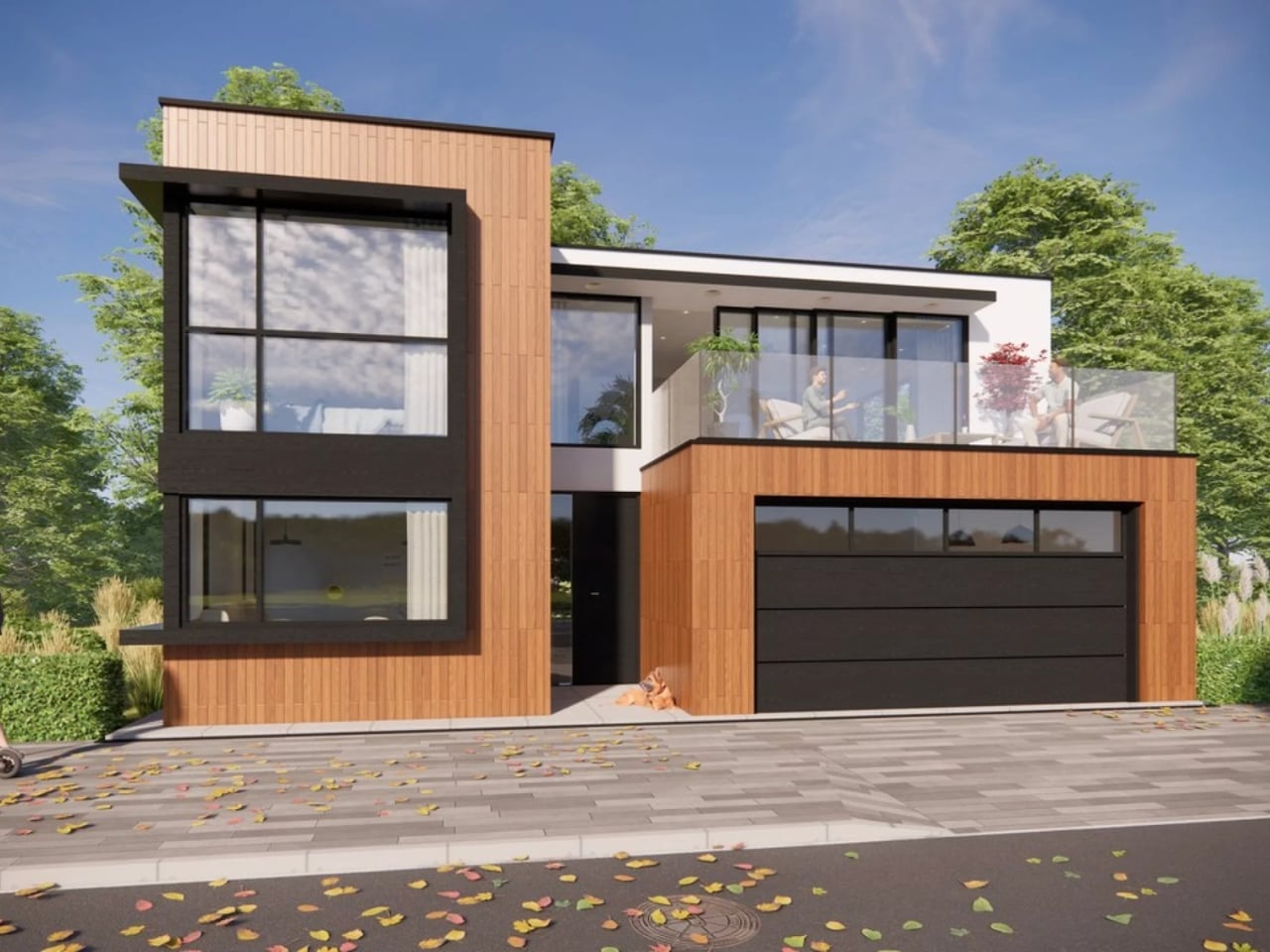
HiberTec Homes is proposing something entirely different. Their fully patented design allows a modular home to automatically lower itself underground when a wildfire or tornado threat is detected, then resurface completely unharmed once the danger has passed. The whole process takes 15 minutes or less. You press a button, the utilities shut off automatically, a fire-retardant system activates, a protective shell seals the structure, and the house descends into a sealed underground vault. Then you wait. Then you come back to a home that’s still standing.
Designer: HiberTec Homes
Founder Holden Forrest first conceived the idea in 2019 and spent several years developing it with a team of engineers specializing in thermal systems and structural design. He self-funded the project to the tune of $500,000 before appearing on Shark Tank Season 17, where he secured a deal with Barbara Corcoran for $1 million at 20% equity, plus a contract to build the first real working model at $1,000 per square foot. That price point is admittedly steep, but HiberTec’s stated goal is to eventually bring costs down to around $400 per square foot, which would put it within reach of a much wider audience.
And the audience that needs it is enormous. Over 300,000 homes are destroyed globally every year. In the U.S. alone, more than 25,000 homes are lost annually to wildfires and high winds. Perhaps the most staggering figure: more than 8 million American homeowners currently cannot obtain property insurance. The economic losses from Southern California wildfires alone have crossed $300 billion. At some point, fire-resistant landscaping and defensible space stop being sufficient answers to what has become a genuine housing crisis.
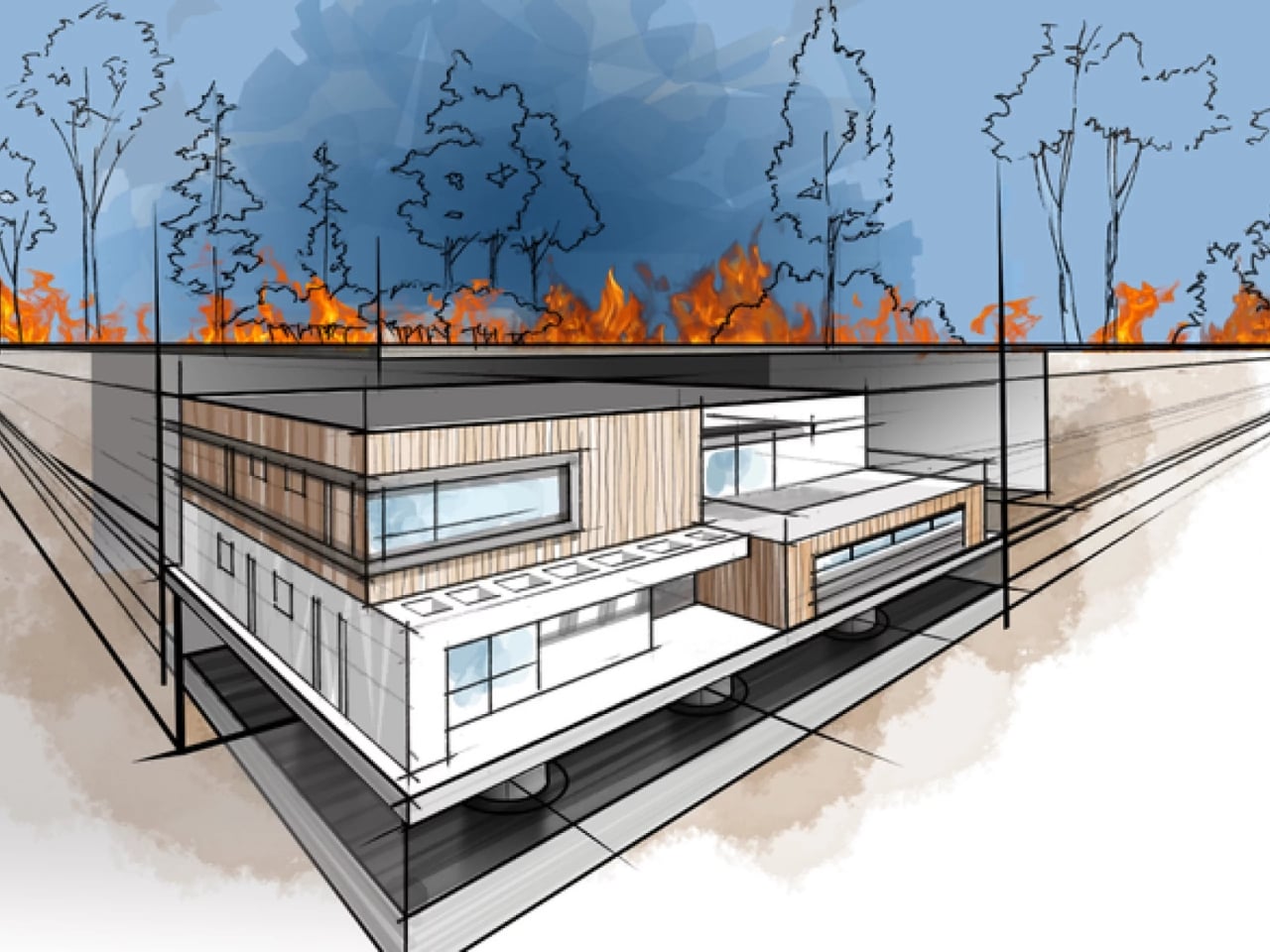
Beyond the visual drama of a house literally sinking into the earth, what makes HiberTec’s approach feel genuinely smart is its open platform model. Rather than operating as a closed, proprietary system, the company has designed its hydraulic technology to integrate with dozens of existing homebuilders and their modular models, with little to no modification required. That’s a meaningful distinction. It means this isn’t a niche luxury product for a handful of custom home clients. It’s being positioned as infrastructure, something that can scale across the industry instead of living at the edges of it.
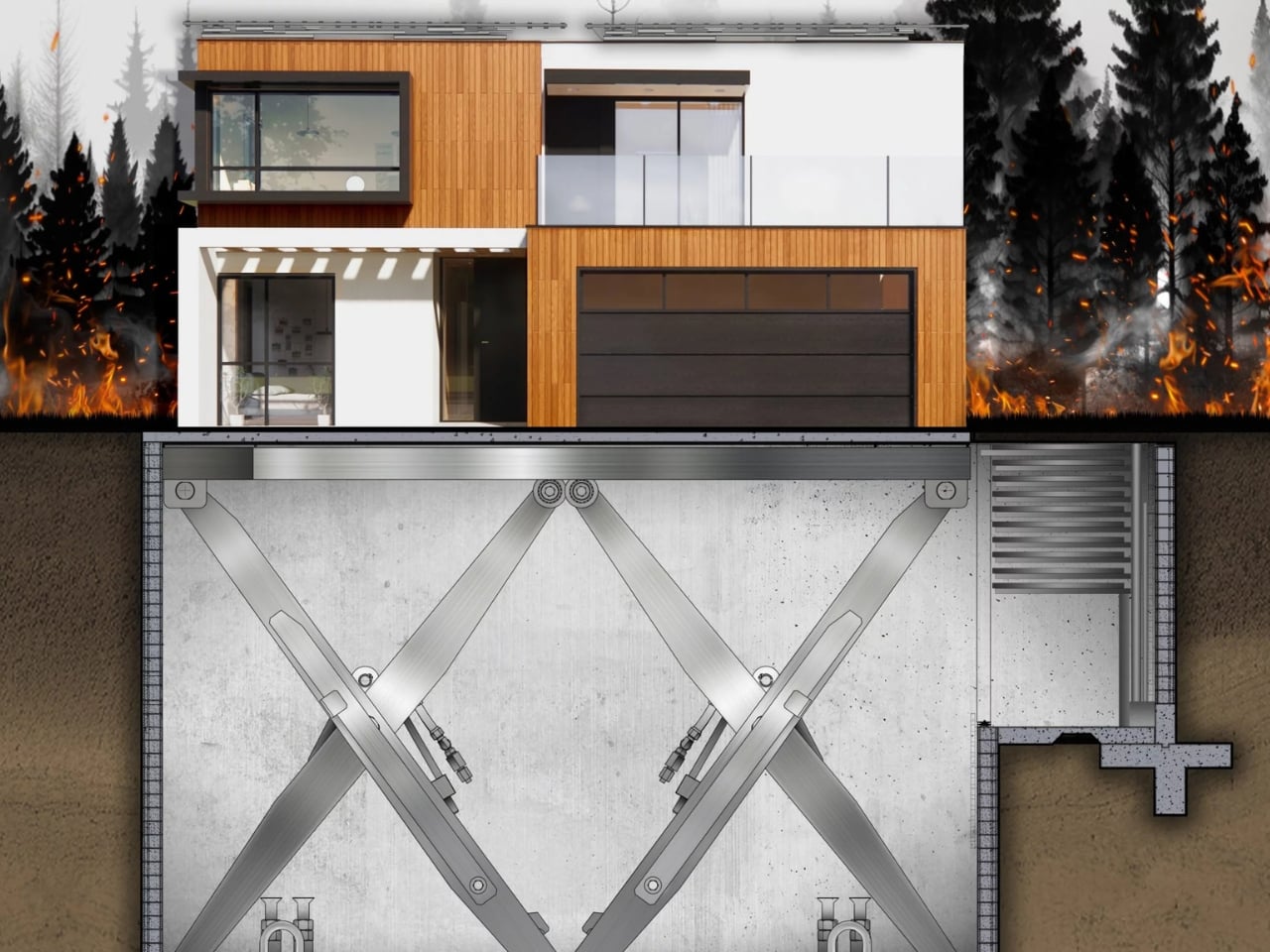
The skeptics will have fair points to raise. The technology is still in the prototype phase, and until a real home descends underground and resurfaces in an actual fire event, all of this lives in the realm of engineering promise. Hydraulic systems are complex. Underground environments bring their own challenges around moisture, soil shifting, and structural integrity. These aren’t small details to work out. There’s also the question of what happens to everything around the home. You save the structure, but the neighborhood, the trees, the infrastructure that connects you to the rest of the world, all of that remains vulnerable.
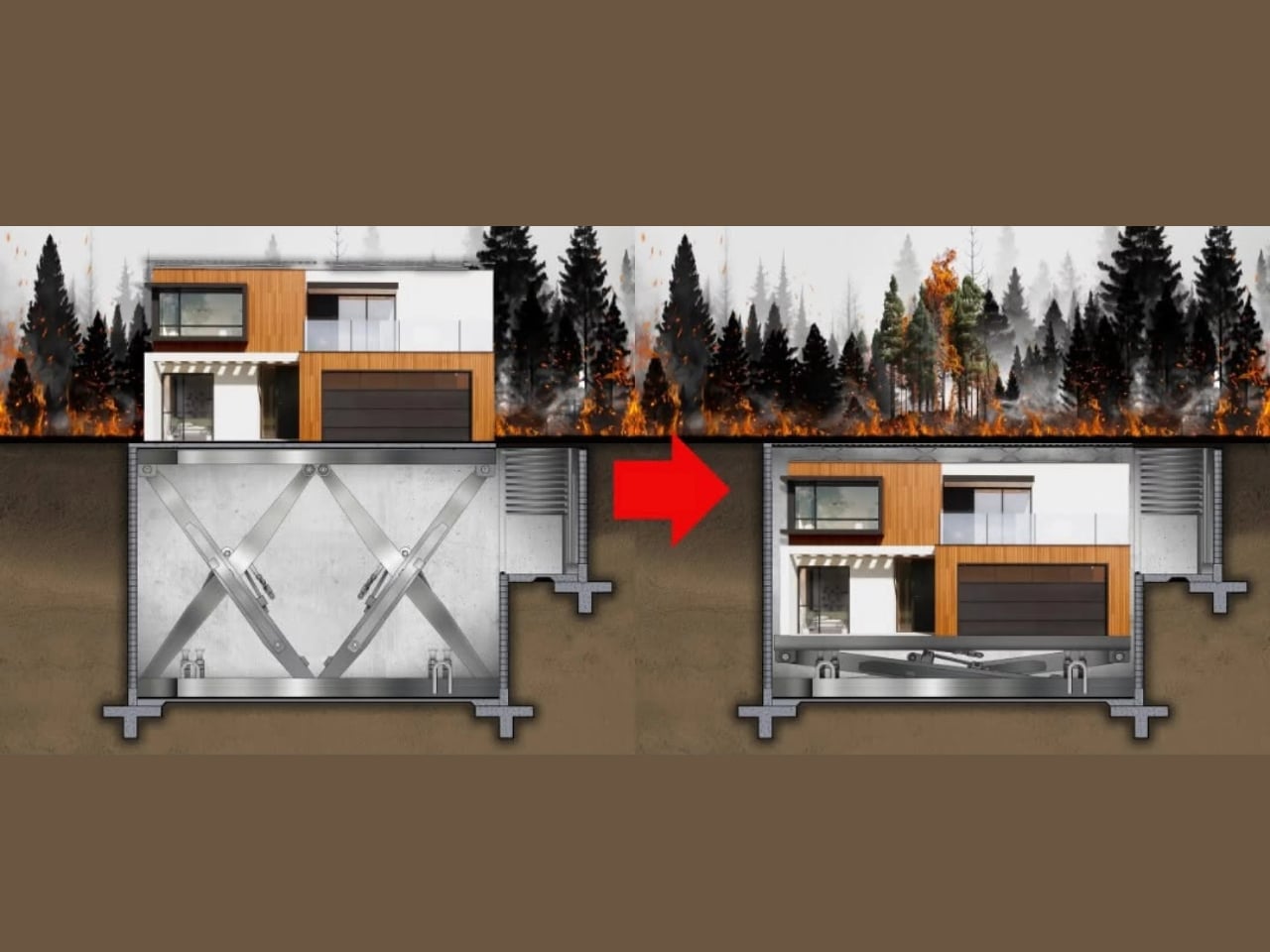
Still, the premise refuses to leave your mind. We’ve spent decades trying to make homes better at withstanding fire. HiberTec’s answer is to simply remove the home from the equation entirely, if only for a few hours. It’s the kind of lateral thinking that sounds absurd right up until you realize the conventional approach keeps failing people at catastrophic scale.
Whether HiberTec becomes the future of housing or a fascinating proof-of-concept that reshapes the conversation, it’s already doing something valuable: forcing the question of whether we need to rethink not just how homes are built, but how they survive. When whole towns can disappear in a single afternoon, that question deserves a serious answer.