In a market saturated with predictable pet furniture, minimal cubes, beige scratching posts, and standard enclosed beds, this monkey-shaped cat house arrives as a refreshing disruption. It is not just a product, it is a presence. Something between furniture sculpture and quiet theater, it redefines what it means to design for animals while speaking directly to human emotion and curiosity.
At first glance, it feels almost surreal. A giant monkey head sits unapologetically in a living space, its exaggerated features soft and inviting rather than imposing. It does not try to blend in. It does not apologize for existing. Instead, it leans fully into character. And that is where the design begins to reveal its intelligence.
Designer: 175****6003 (via Puxiang)
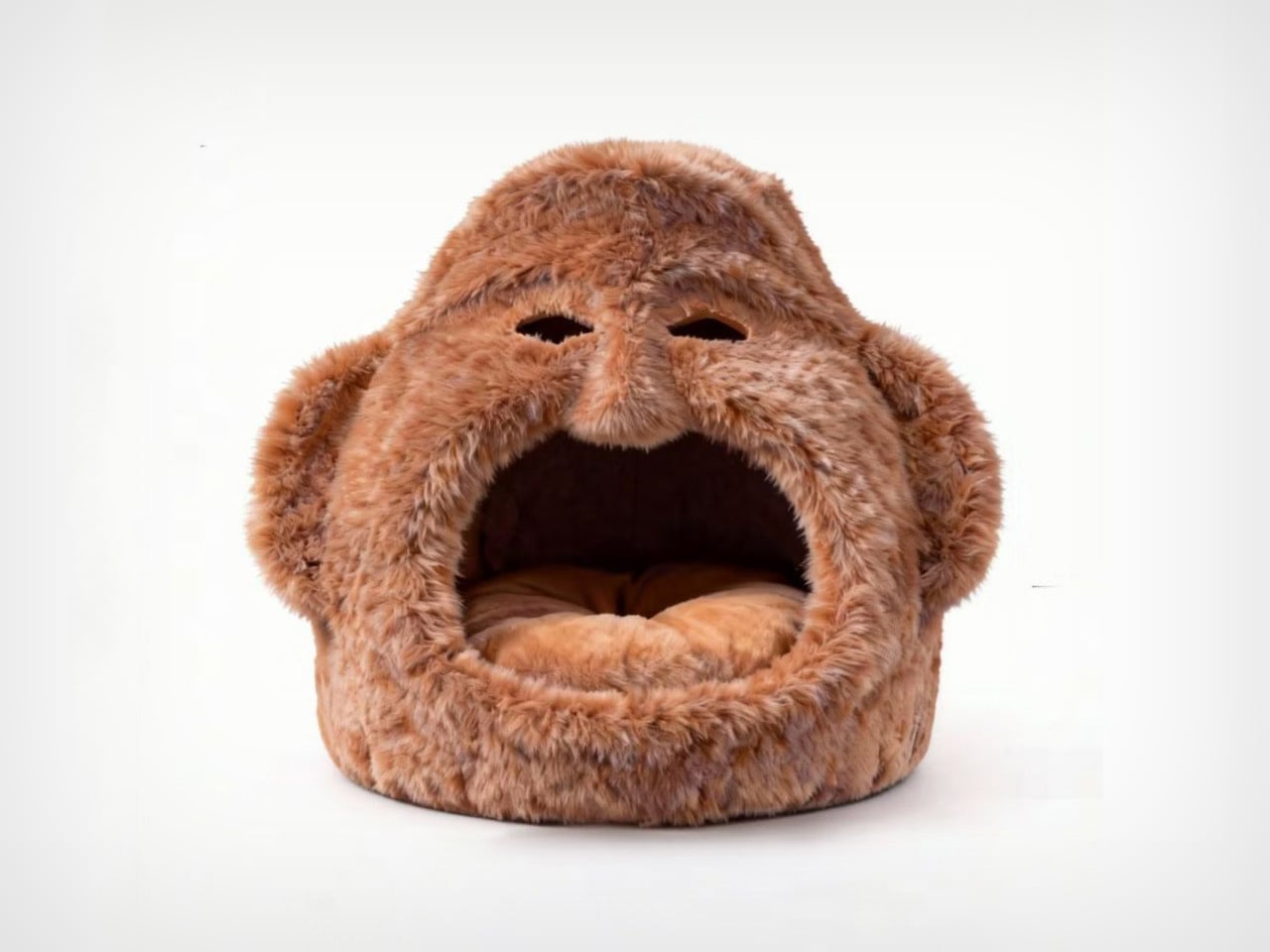
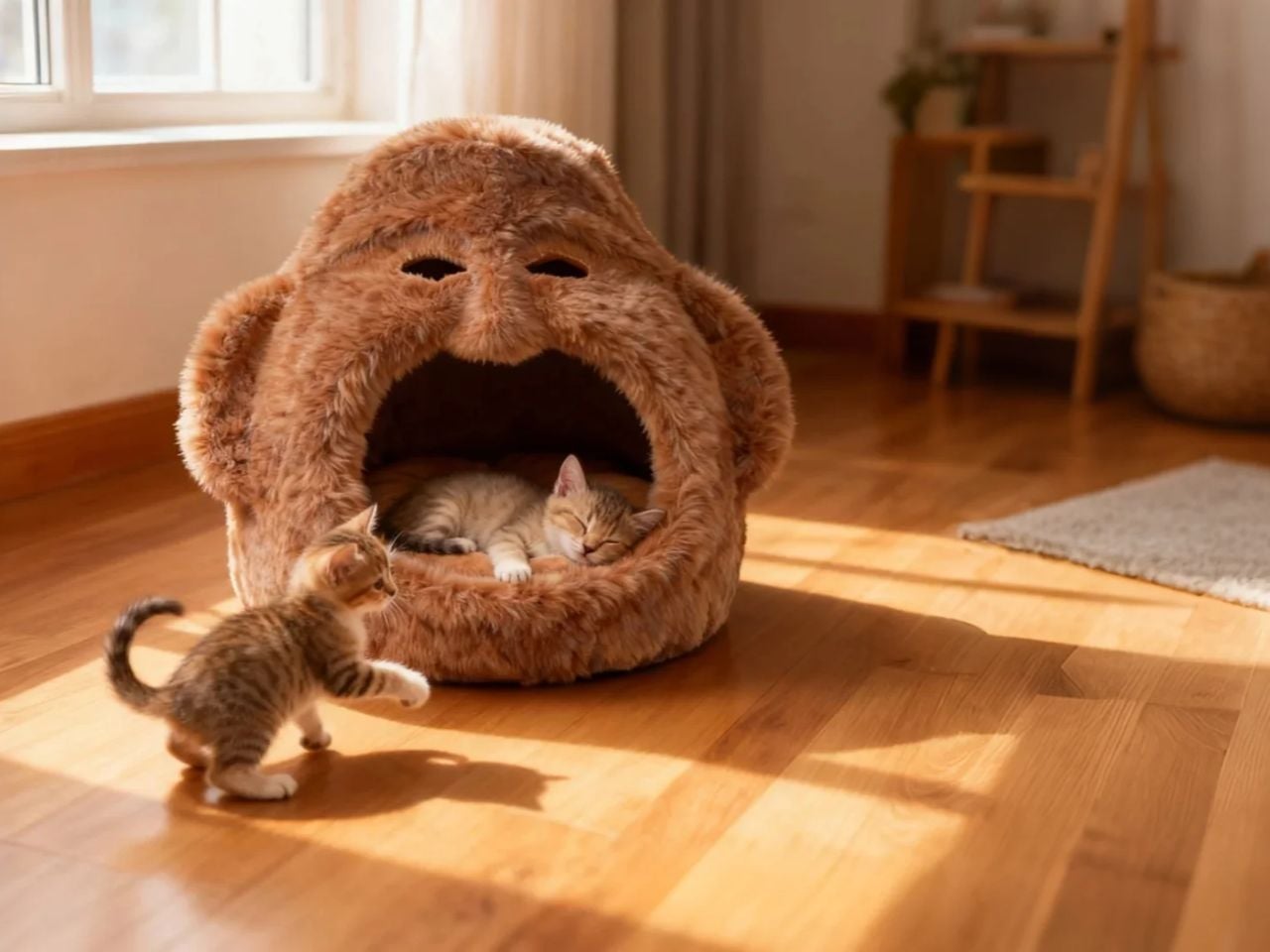
The entry point is its most striking gesture. A wide open mouth that transforms into a sheltered interior where a kitten can curl up and disappear. This is not just visual drama; it is deeply aligned with instinct. Cats are drawn to enclosed cave-like environments that offer warmth, security, and a sense of control over their surroundings. What could have been a novelty form becomes a highly intuitive behavioral response. The object understands the user even if the user is a cat.
Materiality plays a critical role in softening the boldness of the form. The plush exterior carries the familiarity of a large teddy bear, inviting touch even before interaction. It diffuses the visual intensity of the oversized head and replaces it with warmth. Inside the cushioning creates a cocoon-like environment, one that absorbs light sound and movement. It becomes a quiet pocket within an otherwise active home. A retreat disguised as play.
What makes this piece particularly compelling is how it negotiates attention. Most pet furniture is designed to disappear to sit quietly in corners and serve without being seen. This object does the opposite. It becomes a focal point. It sparks conversation. It asks to be noticed. And yet it does not compromise on comfort or usability. Instead, it suggests that functional objects in a home do not have to be invisible to be successful. They can be expressive and still be deeply considerate.
There is also an emotional layer embedded within its form. The oversized features, the softness, and the almost anthropomorphic presence create a strange sense of companionship. It is not just a house for a pet but an object that feels alive within a space. It participates in the environment rather than simply occupying it.
This is where the design moves beyond utility and into storytelling. It reflects a shift in how we think about products in our homes. They are no longer passive tools but active contributors to atmospheric identity and memory. The monkey cat house becomes a marker of personality. It signals a willingness to embrace playfulness, humor, and a certain irreverence in domestic space.