The first thing most people reach for in the morning isn’t a glass of water or a cup of coffee; it’s the phone. From there, it’s a quick trip through news alerts, emails, and a social media feed that didn’t exist last night. Screen fatigue is well-documented at this point, and the solutions that have emerged tend to be more digital tools designed to manage other digital tools.
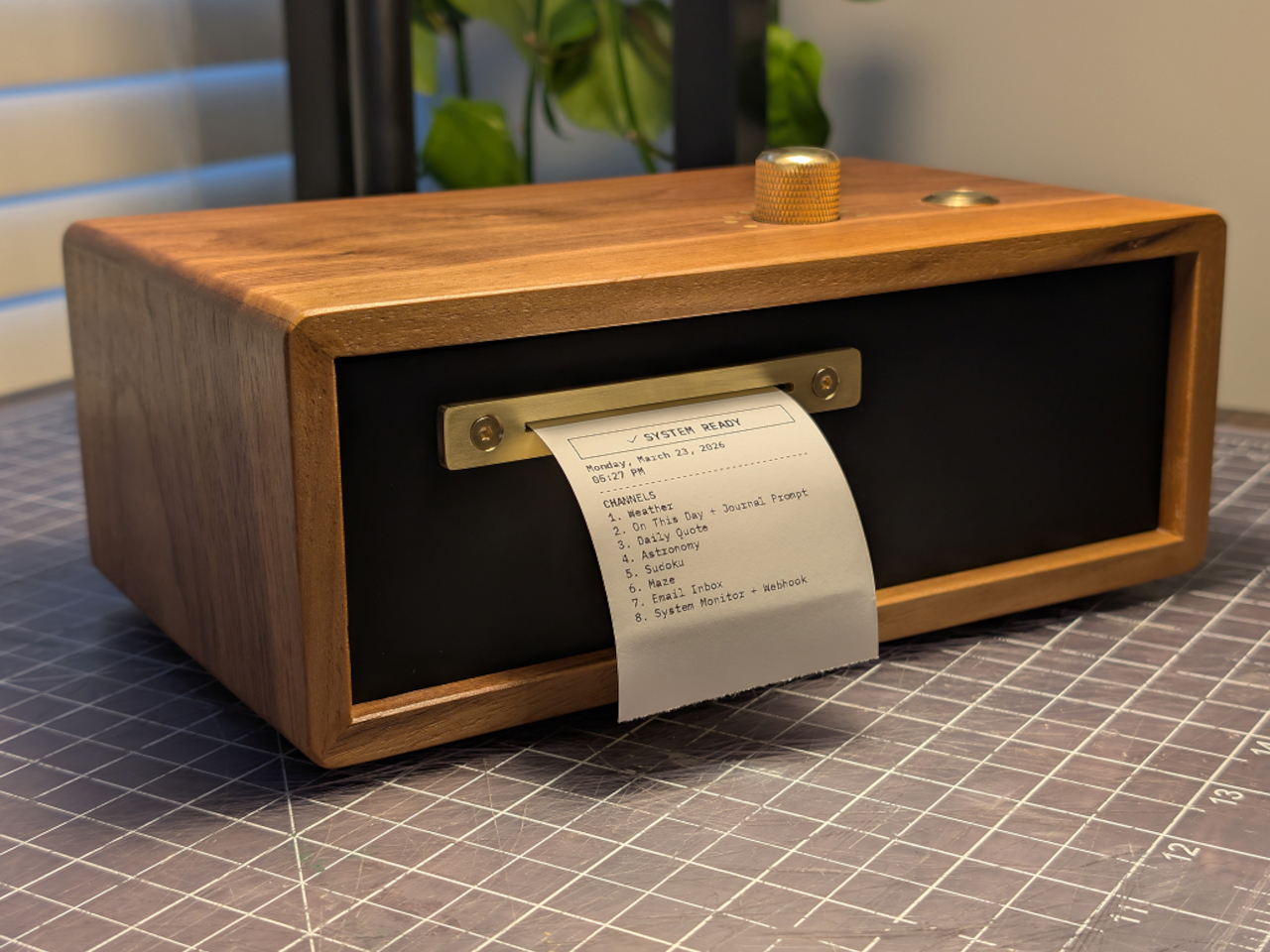
Designer and furniture maker Travis Miller decided to approach the problem differently. His Paper Console PC-1 doesn’t ask you to manage your screen time; it simply offers an alternative that doesn’t involve one. The device is about the size of a toaster and sits on a desk or nightstand, printing your news, weather, puzzles, and other personally selected content on demand, one strip of thermal paper at a time.
Designer: Travis Miller
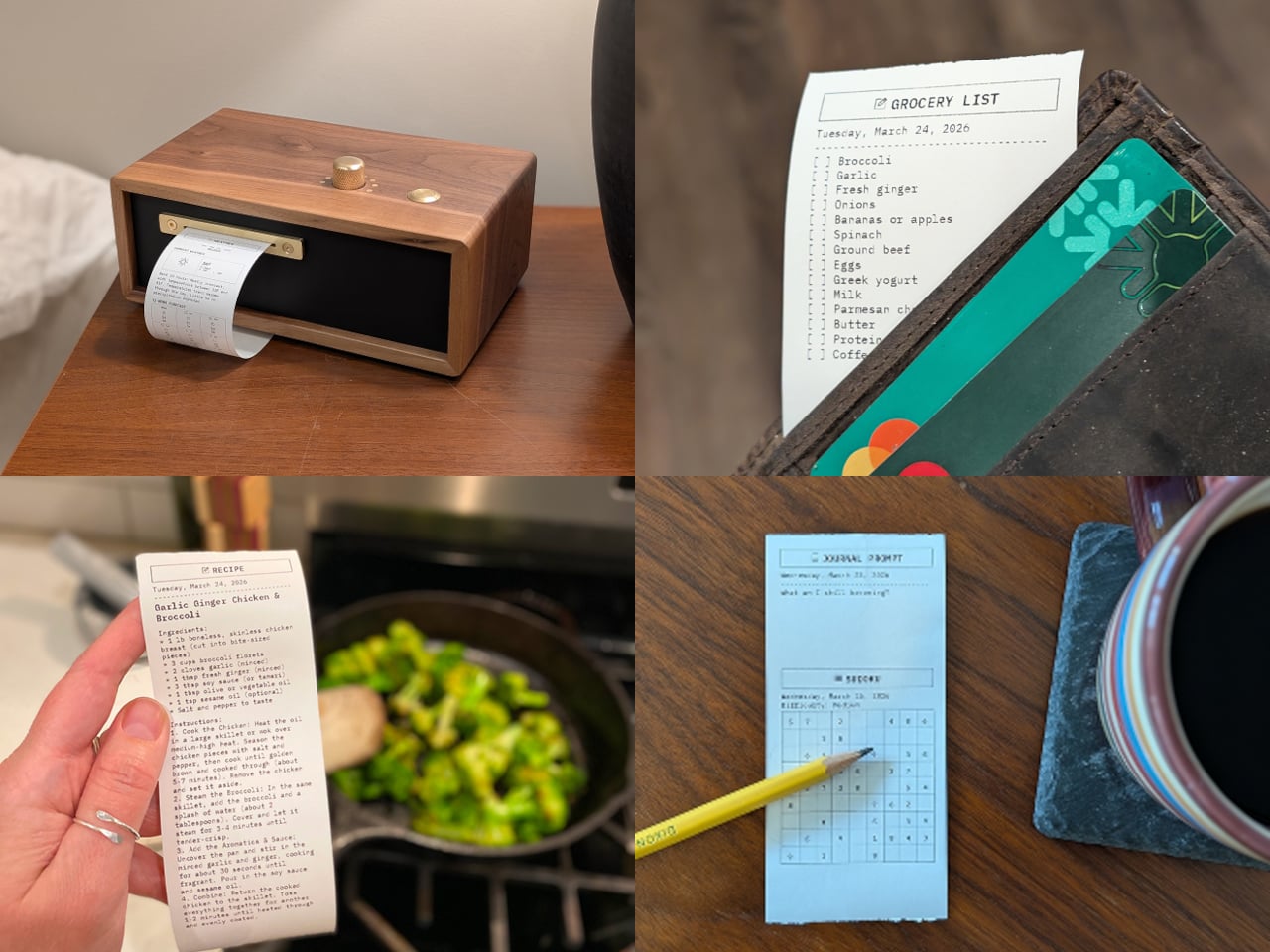
The interaction is deliberately simple. A brass rotary dial on the front selects from up to eight customizable channels, and a single button triggers printing. No menus, no tap targets, no notifications pulling your attention away. The channels can be loaded with whatever content matters most to you, from top news headlines and RSS feeds to weather forecasts, email summaries, astronomy updates, and puzzles like Sudoku and mazes.
Each channel can hold multiple modules stacked in whatever order you prefer, so a single press can deliver a full morning digest: weather first, then headlines, then a journal prompt to think about over coffee. Scheduling is built in as well, so the device can print automatically at set times, silently delivering the day’s content without any input. It’s passive in the best sense.
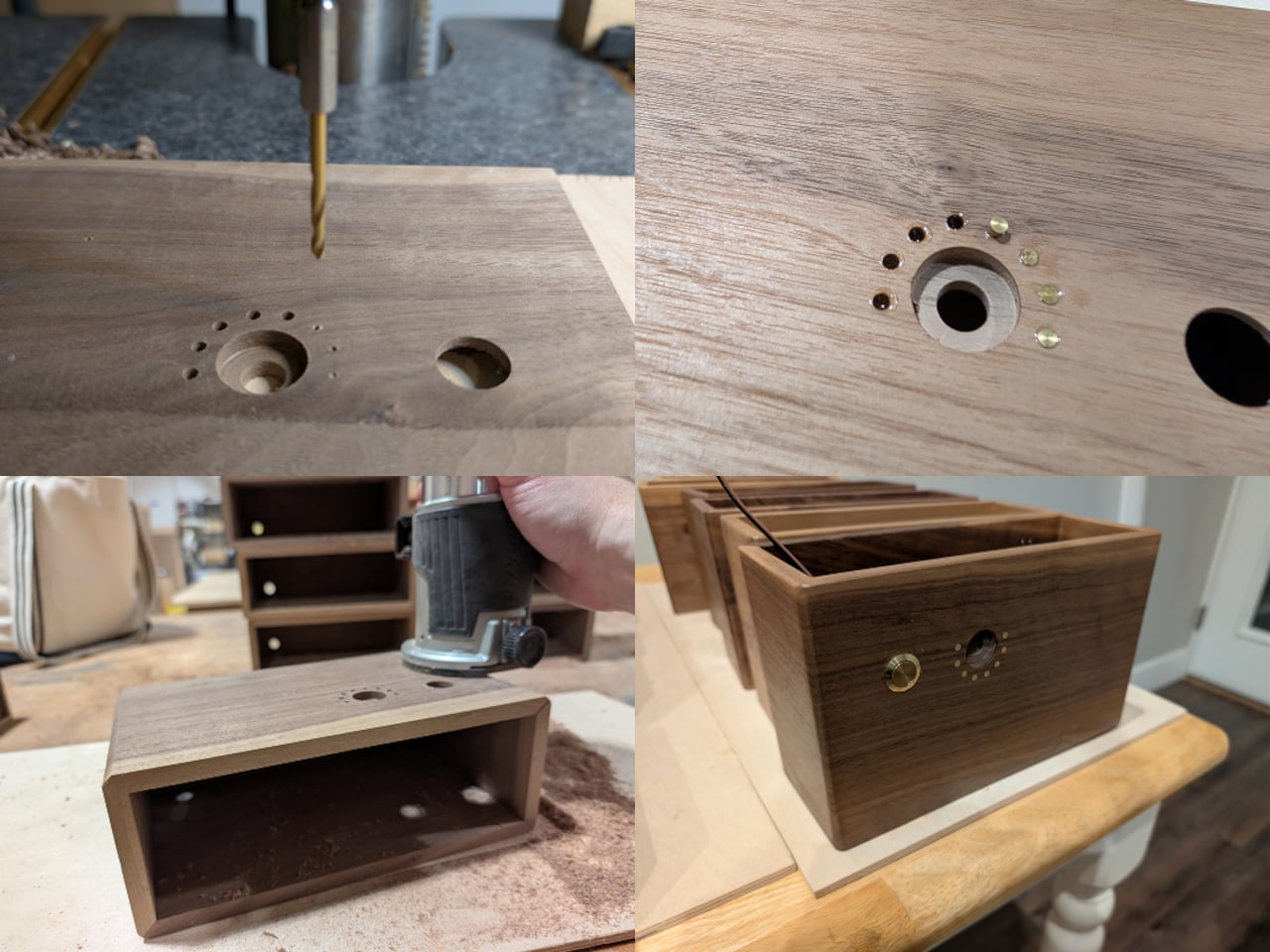
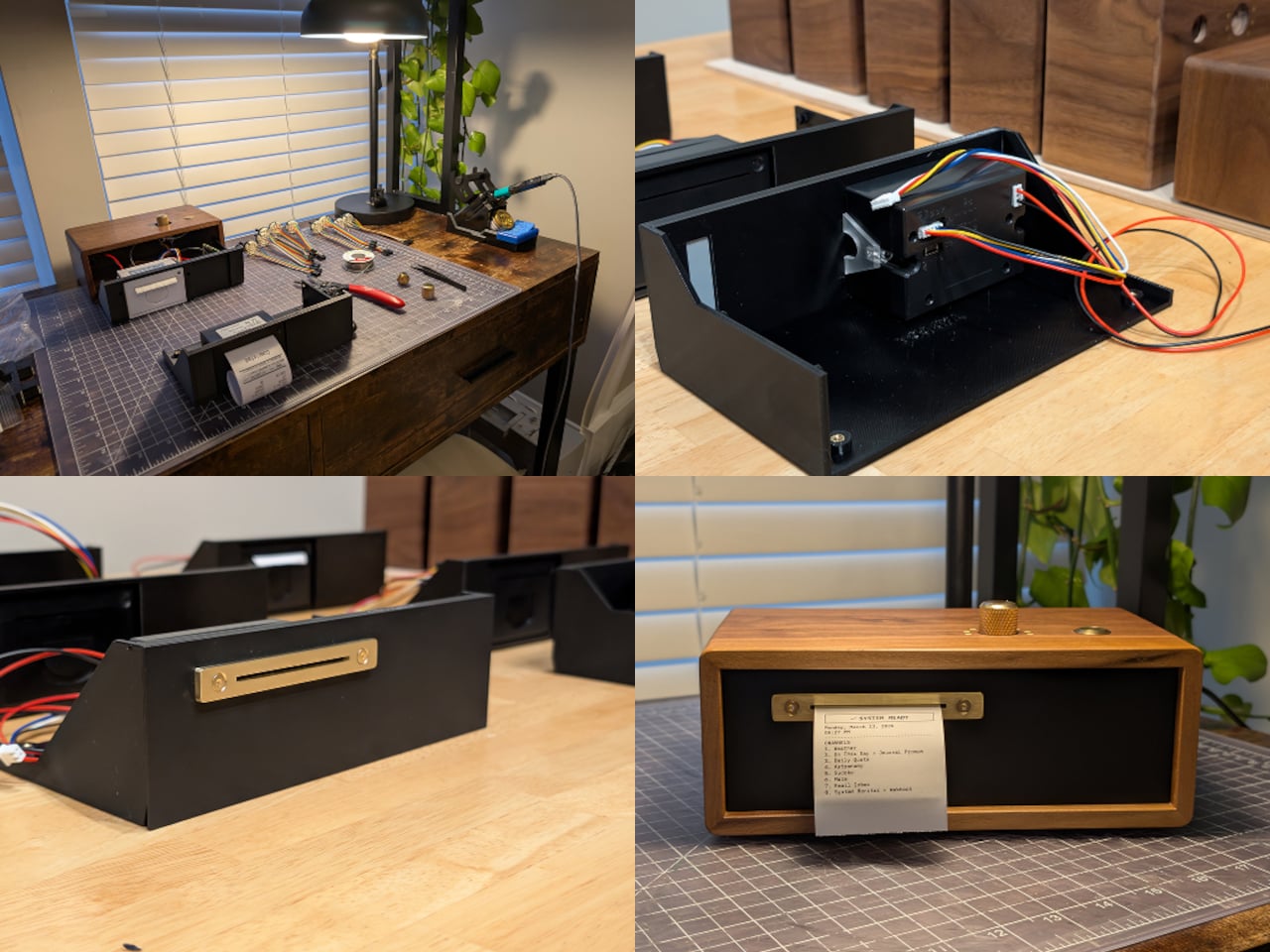
Inside the walnut and brass enclosure is a Raspberry Pi Zero 2 W paired with a 58mm thermal printer. Miller designed and fabricated the case himself, drawing on six years of furniture making, and a 3D-printed internal sled keeps the electronics tidy and mounted. The brass faceplate gives the device the kind of weight and finish that puts it a long way from anything that comes in a retail box.
Miller made only 10 units in this first run, though the full project is open-sourced and documented on GitHub for anyone who wants to build one. That openness suits it well. The PC-1 isn’t a product category or a commercial platform; it’s a personal project that turned out well enough to share. The GitHub documentation is detailed enough to follow and honest about what the build actually involves.
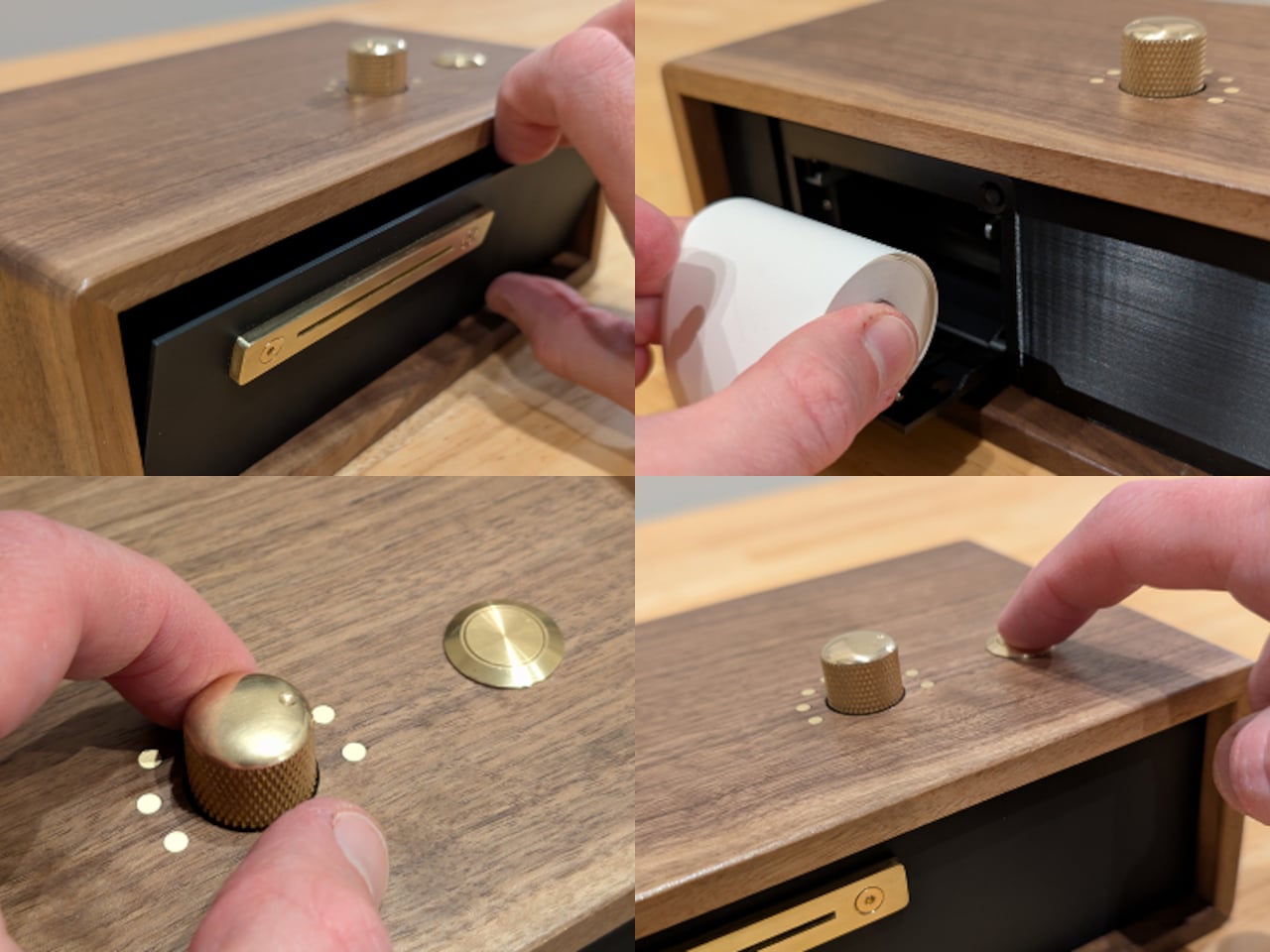
There’s something genuinely refreshing about a device that asks nothing of you except a button press. The Paper Console PC-1 isn’t anti-technology; it’s just more selective about what earns a spot on the desk. Information printed on paper, held in your hand, and torn off when you’re done has a finality that a notification never manages, and for a growing number of people, that difference matters quite a lot.