Most of us learned to play ping pong the same way: flat table, net in the middle, bounce, smash, repeat. The rules were never really up for debate. You either knew them or you didn’t, and the table gave you very little room to imagine doing things differently. That’s exactly the kind of thinking French architecture studio Exercice decided to challenge.
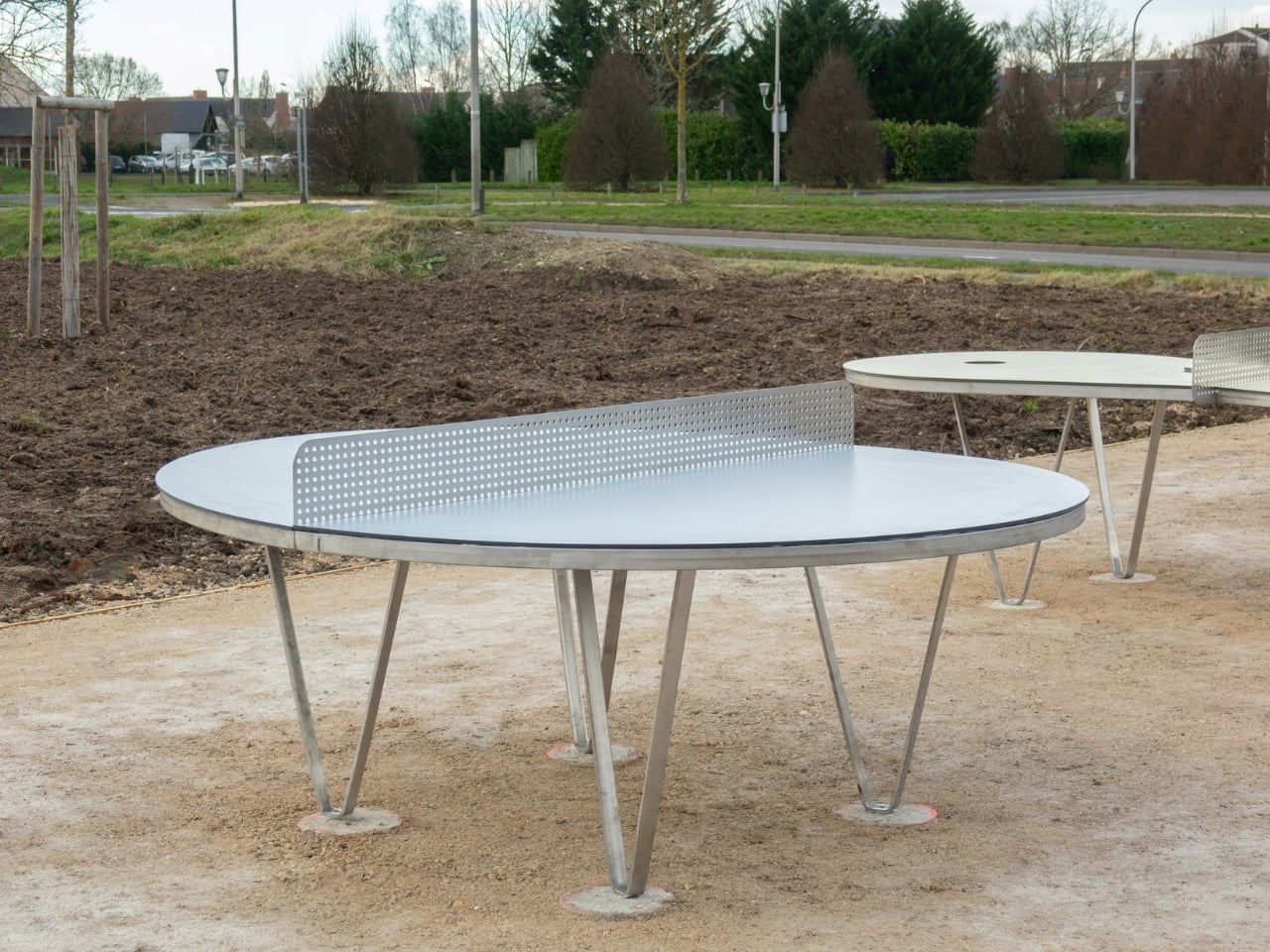
Their project, called Ping Pong Park, recently landed at a high school in Ingré, France, and it is not your standard schoolyard furniture. Exercice installed four table tennis tables on the school grounds, each one looking like it wandered out of an art gallery and accidentally became a playground fixture. They were designed to make children question the rules, experiment with play, and figure out how the game works for them, not for a referee.
Designer: Exercise
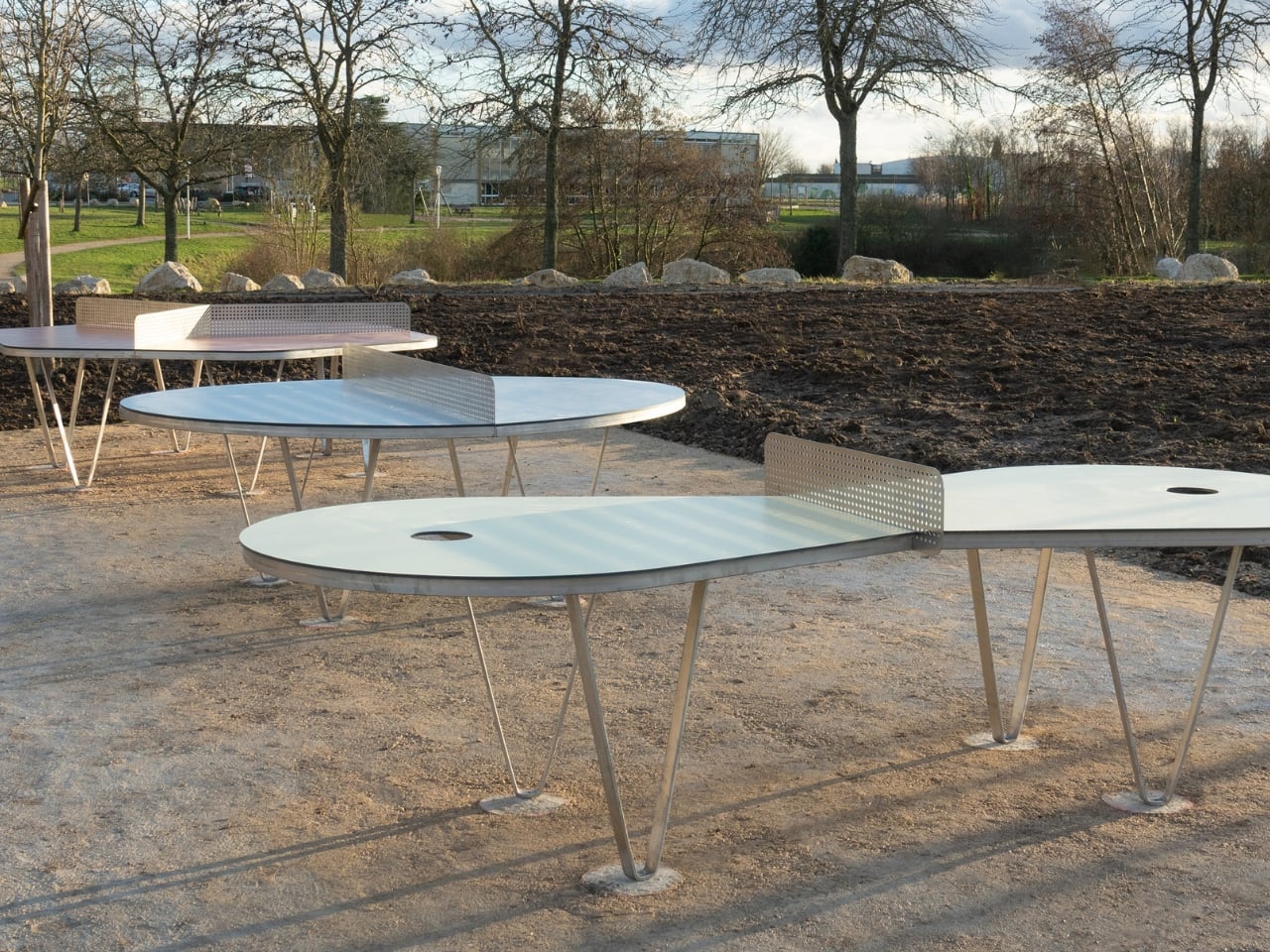
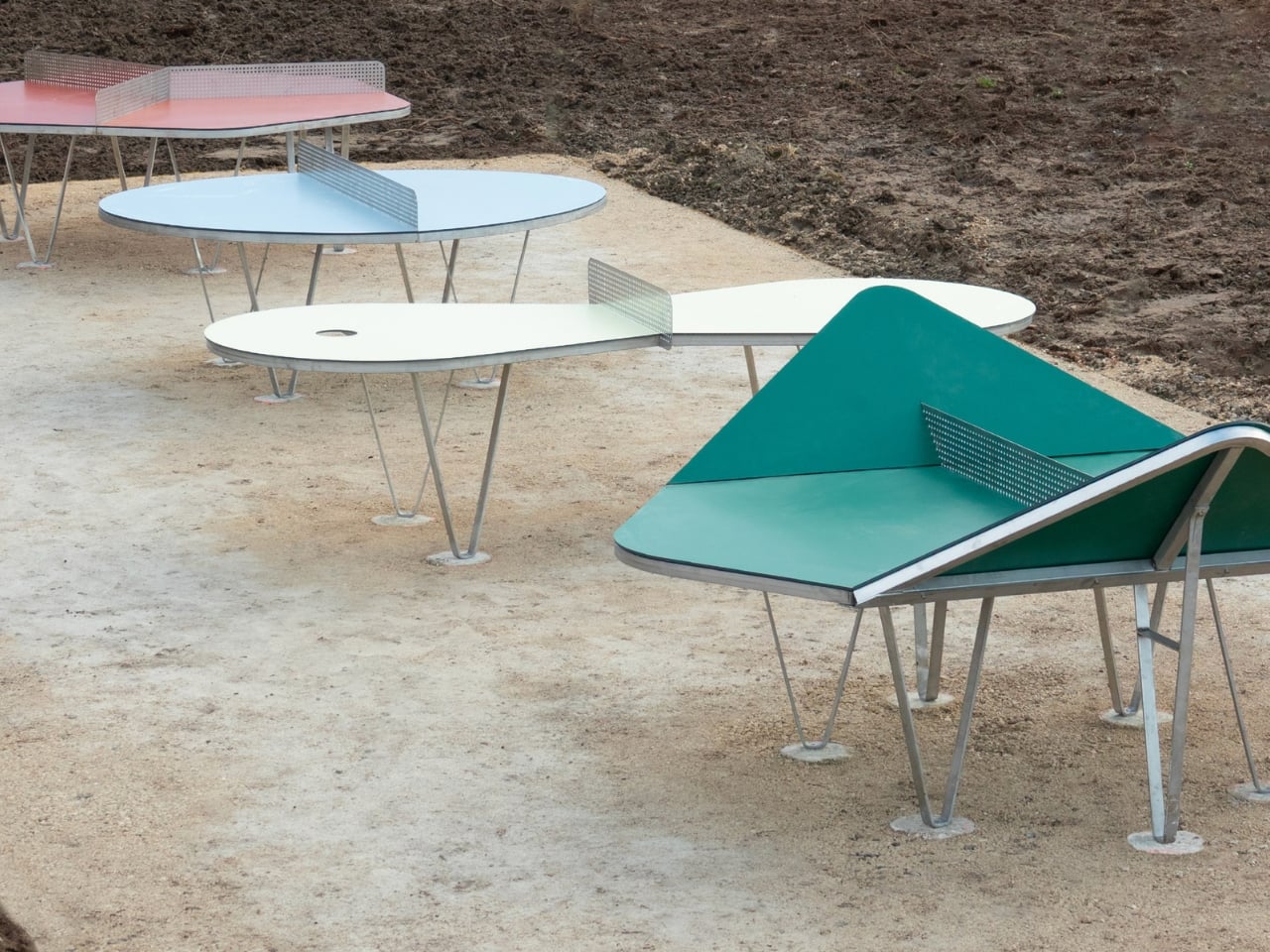
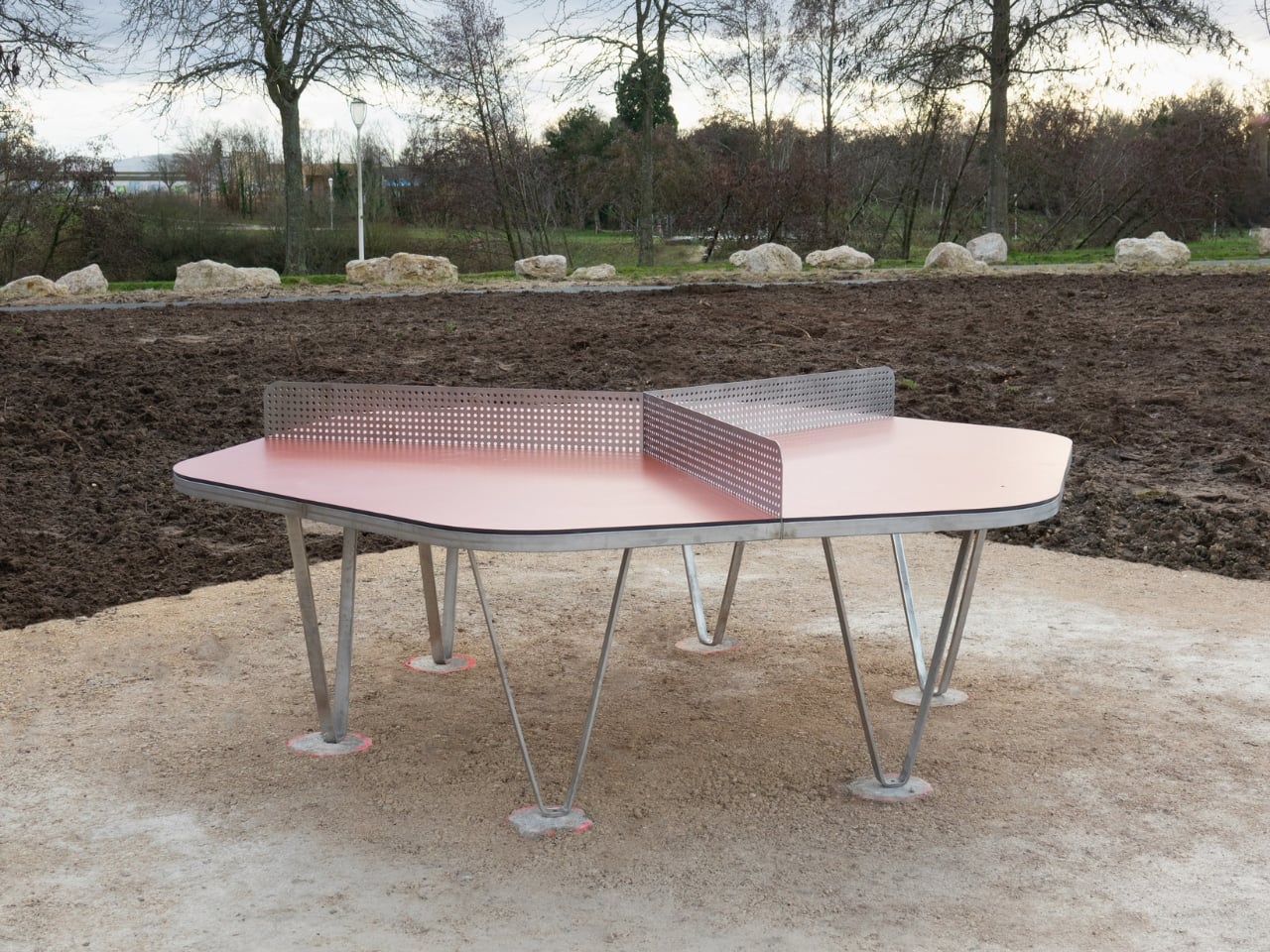
The four tables each have a distinct character. The Rebound table has raised sides that expand the playing surface vertically, so the ball doesn’t just travel across the table. It can careen off walls you didn’t anticipate. Every rally becomes a small physics experiment. The Golf table narrows at the centre and features holes on either side that can count as a winning point or a foul, depending entirely on what players decide before the match starts. Even the geometry pushes you toward longer, more strategic shots. Then there’s the Rotating table, which is circular and designed for tournante, the French schoolyard favourite where multiple players run around the table taking turns hitting the ball. The round shape accommodates up to six or seven players and keeps everyone moving, which means the social energy is essentially designed into the form.
Exercice describes these as “social sculptures: accessible, participatory and constantly evolving through collective appropriation.” That’s a mouthful, but it’s also kind of perfect. The tables aren’t static objects kids use and then forget. They change meaning every time a new group decides what the rules are going to be that afternoon. One day the holes in the Golf table are winning points. The next, they’re instant fouls. The table is genuinely indifferent either way, and that neutrality is the whole idea.
I love this approach because it trusts kids to be more interesting than we usually give them credit for. The whole premise assumes that children are capable of designing their own experience if you give them the right starting point. A regulation ping pong table says: here are the rules, now compete. The Ping Pong Park tables say: here’s a surface, now figure it out. That’s a subtle but genuinely different message about what play is for, and what sports equipment is really supposed to do.
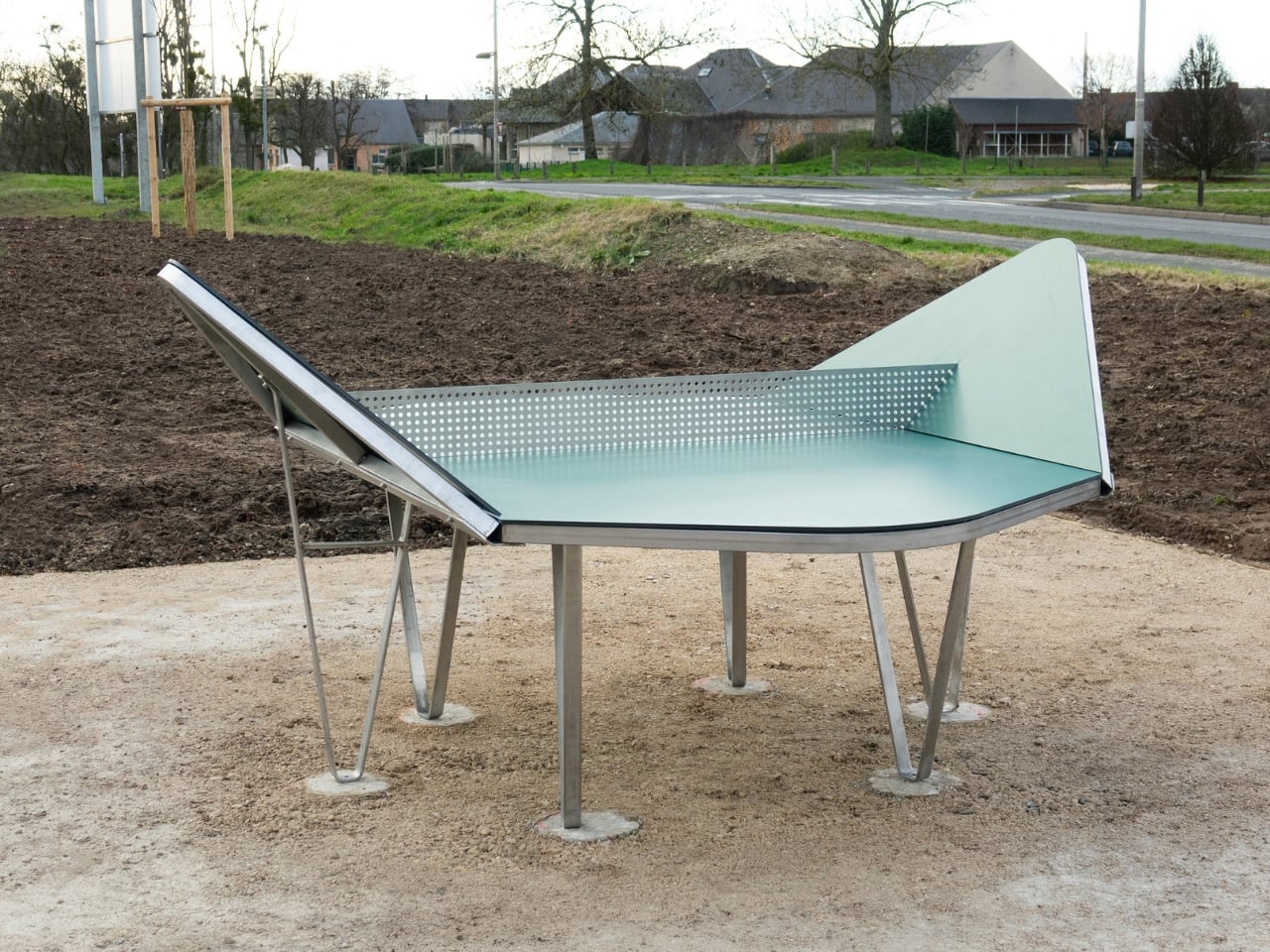
The design itself holds up visually, which matters more than it might seem. The tables are made from galvanised steel and high-pressure laminate, built to survive daily use, not just an exhibition. They have clean, confident shapes that could hold their own as standalone sculptures in a public space. Exercice has framed them that way deliberately, noting that each table has a “distinctive aesthetic identity” that allows it to function as an autonomous artwork. The fact that they’re also durable enough for a schoolyard is the point. Art that only survives gallery conditions is less interesting to me than art that survives contact with twelve-year-olds.
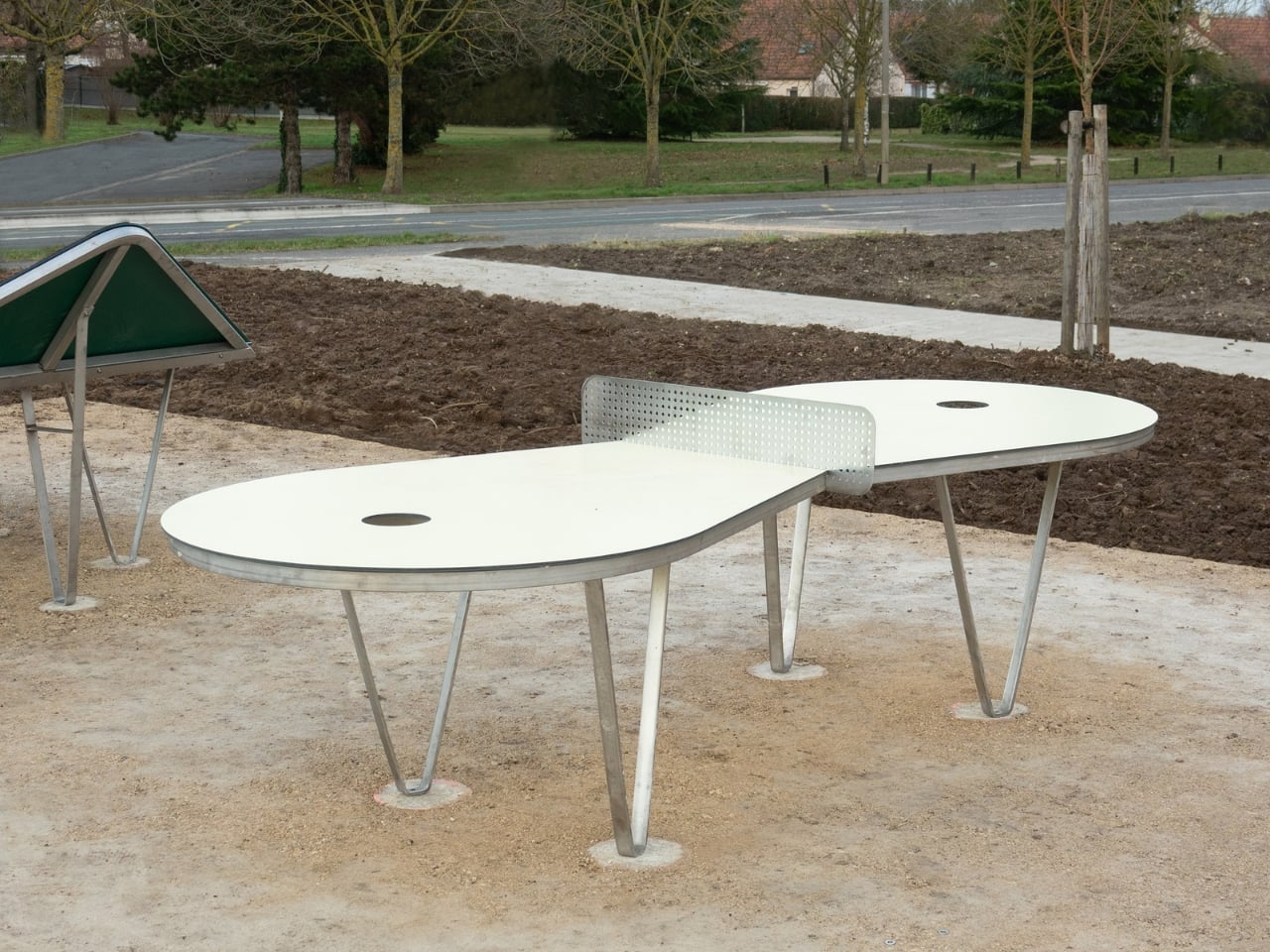
The complete range, including indoor and outdoor versions, is available through French brand Nedj. So while the Ingré school installation is the most visible showcase right now, these aren’t a one-off concept piece locked behind a museum velvet rope. They’re in production, which means the logic behind them, that sports equipment can also be social infrastructure, is something other schools and public spaces could genuinely access. That’s the part that feels most exciting. Good ideas should travel.
Play is serious business when it’s done well. Exercice seems to understand that the best playground equipment doesn’t hand children a script. It hands them a question. And a ping pong paddle.