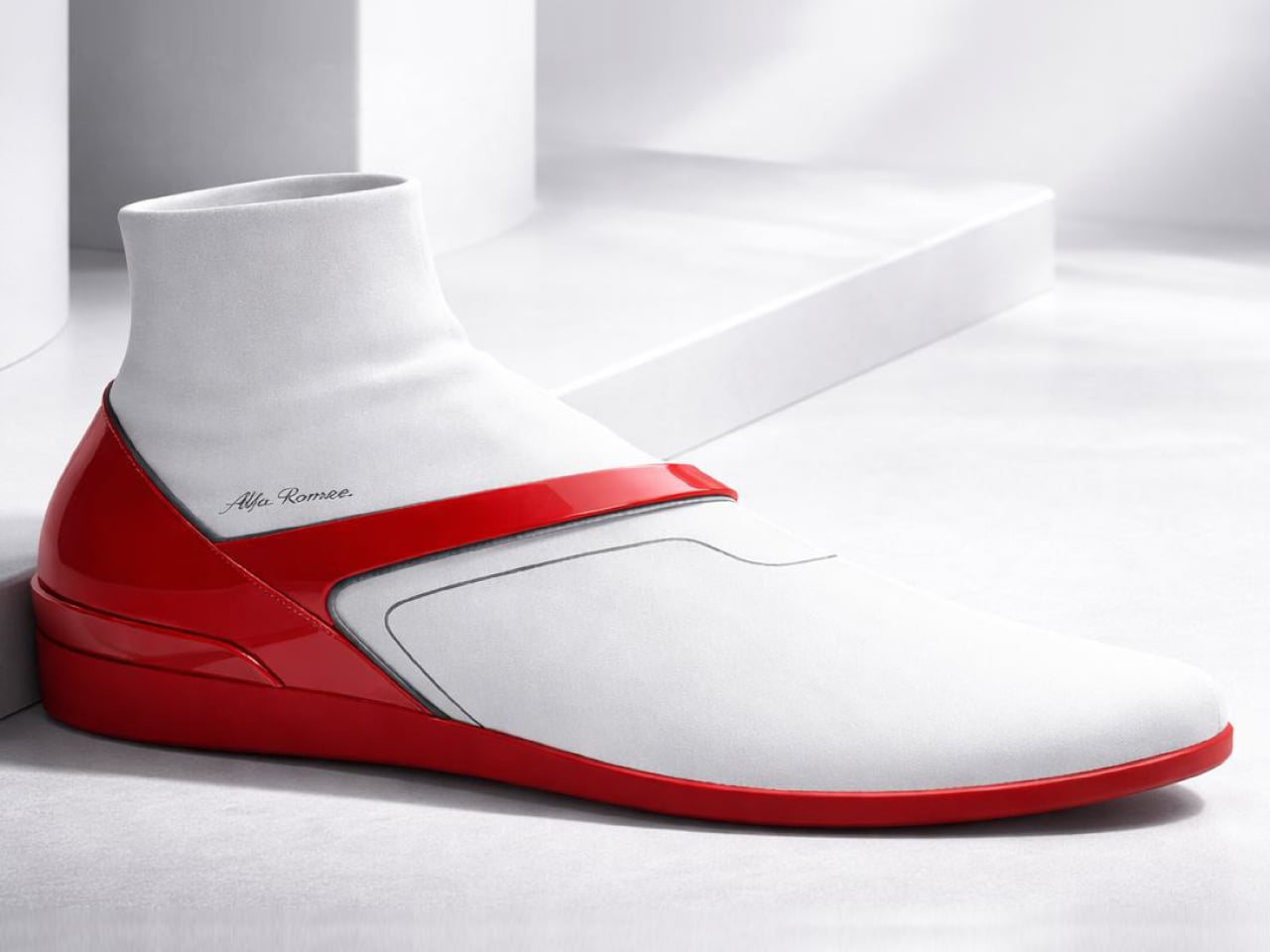
Car brands dabble in lifestyle merchandise all the time, and most of it follows a predictable formula: slap a logo on a jacket, maybe a watch, and call it brand extension. Footwear collaborations exist, too, but they rarely go further than embroidering a grille badge onto an existing sneaker. This Alfa Romeo-inspired concept shoe takes a different approach, asking what happens when automotive design is treated not as decoration but as a structural principle.
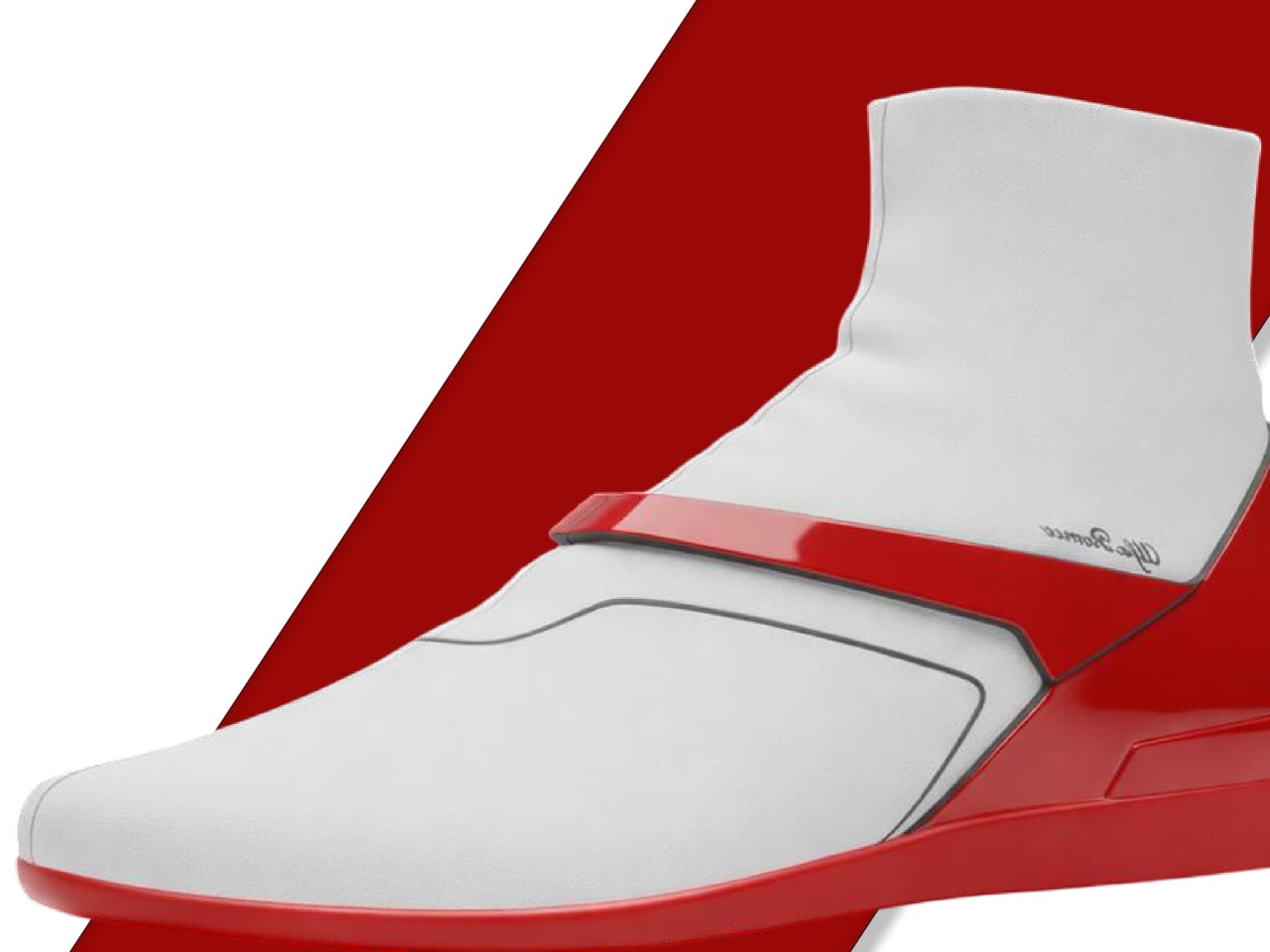
The answer turns out to look a bit like a futuristic slipper, which is either its most interesting quality or its most confounding one, depending on your expectations. The upper is a soft, seamless white shell that pulls over the foot more like a sock than a traditional shoe, with almost no visible fastenings, stitching, or hardware. That minimal surface exists to let the midsole do all the work visually, and the midsole is doing quite a lot.
Designer: Haamed Ansari

That red base is the conceptual core of the whole project. Rendered in high-gloss red, it wraps from heel to toe in a continuous form that borrows the surface logic of automotive body panels, where lines are load-bearing transitions between volumes, not decorative additions. A single glossy band sweeps diagonally across the lateral side before tapering into the toe, much like a racing stripe that has been folded into three-dimensional geometry.
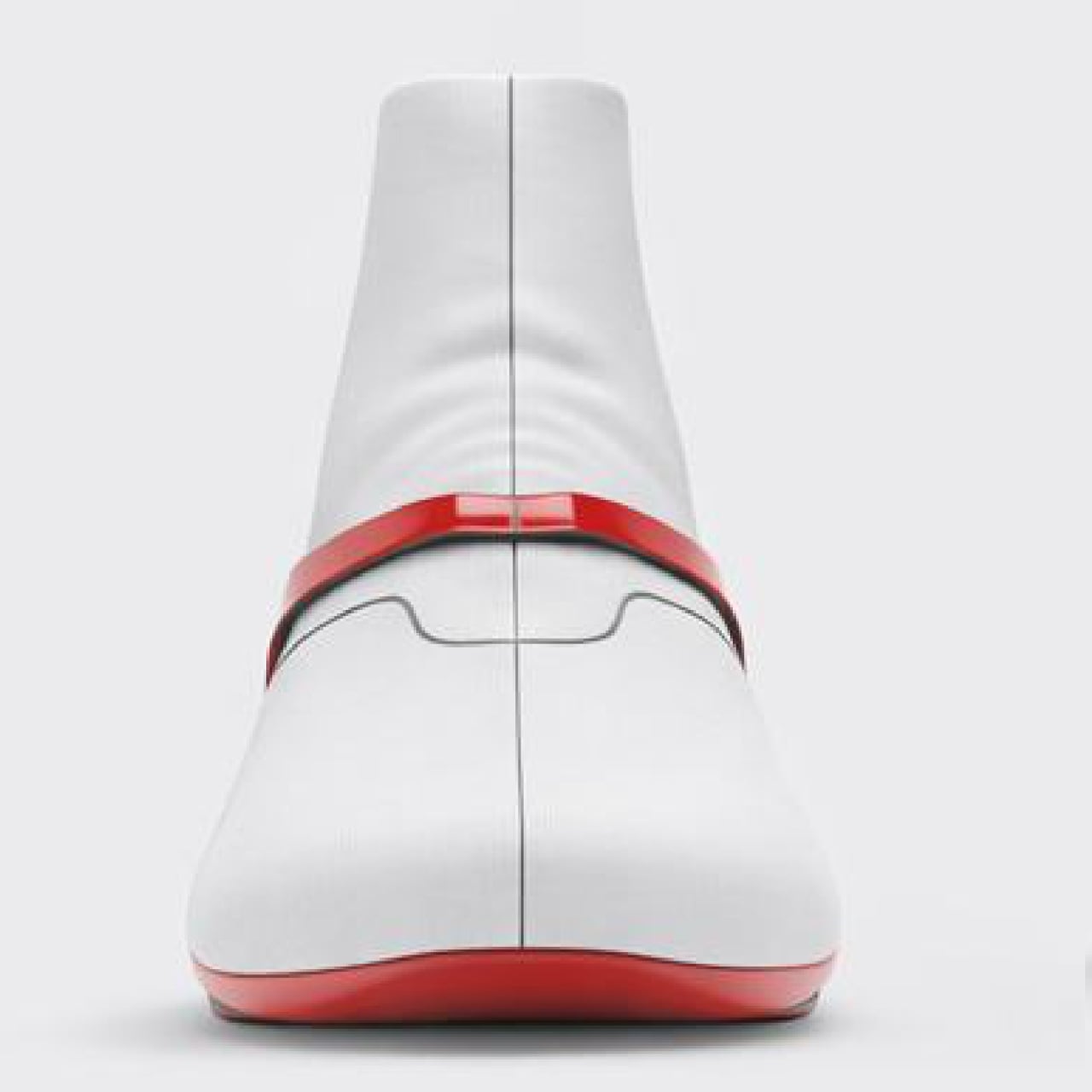
Where the red midsole meets the white upper, a narrow grey seam line functions almost like a panel gap. Car designers use exactly this kind of negative space to separate body sections and give each component its own visual weight. Without it, the shoe would read as a simple two-tone colorblock. With it, the shoe looks assembled from distinct parts that happen to meet with precision, which is a different thing entirely and a far more considered one.
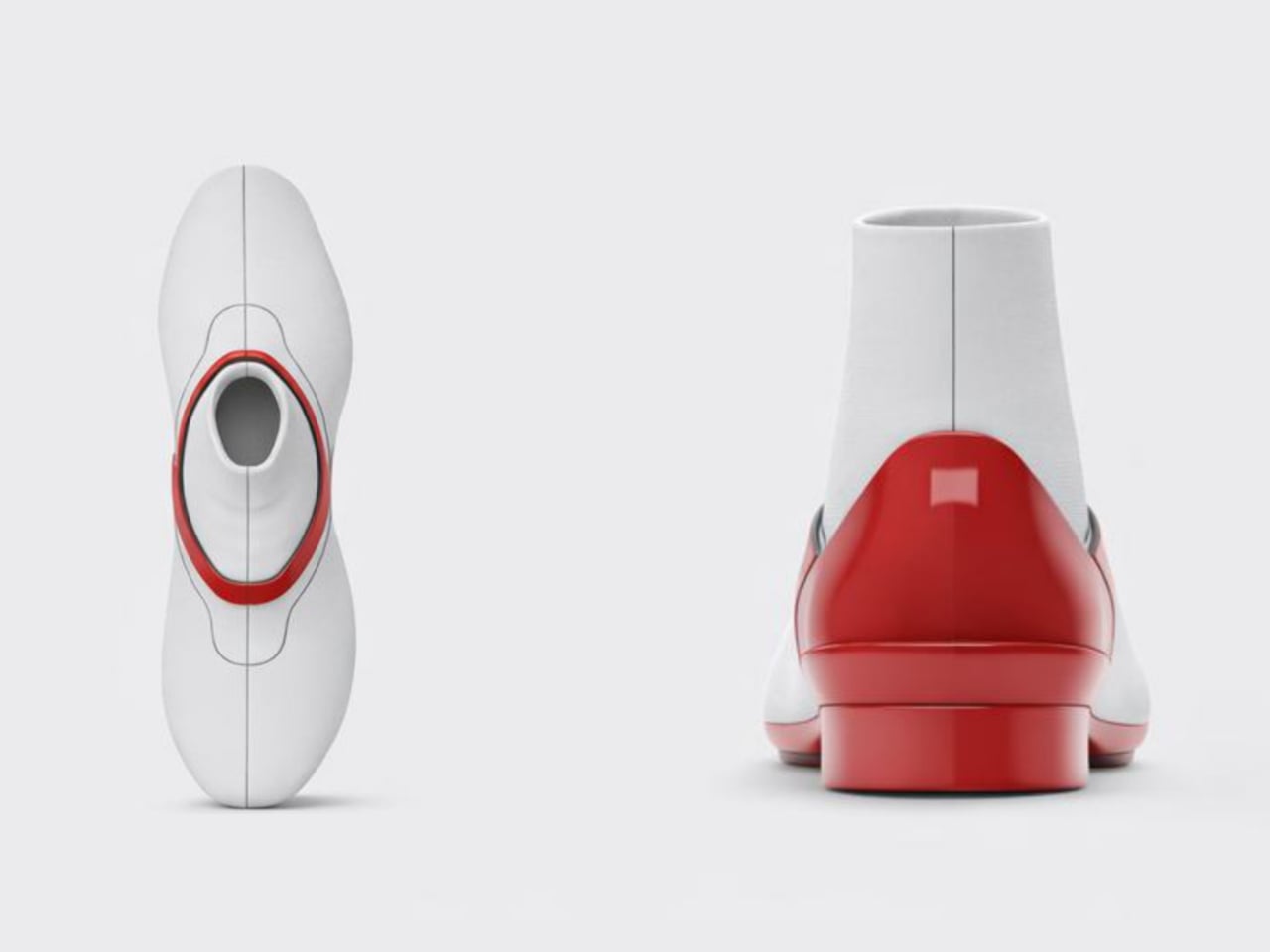
Seen head-on, the silhouette edges surprisingly close to a Japanese tabi shoe, the way the upper pulls cleanly away from a defined sole structure and wraps the foot rather than lacing or strapping around it. The proportions are quite different, but the underlying logic feels shared. Where the tabi’s separation is rooted in traditional craft and function, this concept’s version is purely formal, a visual argument about soft material against rigid geometry.

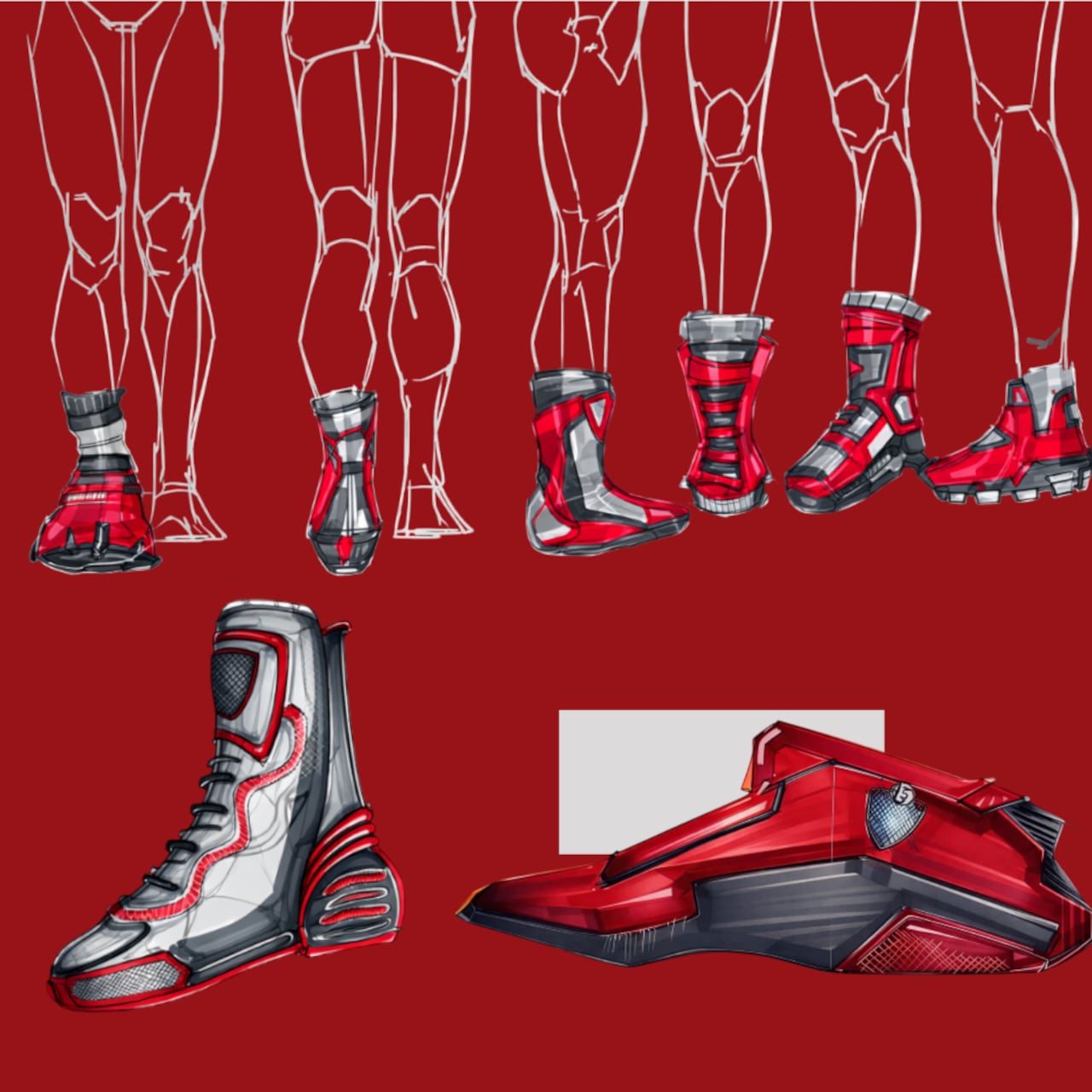
The ideation sketches make clear that the final form is a significant restraint from where the concept began. Earlier iterations pushed into armored, aggressive territory with angular protrusions and forms that read more like racing boots from a science fiction film. The decision to pare that down into something closer to a loafer-boot hybrid is either a maturation of the idea or a softening of it, and whether that calm reads as confidence or compromise is the question the final render quietly leaves open.