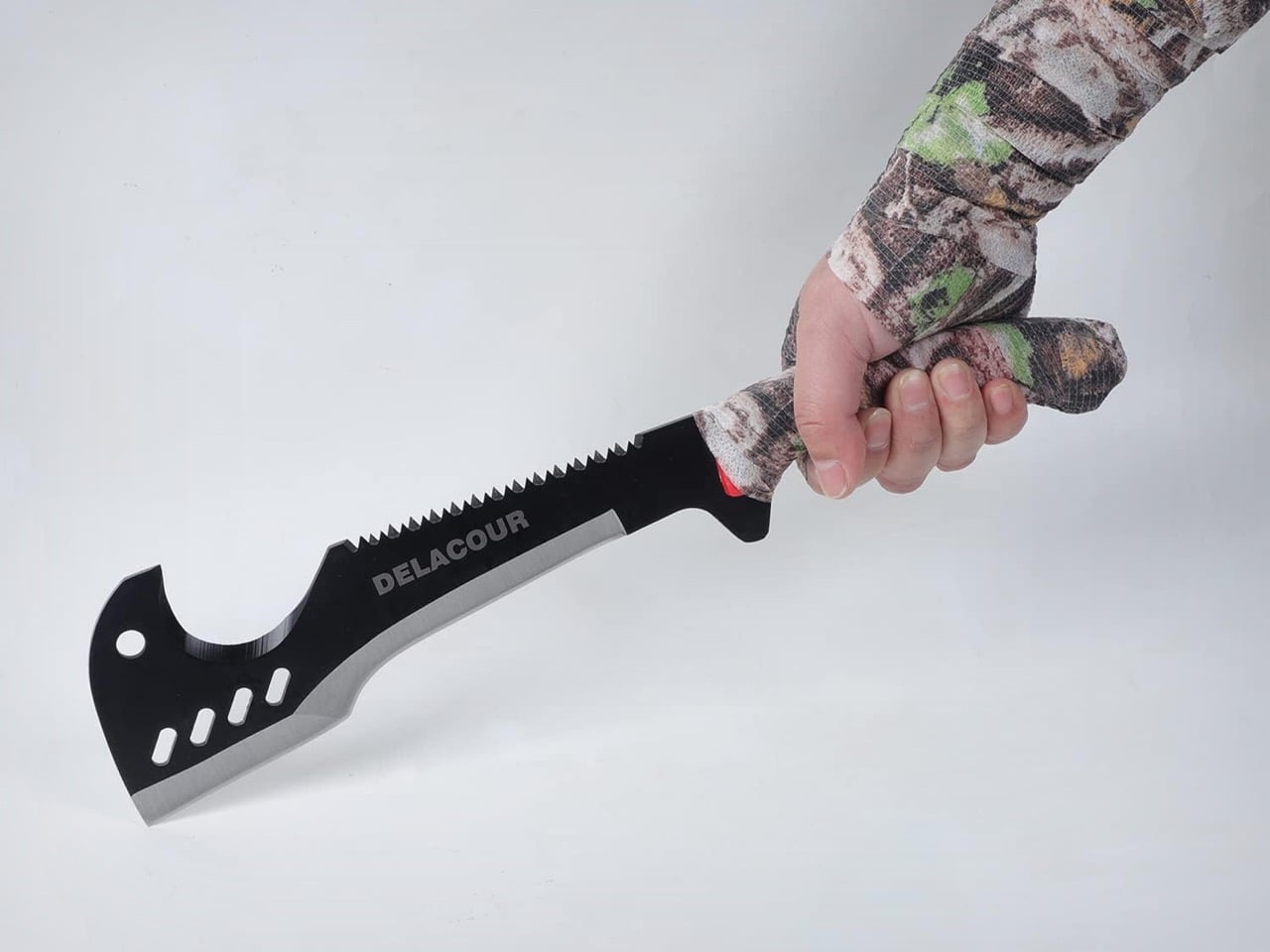
The Woodman’s Pal is an 84-year-old Pennsylvania tool that the US Army adopted almost immediately after its 1941 introduction, issuing it to Signal Corps troops in the Pacific and eventually to pilots as a survival blade through Vietnam and Desert Storm. It costs $169.95, uses 1075 high-carbon spring steel, and is still hand-assembled in Lancaster County with buffalo leather sheaths stitched by Amish craftsmen. The once-patented design now exists in public domain, prompting other creators like Jinhua Shengpu Tools Co., Ltd to make their own, modified versions of it with better materials and at a lower cost. Meet the Delacour Multi-Use Axe Machete, a Woodman’s Pal tribute that is more than 70% more affordable, bringing the winning design to a larger audience.
The logic behind both tools is simple: forward-weight the blade, add a reverse hook at the tip for catching and pulling vines, put saw teeth on the spine for crosscutting, and the result replaces a machete, axe, pruning hook, and bow saw simultaneously. The Delacour reproduces this geometry faithfully. The hook works. The saw back works. The forward mass creates chopping momentum that a straight blade cannot replicate.
Designer: Jinhua Shengpu Tools Co., Ltd
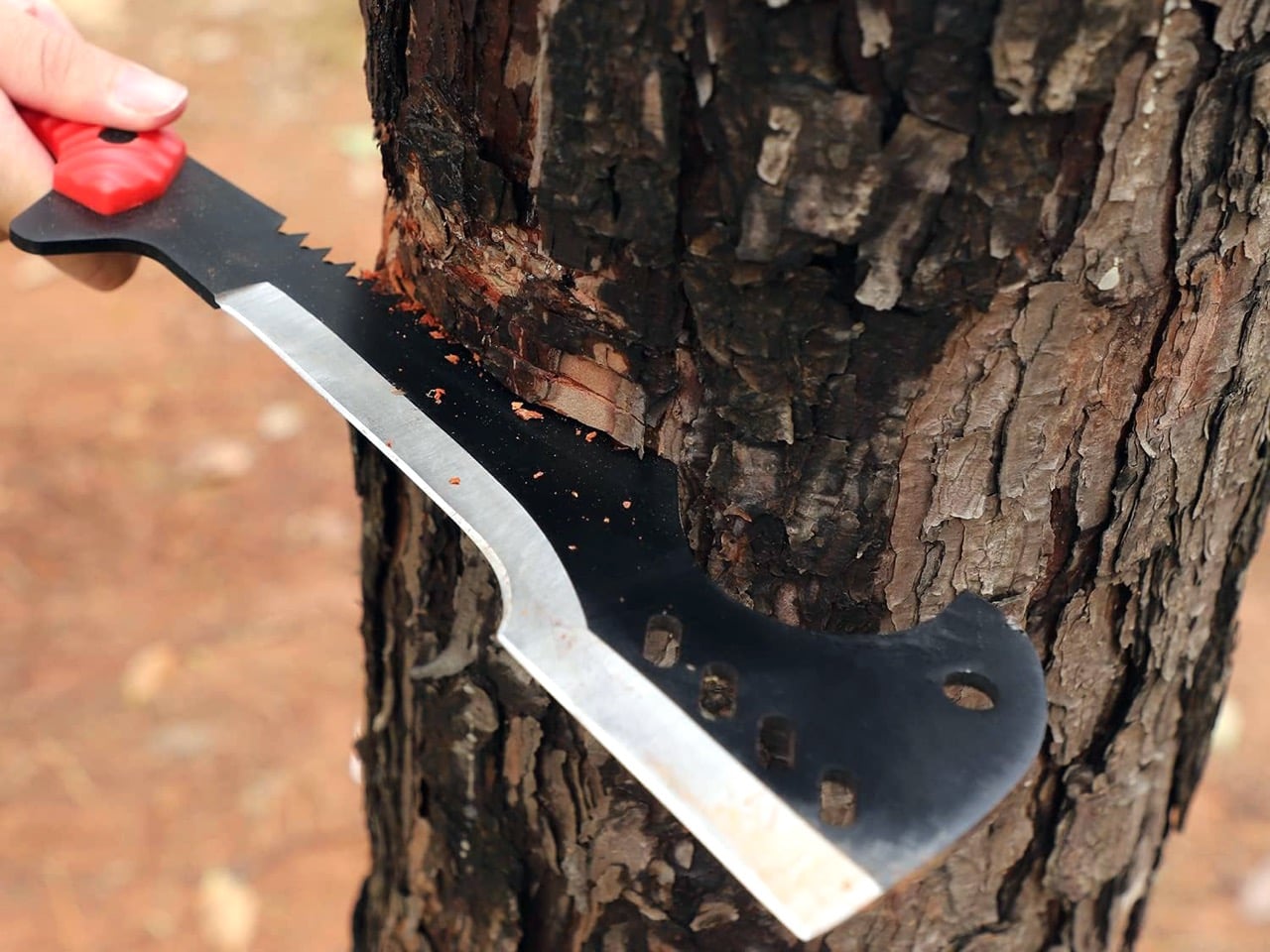
The two tools diverge most clearly in material. The Delacour uses 3Cr13 stainless steel at 4mm, a mid-grade alloy that prioritizes corrosion resistance and manufacturability. The Woodman’s Pal uses 1075 high-carbon spring steel, which holds an edge under sustained load. At $56, the Delacour’s steel is a reasonable trade-off for light clearing, campsite work, and occasional trail use. It becomes a constraint only when pushed into the heavy chopping the blade geometry invites.
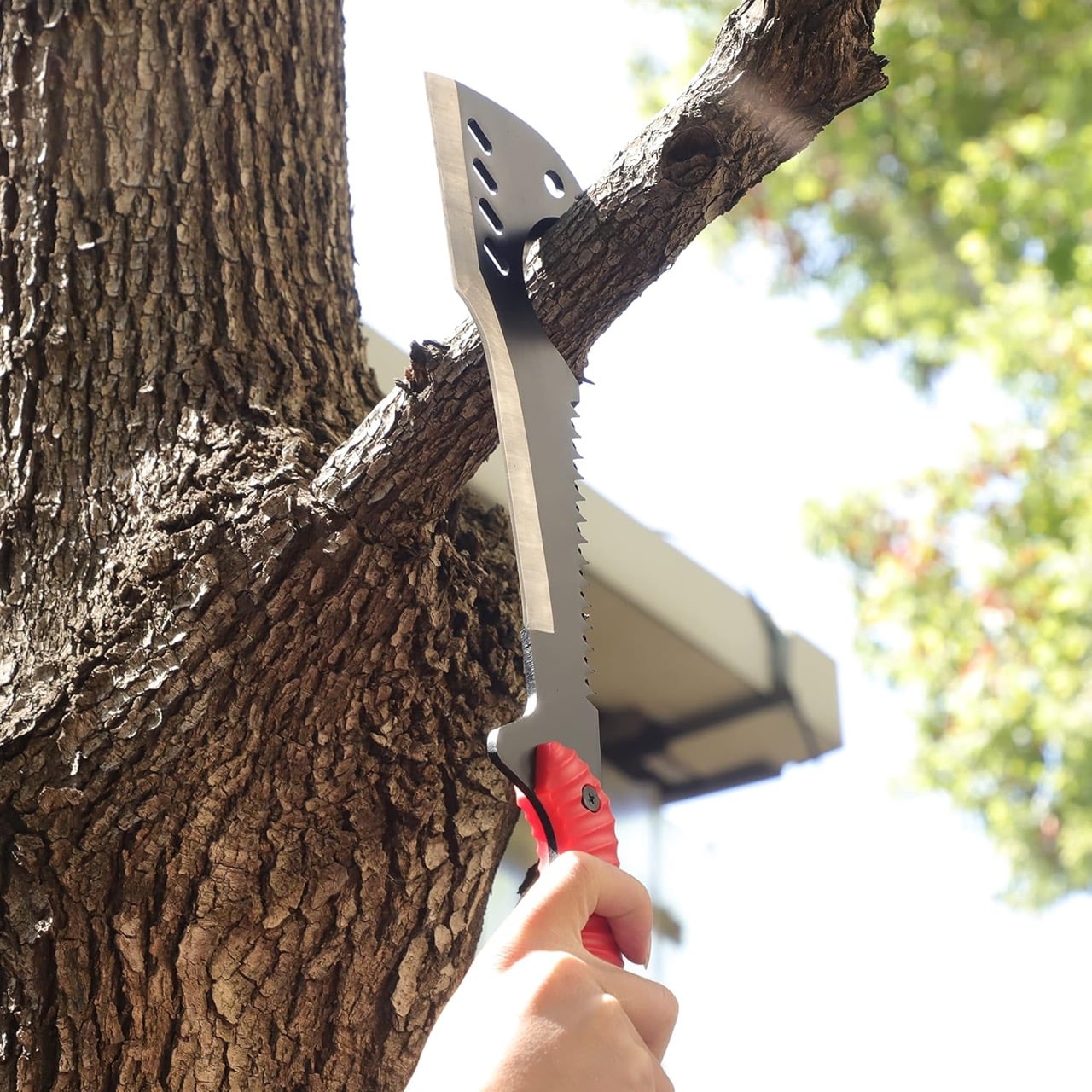
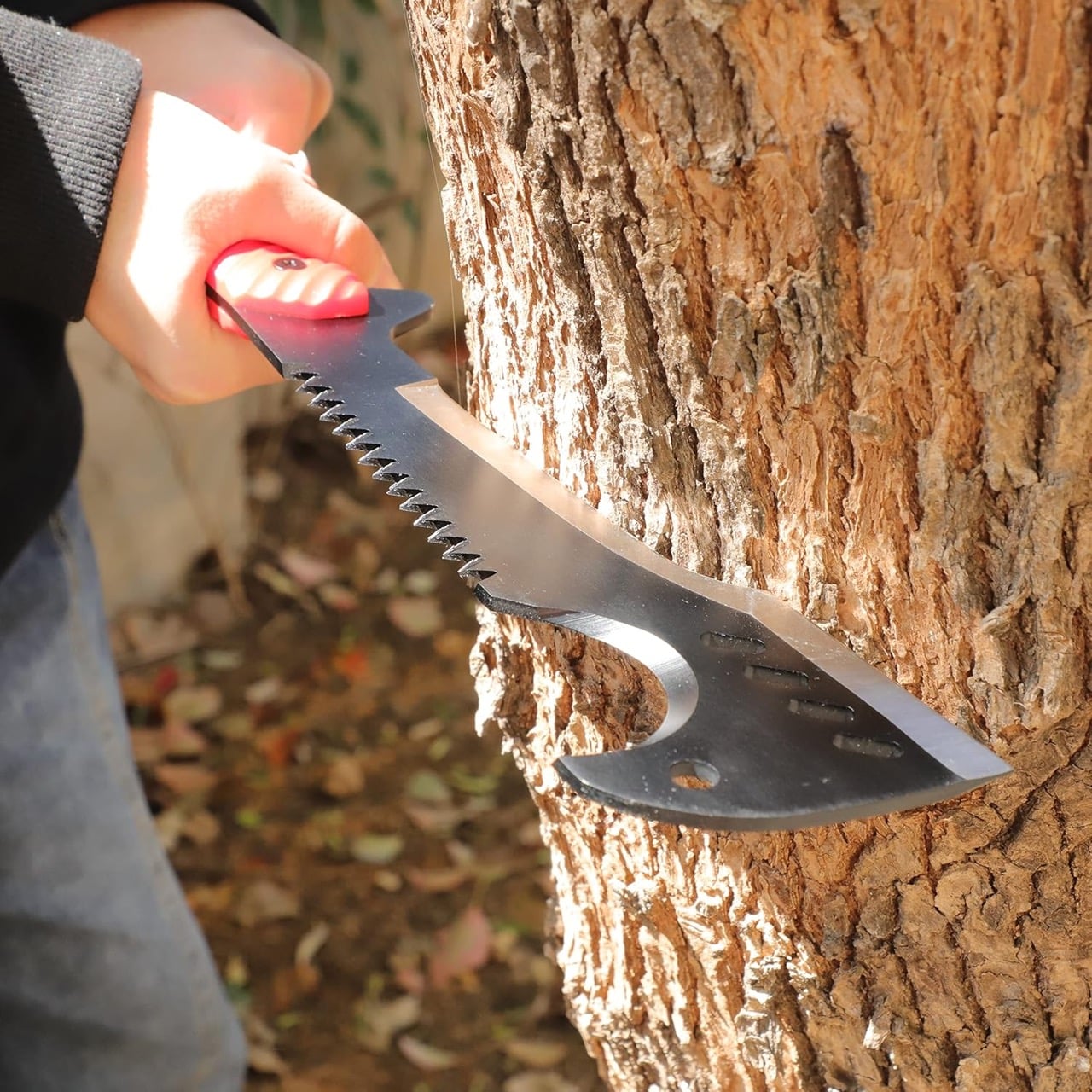
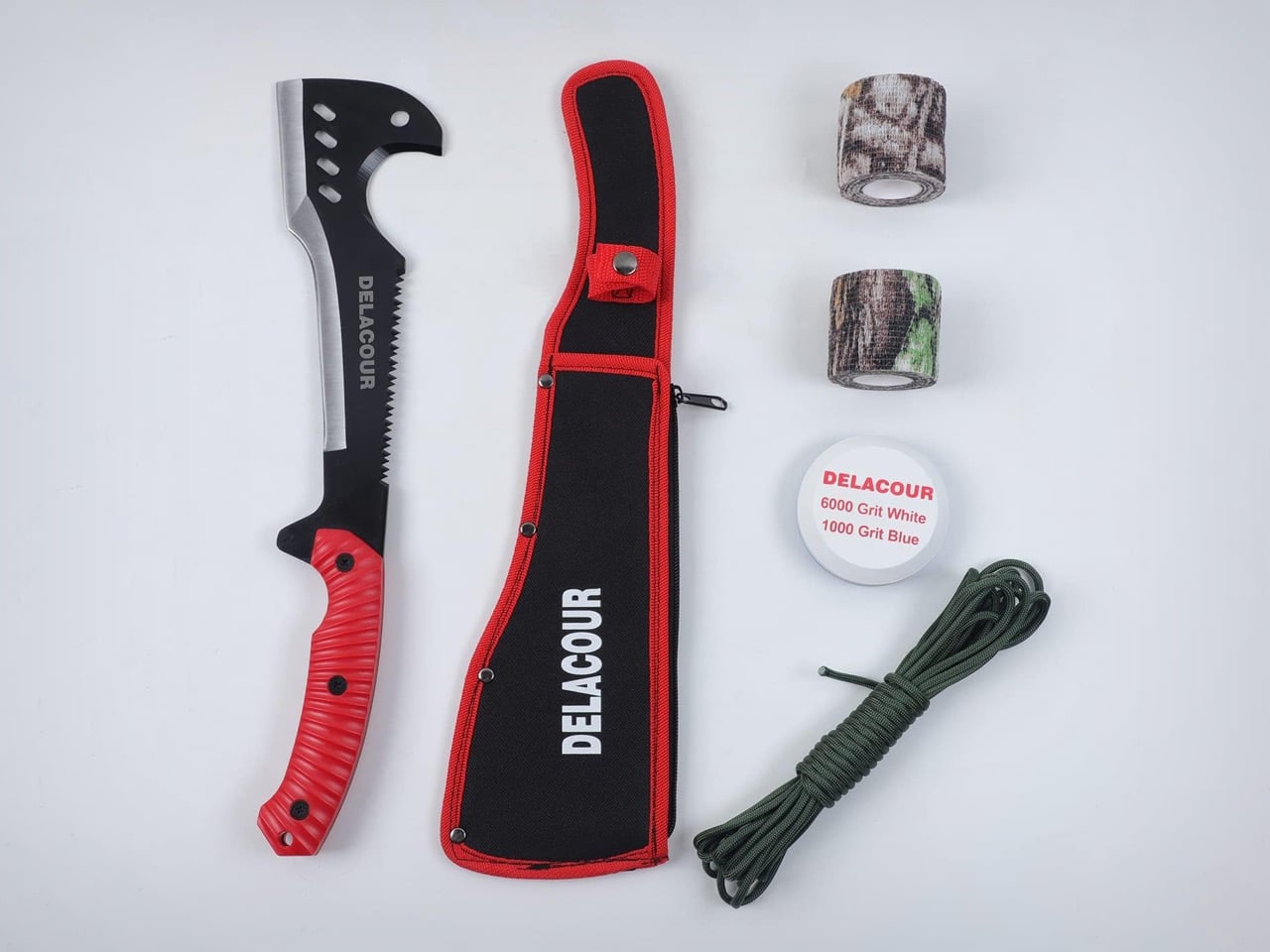
The visual language is a departure from the Woodman’s Pal’s austere utility. The injection-molded red nylon grip is aggressively textured and colored, reading more as consumer outdoor product than working tool. Lightening holes punched through the blade add visual complexity without a clear weight or balance rationale. The package throws in camo wrap tape, a paracord coil, and a dual-sided whetstone, rounding the Delacour out as an entry-level survival kit rather than a single well-considered implement.
At $56, the Delacour asks a reasonable question: how much of what makes the Woodman’s Pal worth $170 is the steel, and how much is the leather, the Lancaster County provenance, and 84 years of military heritage? The geometry, at least, costs the same in both.