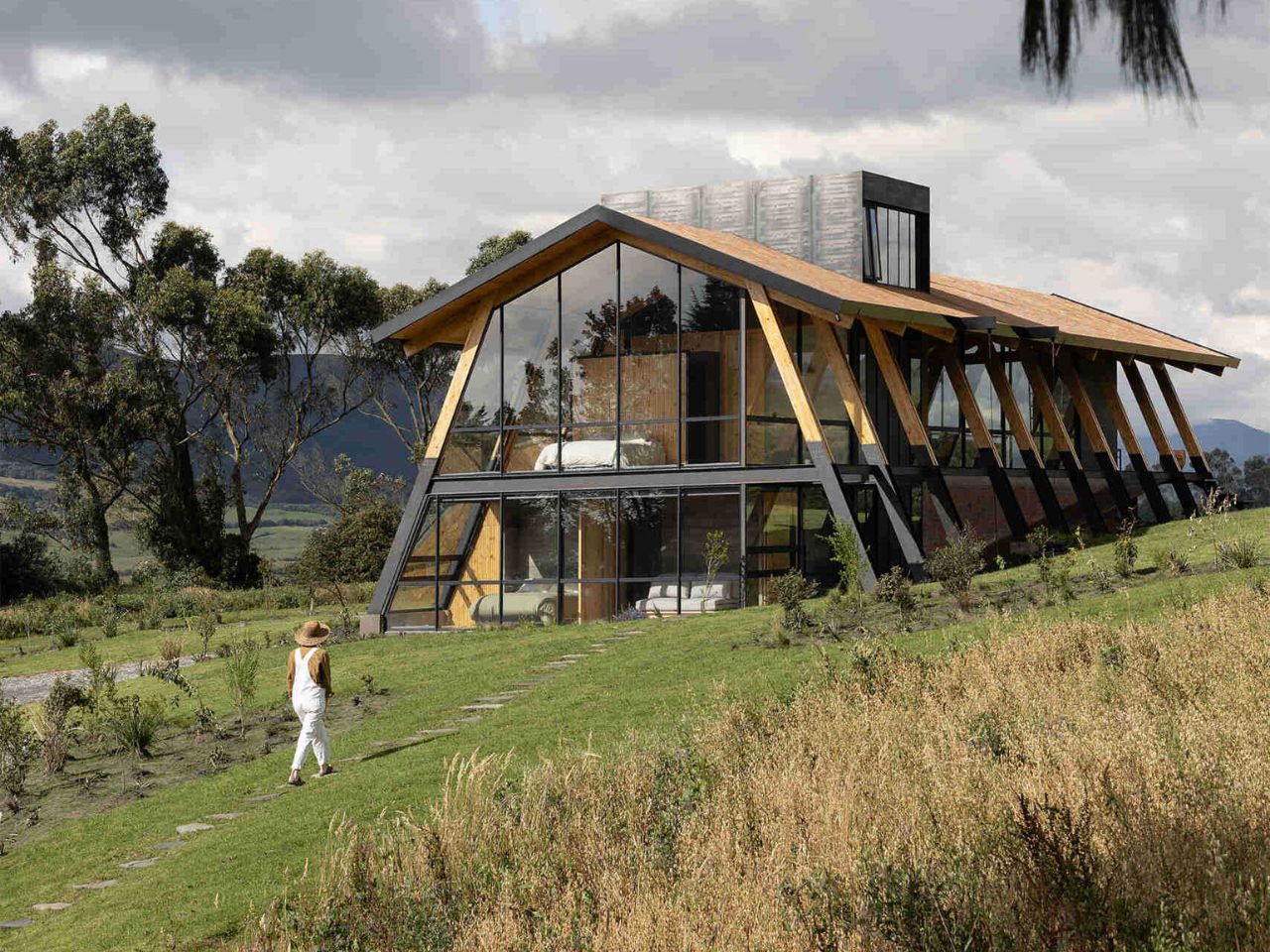
You approach La Miradora by moving uphill. The house sits at the highest point of a long plot in Ecuador’s central highlands, and from the start, it’s clear that the terrain is in charge. Instead of flattening the land, the design by Taller General works with its natural slope, letting the ground shape how the house is arranged, entered, and experienced.
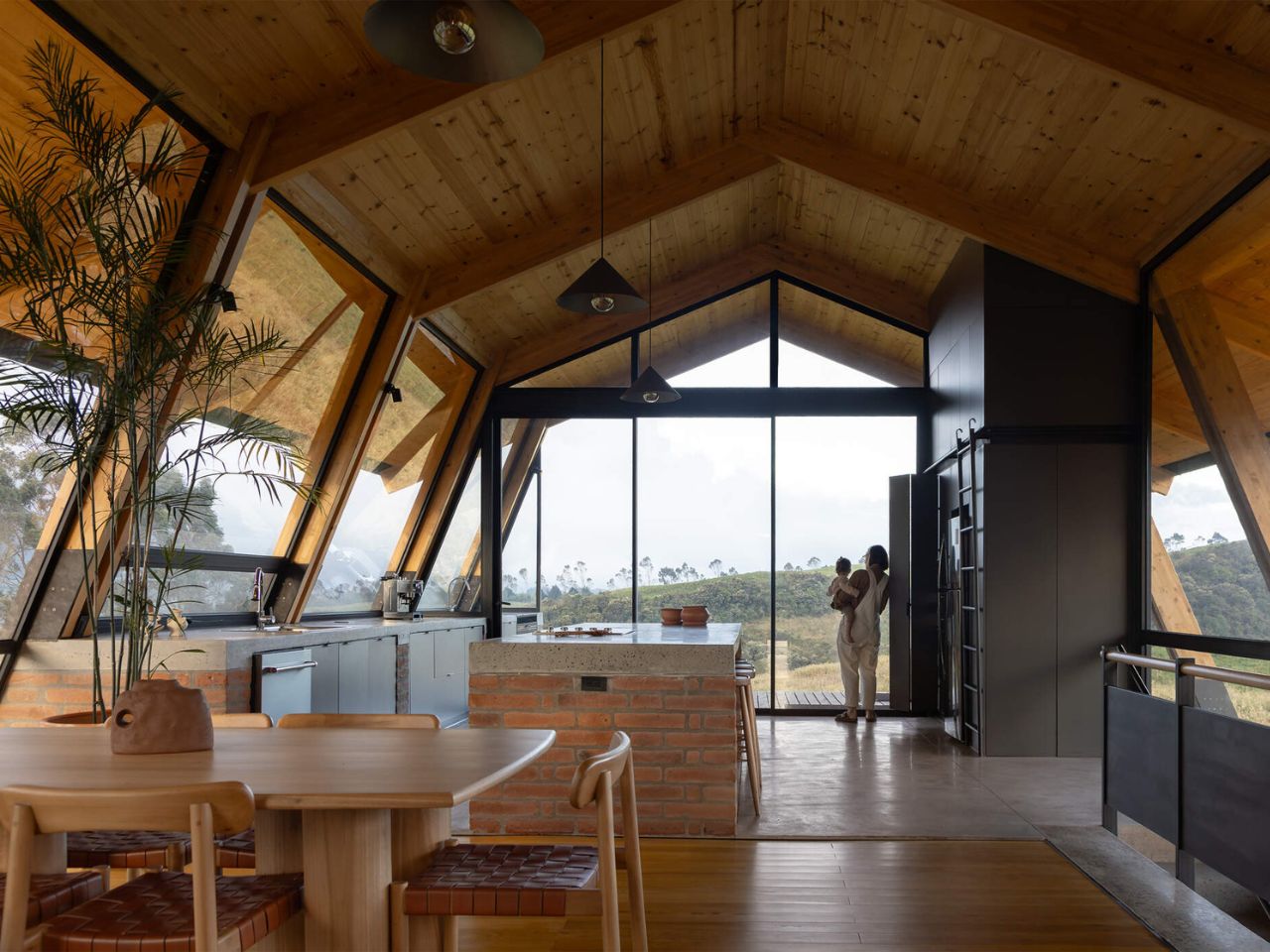
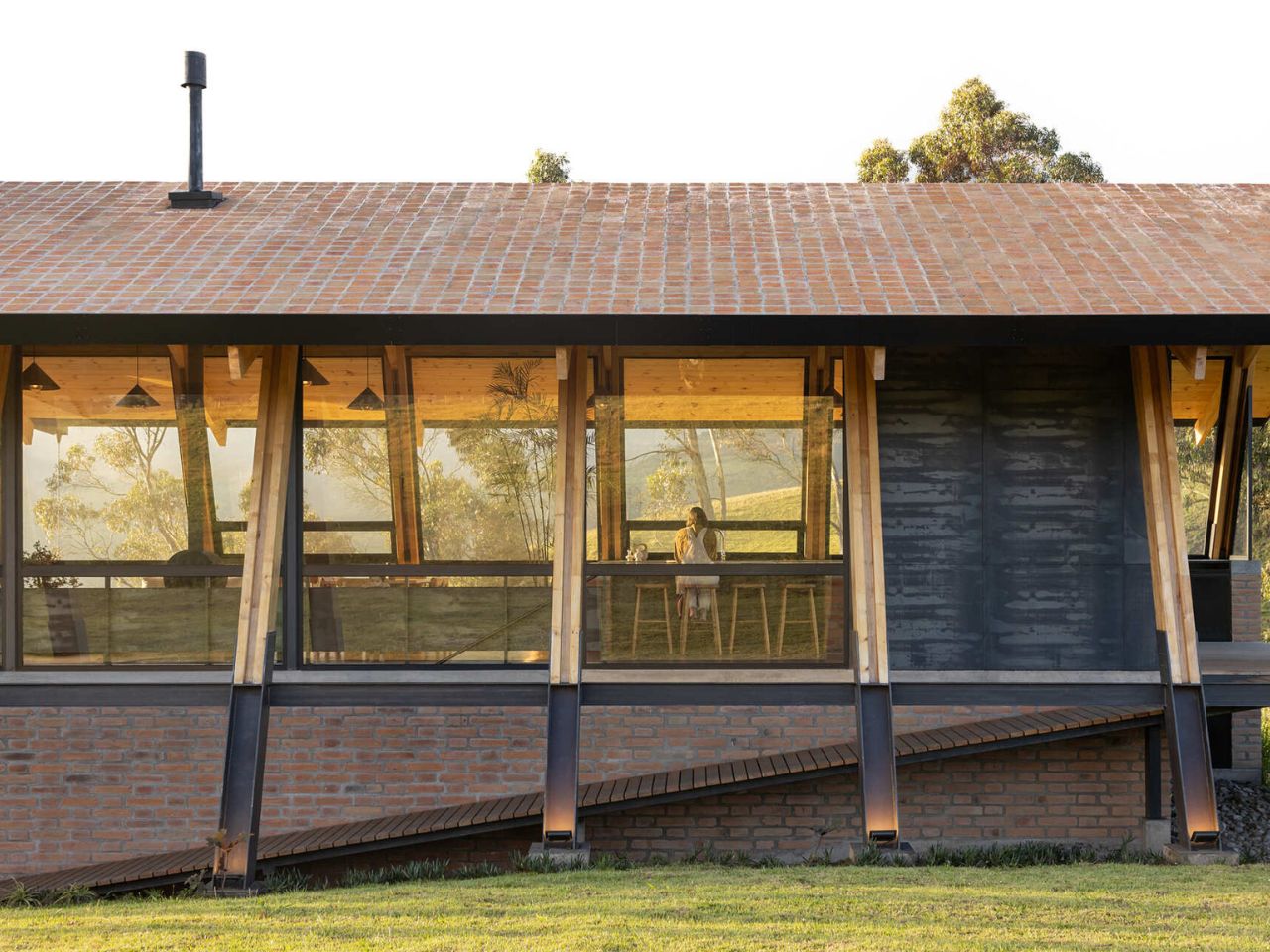
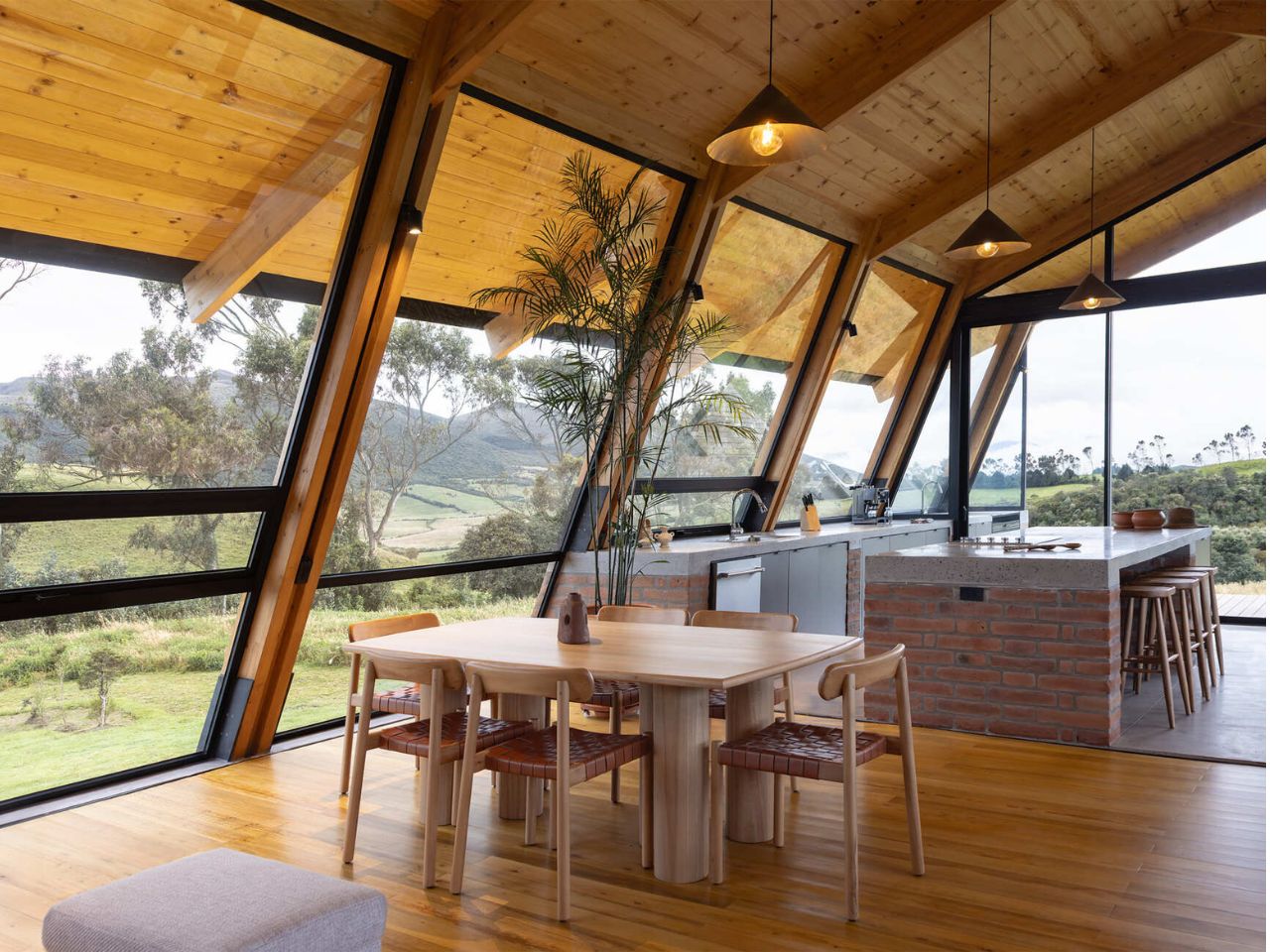
The structure reveals itself gradually. A sequence of wooden ribs lines the exterior, spaced evenly and forming the main structural system. These ribs act as both frame and shelter, supporting the upper floor while creating deep overhangs that protect the interior from strong sun and rain. On one side, they rest on a brick base that follows the slope and disappears where the lower level fits beneath. On the other hand, the elements vary slightly in length to match the terrain and shift into metal where exposure to weather is strongest. The logic is visible everywhere. Nothing is covered or hidden.
Designer: Taller General
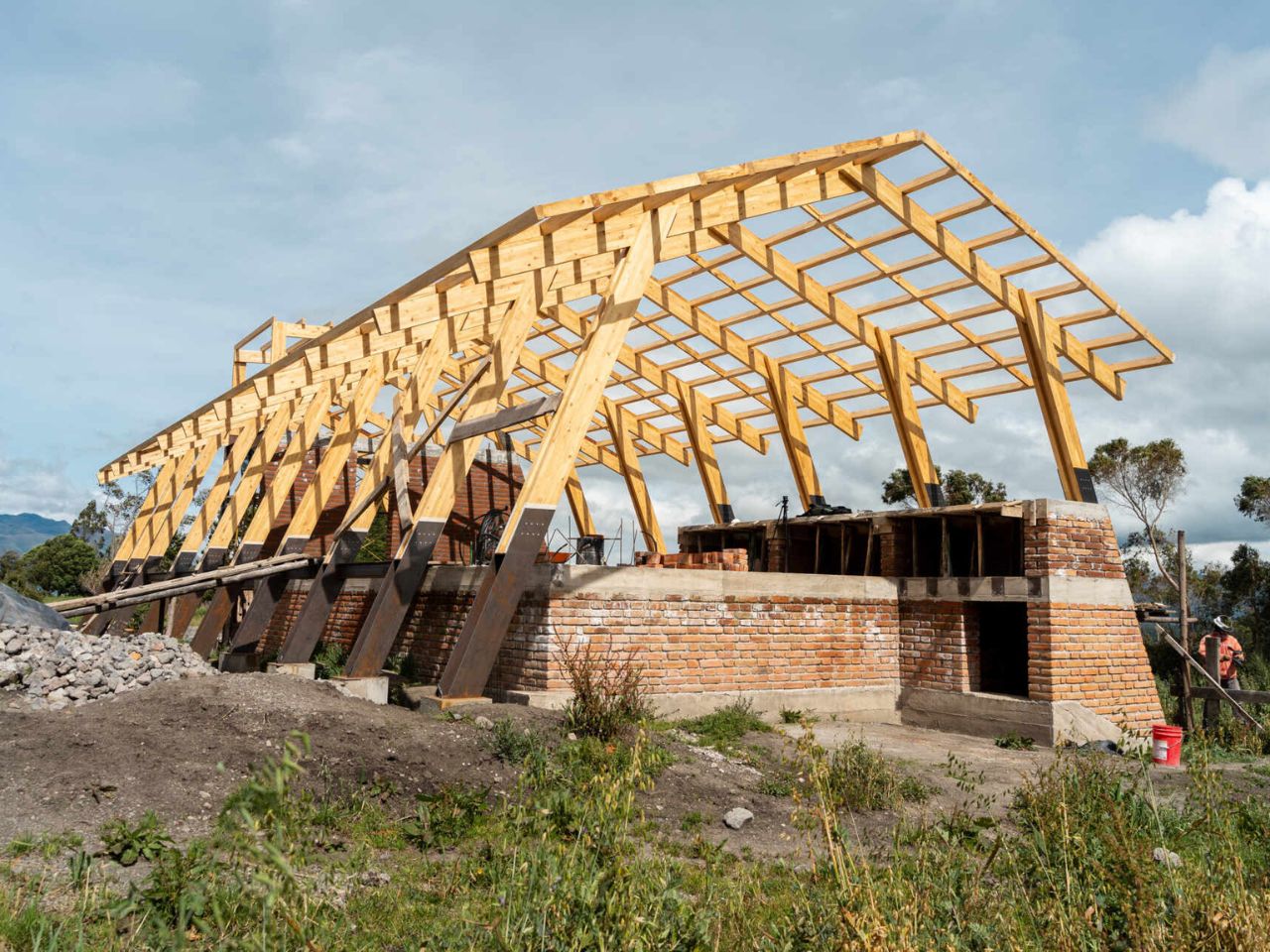
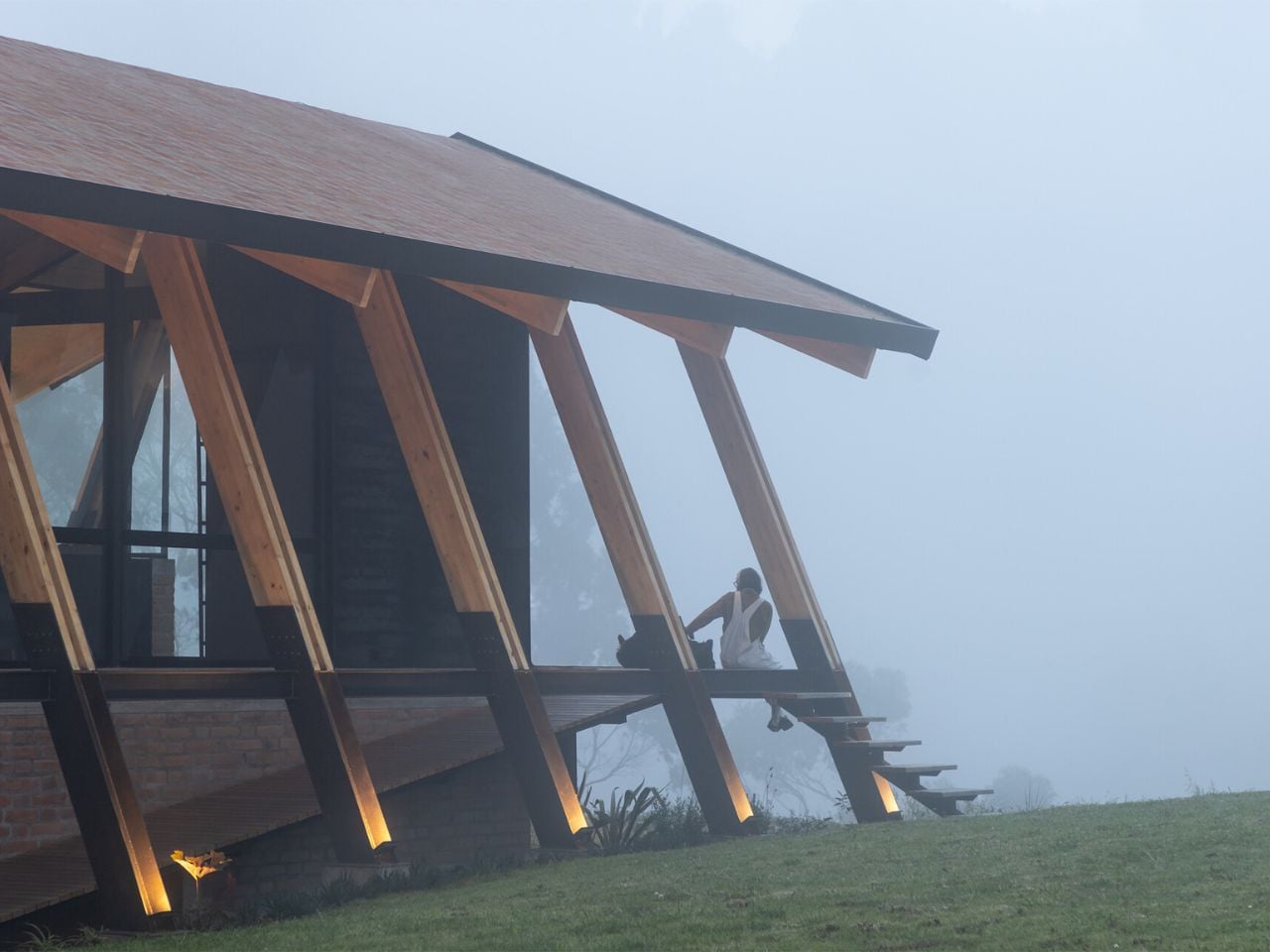
Before you even step inside, a ramp guides you along the edge of the house. This path lets you move around the building while staying connected to the landscape. One end of the site opens toward a ravine, the other toward a road, and the circulation route allows you to understand both conditions before entering.
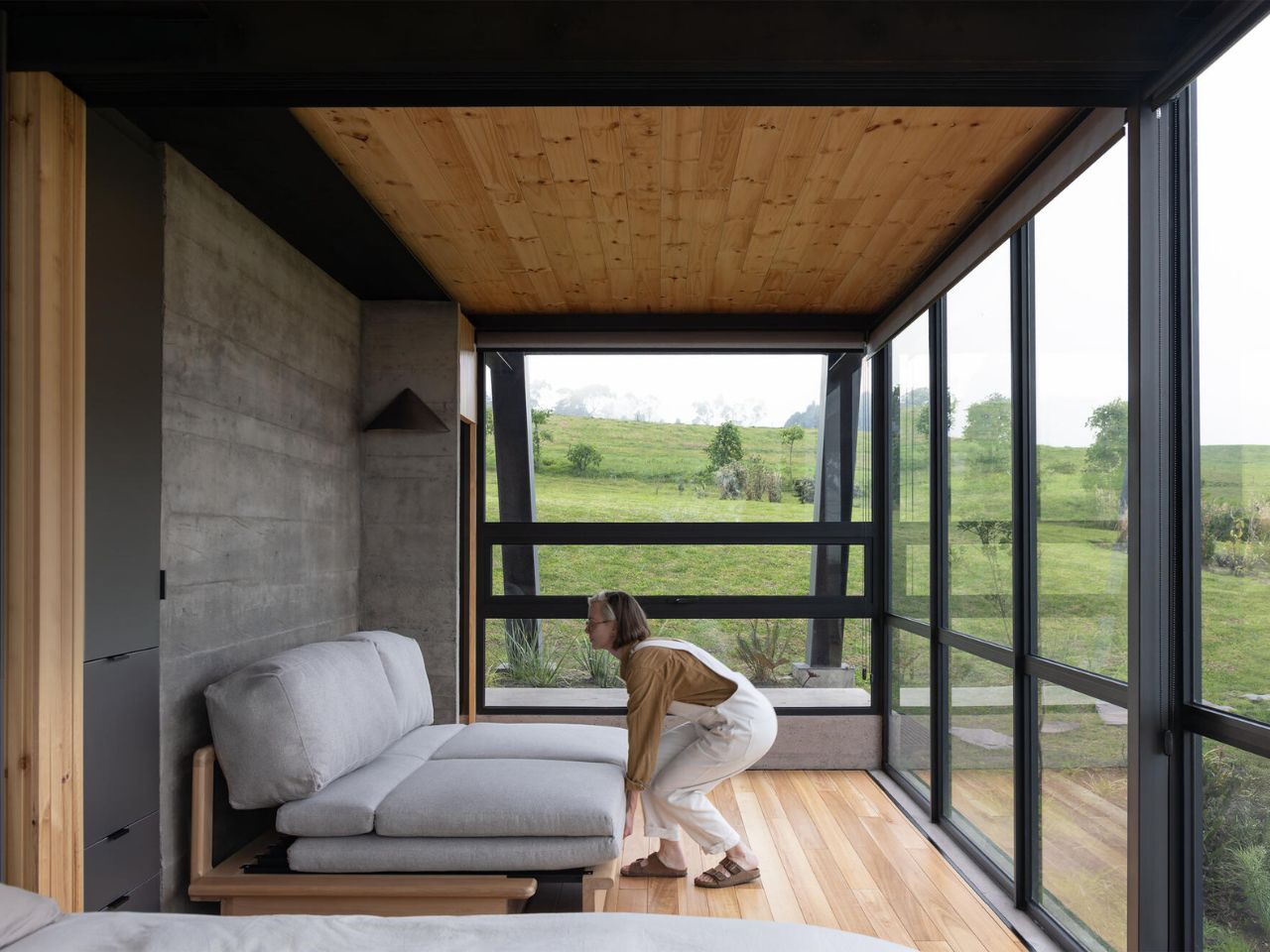
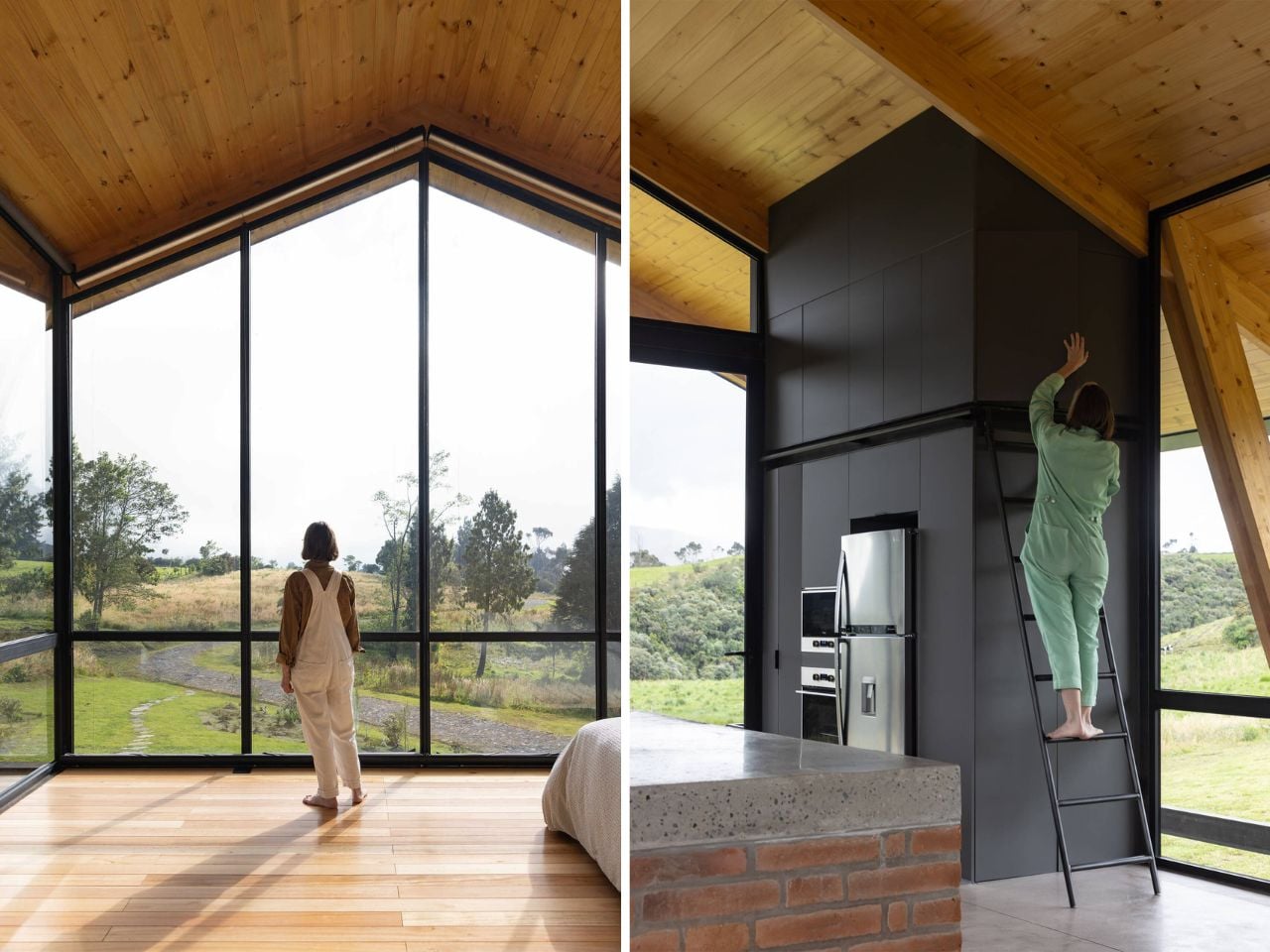
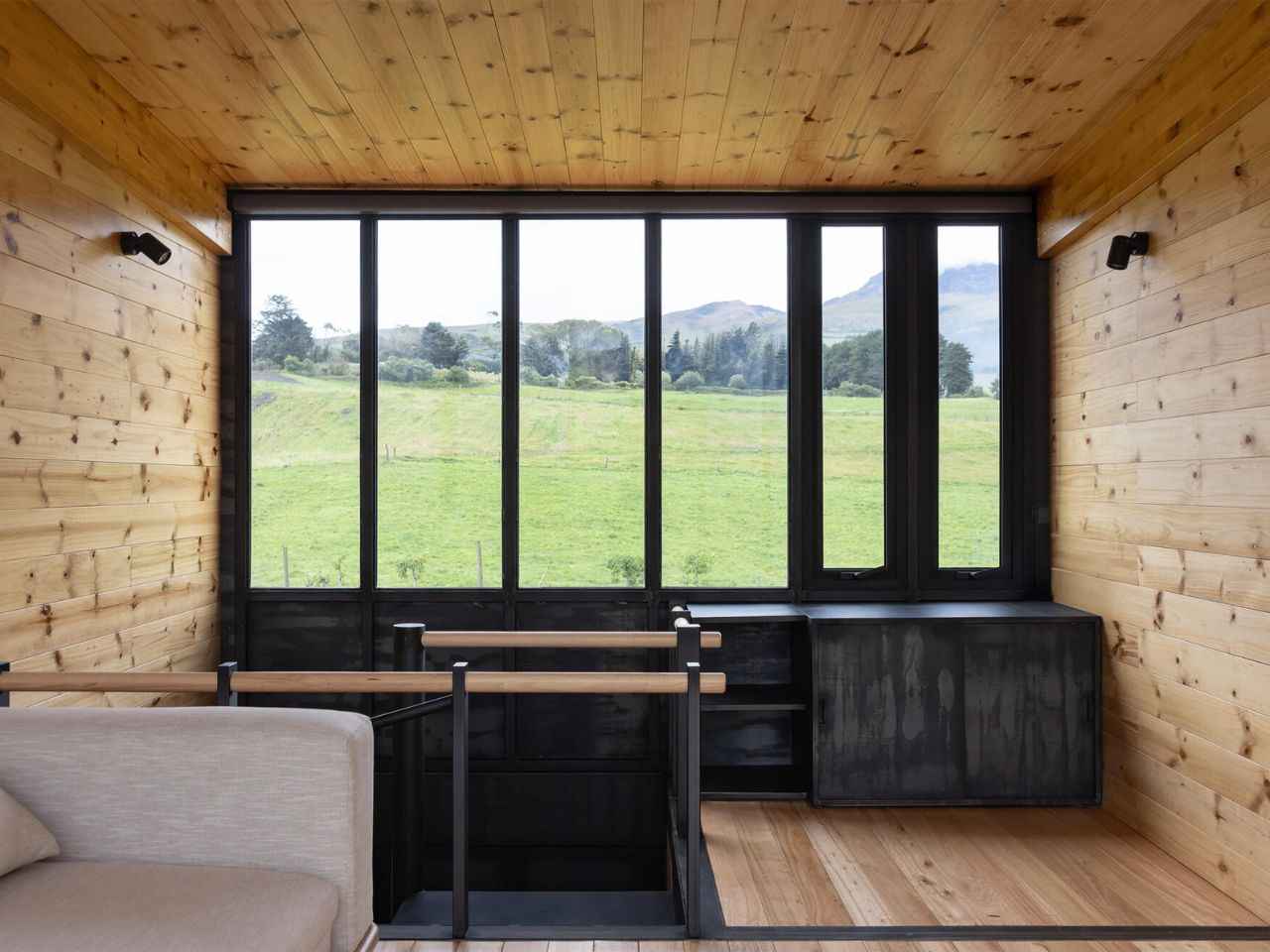
The main living spaces are located on the upper level. Once you arrive there, the reason becomes obvious. From this elevation, views extend across open meadows and toward nearby volcanoes. The living room, dining area, and kitchen are organized as one continuous space, so the horizon remains visible from almost anywhere. This layout reflects how the resident couple lives day to day, placing shared spaces at the center and giving them the best vantage point.
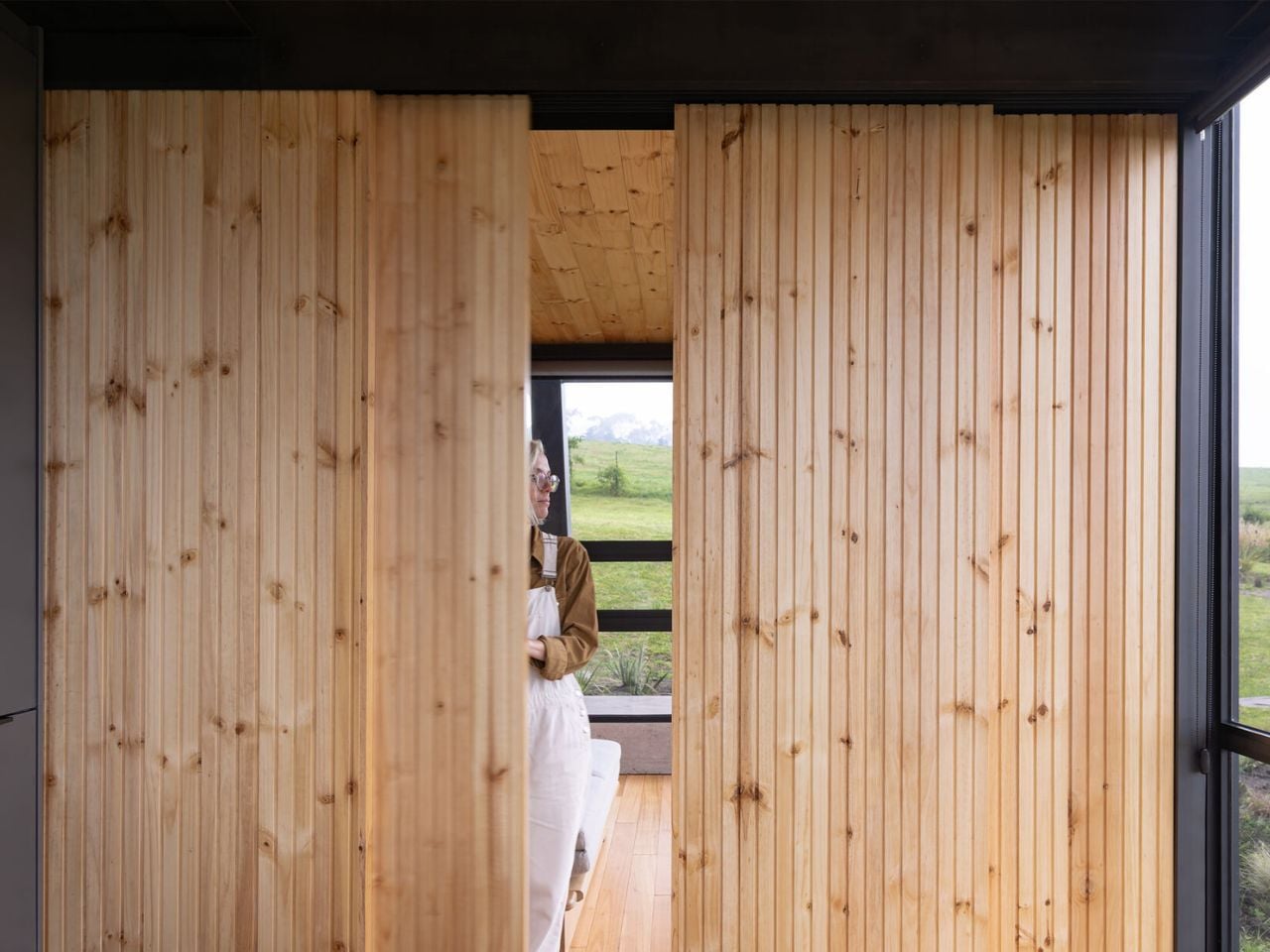
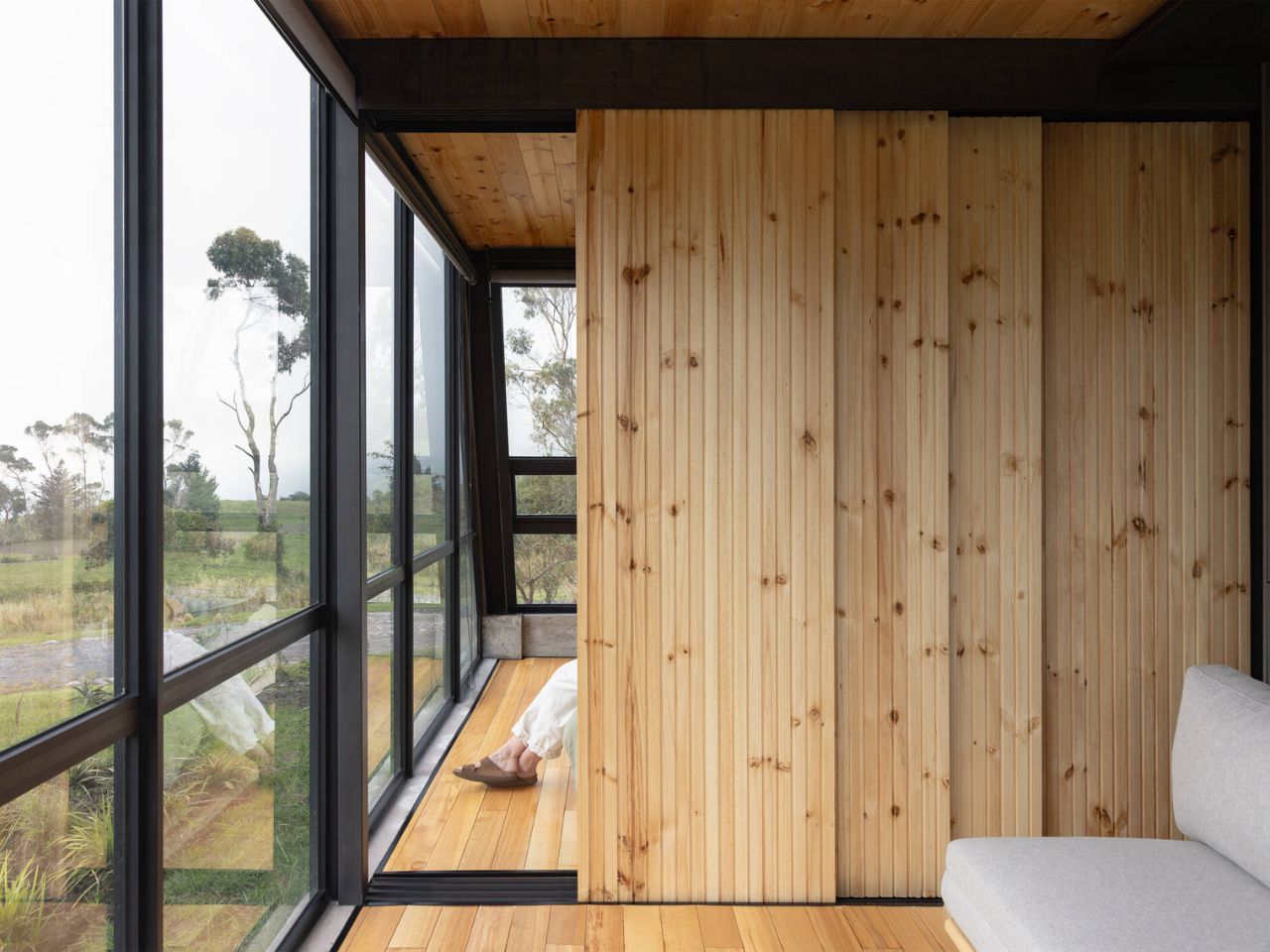
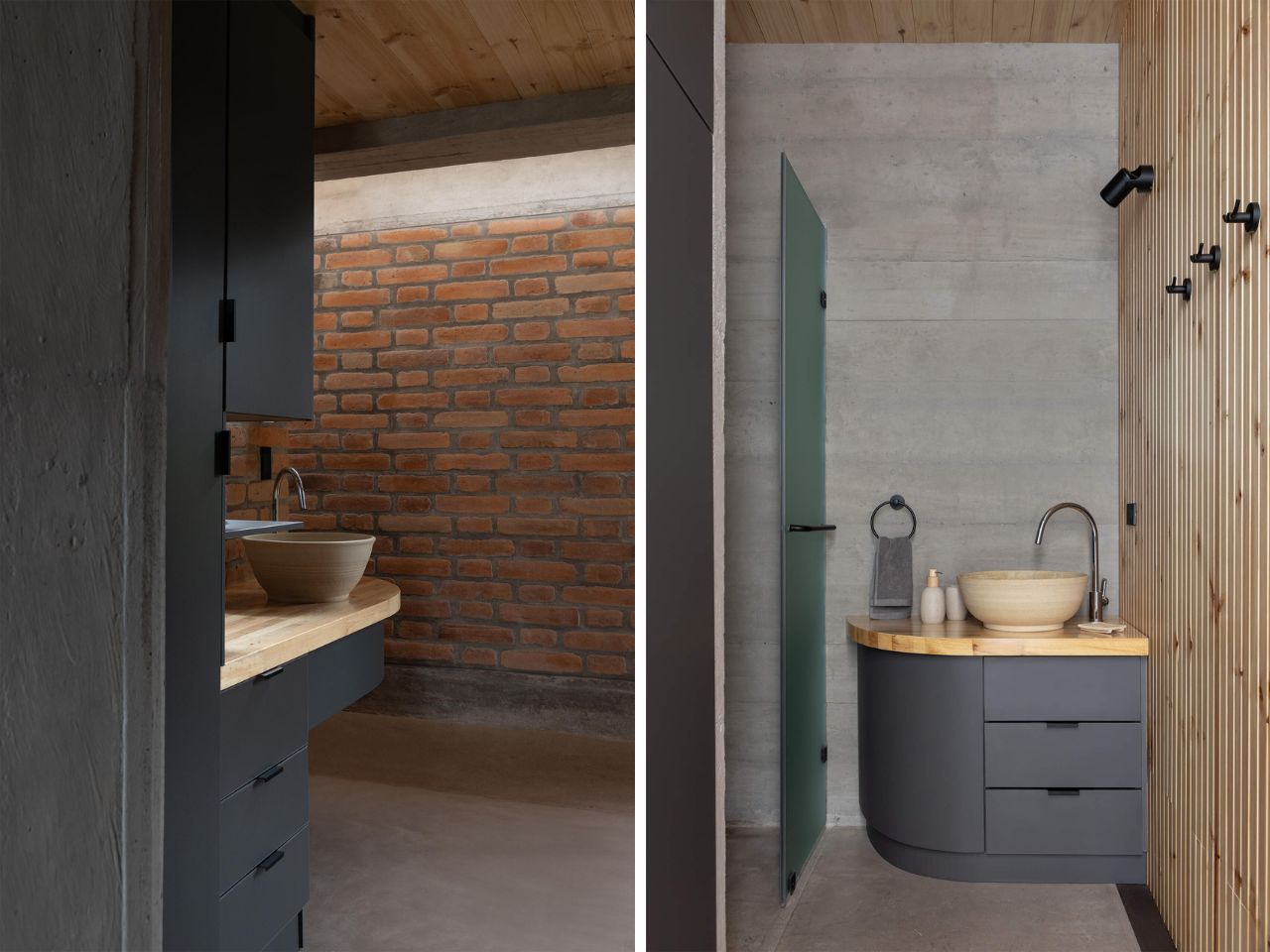
Looking closely, you begin to notice how much of the house was resolved through direct collaboration with craftspeople. Specialists in wood, metal, ceramic, and fabric designed and built elements such as storage, lighting, stairs, partitions, and curtains as part of the architecture itself. These details are not applied later. They are integrated into the structure from the beginning.
A small loft sits above part of the upper floor. It functions as a viewing point with direct sightlines in both directions toward the surrounding mountains. The space is simple but intentional, reinforcing the idea that the house is organized around its setting rather than around decorative features.
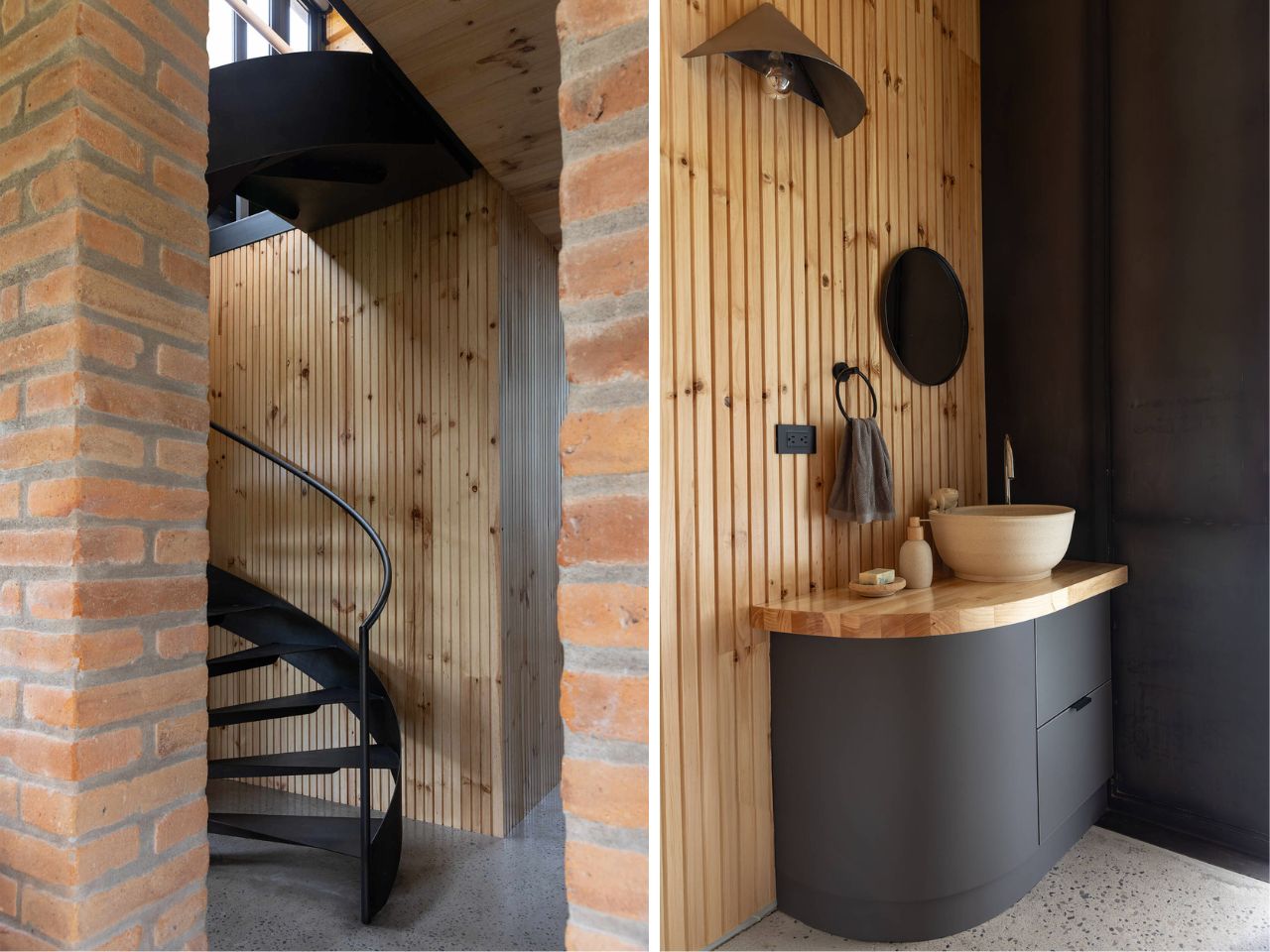
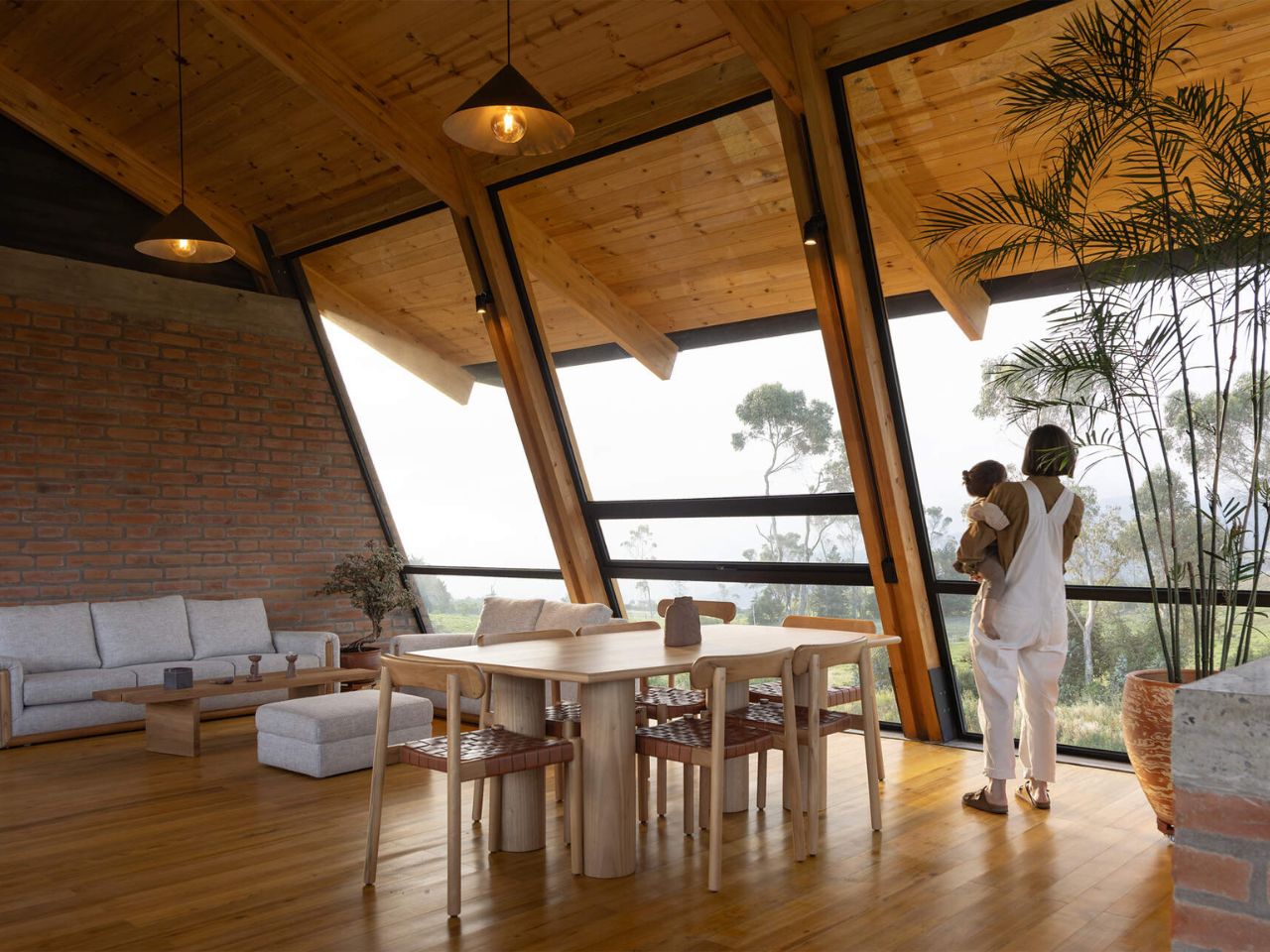
To reach the lower level, you move down a central stair that connects the two floors without expanding the building’s footprint. This level is smaller because it is partially tucked into the slope, but it plays an important role. It is designed for visiting family and becomes more active during gatherings. Bathrooms, services, and covered parking are also located here, grouped efficiently within the structural grid.
The material palette reflects practical decisions. Construction materials are left exposed, which reduces finishing work, minimizes waste, and keeps the building process straightforward. Sustainability systems are integrated quietly: solar panels provide electricity, and water is treated through a sequence of filters and natural processes before returning to the ground.
What stands out most about La Miradora is how clearly it responds to its environment. The slope determines the section, the views determine the layout, and the climate determines the materials. Rather than imposing a form on the site, the project lets the site guide the design. Walking through it, you don’t feel like you’re touring an object placed in the landscape. You feel like you’re moving through a house that was shaped by it.