Treehouses have re-emerged not as nostalgic artifacts, but as serious architectural propositions. Within contemporary practice, they are understood as a distilled form of biophilic thinking – where structure, ecology, and human occupation are inseparable. Rather than imposing form on landscape, treetop architecture allows the built environment to coexist, adapt, and respond to living systems.
Occupying a treehouse establishes a rare spatial contract with nature. The tree is not a backdrop but a collaborator, shaping load, movement, and experience. This vertical inhabitation reframes ideas of shelter and elevation, offering a quiet yet powerful redefinition of how architecture can belong within the canopy.
1. Safe and Elevated Spaces
The charm of a treehouse comes from the idea of prospect and refuge – our natural need to see without being seen. Being up high gives a clear view of the surroundings, while the leaves and branches around provide shelter and privacy. This combination makes us feel safe and calm instinctively.
Raising the floor above the ground keeps us away from noise and distractions below. The treehouse becomes a peaceful, natural cocoon. Height isn’t just about the view as it gives a sense of security and comfort, letting us enjoy both openness and protection in one space.
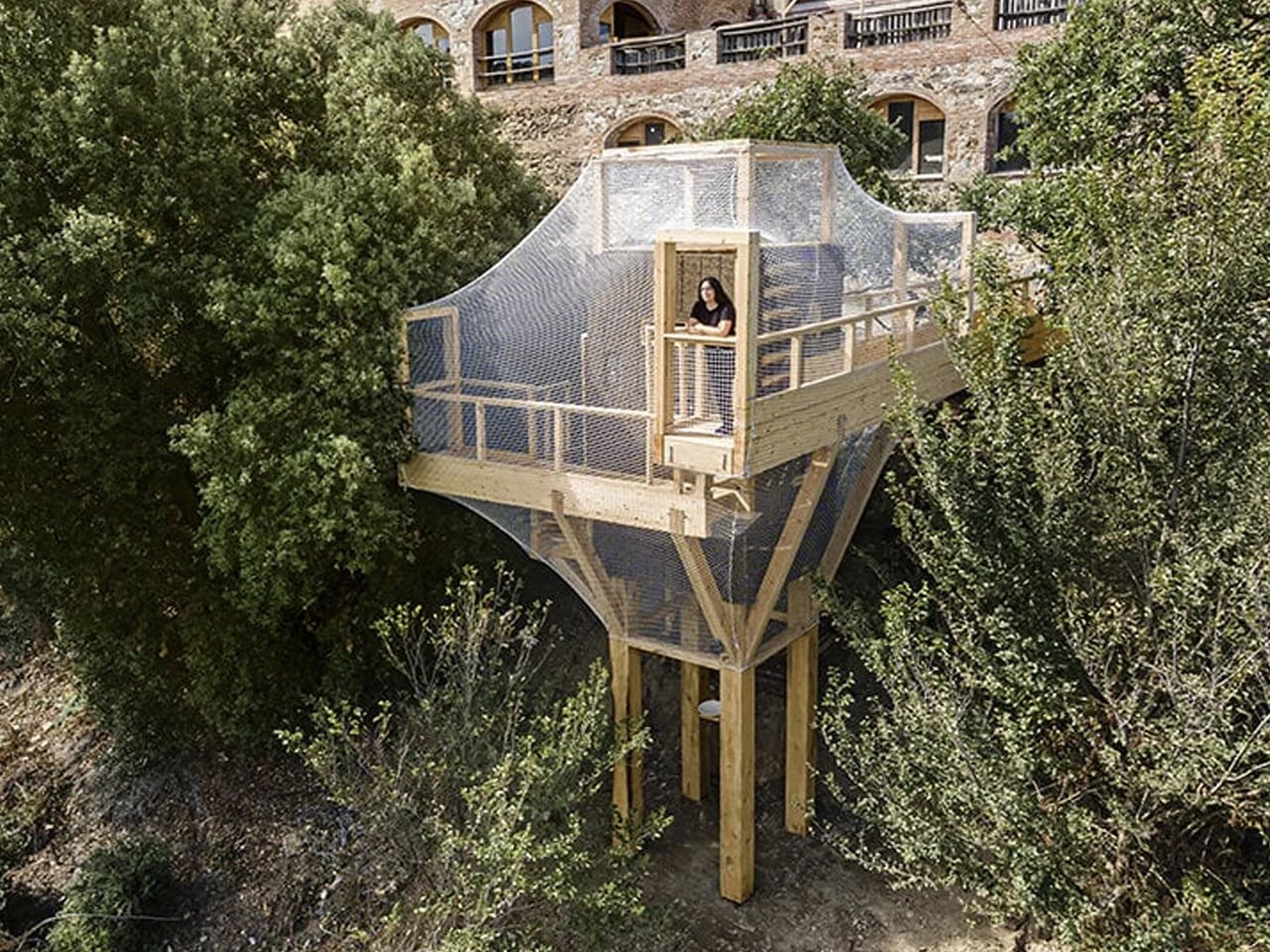
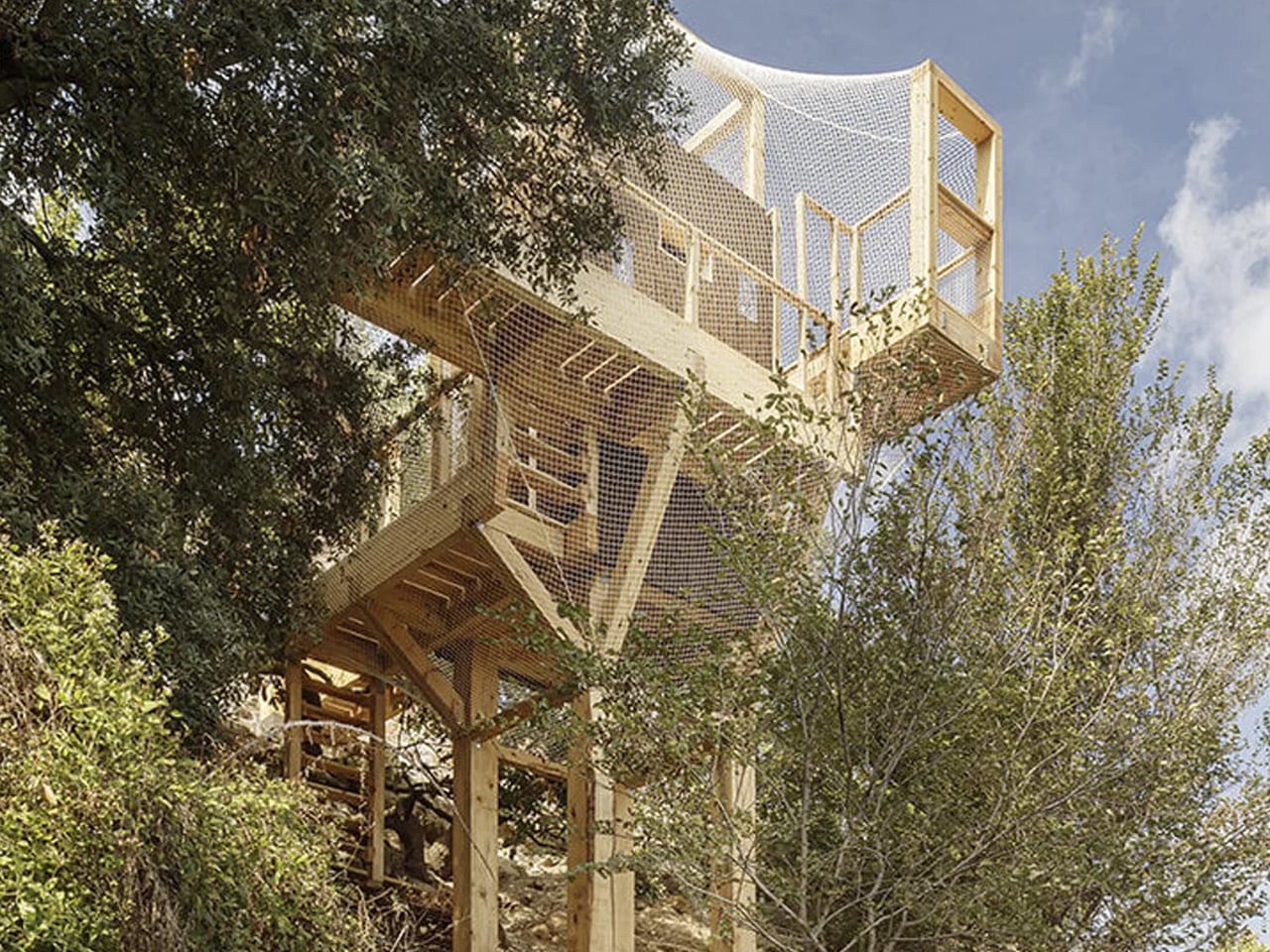
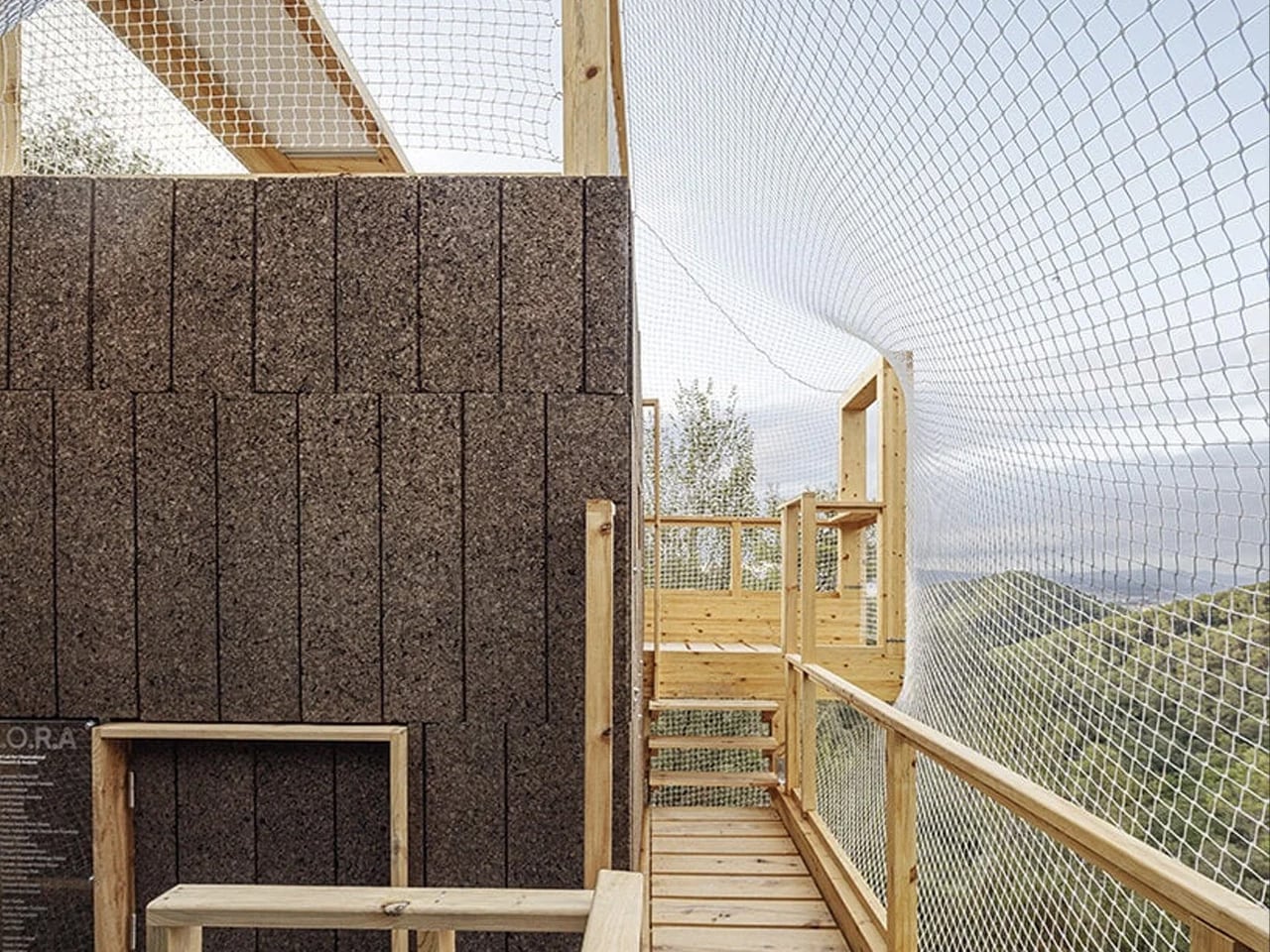
Called the Forest Lab for Observational Research and Analysis (FLORA), this treetop observatory sits within Barcelona’s Collserola Natural Park at the Institute for Advanced Architecture of Catalonia (IAAC). Suspended within the forest canopy, the compact structure serves as a living and working space for researchers studying local biodiversity. Rising about 28 feet high, FLORA is designed as an immersive platform that allows direct access to the upper layers of the forest, making scientific observation possible without disturbing the ground below.
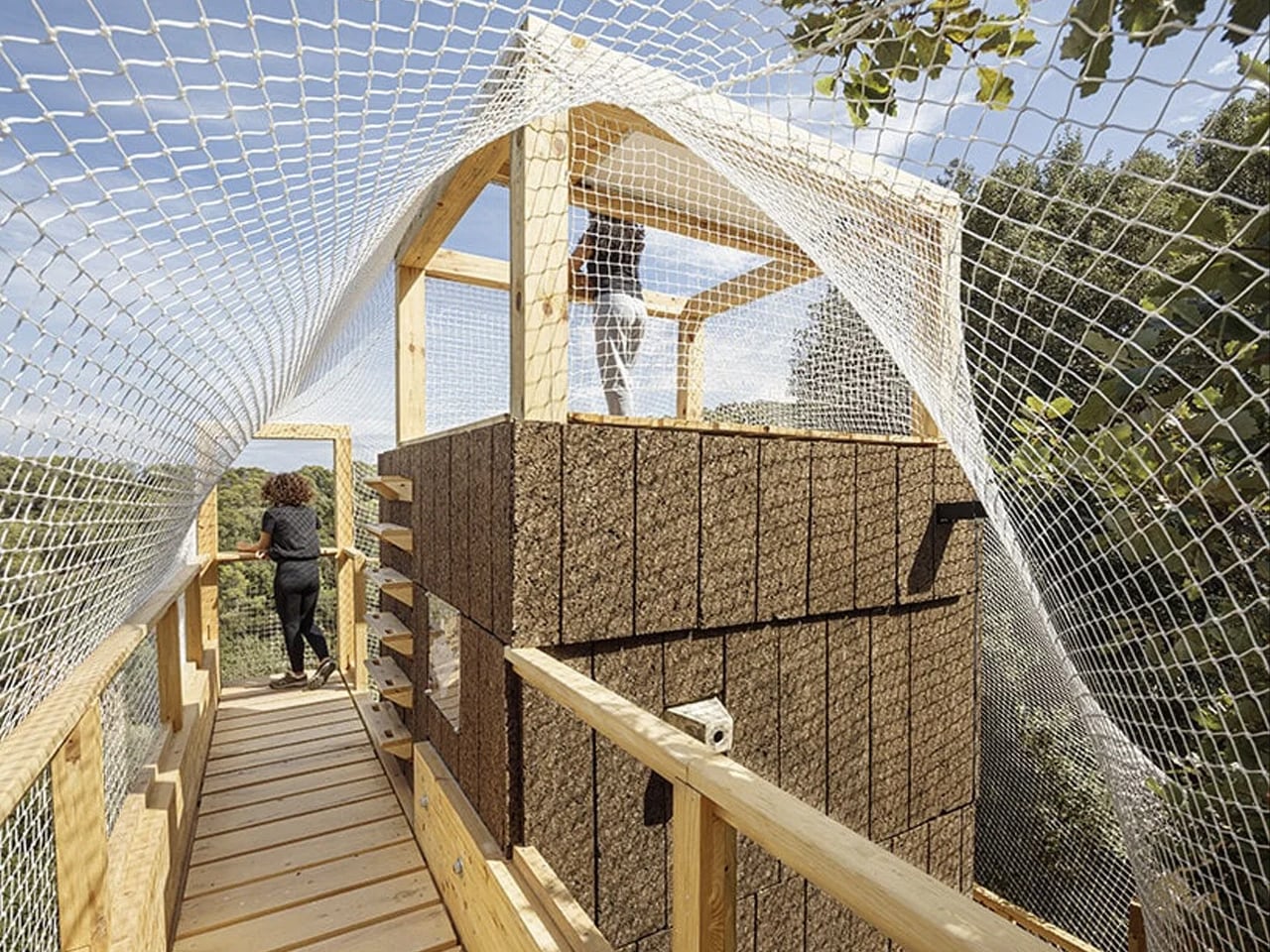
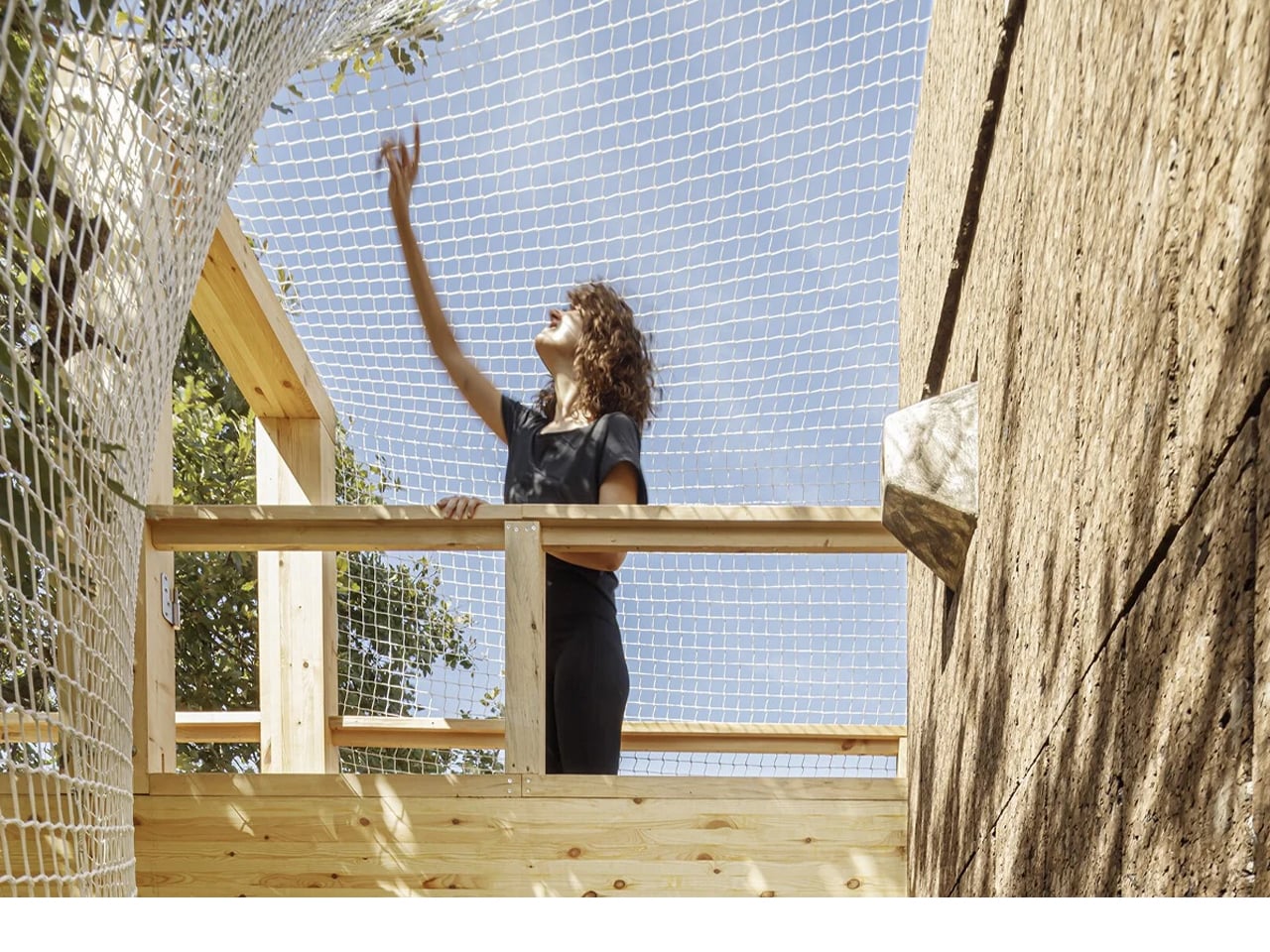
What makes FLORA especially notable is its material strategy. The entire mass-timber structure was built using invasive pine trees sourced from within the park through carefully managed forestry practices. These trees were processed into cross-laminated timber panels, laminated beams, and solid wood components, following a zero-kilometer approach to construction. Inside, the observatory includes work areas, projection space, and bird-monitoring features, turning the building into a functional research prototype that demonstrates how sustainable materials and sensitive design can support long-term ecological study.
2. Use of Honest Natural Materials
A treehouse’s beauty comes from using materials that feel natural and honest. High-quality timber, like cedar or reclaimed teak, allows the house to grow and age alongside the tree. This isn’t just for looks, as it supports the strength and health of both the tree and the structure.
Special hardware, such as Treehouse Attachment Bolts (TABs), lets the tree move and grow naturally without damage. By avoiding heavy concrete foundations, this method protects the tree and reduces environmental impact. The result is a sustainable, long-lasting design where architecture and nature coexist in balance.
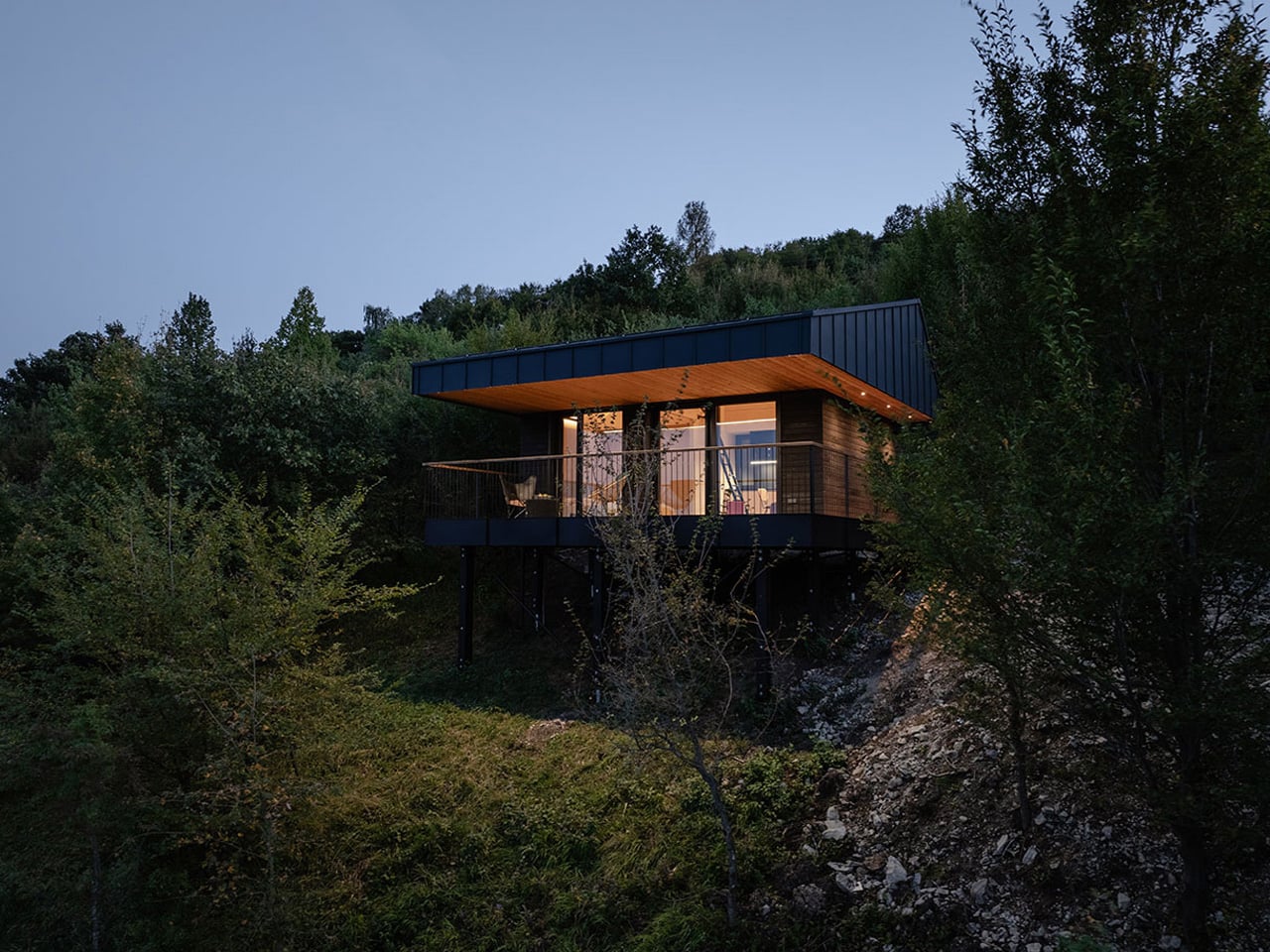
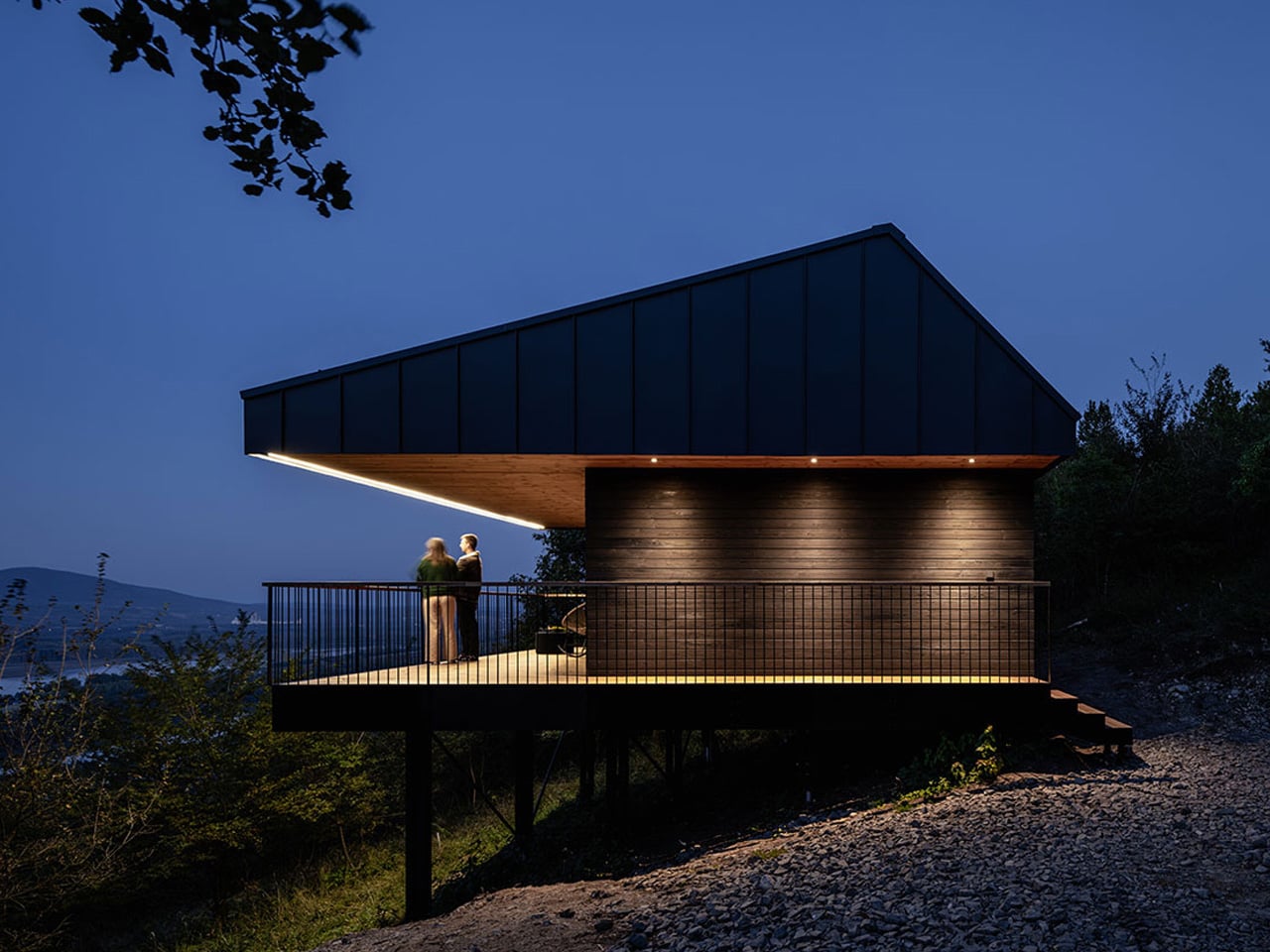
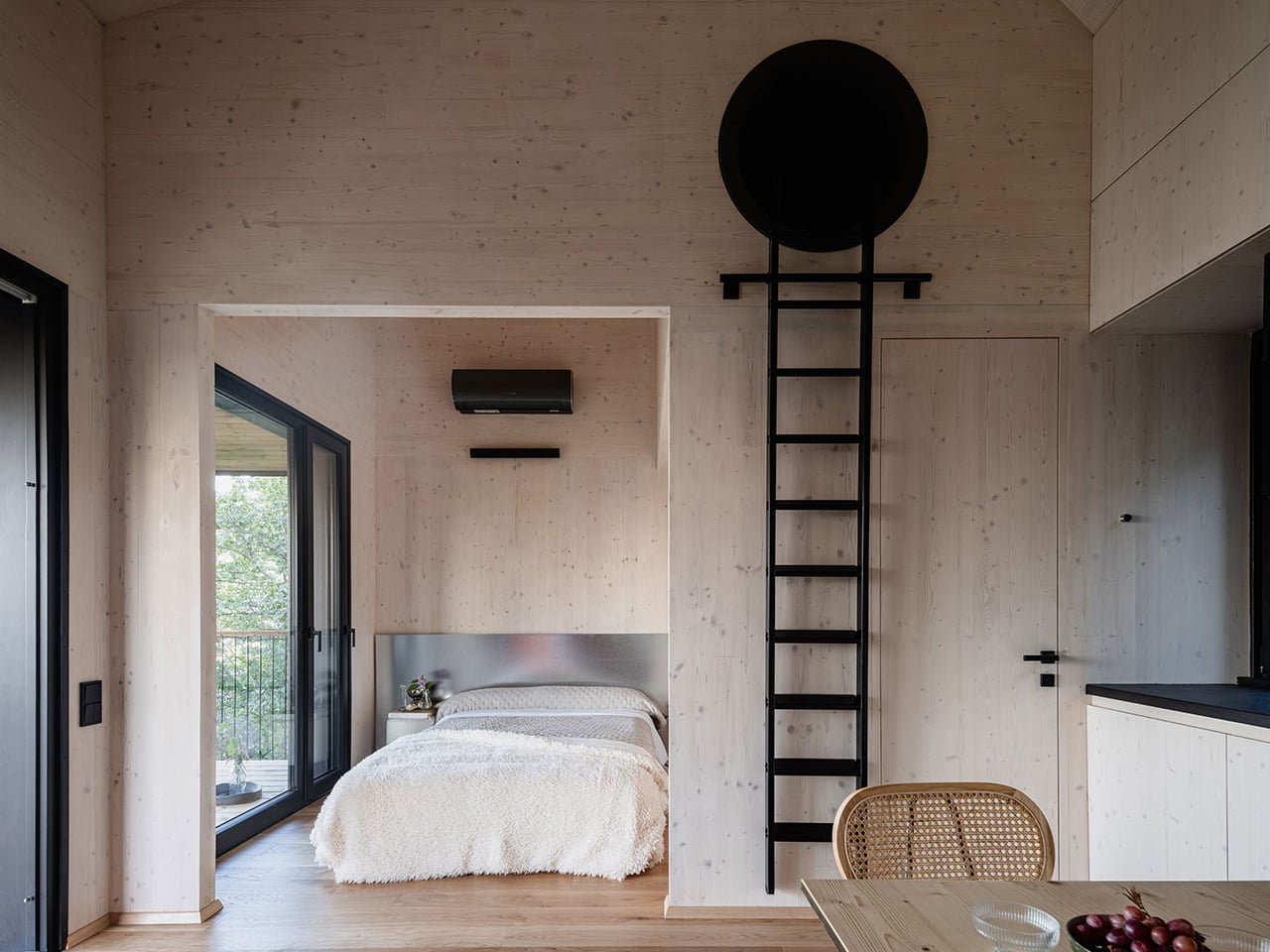
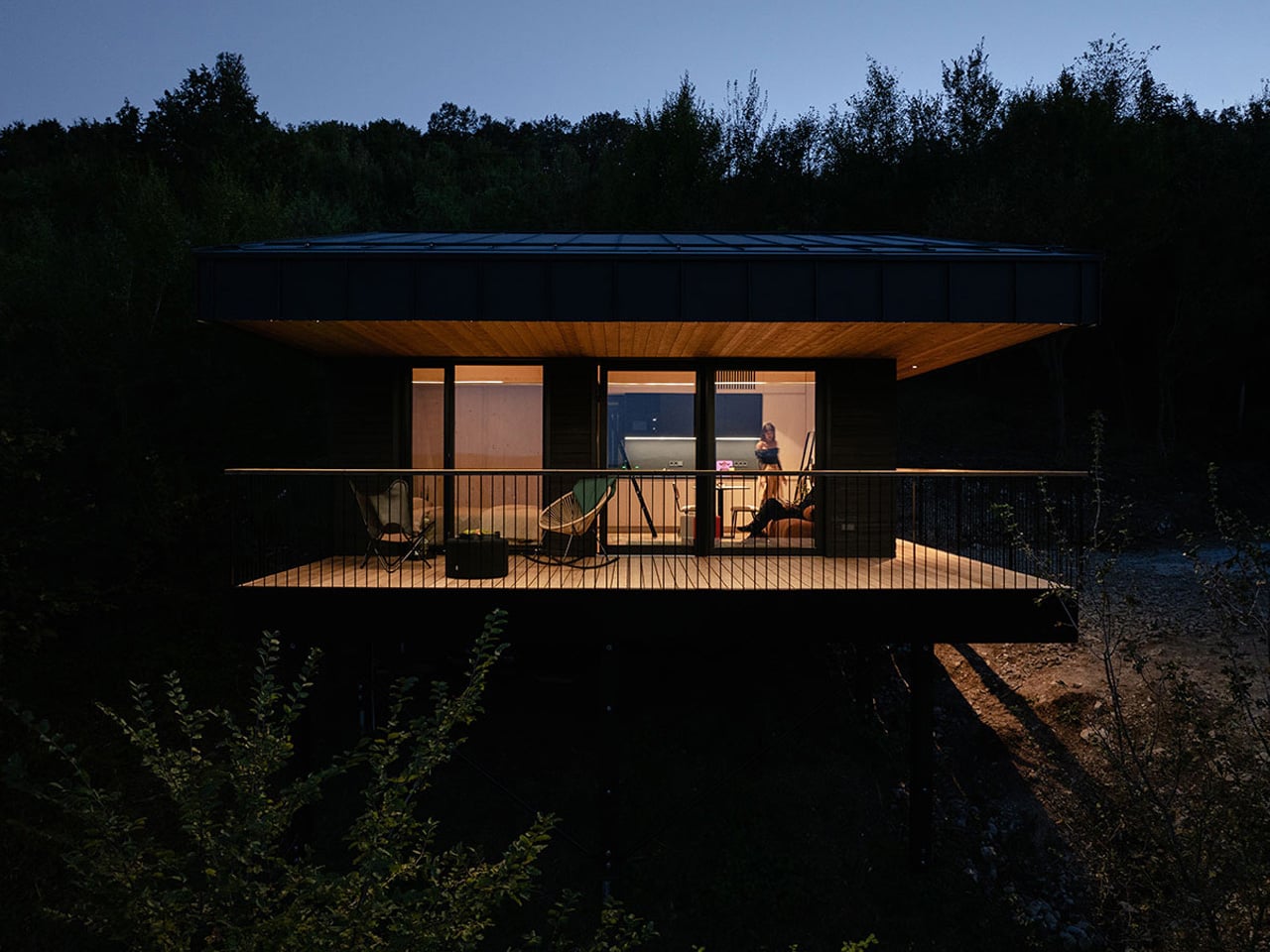
Set within the wooded hills of Dunabogdány, Hungary, Console House by Hello Wood is a quiet retreat overlooking the Danube Bend. Designed to sit lightly within the landscape, the minimalist home follows a calm, nature-first approach, allowing the forest to remain the main visual focus. Raised on slender stilts, the structure appears to float above the ground, preserving natural water flow and wildlife movement beneath. Large glass openings frame peaceful valley views while filling the interiors with soft daylight.
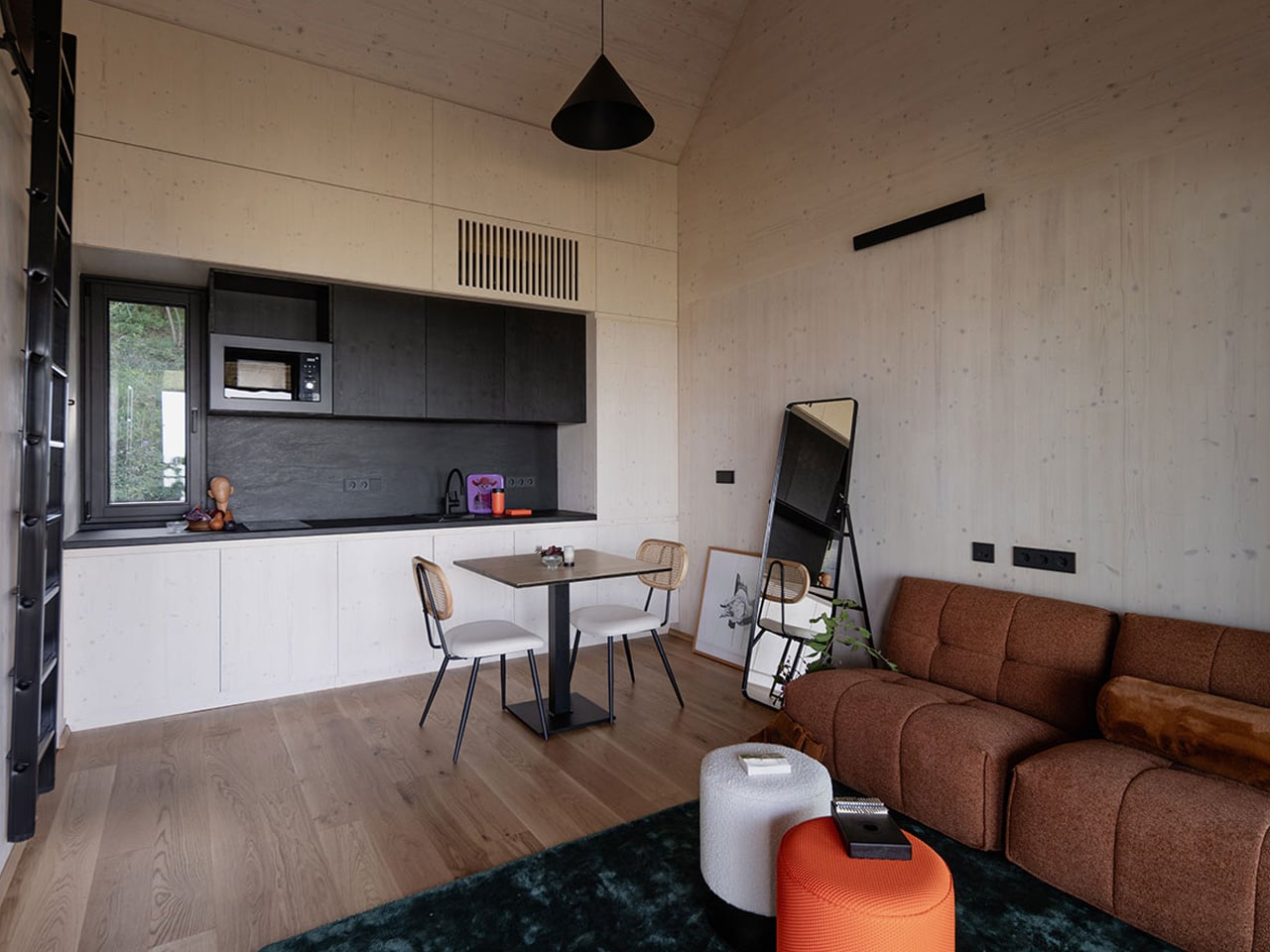
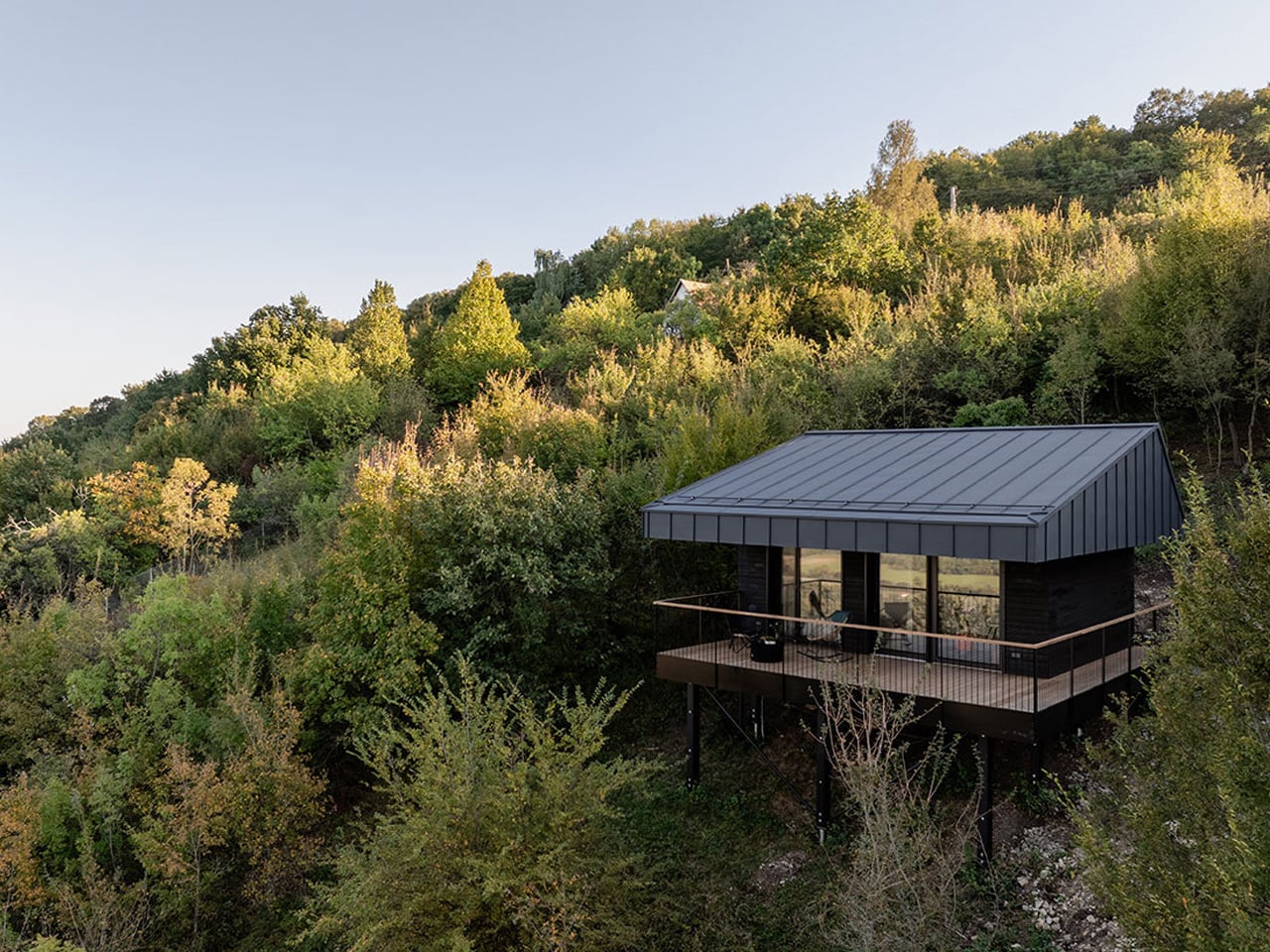
A defining feature of the home is its long cantilevered roof, which creates a generous terrace that extends the living space outdoors. Built using cross-laminated timber and laminated beams, the structure balances strength with environmental sensitivity, while screw pile foundations minimize site disruption. The exterior is finished in charred wood using the shou sugi ban technique, giving the house a dark, textured surface that blends into the trees. Together, these choices create a refined, modern hideaway rooted in its surroundings.
3. The Climbing Experience
The magic of a treehouse starts long before you step inside, as it begins with the climb. Whether it’s a spiral staircase or a suspension bridge, moving upward slowly lifts you away from the ground. This gradual ascent helps the mind shift into a calm, reflective state.
Rising from solid earth into the airy canopy feels like a sensory reset. In many cultures, this vertical journey reflects a spiritual path, taking you from the everyday world below to the quiet, elevated sanctuary among the branches. The climb itself becomes an essential part of the treehouse experience.
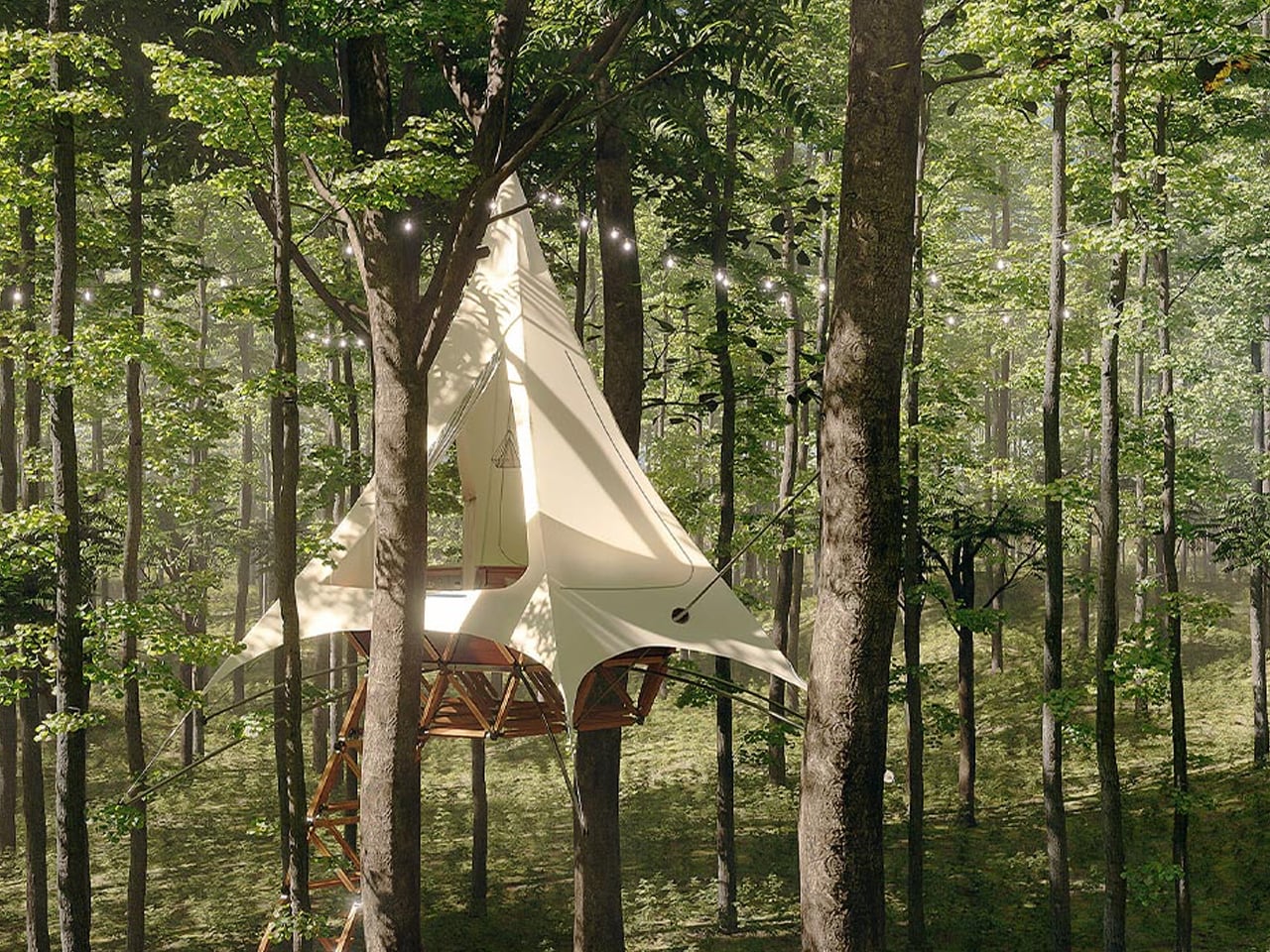
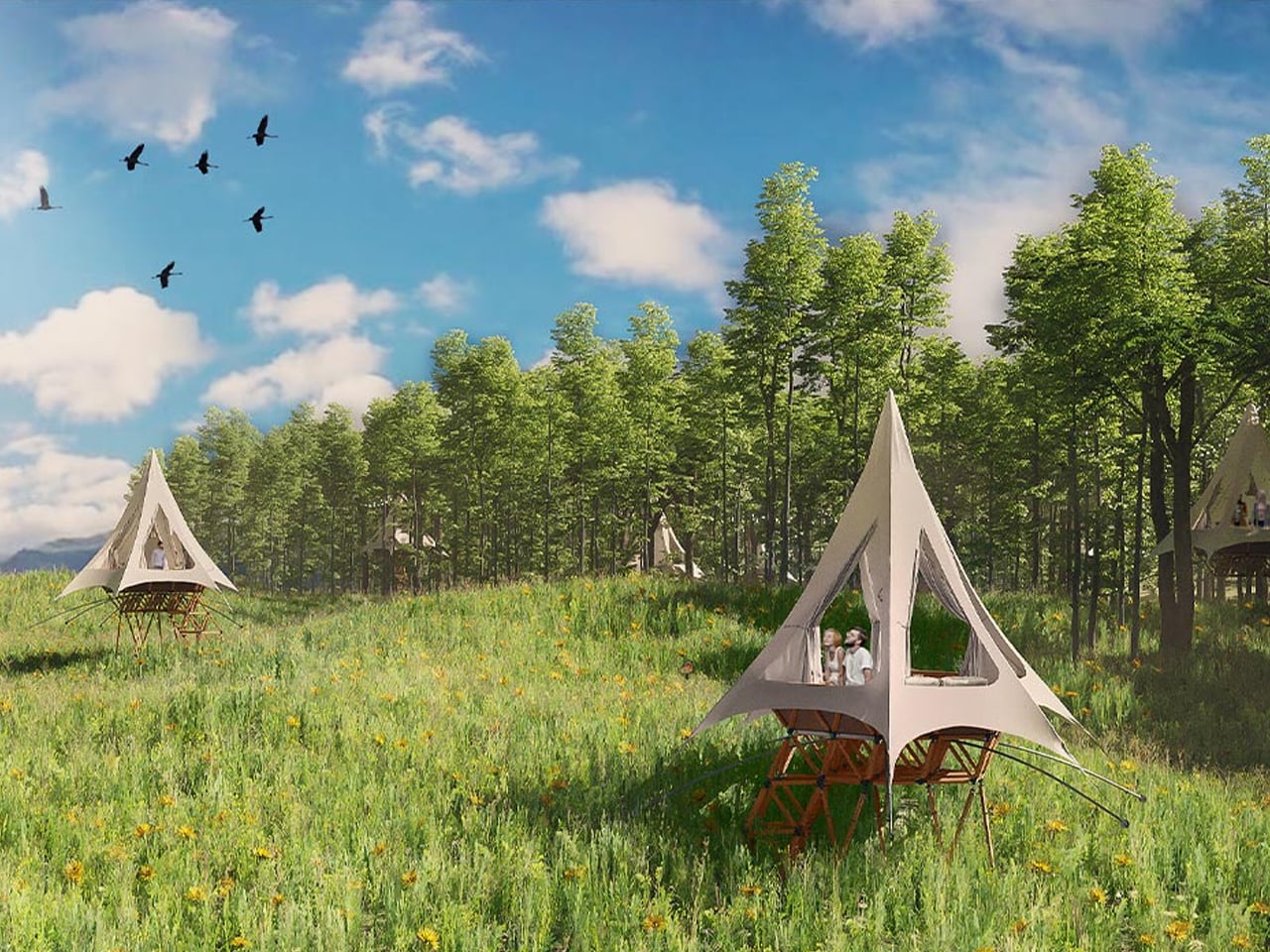
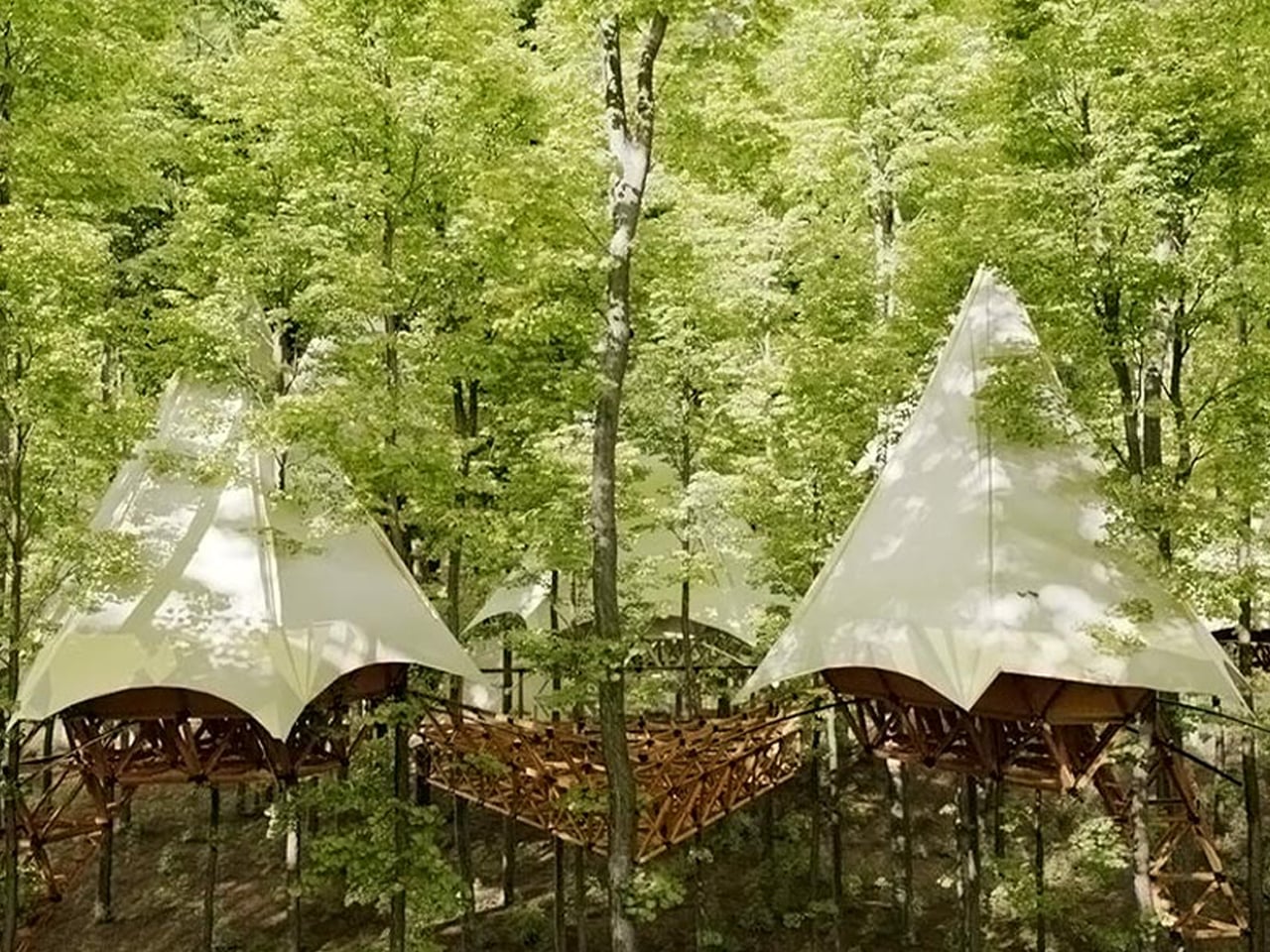
Treehouses may feel like childhood nostalgia, but the O2 Treehouse by Treewalkers brings that sense of wonder firmly into adult living. You step into a lightweight, elevated home that blends playful design with thoughtful sustainability, creating a retreat that feels both imaginative and grounded in nature. Inspired by geodesic structures and forest ecosystems, these tree-supported homes appear to float among the canopy, offering a quiet escape that reconnects you with your surroundings while keeping the natural landscape largely undisturbed.
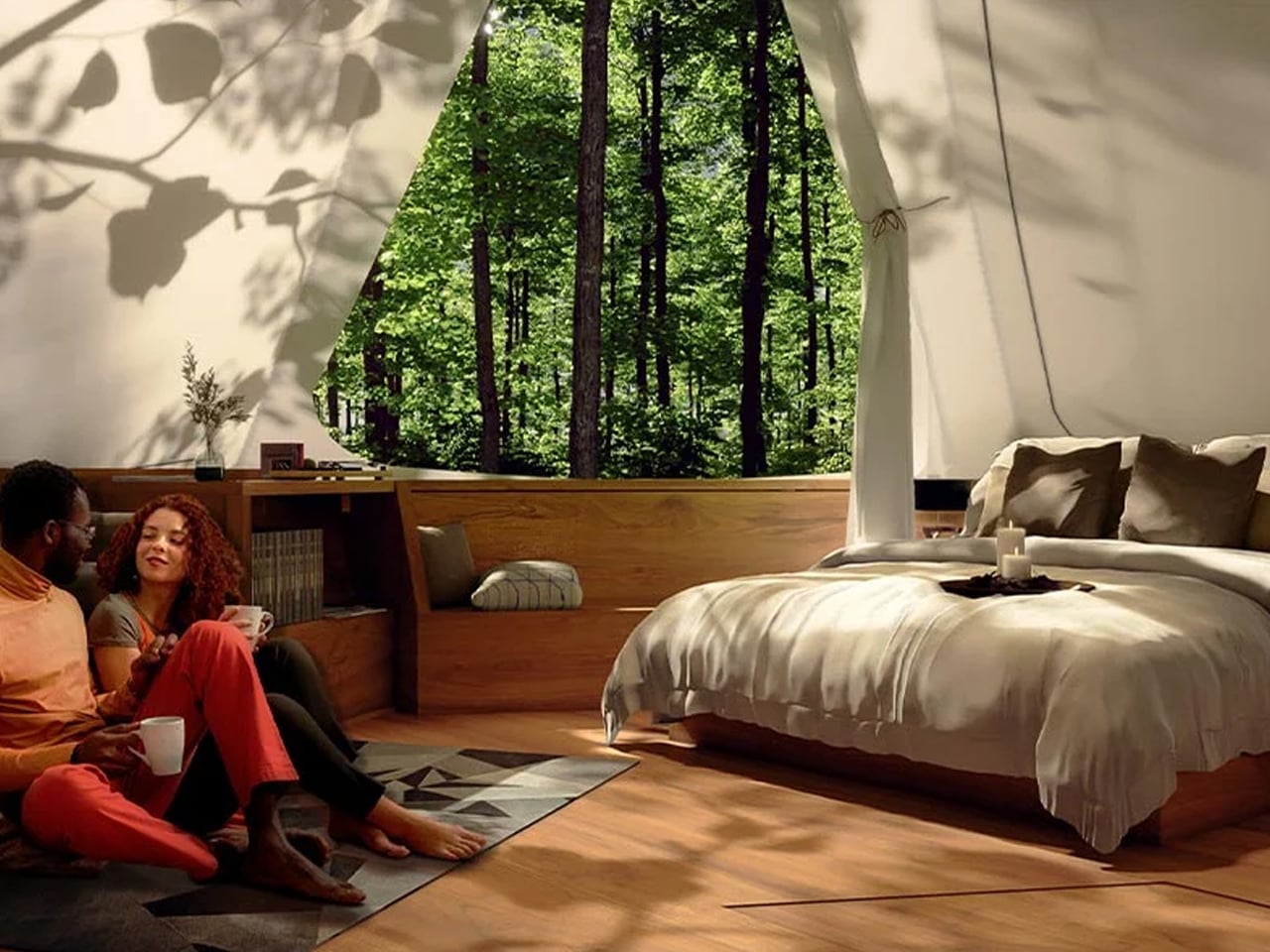
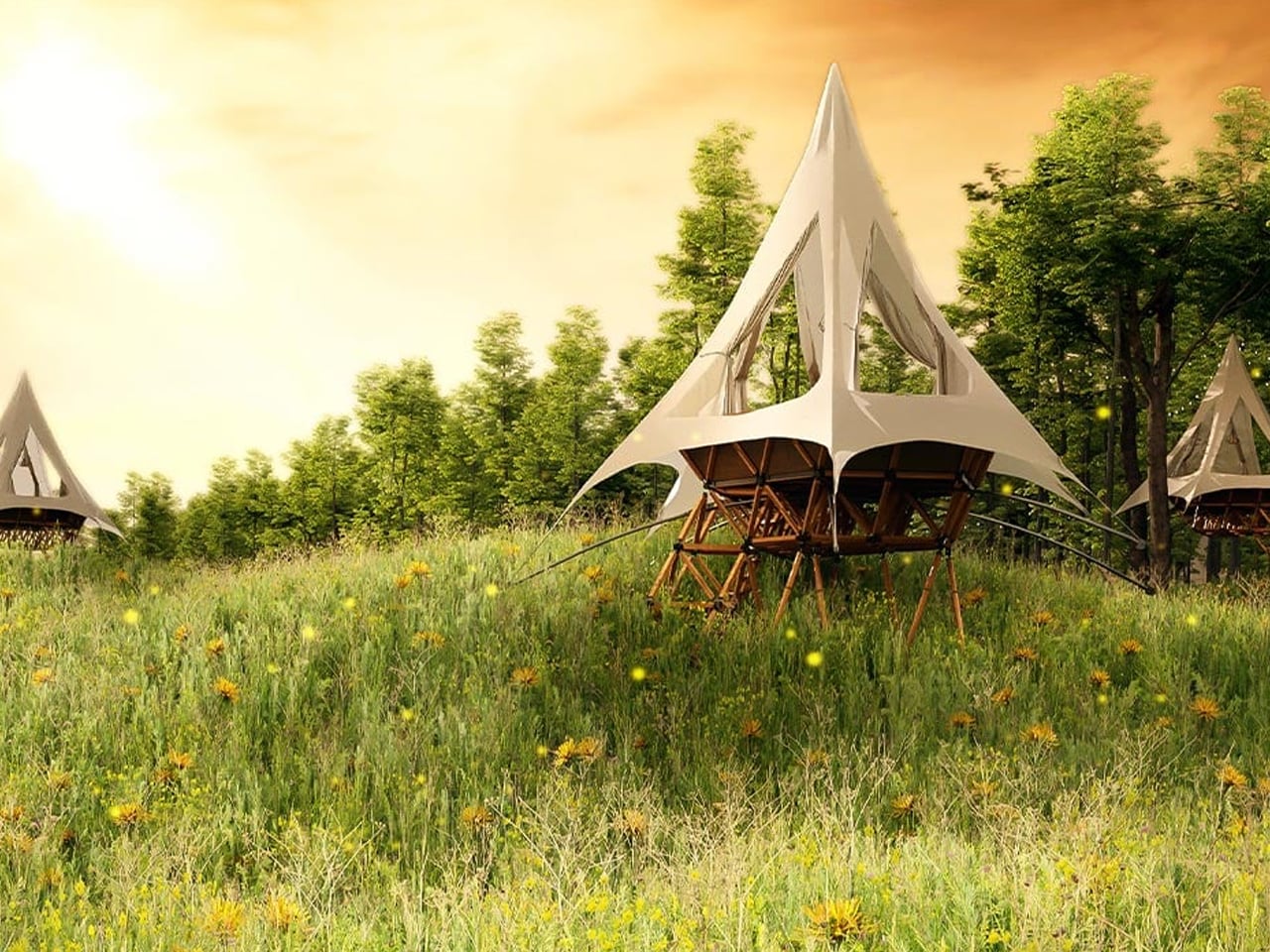
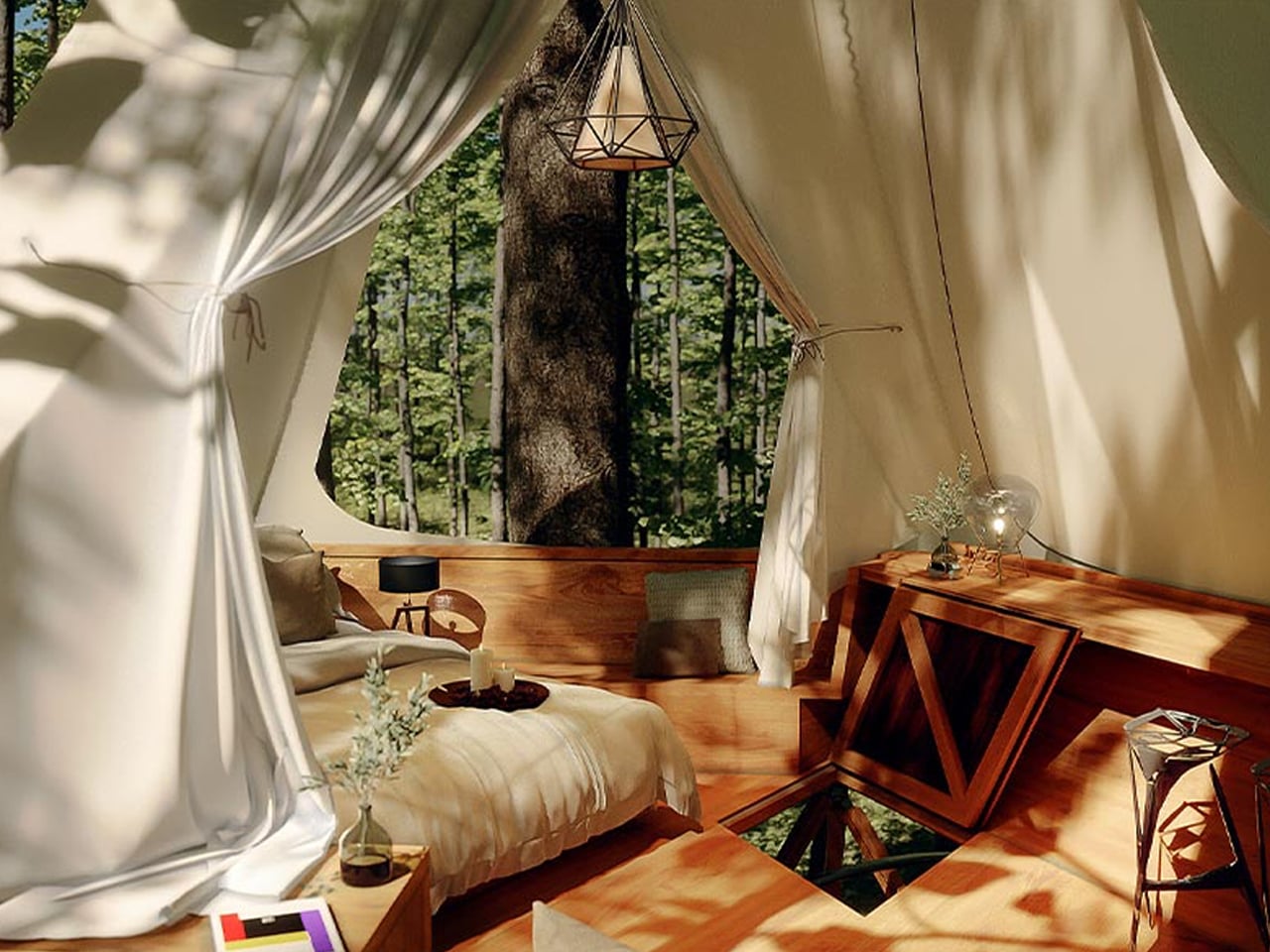
What makes these homes especially compelling is their modular, lattice-based construction, which allows multiple units to connect and evolve into small, customisable clusters. You can adapt layouts, shapes, and interior details to suit how you live, work, or unwind, while enjoying warm, wood-toned interiors, generous natural light, and breathable canvas roofing. From iconic A-frame forms to dome-like shelters, each structure balances architectural innovation with the simple comfort of being tucked into the trees.
4. Natural Climate Control
A treehouse isn’t just beautiful, but it naturally stays comfortable throughout the seasons. Leaves provide shade and cooling in summer, while letting sunlight through in winter. This passive system keeps the space pleasant without relying on air conditioning.
The tree itself helps regulate the microclimate through its natural transpiration. Thoughtful placement of windows and openings captures changing light and shadow, softening the interior and creating a calm, diffused atmosphere. By working with the tree and its environment, the treehouse achieves energy efficiency and comfort, showing how design can harmonize with nature rather than fight it.
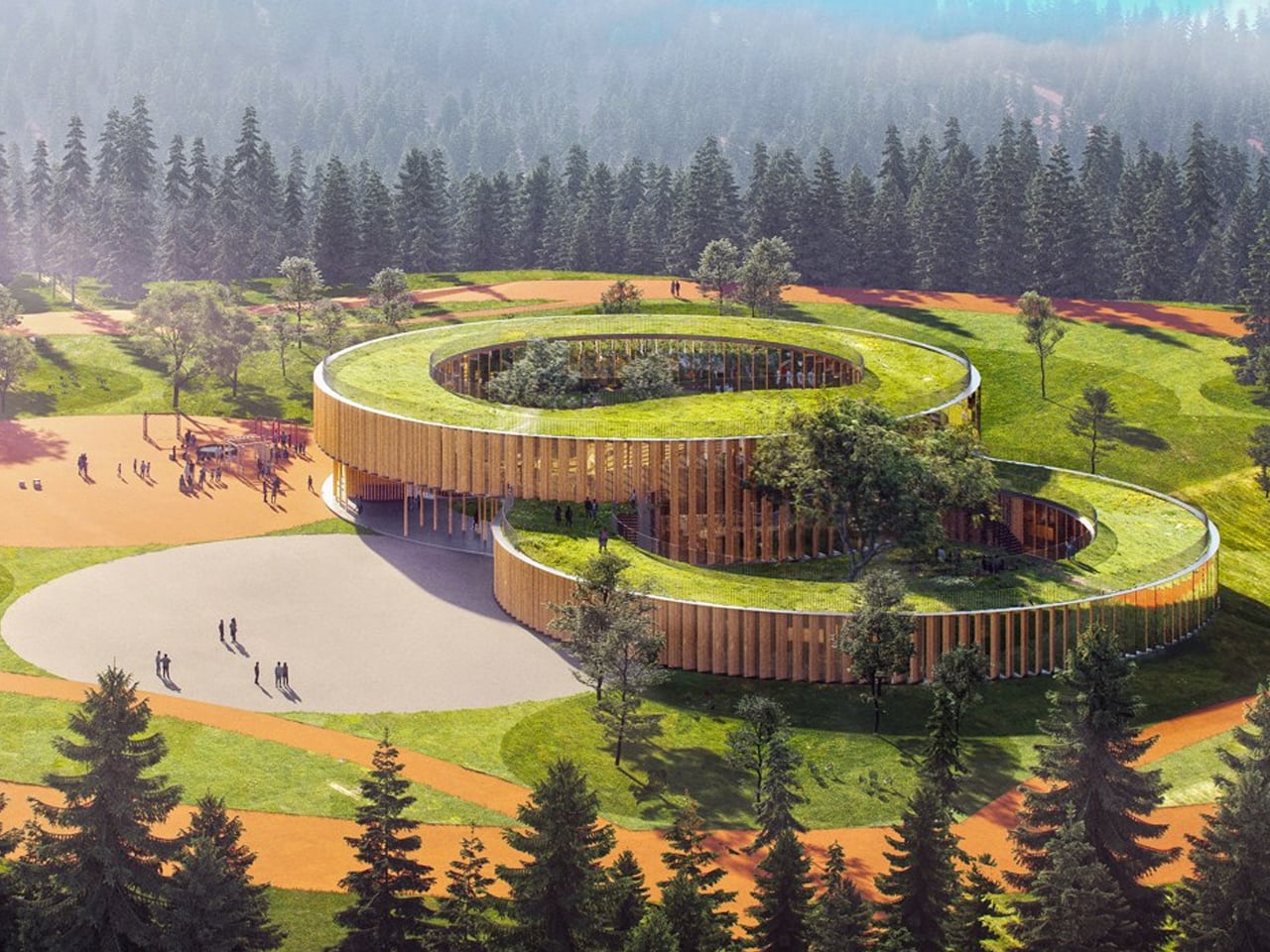
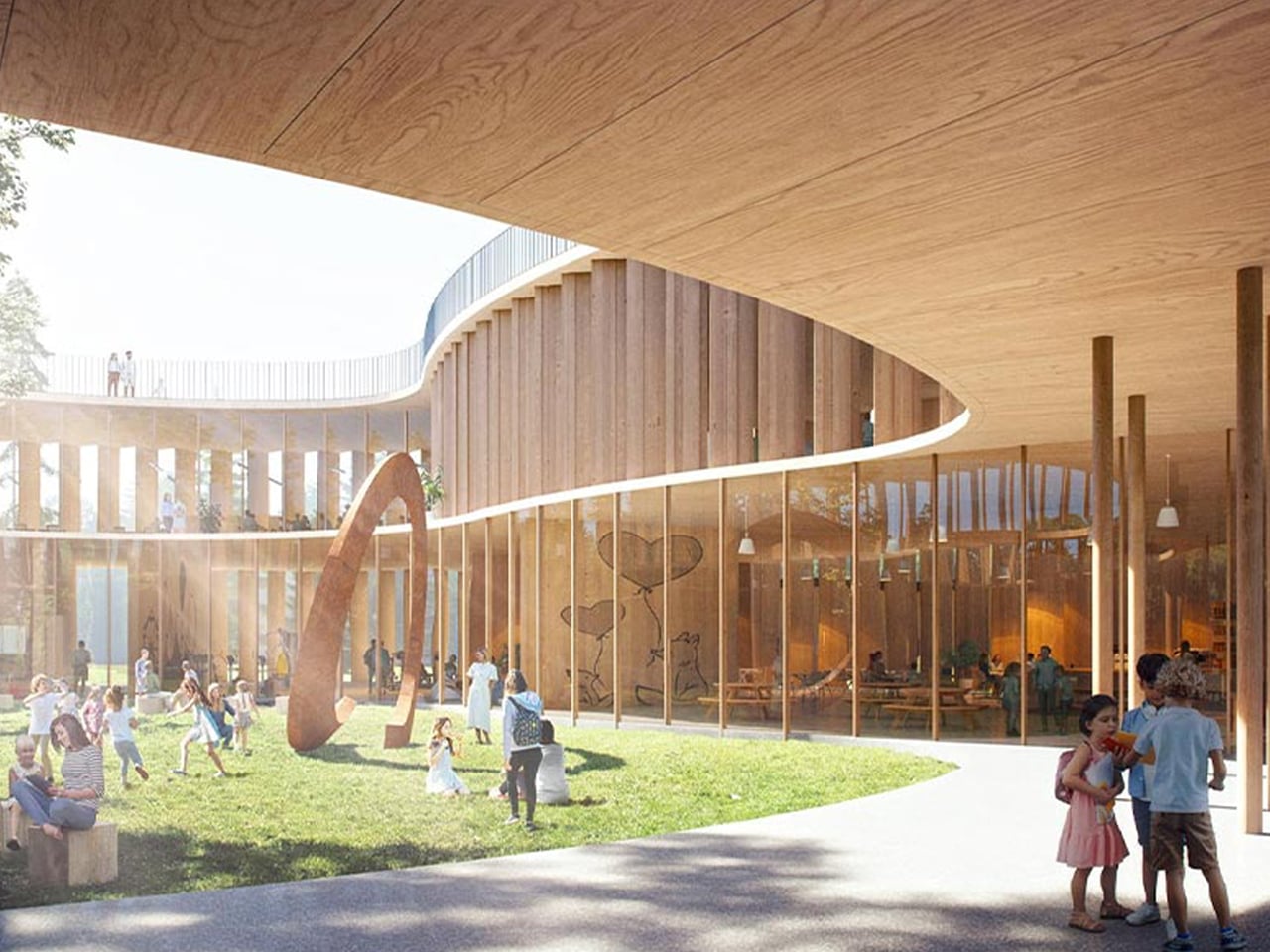
You might remember turning a treehouse into a make-believe classroom, complete with a tiny chalkboard and a big imagination. Designer Valentino Gareri brings that playful idea into real-world architecture with the Tree-House School, a modular learning building set directly within nature. Raised among the trees, the structure eases pressure on dense cities while creating outdoor-focused spaces where education blends with exploration. It becomes a shared hub that reconnects learning with landscape, movement, and everyday discovery, all while using design strategies that support comfortable indoor conditions.
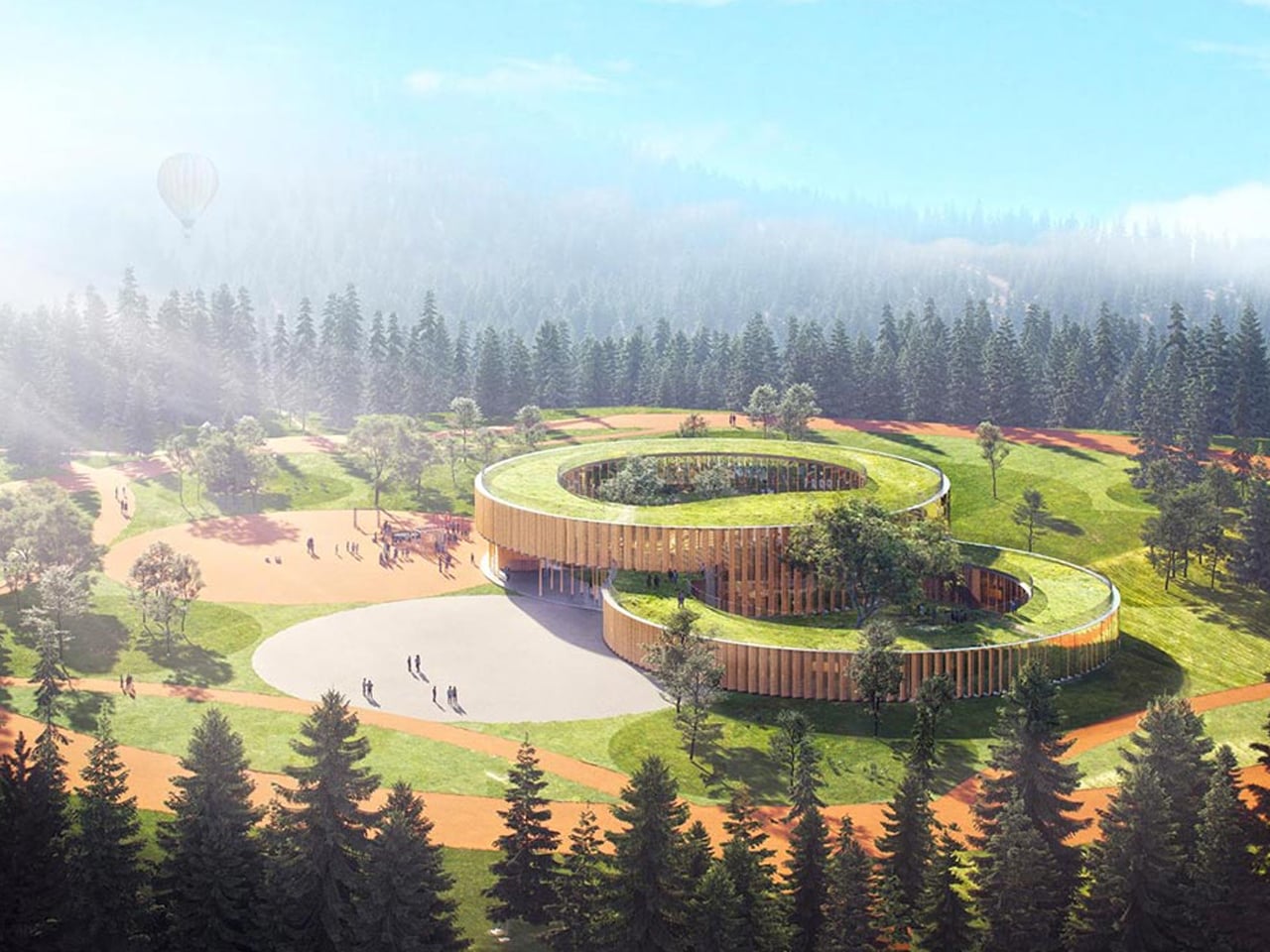
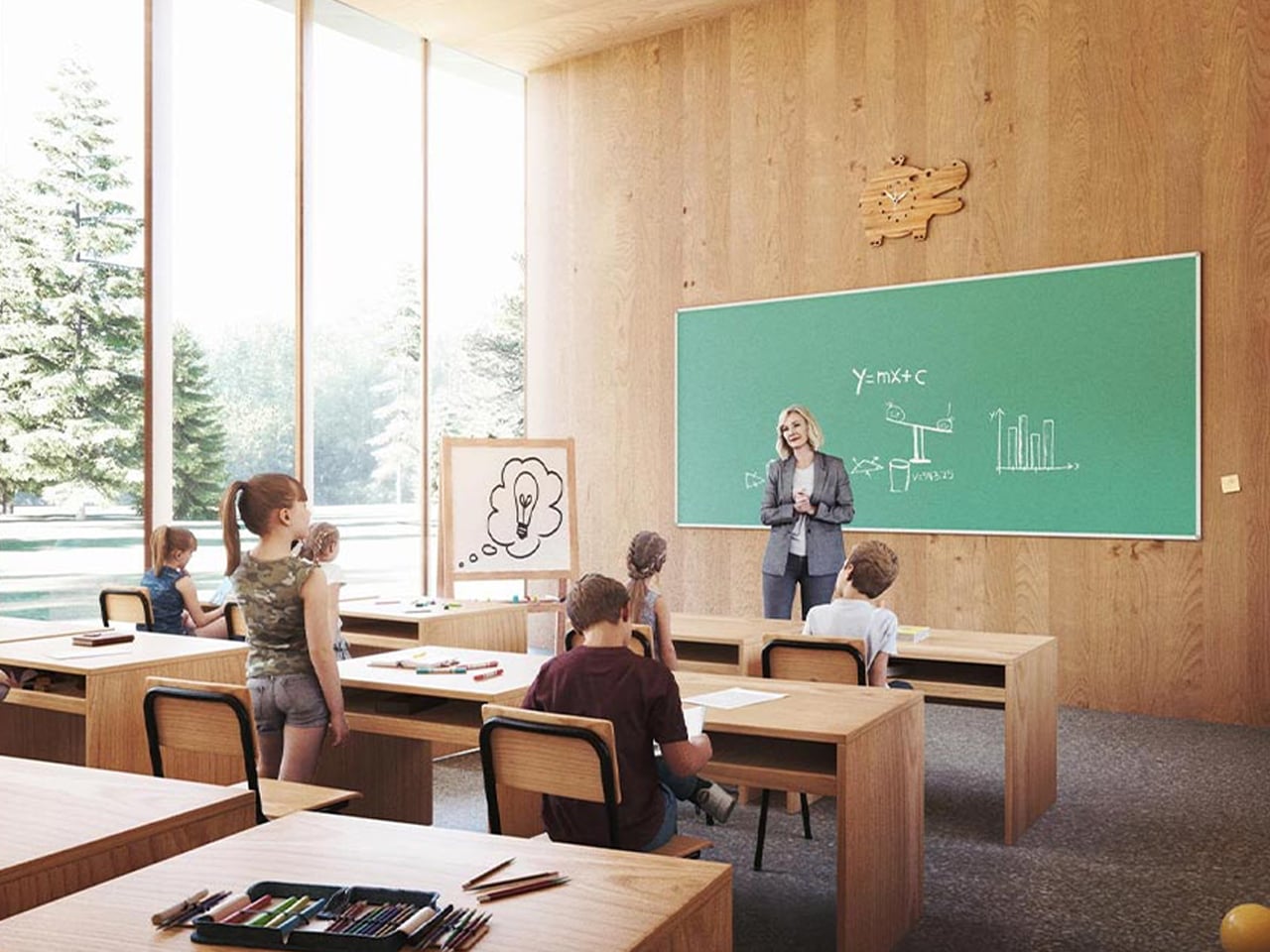
At the core of the design are two large, interconnected rings that organize classrooms from kindergarten through secondary levels, each accommodating up to 25 students and opening toward the surrounding greenery. The circular layout forms sheltered courtyards and a usable rooftop for group activities, while faceted façades alternate timber panels and glass to manage sun exposure, encourage cross-ventilation, and maintain stable interior temperatures. These passive climate-control features reduce reliance on mechanical systems, keeping classrooms bright, airy, and naturally regulated throughout the day.
5. Suspended Sanctuary
Luxury today is found in the ability to disconnect, and a treehouse offers just that. As a “hovering hearth,” it lifts you above the noise and weight of daily life. Being suspended creates a quiet, focused space where creativity, reflection, and rest come naturally.
For those who appreciate design, the treehouse is more than shelter—it’s a statement. It balances perfectly with the forces of nature, respecting both gravity and the life of the tree. This equilibrium transforms the simple act of being into a luxurious experience of calm, presence, and connection with the natural world.
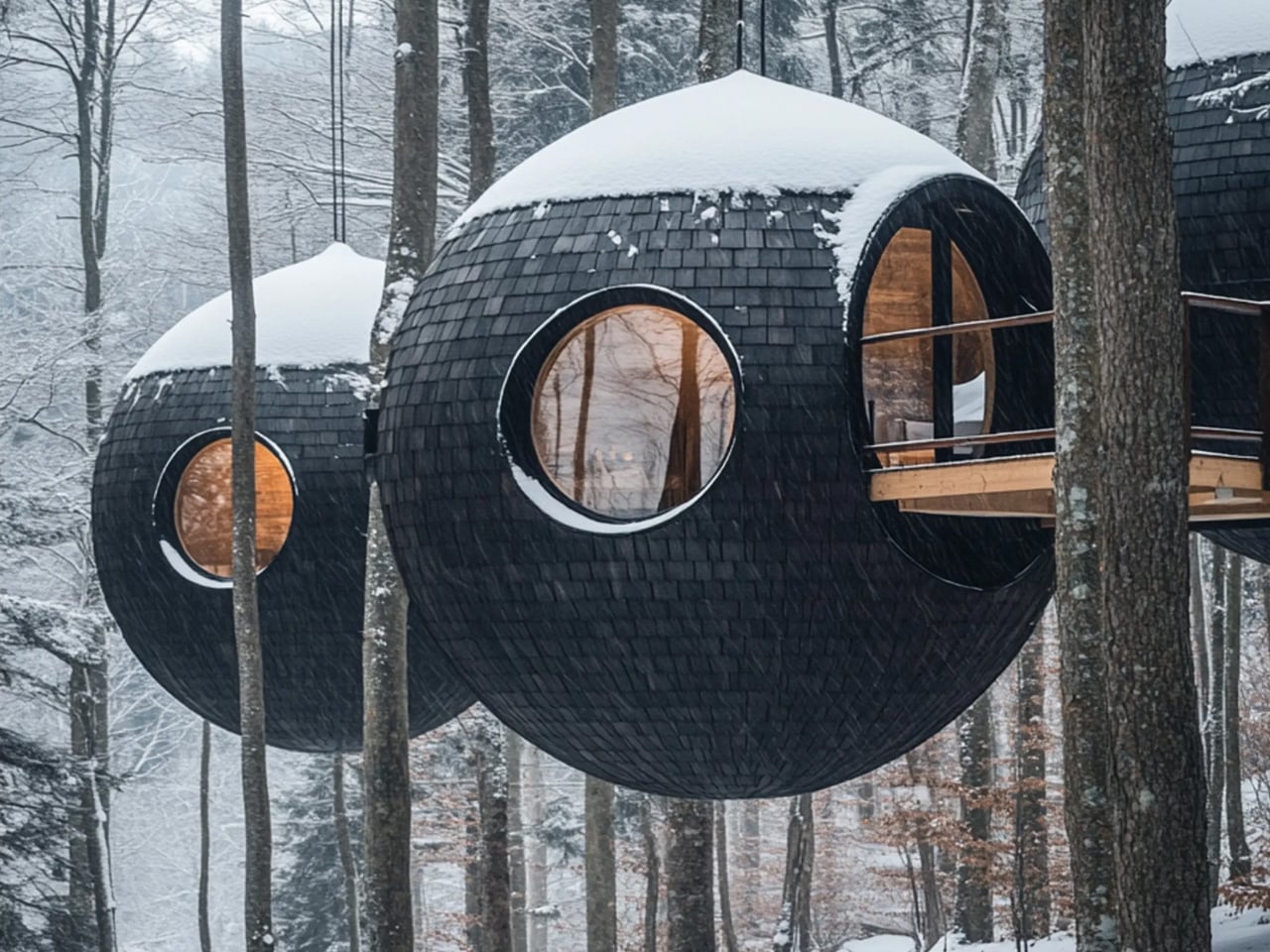
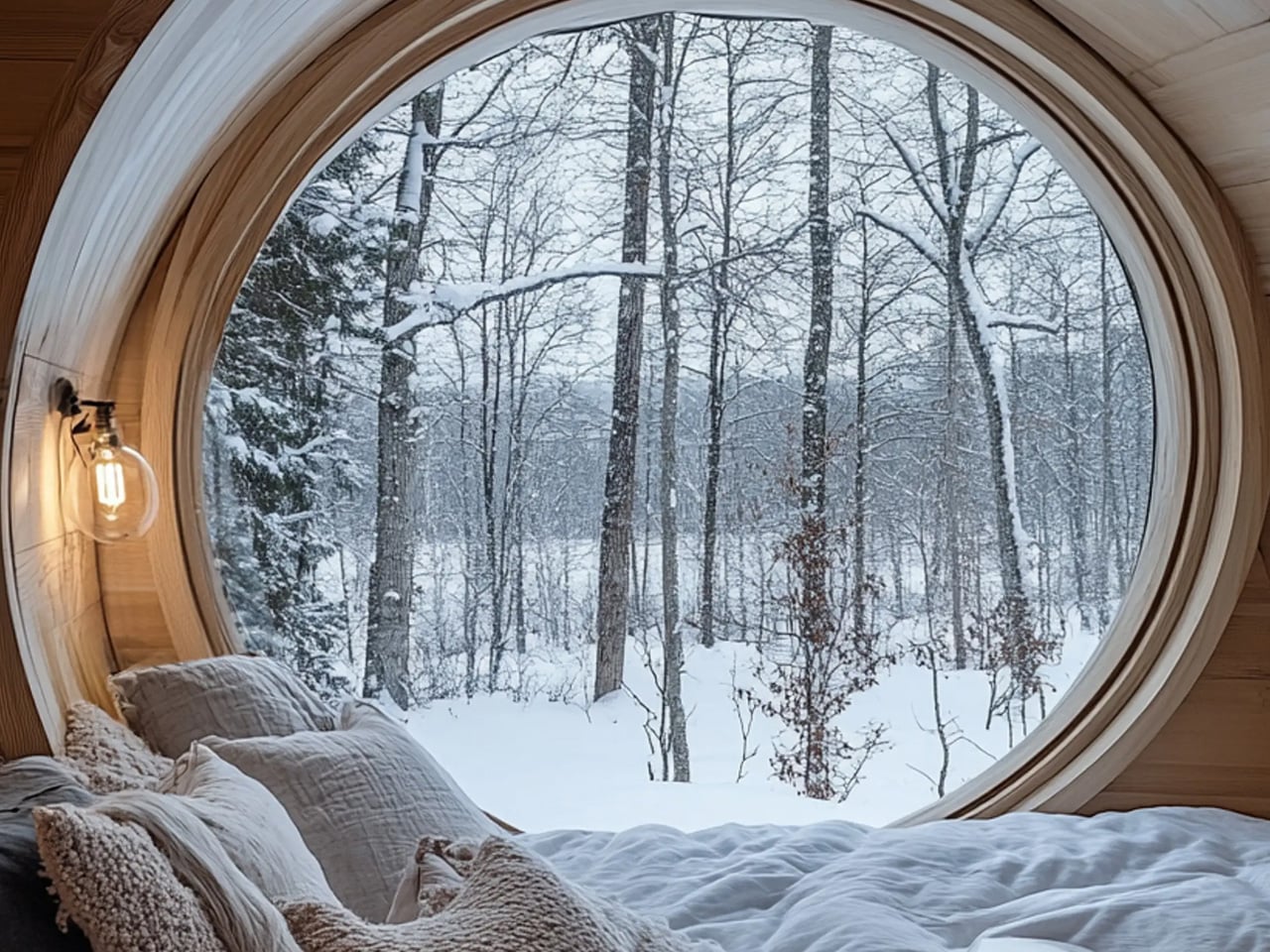
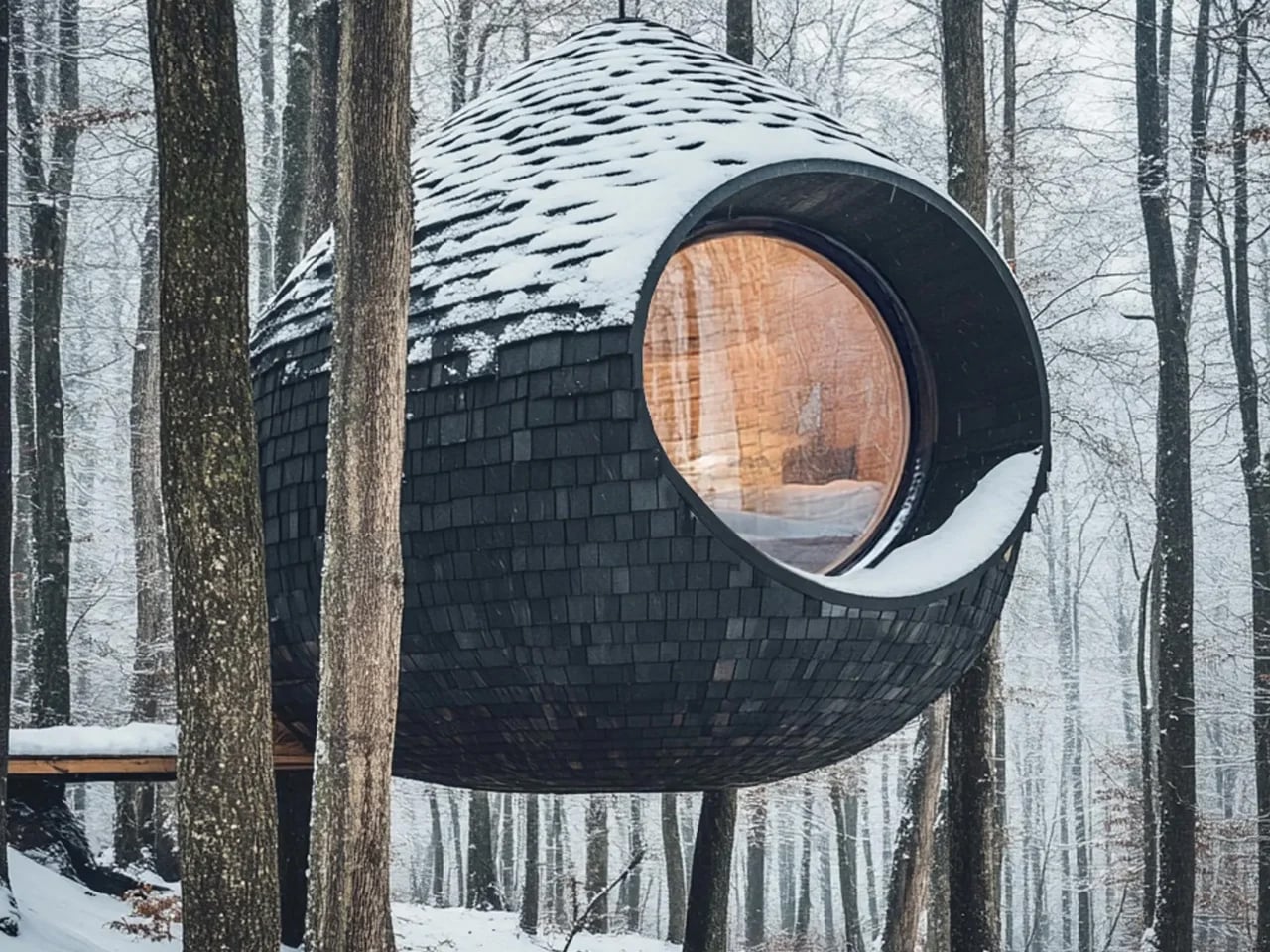
Designed by architectural designer Antony Gibbon, the Burl Treehouse is a concept series of rounded pods that reinterpret forest living through a sculptural, nature-inspired lens. Shaped after tree burls—the textured growths found on trunks, the pods blend organic form with a restrained, minimalist aesthetic. Suspended above the forest floor, each structure appears to float among the trees, creating an immersive experience that feels both futuristic and deeply connected to its surroundings.
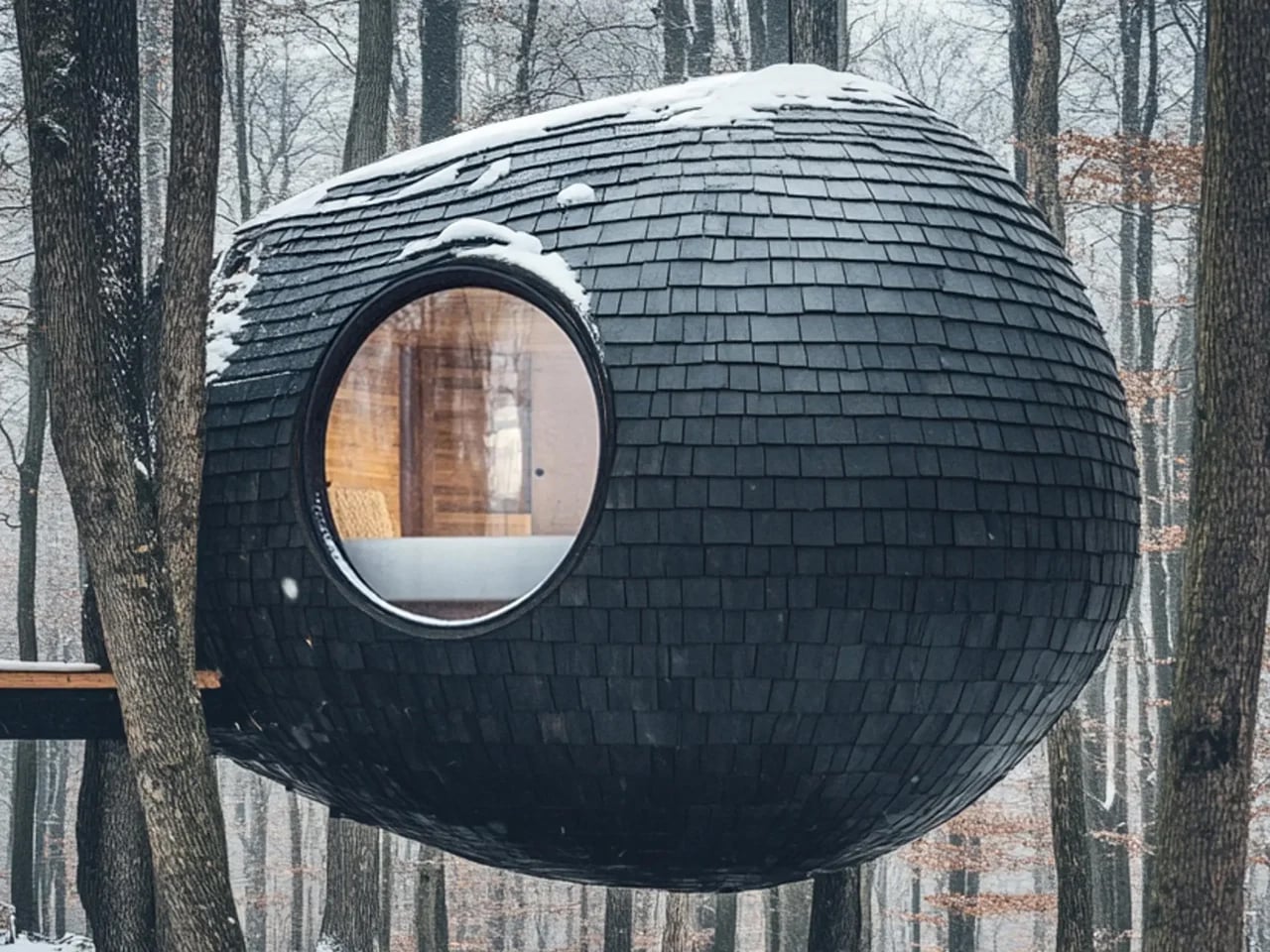
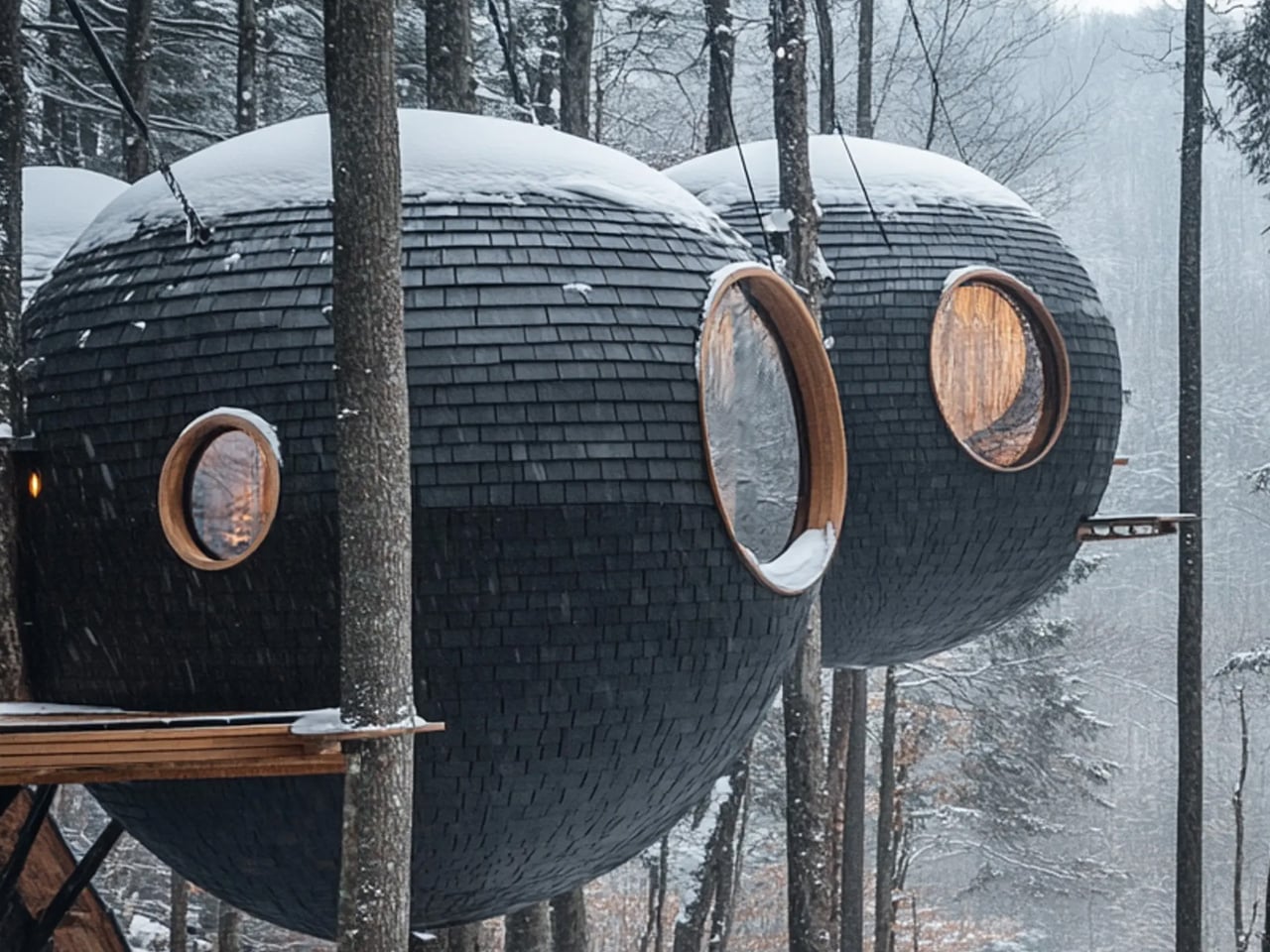
The pods are supported by slim vertical struts and suspension cables anchored directly to the trees, minimizing ground disturbance and preserving the forest below. Accessed by timber suspension bridges, the interiors are lined with light-toned cedar and ash, creating a warm, cocoon-like atmosphere. Each unit includes a bedroom with built-in storage, a compact bathroom, and custom furnishings that maximize space. A central circular window brings in natural light and frames wide forest views, while charred wood shingles on the exterior add texture and durability through traditional shou sugi ban treatment.
Treehouses captivate because they embody our longing to connect with nature. Merging honest materials, smart engineering, and poetic spatial design, they offer more than a room—they create an experience. Building among the trees honors humanity’s timeless bond with the forest, uplifting both spirit and structure in perfect harmony.