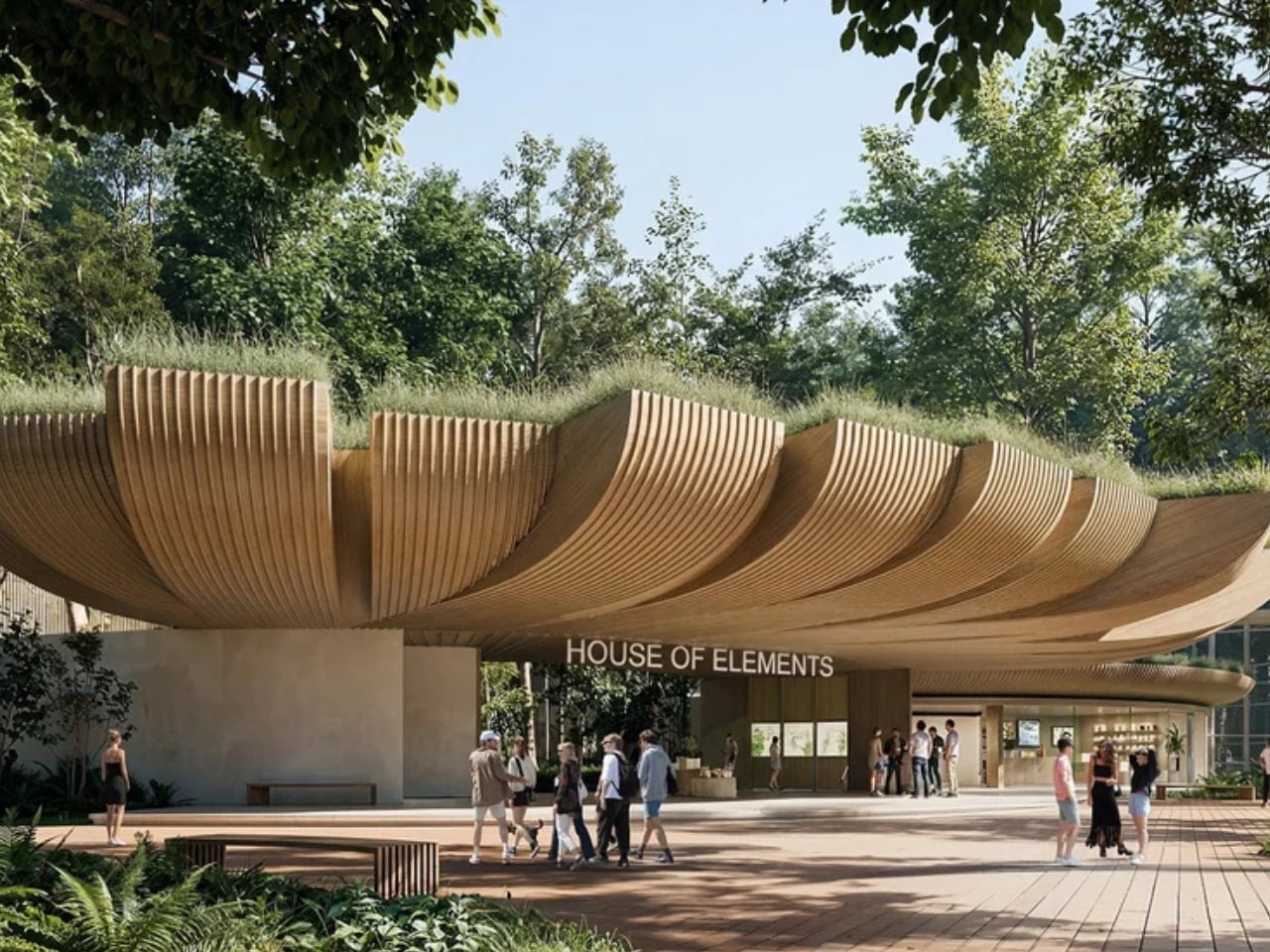
Forget everything you think you know about zoo buildings. Bangkok-based VMA Design Studio just won first prize for a zoological pavilion that reads less like a typical animal enclosure and more like an architectural journey through Earth’s creation story.
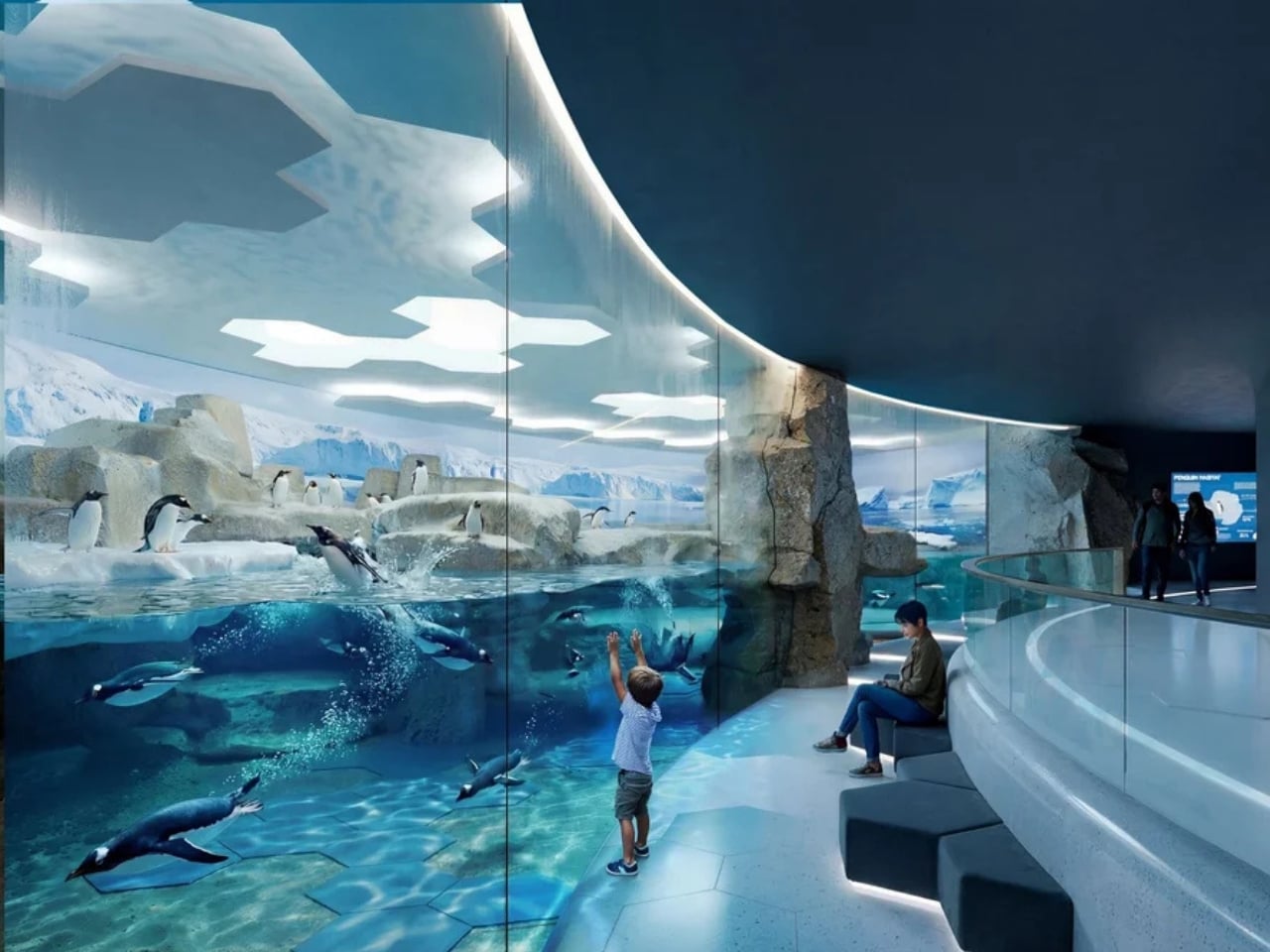
The House of Elements, set to become the crown jewel of Orientarium Zoo in Łódź, Poland, takes the classical elements (earth, ice, water, fire, and air) and transforms them into a 6,000-square-meter narrative experience. Rather than designing a building where you walk from exhibit to exhibit, VMA created a continuous downward-then-upward journey that mirrors the evolution of life itself.
Designer: VMA Design Studio for Orientarium Zoo
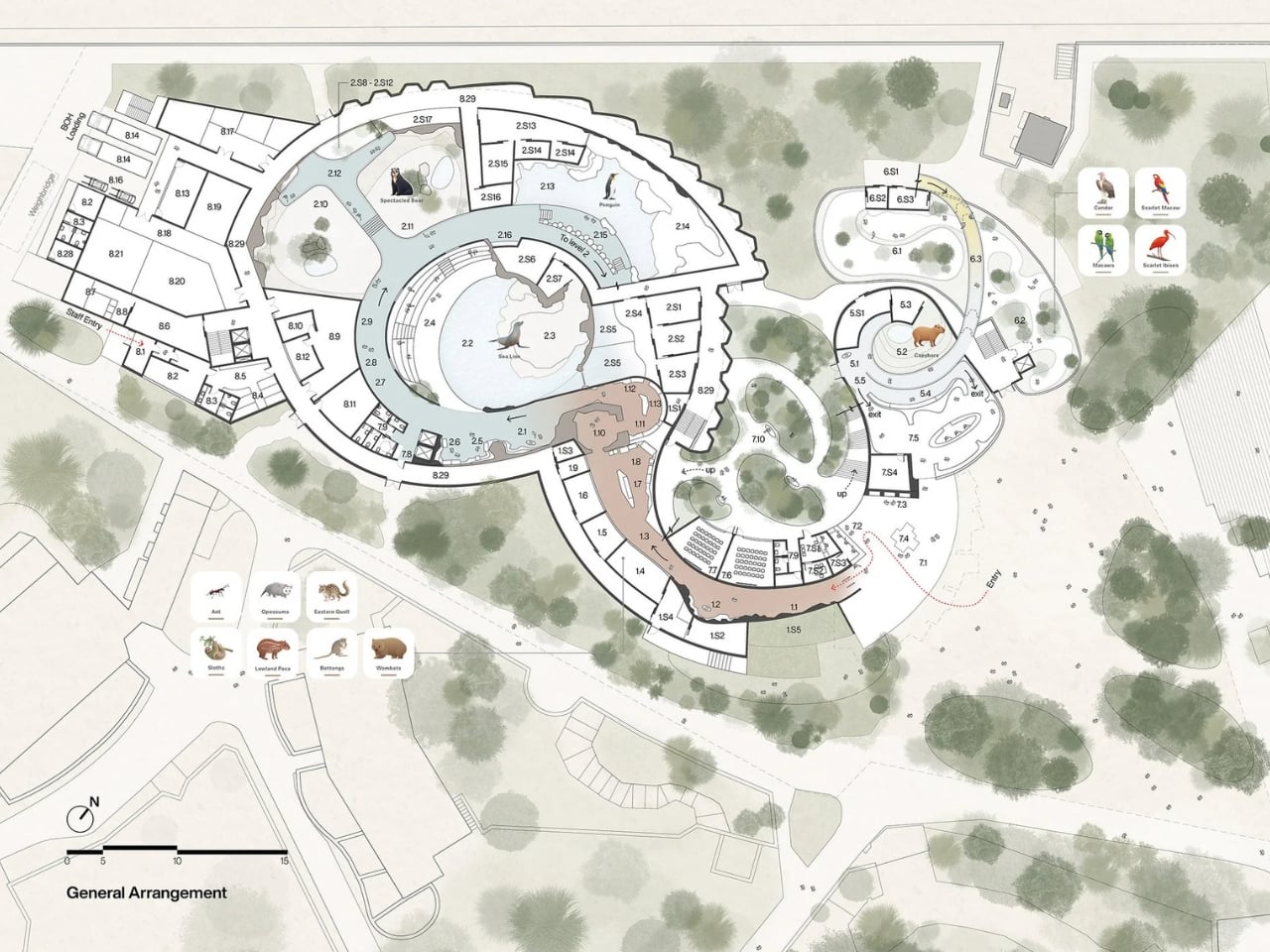
Picture this: you enter the pavilion and immediately begin descending underground into Earth. From there, the path rises through zones dedicated to Ice, Water and Fire, and finally Air. Each section tells the story of how these elements have shaped life on our planet, with the animals serving as living characters in that epic tale.
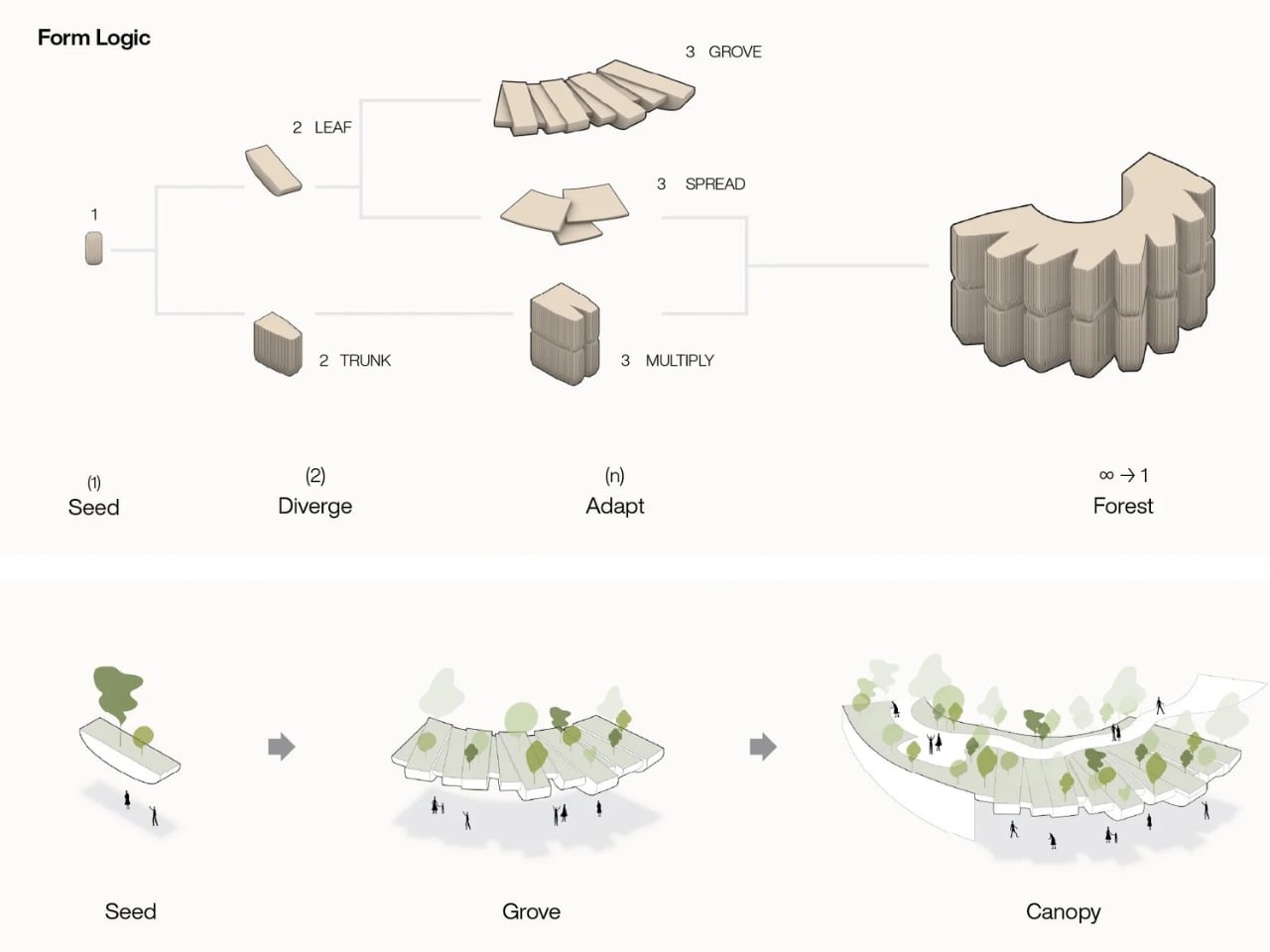
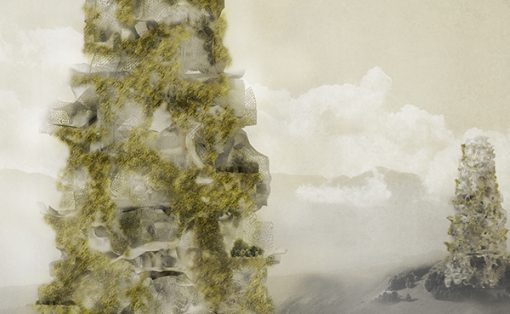
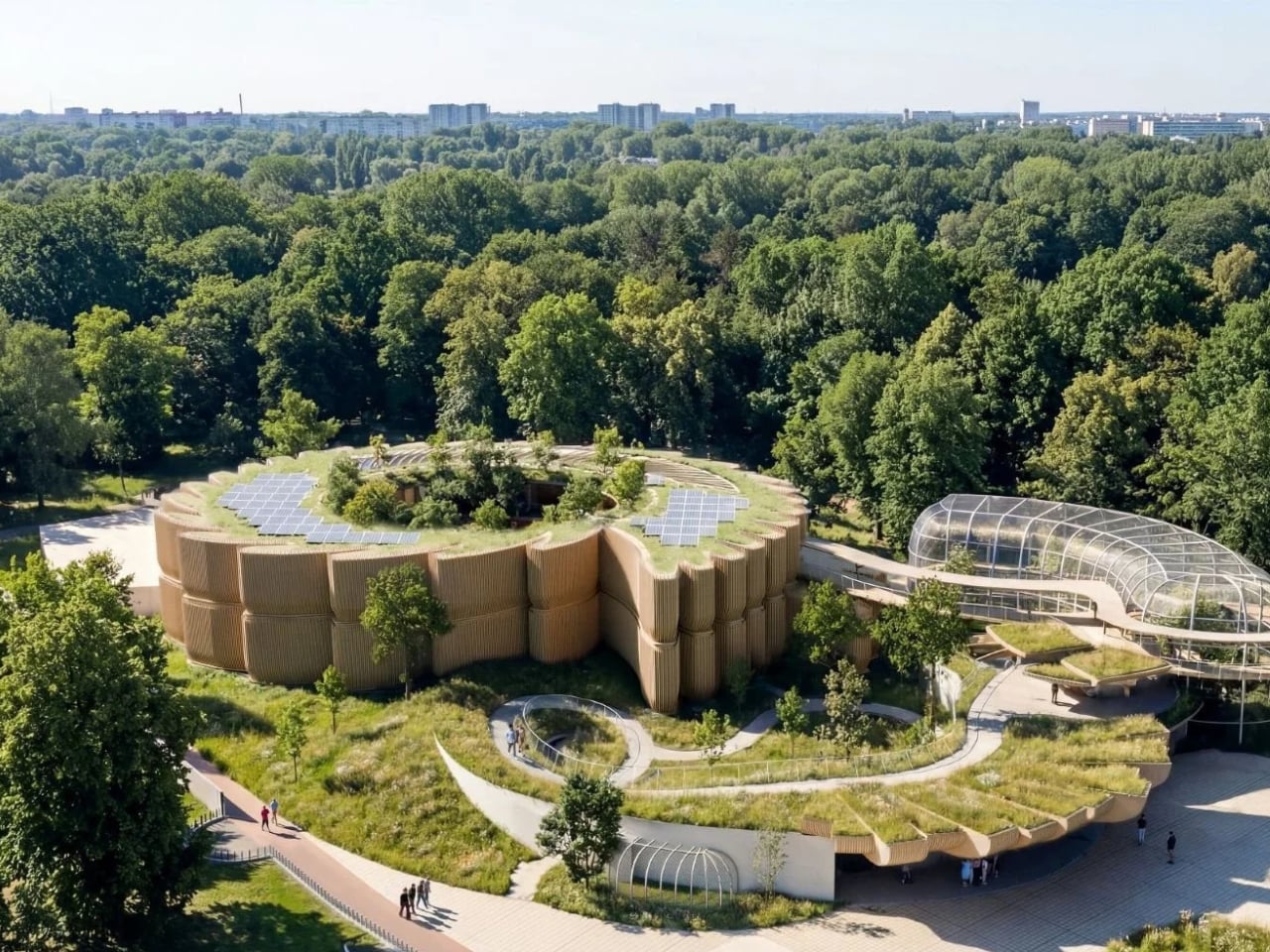
What makes this design fascinating is how VMA used a single architectural seed profile that diverges and adapts throughout the building. Think of it like watching one musical theme morph and transform across a symphony. The result? A unified facade that looks like a forest of timber-clad profiles rising like tall planters, each capped with green roofs. This modular approach means the building can respond individually to different needs (enclosure, shading, circulation, landscape integration) while still feeling like one cohesive whole.
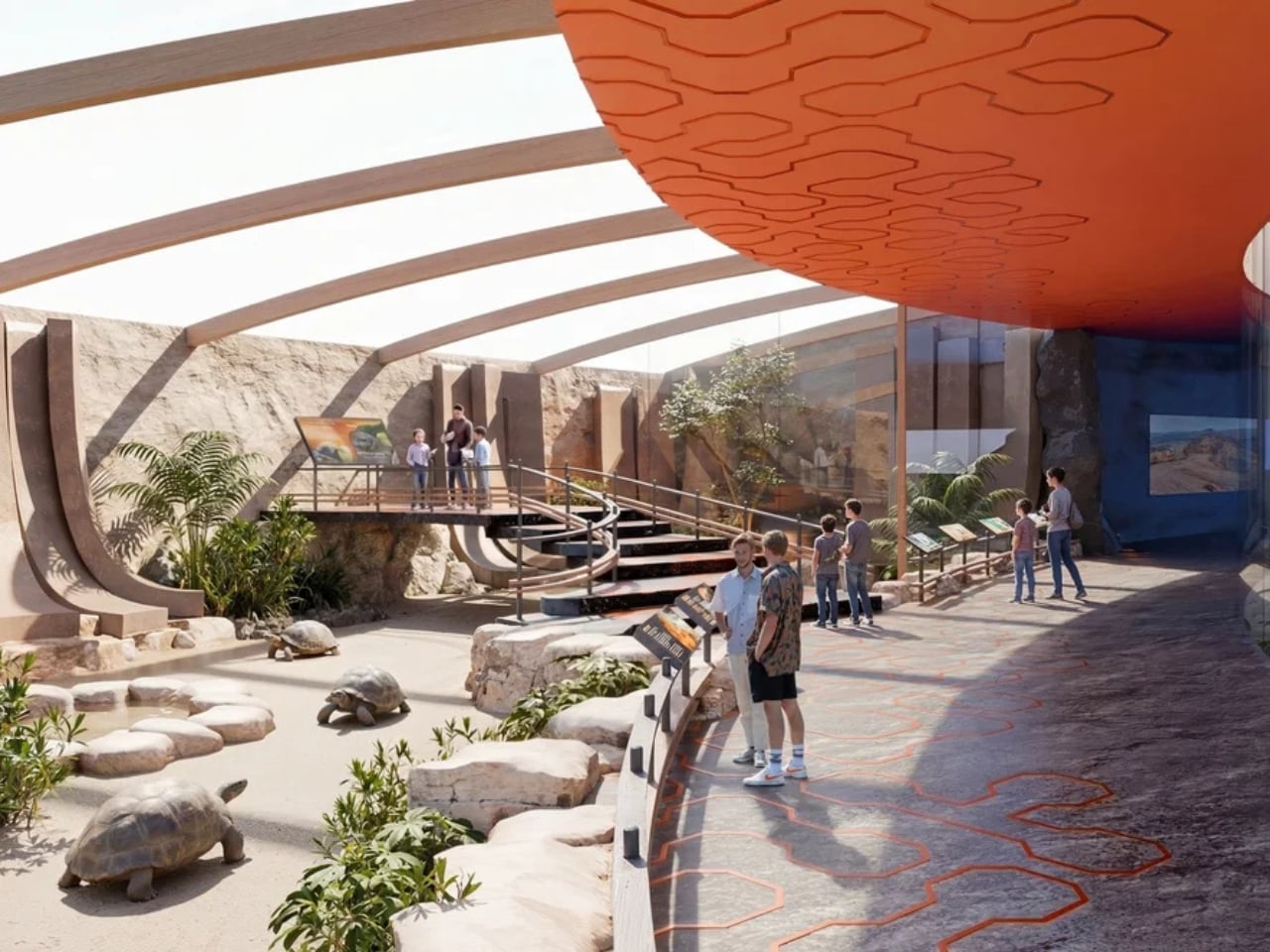
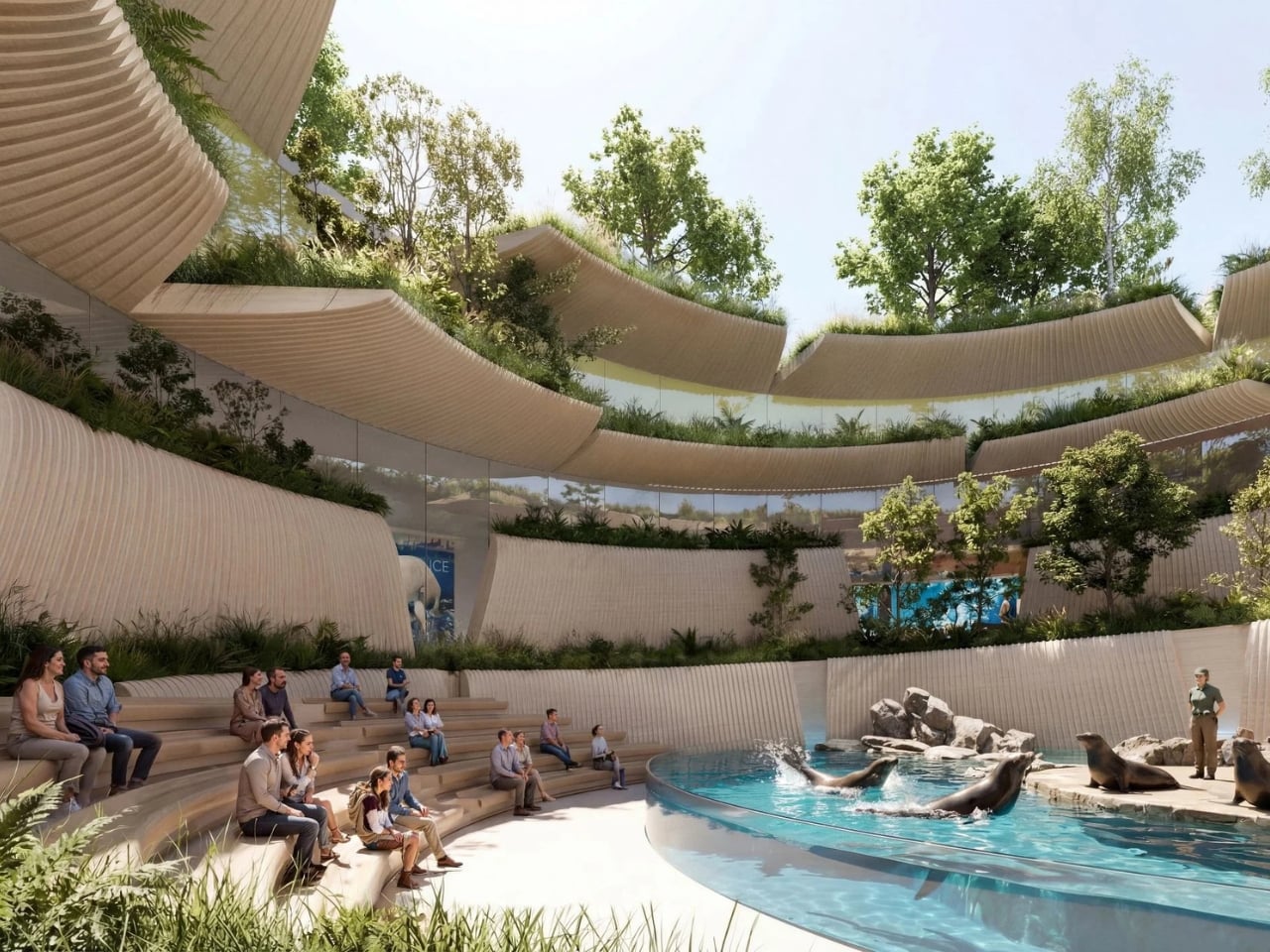
The animal habitats themselves are impressively diverse. Giant tortoises live among volcanic terrain with elevated walkways tracing along their space. Capybaras hang out near living moss walls and chrome sculptures. There’s even a sea lion courtyard and a central garden connected by a spiral path. Each zone captures the essence of its element without resorting to theme park theatrics.
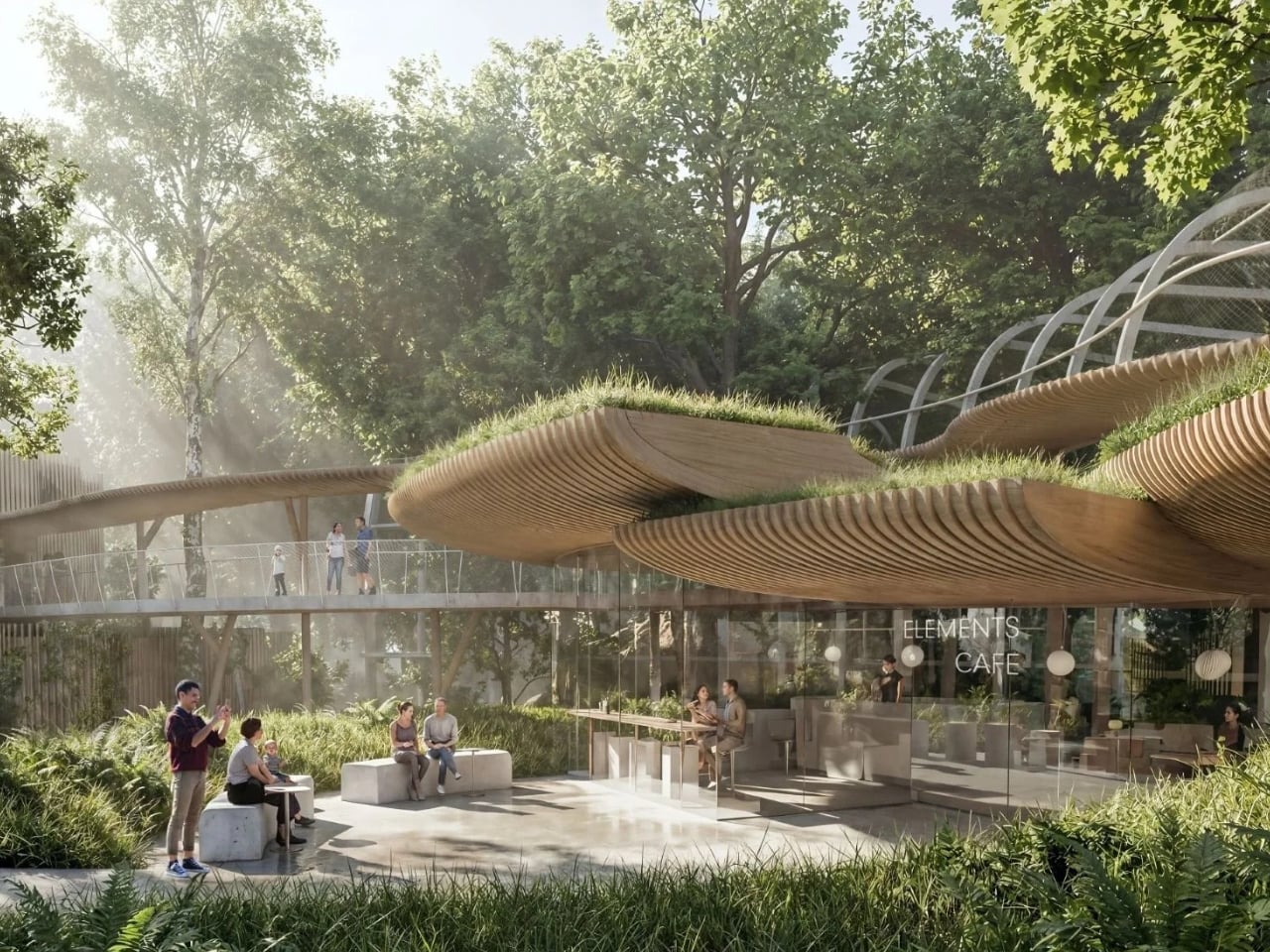
VMA didn’t just think about the building in isolation either. The project establishes a new public open space that connects the zoo’s main entrance, the existing Orientarium complex (a Southeast Asian wildlife facility completed in 2022), and this new pavilion. The design includes a series of planted roof decks and ramps serving a cafe and aviary, creating multiple layers of experience both inside and outside the main structure.
There’s something particularly clever about how the building treats humans as the fifth element. Visitors aren’t just passive observers walking through glass corridors. The architecture positions people as part of the evolutionary narrative, making the experience feel less like watching nature behind barriers and more like understanding our place within it.
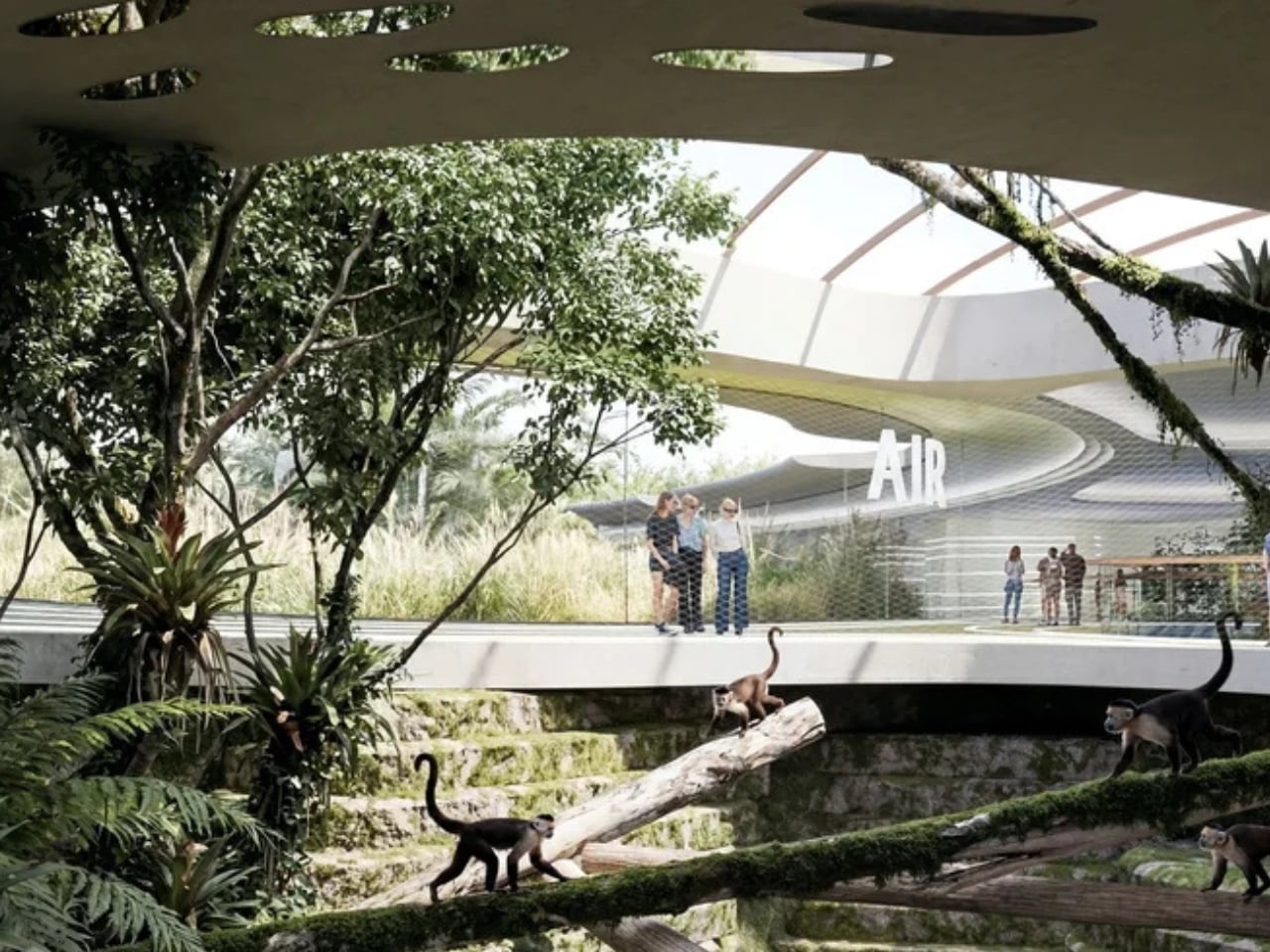
The competition itself attracted international attention, with architects given until December to submit proposals that included visualizations of the building integrated into the zoo’s landscape plus three floor plans showing different levels. That VMA, a Bangkok-based studio, won a competition in Poland speaks to how universal their design language became. The elements, after all, are the same everywhere.
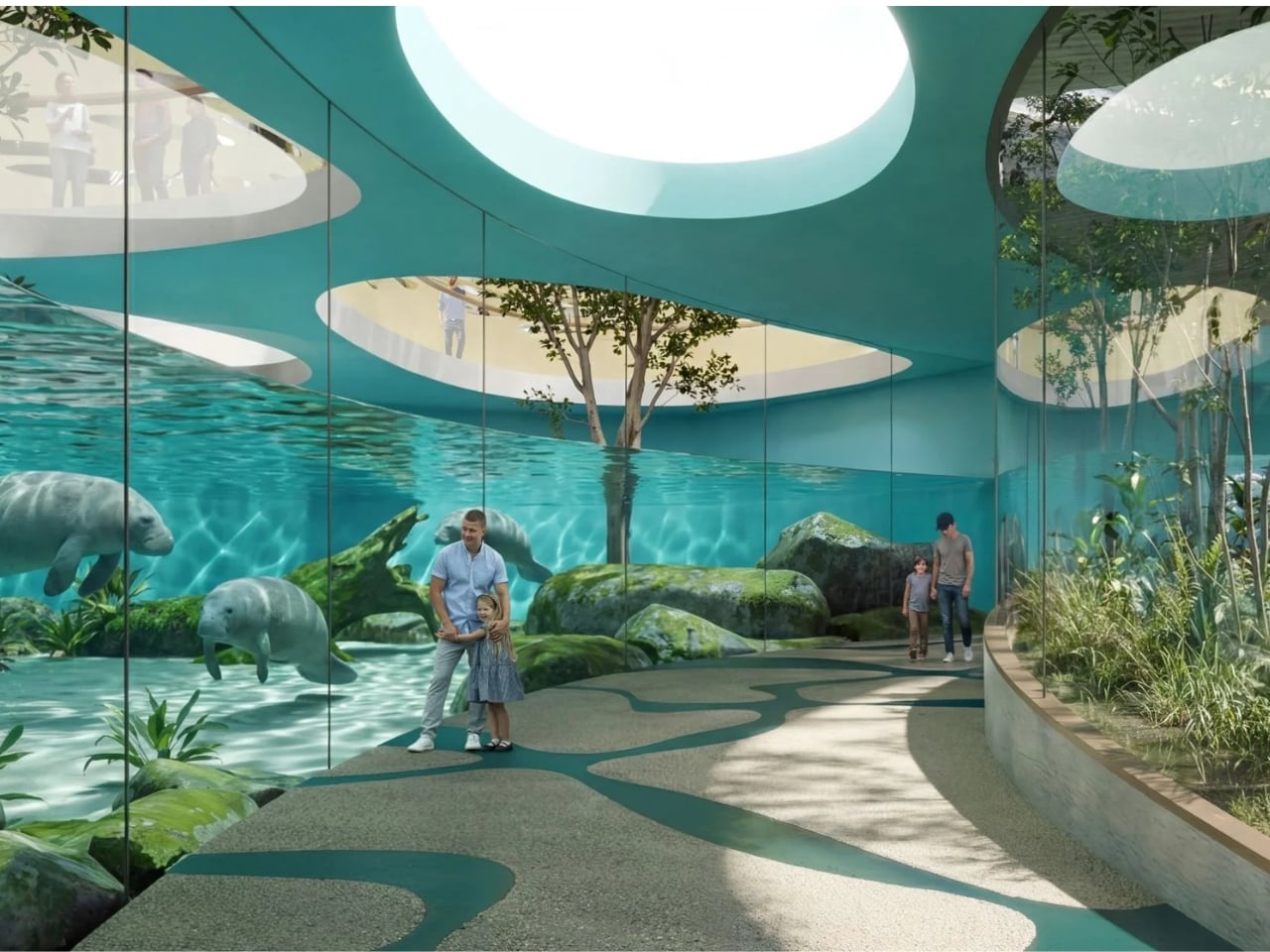
Looking at the renderings, what strikes you most is the facade. Those timber profiles create rhythm and texture while the green roofs blur the line between building and landscape. It’s biophilic design done right, not as decoration but as fundamental architectural strategy. The structure looks like it grew from the ground rather than being imposed on it.
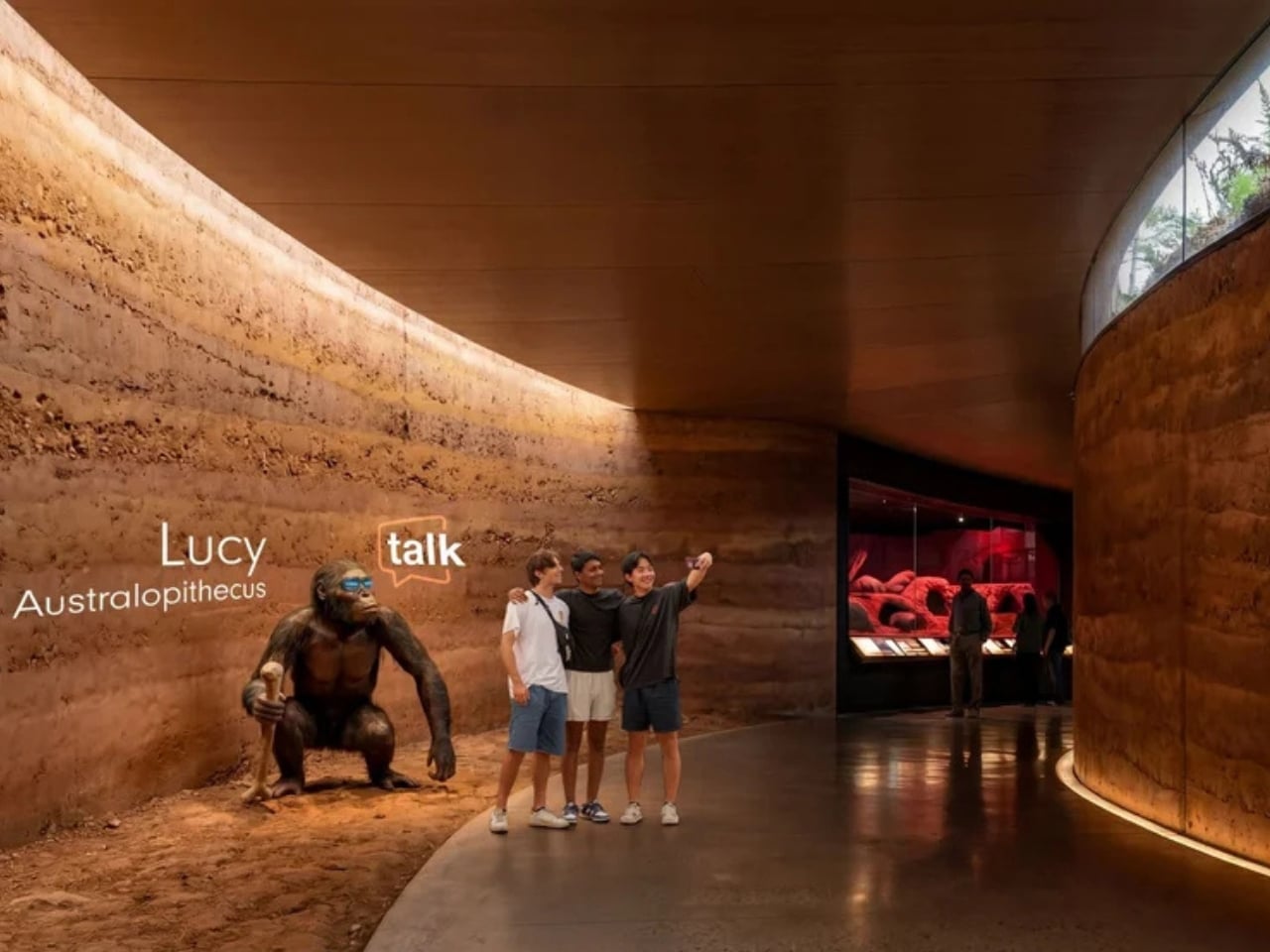
This project represents a bigger shift in zoo design philosophy. The best contemporary zoos recognize they’re not just about displaying animals but about telling stories of conservation, evolution, and interconnection. Architecture becomes the narrative framework that makes those stories visceral rather than abstract. VMA understood this assignment perfectly.
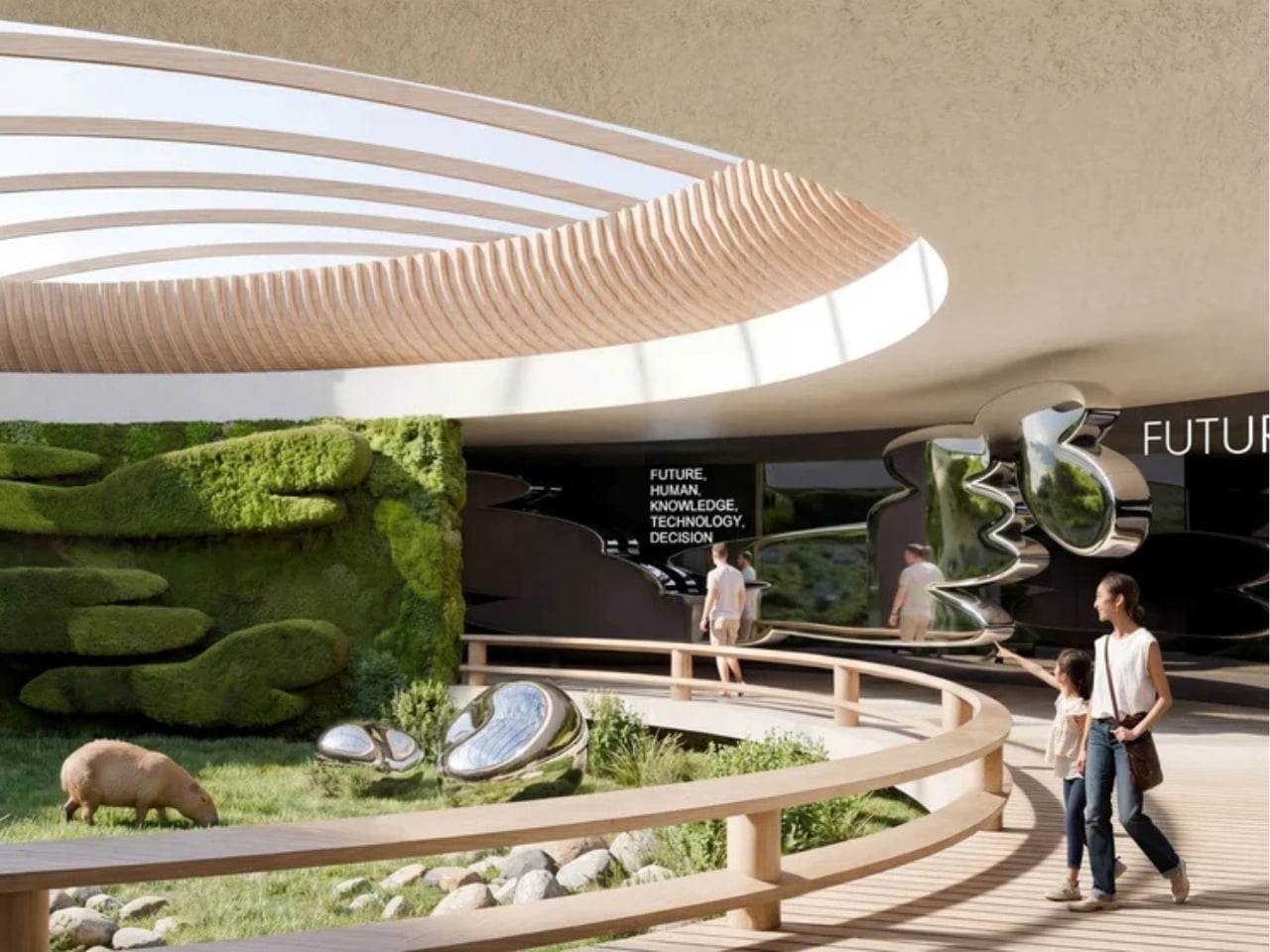
The House of Elements follows the completion of the Orientarium Southeast Asian wildlife complex and represents the second major development at Łódź Zoo. Together, these projects are transforming what was once a standard municipal zoo into something far more ambitious: a place where architecture, animals, and ideas converge to create experiences that stick with you long after you leave.
When the pavilion eventually opens, visitors will walk through earth and ice and fire and emerge changed, having experienced not just animal habitats but the fundamental forces that make life on this planet possible. That’s the kind of design ambition we need more of.