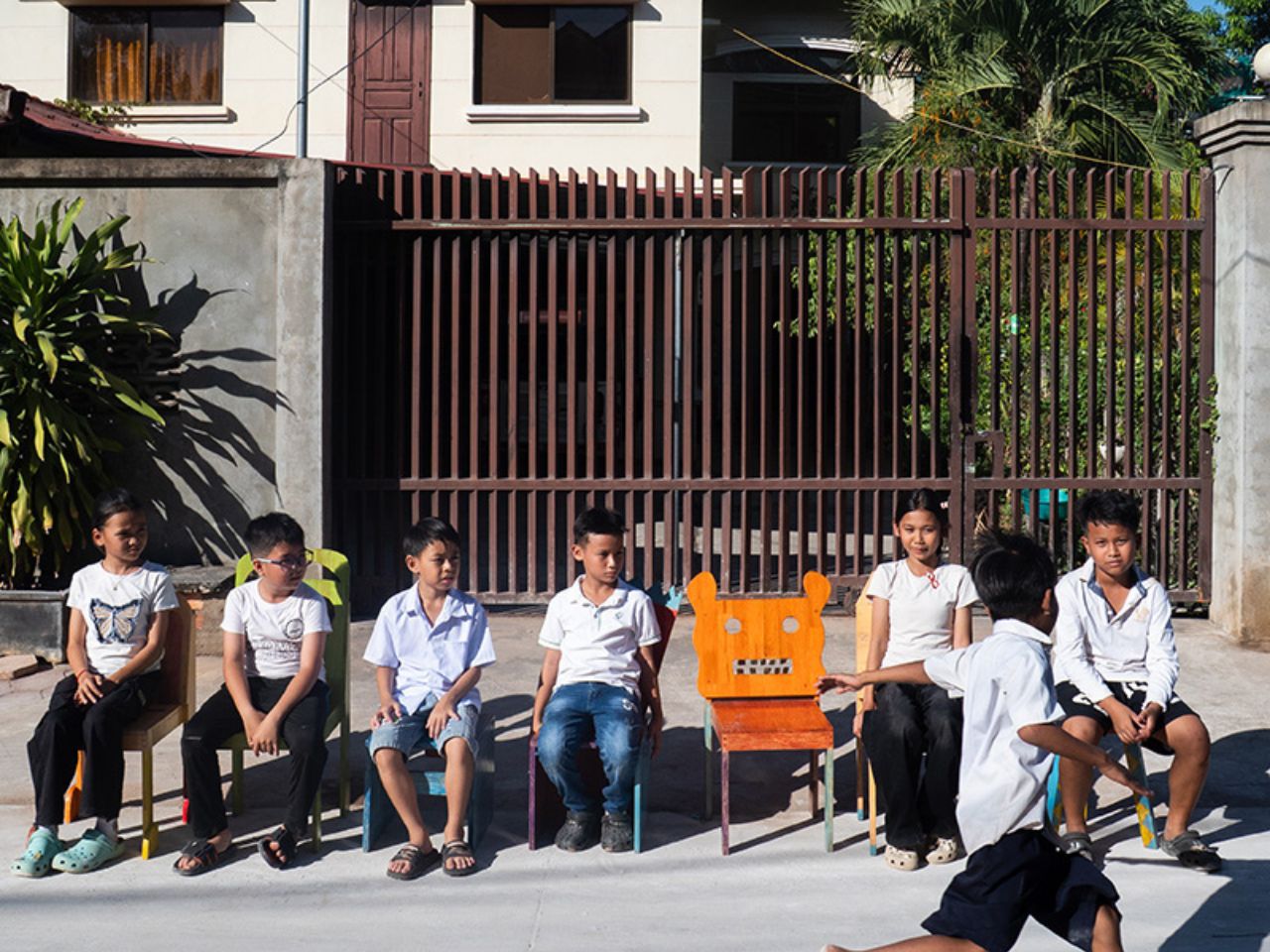
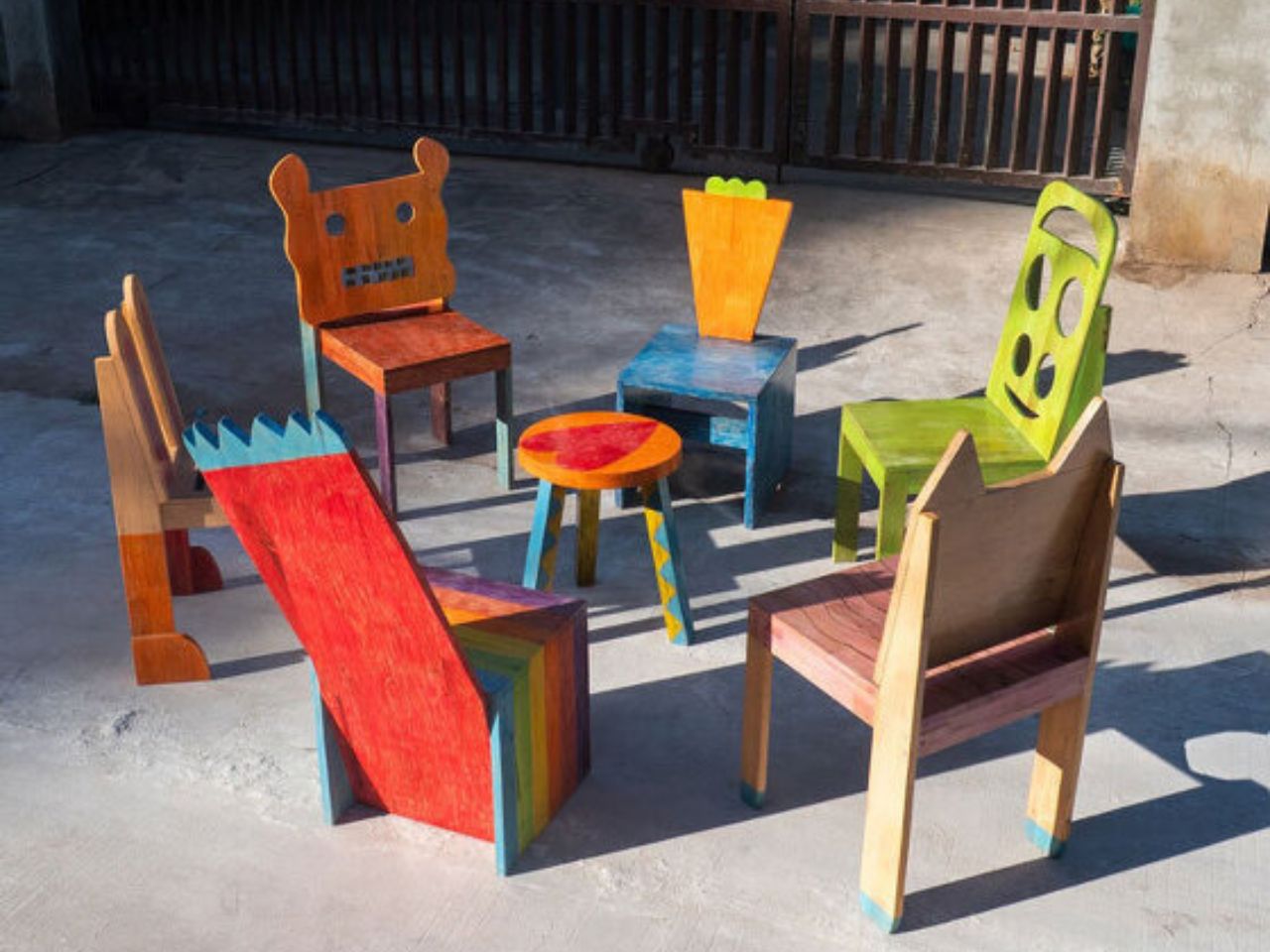
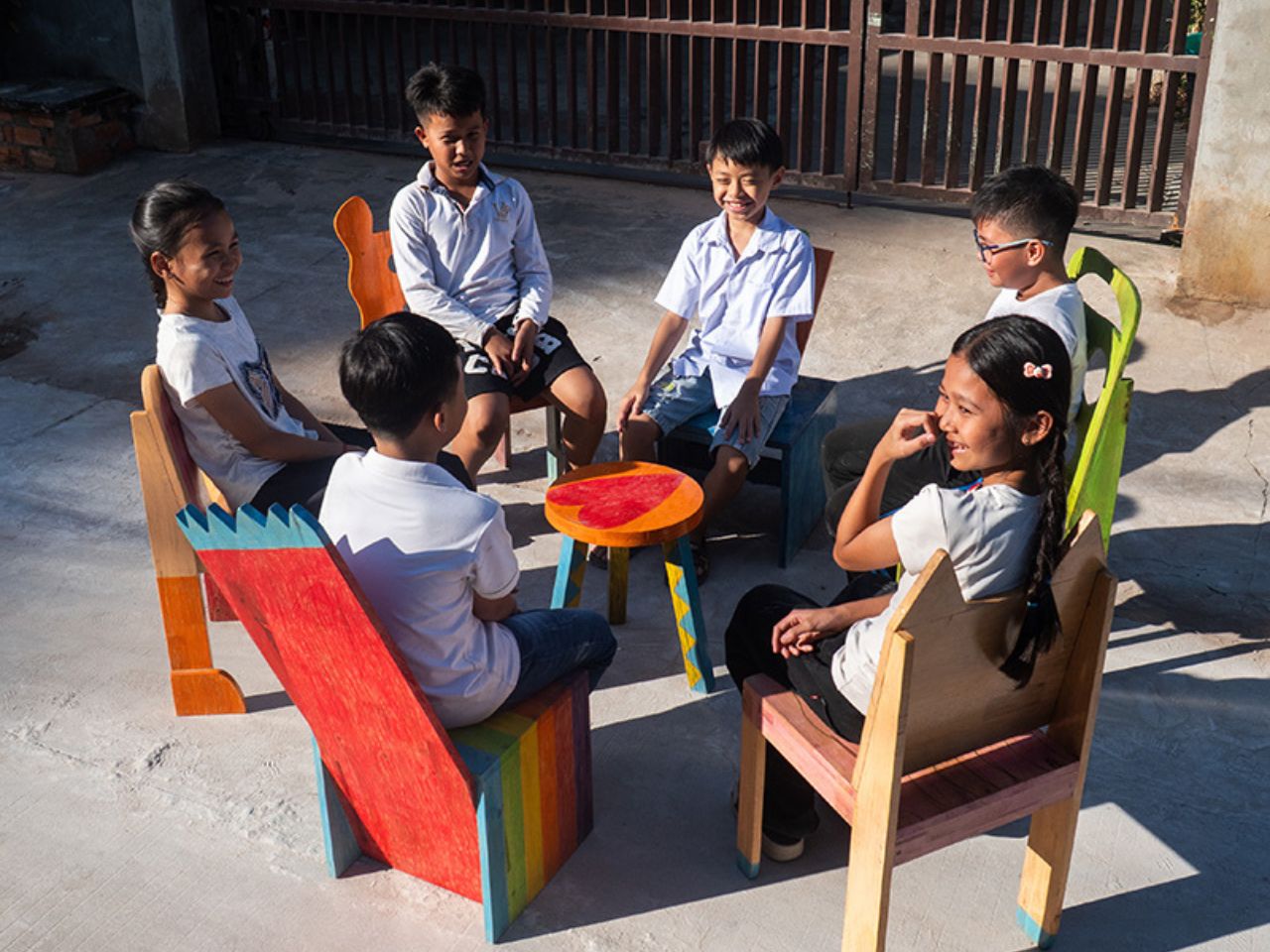
One of the most powerful moments in the creative process is seeing an idea transform into something real. For a child, that moment carries even greater weight. It builds confidence, validates imagination, and reinforces the belief that creativity is not limited by age. Chair for Kids, a participatory design project developed by Taekhan Yun, captures this experience by translating children’s playful and imperfect drawings into fully functional and usable chairs that children can see, touch, and use every day.
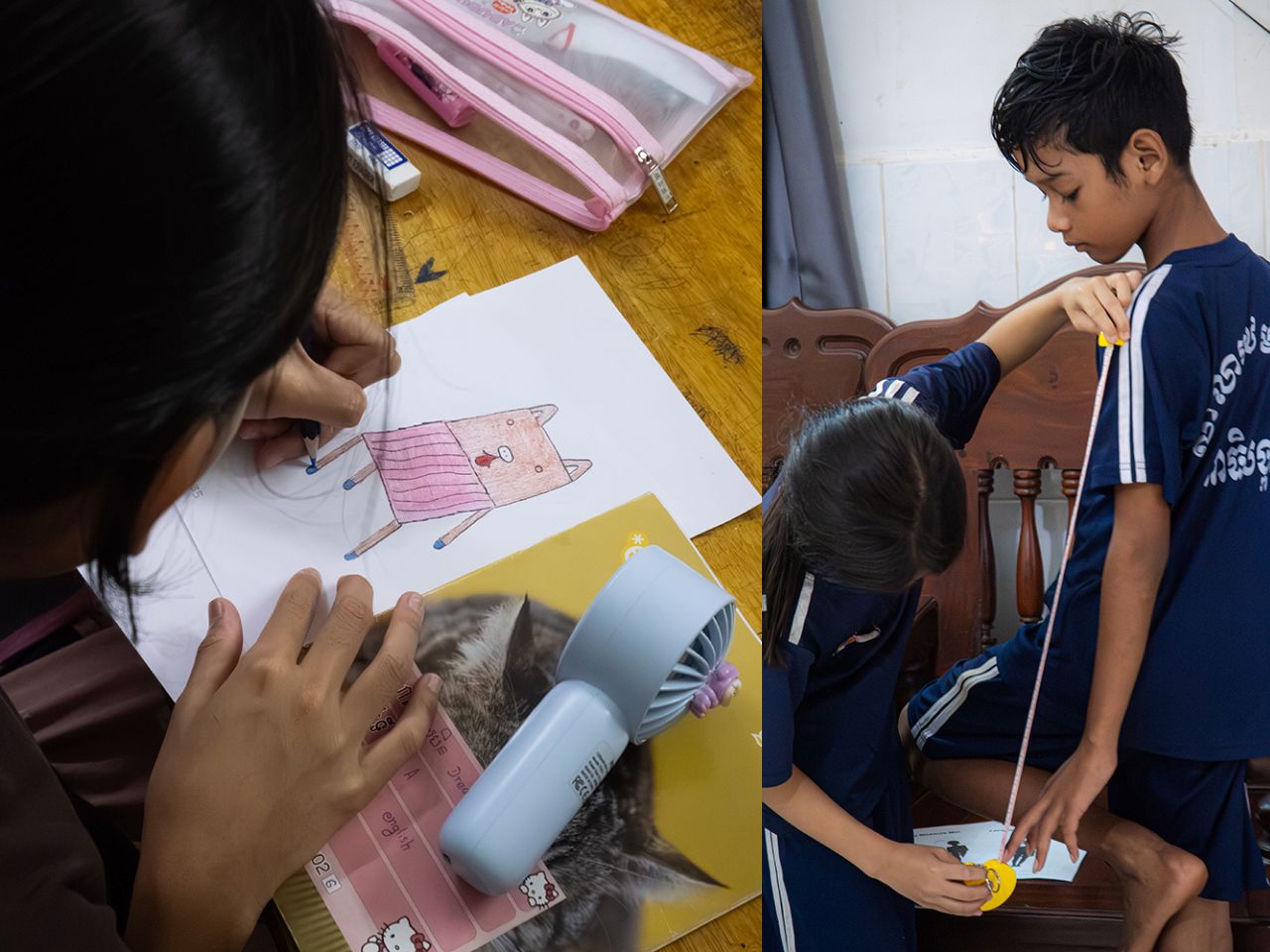
Created in collaboration with students from an English school in Siem Reap, the project places children at the center of the design process. Rather than correcting or refining their ideas to fit adult notions of good design, the project embraces the rawness of children’s imagination. More than seventy children participated, each drawing their own version of a chair or stool as an initial exploration of form, balance, and function. These drawings were treated as genuine starting points rather than symbolic exercises.
Designer: Taekhan Yun
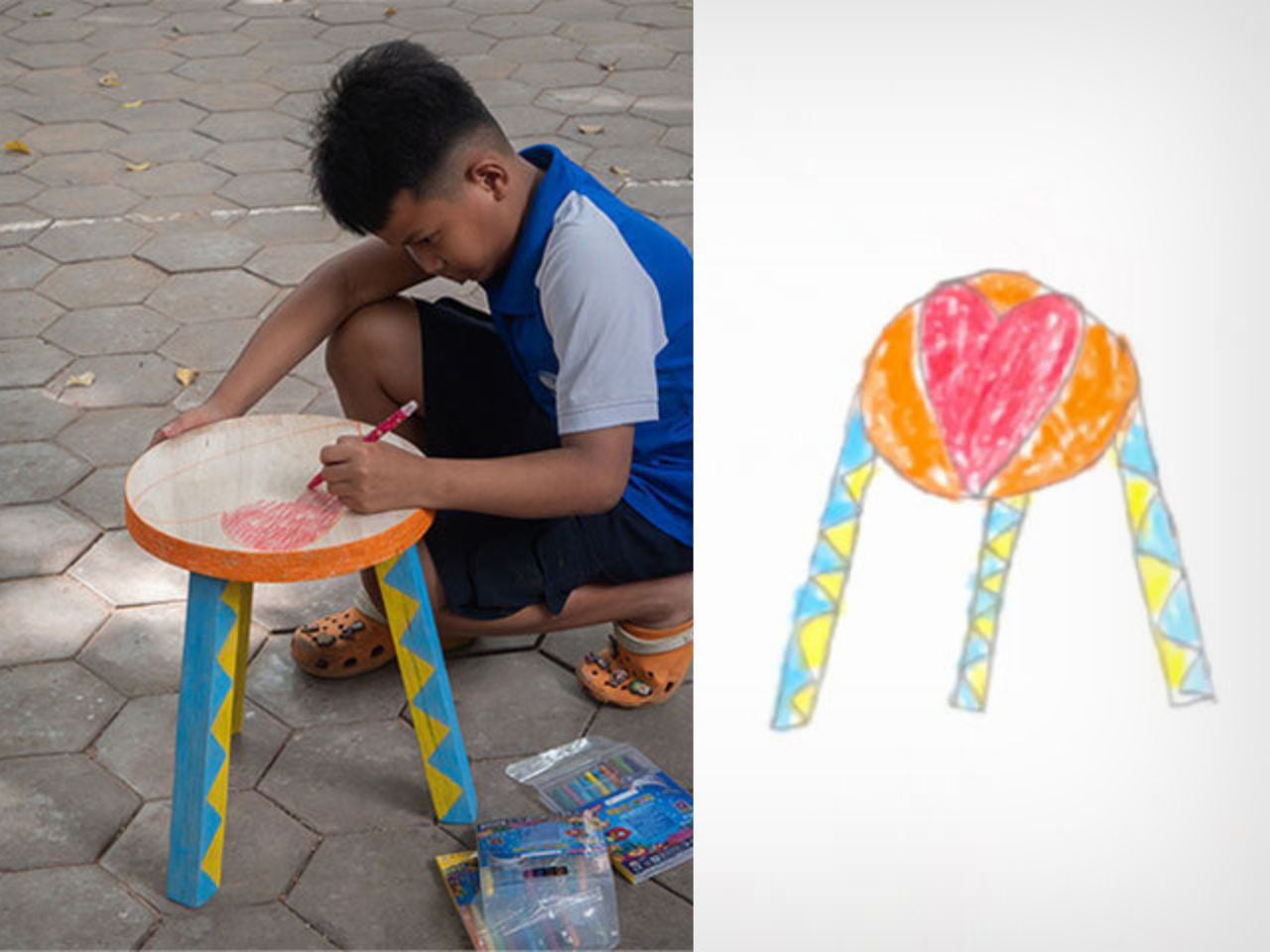
Collaboration played a key role throughout the process. Children gathered to look at and share each other’s drawings, discussing differences in shape, structure, and intention. They then worked in pairs to measure their own height and body dimensions, learning how scale and proportion affect comfort and usability. Based on these measurements, the children described the type of chair they wanted to make, introducing basic ergonomic thinking in an intuitive and accessible way. Each chair was designed specifically to fit the child’s own body, reinforcing the connection between design and lived experience.
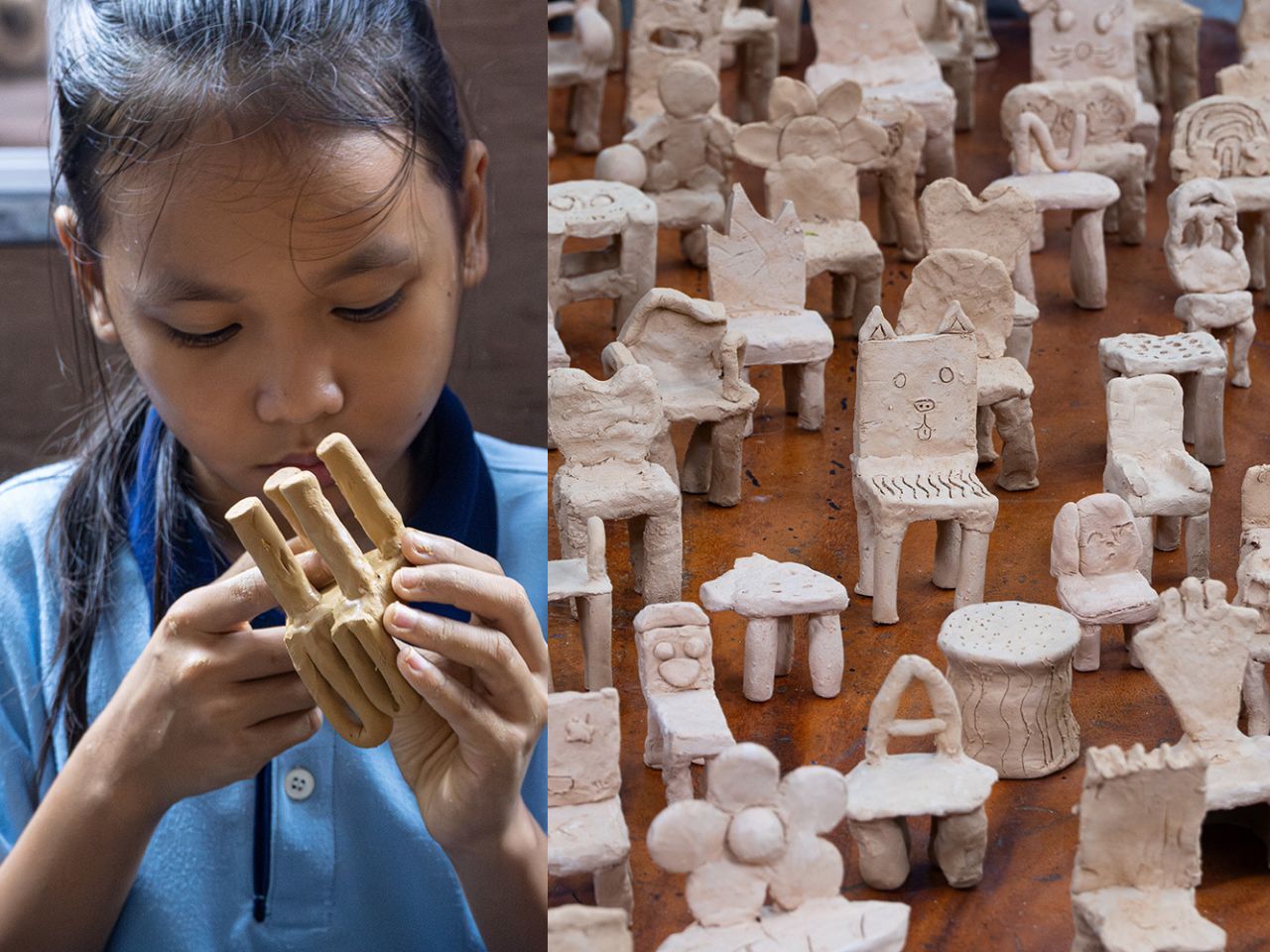
To translate drawings into three-dimensional objects, the children created clay prototypes of their chairs. Clay was chosen for its low cost, accessibility, and ease of manipulation, allowing children to freely experiment with volume and structure. These models helped bridge the gap between imagination and fabrication and served as references for the final chairs produced by Taekhan Yun. The resulting forms retain the charm of the original drawings with crooked legs, unexpected angles, and playful proportions while remaining structurally sound and functional.
In the final stage, the children actively participated in finishing their chairs. Crayons were used to apply color directly onto the surfaces, transforming each piece into a personal expression of identity. Acrylic lacquer spray was then applied to seal the drawings, followed by varnish to protect the finish. This process preserved the spontaneity of the children’s marks while ensuring durability, resulting in furniture that feels joyful, expressive, and intentional.
Beyond individual expression, Chair for Kids also highlights the potential for scalability. The chairs are low-cost and easy-to-build designs that rely on simple materials and straightforward construction methods. This makes them well-suited for mass manufacturing and adaptation across schools, community centers, and educational environments, particularly in resource-constrained contexts. The project demonstrates how participatory design can produce furniture that is not only meaningful and educational but also practical, affordable, and replicable.
Each chair reflects the imagination of a single child while contributing to a collective outcome. Chair for Kids shows how design education rooted in participation and making can empower children, build confidence, and reimagine furniture as a tool for learning, inclusion, and creativity.