There’s something quietly radical about sitting in a recycled Adirondack chair while you’re waiting for your flight at the world’s busiest airport. Plastic Reimagined transforms locally sourced plastic waste into full-scale seating prototypes, bridging design education, material research, and civic infrastructure at Hartsfield-Jackson Atlanta International Airport, and honestly, I can’t stop thinking about how clever this is.
Here’s what happened. Assistant Professor Hyojin Kwon, founder of the research-oriented practice Pre– and Post–, developed this through a graduate design research studio at Georgia Tech’s School of Architecture, where students took a very practical question and turned it into something beautiful. What if all that plastic waste from campus could actually become something useful again?
Designer: Hyojin Kwon (curator and instructor)
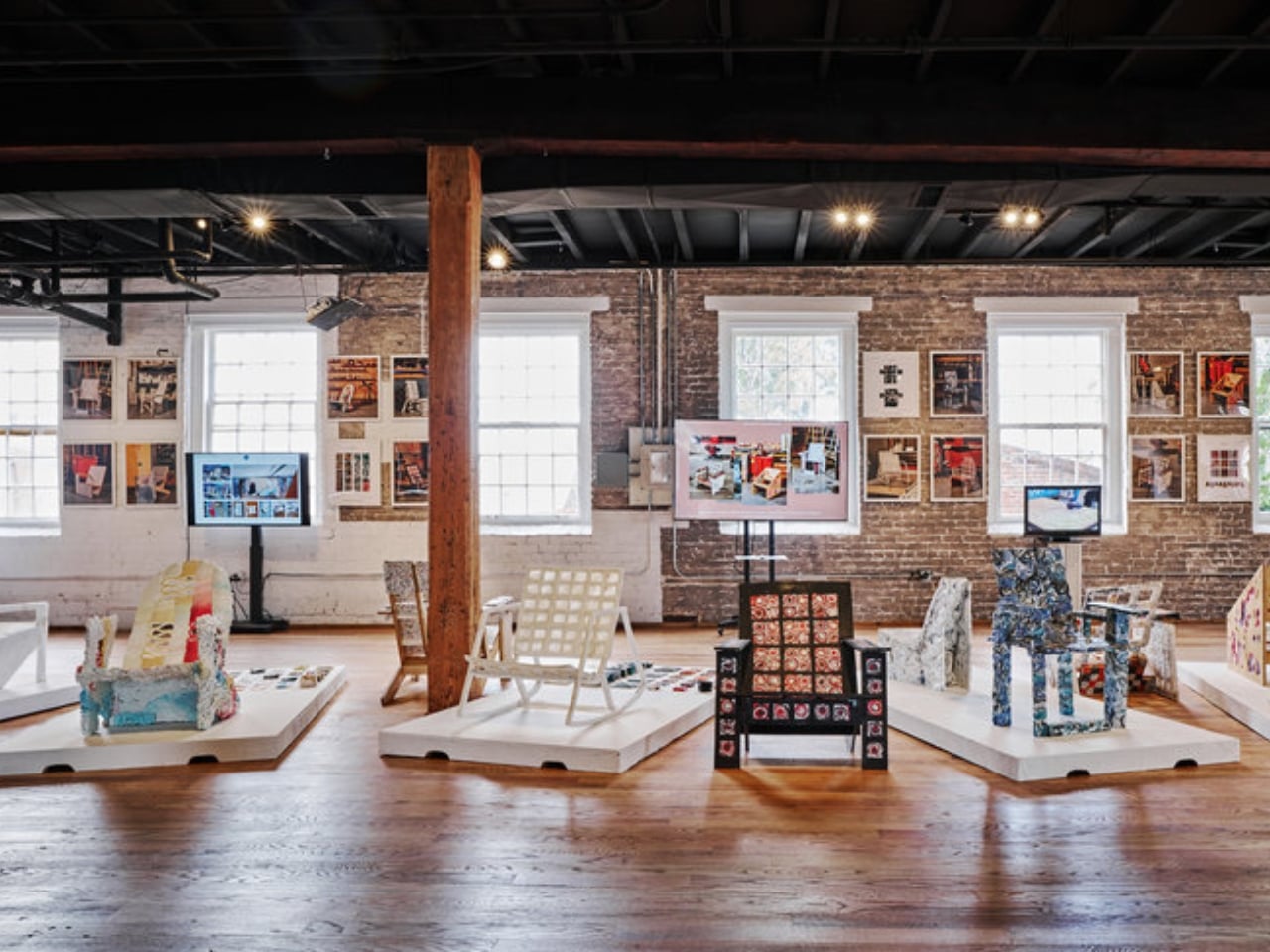
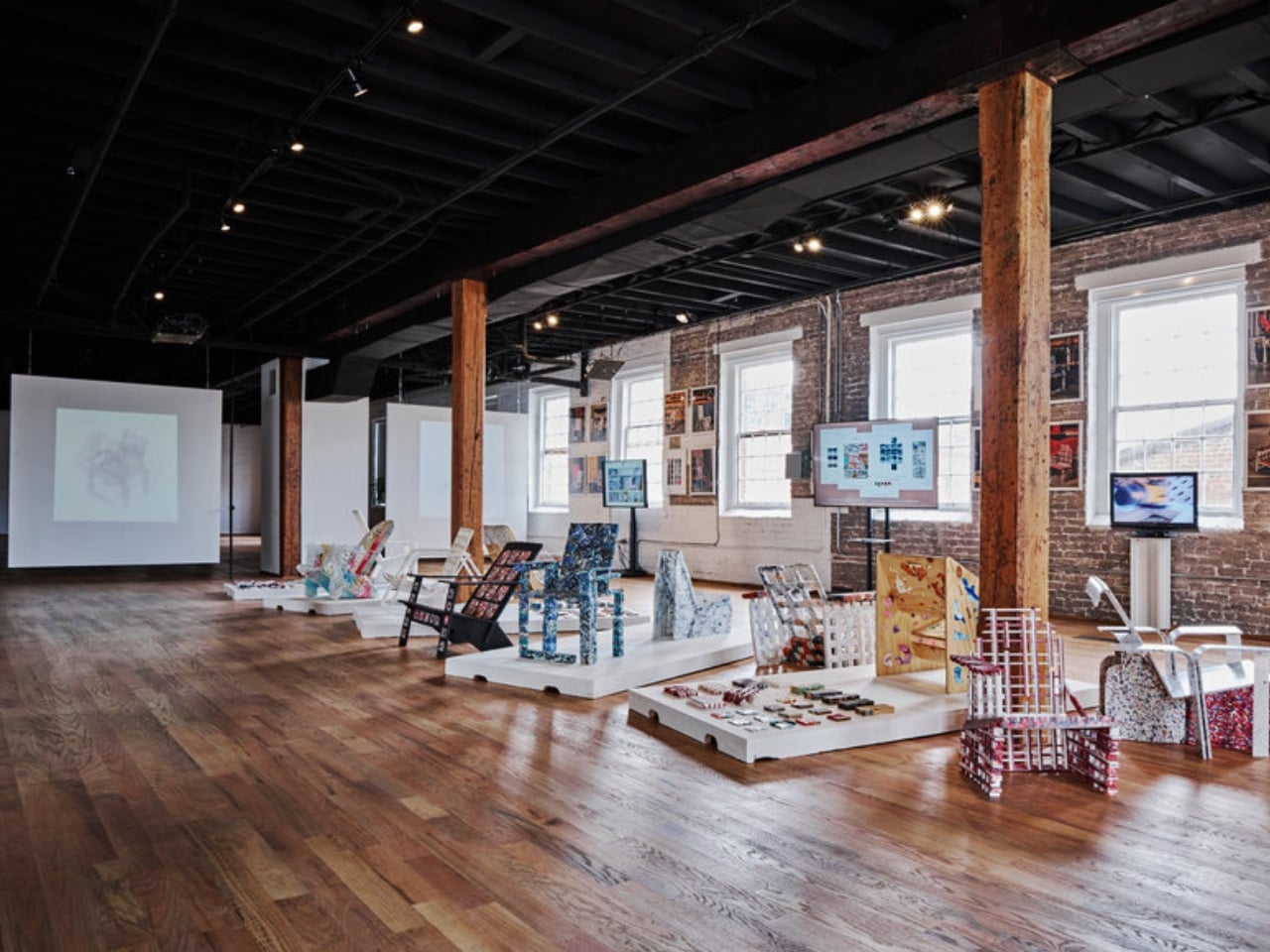
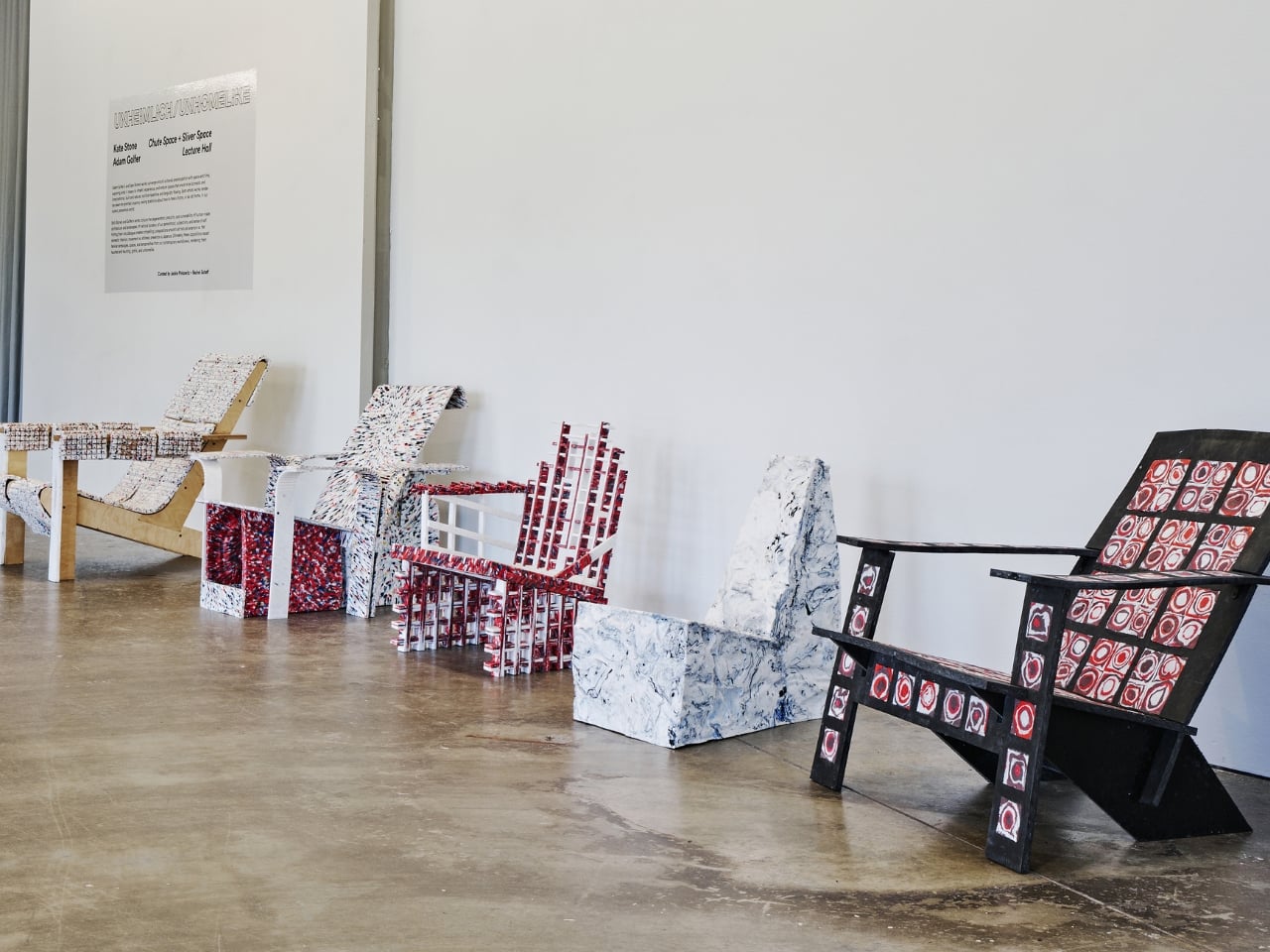
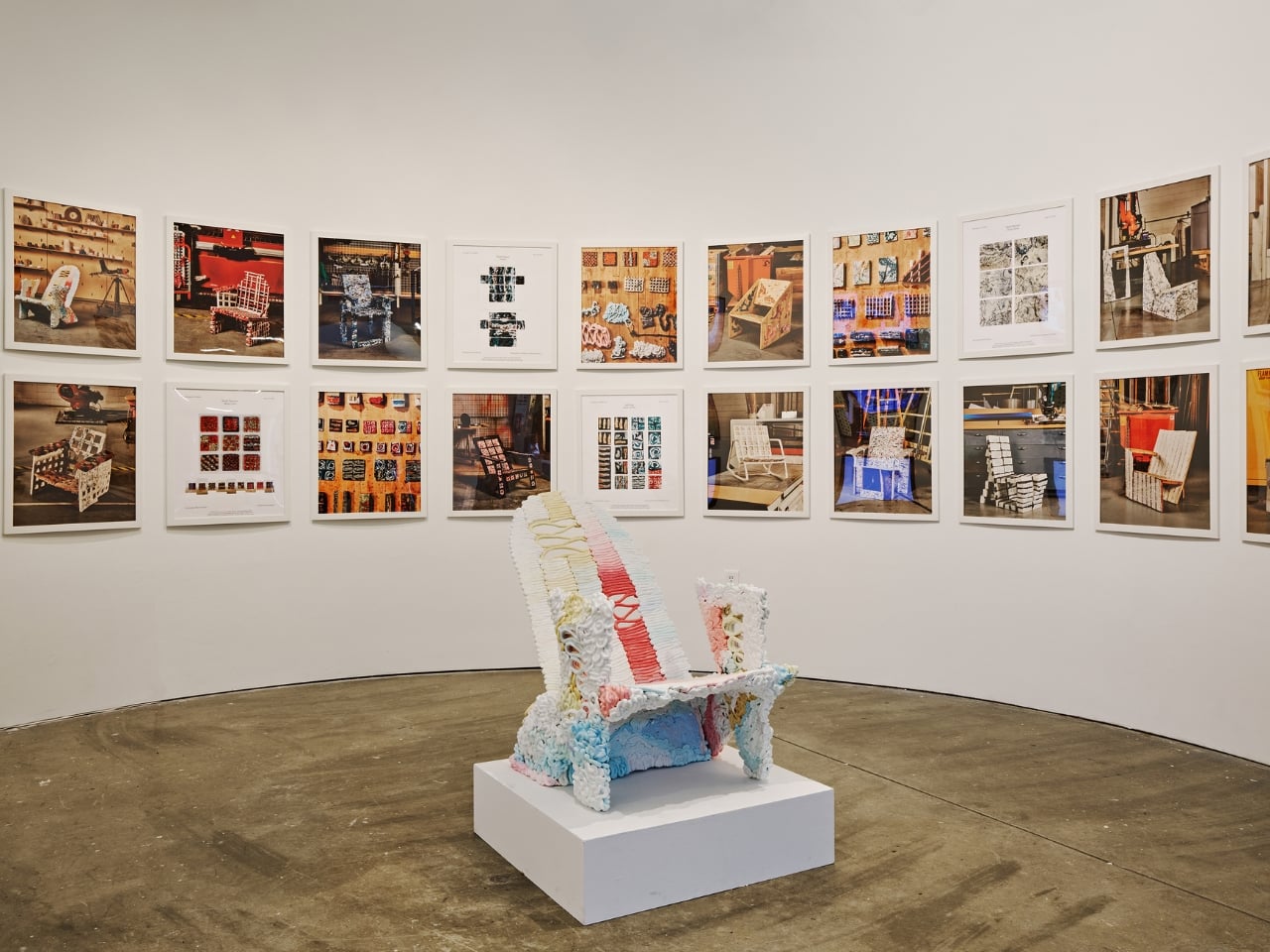
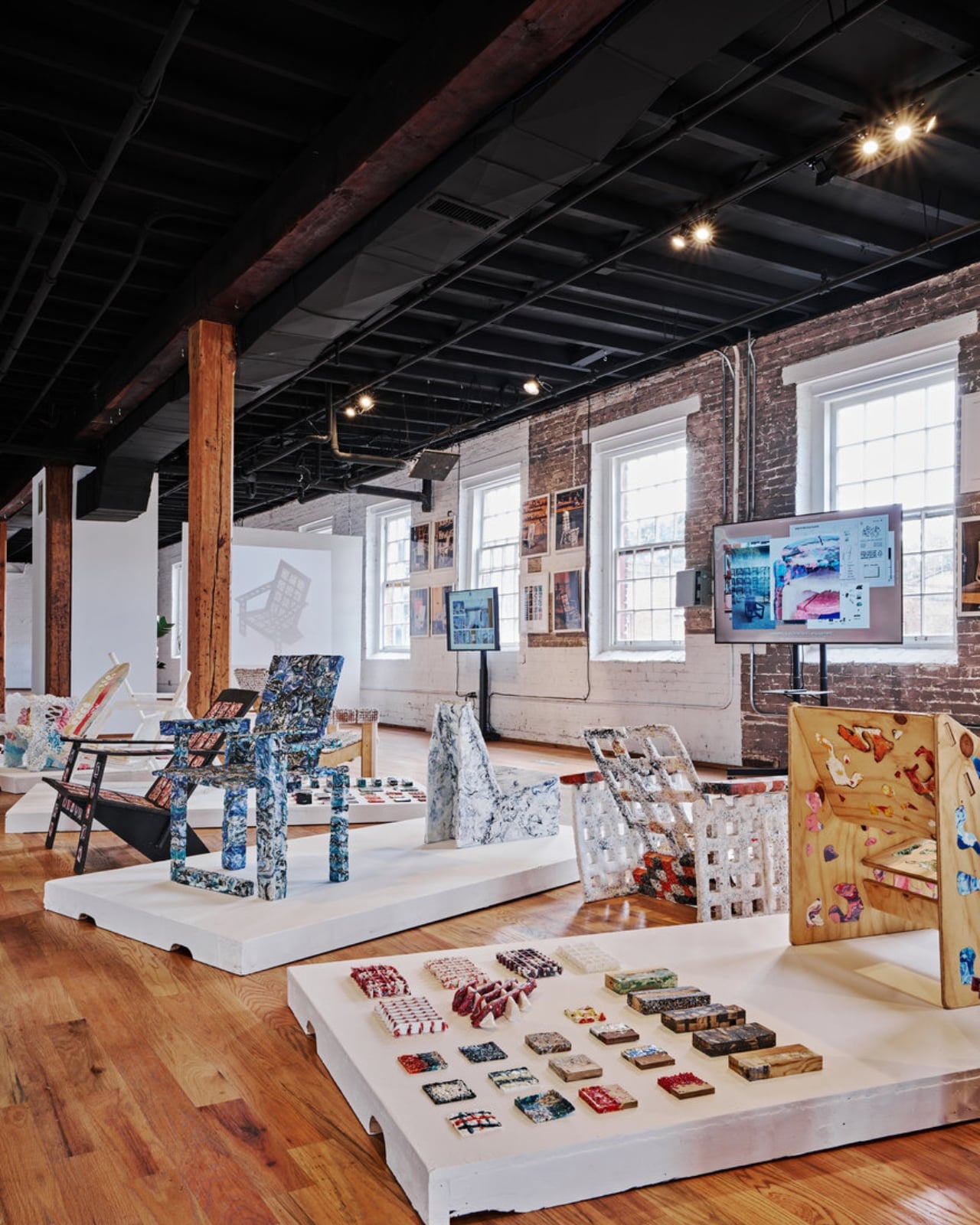
Graduate students collected post-consumer HDPE and PLA from campus makerspaces, waste collection streams, and local recycling facilities. Think about that for a second. The plastic cups from the student union, 3D printing scraps from late-night projects, all that everyday campus detritus that usually ends up in a landfill. Instead of being tossed, the materials were shredded, pressed into sheets, milled with CNC routers, or cast into volumetric forms.
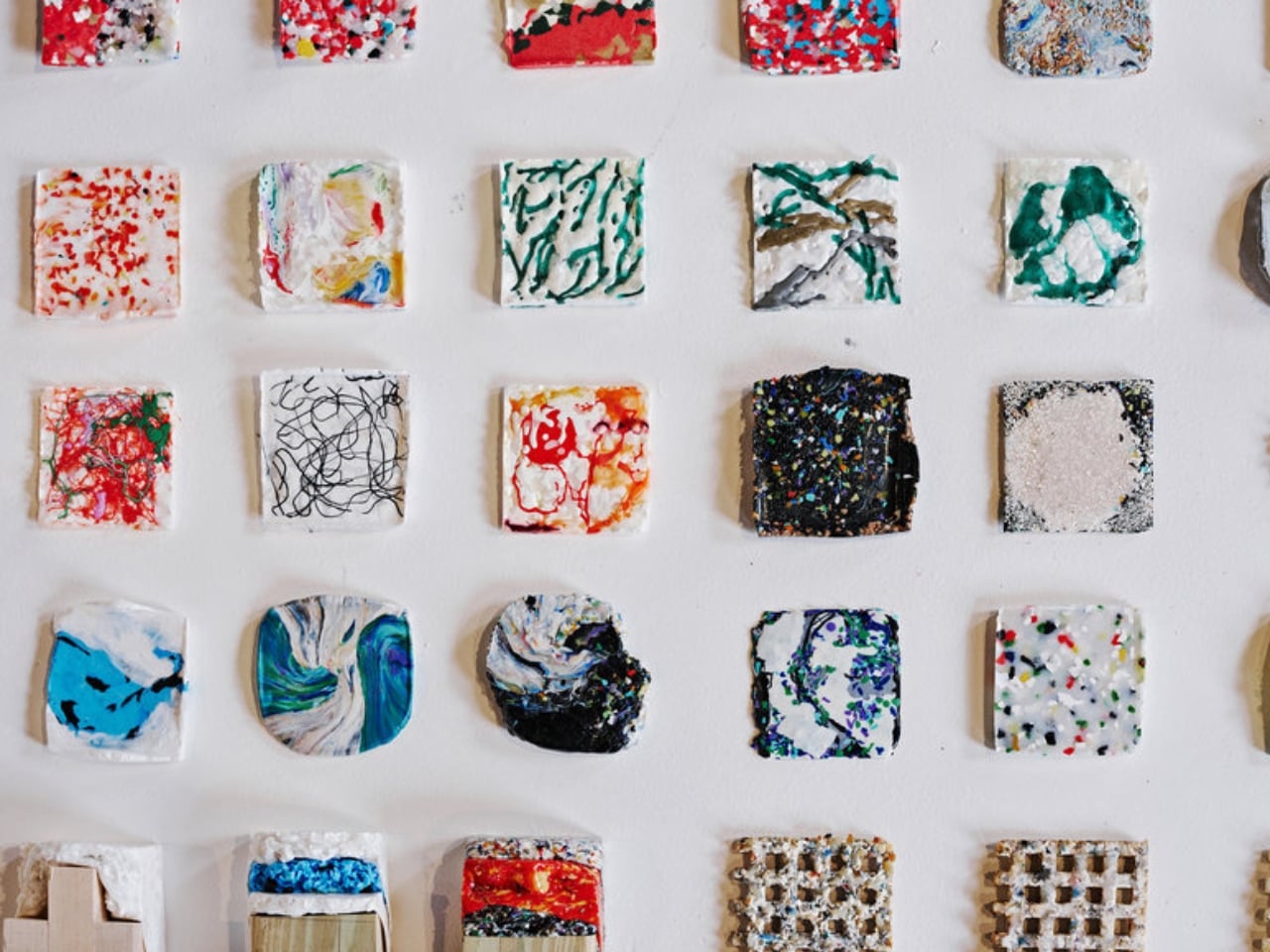
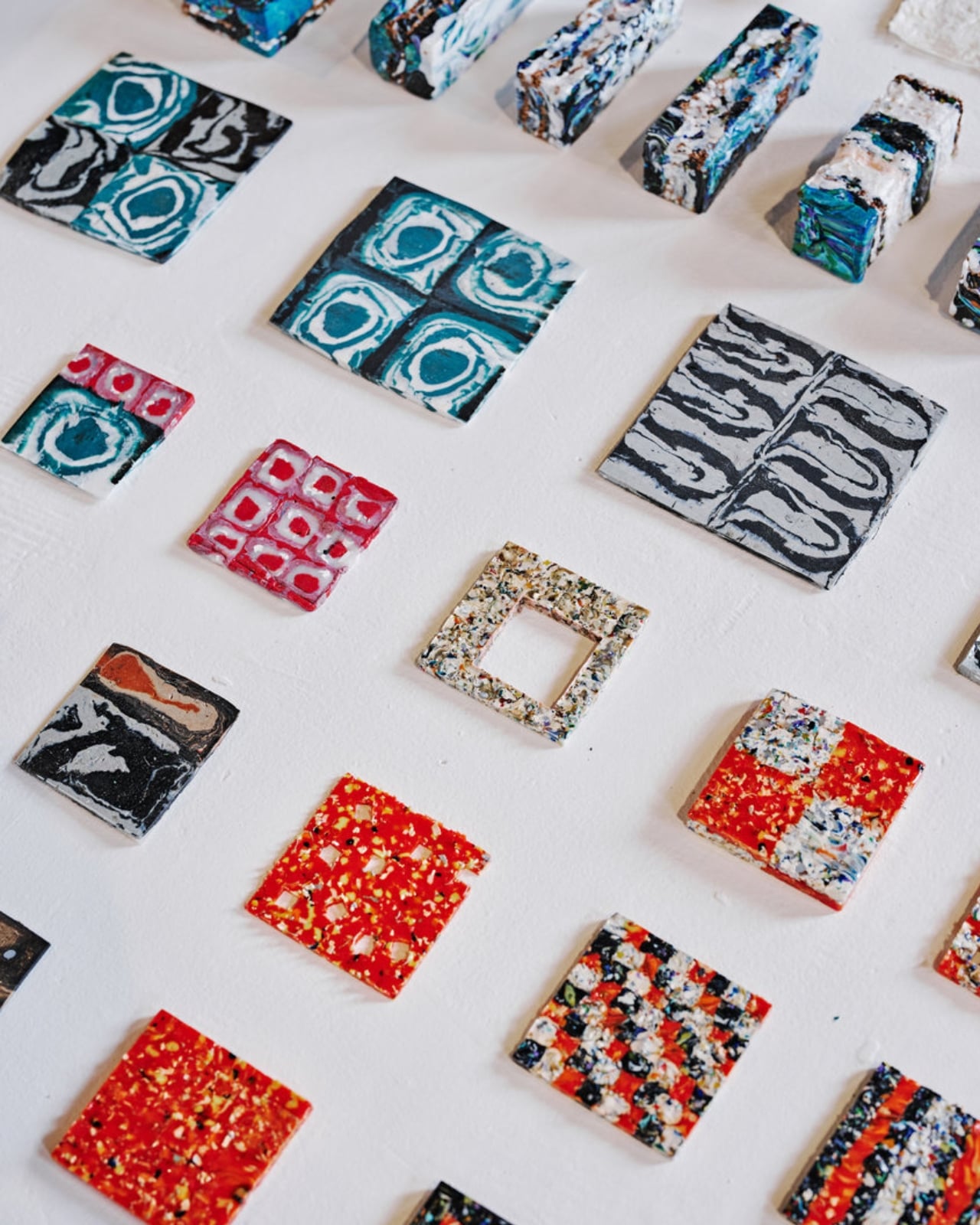
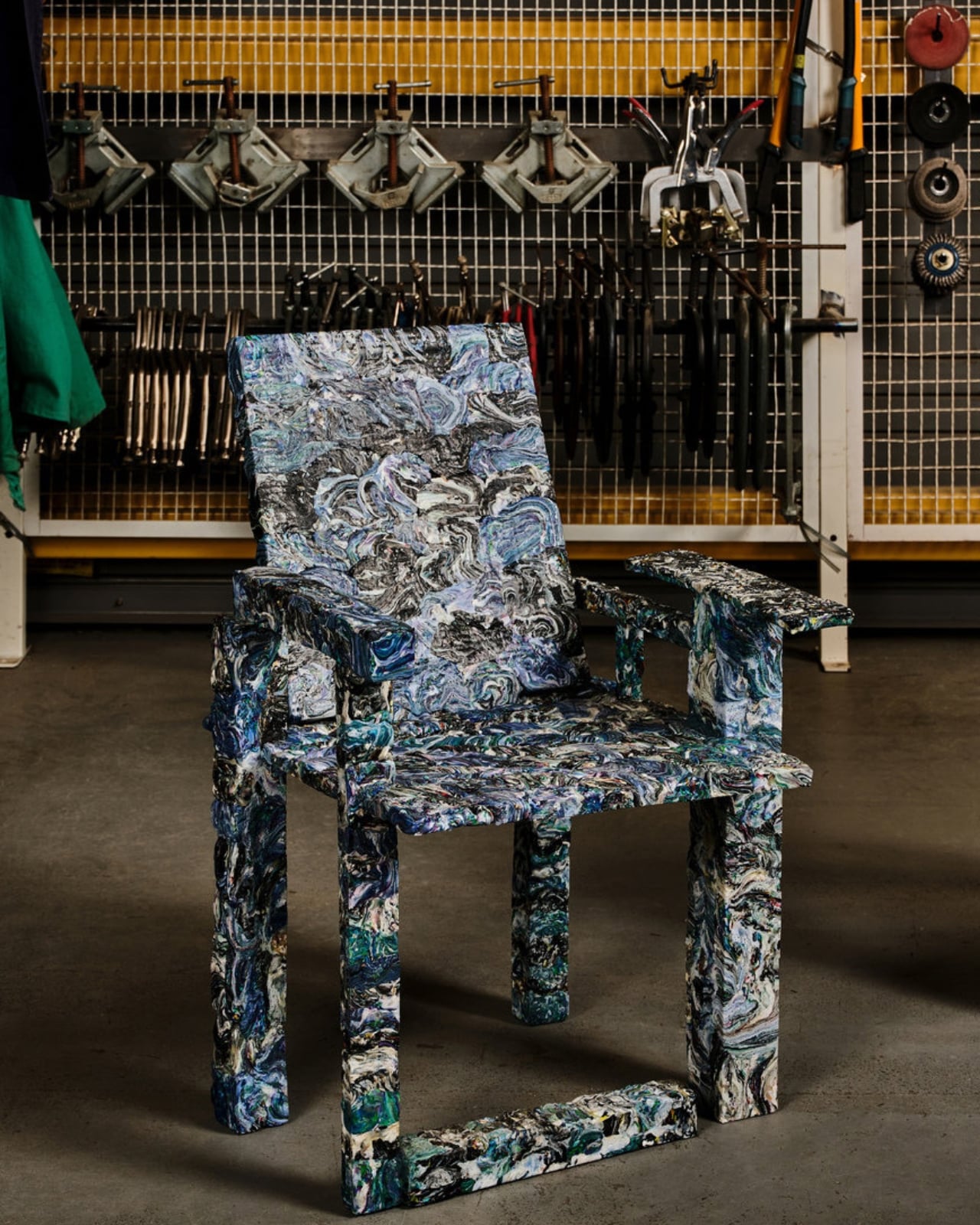
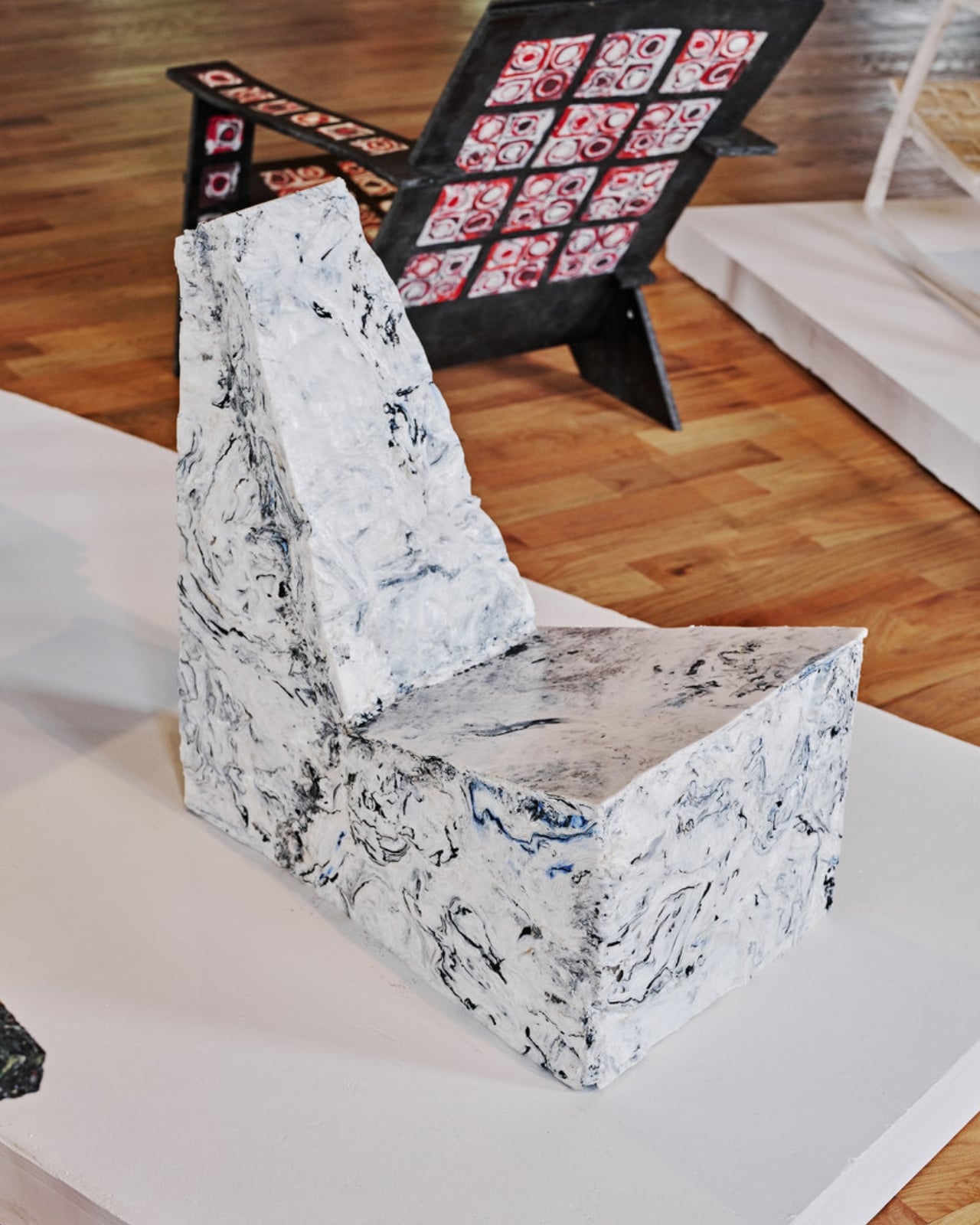
What I love most is that they didn’t try to hide the recycled nature of these pieces. Surface variations, including marbled color patterns and irregular textures, were retained as integral elements of the final designs, so each chair has this gorgeous, swirly aesthetic that screams “I used to be something else.” The imperfections became the personality.
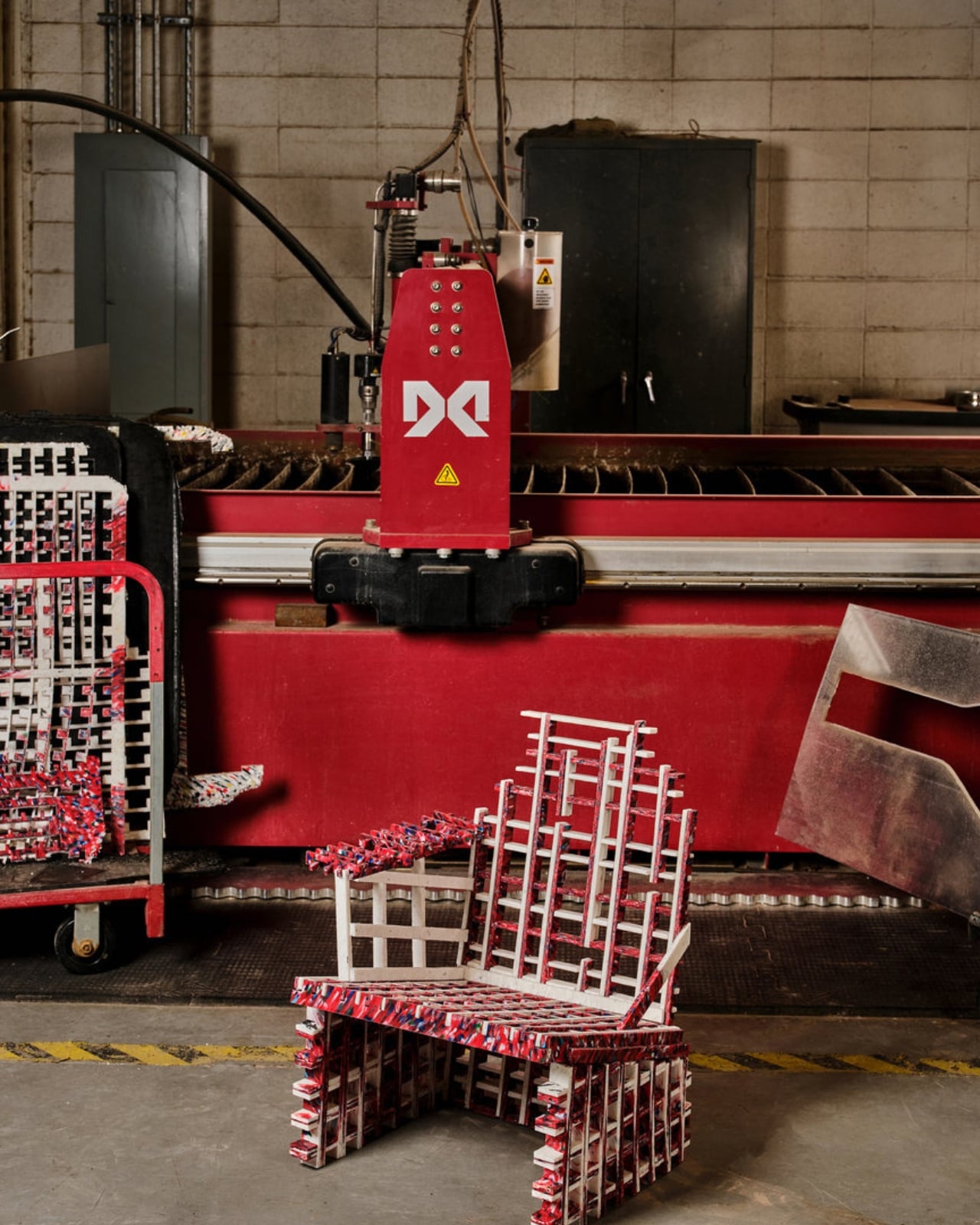
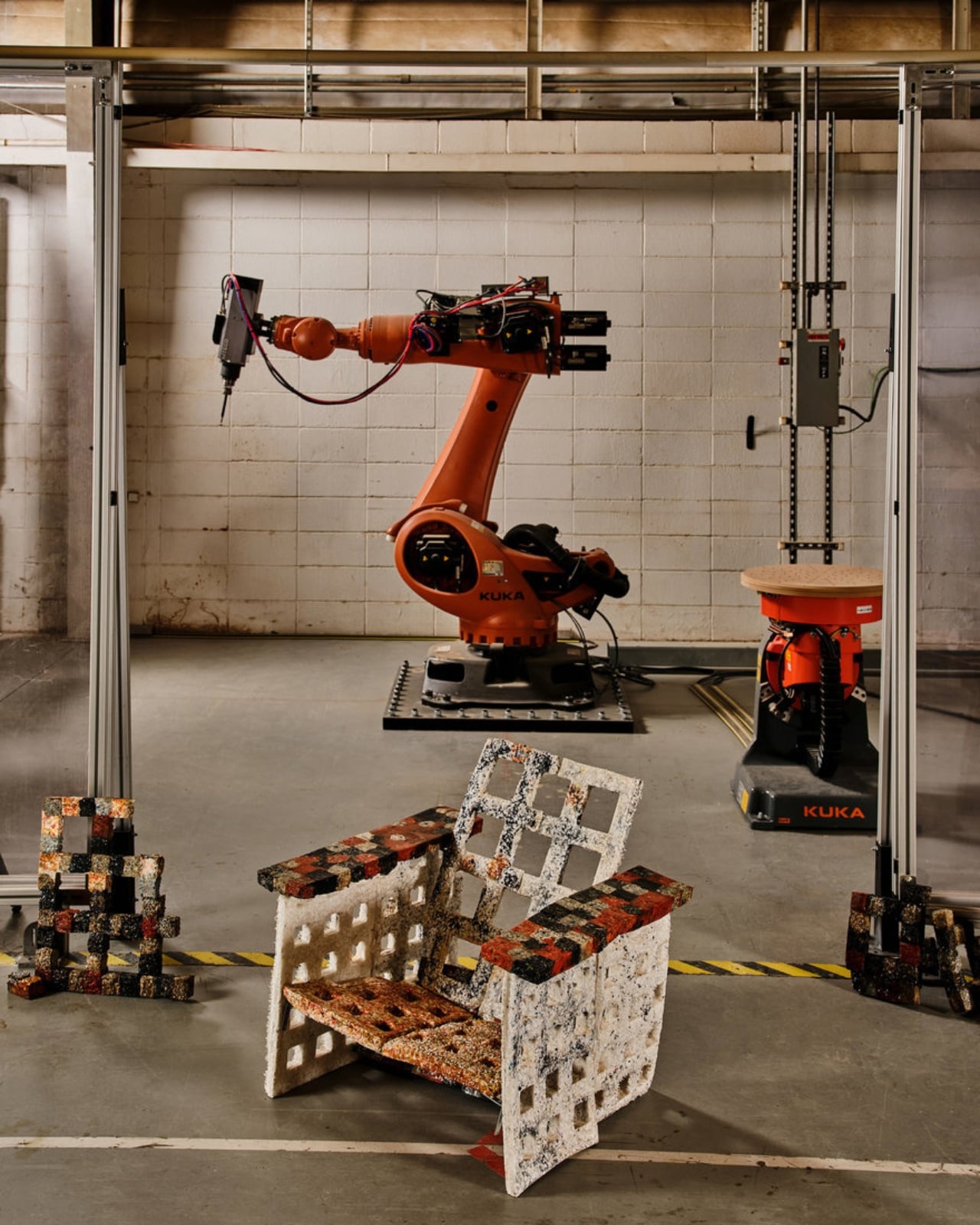
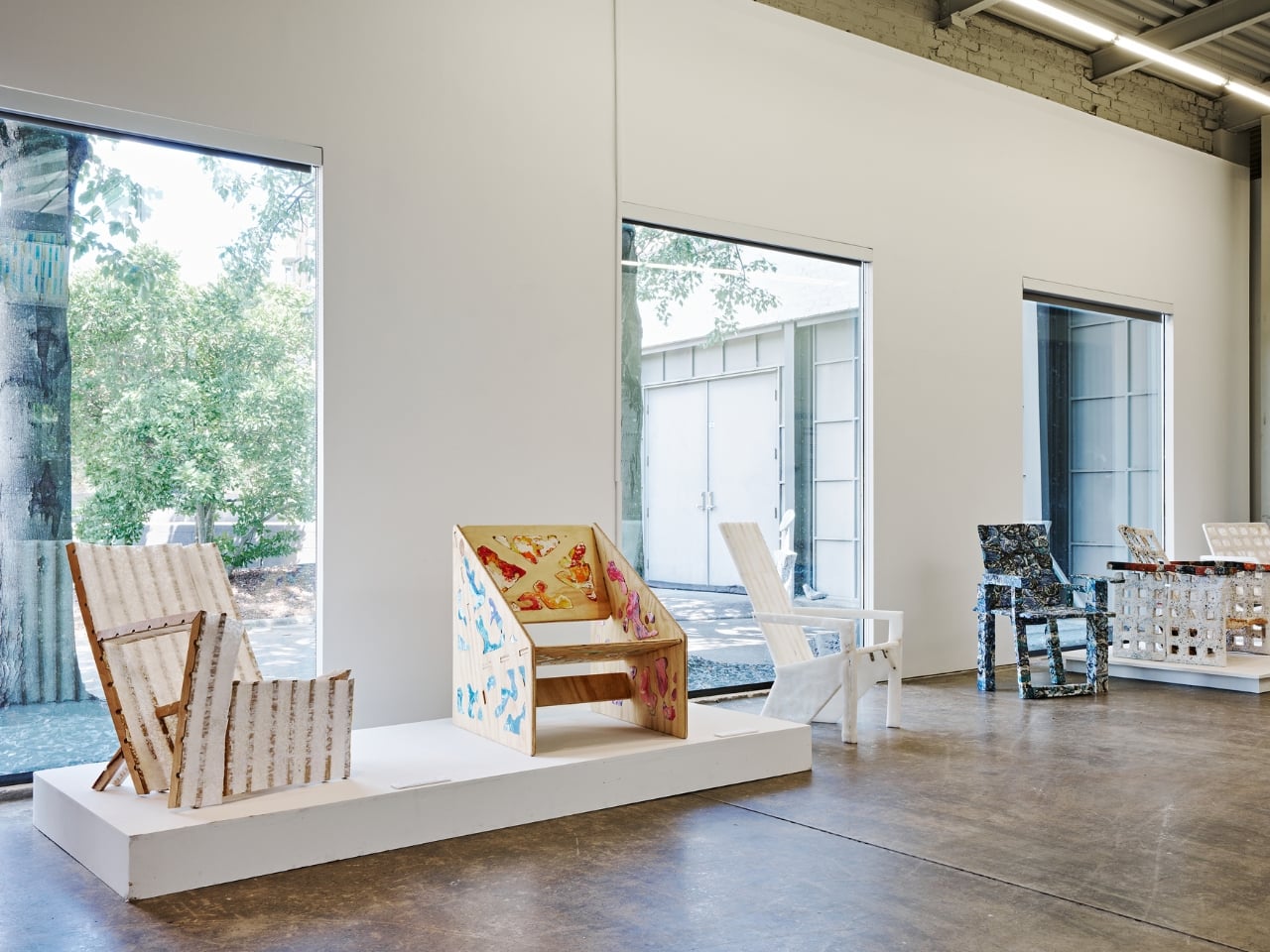
The project started modestly enough. It was first exhibited at Atlanta Contemporary from June to September 2025, where a series of Adirondack chairs and collective seating elements were presented as both design artifacts and material propositions. But then it went public in a bigger way. During SITE 2025 at the Goat Farm Arts Center, the chairs were installed across the 12-acre property during a one-night arts festival and encountered by over 4,000 visitors who could actually sit on them, touch them, use them in the wild.
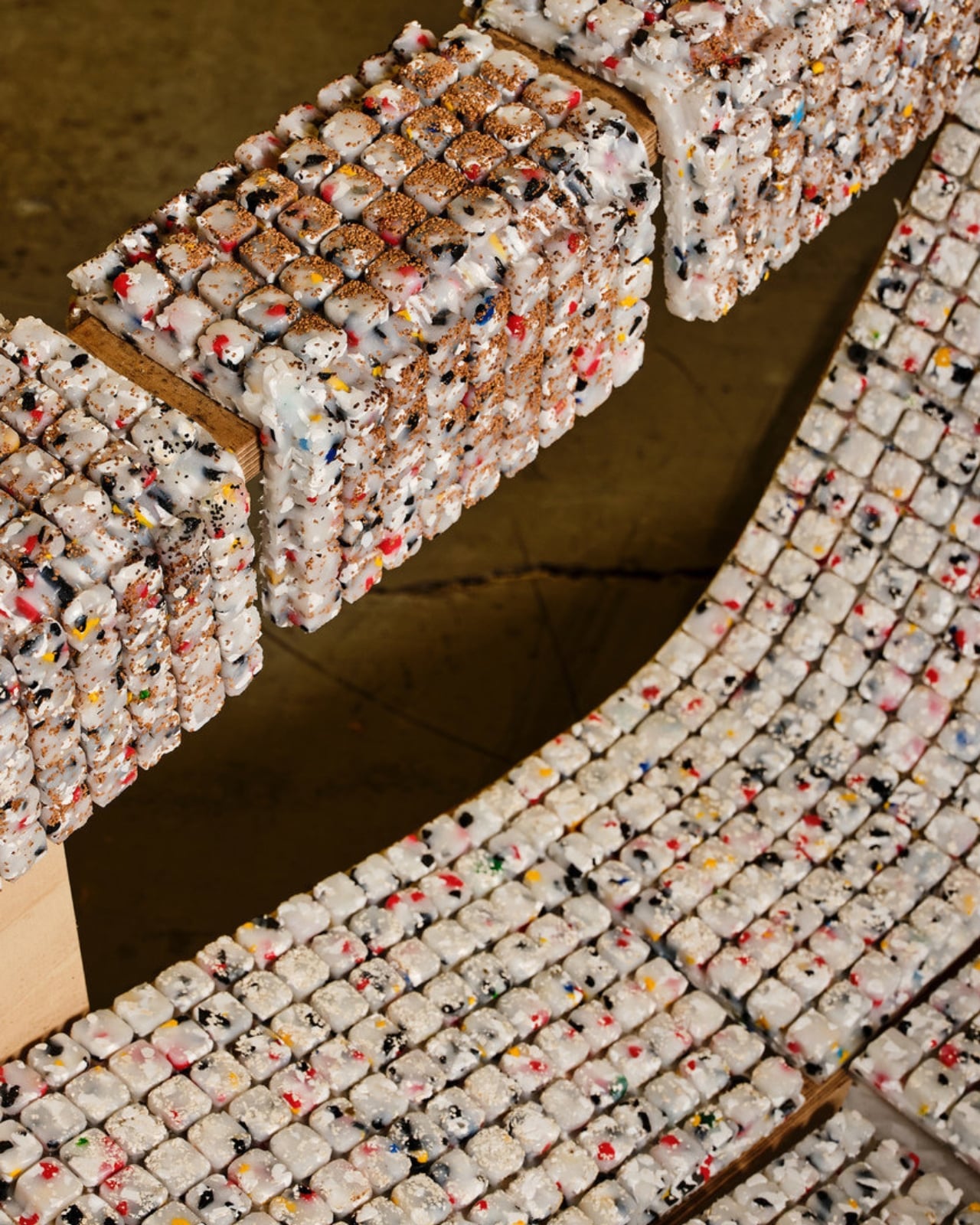
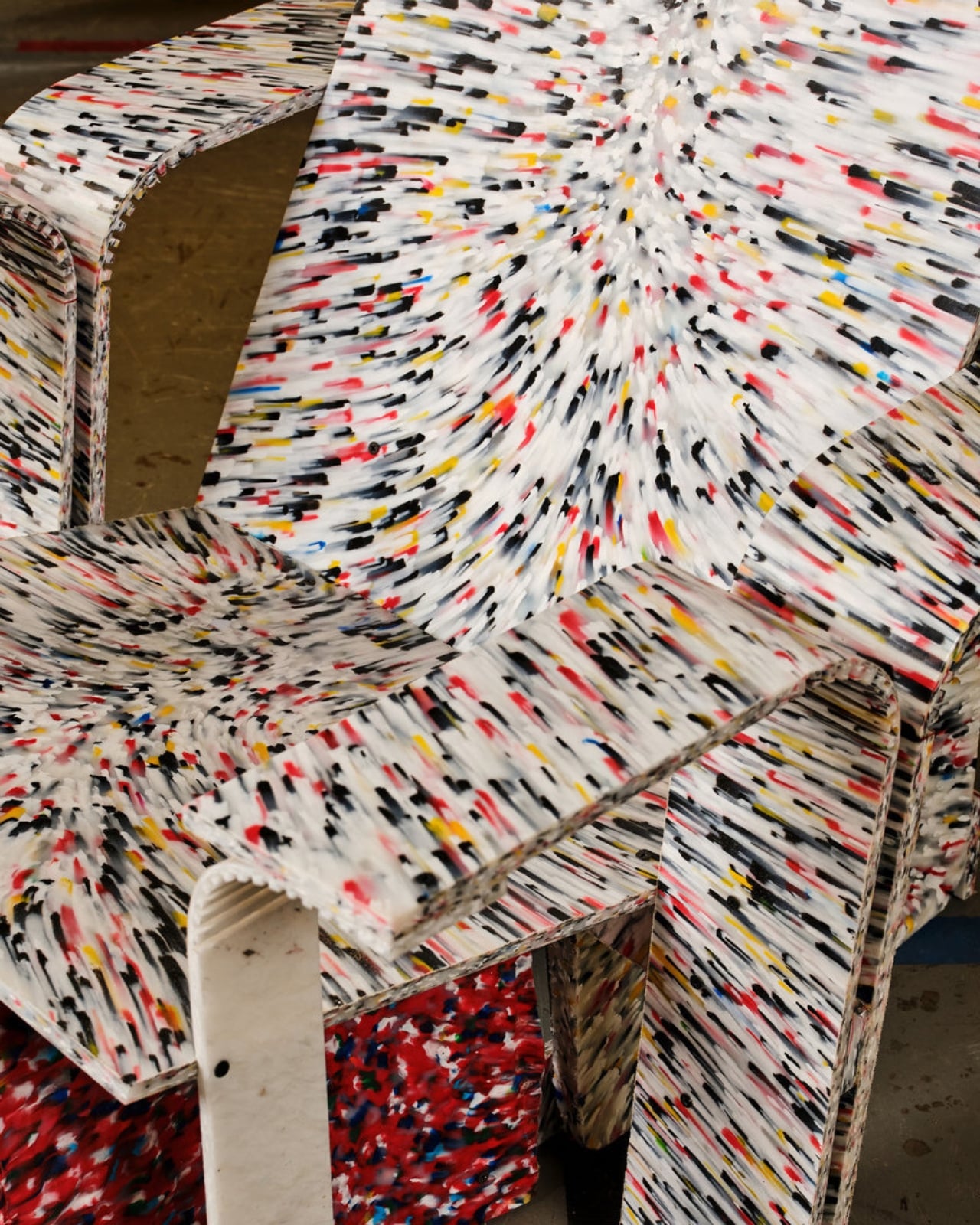
Now comes the really exciting part. Plastic Reimagined transitioned into a long-term civic setting as part of TRANSPORT | Transform | TRANSCEND, a year-long exhibition partnership between Georgia Tech Arts and Hartsfield-Jackson Atlanta International Airport, installed in Terminal T and on view through November 2026. That means millions of travelers from around the world will see these chairs, and maybe pause long enough to wonder about their own relationship with plastic waste.
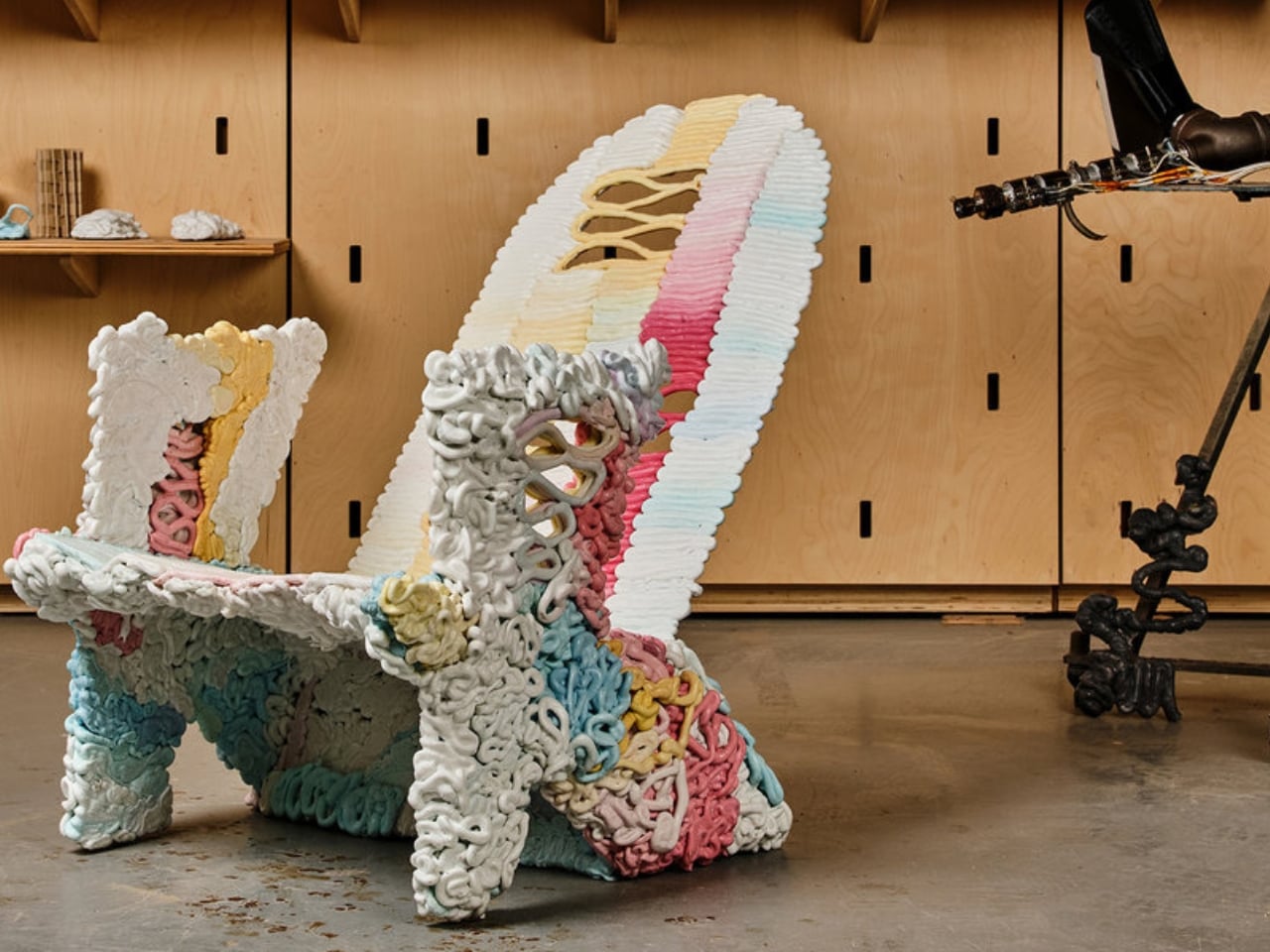
As Kwon noted, “These post-consumer materials were coming from our campus, our students’ everyday life. By repurposing them, we created meaningful research outcomes.” There’s something deeply satisfying about that circularity. The students created the waste, then figured out how to give it a second life as functional furniture that other people can actually use.
The individual pieces have names and personalities. There’s Vincent, with its hand-shaped forms and marbled surfaces. There’s Modu-Chair, built from cubic modules that echo quilting patterns. And Framework, a translucent lattice structure that reimagines what an Adirondack chair can even be. Each one asks the same question in a different way: what if we stopped seeing plastic as garbage and started seeing it as potential?
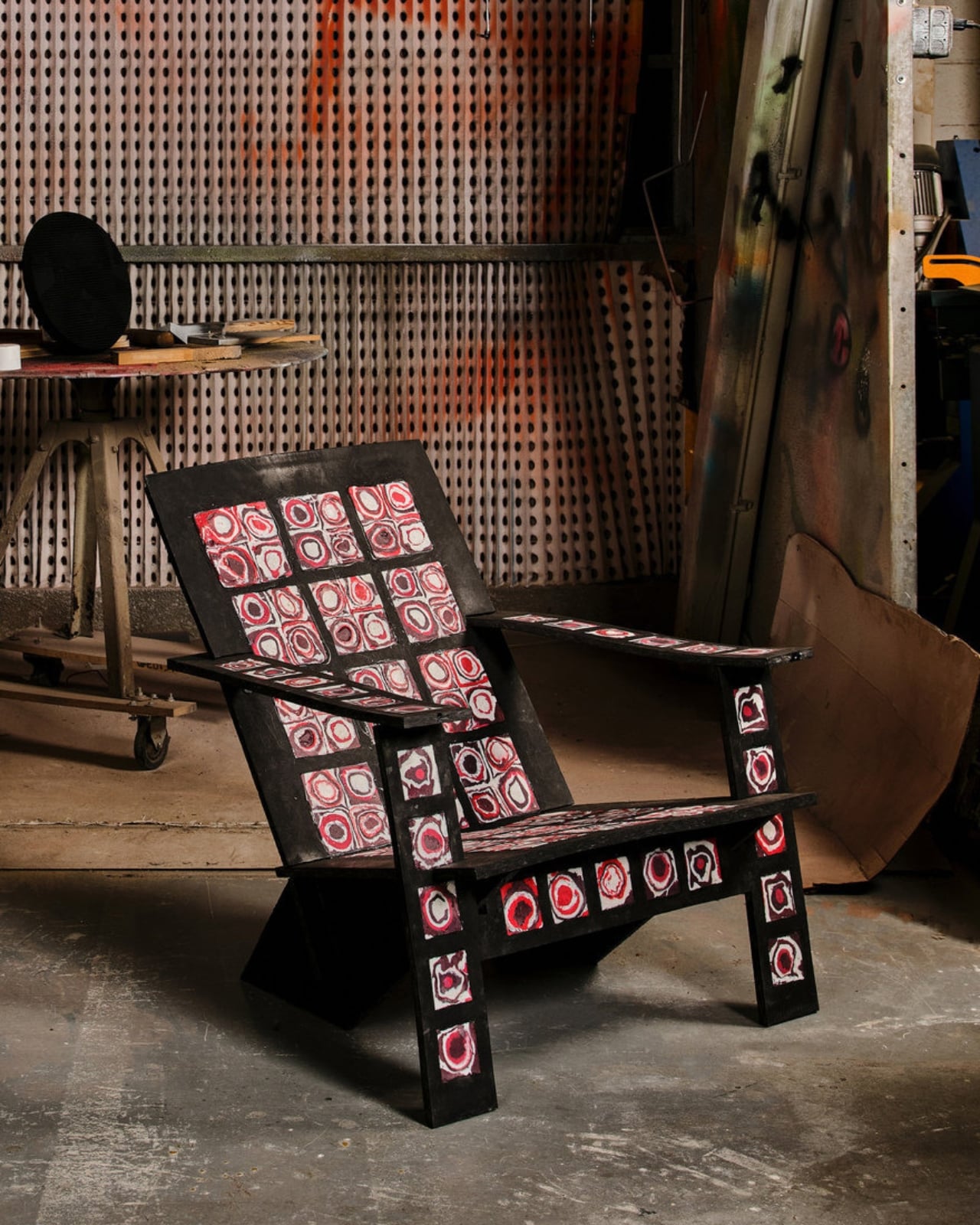
Across its transitions from gallery to festival to global transit hub, Plastic Reimagined argues for sustainability as infrastructural literacy rather than aesthetic signaling. This isn’t performative environmentalism. It’s practical, tangible, and sitting right there in the airport terminal where anyone can plop down and rest their feet.
This project proves something I’ve always believed: the best design solutions come from constraints, not abundance. When you have to work with what’s already there, you get creative in ways you never would with unlimited resources. These Georgia Tech students turned their campus waste stream into a civic contribution, and now their work is literally supporting weary travelers at one of the planet’s busiest crossroads.