Lamp switches don’t get much design attention. They’re usually a small toggle on the cord, a push button under the shade, or a touch-sensitive strip on the base that’s easy to miss in the dark. They get the job done, but they’re rarely treated as a meaningful part of the object. It’s one of those details that most lamp designers seem perfectly happy to leave to the supplier catalog.
The Strata lamp takes a different position on both counts. It’s a handmade steel table lamp that earns its name from geological rock formations, those compressed, layered bands of sedimentary stone that build up over time into something structurally dense and visually striking. The lamp translates that geological idea directly into stacked steel panels, and pairs it with a switching mechanism that makes turning a lamp on feel unexpectedly deliberate.
Designer: Aleksandr Misiukevich
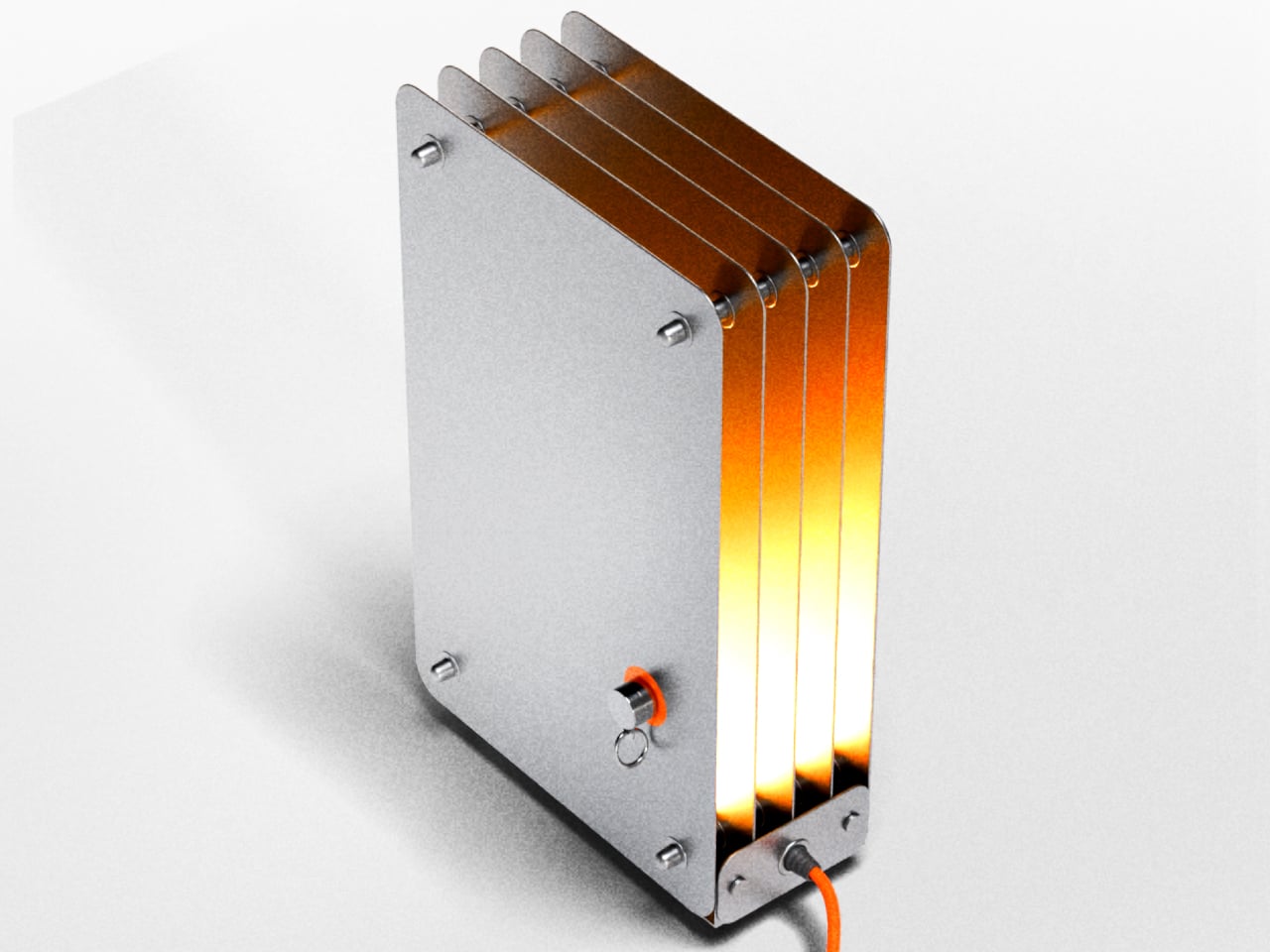
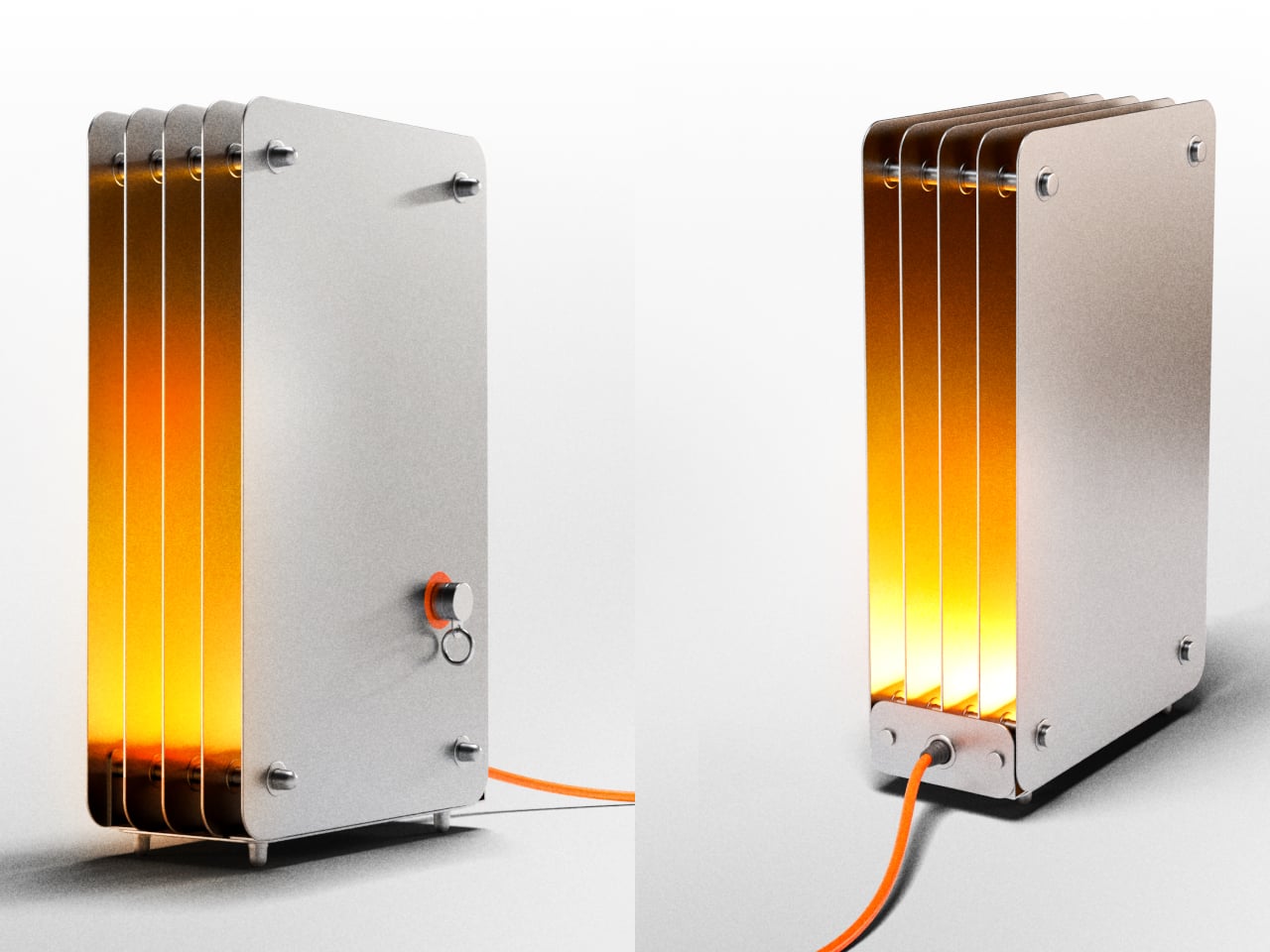
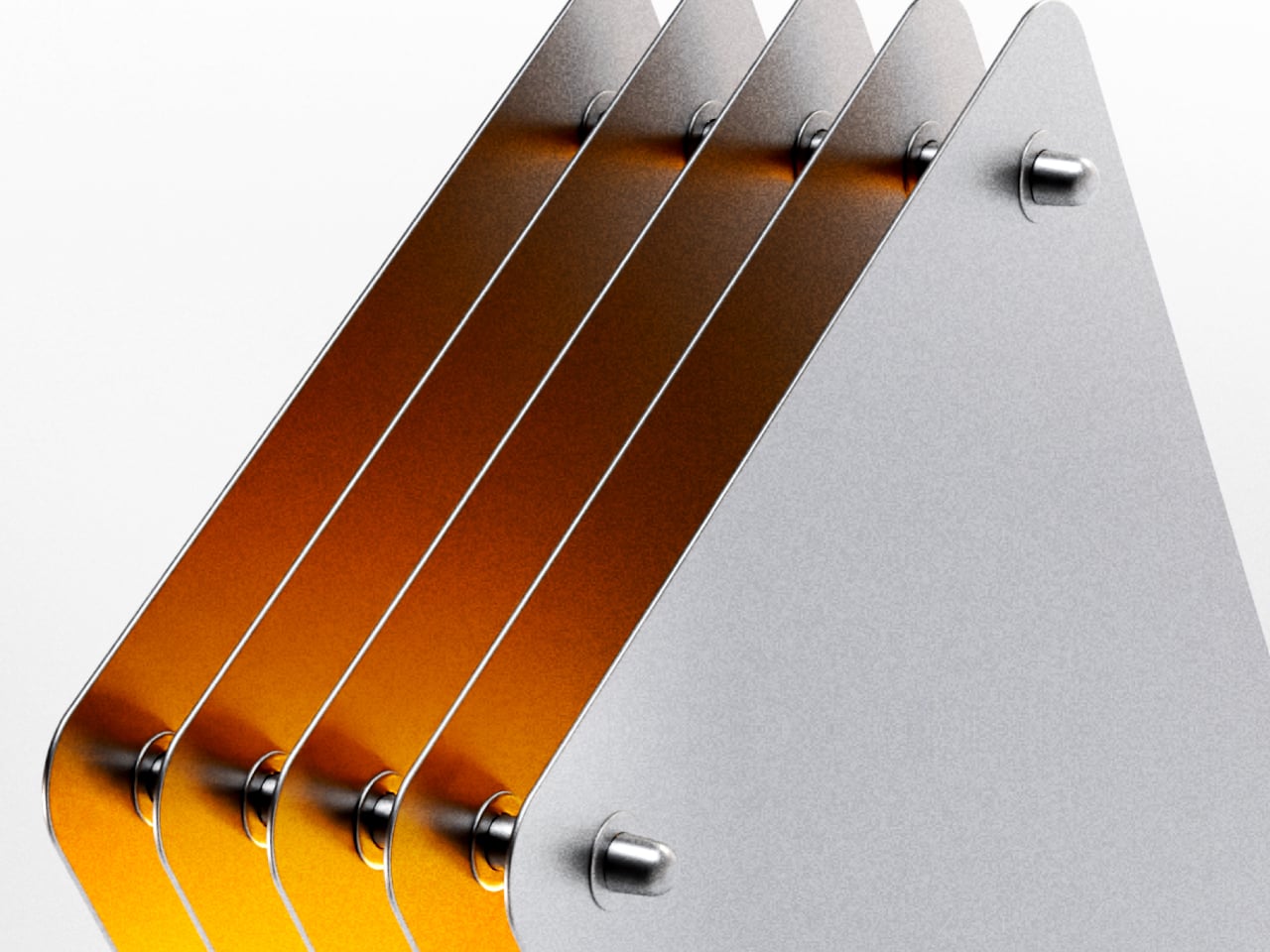
The body is built from individual steel plates with rounded rectangular corners, held in parallel by cylindrical steel standoffs at each corner and center. When lit, warm amber light radiates from the gaps between every plate and from the open front edge, creating a layered glow that shifts from deep orange near the top of the lamp to a brighter, more diffused yellow further along each inner steel surface.
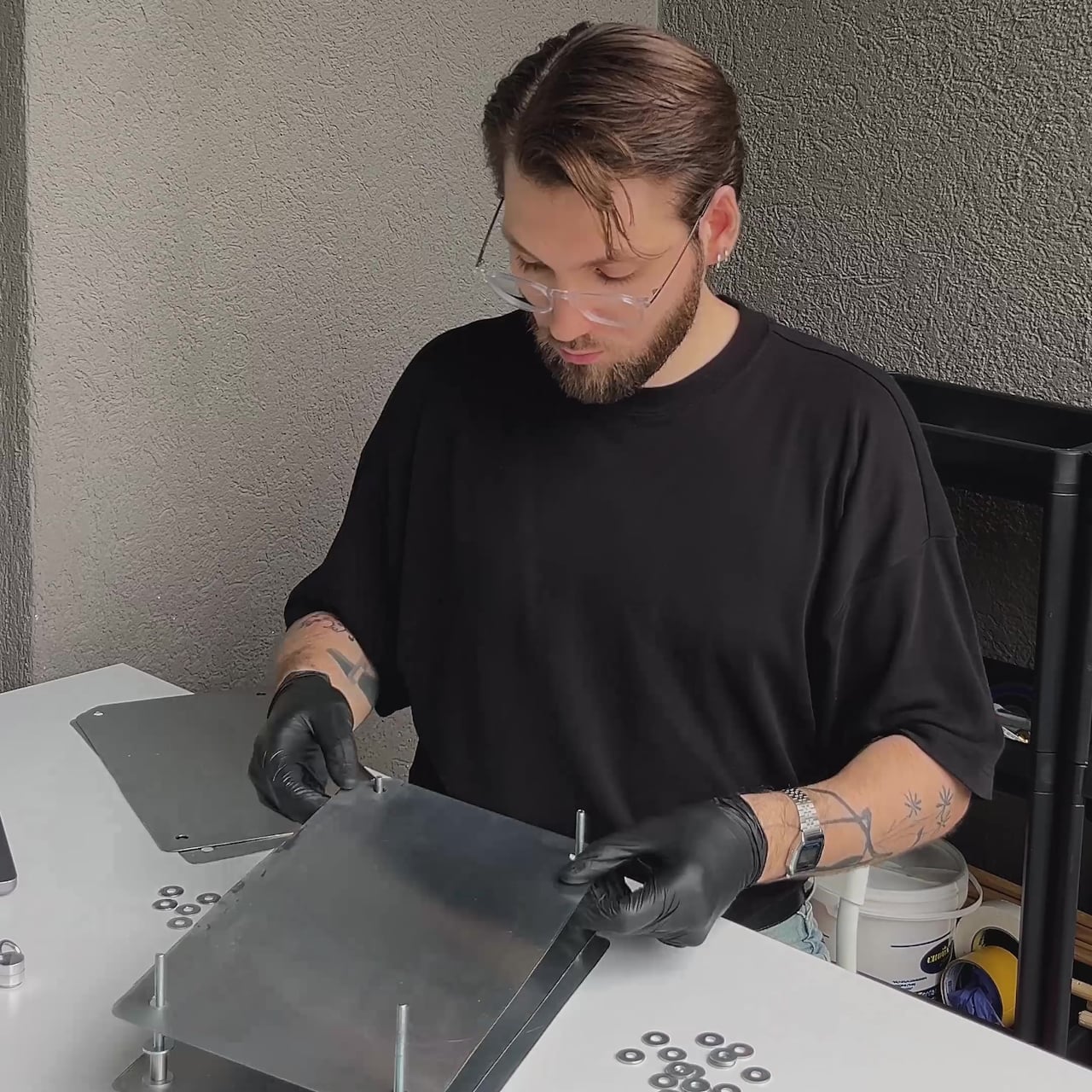
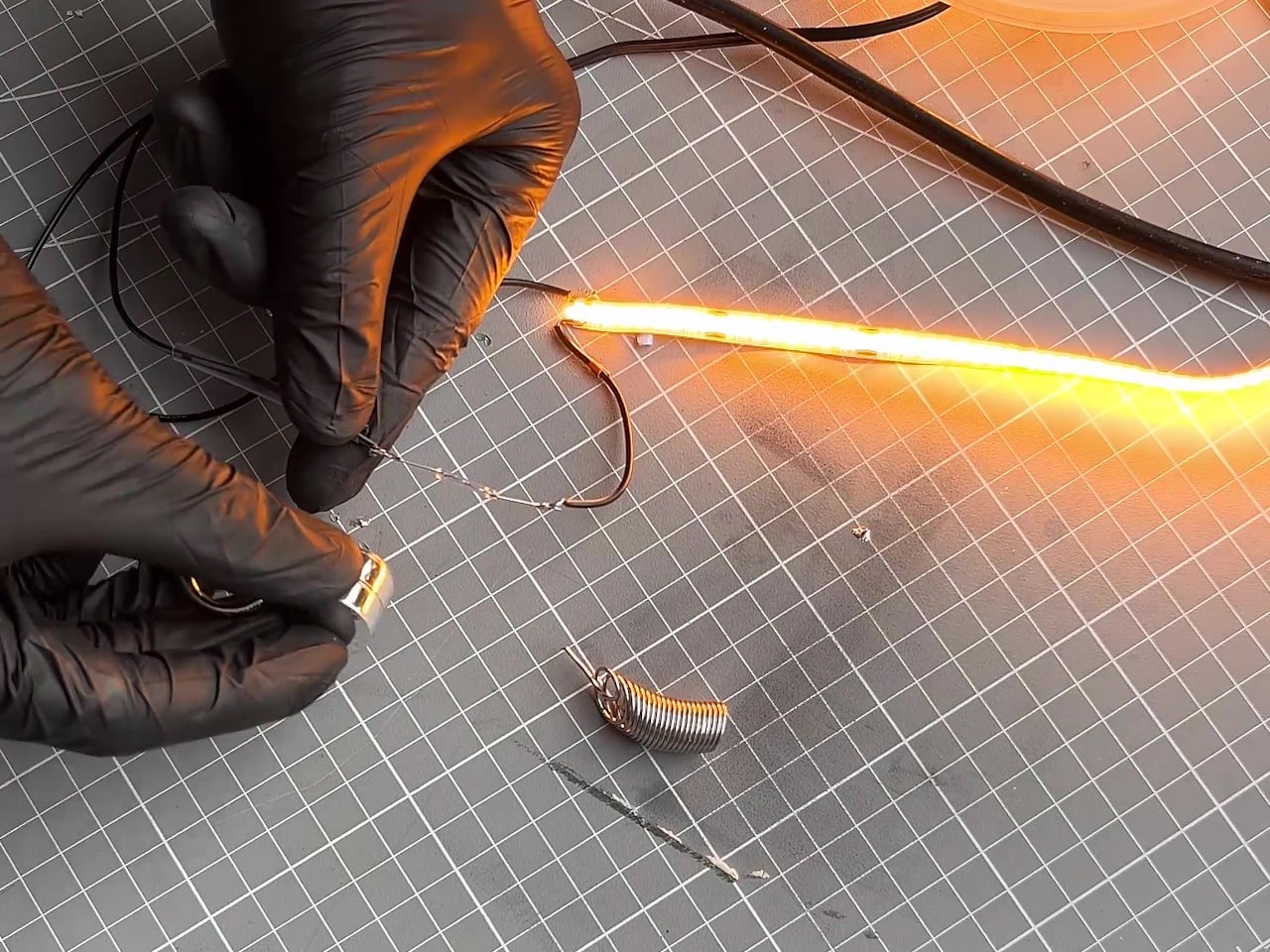
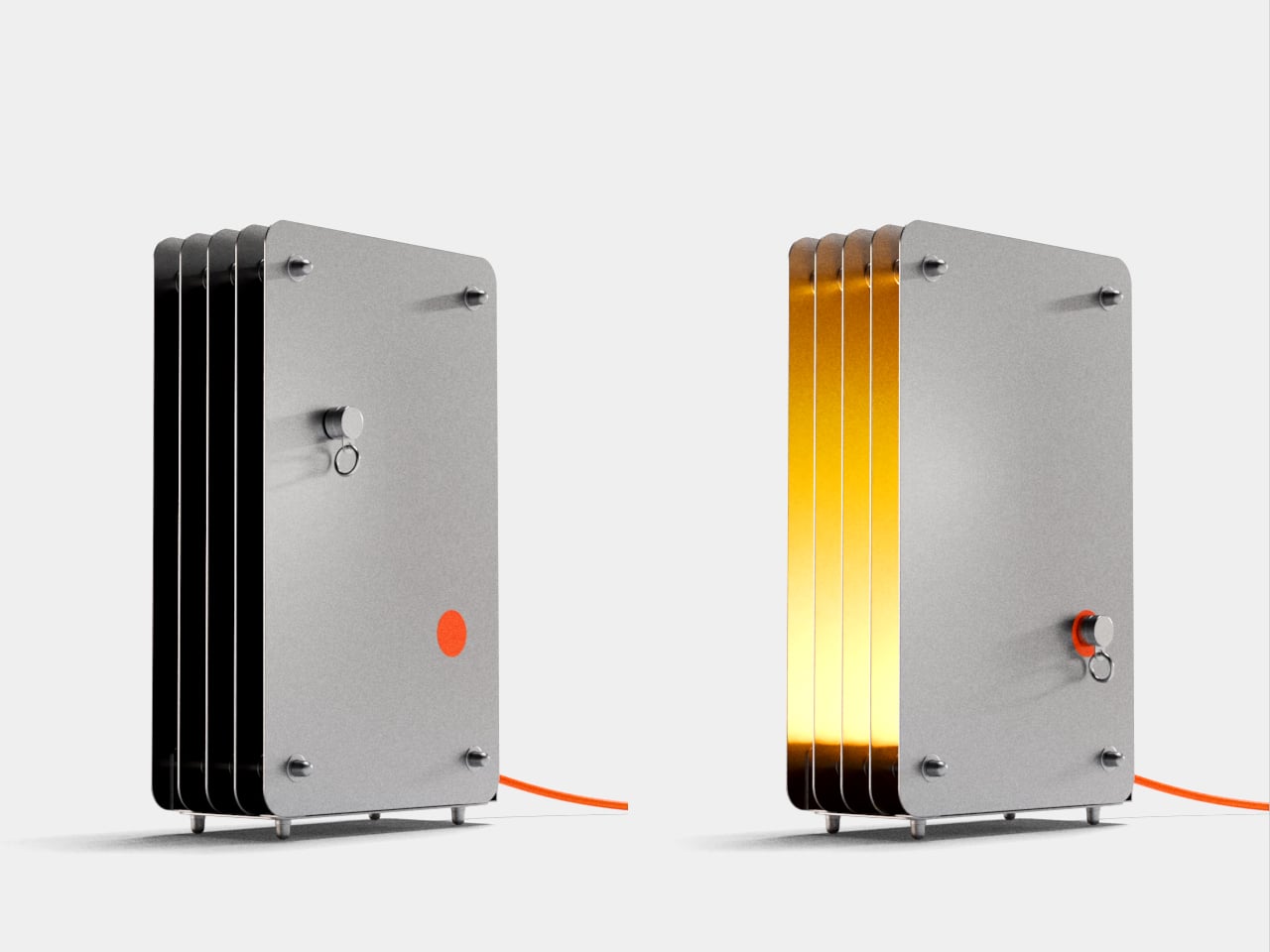
The switch is a magnetic reed switch, one of the simpler components you can put inside a lamp. A small cylindrical magnet, tethered to the body by a metal ring, acts as the key. Set it on the orange circle marked on the front panel, and the lamp turns on. Lift it away, and it turns off. The magnet parks on a small post when it’s not in use.
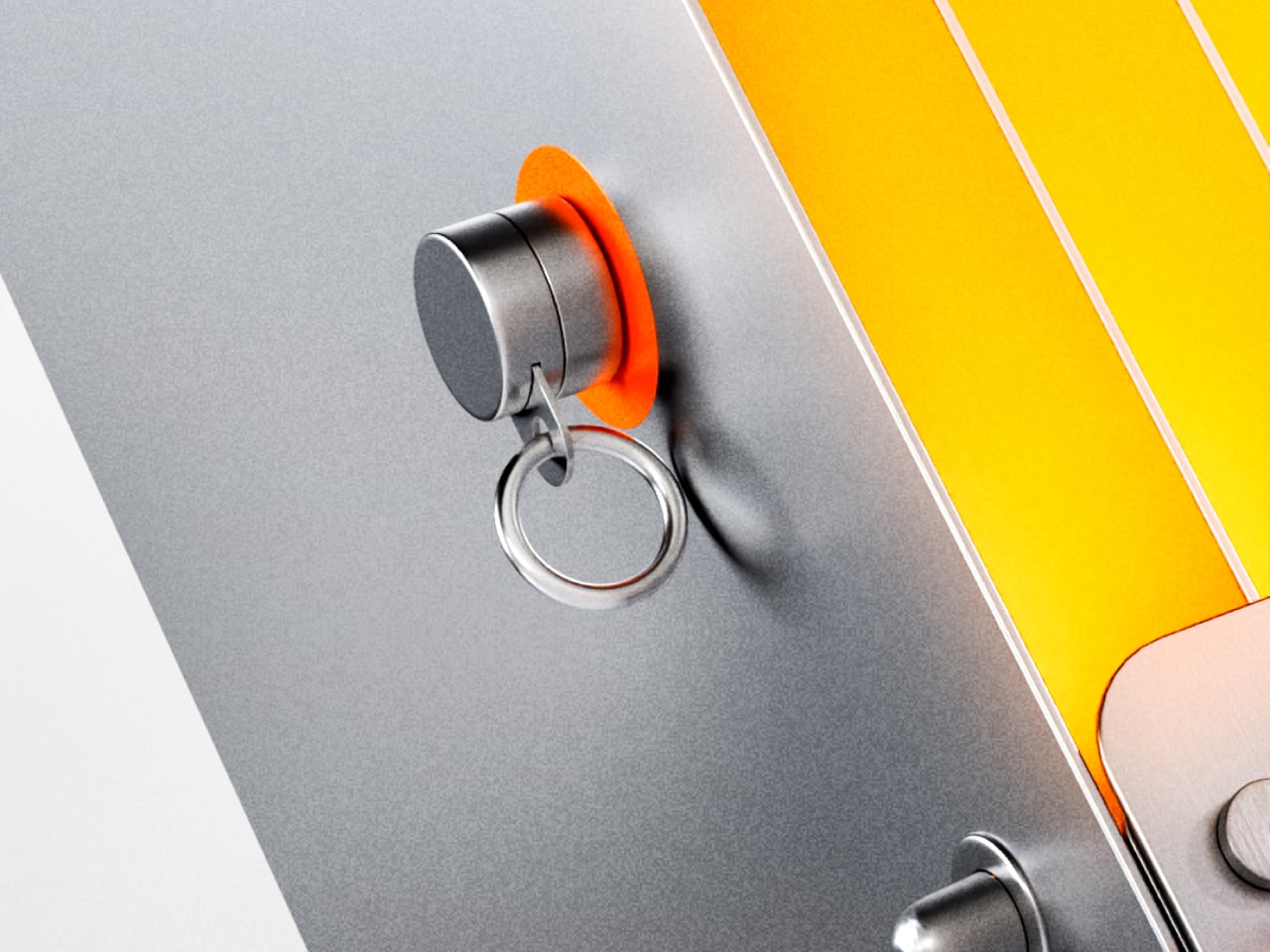
That interaction is a harder thing to design well than it sounds. Reed switches are decades-old technology, and the magnet-on, magnet-off logic is genuinely simple. But the way it’s set up here gives the action more weight than it would otherwise have. You’re not flipping a switch. You’re placing something intentionally, and removing it just as deliberately. It’s the kind of small habit that starts to feel like a routine.
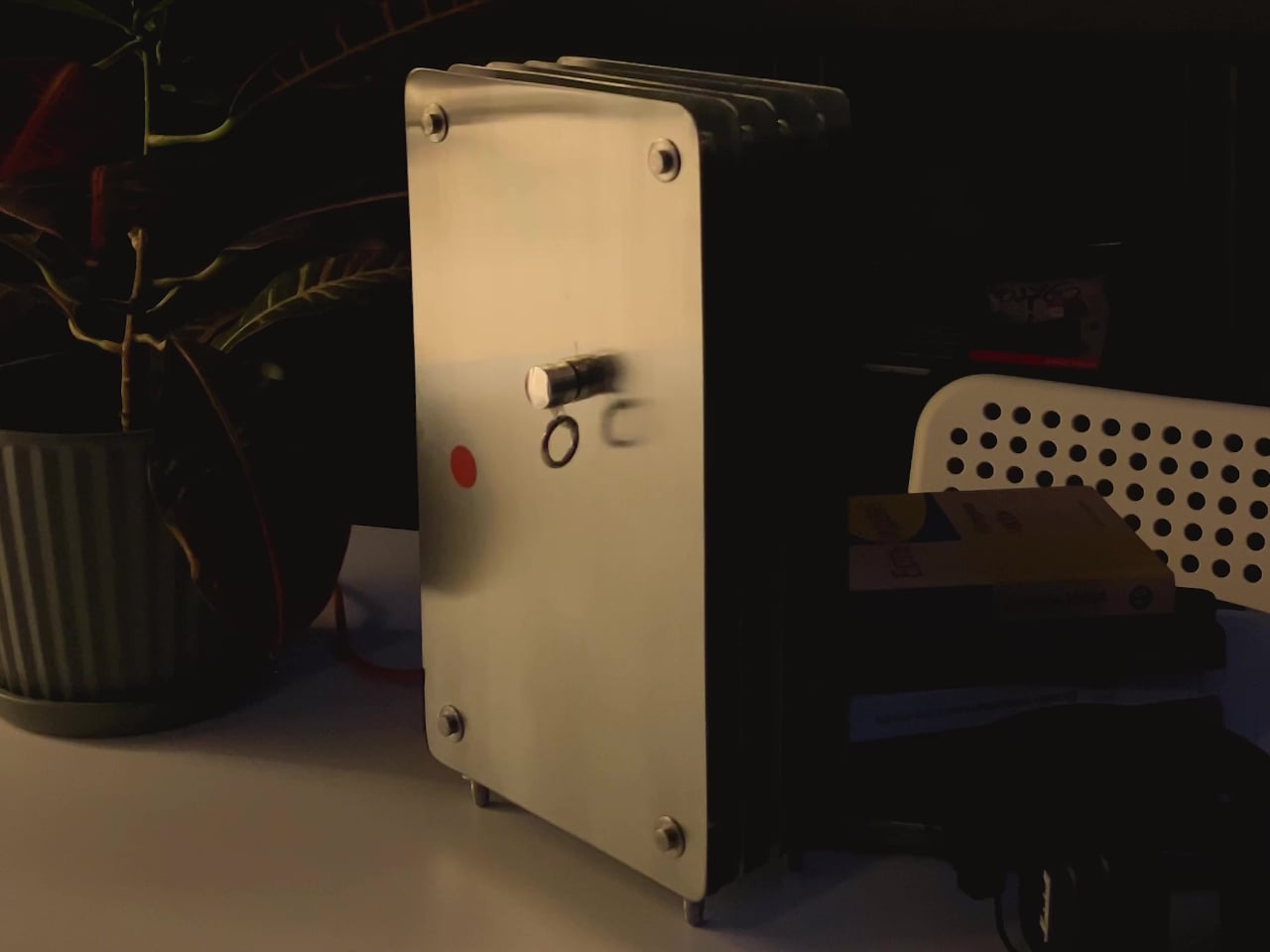
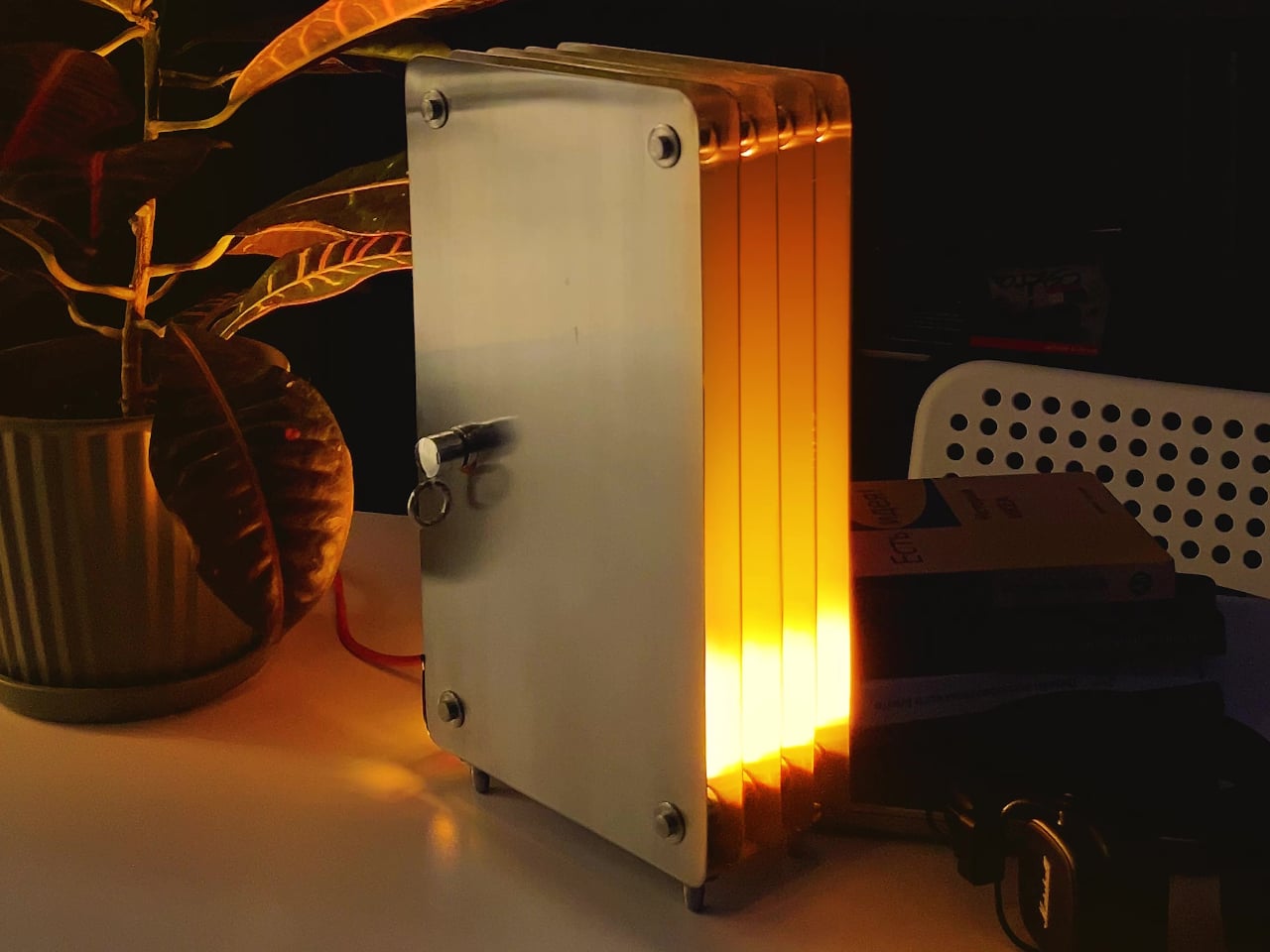
The rest of the construction follows the same thinking. The steel plates, the standoff hardware, and the small feet that lift the base all stay visible rather than concealed, and an orange power cord exits from the bottom without apology. That cord color, matched to the activation circle on the panel, is the one deliberate accent in an otherwise entirely industrial material palette of matte gray and polished steel.
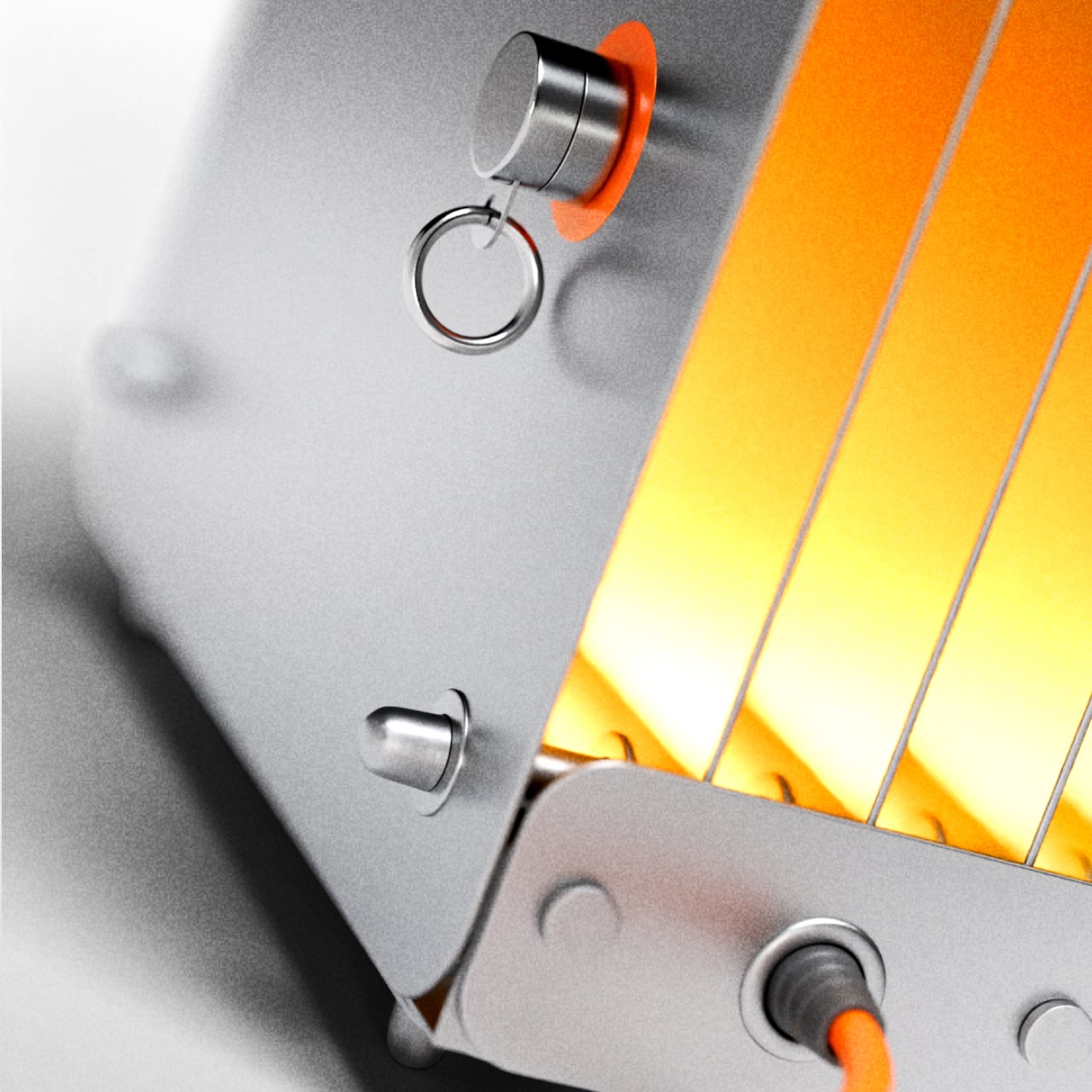
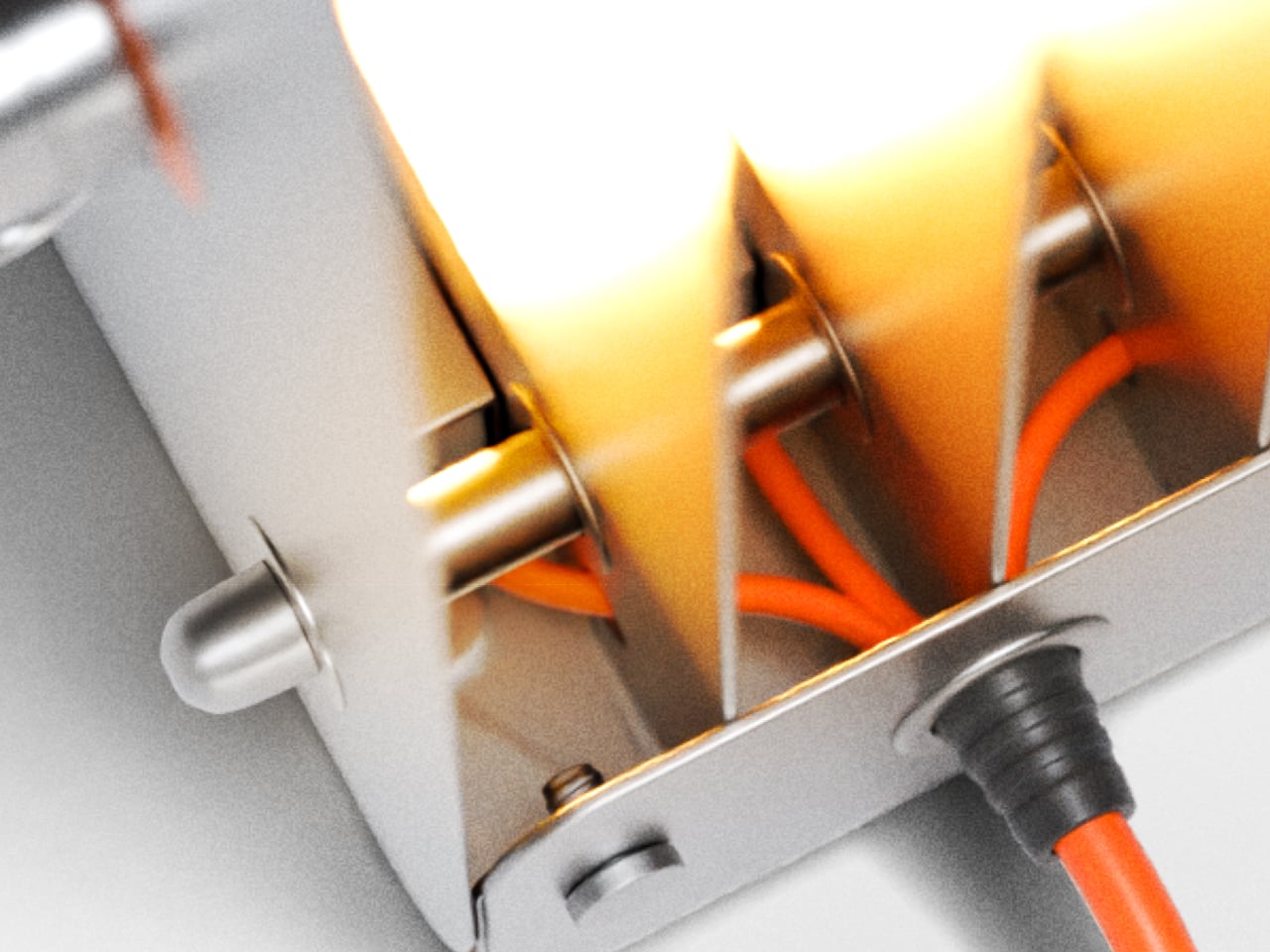
Strata was built by hand, and that’s evident in the quality of each component rather than any sense of roughness. The plates are cut cleanly, the standoffs are consistent, and the glow that fills the gaps between the sheets has a warmth that a simple LED strip wouldn’t normally produce on its own. The steel acts as both housing and reflector, which is about as economical as structural decisions get.