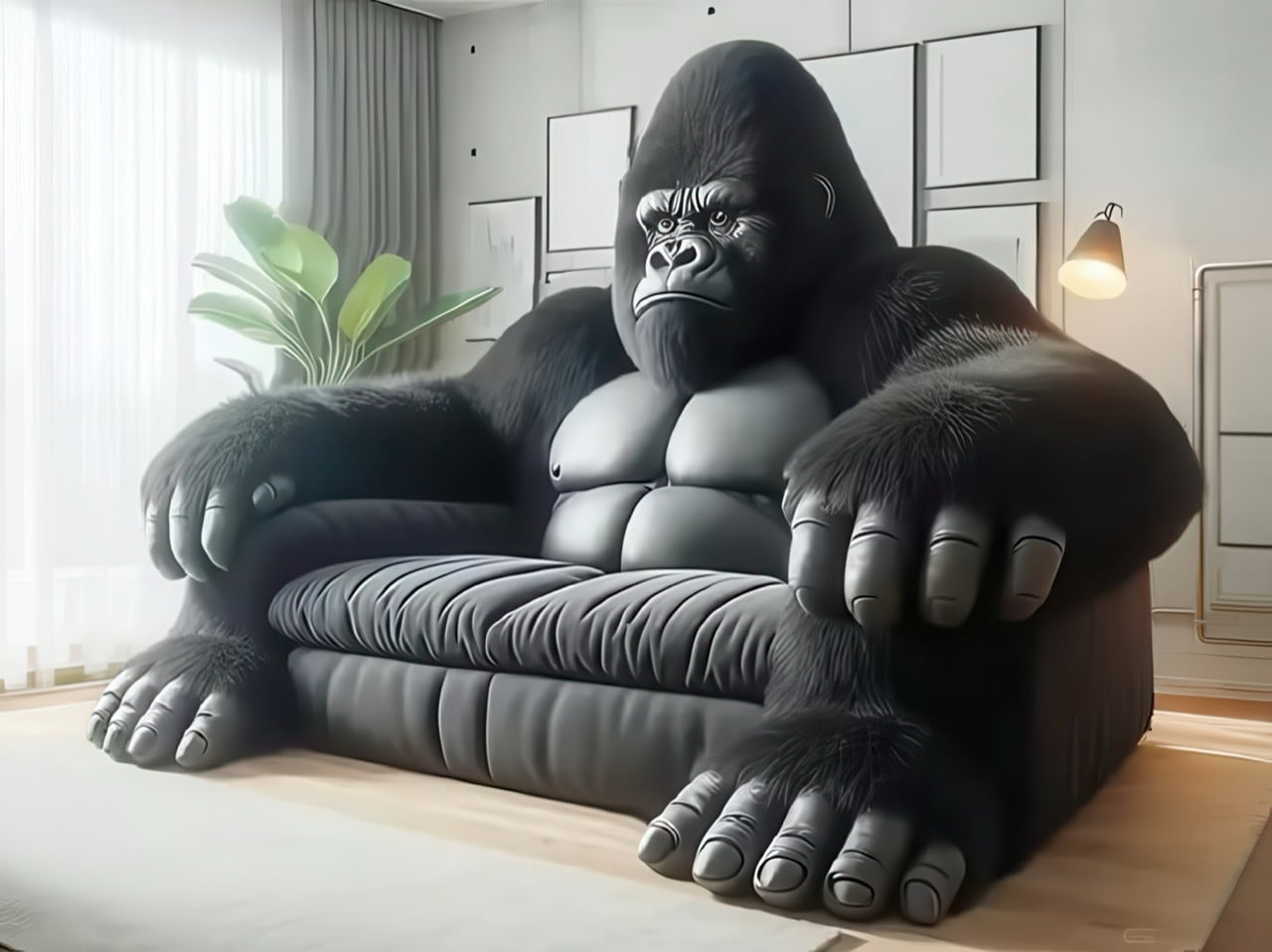
In April 2024, a design page called Inspiring Designs posted a few images of a gorilla-shaped couch. The gorilla’s arms curved into armrests. Its chest and stomach formed the back and seat cushion. On TikTok, the images passed 500,000 likes before most people had fully processed what they were looking at. Comment sections filled up immediately with a single question: where do I buy one? A furniture manufacturer in China saw the numbers and went to work. Molds were made, foam was cut, fabric was stretched over frames. The couch became real.
Real, and deeply underwhelming. The physical versions that reached buyers were less detailed, less textured, less everything. The quality left much to be desired, as reviewers put it diplomatically. The couch that existed in photographs had been generated by a machine that had never heard of manufacturing constraints, and no factory floor could close that gap. Back on eBay and TikTok, merchants began listing the couches anyway, using only the original AI images, because the AI images were what people actually wanted. The physical object was almost beside the point.
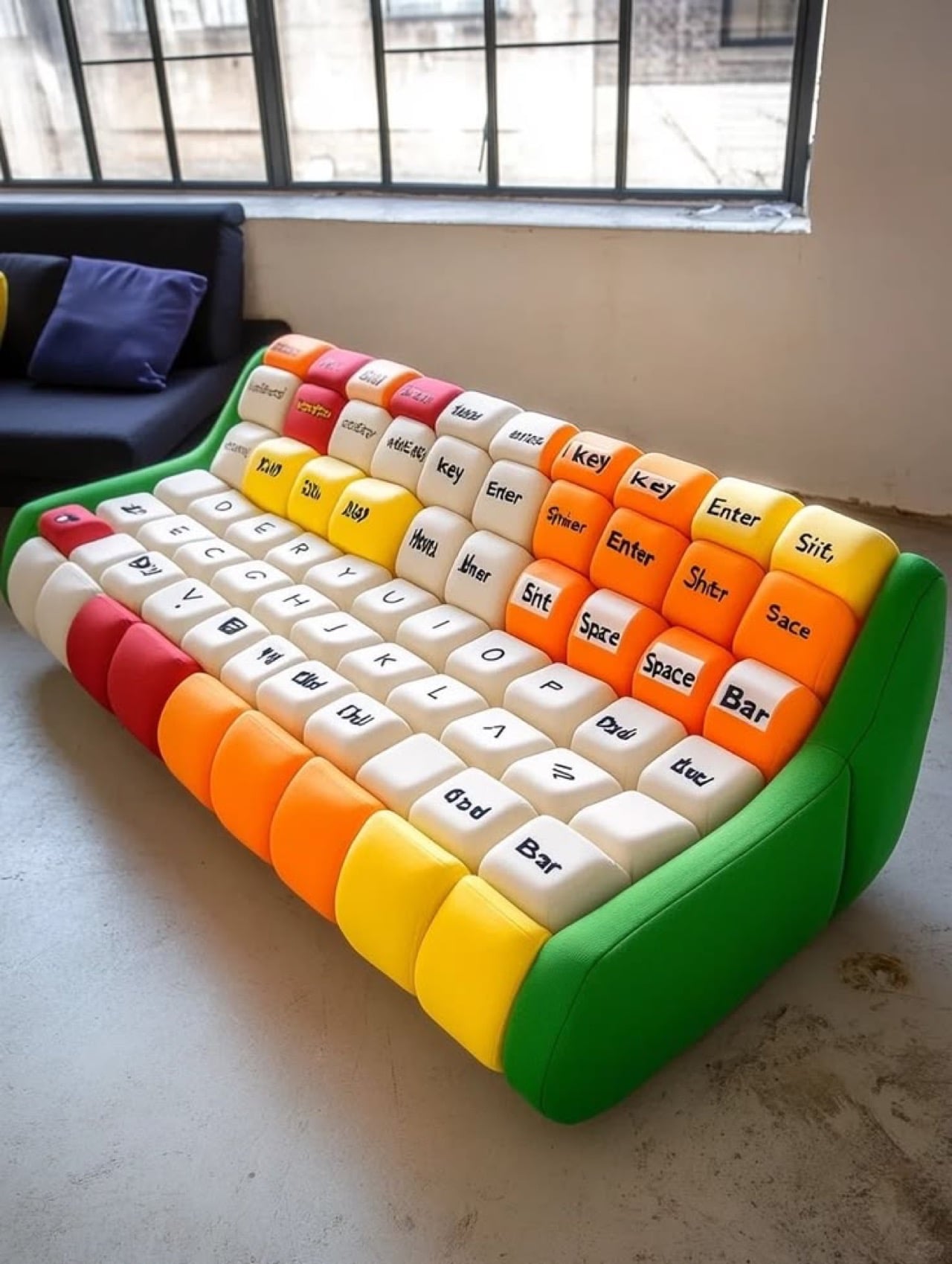
What happened with the gorilla sofa was easy to frame as a novelty at the time. A funny edge case, a quirky viral moment, the kind of thing that design blogs screenshot and move on from. But the same dynamic was already baking into the standard commercial transaction at enormous scale. Temu, which now serves more than 416 million monthly active users worldwide, up from roughly 167 million in early 2024, has become the central arena for what shoppers openly call “AI slop.” The phrase is blunt and accurate: a listing image that looks generated rather than photographed, presenting a product with a visual finish that the manufactured version will never have. Security guides and consumer watchdog sites now list “looks AI-generated” as a standard red flag alongside mismatched fonts and suspiciously round prices. Deepfake detection firm Pindrop estimates that three in ten retail fraud attempts today are AI-generated. The gorilla sofa was a novelty. AI slop is infrastructure.
Food delivery brought the problem somewhere more visceral. In February 2024, a 404 Media investigation found dozens of ghost kitchens, delivery-only restaurant brands operating out of unmarked shared commercial spaces, promoting food on DoorDash and Grubhub with AI-generated images that bore little resemblance to anything a cook could plate. Some of the images were technically impossible. Chopsticks passed through the bowl rather than resting on it. Broth caught light in ways that liquid does not. A bowl of ramen could look sculpted, with chashu pork fanned into perfect petals over eggs with custard-gold yolks, because no one had actually cooked it. The photograph was the product, made in software, and the delivery was an afterthought.
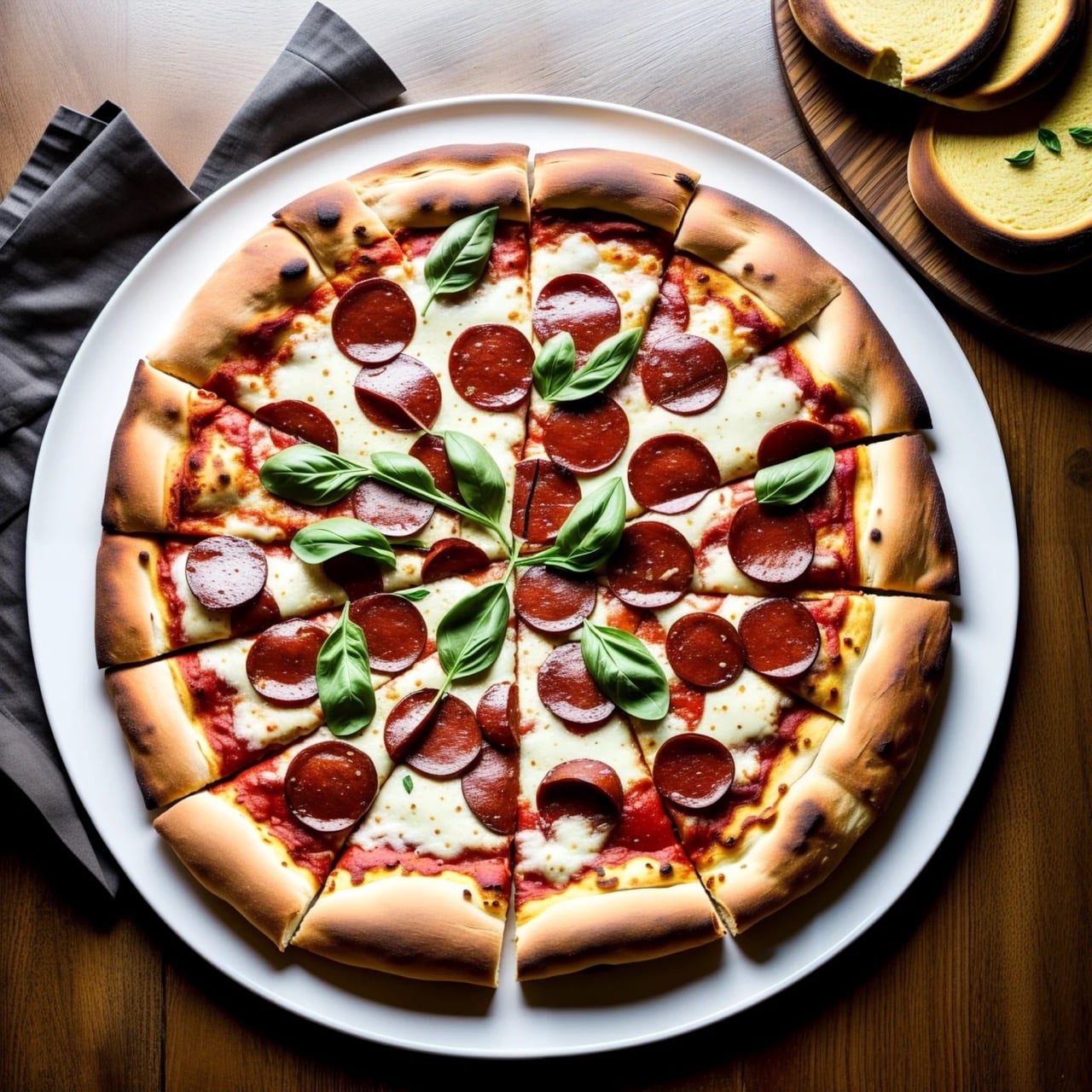
The platforms have since tried to draw a line. DoorDash launched AI photo tools in April 2025 designed to improve lighting, framing, and plating appearance without altering the food itself. Uber Eats asked contributors to avoid submitting AI-generated or heavily edited images. Enhancement of a real dish, the logic goes, sits in a different category from full fabrication. That line is technically coherent and practically very difficult to police.
Then the tools changed hands. Customers discovered that the same AI and image-editing capabilities available to ghost kitchen operators were available to them too. A documented trend emerging by January 2026 showed shoppers using Photoshop and generative tools to fake evidence of undercooked or contaminated food and claim refunds. One edited image of a chicken leg, altered to look raw, secured a $26.60 refund. In December 2025, DoorDash permanently banned a driver for submitting an AI-generated photo as proof of delivery for a package that never arrived. The image had been the seller’s weapon, then the buyer’s weapon, then the courier’s weapon. At that point, a photo in a transaction proves nothing to anyone.
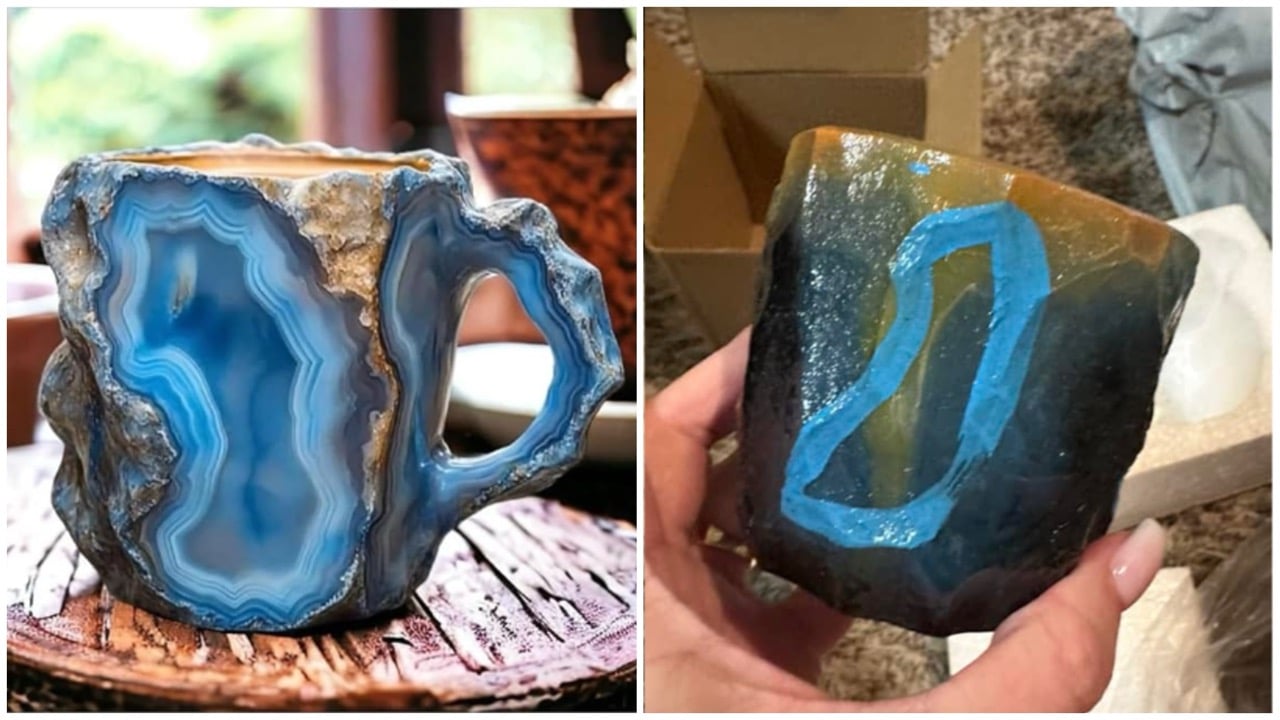
Rules arrived in early 2026, which is a sentence that sounds more decisive than the situation actually is. The FTC finalized guidelines around AI transparency in advertising, confirming that AI-generated product images that materially misrepresent a product’s appearance are deceptive under Section 5 of the FTC Act. A dedicated AI enforcement unit launched in January 2026, with maximum penalties for disclosure violations set at $53,088 per violation. The EU went further with Article 50 of the EU AI Act, requiring AI-generated or manipulated content to carry machine-readable disclosure markers when it would otherwise appear authentic.
The honest read on all of this is that the rules exist on paper and the enforcement is genuinely uncertain. In December 2025, the FTC reopened and set aside its own 2024 order against Rytr, an AI review-writing tool, concluding that the original complaint had not met the Commission’s own standard. The same body writing the new rules walked back one of its previous ones. Whether the $53,088 penalty figure functions as a deterrent or a line item depends entirely on how often it gets applied, and under current leadership, that appetite is openly contested.

By 2026, only 19% of consumers say they feel excited about AI, down from 50% two years earlier. Nearly 60% now doubt the authenticity of online content. More than half reduce their engagement the moment they suspect something is machine-generated, and 54% of Americans report what researchers are calling AI fatigue. Those numbers describe something that goes beyond a shopping inconvenience. The product image was, for a long time, a contract, a promise from seller to buyer that the thing in the photo and the thing in the box were the same thing. That contract has broken down, and the breakage runs in every direction. Sellers fabricate. Buyers manipulate. Couriers fake proof of delivery. The image, which the whole system of online commerce runs on, has become the least reliable part of the transaction.
The gorilla sofa was funny in 2024. It had the quality of a harmless glitch, a brief overlap between what AI could generate and what commerce could absorb. What it was actually marking was the beginning of a default posture: the assumption, now spreading across every platform that handles a product image, that the photo and the object have a negotiable relationship at best. Shopping has always involved some willingness to take a seller at their word. That willingness is running out.