
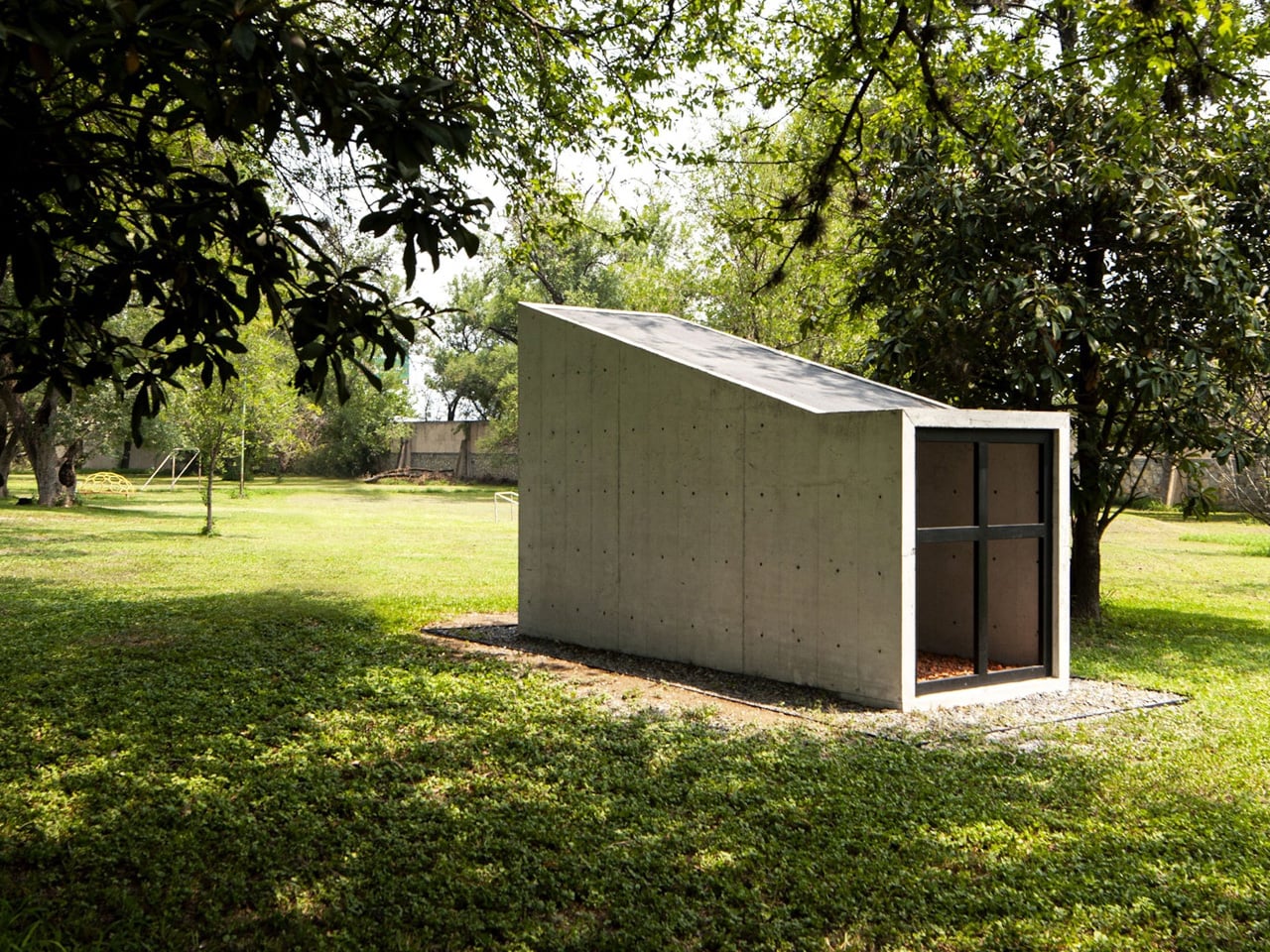
Most buildings erase what came before them. This one didn’t. That’s exactly what Mexican studio S-AR has achieved with its Oratory Chapel in Santiago, Nuevo León, a compact sacred space set within a sprawling garden that breathes new life into a demolished predecessor.
The project began with an act of demolition. A preexisting chapel on the same site was taken down, but rather than discarding its materials, S-AR retained them and worked them back into the new construction. The result is a structure that operates as a continuation rather than a replacement — the old chapel doesn’t disappear; it reassembles itself into something fresh, its fragments carrying forward a spatial and material dialogue between past and present.
Designer: S-AR
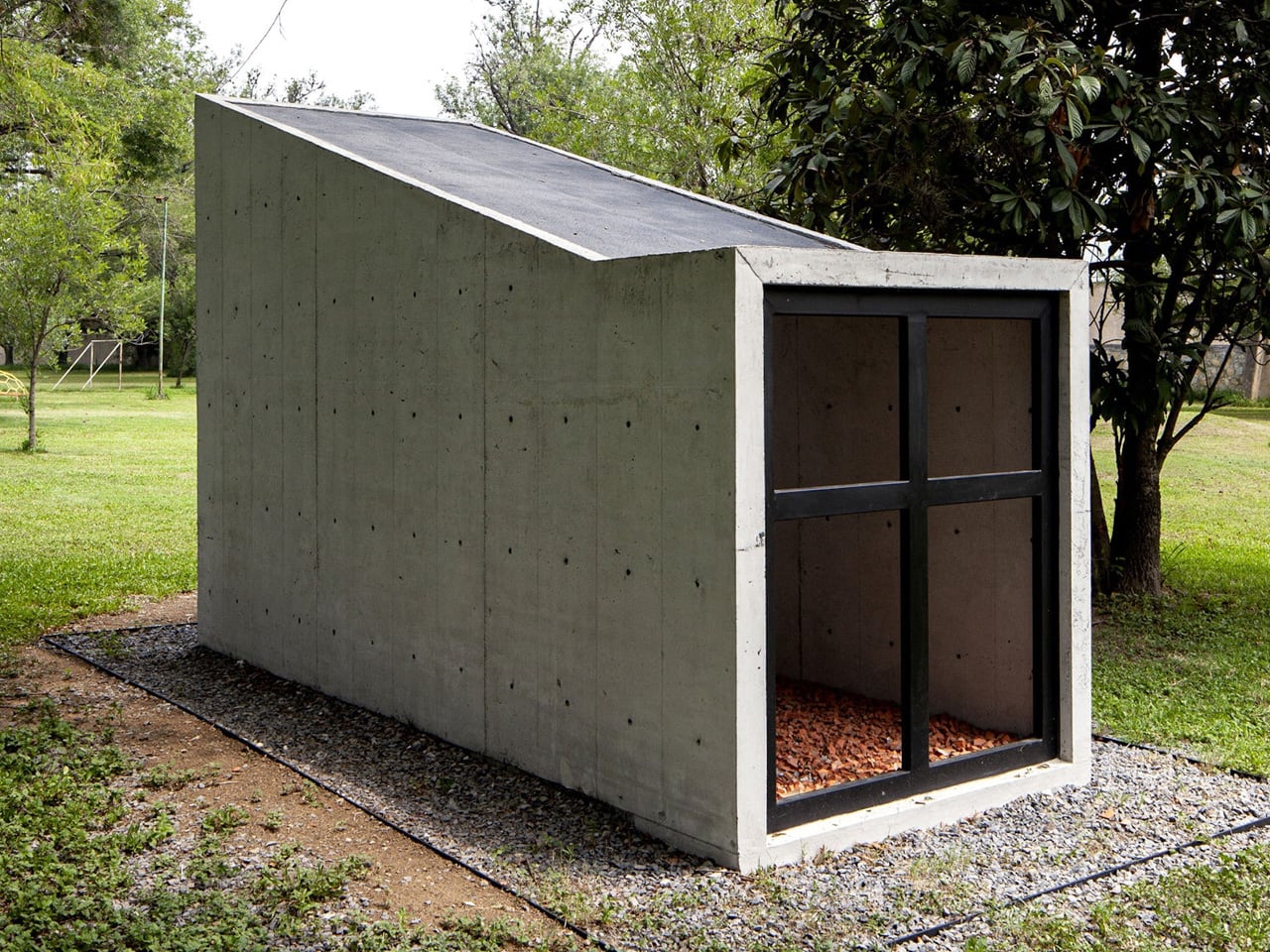
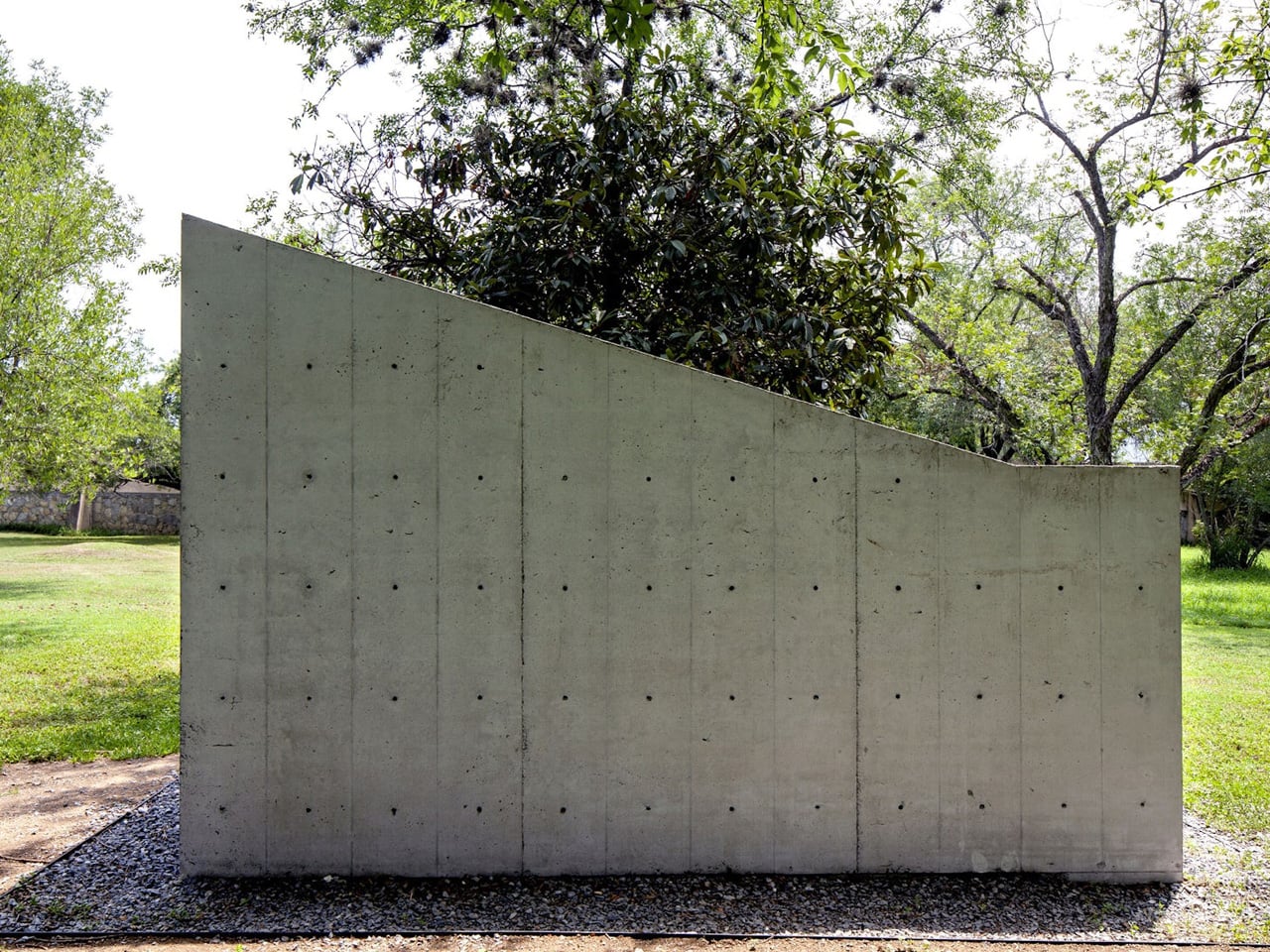
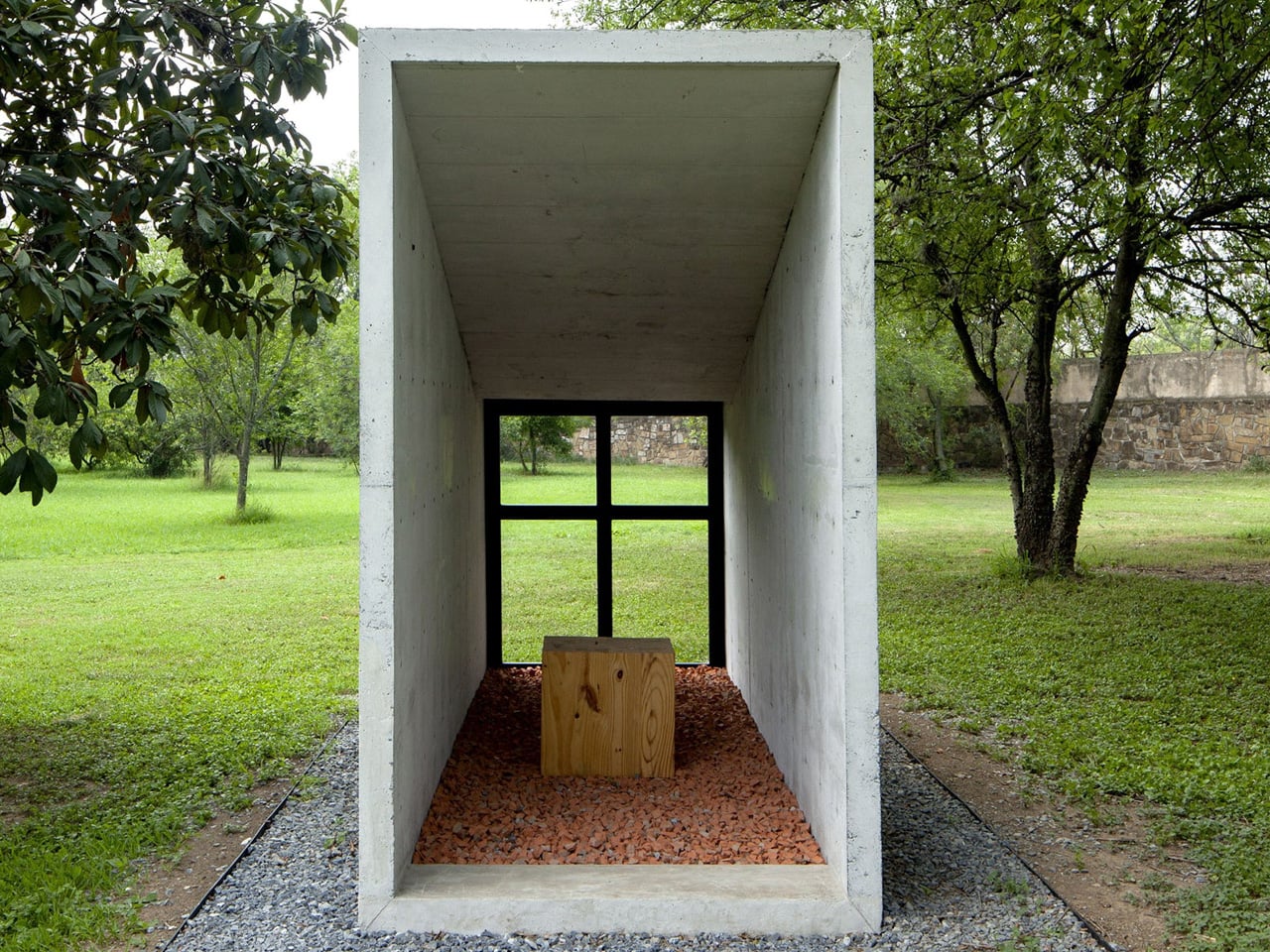
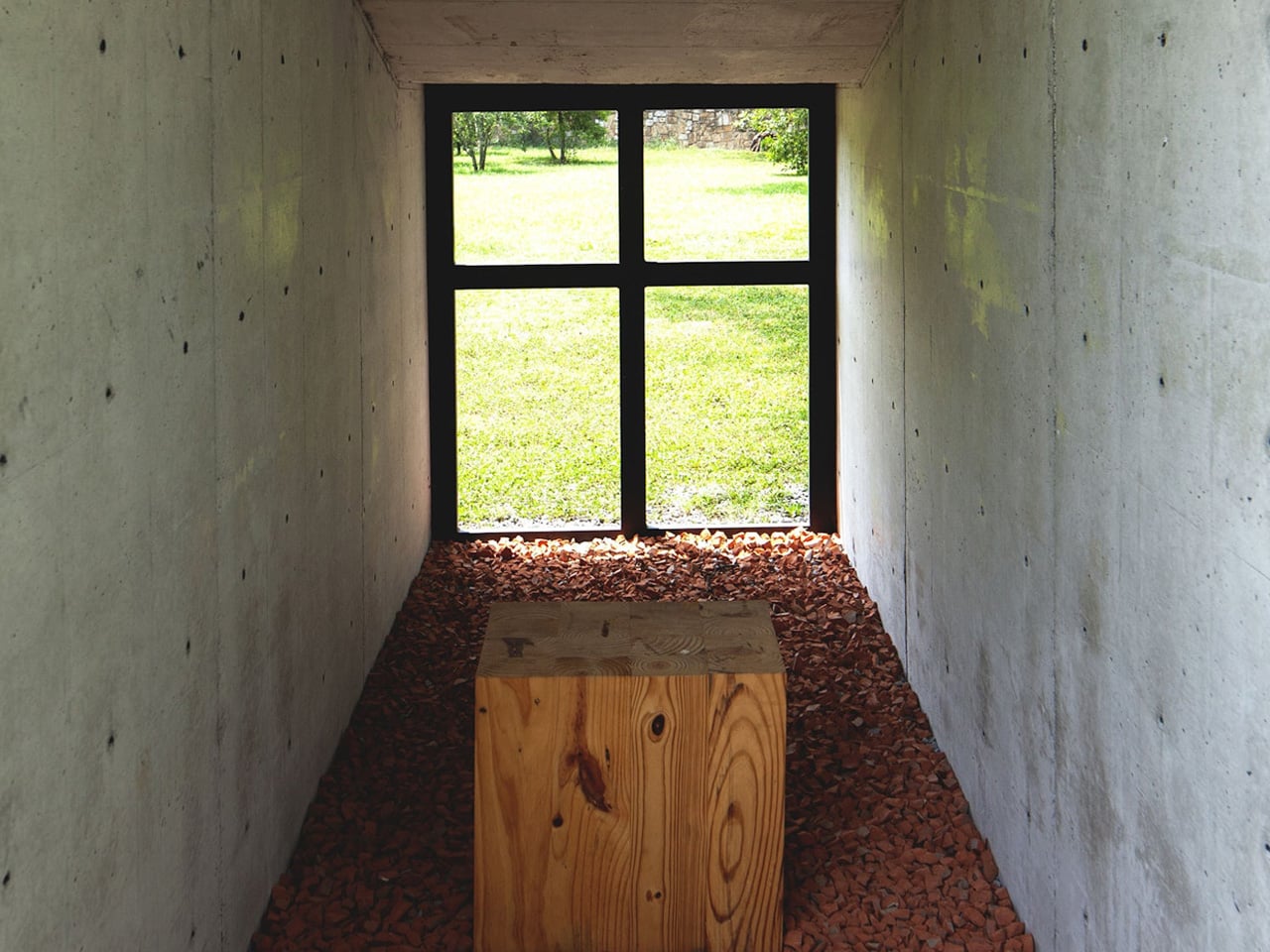
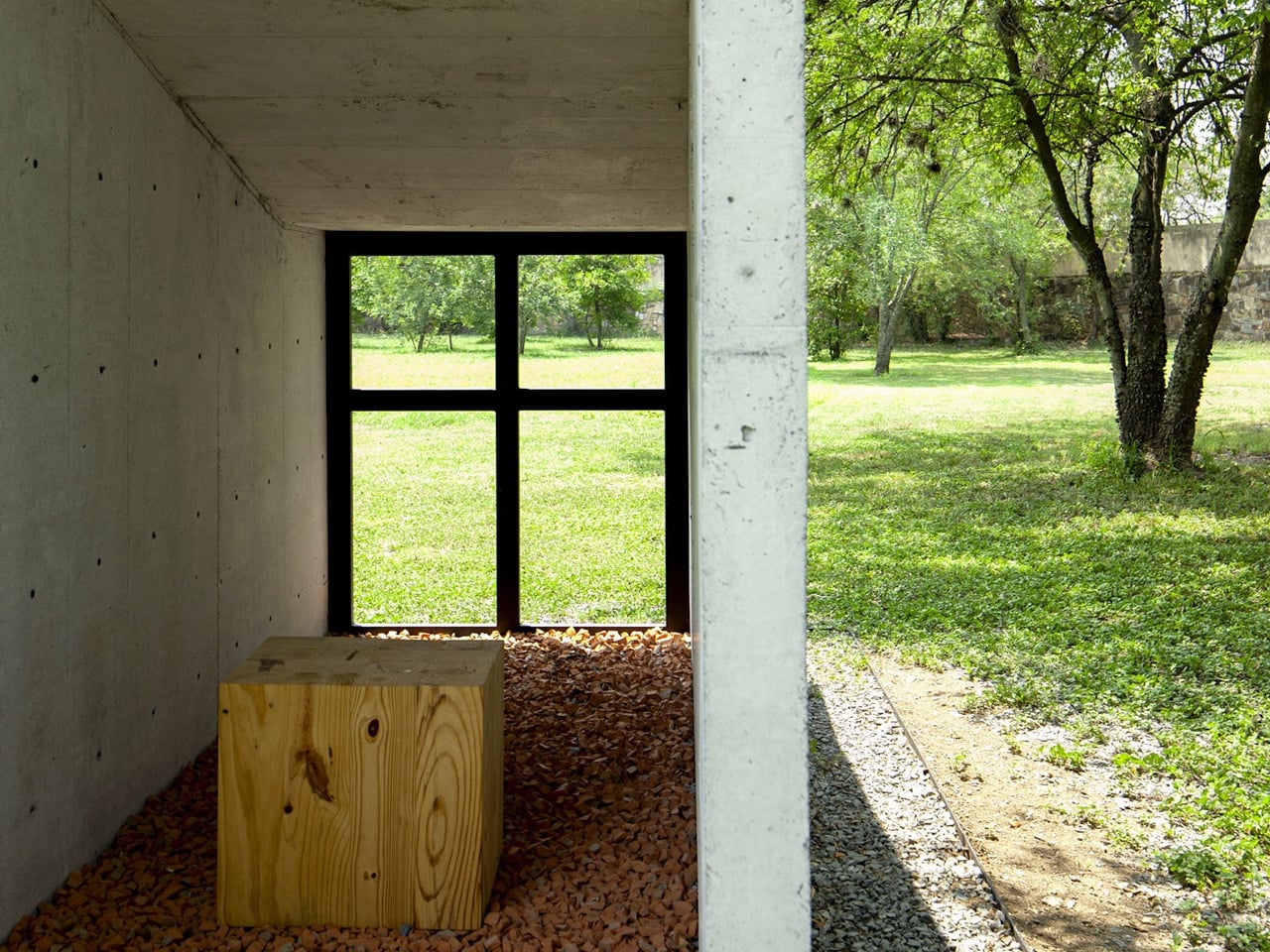
Architecturally, the chapel is a study in precision and restraint. Two reinforced concrete walls, each just 8 cm thick, rise at variable heights along a diagonal axis and support a slab only 6.5 cm deep, forming what reads almost like a tunnel — a narrow, directional passage that channels both movement and contemplation. The formwork follows a 30.5 cm modulation, and the holes left by the wall’s constructive system are deliberately left unfilled, allowing light and air to filter through the structure like something between architecture and screen.
This handling of light is where the chapel finds its spiritual character. Without electricity or artificial utilities, the building relies entirely on natural illumination. Light enters through the voids in the concrete, drifting across surfaces in patterns that shift with the hour and season. It turns the act of sitting inside the chapel into something inherently tied to time — not just sacred time, but the slow, physical time of the garden and the sky surrounding it.
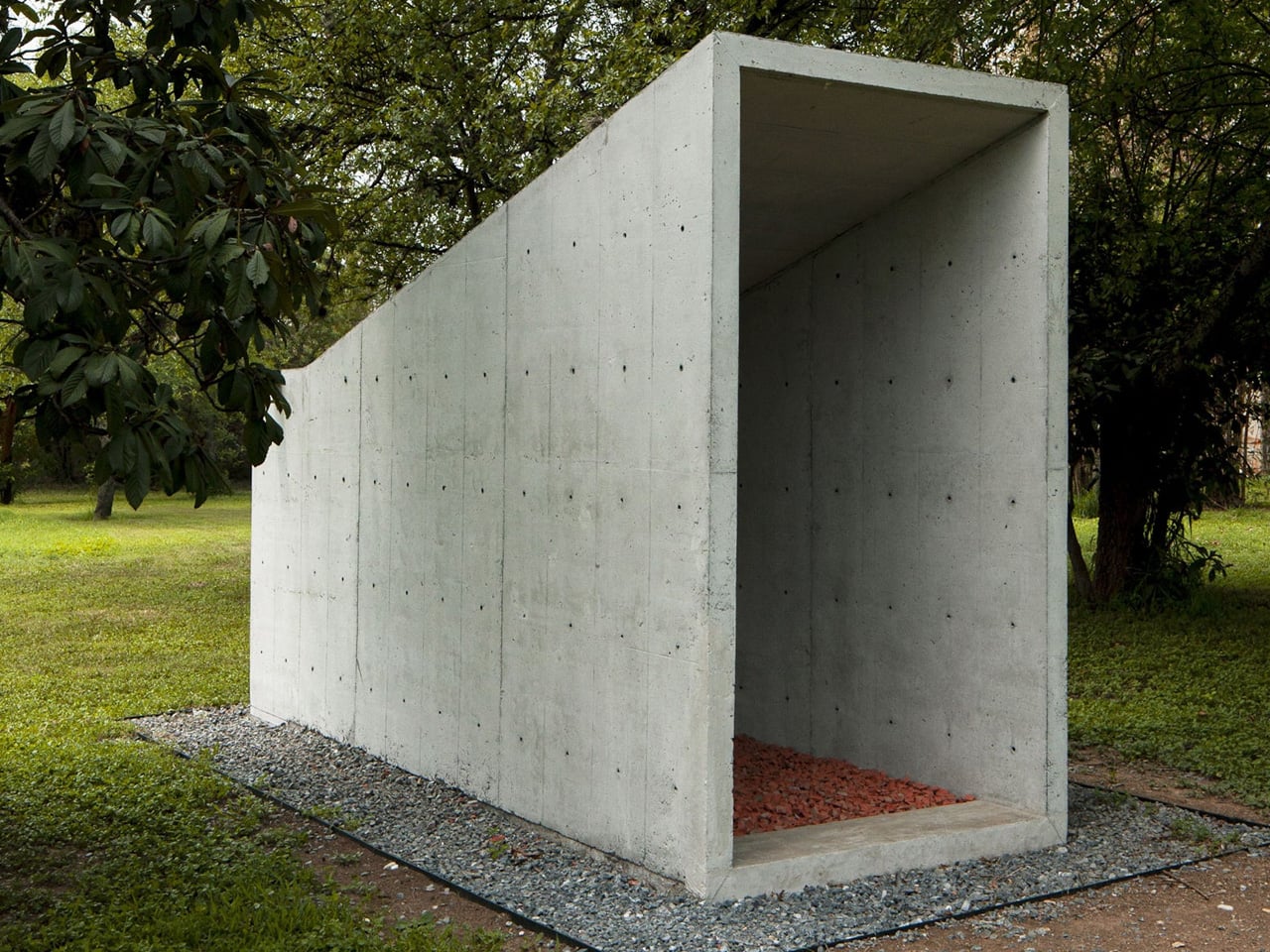
S-AR, the Monterrey-based studio known for its material rigor and contextual sensitivity, has built a reputation for working with concrete in ways that feel more geological than constructed. The Oratory Chapel continues that lineage. Its walls don’t feel poured so much as grown from the site. At just a few square meters, it’s one of the smallest things the studio has made — and possibly one of the most considered.
In an era where sacred architecture often reaches for scale and spectacle, this small chapel in a big garden does the opposite. It compresses everything down to two thin walls, a sliver of a roof, and the light that passes between them. That, it turns out, is enough.
SHARE