The bag you carry is a design decision. Every object inside it is a small vote for how you move through the world, what you value, what you’re willing to lug, and what deserves a slot in your pocket or your pack. For too long, tech accessories defaulted to bulk. More power meant more weight. More connectivity meant more dongles. Better audio meant a bigger case. The implicit trade was always the same: capability costs space.
That trade is becoming optional. A new generation of everyday carry tech is rethinking its own geometry, collapsing into pockets, shedding grams, and using smarter materials and tighter engineering to pack more utility into less volume. These are not spec-sheet products assembled to fill a gap. They are designed to disappear into your day and show up exactly when you need them. From a power bank thinner than any phone to a keyboard built for a jacket pocket, these seven picks redefine what it means to carry less and own more.
1. Xiaomi UltraThin Magnetic Power Bank 5000 15W
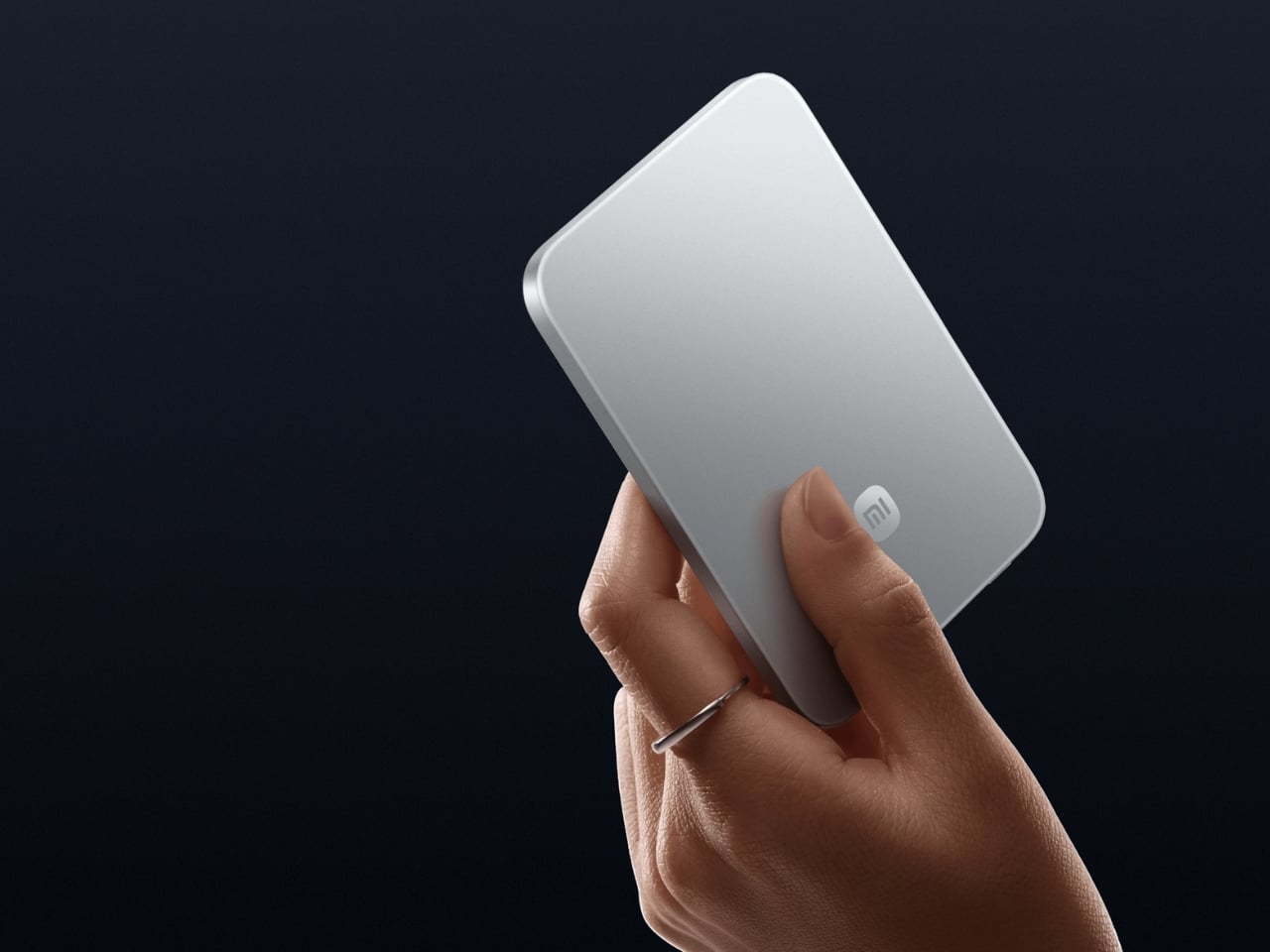
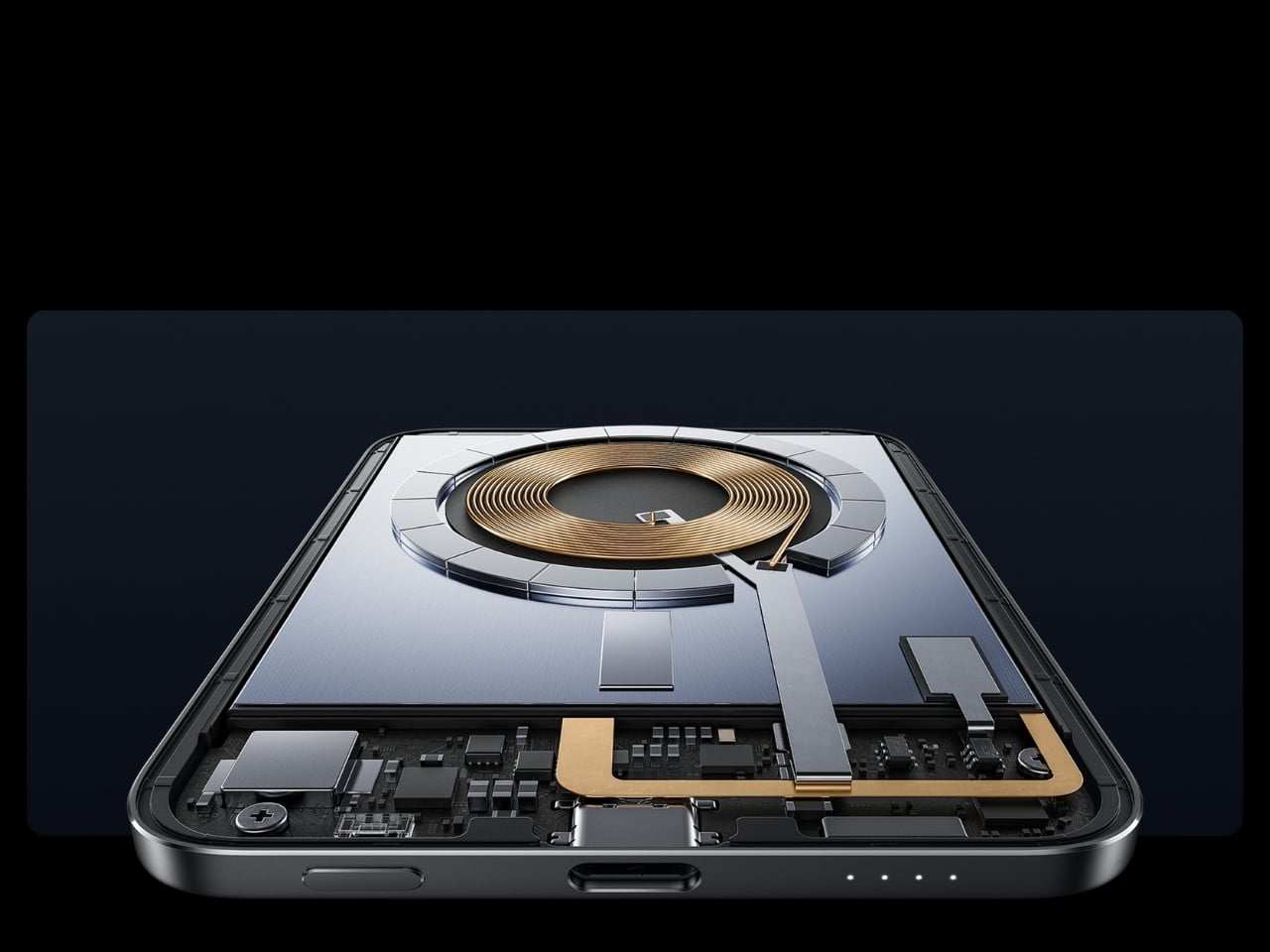
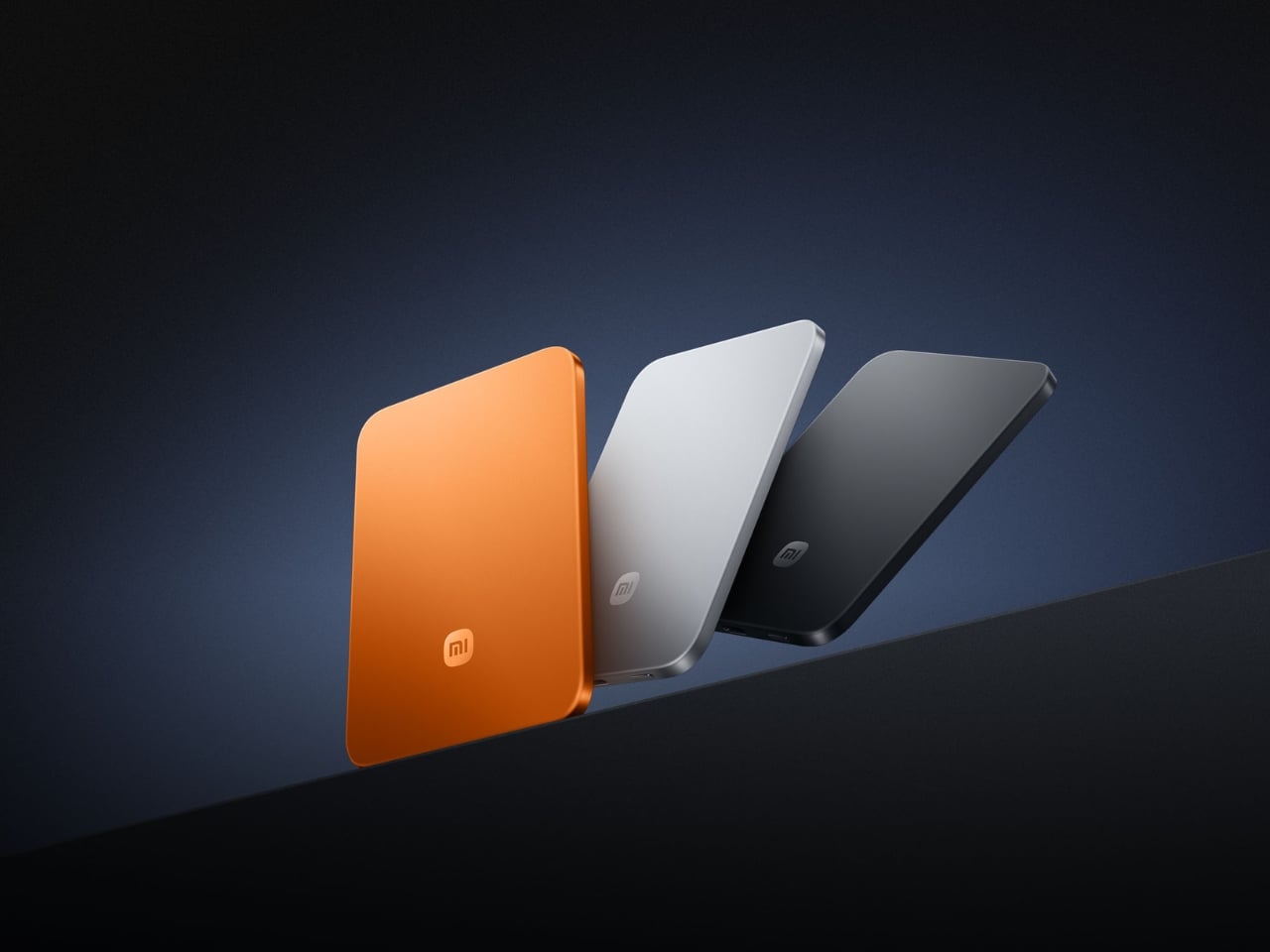
Power banks have always had a design problem. They’re essential and clunky, reliable and bulky, always appreciated but never comfortable to carry. Xiaomi’s UltraThin Magnetic Power Bank 5000 addresses that problem by starting where no other power bank has dared: at 6mm. That is thinner than most smartphones currently shipping. The aluminum alloy shell comes in Glacier Silver, Graphite Black, and Radiant Orange, each finished with a photolithographically etched logo that signals careful intention rather than assembly-line output. The fire-resistant fiberglass phone-facing surface handles heat management invisibly, keeping the exterior clean of vents or grilles. At 98 grams, it weighs less than two eggs, and carrying it feels like carrying nothing at all.
The engineering behind that form is silicon-carbon battery chemistry with 16% silicon content, enabling the energy density required to fit 5,000mAh into a body this slim. It supports 15W wireless charging for compatible Android devices, 7.5W for iPhone, and 22.5W wired via USB-C, with the practical addition of charging two devices simultaneously while being recharged itself. Showcased at MWC 2026 in Barcelona and priced at €59.99 in Europe for the Silver and Black versions, this is a power bank that earns its place by eliminating the bulk compromise the category has always required. For anyone committed to carrying less, this is the first power bank that doesn’t feel like a concession.
What We Like:
- 6mm profile and 98g weight make it the most pocket-friendly 5,000mAh power bank available
- Silicon-carbon battery chemistry delivers a full 5,000mAh capacity without dimensional sacrifice
What We Dislike:
- Wireless charging for iPhone is capped at 7.5W maximum
- Rated capacity sits at 3,000mAh at 5V/2A, lower than the typical 5,000mAh figure
2. OrigamiSwift Mouse


A mouse seems immovable in form. Wide, arched, and desk-bound. The OrigamiSwift dismantles that assumption by doing exactly what the name implies: it folds. Inspired by the precision of origami, it compresses into a flat, slim profile that slips into a bag or jacket pocket without protest, then springs open in under 0.5 seconds into a full-sized, ergonomically shaped Bluetooth mouse that feels nothing like a compromise. It weighs 40 grams. That figure deserves a moment. Most full-sized mice weigh three to four times as much. The OrigamiSwift delivers all the comfort and tracking precision of a conventional mouse while occupying the footprint of a notepad when packed.
For the digital nomad setting up at a café, or the professional moving between meetings with a laptop under one arm, this is the kind of tool that quietly changes the texture of the day. The ergonomic form is shaped to fit naturally in the hand during extended work sessions, reducing the fatigue that accumulates from hours spent on a trackpad. The Bluetooth connection keeps the desk or surface clean. The ultra-thin folded profile sits flat in any bag compartment without creating bulk or claiming space disproportionate to its value. Minimalist carry is about tools that show up without announcing themselves, and the OrigamiSwift does exactly that: invisible when packed, essential when open.
What We Like:
- Folds flat for pocket carry and opens into a full ergonomic mouse in under 0.5 seconds
- At just 40 grams, it is one of the lightest full-form productivity mice available
What We Dislike:
- The folding mechanism may require adjustment time for users accustomed to traditional mice
- A 40-gram build may feel less substantial to users who prefer a weighted mouse
3. HubKey Gen2
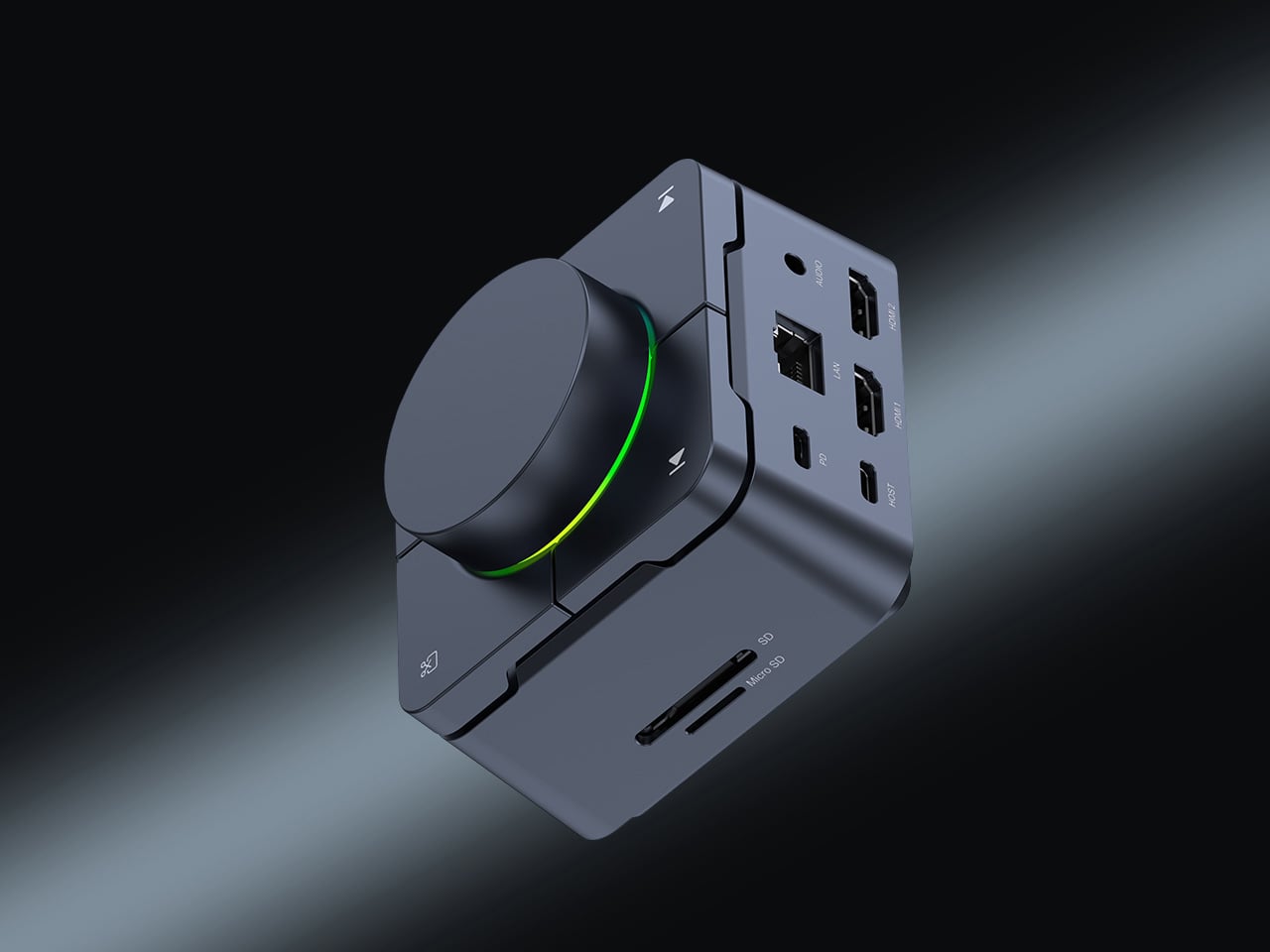
The modern desk accumulates workarounds. Two USB-C ports become four, then six, spread across a tangle of adapters that creep outward from the laptop until the workspace feels less like a setup and more like a wiring diagram. HubKey Gen2 is built to end that creep. It is an 11-in-1 USB-C hub inside a compact cube, and the more interesting detail is what lives on top: four physical shortcut keys and a central control knob that handle media playback, privacy shortcuts, and daily actions without a software menu or a keyboard combination you can never quite remember. One object consolidates what used to require a cluster of small fixes, turning a patchwork of compromises into something coherent.
Dual 4K display support makes it relevant for anyone running an expanded screen setup, while the physical controls restore a directness that software interfaces have quietly taken away. Volume knobs, mute buttons, and display toggles should not require a three-key shortcut or a settings dive. HubKey Gen2 puts that control back within arm’s reach. It handles power, storage, network, and displays from a single USB-C connection, and transforms a desk covered in small adaptations into something intentional and calm. The headline is carry less, own more, and at the desk, that translates directly: one compact cube where eleven separate solutions used to live.
What We Like:
- Consolidates 11 connections and physical shortcut controls into a single compact cube
- Dual 4K display support covers multi-monitor setups without additional adapters
What We Dislike:
- Desk-bound design means it is a workspace consolidation tool rather than a pocketable carry item
- Physical shortcut keys offer fewer customization options compared to software-based control surfaces
4. Battery-Free Amplifying iSpeakers
The charging cable is the one obligation that minimalist carry never fully escapes. Every wireless device is a deferred maintenance task, a battery you will have to tend to eventually. The Duralumin battery-free iSpeakers sidestep that dependency entirely. No power source, no cable, no charging ritual. You place your smartphone inside the enclosure, and the geometric cavity amplifies sound through acoustic engineering alone, using the golden ratio in its design to optimize resonance and distribute the audio across the room. It is the kind of object that looks precisely like it belongs on a desk and sounds as considered as it looks.
The material choice deepens the story. Duralumin is the same aluminum alloy used in aircraft construction, a combination of lightness and structural rigidity that allows the speaker to resonate without distorting. The result is a passive amplifier that genuinely improves your phone’s audio while functioning as a deliberate desktop object. Modular compatibility with the sold-separately +Bloom and +Jet sound-directing additions means it can adapt to different spatial setups without ever adding an electronic dependency. For carry with intention, this is what owning more looks like: an object that does its job through physics, needs nothing from a wall outlet, and occupies any surface as though it was designed specifically for it.
Click Here to Buy Now: $179.00
What We Like:
- Requires no battery or electricity, making it zero-maintenance and usable anywhere
- Aircraft-grade Duralumin construction delivers structural integrity alongside a refined aesthetic
What We Dislike:
- Audio output is entirely dependent on the quality of the phone’s built-in speaker
- Directional sound control requires purchasing the +Bloom or +Jet mods separately
5. NanoPhone Pro
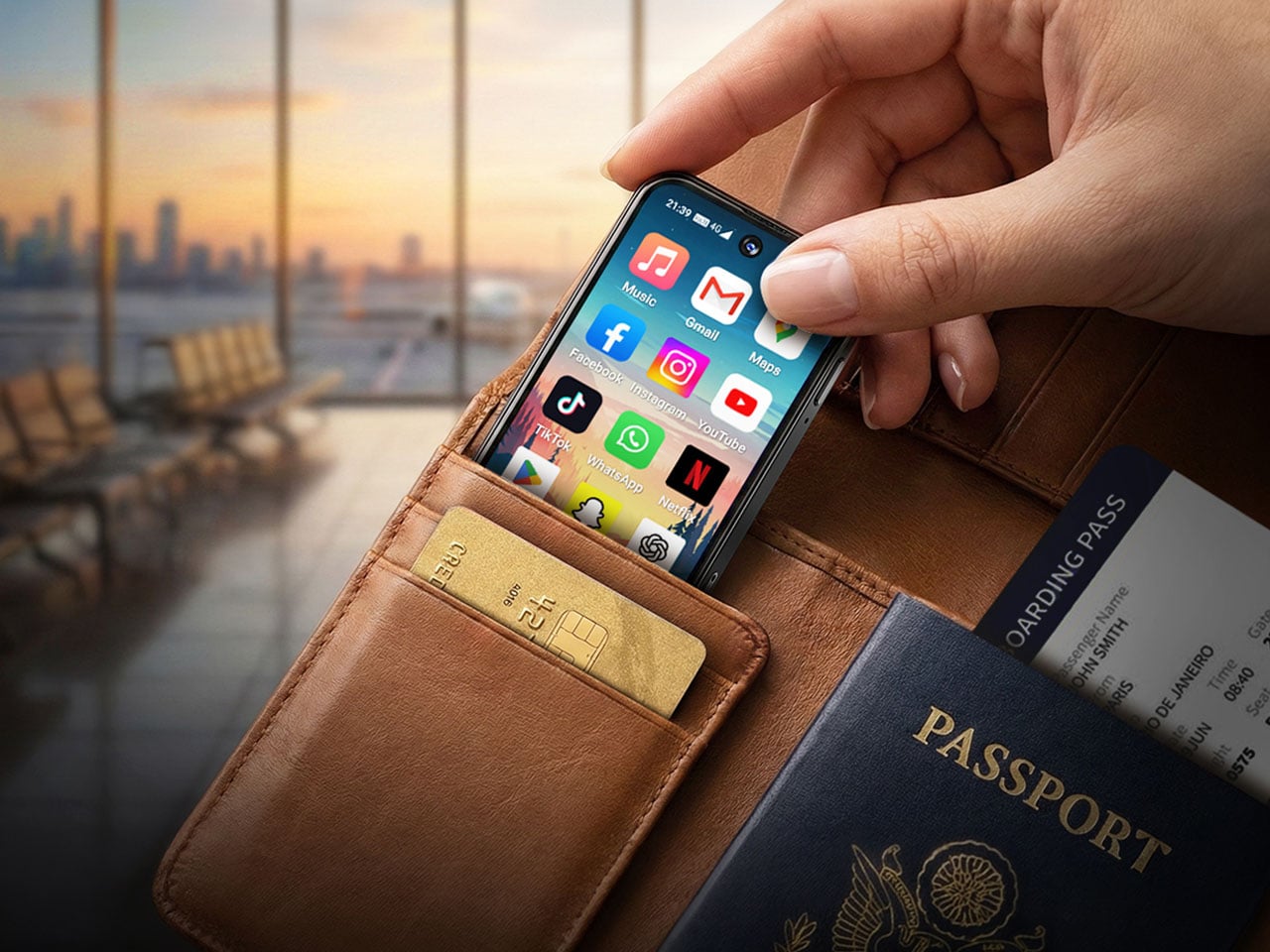
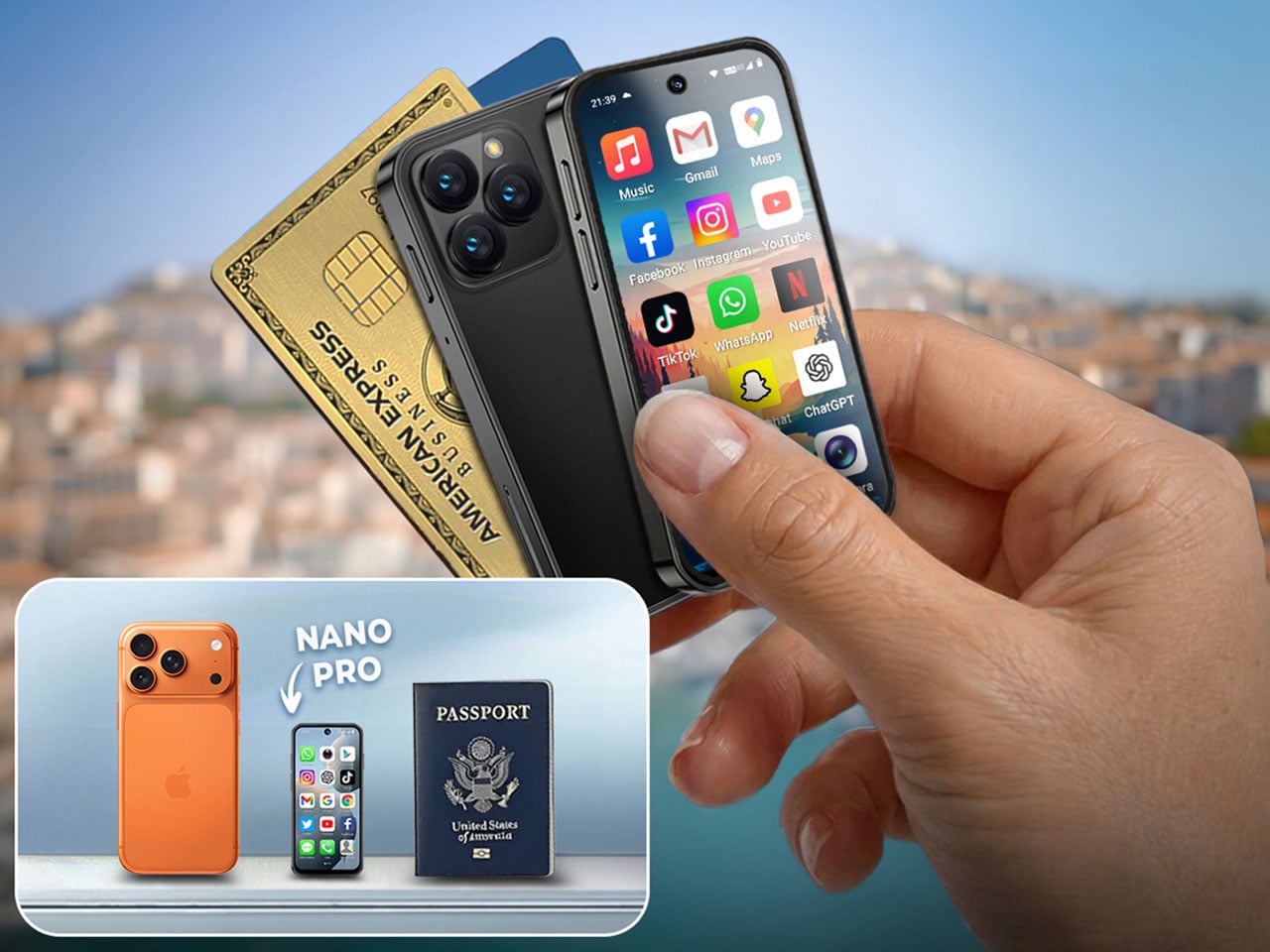
There is a version of the smartphone that has been lost in the pursuit of bigger screens and faster processors. It is the phone that fits in a coin pocket, asks nothing of your attention beyond the call and the navigation prompt, and treats connectivity as a utility rather than an experience. The NanoPhone Pro returns to that idea with a credit-card-sized 4G device running Android 12 and certified for Google Play apps. It browses, calls, navigates, plays music, and handles real-time navigation. It does not demand to be the center of your day, and that restraint is the entire point.
A 5MP rear camera and 2MP front shooter cover quick captures and video calls without positioning this as a photography device. That deliberate limitation is the product’s philosophy: it does everything a smartphone needs to do and none of what a smartphone has quietly drifted into doing over the last decade. As a secondary phone for travel, for screen-time reduction, or for users who simply want connectivity without the gravitational pull of a large-format device, the NanoPhone Pro is a precise instrument. Minimalist carry is often defined by what you leave behind, and this phone argues convincingly that you can leave behind the bulk of a modern device without surrendering any of its real utility.
What We Like:
- Credit-card footprint eliminates smartphone bulk while retaining 4G connectivity and Google Play
- Android 12 certification ensures a complete app ecosystem without compatibility compromises
What We Dislike:
- The 5MP rear camera is not a substitute for a primary smartphone’s imaging system
- Small screen dimensions limit usability for media consumption or extended reading
6. Keychron B11 Pro
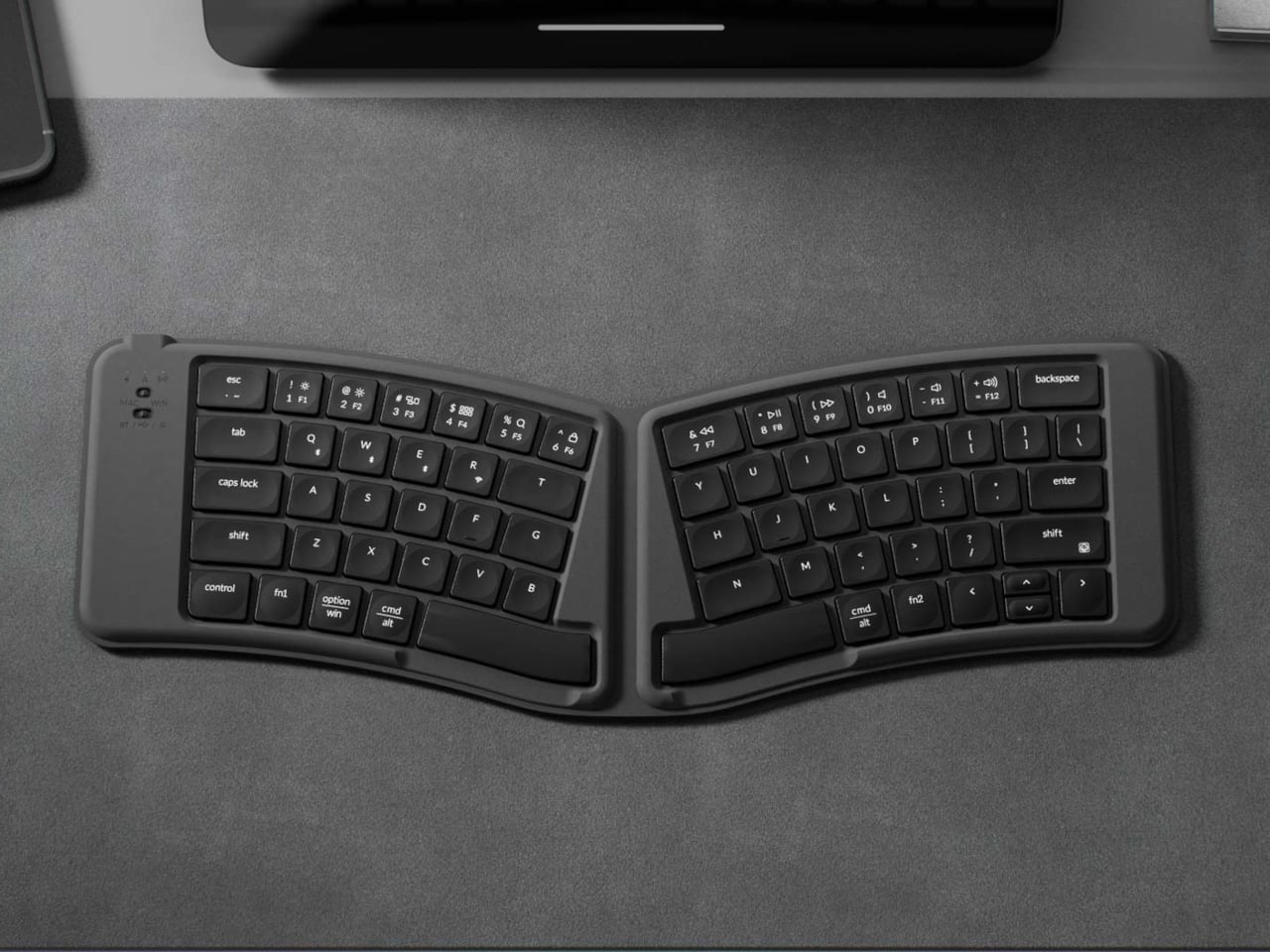
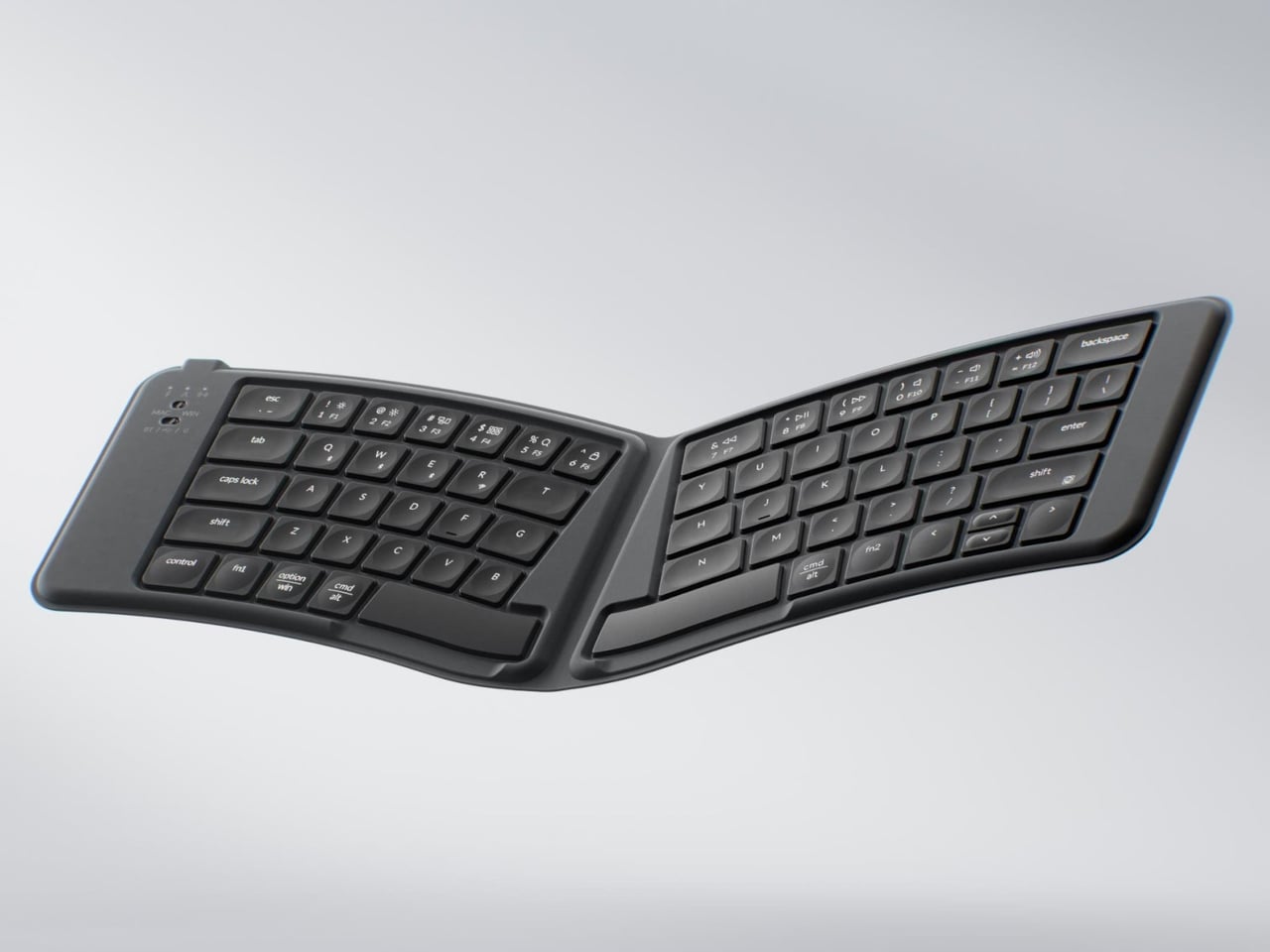
Most portable keyboards solve one problem while ignoring another. They compress the footprint but flatten the key geometry, leaving your wrists to negotiate a straight layout through a full working day in a hotel room or an airport lounge. The Keychron B11 Pro approaches the problem differently. It uses a 65% Alice layout, splitting and angling the two key clusters slightly inward for a more natural wrist position, and then folds in half when not in use. Folded, it measures 196.3 × 143mm and weighs 258 grams, closer in footprint to a paperback book than a keyboard, adding almost nothing to a bag already loaded with a laptop and a water bottle.
The Alice geometry is the more considered design decision here. Angling both hands naturally inward reduces the lateral wrist strain that builds over a long typing session away from a dedicated desk. Keychron already applies this same geometry to the desk-bound K11 Max, but putting it into a foldable form at $64.99 is an entirely different proposition. Most foldable keyboards treat compactness as the only ergonomic consideration on the road. The B11 Pro argues that wrist health doesn’t stop mattering when you leave the office. For writers, remote workers, and anyone who types seriously while traveling, this is the keyboard that proves you don’t have to choose between ergonomic design and fitting your gear into a jacket pocket.
What We Like:
- The Alice split geometry reduces lateral wrist strain during long typing sessions away from a desk
- Folds to 196.3 × 143mm and 258g, small enough for a jacket pocket or bag side compartment
What We Dislike:
- 65% layout omits the function row and numpad, which may limit certain professional workflows
- The angled Alice geometry requires adjustment time for users moving from a standard keyboard layout
7. TWS Earbuds with Built-in Cameras
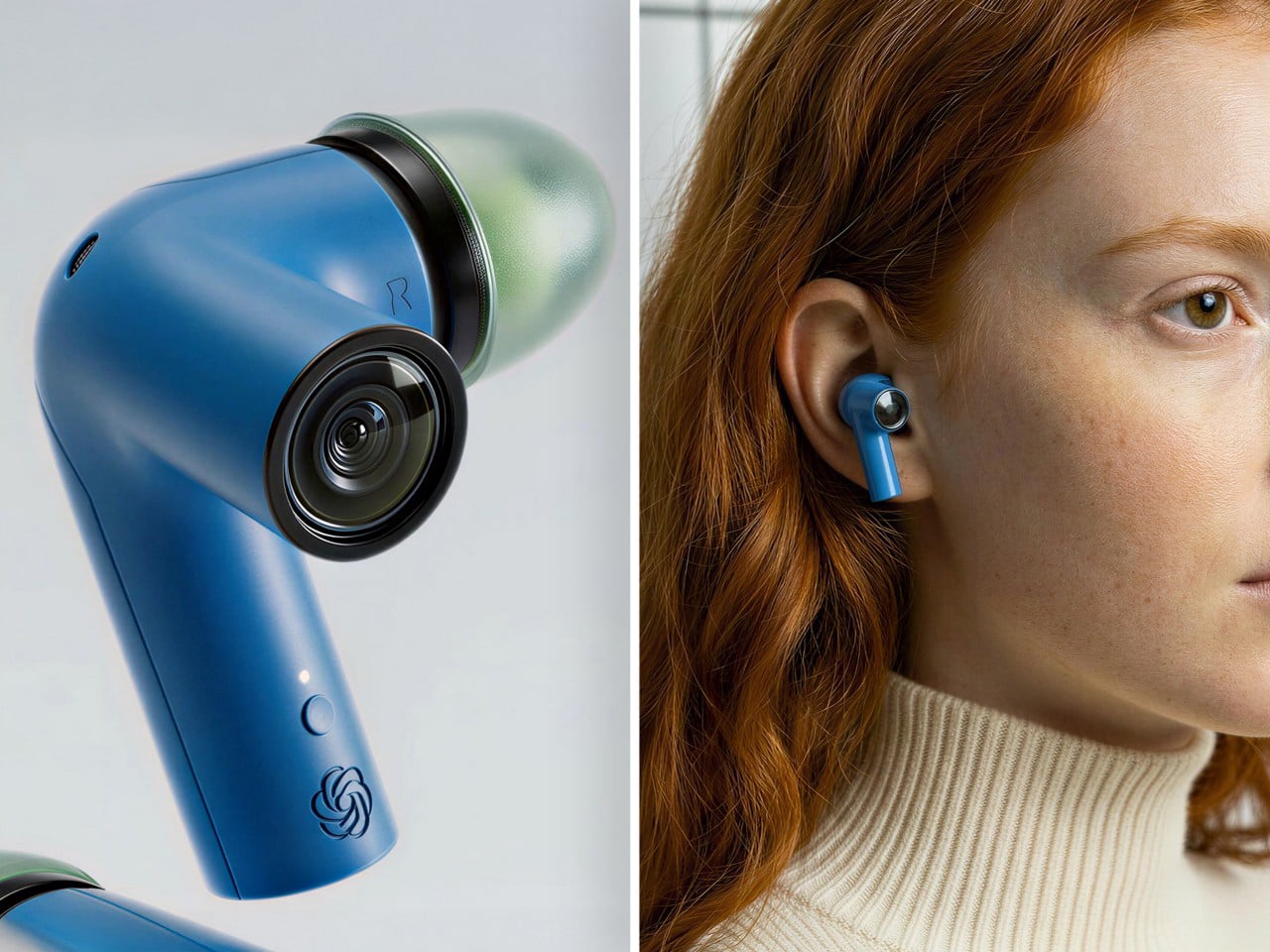
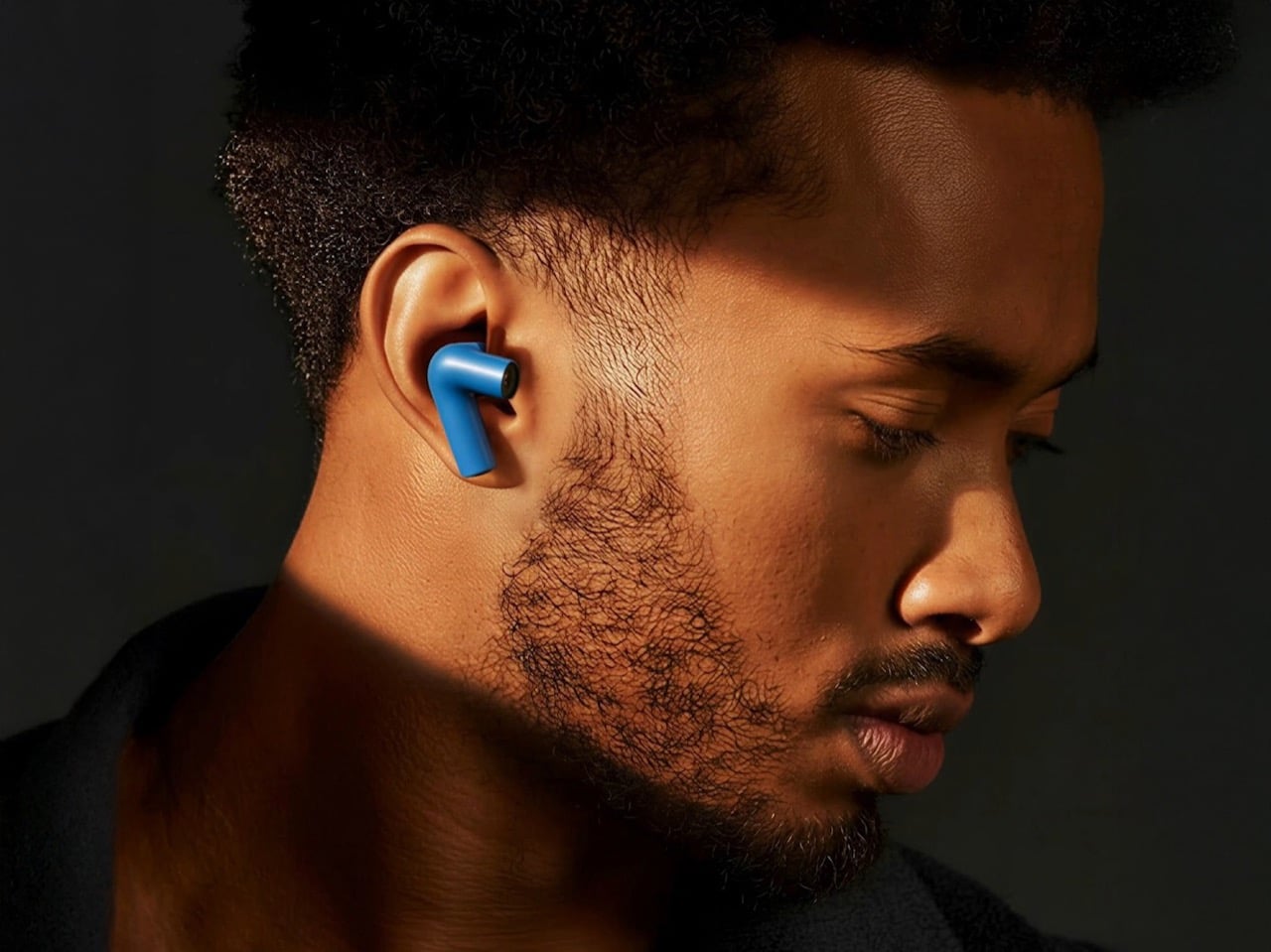
Every company building AI hardware is betting on a form factor. Smartglasses, pins, pocket companions: each one asks you to wear a new device, adopt a new habit, and accept a new object into your daily carry. This concept asks a quieter question. What if the best AI hardware is something you already wear? These conceptual TWS earbuds add a single modification to a familiar form: each bud carries a built-in camera positioned along an extra stem, close to your natural line of sight. Paired with ChatGPT, those lenses become a live visual feed for an assistant that lives in your ears, reading menus, interpreting signage, and guiding you through an unfamiliar city without a screen in sight.
The carry implications are significant. A case the size of a lip balm replaces a phone query, a smartwatch notification, and a spoken search. The familiarity of the earbud form is the concept’s strongest argument: people already carry these, already charge them, and already wear them for hours at a stretch. Layering AI visual capability onto that without adding bulk or asking you to change how you move through the world is exactly what makes this vision compelling. Carry less, own more: this concept takes that headline literally. If the goal is capability without compromise, an assistant that can see, hear, and understand the world from inside a pair of earbuds is the most minimal possible version of that idea.
What We Like:
- AI visual and audio capability in an earbud form factor requires no new carry habits or added bulk
- Familiar TWS design eliminates the adoption friction that has limited other AI hardware categories
What We Dislike:
- Currently a concept product with no confirmed release date or commercial availability
- Built-in cameras positioned near the face raise valid and ongoing concerns about privacy in everyday use
The Best Tech Is the Tech You Actually Carry
Minimalism in everyday carry is not about owning less for its own sake. It is about refusing to let the objects you depend on become a burden. The best gear earns its place by doing more with less, compressing capability into a form that fits your life without requiring your life to reorganize around it. Every product on this list represents that thinking: a power bank that weighs less than two eggs, a keyboard that folds into a jacket pocket, a speaker that needs no power at all, and earbuds that could soon carry an AI capable of reading the world for you.
The shift is real, and it is accelerating. Engineering is finally catching up to the design ambition that minimalist carry has always implied. You no longer have to choose between a fully equipped setup and a light bag. These seven accessories make that argument in the most convincing way possible: not with a manifesto, but with their dimensions.
SHARE