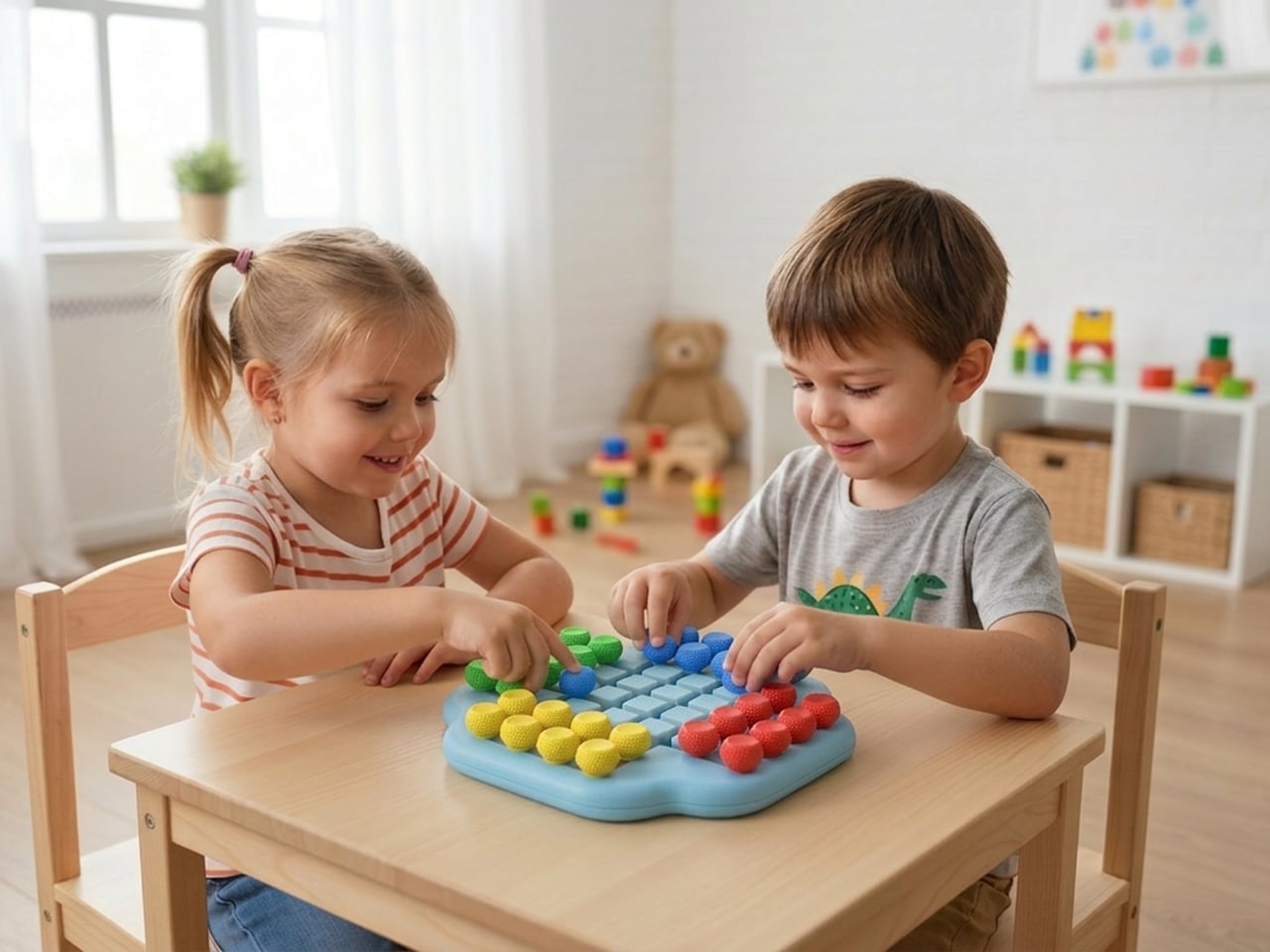
Most children’s board games follow the same unspoken contract: open the box, unfold the board, arrange the pieces, and then, finally, play. The setup is just a chore you get through before the real experience begins. Toddler Plus, a concept by designer Adesh Jadhav, breaks that contract entirely. Here, the game begins the moment you pick it up.
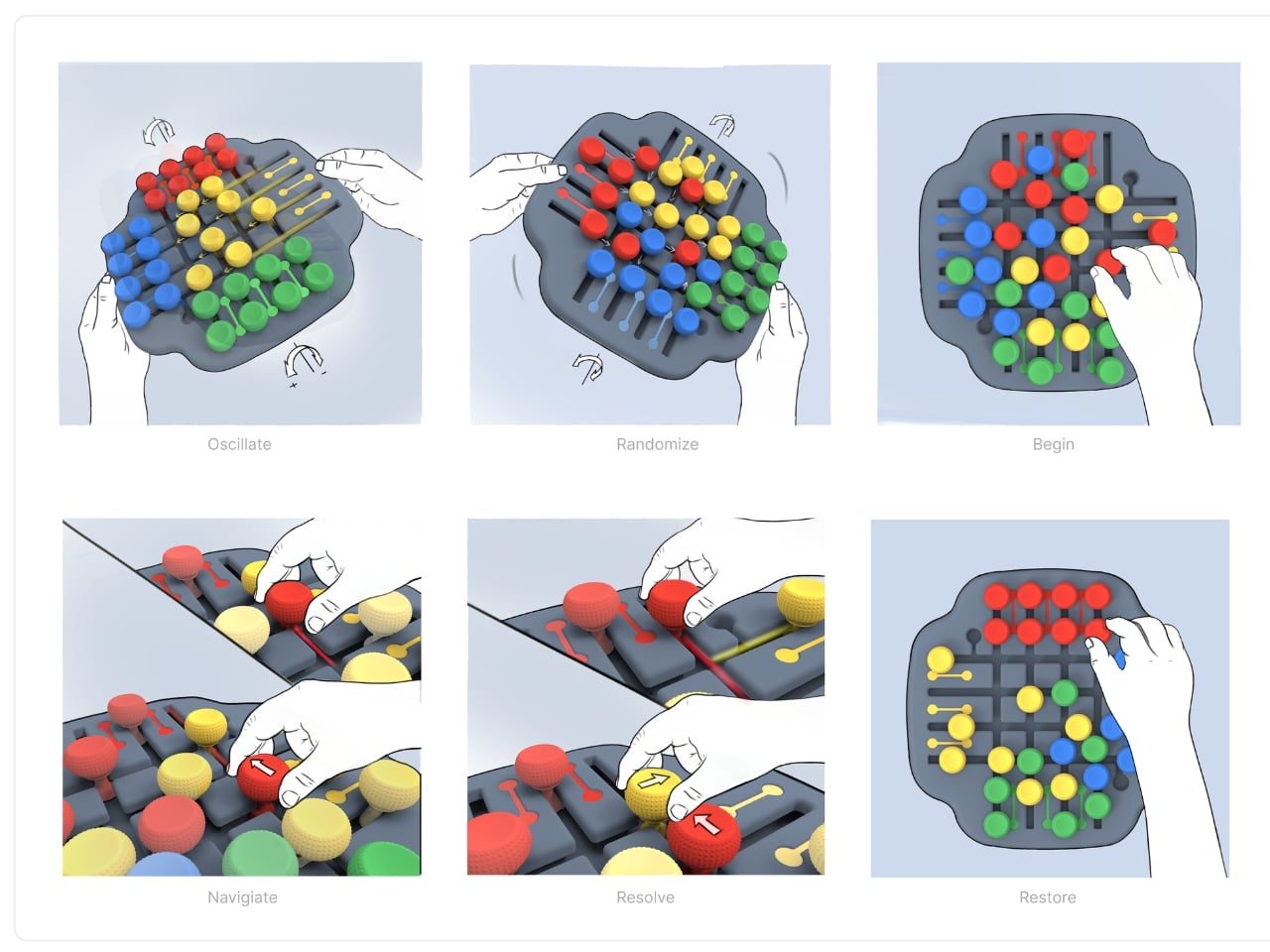
The idea is deceptively simple but genuinely clever. Before any piece slides along a pathway, a player lifts the board using its sculpted in-scoop grip and gives it a gentle oscillating motion. That motion randomizes the colored pegs across the surface, scrambling what was once an orderly arrangement into a colorful puzzle waiting to be solved. What would normally be a mundane setup step becomes a physical ritual, a small moment of anticipation before the challenge even starts. I find it refreshing that the designer thought to make that moment matter.
Designer: Adesh Jadhav
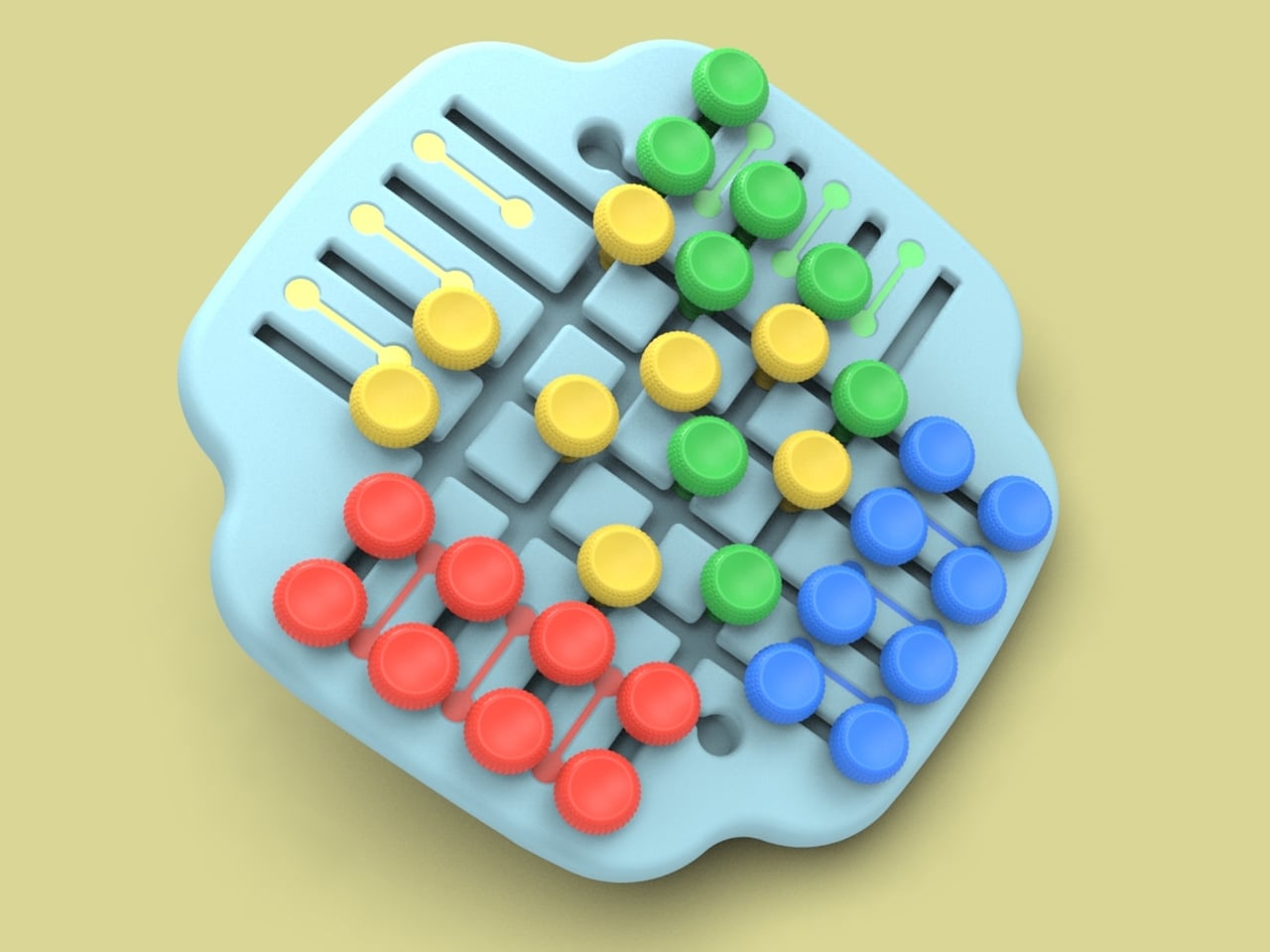
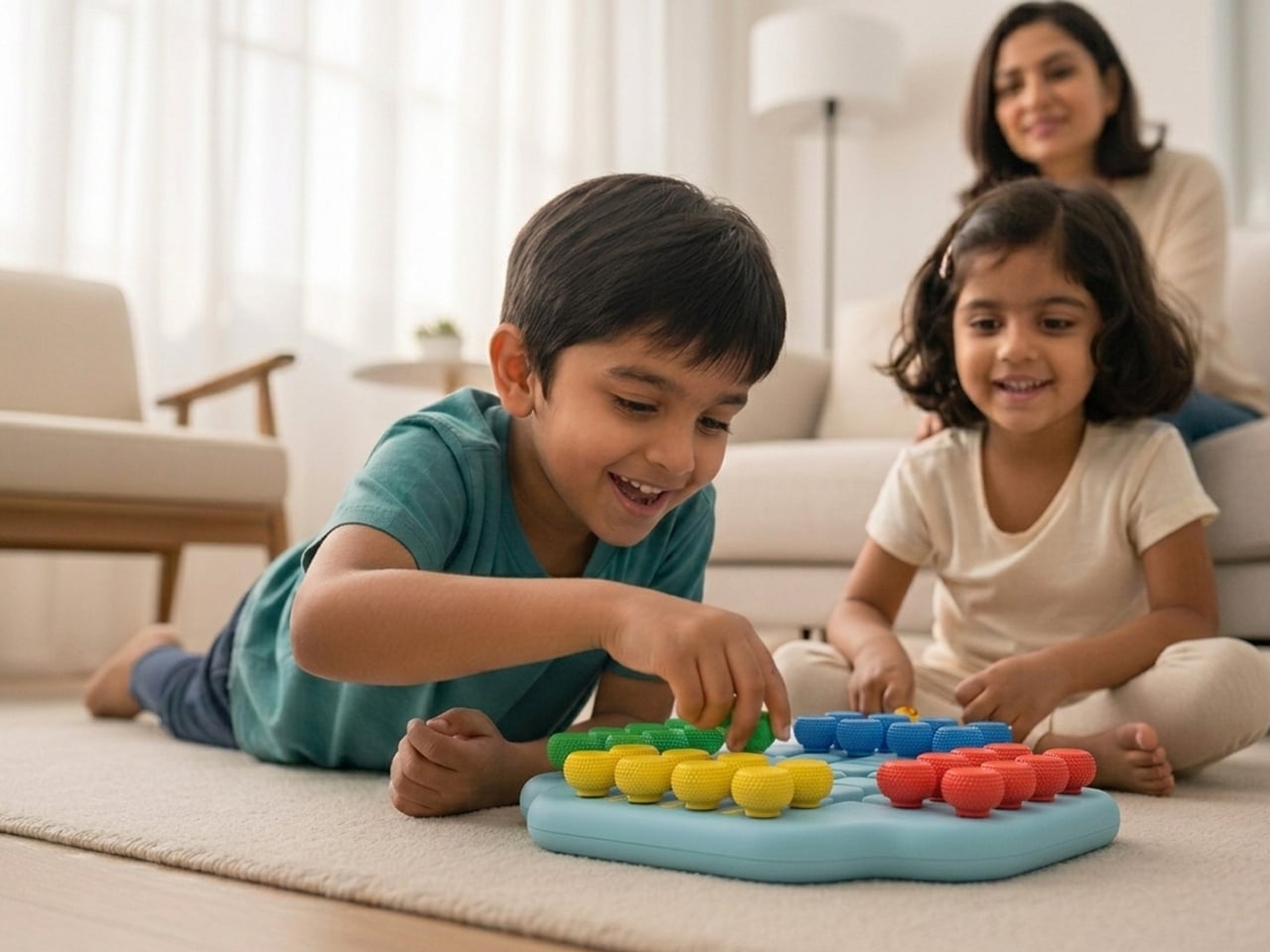
Designed for children aged four to six, Toddler Plus is built around a developmental sweet spot. Kids at this stage are refining their hand coordination, starting to understand basic rules, and learning that actions have consequences. The game speaks directly to all of that. Players slide colored pegs along guided pathways on the board, navigating around obstacles to return each color to its designated corner. When a route is blocked, another piece has to move first. It is a gentle, tactile introduction to sequencing and cause-and-effect thinking, and it teaches these things through movement rather than instruction.
That distinction matters more than it might seem. A lot of educational toys announce their purpose a little too loudly. You can sense the lesson underneath the fun, and kids sense it too. Toddler Plus feels like it trusts children more than that. The learning is embedded in the mechanics, not layered on top of them. A four-year-old working through a blocked path is doing real problem-solving, but they are not being tested. They are just playing.
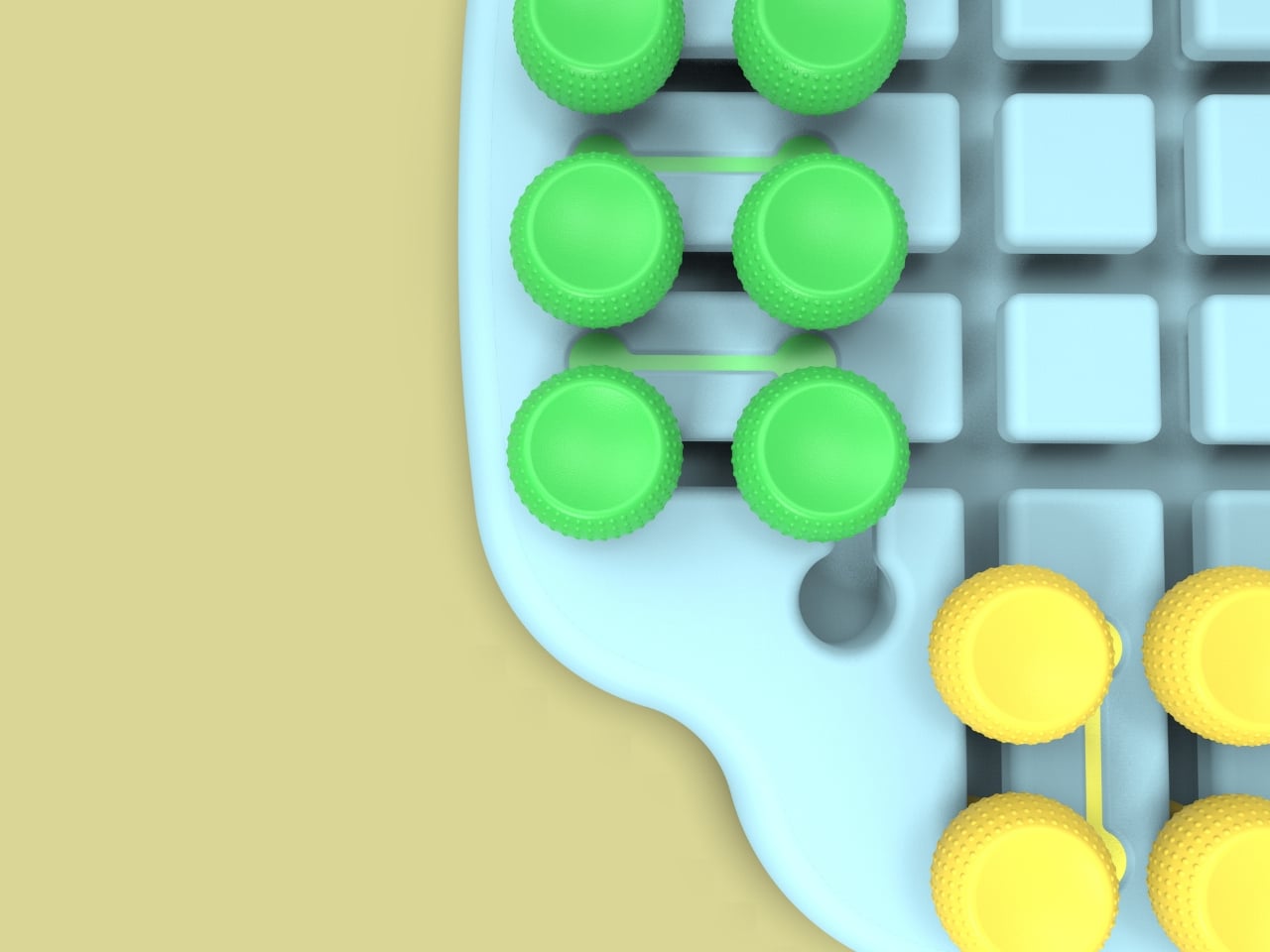
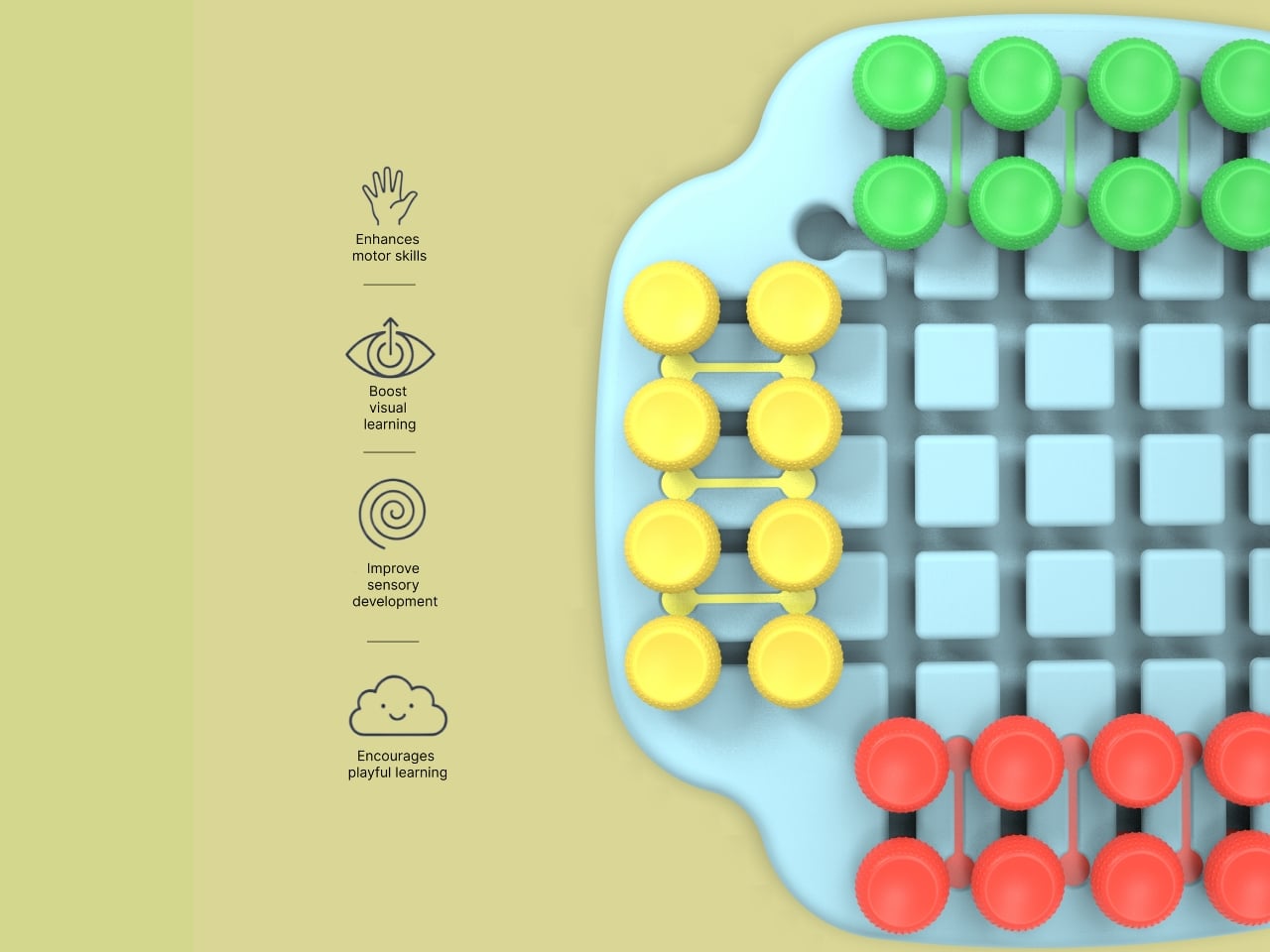
The structure also adapts to how children actually exist in the world, which is sometimes alone and sometimes not. A single player can work through the puzzle independently, restoring all four colors to their corners at their own pace. With two or four players, the board becomes a shared space where turns are taken and strategies have to account for what everyone else is doing. Both modes feel natural rather than forced, which is harder to achieve than it sounds in a single object.
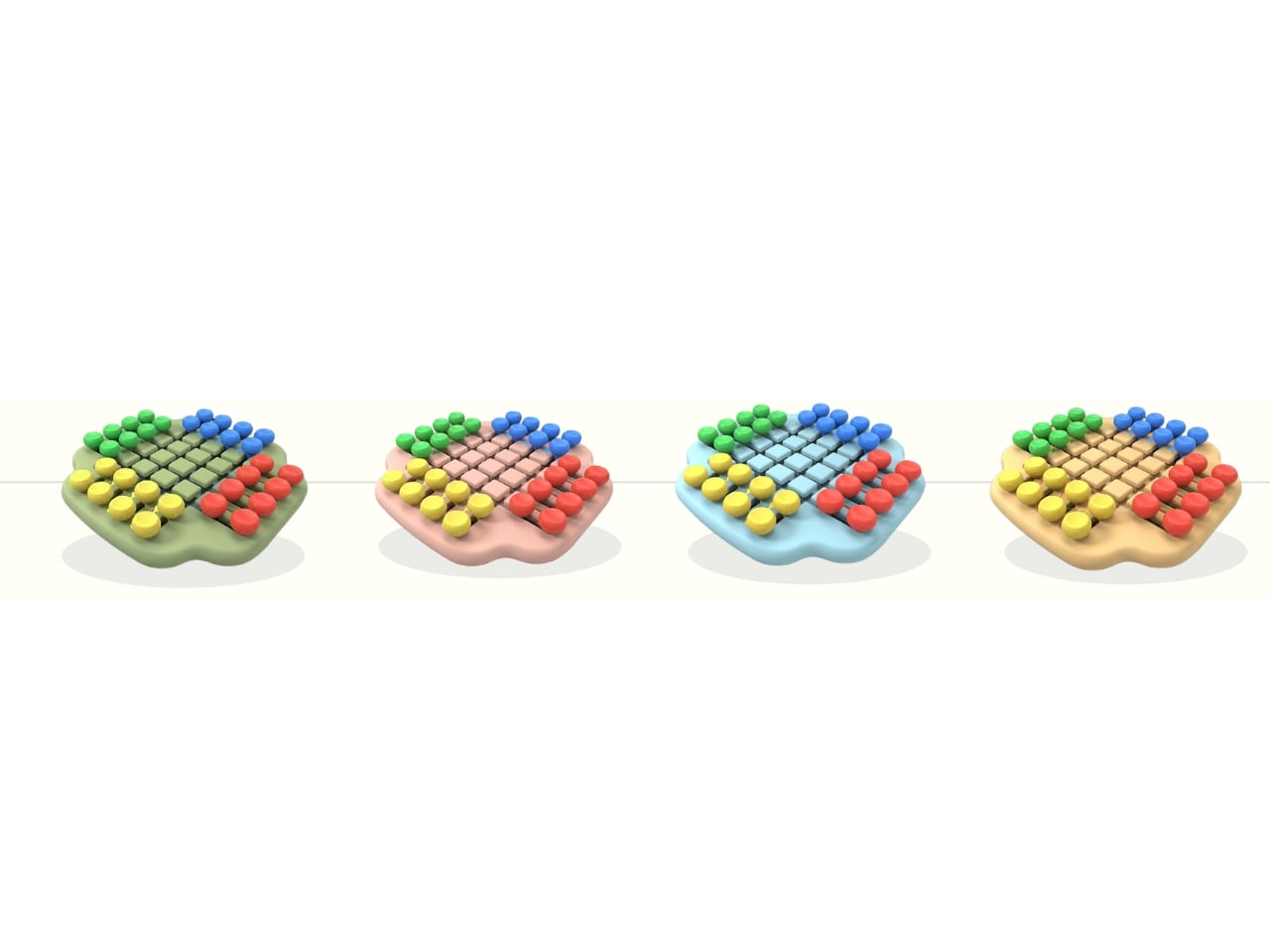
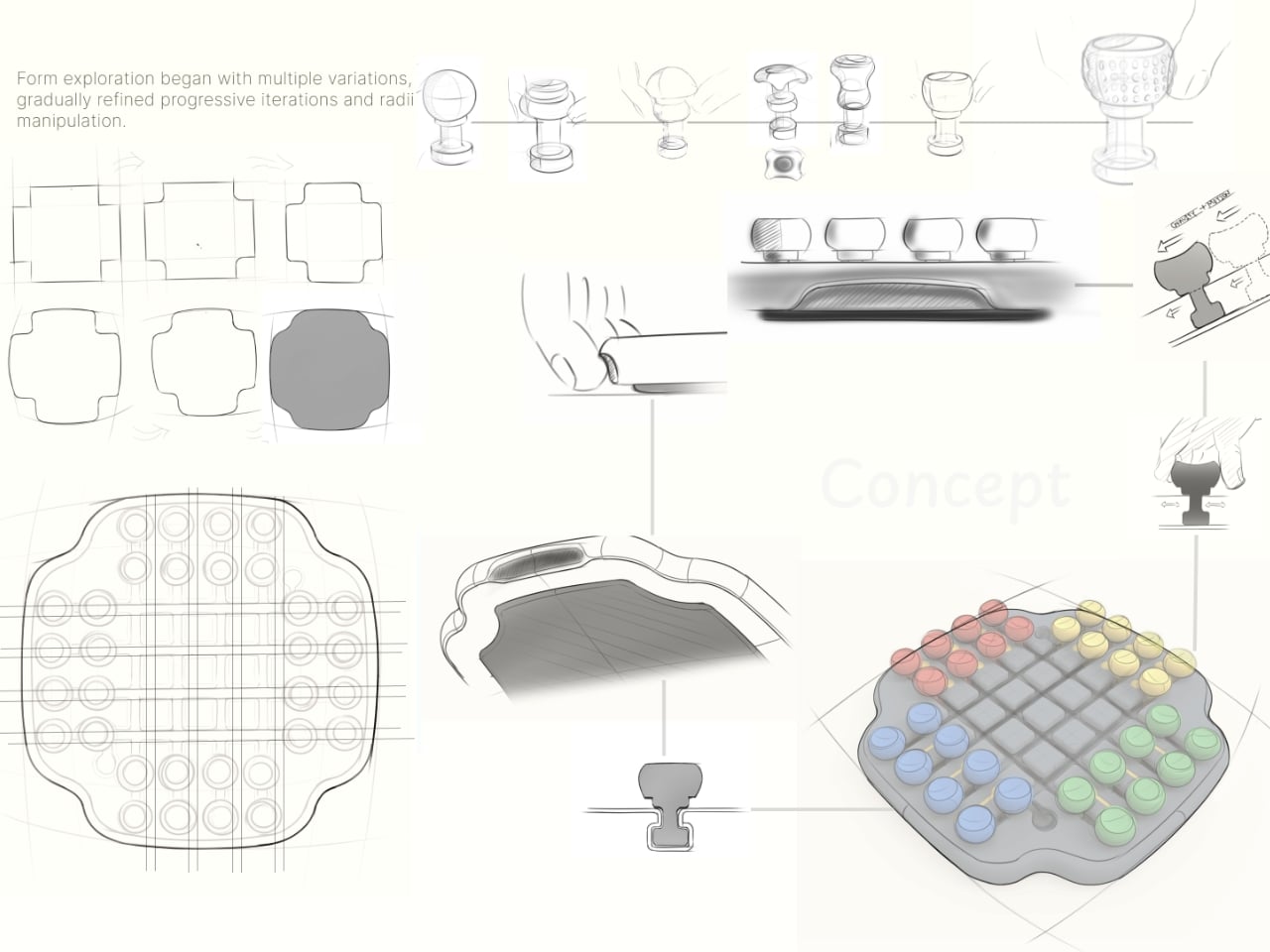
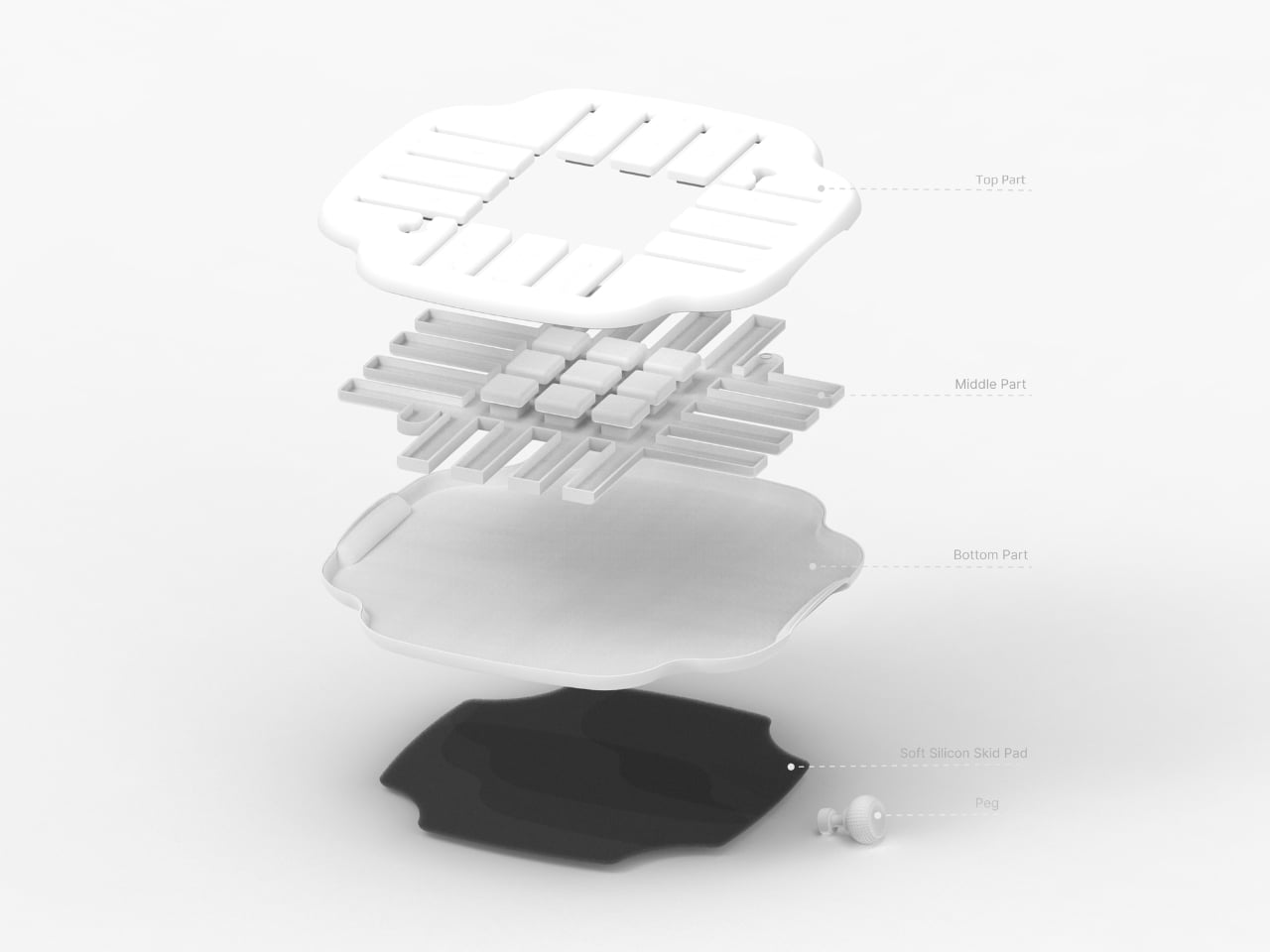
Visually, the design earns its place on a coffee table, not just a playroom floor. The board’s organic, softly rounded form sits somewhere between a pebble and a pillow. The vibrant pegs in red, yellow, green, and blue sit against a muted body in sage, blush, sky blue, or sand, depending on the colorway. It is a palette that manages to feel cheerful without being overstimulating, which is a genuine design achievement in the children’s product space. Looking at the exploded view of the construction, it is also clearly considered from a structural standpoint, with layered components and a soft silicone skid pad on the base that keeps the board grounded during play.
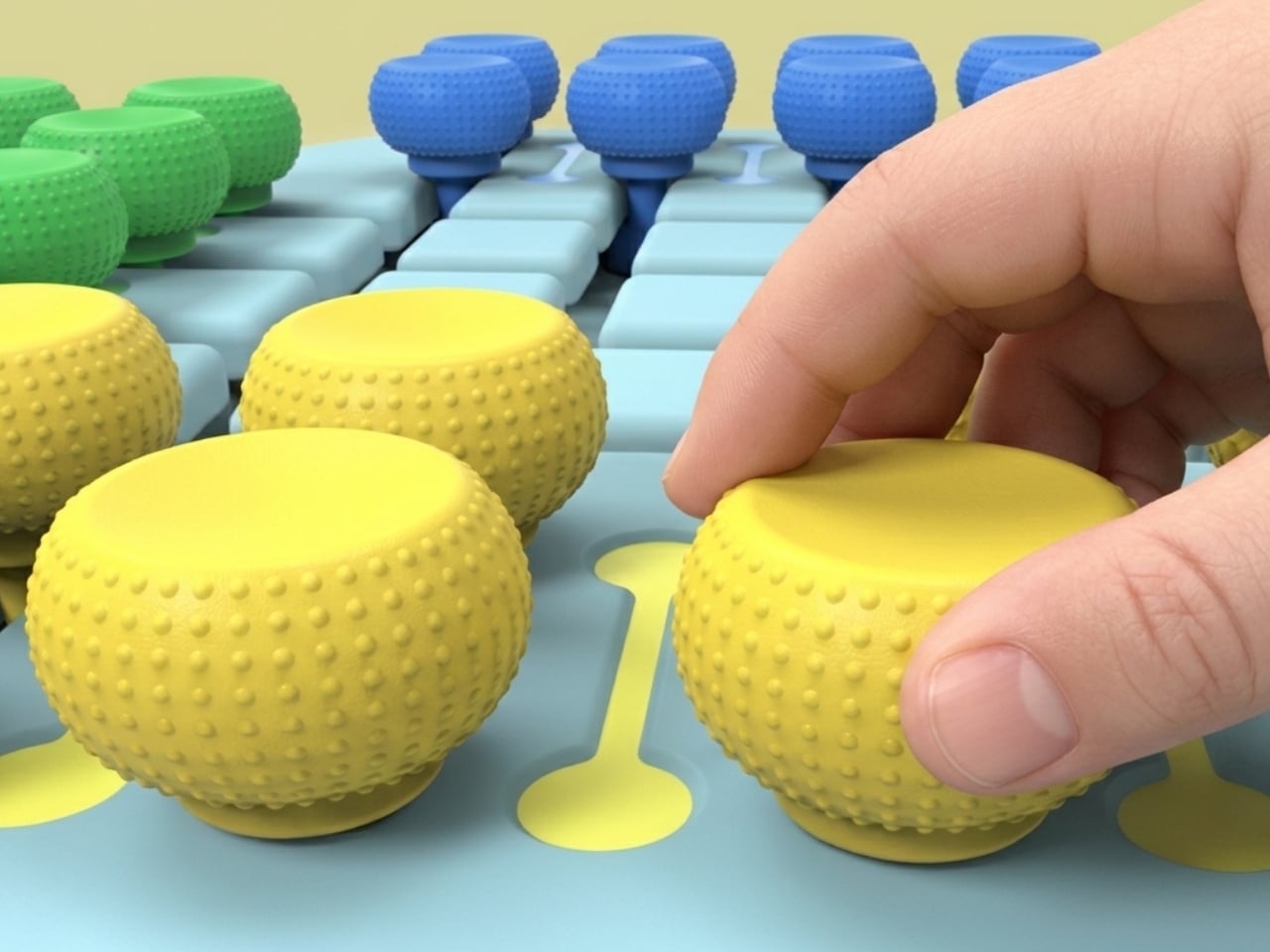
What I appreciate most about Toddler Plus is that it does not try to compete with screens. It does not need to. It offers something fundamentally different: a physical, tactile, repeatable experience that changes every single round because the starting position is always randomized. The oscillation step is not a gimmick. It is the reason each game feels fresh.
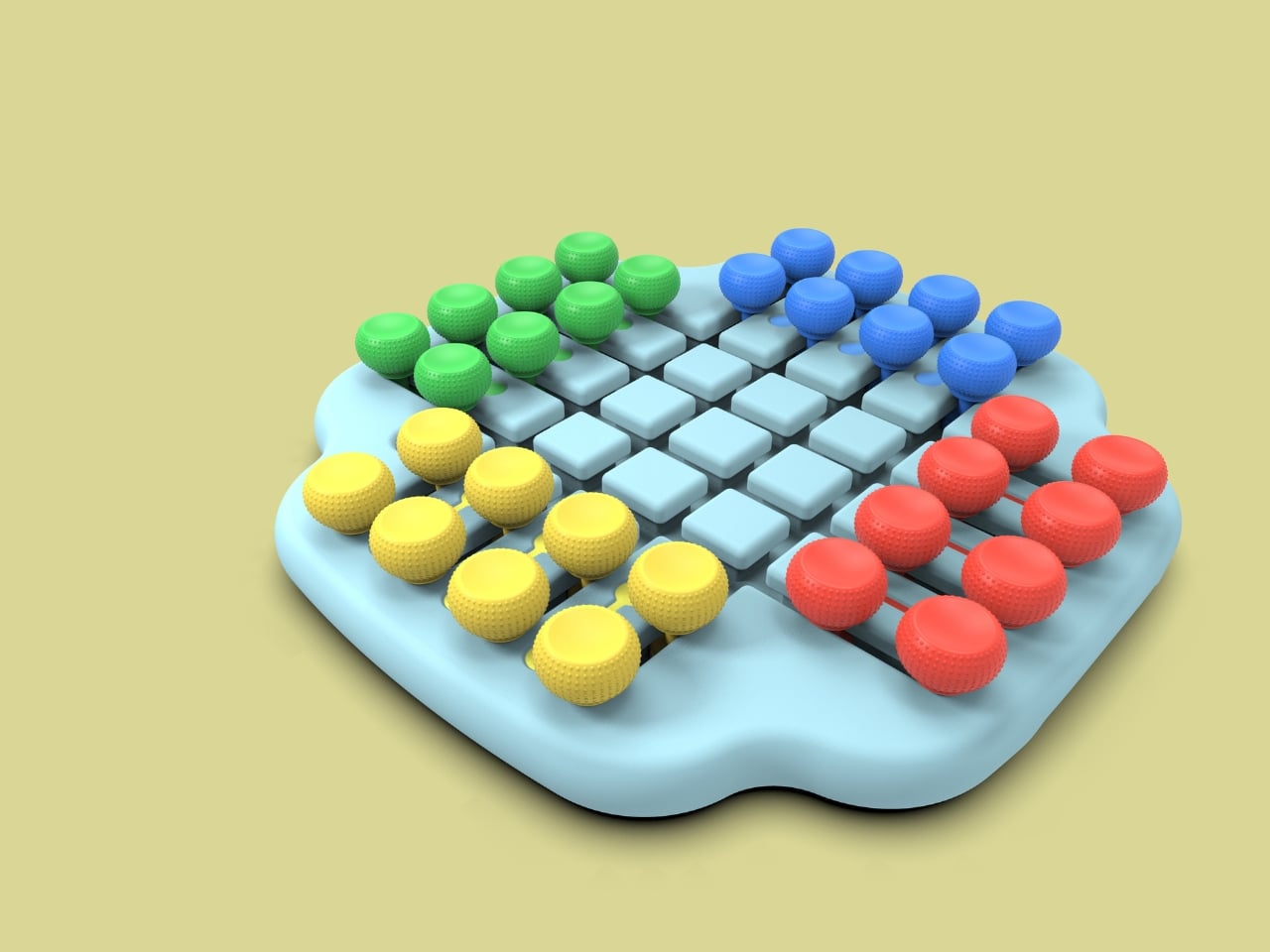
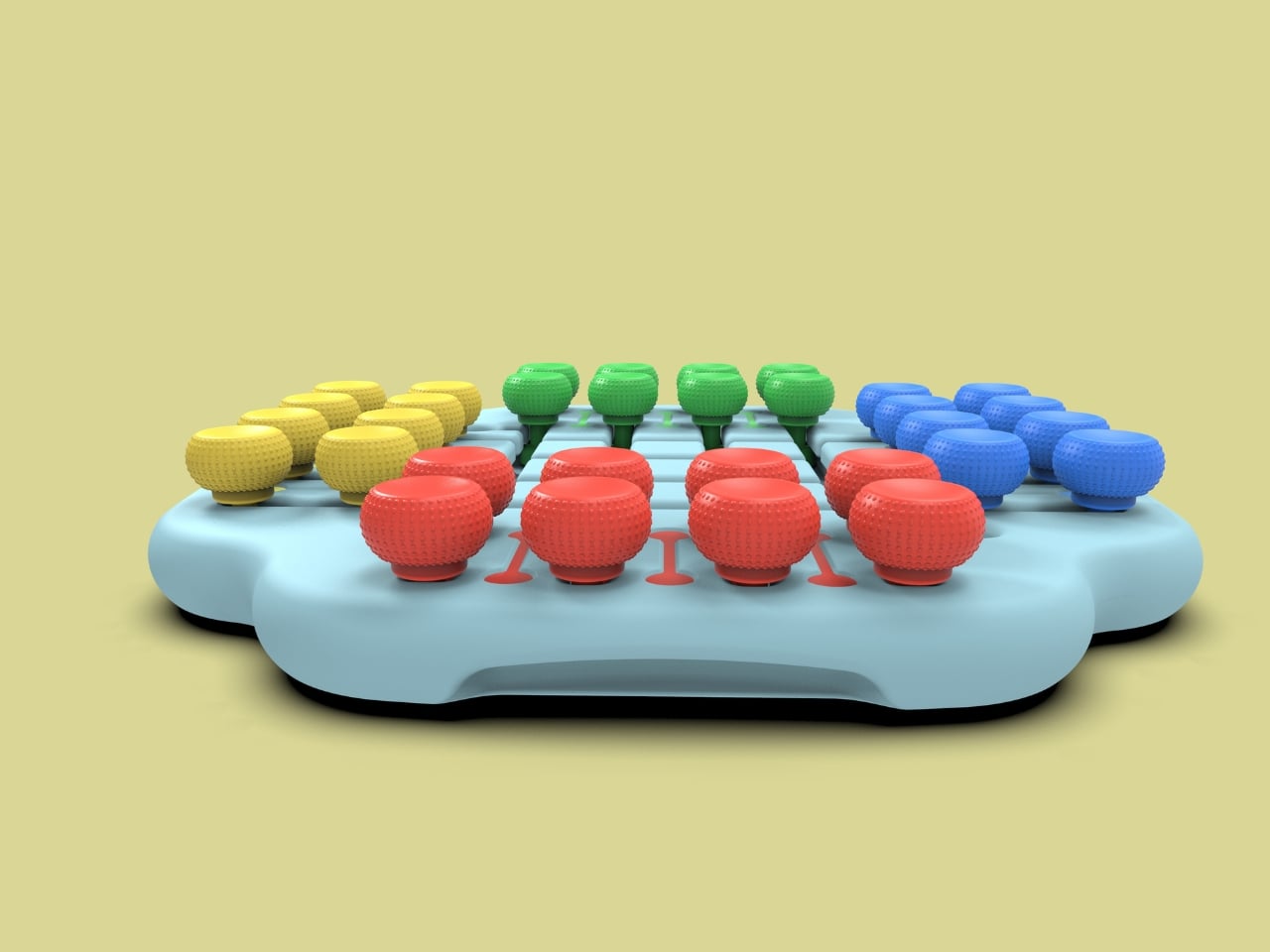
Good toy design tends to look obvious in retrospect, as if the idea was always there waiting to be found. Toddler Plus has that quality. The moment you understand that shaking the board is part of the game, the whole concept clicks into place. It is intuitive, it is physical, and it is thoughtfully designed for the age group it serves. I would genuinely love to see this one make it to production.
SHARE